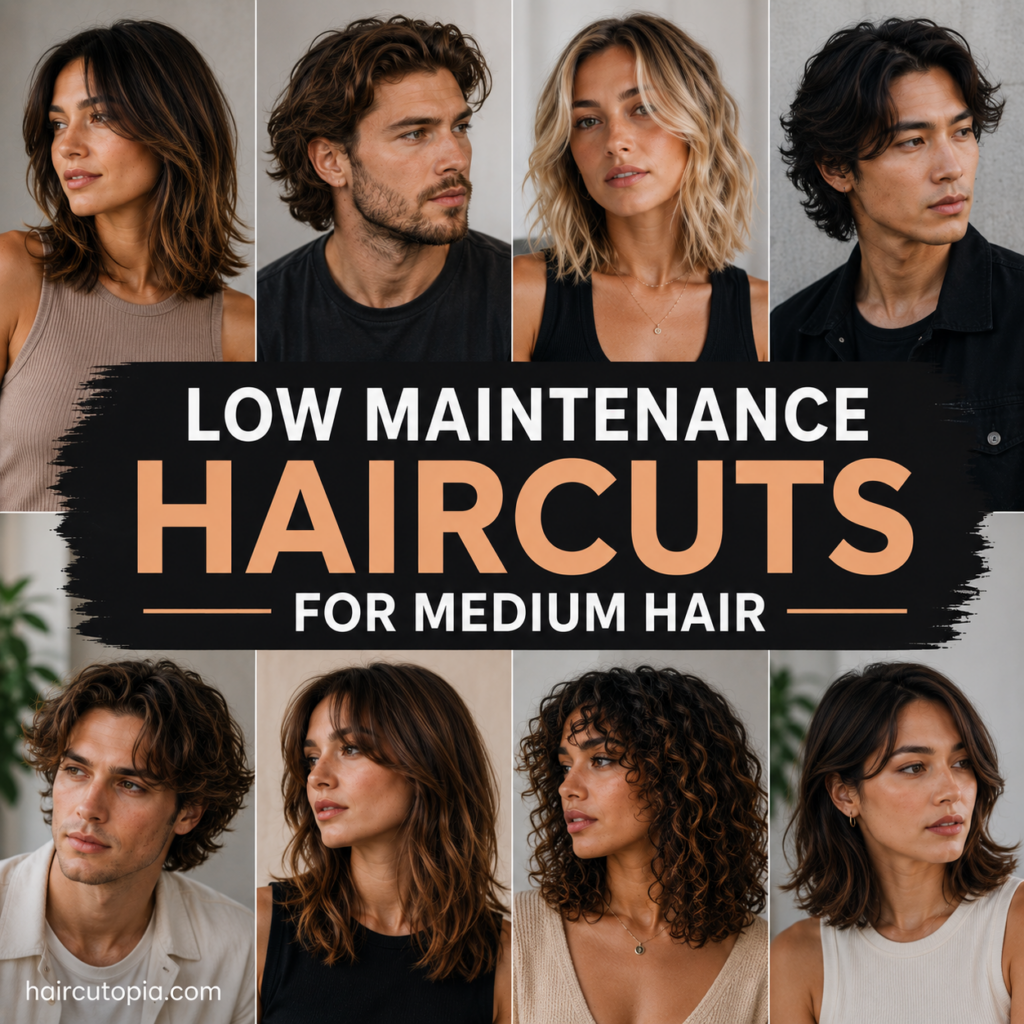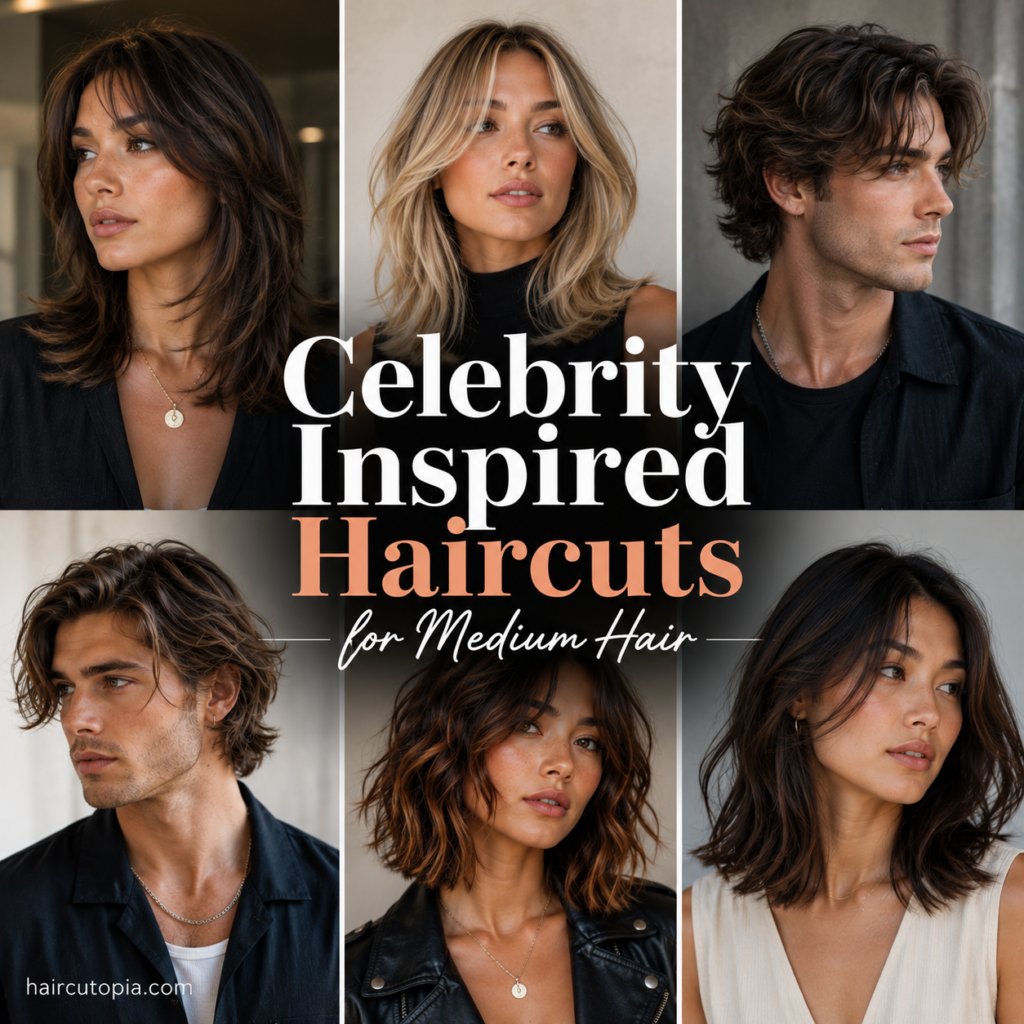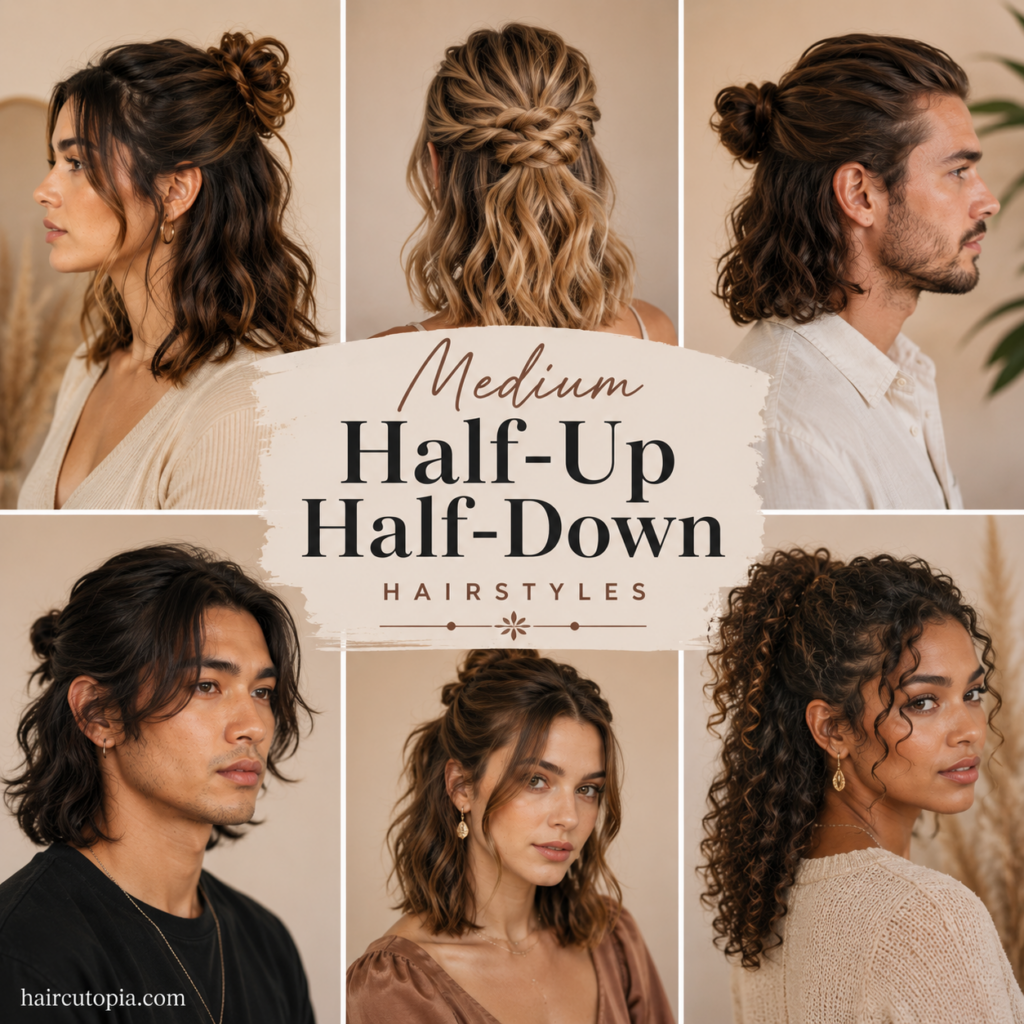
Medium-length hair hits a sweet spot for straight hair. There’s enough length to experiment with layers, bangs, updos, and different parts, but not so much that the hair automatically feels heavy or difficult to manage.
For most people, medium hair falls somewhere between the shoulders and upper chest. Within that range, even a small change in length or layering can completely change how straight hair sits. A blunt shoulder-length cut can look sleek and substantial, while long layers create movement and keep thicker hair from feeling weighed down.
The best medium haircuts for straight hair work with your natural density, strand thickness, and everyday routine. Whether your hair is fine and tends to fall flat or thick and needs some weight removed, there’s plenty of room to customize the cut.
Why Medium-Length Hair Works Well With Straight Hair
Straight hair shows the structure of a haircut clearly. Layers, face-framing pieces, blunt ends, and graduation don’t disappear into curls, so relatively subtle changes can have a noticeable effect.
Medium length also gives you flexibility.
You can wear your hair down one day and pull it into a ponytail the next. You can experiment with bangs without committing to a dramatically short haircut. And if you’re growing out a bob or considering cutting long hair shorter, medium length makes a practical stopping point.
Other advantages include:
- Enough length for ponytails and simple updos
- Less weight than very long hair
- Plenty of options for layers and face framing
- Easy transition between short and long hairstyles
- More visible movement than some longer straight styles
- Versatility for both casual and polished looks
The key is getting the balance right. Too many layers can make fine straight hair appear thinner, while too little shaping can leave thick straight hair feeling heavy.
Best Medium Haircuts for Straight Hair
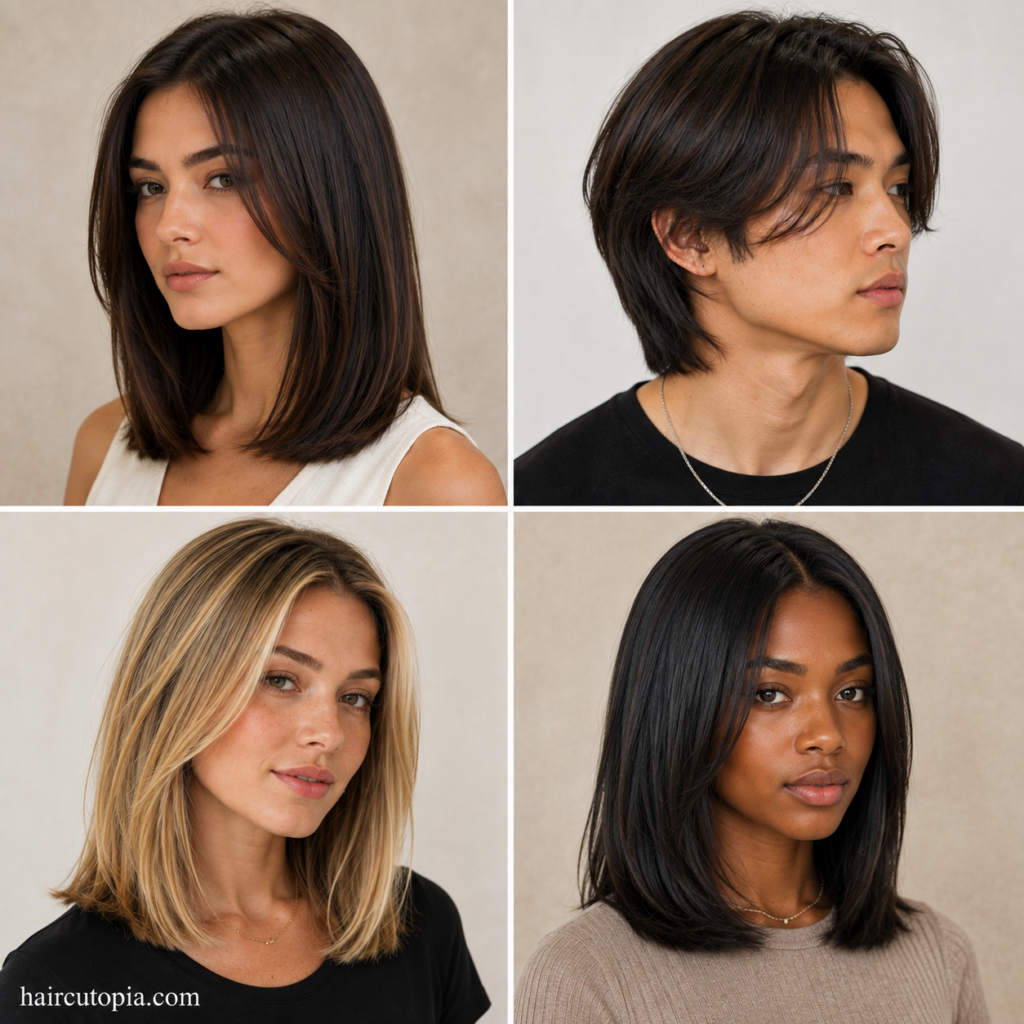
Medium straight hair can support everything from clean, one-length cuts to heavily layered styles.
Here are some of the most versatile options.
Shoulder-Length Blunt Cut
A blunt shoulder-length haircut is simple, but that’s exactly why it works.
The ends are kept relatively even rather than being heavily layered. This creates a strong perimeter and can make straight hair appear thicker.
It’s particularly useful for fine or medium-density hair because you’re not removing much weight from the ends.
A blunt cut can be worn with a center part for a symmetrical look or shifted to one side for a little more volume.
Long Bob
The long bob, often called a lob, sits somewhere between a traditional bob and longer medium-length hair.
It usually falls around the shoulders or collarbone, making it long enough to tie back while still having the defined shape of a shorter haircut.
Straight hair works particularly well with a lob because the clean outline is easy to see.
You can keep it blunt for a sleek appearance or introduce subtle layers for additional movement.
Collarbone Cut
A collarbone cut is exactly what it sounds like: hair that lands roughly around the collarbone.
It may seem like a small distinction, but this length is extremely versatile.
It doesn’t have the same commitment as a short bob, yet it removes enough length to make straight hair feel lighter. It also works well with face-framing layers because the shortest pieces can blend gradually into the rest of the haircut.
For someone who wants a noticeable change without going genuinely short, the collarbone cut is a strong option.
Layered Medium Cut
Layers can bring movement to straight hair that otherwise tends to hang in one solid shape.
A medium layered haircut usually keeps the overall length while introducing shorter sections throughout the hair.
The amount of layering matters.
Fine straight hair generally benefits from fewer, longer layers that preserve density. Thick hair can often handle more substantial layering to remove weight.
Your stylist can also concentrate the layers in specific areas rather than cutting them evenly throughout the entire head.
Face-Framing Layers
You don’t need layers everywhere to change the appearance of medium straight hair.
Face-framing layers introduce shorter pieces around the front while leaving most of the length intact.
They can begin around the cheekbones, jaw, chin, or lower depending on the effect you want.
Higher face-framing pieces create more noticeable movement, while longer ones blend subtly into the rest of the hair.
They’re also easy to combine with curtain bangs.
Butterfly-Inspired Medium Cut
The butterfly haircut is usually associated with longer hair, but a softer version can work at medium lengths too.
The style uses shorter layers around the face and longer layers underneath to create movement without sacrificing all of the length.
On straight hair, these layers tend to look more defined than they would on highly textured hair.
A medium butterfly-inspired cut works best when there’s enough length for the layers to transition naturally rather than creating disconnected sections.
Medium Shag
If sleek and polished isn’t your thing, a medium shag offers a more relaxed alternative.
Shags use multiple layers to create movement through the crown, sides, and ends. They can be worn with bangs or without them.
Naturally straight hair won’t necessarily produce the same tousled finish as wavy hair, but that can actually give the shag a distinctive appearance. The layers become more visible and piecey.
A small amount of texturizing product can emphasize the separation.
Modern Rachel-Inspired Cut
The heavily layered styles associated with the 1990s have returned in softer, more wearable forms.
A modern Rachel-inspired haircut typically combines medium length with noticeable face-framing layers and movement around the ends.
Straight hair is particularly suited to this type of cut because the individual layers remain visible.
You don’t need to recreate the original style exactly. Longer layers and less dramatic graduation can give you the same general feel with easier everyday maintenance.
U-Shaped Medium Cut
Instead of cutting the back perfectly straight across, a U-shaped haircut creates a gentle curve.
The center remains slightly longer while the sides gradually become shorter.
This is a subtle way to give medium straight hair more shape without adding lots of layers.
It works especially well if you like keeping most of your density through the ends.
Angled Lob
An angled lob is slightly shorter in the back and longer toward the front.
The difference can be dramatic, but it doesn’t have to be.
A subtle angle creates structure while still looking natural. Because straight hair clearly shows the outline of the haircut, even a small difference in length can make the style feel more intentional.
This can also be a good option for thick hair because some weight can be removed through the back.
Medium Haircuts for Fine Straight Hair
Fine straight hair often looks best when the haircut preserves enough density around the perimeter.
It can be tempting to add lots of layers in an attempt to create volume, but removing too much hair can have the opposite effect.
Instead, consider:
- Blunt shoulder-length cuts
- Collarbone cuts
- Long bobs
- Lightly layered medium cuts
- Face-framing pieces
- Wispy or curtain bangs
The goal is usually to create movement without making the ends look sparse.
Fine hair may also appear fuller when it’s kept around shoulder or collarbone length rather than growing significantly longer. Less weight can help prevent the roots from being pulled flat.
When styling, lightweight volumizing products are generally easier to work with than heavy oils or creams.
Medium Haircuts for Thick Straight Hair
Thick straight hair has plenty of natural density, but medium lengths can become bulky if the cut isn’t shaped properly.
This is where layering becomes particularly useful.
Long layers can remove weight from the interior while keeping the overall length. Face-framing pieces can prevent the front from looking too heavy, and subtle graduation can give the ends a softer shape.
Good options include:
- Long layered cuts
- Medium shags
- Butterfly-inspired cuts
- Angled lobs
- U-shaped cuts with internal layers
- Collarbone cuts with face framing
Rather than thinning the hair everywhere, a stylist can selectively remove weight from areas where it tends to become bulky.
That usually creates a more balanced result.
Medium Straight Hair With Bangs
Medium hair gives you plenty of room to experiment with bangs because the fringe can blend into the surrounding layers.
Curtain Bangs
Curtain bangs are one of the most adaptable choices for medium straight hair.
They’re usually shorter near the center and gradually become longer toward the sides, creating a framing effect around the face.
They pair especially well with:
- Collarbone cuts
- Medium layers
- Shags
- Butterfly-inspired styles
- Long bobs
Because they’re longer than traditional bangs, they can also be easier to grow out.
Wispy Bangs
Wispy bangs create a lighter fringe across the forehead.
They use less hair than thick, blunt bangs, making them a good option if you want to experiment with fringe without dramatically changing the rest of your haircut.
They can work particularly well on fine straight hair.
Blunt Bangs
Straight hair provides an ideal canvas for blunt bangs.
The clean edge of the fringe contrasts nicely with medium-length hair, especially when the rest of the cut is also relatively blunt.
This style does require more maintenance, though. Once the bangs begin growing into your eyes, the change is hard to ignore.
Side-Swept Bangs
Side-swept bangs offer a softer approach.
They can blend into face-framing layers and work with both center-adjacent and deeper side parts.
They’re also useful if you’re growing out shorter bangs and want them to become part of the overall haircut.
Bottleneck Bangs
Bottleneck bangs combine a shorter center with longer pieces around the sides.
The result sits somewhere between curtain bangs and a fuller traditional fringe.
On straight hair, the shape tends to be clearly visible, making them a natural pairing with layered medium cuts.
Choosing a Medium Straight Haircut for Your Face Shape
Face shape can help guide your decision, but don’t treat it like a set of rules.
Two people with the same face shape can look completely different depending on their features, hair density, parting, and personal style.
Round Faces
Cuts that extend below the chin can create longer visual lines around the face.
Consider collarbone cuts, angled lobs, longer face-framing layers, or medium styles with a slightly off-center part.
Oval Faces
Oval faces tend to work with many medium hairstyles.
Blunt lobs, layered cuts, shags, bangs, and collarbone styles can all work. Hair density and maintenance preferences may be more useful deciding factors than face shape alone.
Square Faces
Soft face-framing layers can contrast with a defined jawline, while a blunt haircut can intentionally emphasize it.
Curtain bangs and medium shags can also introduce softness and movement around the face.
Heart-Shaped Faces
Medium styles that create some fullness around the lower portion of the face can balance a wider forehead and narrower chin.
Collarbone cuts, lobs, curtain bangs, and face-framing layers are all worth considering.
Long or Oblong Faces
Adding width rather than excessive height can help balance a longer face.
Medium cuts with bangs, side volume, or noticeable layering can work well.
How to Add Volume to Medium Straight Hair
One common complaint about straight hair is that it can look flat, particularly at medium and longer lengths.
Fortunately, you don’t necessarily need a complicated styling routine to create more movement.
Adjust Your Part
If you’ve worn the same part for years, your hair may naturally settle flat in that direction.
Moving the part slightly can immediately create some lift around the roots.
Use Layers Strategically
Layers can help create movement, but more isn’t always better.
Fine hair usually needs enough density left at the ends, while thick hair can tolerate more extensive layering.
Focus on the Roots
If volume is your goal, concentrate lightweight volumizing products near the roots rather than coating the entire length.
Too much product through the ends can make straight hair feel heavy.
Blow-Dry in Different Directions
Instead of drying everything exactly where it naturally falls, lift sections away from the scalp as you dry.
Even using your fingers rather than a round brush can create noticeable root lift.
How to Style Medium Straight Hair
One of the best things about medium straight hair is how many styling options remain available.
For an easy everyday look:
- Apply heat protectant to damp hair if you’ll be using heat.
- Blow-dry the roots with some lift rather than pressing them flat.
- Smooth the mid-lengths and ends with a brush or your fingers.
- Add a small amount of lightweight finishing product if needed.
- Separate face-framing pieces or layers to emphasize the haircut.
For a sleeker finish, use a flat iron selectively rather than repeatedly passing over every section.
You can also experiment with loose bends or waves even if your hair is naturally straight. Medium length is particularly well suited to adding temporary texture because there’s enough hair to show the shape without the weight of very long strands.
Low-Maintenance Medium Haircuts for Straight Hair
Medium hair is already fairly practical, but certain cuts require less upkeep than others.
Some good low-maintenance choices include:
- Collarbone cuts
- Long bobs
- Blunt shoulder-length cuts
- U-shaped cuts
- Long, subtle layers
- Face-framing layers that start below the chin
Styles with lots of short layers or precise bangs generally require more frequent maintenance.
If you don’t enjoy styling your hair every morning, tell your stylist. A haircut that looks good with your natural air-dried texture is usually a better investment than one that depends on a round brush and several products every day.
How Often Should Medium Straight Hair Be Trimmed?
Medium hair generally gives you more flexibility between appointments than a pixie or short bob.
A trim roughly every 8–12 weeks works for many medium hairstyles.
However, the ideal schedule depends on the cut.
Blunt or highly structured styles may start losing their shape sooner. Layered cuts often grow out more naturally and may tolerate longer periods between appointments.
Bangs are another story. Shorter fringe may need trimming every few weeks even when the rest of the haircut doesn’t.
What to Ask Your Stylist
Before choosing a medium haircut, explain how your hair behaves outside the salon.
Useful things to discuss include:
- Whether your hair is fine, medium, or coarse
- Your overall hair density
- Areas that tend to become bulky
- Whether your roots naturally lie flat
- Cowlicks around the hairline
- How you normally part your hair
- Whether you air-dry or blow-dry
- How often you use heat tools
- How much daily styling you’re willing to do
Bring reference photos, but focus on what you like about each one.
Maybe it’s the length. Maybe it’s the bangs. Maybe you like how the layers frame the face.
Identifying those details helps your stylist adapt the idea to your actual hair instead of trying to reproduce a photo exactly.
Common Mistakes to Avoid With Medium Straight Hair
Medium hair is forgiving, but there are still a few things worth watching out for.
Over-Layering Fine Hair
Layers can create movement, but they also remove density.
If your hair is already fine or sparse, too many layers may make the bottom look thin.
Leaving Thick Hair Completely Unshaped
The opposite problem can happen with thick hair.
A medium one-length cut may become heavy or bulky, particularly around the sides and ends. Internal layers or strategic weight removal can help without changing the overall appearance dramatically.
Using Too Much Product
Straight hair can show product buildup quickly.
Start with less than you think you need, especially with oils, creams, and shine products.
Flattening the Hair Too Much
Naturally straight hair doesn’t necessarily need to be made even straighter.
Repeatedly flat-ironing the hair can remove movement and make layers less noticeable. Sometimes a little natural bend or volume around the roots makes the haircut look better.
Choosing a Cut That Requires More Styling Than You Want
A haircut can look incredible after a professional blowout and completely different after air-drying at home.
Be realistic about your routine.
If you spend five minutes on your hair in the morning, choose a haircut designed to work within those five minutes.
Finding the Right Medium Haircut for Straight Hair
Medium hair gives straight-haired people a lot of freedom.
You can keep things simple with a blunt shoulder-length cut, add subtle movement with face-framing layers, or go much more textured with a shag or butterfly-inspired style. Bangs can change the entire look without sacrificing length, while a collarbone cut offers an easy transition if you’re not sure whether you ultimately want to go shorter or longer.
Your hair’s density should play a major role in the decision.
Fine straight hair often benefits from stronger perimeters and restrained layering. Thick straight hair usually has enough density to support more layers and weight removal.
Above all, choose something that works when you’re the person styling it.
A good medium haircut shouldn’t only look great when you leave the salon. It should make your everyday hair easier to manage, give your straight texture some shape, and still leave you enough flexibility to change things up whenever you feel like it.