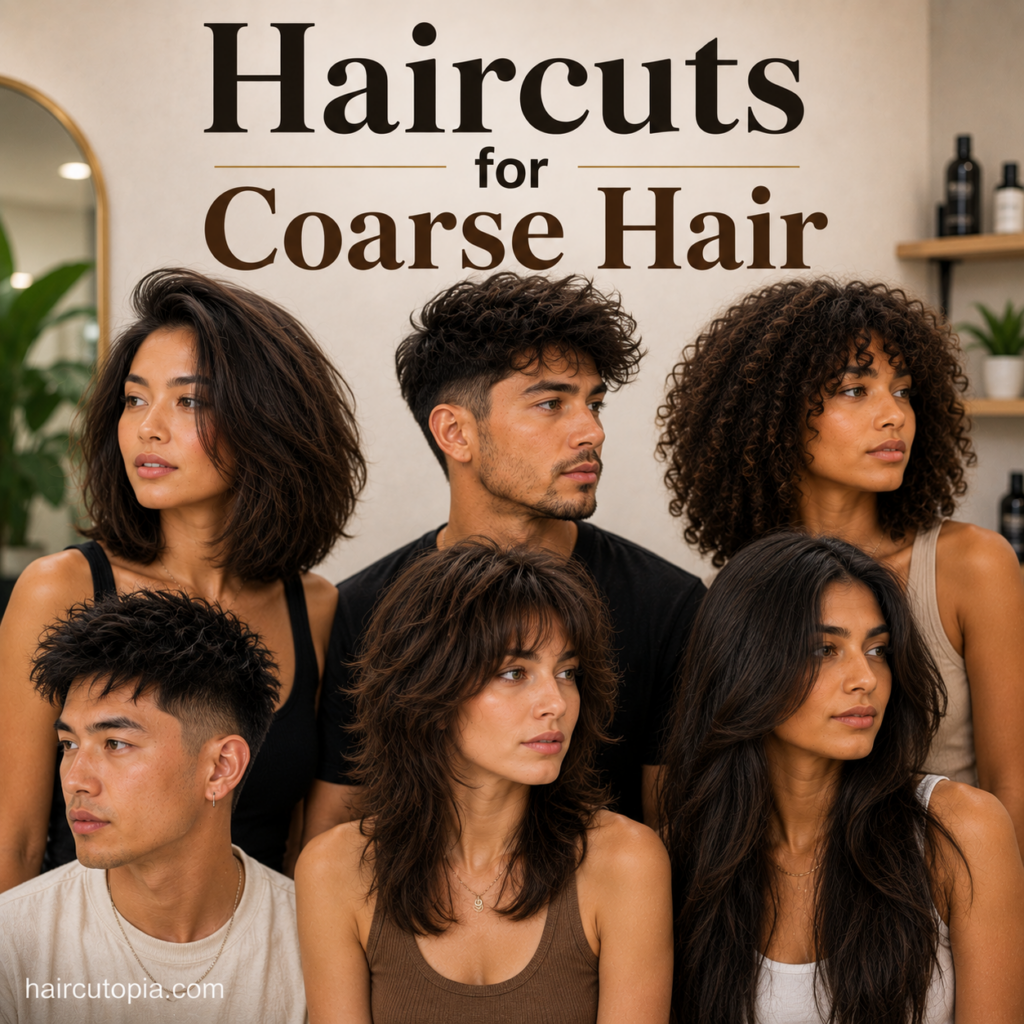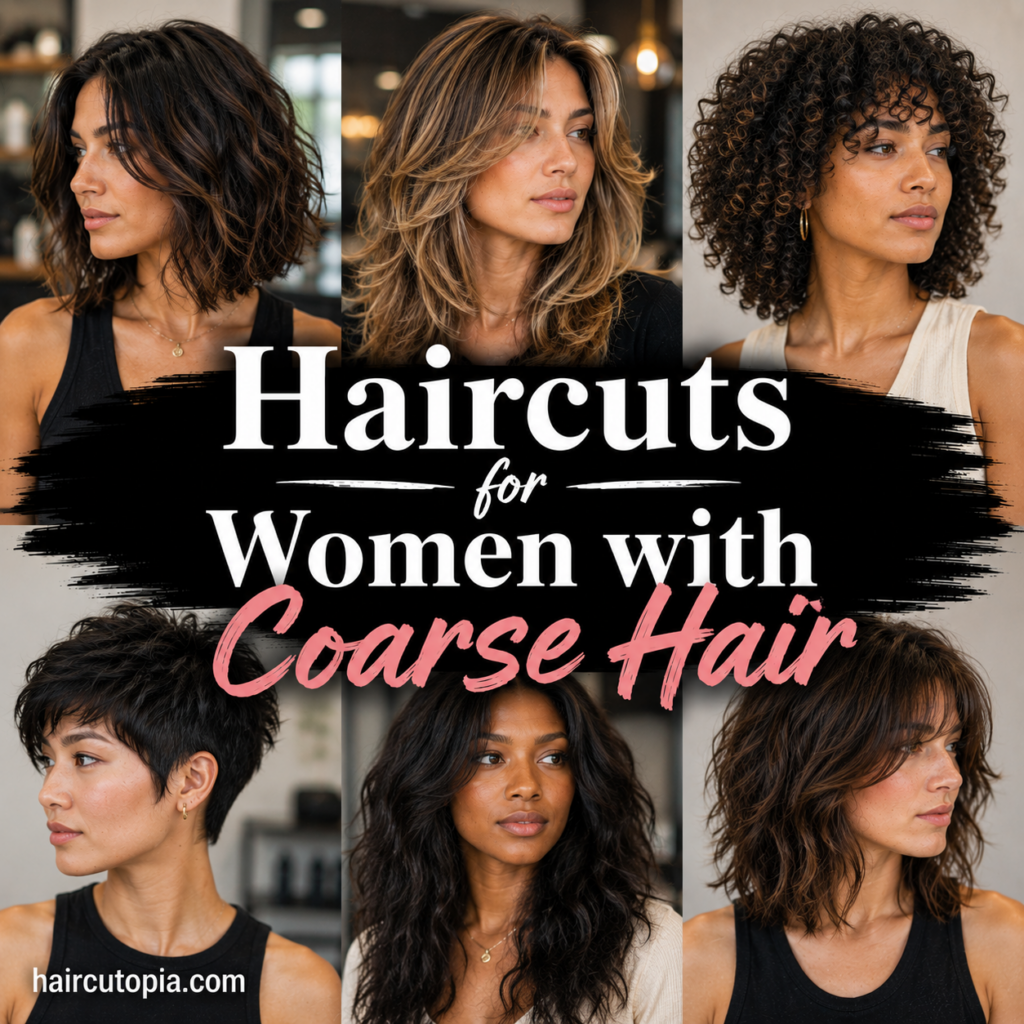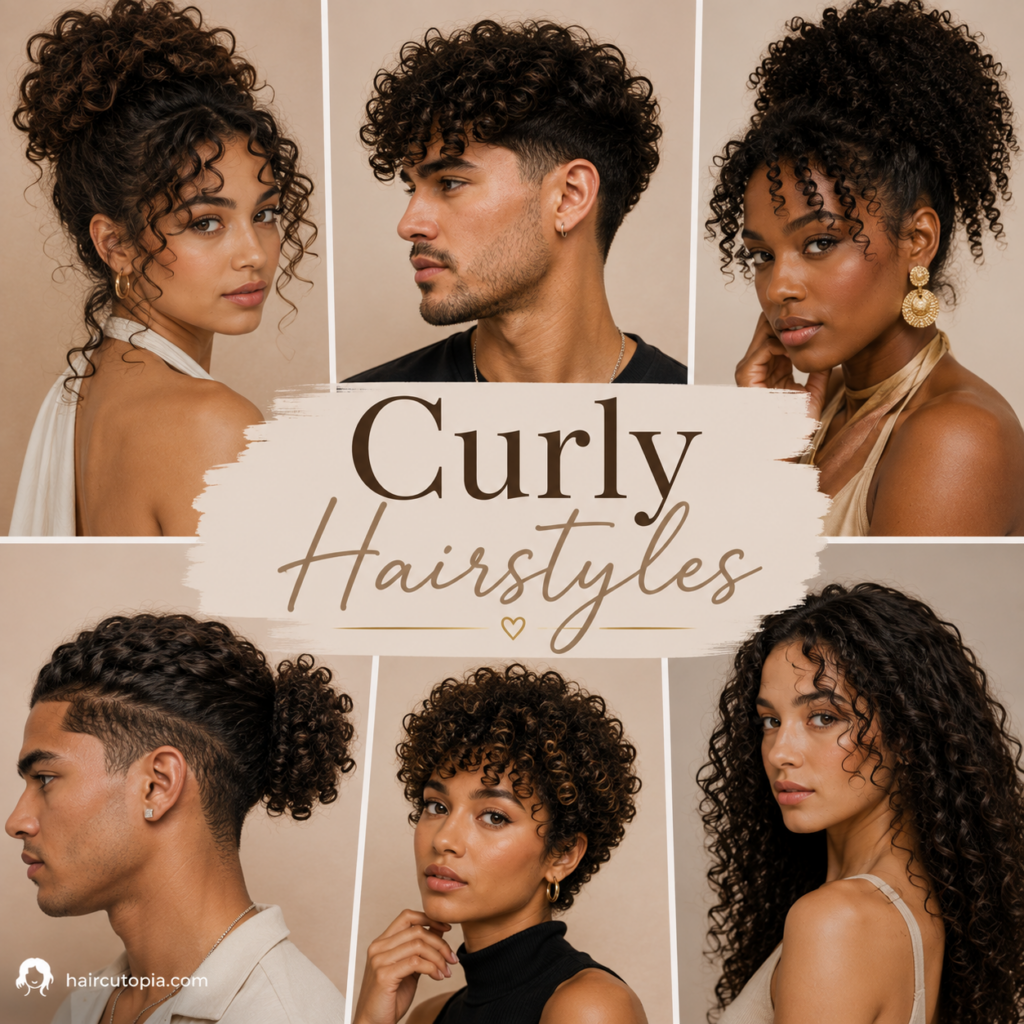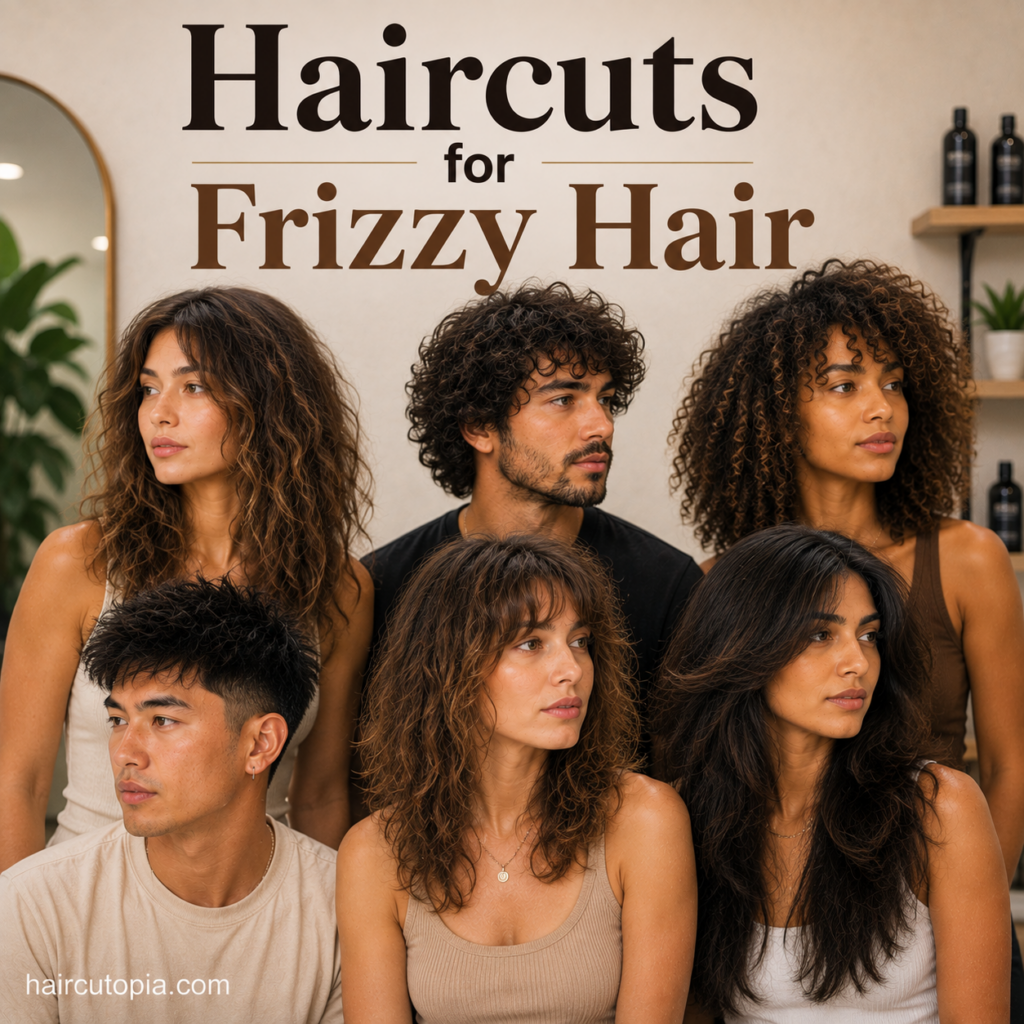
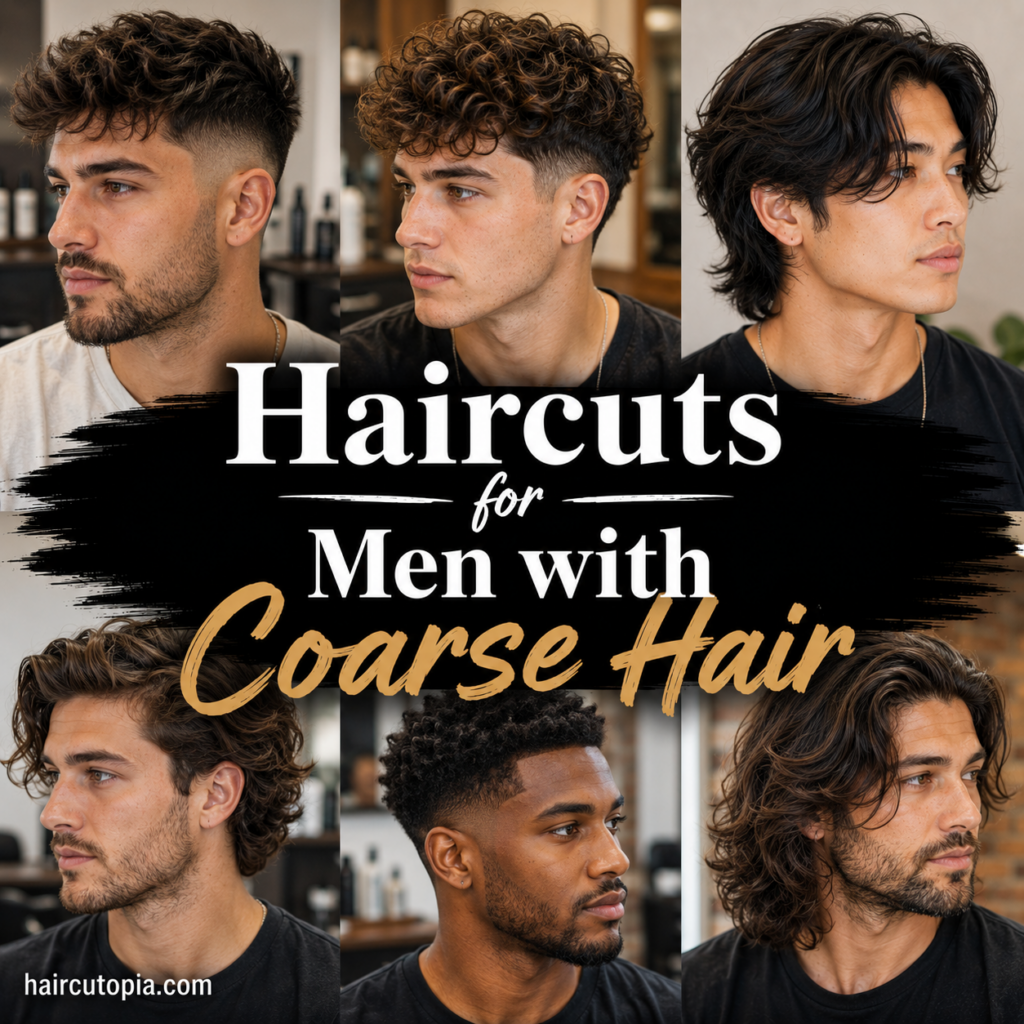
Coarse hair gives you plenty to work with. The individual strands are thicker, the hair tends to have noticeable body, and many styles hold their shape without needing much help.
It can also be stubborn.
Cut coarse hair too short in the wrong place and it may stick straight out. Leave too much weight through the sides and a neat haircut can quickly become bulky. Grow it longer without enough shaping and suddenly there’s a lot of hair to wash, dry, and control.
The best haircuts for men with coarse hair work with that natural thickness instead of trying to flatten or thin it into submission. That might mean a textured crop, a carefully tapered cut, a medium-length flow, or longer layers that let the hair’s natural movement do most of the styling.
The key is finding the right balance of length, weight, and texture.
What Does Coarse Hair Mean for Men?
Coarse hair refers to the thickness of each individual strand.
It’s different from hair density, which describes how many strands are growing on your scalp.
That means a man can have coarse strands without necessarily having extremely thick-looking hair. You can also have fine individual strands but very high density.
Coarse hair can be:
- Straight
- Wavy
- Curly
- Coily
- Low density
- Medium density
- High density
Your combination of strand thickness, density, and natural texture determines how a haircut will behave.
This is particularly important with short men’s cuts. Dense, coarse hair may stand away from the scalp when cut very short, while longer sections often become easier to control because they have enough weight to lie down.
Why Coarse Hair Works Well With Men’s Haircuts
Coarse hair has natural structure.
That’s a major advantage for styles that rely on texture, volume, or a defined silhouette.
A textured crop can have plenty of separation. A quiff has natural support. Medium and longer styles can develop substantial movement without looking thin.
Depending on your hair, coarse strands can provide:
- Natural volume
- Strong texture
- Fuller-looking styles
- Good shape retention
- Defined longer layers
- Substantial fringes
- Plenty of styling flexibility
The challenge is managing bulk.
A good barber or stylist won’t simply remove as much hair as possible. They’ll decide where weight is helping the haircut and where it’s getting in the way.
Best Short Haircuts for Men With Coarse Hair
Short hair can make coarse hair easier to wash and style, but length selection matters.
Some coarse hair becomes harder to control when it’s cut extremely short because the strands naturally push outward.
Textured Crop
The textured crop is one of the most practical short haircuts for coarse hair.
The sides are kept shorter while enough length remains on top to create visible separation and texture.
Coarse strands naturally support the piecey finish, so you may not need much product.
A small amount of matte paste or clay can usually provide enough definition without making the hair feel stiff.
French Crop
The French crop keeps the top relatively short and directs the hair forward toward a fringe.
This works well if your coarse hair naturally grows toward the forehead.
The fringe can be:
- Blunt
- Textured
- Slightly uneven
- Short and subtle
- Longer and more noticeable
Pairing the crop with a taper instead of an extremely high fade can create a softer, more natural shape.
Crew Cut
A crew cut keeps the hair short while leaving additional length toward the front.
That extra length is useful with coarse hair because it gives you enough hair to create direction rather than having every strand stick upward.
The sides can be faded or tapered depending on how much contrast you prefer.
Ivy League
The Ivy League is essentially a longer, more flexible relative of the crew cut.
There’s enough hair on top to create a side part, brush the front upward, or wear it more casually.
Coarse hair gives this style natural body, which can make it surprisingly easy to maintain.
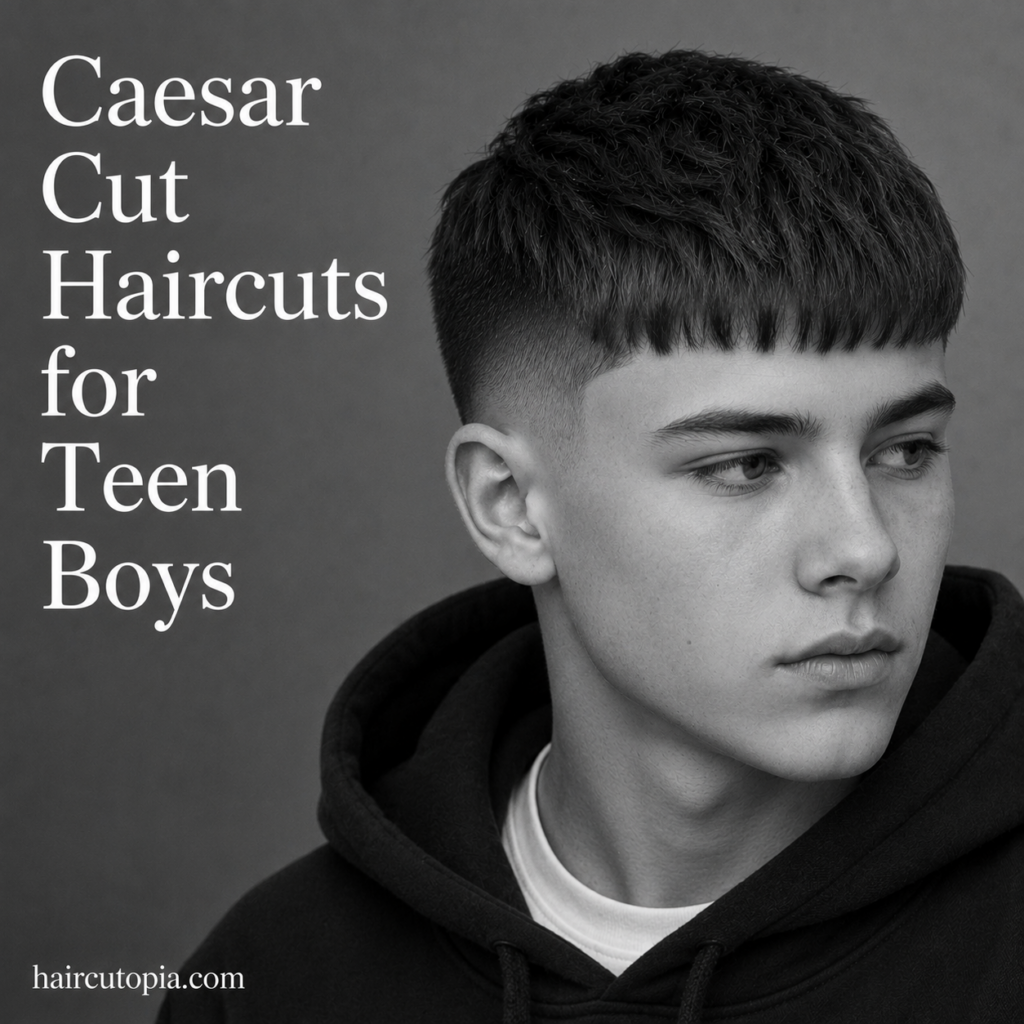
Caesar Cut
The Caesar features a short top and a small fringe styled forward.
It’s compact and relatively simple to manage.
If your coarse hair tends to fall forward naturally, this cut can work with the growth pattern rather than forcing the hair backward every morning.
Buzz Cut
A buzz cut removes most styling concerns, but coarse hair can make the texture of a very short cut particularly noticeable.
Different guard lengths produce different results.
Going extremely short creates a more minimal appearance, while leaving slightly more length allows the natural texture and density to remain visible.
Remember that cowlicks, growth patterns, and scalp visibility become more obvious with a buzz cut.
Short Textured Quiff
A quiff leaves additional length at the front so the hair can be styled upward and slightly backward.
Coarse hair’s natural structure can help support the shape.
Keeping the quiff relatively short makes it easier to manage than a dramatic high-volume version.
Fade and Taper Haircuts for Coarse Hair
Fades and tapers can remove significant bulk from the sides, which is useful when you have dense coarse hair.
The difference is how much hair you want to remove.
Low Fade
A low fade begins closer to the ears and neckline.
It keeps more weight through the upper sides, creating a less dramatic contrast with the top.
This works well with crops, side parts, quiffs, and medium-length tops.
Mid Fade
A mid fade removes more hair from the sides and creates a stronger transition.
For very dense coarse hair, this can help prevent the haircut from becoming too wide as it grows.
High Fade
A high fade creates the strongest contrast by taking the short section farther up the head.
This can dramatically reduce bulk around the sides.
The tradeoff is maintenance. The clean contrast becomes less defined relatively quickly as the hair grows.
Taper
A taper keeps more overall length than a traditional fade while gradually shortening the hair around the sideburns and neckline.
This is often an excellent choice for coarse hair because the extra length helps the sides lie more naturally.
It also tends to grow out more smoothly.
Taper Fade
A taper fade combines a clean transition around the edges with more substantial length through the sides.
It’s a useful middle ground if you want a sharp finish without removing too much hair.
Medium Haircuts for Men With Coarse Hair
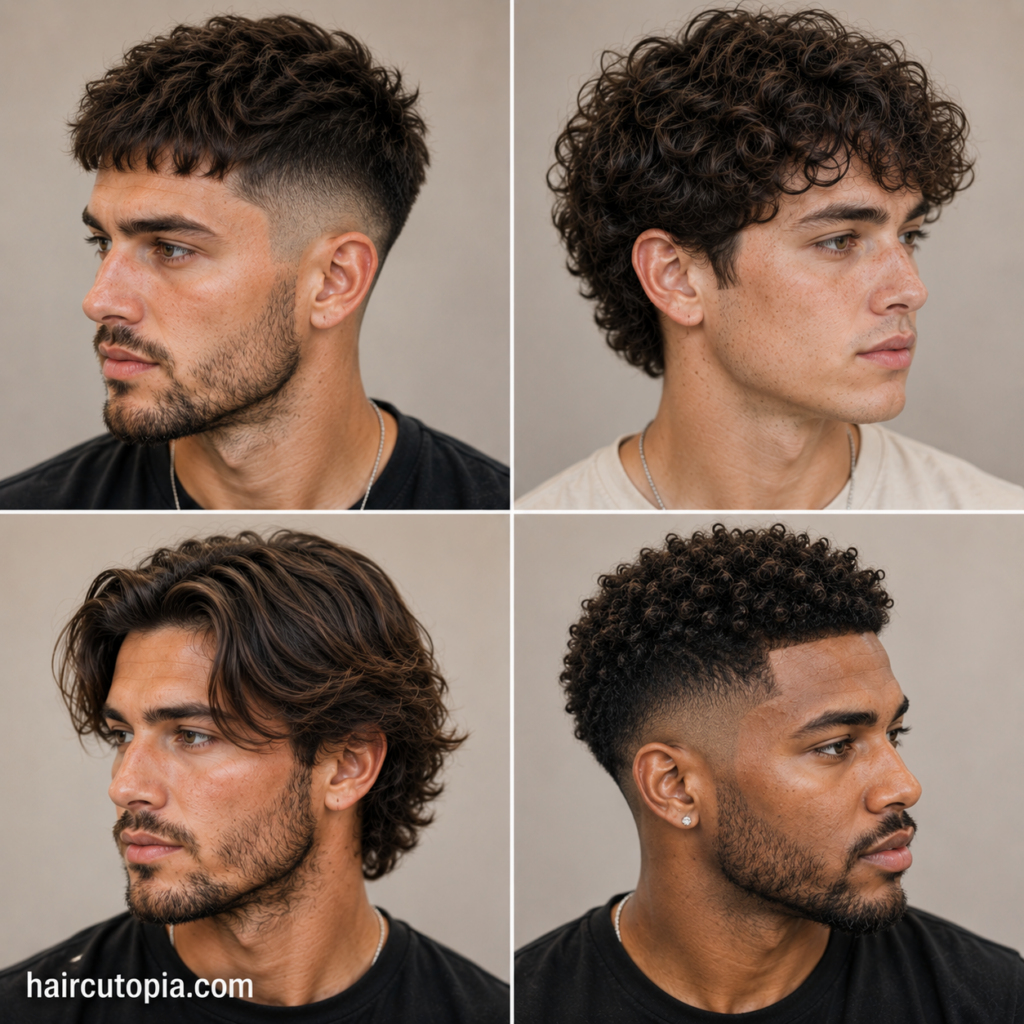
Medium length can actually make coarse hair easier to control.
Once the strands have enough length, gravity begins helping them fall instead of sticking outward.
Medium Layered Cut
Layers can distribute the weight of coarse hair while preserving its natural fullness.
This is particularly useful for dense hair that becomes bulky around the sides and back.
Rather than aggressively thinning everything, longer layers create movement while maintaining a substantial shape.
Bro Flow
The bro flow works with the hair’s natural movement.
The front is usually directed away from the face while the sides and back retain enough length to move freely.
Coarse wavy hair is especially well suited to this style because the natural texture creates much of the shape on its own.
Middle Part
A middle part gives medium coarse hair a defined structure without requiring short sides.
Straight and wavy coarse hair can both work well with this style.
Subtle layering helps prevent the hair from becoming too heavy around the face.
Curtains
Curtains are similar to a middle part but emphasize the longer front sections falling toward either side of the face.
Coarse hair can create a substantial curtain shape without needing much styling product.
If your hair is extremely dense, some internal weight removal may make the front easier to manage.
Medium Shag
A medium shag uses layers throughout the crown, sides, and back to create a relaxed, textured shape.
It’s particularly useful if you’d rather embrace natural volume than constantly try to smooth it down.
Wavy and curly coarse hair can look especially natural in a shag.
Slicked-Back Medium Hair
Coarse hair can also work with more polished medium styles.
Leaving enough length allows the hair to be directed backward rather than standing upright.
You don’t necessarily need a wet-look product. A lightweight styling cream can create a softer, more natural swept-back finish.
Long Haircuts for Men With Coarse Hair
Growing coarse hair long can produce an impressive amount of volume and movement.
The challenge is preventing all that length from becoming one heavy mass.
Long Layered Hair
Long layers distribute weight and allow coarse hair to move more naturally.
Straight coarse hair tends to show the individual layers clearly, while wavy and curly hair blends them into the natural texture.
For extremely dense hair, internal layers can remove additional weight without dramatically changing the outer shape.
Shoulder-Length Cut
Shoulder length provides enough weight to control coarse strands without committing to extremely long hair.
It can be worn:
- With a center part
- Swept backward
- Tucked behind the ears
- In a low ponytail
- Half-up
- Naturally loose
Regular shaping can prevent the ends from becoming too bulky.
Long Shag
A long shag incorporates multiple layers to create movement through the crown and lengths.
Coarse hair naturally supports the textured appearance.
This is particularly effective with wavy hair because removing some weight can help the natural pattern become more visible.
Long Middle Part
A center part creates a straightforward shape for longer coarse hair.
Face-framing layers can keep the front from feeling too heavy while maintaining most of the overall length.
Haircuts for Men With Coarse Straight Hair
Coarse straight hair can be very structured.
At shorter lengths, it may stick upward or outward. At medium and longer lengths, the added weight often makes it easier to control.
Good options include:
- Textured crops
- Crew cuts
- Ivy League cuts
- Tapers
- Medium layered cuts
- Curtains
- Long layered hair
If the sides tend to stick out after a haircut, don’t assume they need to be cut even shorter.
Sometimes leaving more length is the solution.
Haircuts for Men With Coarse Wavy Hair
Coarse wavy hair already has plenty of natural texture.
The haircut should give that texture room to form.
Consider:
- Textured crops
- Tapers
- Bro flow
- Medium shags
- Layered medium cuts
- Shoulder-length cuts
- Long shags
Heavy one-length hair can stretch waves out, while carefully placed layers may bring more movement back into the pattern.
Haircuts for Men With Coarse Curly Hair
Coarse curls can create excellent volume at almost any length.
The main goal is shaping that volume rather than removing it indiscriminately.
Options include:
- Curly crops
- Tapered curly cuts
- Curly fades
- Medium layered curls
- Curly shags
- Longer layered curls
Shrinkage needs to be considered before deciding on length.
Hair that looks relatively long when wet or stretched may sit considerably higher once completely dry.
Haircuts for Men With Thick, Coarse Hair
If your hair is both coarse and dense, you have thick individual strands and a lot of them.
That’s where bulk management becomes particularly important.
A barber or stylist may use:
- Internal layering
- Point cutting
- Strategic texturizing
- Tapered sides
- Longer graduated layers
- Selective weight removal
The goal isn’t to make your hair thin.
It’s to control where the volume sits.
For example, removing some density around the sides can create a cleaner silhouette while preserving fullness through the top.
Men’s Coarse Hair With a Fringe
A fringe can work particularly well with coarse hair because the strands naturally create a substantial shape.
Textured Fringe
A textured fringe uses separation to prevent the front from looking like one solid block.
It pairs naturally with crops and tapered sides.
Short Fringe
A short fringe is practical if your hair naturally grows forward.
It requires relatively little styling and can work with a French crop or Caesar cut.
Long Fringe
Keeping additional length at the front provides more flexibility.
You can wear it forward, sweep it sideways, or transition it into curtains.
Side-Swept Fringe
A side-swept fringe works particularly well with medium-length hair and softer tapers.
It’s also easier to grow out than a very short or blunt fringe.
Choosing a Men’s Coarse Haircut for Your Face Shape
Face shape can help guide proportions, but it doesn’t need to dictate your haircut.
Your density, natural texture, hairline, facial hair, and styling preferences all affect the final result.
Round Faces
Some height through the top combined with controlled sides can create more vertical emphasis.
Textured quiffs, crops, and tapered styles are all worth considering.
Oval Faces
Oval faces can generally accommodate many hairstyles.
Crops, crew cuts, medium flow styles, curtains, and longer layered cuts can all work.
Square Faces
Short structured styles can emphasize a strong jawline.
Crew cuts, Ivy League styles, crops, and tapers are good options.
Medium layers can create a softer appearance if that’s what you prefer.
Long or Oblong Faces
Avoid automatically combining extremely short sides with lots of height on top, since that can create even more vertical emphasis.
Fringes, medium styles, and cuts with some fullness through the sides can provide balance.
Heart-Shaped Faces
Medium cuts can add visual weight around the lower portion of the face.
Curtains, side-swept styles, textured fringes, and layered medium cuts are all options to consider.
How to Remove Bulk From Men’s Coarse Hair
One of the biggest mistakes with coarse hair is assuming that removing more hair automatically makes it easier to manage.
It doesn’t always work that way.
Keep Enough Length
Coarse strands often need some length to lie down.
Cutting a problem area extremely short may make it stick out even more.
Remove Weight Strategically
Your barber can reduce density where the haircut becomes bulky without thinning the entire head.
Be Careful With Thinning Shears
Thinning shears can be useful, but excessive thinning creates shorter internal hairs.
Those hairs may stick outward or make wavy and curly textures appear frizzier.
Use Layers at Medium and Long Lengths
Layers distribute weight while maintaining the overall shape.
They’re especially useful once coarse hair grows beyond short barber-style cuts.
How to Style Coarse Hair for Men
You may need less styling product than you think.
Coarse hair already has plenty of structure, so the main goal is usually direction and control.
A simple routine can look like this:
- Start with damp hair.
- Apply a lightweight leave-in or pre-styling product if needed.
- Blow-dry the hair in the direction you want it to sit.
- Use your fingers or a brush to establish the shape.
- Work in a small amount of styling product.
- Add more only where additional control is needed.
For textured styles, matte pastes and clays can create separation.
For longer or more natural styles, lightweight creams may provide control without making the hair rigid.
Wavy and curly coarse hair may benefit more from products designed to define the natural pattern.
Low-Maintenance Haircuts for Men With Coarse Hair
Low maintenance isn’t necessarily the same as short.
A skin fade requires very little morning styling, but frequent barber appointments are needed if you want it to stay sharp.
A longer taper might require slightly more styling but grow out much more naturally.
Practical options include:
- Textured crops
- Crew cuts
- Ivy League cuts
- Tapers
- Bro flow
- Medium layered cuts
- Shoulder-length layered styles
The easiest haircut is usually one that follows your natural growth pattern.
How Often Should Men With Coarse Hair Get a Haircut?
The haircut itself determines the maintenance schedule more than the coarseness of the hair.
As a general guide:
- Skin fades: every 2–4 weeks
- Short crops: every 3–6 weeks
- Crew cuts: every 3–6 weeks
- Tapers: every 4–8 weeks
- Medium styles: every 6–10 weeks
- Long styles: every 8–12 weeks or as needed
If you like the way your haircut grows out, there’s no need to follow an exact schedule.
What to Tell Your Barber or Stylist
Reference photos help, but explain how your hair actually behaves.
Mention:
- Whether your strands are coarse
- Your overall density
- Whether your hair is straight, wavy, curly, or coily
- Areas that tend to stick outward
- Where your hair becomes bulky
- Cowlicks and natural growth patterns
- Whether you blow-dry your hair
- How much styling you want to do
- How often you’re willing to get haircuts
If your previous barber thinned your hair and you didn’t like the result, say so.
The more your barber knows about how the haircut behaves after you leave the shop, the easier it is to choose a shape that works.
Common Mistakes With Men’s Coarse Hair
Coarse hair doesn’t need to be difficult, but certain approaches can make it harder to control.
Cutting Problem Areas Too Short
Hair that sticks outward may need additional length rather than less.
Over-Thinning
Removing too much density can create short strands that become difficult to control as they grow.
Fighting the Natural Growth Pattern
If your hair strongly grows forward, forcing it backward every morning means more work.
A crop or fringe might make better use of that natural direction.
Using Too Much Product
Coarse hair can handle styling products well, but piling them on can make the hair heavy or greasy.
Start with a small amount.
Choosing a Fade Without Considering Maintenance
Sharp fades grow out quickly.
If you don’t want frequent barber appointments, a taper or longer side may be more practical.
Finding the Best Haircut for Men’s Coarse Hair
Coarse hair gives men’s haircuts natural body, texture, and structure. The trick is knowing where to keep that fullness and where to control it.
For shorter styles, textured crops, crew cuts, Ivy League cuts, and tapers can create a clean shape without fighting the natural thickness of the strands. At medium lengths, curtains, bro flow, shags, and layered cuts let coarse hair develop more movement. And if you’re growing it long, layers can remove weight while preserving the fullness that makes coarse hair stand out.
Your natural texture matters too.
Straight coarse hair often needs enough length to prevent it from sticking outward. Wavy coarse hair can benefit from layers that bring out its movement. Curly coarse hair needs shaping that respects the curl pattern and shrinkage.
Most importantly, don’t assume your hair needs to be aggressively thinned.
A good haircut should make coarse hair easier to manage while keeping the body and texture that give it character. Work with those qualities, and you’ll have far more options than simply cutting everything short.