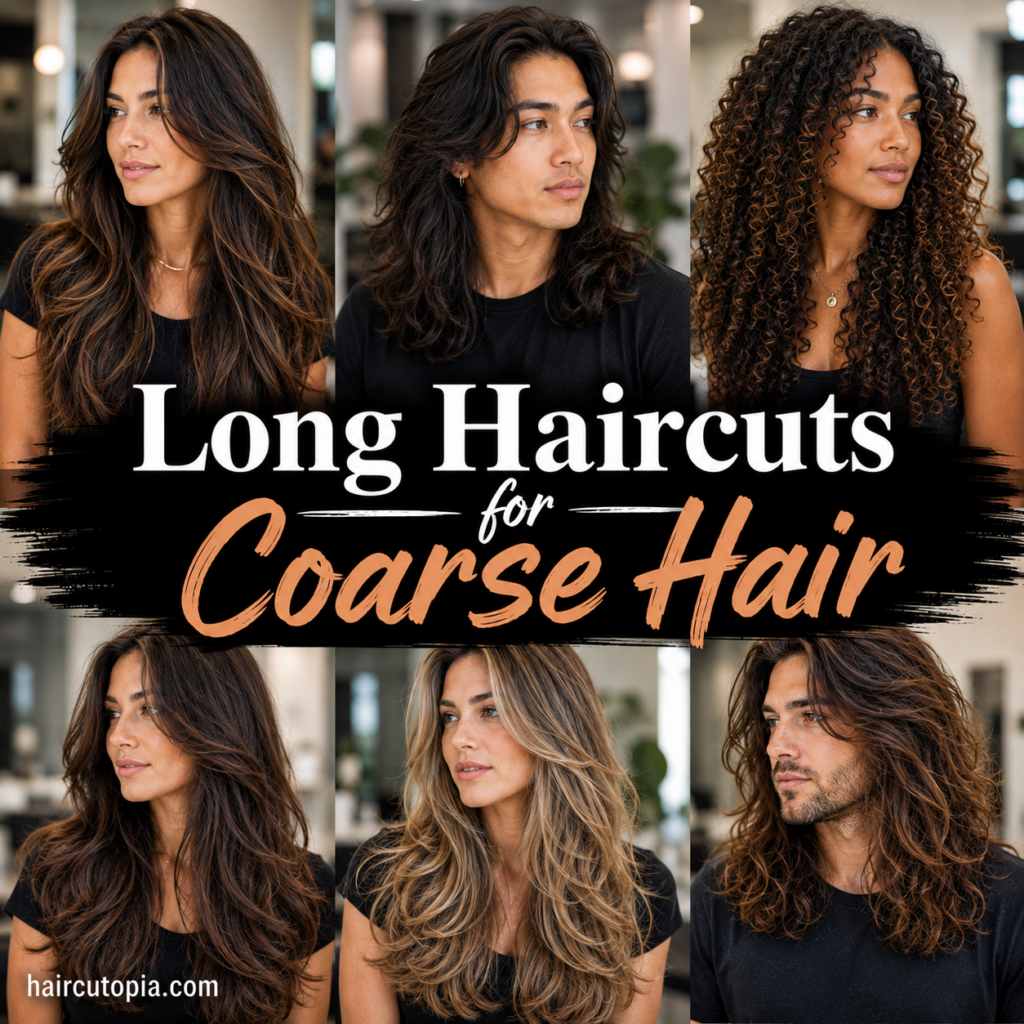
Long coarse hair has one big advantage: it rarely lacks presence.
Because coarse hair has thicker individual strands, longer lengths can look full, substantial, and naturally voluminous. But there’s another side to that. Once coarse hair gets long, all that hair can become heavy, bulky, slow to dry, and difficult to shape.
That’s where the haircut makes a real difference.
The best long haircuts for coarse hair don’t simply remove as much weight as possible. They distribute it. Long layers can create movement, face-framing pieces can keep the front from feeling heavy, and the right perimeter can help the hair fall into a more balanced shape.
Whether your coarse hair is straight, wavy, curly, or extremely dense, you can keep your length while making it considerably easier to manage.
What Does Coarse Hair Mean?
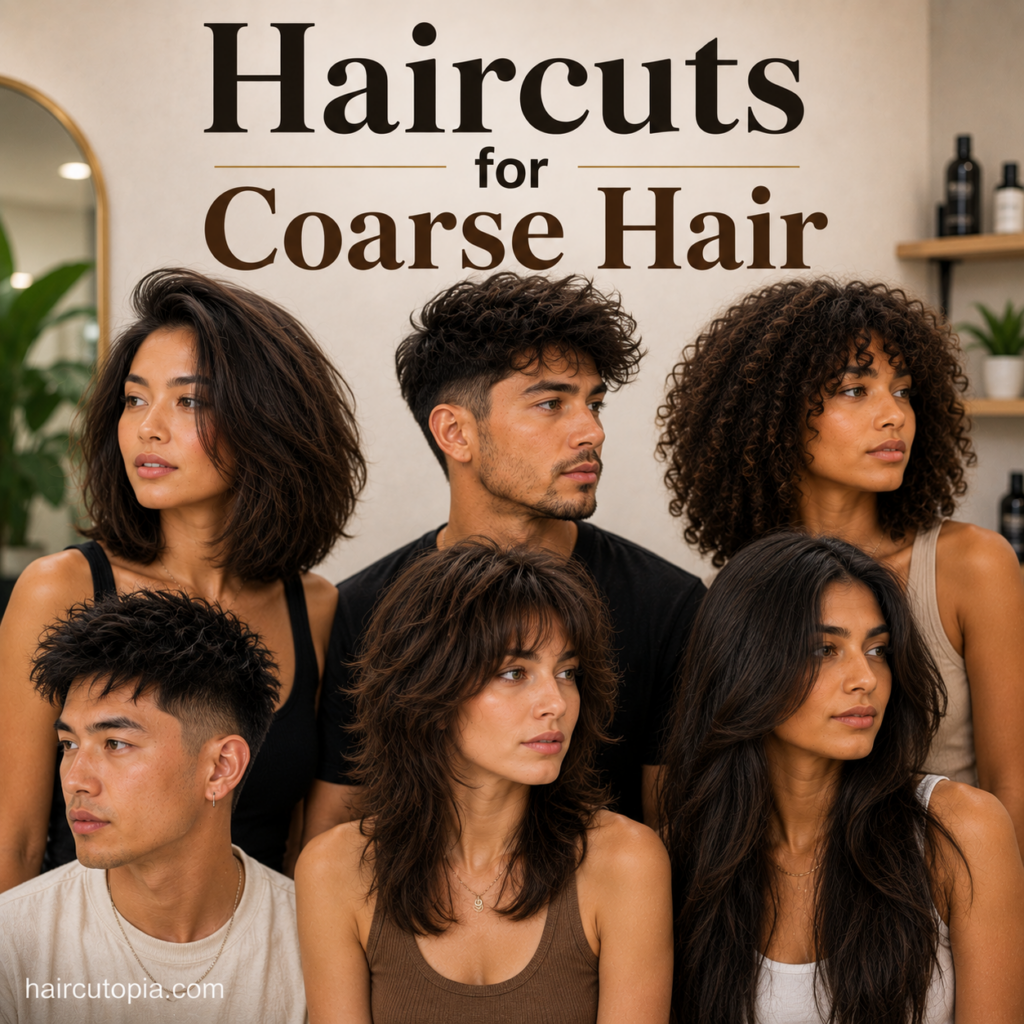
Coarse hair refers to the diameter of the individual hair strands.
A coarse strand is thicker than a fine or medium strand. That doesn’t necessarily mean you have a lot of hair.
Hair density describes how many strands you have, while coarseness describes the thickness of each strand.
You can have:
- Coarse hair with high density
- Coarse hair with medium density
- Coarse hair with lower density
- Straight coarse hair
- Wavy coarse hair
- Curly or coily coarse hair
Understanding the difference matters when choosing a haircut.
Someone with coarse, extremely dense hair may need substantial weight removal. Someone with coarse strands but lower density may need to preserve more of the perimeter.
Why Long Length Can Work Well for Coarse Hair
It might seem logical to cut coarse hair short to make it easier to manage, but longer hair has an advantage: weight.
That weight can help coarse strands settle.
Hair that expands or sticks outward at shorter lengths may fall more naturally once it reaches the shoulders, chest, or beyond.
Long hair also gives your stylist more room to distribute layers without creating lots of short pieces.
Potential benefits include:
- Natural weight that helps control volume
- Plenty of room for gradual layers
- More styling options
- Easier ponytails, braids, and updos
- Less frequent reshaping than some short cuts
- Enough length for face-framing pieces
- A fuller-looking perimeter
The downside is that long coarse hair can become very heavy.
The goal is finding enough weight to control the hair without keeping so much that the entire style feels weighed down.
Best Long Haircuts for Coarse Hair
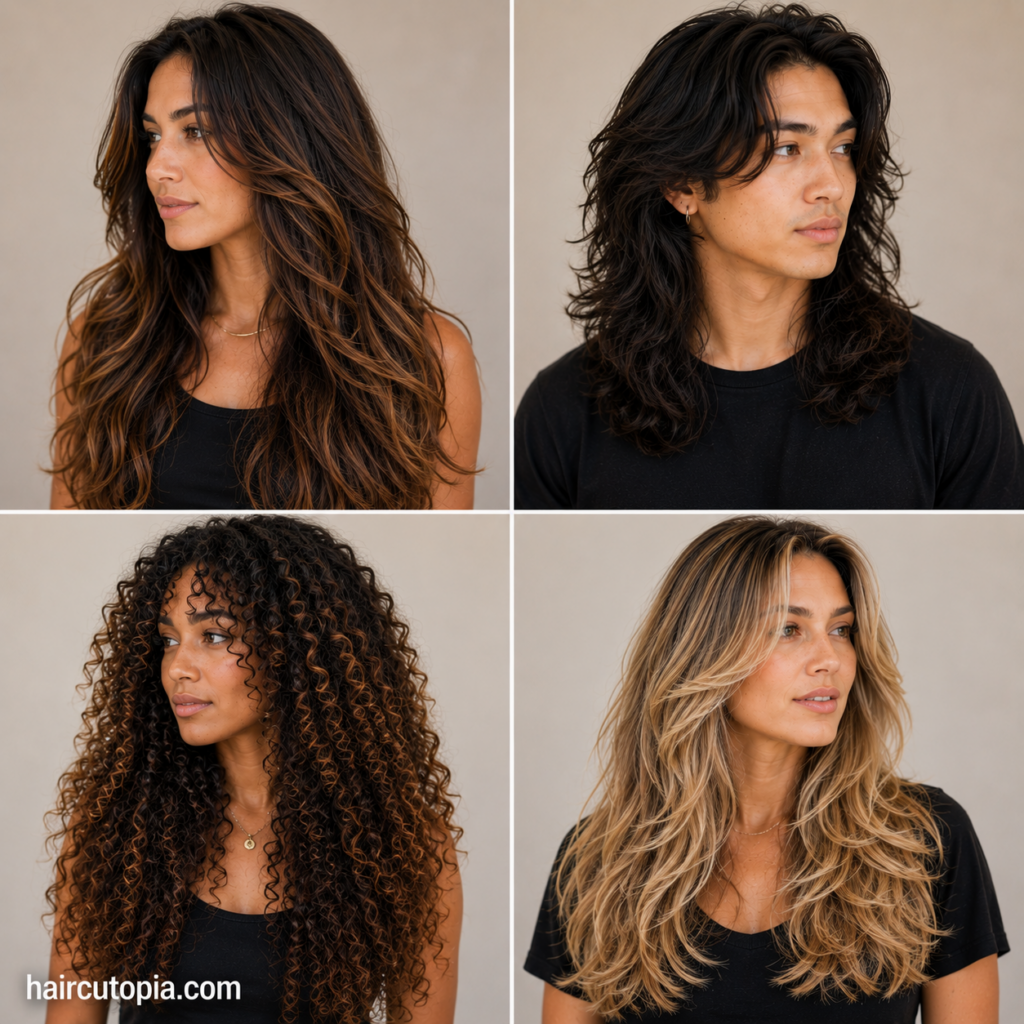
Long coarse hair doesn’t need to be aggressively thinned to have movement.
The right combination of layers and perimeter shaping can usually do much of the work.
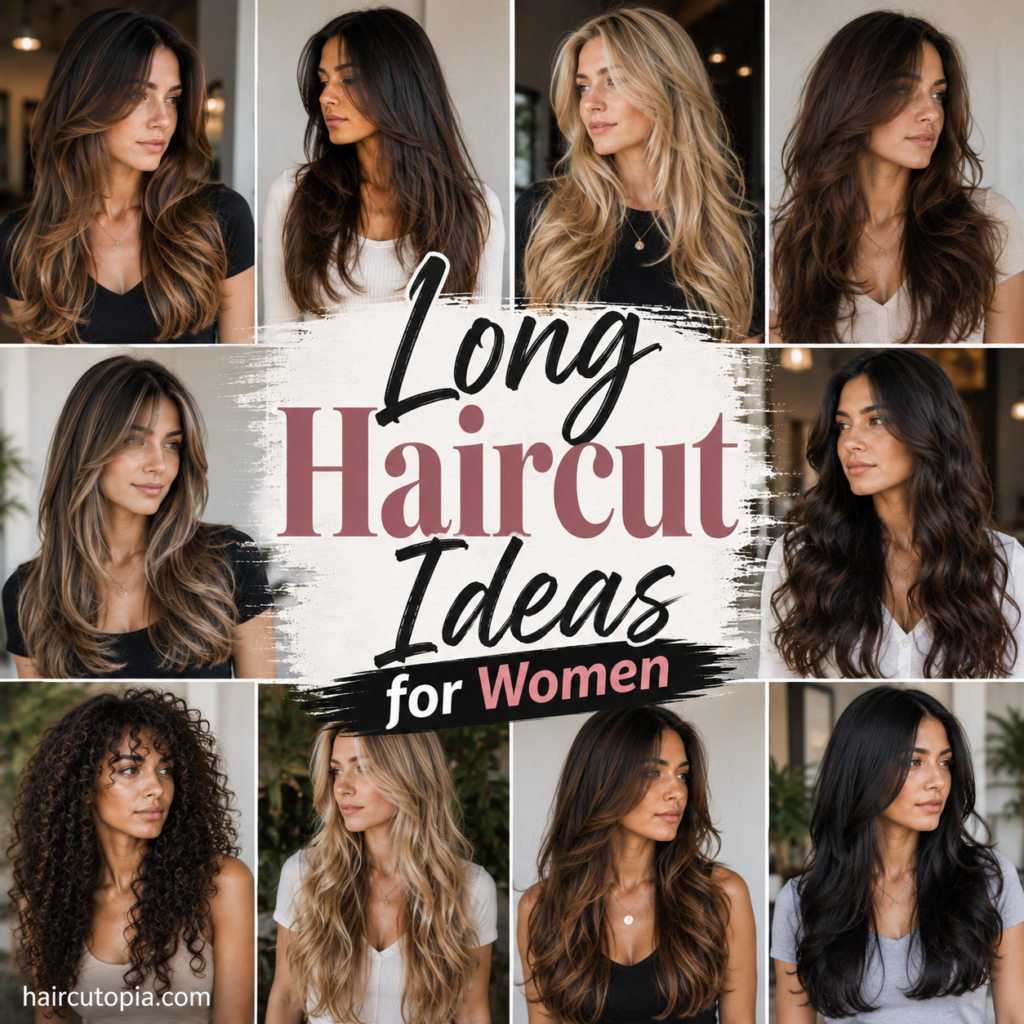
Long Layered Haircut
Long layers are one of the most versatile choices for coarse hair.
Instead of keeping everything at one length, sections are gradually shortened to distribute weight throughout the haircut.
For dense coarse hair, layers can remove substantial bulk while preserving the overall length.
The shortest layers don’t necessarily need to begin high on the head. Starting them lower can create movement without adding too much volume around the crown.
Long Hair With Face-Framing Layers
Face-framing layers are useful when you want a visible change without dramatically layering the entire head.
Shorter sections are concentrated around the front and gradually blend into the longer lengths.
They might begin around the:
- Cheekbones
- Jaw
- Chin
- Collarbone
- Shoulders
Where they start depends on the amount of movement you want.
Longer face-framing pieces are usually easier to maintain, while shorter ones create a more dramatic shape.
Butterfly Haircut
The butterfly haircut works especially well with coarse hair because the strands have enough body to support the layered structure.
Shorter layers around the face and upper sections create movement, while the longest sections remain largely intact.
This gives the appearance of a dramatic layered haircut without sacrificing all your length.
If your coarse hair is extremely dense, your stylist may combine the visible layers with internal weight removal.
Long U-Shaped Haircut
A U-shaped haircut creates a rounded perimeter when viewed from behind.
The center remains slightly longer while the sides gradually become shorter.
This soft curve can make long coarse hair feel less blocky without removing a significant amount of length.
A U shape can be worn with:
- Minimal layering
- Long layers
- Face-framing pieces
- Curtain bangs
- Internal weight removal
It’s a good option if you want movement but still like a substantial perimeter.
Long V-Shaped Haircut
A V-shaped cut creates a more dramatic point toward the center of the back.
Because the sides are shorter than the center, the shape naturally removes some weight from the perimeter.
This can work particularly well with very long, dense coarse hair.
However, if your density is lower and you want the ends to appear as full as possible, a softer U shape may be a better option.
Long Shag
A long shag embraces the natural volume and texture of coarse hair.
The haircut uses multiple layers throughout the crown, sides, and lengths to create a deliberately relaxed shape.
Coarse wavy hair can be particularly well suited to this cut because removing weight may allow the natural wave pattern to become more noticeable.
Straight coarse hair can also wear a shag, although the layers will generally look more defined.
Long Wolf Cut
A wolf cut takes the layered structure of a shag and makes the contrast between the upper and lower sections more noticeable.
The top has shorter layers and more volume, while the bottom retains length.
Coarse hair has enough natural structure to hold this shape well.
If you’re concerned about excessive volume, ask for a softer version with longer upper layers.
Long Hair With Invisible Layers
Invisible layers are ideal if you want to reduce bulk without having an obviously layered haircut.
Weight is removed internally while the outer sections remain relatively long.
This can make dense coarse hair feel significantly lighter without changing its overall appearance.
It’s particularly useful for straight or slightly wavy coarse hair when you prefer a smoother silhouette.
Long Rounded Layers
Rounded layers create a softer transition through the lengths rather than sharp, disconnected sections.
This approach can help distribute the natural fullness of coarse hair.
The result is movement without the intentionally piecey appearance of a shag or wolf cut.
Long Blunt Cut With Internal Layers
A blunt haircut might sound like the last thing dense coarse hair needs, but it can work when combined with internal shaping.
The outer perimeter remains strong and substantial while hidden layers remove some of the weight underneath.
This gives you the visual effect of thick, blunt ends without keeping every strand exactly the same length.
Long Haircuts for Coarse Straight Hair
Long coarse straight hair tends to show the structure of the haircut clearly.
Layers are visible, perimeter shapes are easy to see, and blunt ends can look especially substantial.
Good options include:
- Long layers
- Butterfly cuts
- U-shaped cuts
- Invisible layers
- Face-framing layers
- Long blunt cuts with internal shaping
If your hair is extremely dense, keeping everything one length can create a lot of weight through the bottom.
Internal layers are particularly useful because they can reduce that heaviness while maintaining a smooth outer appearance.
Avoid automatically asking for aggressive thinning. Shorter internal strands can sometimes stick outward rather than blending smoothly.
Long Haircuts for Coarse Wavy Hair
Long coarse wavy hair can become heavy enough to stretch out its natural wave pattern.
Strategic layering removes some of that weight and allows the waves to form more freely.
Consider:
- Long layered cuts
- Butterfly cuts
- Long shags
- Soft wolf cuts
- U-shaped layered cuts
- Face-framing layers
The placement of the shortest layers matters.
If you already have substantial volume around the crown, beginning the layers lower may create a more balanced shape.
If your roots tend to become flat from the weight, slightly shorter upper layers may provide more lift.
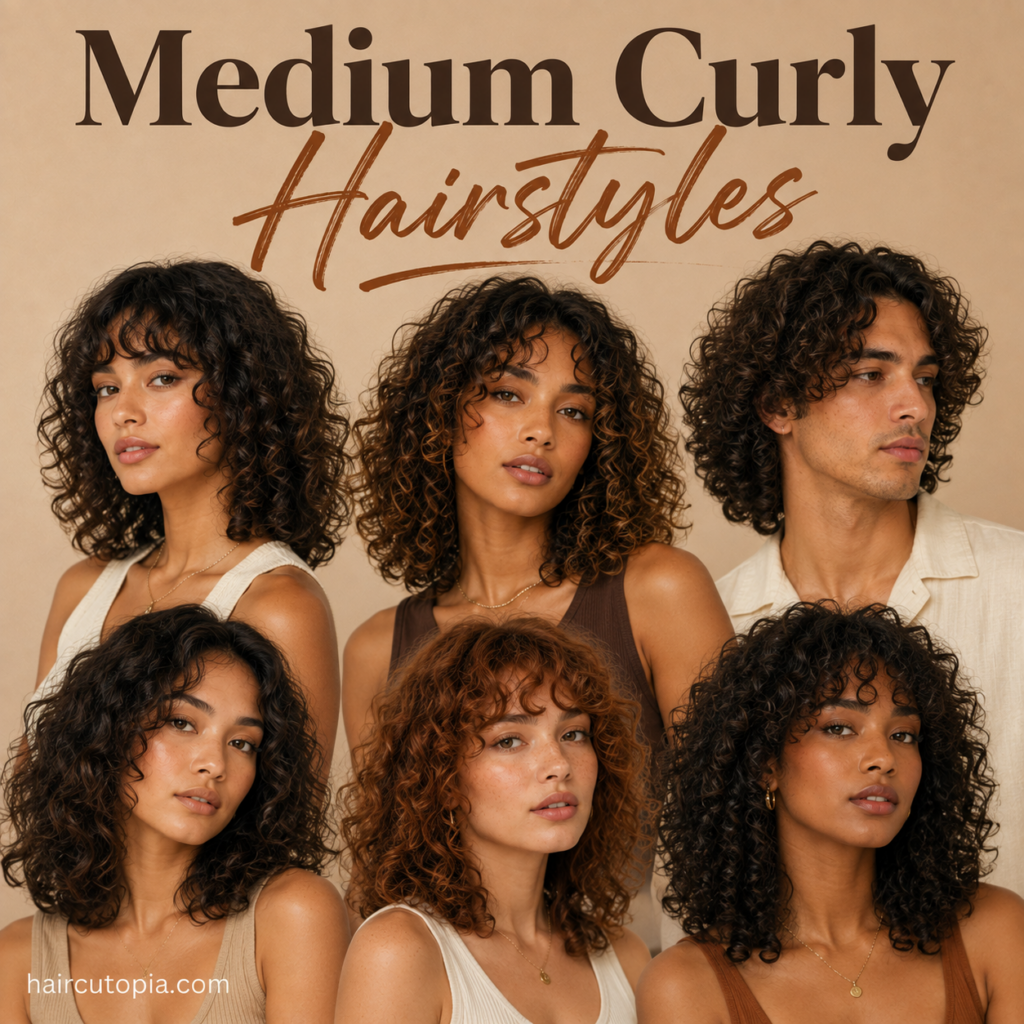
Long Haircuts for Coarse Curly Hair
Long coarse curls can create impressive volume and definition, but the weight needs to be distributed carefully.
Rather than simply thinning the hair, the cut should support the natural curl pattern.
Options include:
- Long rounded layers
- Curly shags
- Long face-framing layers
- U-shaped curly cuts
- Graduated long layers
Shrinkage is an important consideration.
A curl can appear significantly longer when wet or stretched than it does when completely dry.
For that reason, the intended dry length should be discussed before cutting.
A stylist experienced with curly textures can also look at how individual curl groups form instead of treating every section exactly the same.
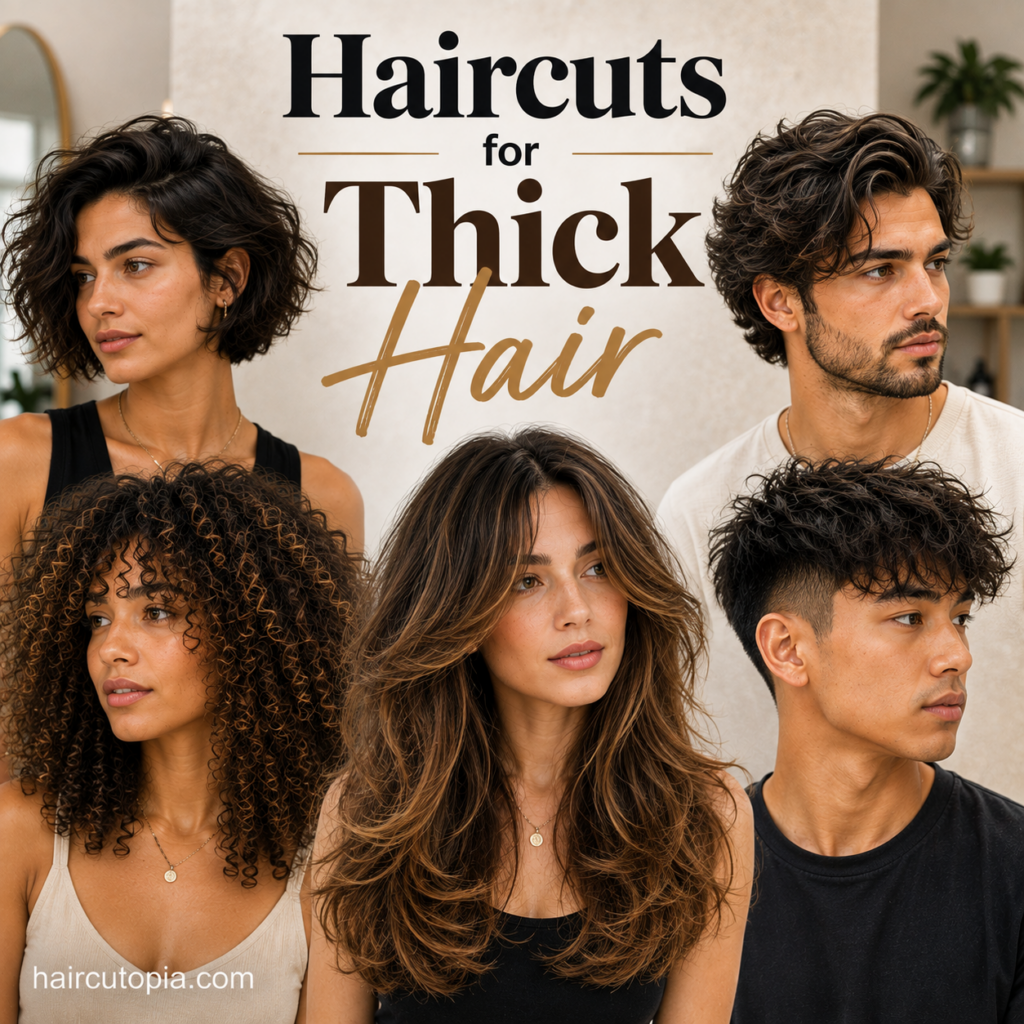
Long Haircuts for Dense, Coarse Hair
When your hair is both coarse and dense, long lengths can become genuinely heavy.
This is where strategic weight removal can make the biggest difference.
Instead of thinning the entire head evenly, your stylist might use:
- Internal layers
- Long graduated layers
- Selective weight removal
- Face-framing layers
- Perimeter shaping
- Carefully placed texturizing
The goal isn’t to make thick hair thin.
It’s to prevent all that density from accumulating in the same areas.
Keeping a strong perimeter can still make the ends look substantial even when a significant amount of internal weight has been removed.
Long Coarse Hair With Bangs
Bangs can change the appearance of long coarse hair without sacrificing much length.
The amount of hair used for the fringe is especially important with coarse strands.
Curtain Bangs
Curtain bangs blend naturally into long layers and face-framing pieces.
They’re shorter toward the center and gradually become longer toward the sides.
Because they’re relatively long, they’re also easier to incorporate into the rest of the haircut as they grow.
Bottleneck Bangs
Bottleneck bangs create a fuller fringe with shorter sections around the center and longer pieces toward the sides.
Coarse hair can give them plenty of structure.
Your stylist may use a smaller section of hair to keep the fringe from becoming overly heavy.
Side-Swept Bangs
Side-swept bangs work well if you want movement around the face without committing to a full fringe.
They can transition easily into longer face-framing layers.
Textured Bangs
Textured bangs introduce separation rather than creating one solid line.
This can help a coarse fringe feel lighter.
Blunt Bangs
Blunt bangs can look particularly dramatic with long coarse hair.
The thickness of the strands creates a strong, defined fringe.
Keep in mind that precise bangs require regular maintenance and may need more styling than longer options.
Choosing a Long Coarse Haircut for Your Face Shape
Face shape can help you decide where to place layers and volume, but it shouldn’t become a rigid rule.
Your hair’s density, texture, growth pattern, and your personal preferences matter just as much.
Round Faces
Long face-framing layers can create vertical movement around the face.
Layers beginning below the chin, long curtain bangs, and V-shaped or U-shaped cuts are all options worth considering.
Oval Faces
Oval faces generally work with a wide variety of long hairstyles.
Butterfly cuts, long layers, shags, bangs, and shaped perimeters can all be adapted to coarse hair.
Square Faces
Soft face-framing layers can create movement around a defined jawline.
Long layers, curtain bangs, and rounded U-shaped cuts can produce a softer effect.
Heart-Shaped Faces
Layers that create movement around the chin and lower face can help balance a wider forehead.
Curtain bangs and longer face-framing pieces work particularly well.
Long or Oblong Faces
Very long, flat hair can create even more vertical emphasis.
Adding bangs, face-framing layers, or movement through the sides can create more balance.
How to Remove Bulk From Long Coarse Hair
Removing bulk from coarse hair should be deliberate.
Simply thinning everything can create more problems than it solves.
Use Long Internal Layers
Internal layers remove hidden weight without dramatically changing the exterior shape.
They’re particularly useful if you like your hair to look smooth and relatively one length.
Distribute the Layers
Layers should address where the hair actually feels heavy.
Someone with excessive density around the back may need a different layering pattern from someone whose hair expands mostly through the sides.
Be Careful With Thinning Shears
Thinning shears can be useful, but excessive thinning can create short internal strands.
Those strands may contribute to frizz, puffiness, or an uneven grow-out.
Preserve the Perimeter
You can remove considerable internal weight while maintaining fuller-looking ends.
This is especially useful when you want long hair to feel lighter without looking thinner.
How to Keep Long Coarse Hair From Looking Puffy
Coarse hair naturally has body. The goal isn’t necessarily to eliminate it.
If you’re dealing with unwanted puffiness, consider both the haircut and your routine.
Maintain Enough Length
Long hair has natural weight that can help coarse strands settle.
Very short layers may create additional volume rather than controlling it.
Keep the Hair Conditioned
Coarse strands can sometimes feel dry through the lengths and ends.
Regular conditioning and appropriate leave-in products can make the hair feel smoother and easier to manage.
Avoid Excessive Short Layers
Short layers create lift.
If you already have more volume than you want, longer layers may be a better choice.
Consider Humidity
Some coarse hair expands noticeably in humid conditions.
Products designed to smooth or define your particular texture may help maintain the shape of the haircut.
How to Style Long Coarse Hair
Long coarse hair often holds a style well once you get it into place.
For a basic routine:
- Start with damp, towel-dried hair.
- Apply leave-in conditioner or smoothing product if needed.
- Use heat protectant before blow-drying or using hot tools.
- Dry the roots and lengths in sections.
- Direct face-framing pieces into position.
- Apply a small amount of finishing product through the mid-lengths and ends.
If your hair is naturally wavy or curly, you may prefer air-drying or diffusing.
You don’t need to force coarse hair into a perfectly smooth finish. Often, allowing some of its natural movement to remain makes the layers look better.
Low-Maintenance Long Haircuts for Coarse Hair
Long hair doesn’t necessarily require frequent reshaping.
If low maintenance is important, consider:
- Long layers
- U-shaped cuts
- Invisible layers
- Long face-framing layers
- Blunt cuts with internal shaping
More dramatic shags, wolf cuts, and short face-framing sections may require additional styling to maintain their intended shape.
Bangs also increase maintenance, particularly if they’re short or blunt.
How Often Should Long Coarse Hair Be Trimmed?
Long hair generally allows more time between shaping appointments than short hair.
For many people, every 8–12 weeks is a reasonable starting point, although you may comfortably go longer if the haircut is growing out well.
Consider scheduling a trim when:
- The ends begin feeling dry or rough
- Tangling increases
- The perimeter becomes uneven
- Layers stop blending well
- The haircut starts feeling noticeably heavier
- Split ends become more visible
Bangs may need separate trims between full appointments.
What to Ask Your Stylist
With long coarse hair, communication matters—especially if keeping your length is important.
Talk about:
- Your strand thickness
- Your overall hair density
- Whether your hair is straight, wavy, curly, or coily
- Where the hair feels heaviest
- Whether it expands when dry
- How humidity affects it
- How much length you’re willing to lose
- Whether you air-dry or blow-dry
- How much daily styling you want to do
- Whether you’ve had problems with thinning in the past
If you want less bulk, explain exactly where you’re feeling it.
“There’s too much weight around the back and sides” gives your stylist much more useful information than simply asking them to thin your hair.
Common Mistakes With Long Coarse Hair
A few common approaches can make long coarse hair harder to manage.
Over-Thinning the Hair
Removing too much density can leave short internal pieces that contribute to frizz or puffiness.
Weight removal should be strategic.
Adding Too Many Short Layers
Short layers can create a lot of volume around the crown.
That’s great if you want lift, but not if you’re already trying to control fullness.
Ignoring Shrinkage
Wavy and curly coarse hair can appear considerably shorter once dry.
Always consider the finished dry length.
Keeping Damaged Ends Just for Length
Holding onto every inch isn’t always the best way to make hair look long.
If the bottom has become sparse or damaged, trimming it back to a stronger perimeter can make the entire haircut look fuller.
Choosing a Cut That Requires Constant Styling
Highly layered styles may look fantastic after a salon blowout but require more effort at home.
Choose a haircut that also works with your normal routine.
Finding the Right Long Haircut for Coarse Hair
Long coarse hair already has something many hairstyles try to create artificially: natural body.
The right haircut should manage that body rather than eliminate it.
Long layers and invisible layers can remove weight while preserving length. Butterfly cuts and shags create more obvious movement. U-shaped and V-shaped perimeters can give the back a defined silhouette, while face-framing layers can change the entire appearance of the haircut without sacrificing much length.
Your natural texture should guide the details.
Straight coarse hair can showcase clean layers and structured perimeters. Wavy coarse hair often benefits from weight removal that allows the waves to move. Curly coarse hair needs shaping that respects shrinkage and the natural curl pattern.
Most importantly, don’t assume coarse hair needs to be heavily thinned simply because there’s a lot of it.
A carefully shaped long haircut can preserve the fullness that makes coarse hair look so substantial while removing weight exactly where you don’t need it. The result should still feel like your hair—just lighter, more balanced, and considerably easier to manage.