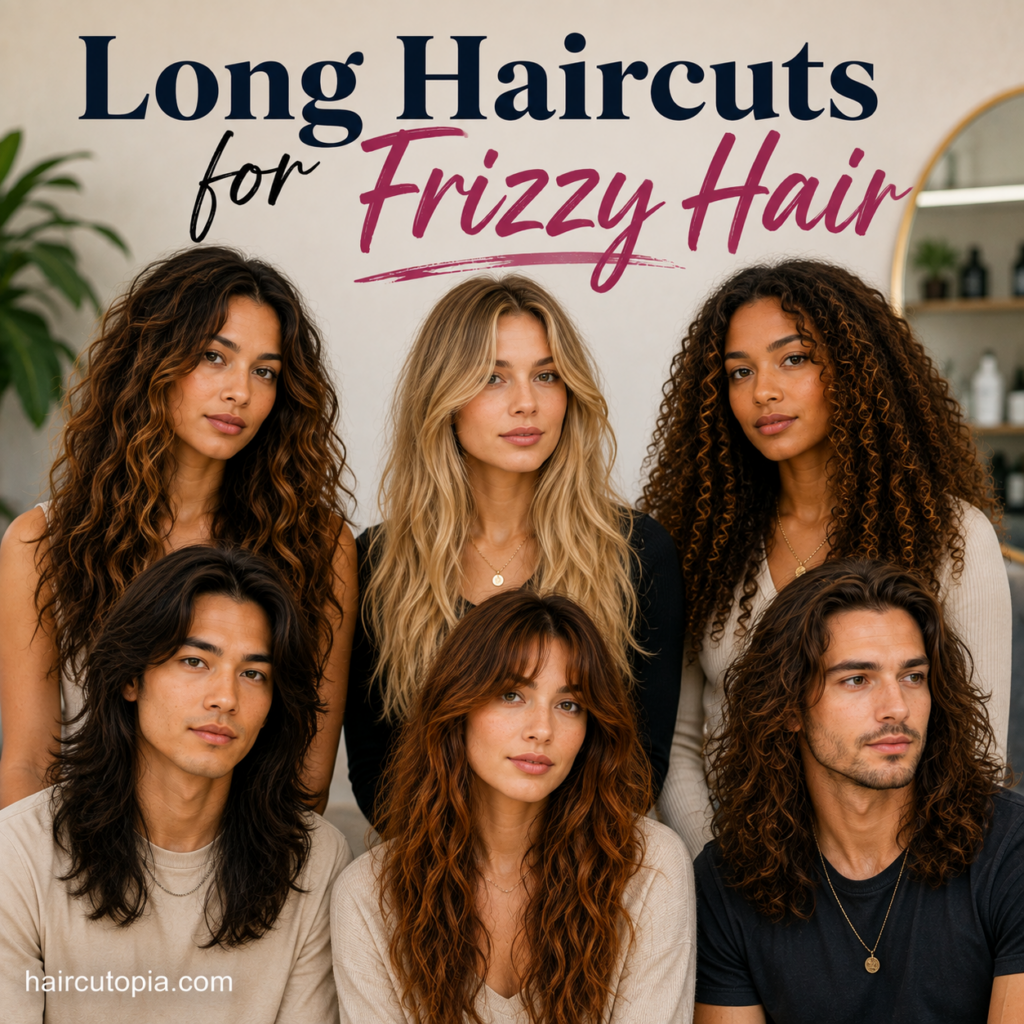
Long hair and frizz have an interesting relationship. Extra length gives your hair more weight, which can help keep unwanted puffiness under control. At the same time, long hair can become heavy, dry at the ends, or difficult to shape if everything is left at one length.
That’s where the right haircut makes a difference.
Instead of trying to eliminate every bit of frizz, a good long haircut gives your natural texture somewhere to go. Strategic layers can release heavy areas, face-framing pieces can add movement, and the right perimeter keeps the ends looking full.
Whether your hair is thick and wavy, fine and frizz-prone, naturally curly, or somewhere in between, there are plenty of ways to wear it long without feeling like you’re constantly fighting it.
Why Long Hair Can Work Well for Frizzy Hair
Length creates weight.
For hair that tends to expand as soon as humidity arrives, that extra weight can help stretch waves and curls slightly and keep the overall shape from becoming too wide.
This is one reason some people notice significantly more volume after going from long hair to a bob or pixie.
Long hair also gives you flexibility. You can wear your natural texture down, create a smooth blowout, braid it, put it into a ponytail, or throw it into a loose bun on days when you don’t want to style it.
But simply growing your hair long isn’t always enough.
Without the right shape, thick frizzy hair can become bulky and triangular, while fine frizzy hair may look thin through the ends. The haircut needs to account for density as well as texture.
Best Long Haircuts for Frizzy Hair
The best long haircut is one that still looks good when your hair isn’t perfectly smooth.
Here are some of the most versatile options.
1. Long Hair with Soft Layers
Soft layers are a great starting point if you want movement without dramatically changing your length.
Rather than creating obvious steps throughout the hair, these layers blend gradually into the overall shape.
They can help remove some heaviness while preserving enough weight to keep frizz under control.
This approach works particularly well for medium to thick hair.
2. Long Layered Haircut
If your hair feels heavy or shapeless, more noticeable layering may be helpful.
A long layered haircut distributes volume through the length rather than allowing everything to collect near the bottom.
The key is where those layers begin.
For frizz-prone hair, starting the shortest layers too high can sometimes create more volume around the crown. Longer layers generally give you movement without sacrificing as much weight.
3. Long U-Shaped Haircut
A U-shaped cut creates a softly rounded perimeter when viewed from the back.
The center remains longest while the sides gradually become slightly shorter.
It’s a subtle change, but it can make long hair feel much lighter and more intentional without removing a lot of length.
Long layers can also be incorporated into the U-shape.
This style works well for straight, wavy, and loosely curly frizzy hair.
4. Long V-Shaped Haircut
A V-shaped haircut creates a more dramatic point through the center back.
It can be particularly flattering on very long or thick hair because it breaks up a heavy horizontal perimeter.
Layers are often added to enhance the shape.
If your ends are fine or sparse, however, a dramatic V may make them appear thinner. A softer V or U-shape may be a better option.
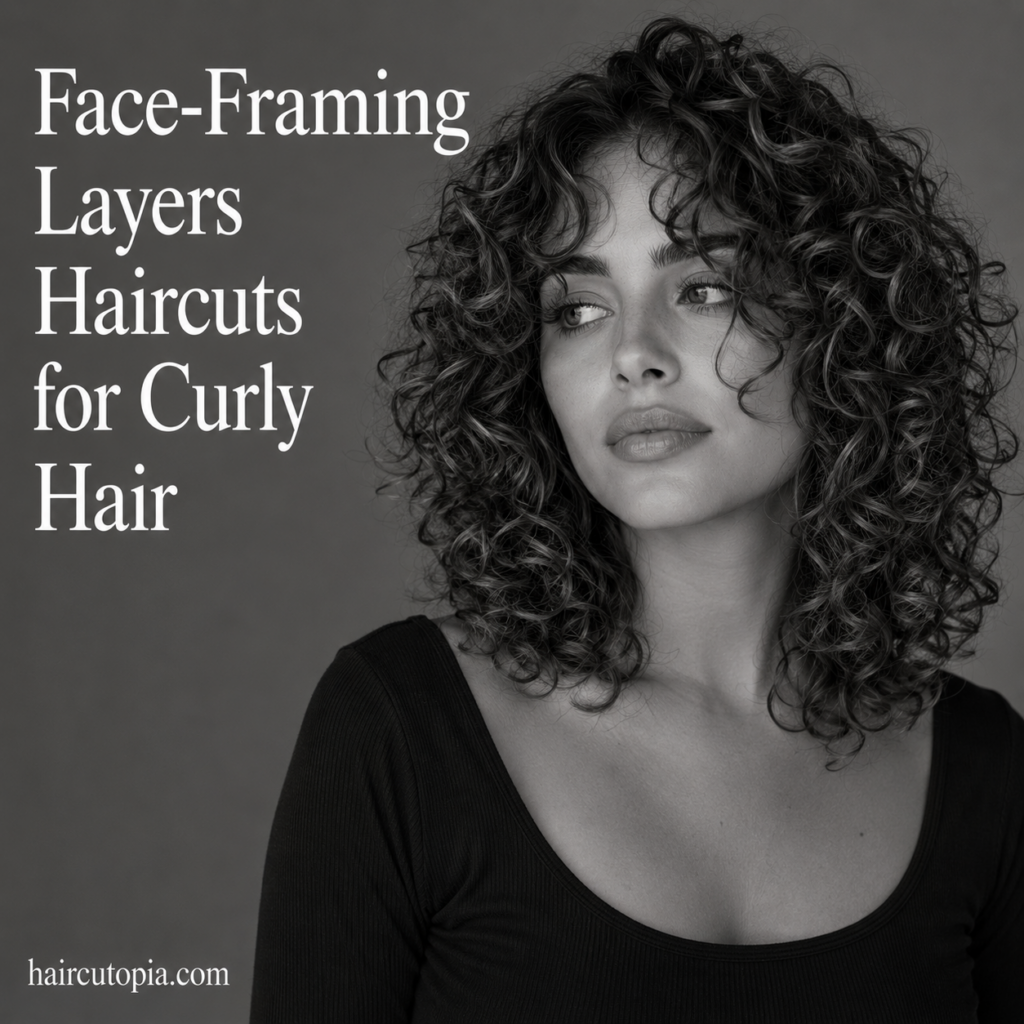
5. Long Hair with Face-Framing Layers
You don’t have to layer your entire head to create movement.
Face-framing layers add shape around the cheeks, jawline, and collarbone while allowing most of the length to remain intact.
This is a good option if you’re cautious about layers because your hair tends to become fluffy when too much weight is removed.
The shortest pieces can be customized depending on your face shape and natural texture.
6. Butterfly Haircut
The butterfly haircut uses shorter face-framing sections combined with longer layers through the rest of the hair.
The result is lots of movement without sacrificing the appearance of long hair.
On wavy or frizz-prone hair, the style can create a soft, airy shape.
However, layer placement matters.
If your hair expands easily, ask for longer, blended layers rather than extremely short sections around the crown.
7. Long Shag
A long shag is a good choice if you’d rather embrace texture than constantly smooth it away.
The style typically includes significant layering around the crown, face, and length.
Natural waves and curls give those layers even more movement.
A little frizz doesn’t necessarily hurt the look either. The shag is supposed to have an undone quality.
People with extremely thick hair may benefit from a softer version that keeps more weight through the bottom.
8. Soft Long Shag
If a traditional shag feels too dramatic, consider a softer variation.
A soft long shag uses blended layers rather than extremely choppy ones.
You still get movement around the face and crown, but the overall shape remains fuller and easier to control.
This can be especially flattering on thick wavy hair.
9. Long Wavy Layers
Natural waves often become more defined when excess weight is removed strategically.
Long wavy layers give bends and waves room to form without creating lots of short pieces that puff outward.
The haircut can be worn air-dried for a relaxed finish or styled with a diffuser when you want more definition.
For many people with wavy frizzy hair, this is one of the easiest long styles to maintain.
10. Long Curly Layers
Curly hair needs shape just as much as straight hair does.
Without layers, long curls can become heavy at the top and overly full toward the ends.
Long curly layers redistribute some of that weight while helping individual curls form more naturally.
Shrinkage is important when choosing the shortest layer.
A section that appears relatively long when wet can become considerably shorter once it dries and curls into place.
11. Rounded Long Curly Cut
Instead of trying to flatten natural volume, a rounded haircut makes it part of the silhouette.
This style is particularly effective for dense curls and coils.
Layers are arranged to distribute volume more evenly around the head rather than allowing the hair to become bottom-heavy.
The finished shape can look full without looking uncontrolled.
12. Long Hair with Curtain Bangs
Curtain bangs can add shape to long hair without requiring you to remove much overall length.
Their longer, parted design is also more forgiving than very short bangs when dealing with humidity or natural texture.
They pair particularly well with:
- Butterfly cuts
- Long layered hair
- Wavy styles
- Soft shags
- Face-framing layers
If your hair shrinks or curls significantly, ask your stylist to account for that when choosing the bang length.
13. Long Hair with Grown-Out Bangs
If traditional bangs sound like too much maintenance, grown-out fringe provides a similar effect with less commitment.
These longer pieces typically blend around the cheekbones, jawline, or chin.
They add movement around the face while still being long enough to tuck behind the ears or pull into a ponytail.
For frizz-prone hair, that versatility can be very useful.
14. Long Blunt Cut
Layers aren’t always the answer.
Fine or lower-density frizzy hair can benefit from a relatively blunt perimeter because it makes the ends appear fuller.
The weight can also help keep the hair controlled.
You can still add minimal face-framing pieces if you want some movement around the front without removing density throughout the rest of the haircut.
15. Long Hair with Invisible Layers
Invisible layers are designed to create movement without making the haircut look obviously layered.
Instead of dramatic shorter sections, subtle internal layering removes some weight while maintaining a fuller exterior shape.
This can be especially useful for thick frizzy hair.
You get some of the benefits of layering without the highly textured appearance of a shag or heavily layered cut.
Long Haircuts for Thick, Frizzy Hair
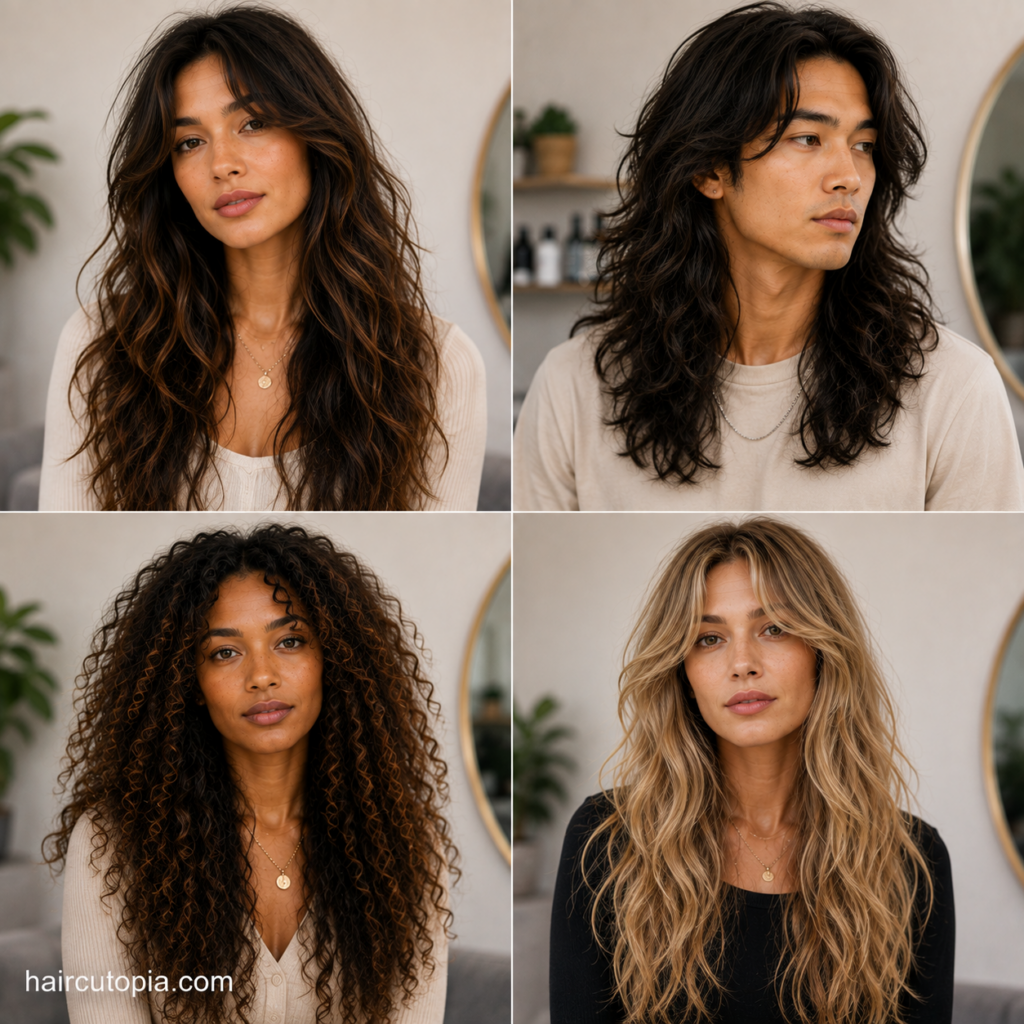
Thick hair often benefits from some weight removal, but there’s a balance.
Too little layering can leave long hair feeling heavy and bulky. Too much can create shorter pieces that expand and make the hair look even fuller.
Good options for thick frizzy hair include:
- Long blended layers
- U-shaped cuts
- Butterfly cuts with longer layers
- Soft shags
- Invisible layers
- Long wavy layers
- Rounded cuts for curly hair
Instead of simply asking your stylist to “thin it out,” explain where you experience the most bulk.
Strategic internal weight removal may be more effective than aggressive thinning throughout the entire haircut.
Long Haircuts for Fine, Frizzy Hair
Fine hair presents a different challenge.
The individual strands may become frizzy, but removing too much hair can make the overall style look thin.
Maintaining fullness through the ends is often the priority.
Consider:
- Long blunt cuts
- Soft U-shaped cuts
- Minimal long layers
- Face-framing layers
- Subtle invisible layers
You may want to avoid excessive layering through the bottom if your ends already look fine.
Styling products matter too. Heavy creams and oils can quickly weigh down fine hair, so lightweight formulas are generally easier to work with.
Long Haircuts for Wavy, Frizzy Hair
Long hair gives natural waves plenty of room to develop.
The challenge is preventing the weight from stretching the top completely flat while the bottom becomes overly full.
Long layers can help distribute movement more evenly.
Some of the best options include:
- Long wavy layers
- Butterfly cuts
- U-shaped cuts
- Soft shags
- Face-framing layers
- Long curtain bangs
When looking for inspiration, pay attention to how the haircut looks without a polished blowout.
If you normally air-dry your hair, photos of naturally wavy styles will give you a much more realistic idea of how a haircut might behave.
Long Haircuts for Curly, Frizzy Hair
Long curly hair can look incredible when the shape accounts for both shrinkage and volume.
Without enough layering, curls may become stretched near the roots and bulky through the bottom.
Too many short layers can create the opposite problem.
The goal is balance.
Long curly layers and rounded shapes can distribute volume while allowing curls to form naturally.
A stylist experienced with curly hair can also account for different curl patterns across your head. It’s common for one section to shrink considerably more than another.
Should Long Frizzy Hair Be Layered?
In many cases, yes, but it depends on density.
Thick hair often benefits from layers because they remove excess weight and create movement.
Fine hair may need fewer layers to preserve fullness.
Your natural texture matters as well.
Straight frizzy hair may only need subtle long layers, while wavy or curly hair may benefit from more intentional shaping.
There’s no ideal number of layers for “frizzy hair” in general.
The layers should be designed around how your particular hair behaves when dry.
Are Long or Short Layers Better for Frizzy Hair?
Long layers are usually the more conservative choice.
They create movement while retaining much of the hair’s natural weight.
Shorter layers can create significantly more volume, particularly around the crown.
That isn’t necessarily bad.
If you have curly hair and want a big, rounded shape or you’re deliberately choosing a shag, shorter layers can be exactly what the haircut needs.
But if your main concern is controlling expansion, longer blended layers are usually easier to manage.
Should Thick Frizzy Hair Be Thinned Out?
Possibly, but this is an area where technique matters.
Removing some internal weight can make extremely dense hair easier to style.
Aggressive thinning can create many shorter pieces throughout the haircut. Depending on your texture, those pieces may spring outward instead of blending with the longer hair.
This is why simply asking for your hair to be “thinned out as much as possible” isn’t always the best approach.
Talk to your stylist about where the bulk actually needs to be removed.
Is Long Hair Better for Frizzy Hair?
Long hair can be easier to control for some people because the additional weight helps reduce expansion.
But longer isn’t automatically better.
Very thick long hair can become heavy, while fine hair can develop thin or damaged-looking ends if it’s grown beyond the length where it maintains good density.
The best length is the one where your hair still has a healthy-looking shape and fits your styling routine.
For some people that’s waist length. For others it’s just below the shoulders.
How to Style Long Frizzy Hair
You don’t need to make long hair perfectly smooth for it to look polished.
A few simple habits can help preserve your natural texture.
Apply Styling Products While Hair Is Damp
It’s generally easier to manage frizz before the hair has completely dried.
Depending on your texture, you might use:
- Leave-in conditioner
- Lightweight styling cream
- Curl cream
- Mousse
- Gel
- Anti-frizz serum
You don’t need to use everything at once.
Fine hair may only need one lightweight product, while thick curls may respond better to a combination of moisture and hold.
Be Gentle When Drying
Rubbing wet hair aggressively with a towel creates friction.
Instead, gently squeeze or blot excess water.
A microfiber towel or soft cotton T-shirt can also help reduce unnecessary disturbance, particularly with waves and curls.
Use a Diffuser for Natural Texture
A diffuser can help dry waves and curls while preserving their shape.
Avoid constantly touching or rearranging the hair while it’s drying.
Once waves or curls begin forming, repeatedly running your hands through them can separate the strands and create more frizz.
Use Heat Protection
Long hair has been around for a while.
The ends may have experienced years of heat styling, sun exposure, brushing, and general wear.
If you blow-dry, straighten, or curl your hair, use an appropriate heat protectant and avoid using more heat than necessary.
Don’t Overdo Oils and Serums
A small amount can help smooth the ends and add shine.
Too much can leave long hair looking stringy or heavy, especially if your strands are fine.
Start with less than you think you need.
You can always add another small amount.
What to Ask Your Stylist
Long haircuts can look deceptively simple, so it’s worth having a detailed conversation before the scissors come out.
Tell your stylist:
- How you normally wear your hair.
- Whether you air-dry, diffuse, or blow-dry.
- How much your hair expands in humidity.
- Whether your curls or waves shrink significantly.
- Where your hair feels especially bulky.
- How much daily styling you’re willing to do.
- Whether maintaining ponytail or braid length matters to you.
- What you dislike about your current shape.
If you normally wear your natural texture, make sure your stylist knows that.
A haircut designed entirely around a smooth salon blowout may behave very differently once you wash and air-dry it at home.
Common Haircut Mistakes With Long Frizzy Hair
The wrong technique can make long frizzy hair harder rather than easier to manage.
Adding Too Many Short Layers
Removing too much weight near the crown can create unexpected volume.
If you’re concerned about puffiness, begin with longer layers.
Over-Thinning Thick Hair
Removing bulk can be helpful, but excessive thinning may leave shorter strands throughout the haircut that become more noticeable when frizz develops.
Over-Layering Fine Hair
Fine hair needs enough density through the ends to maintain a full appearance.
Too many layers can make an already delicate perimeter look sparse.
Ignoring Shrinkage
This is especially important for curls.
Always think about where the shortest layers and face-framing pieces will sit after your hair is completely dry.
Choosing a Haircut That Only Works Styled
There’s nothing wrong with enjoying a blowout.
But if you usually air-dry your hair, choose a haircut that also looks good naturally.
You’ll get much more use out of it.
How Often Should Long Frizzy Hair Be Trimmed?
Long hair doesn’t usually require reshaping as frequently as a pixie or bob.
For many people, trimming approximately every eight to twelve weeks works well, although the right schedule depends on your hair, haircut, and styling habits.
Some long layered styles can go longer between appointments.
Pay attention to your ends.
If they’re tangling easily, looking thin, or making the overall haircut feel shapeless, it may be time for a trim even if you’re trying to grow your hair longer.
Keeping damaged ends indefinitely doesn’t necessarily help the hair look longer.
How to Choose the Best Long Haircut for Your Frizz
Start with density and texture.
If your hair is very thick, you may need strategic layers or internal weight removal.
If it’s fine, preserving a strong perimeter may be more important.
Then think about how you actually style your hair.
If you love wearing your natural waves, choose a haircut that encourages them. If you regularly wear curls, make sure the layers account for shrinkage. If you prefer smoother styles, you may want longer blended layers that work well with a blowout.
Most importantly, choose inspiration that resembles your real hair.
A haircut photographed on naturally straight, professionally styled hair won’t necessarily behave the same way on thick waves or curls.
Final Thoughts
Long hair can work beautifully with frizz.
In fact, the extra length can be an advantage because it provides natural weight while giving waves and curls plenty of room to form.
The key is creating the right shape.
Long blended layers, U-shaped cuts, butterfly cuts, soft shags, face-framing pieces, and rounded curly styles can all make long frizzy hair feel more intentional and manageable.
You don’t have to remove every flyaway or straighten away your natural texture for long hair to look polished.
Sometimes the best haircut is simply one that gives your volume, waves, curls, and even a little frizz room to look like they belong there.
Related Posts
 Long Curly Hairstyles: 18 Beautiful Ways to Wear Your Natural Curls
 Haircuts for Frizzy Hair: The Complete Guide to Cuts for Every Length and Texture
 Haircuts for Coarse Hair: The Complete Guide to Cuts for Every Length and Texture
 Haircuts for Thick Hair: The Complete Guide to Flattering Cuts for Every Length and Texture