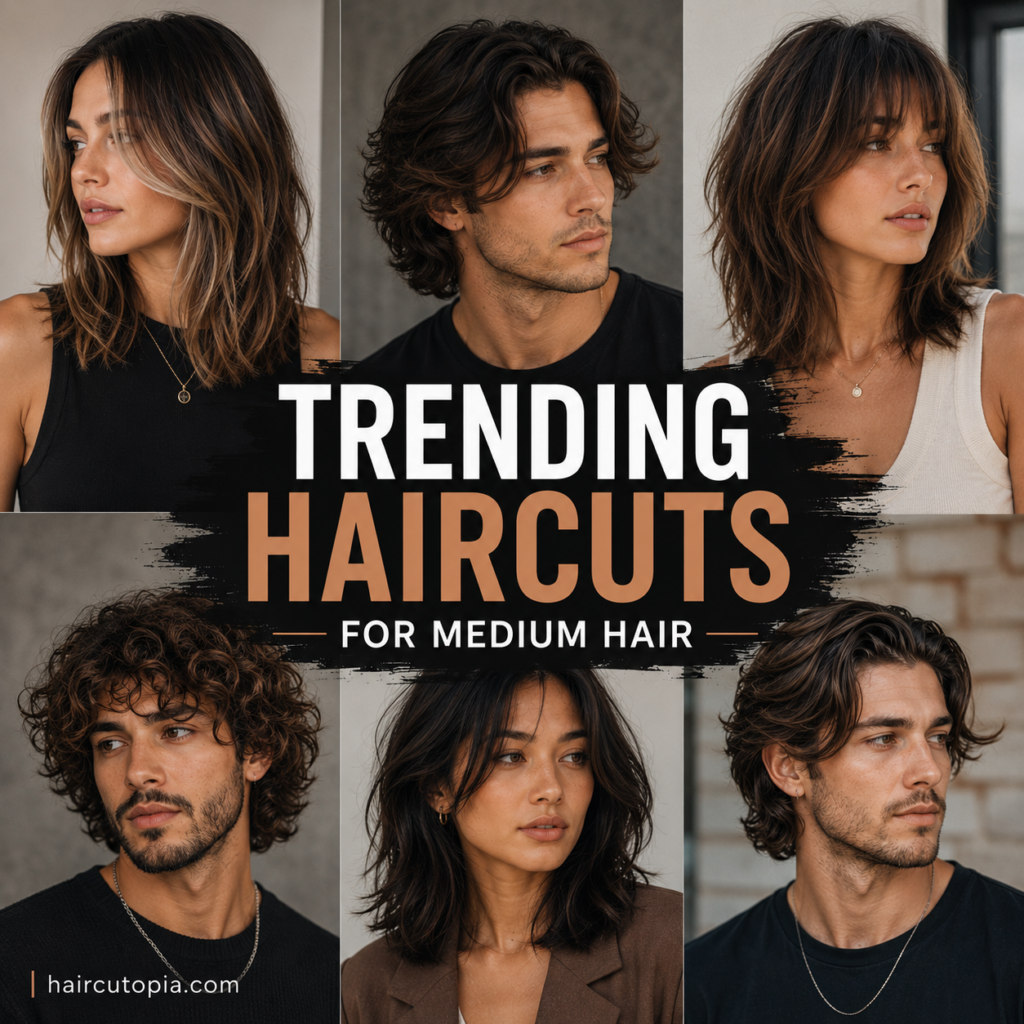
Medium-length hair lives in a sweet spot. You have enough length to experiment with layers, waves, curls, bangs, and different styling techniques, but not so much that every wash day becomes a project.
That flexibility is a big reason medium hair keeps showing up in current haircut trends.
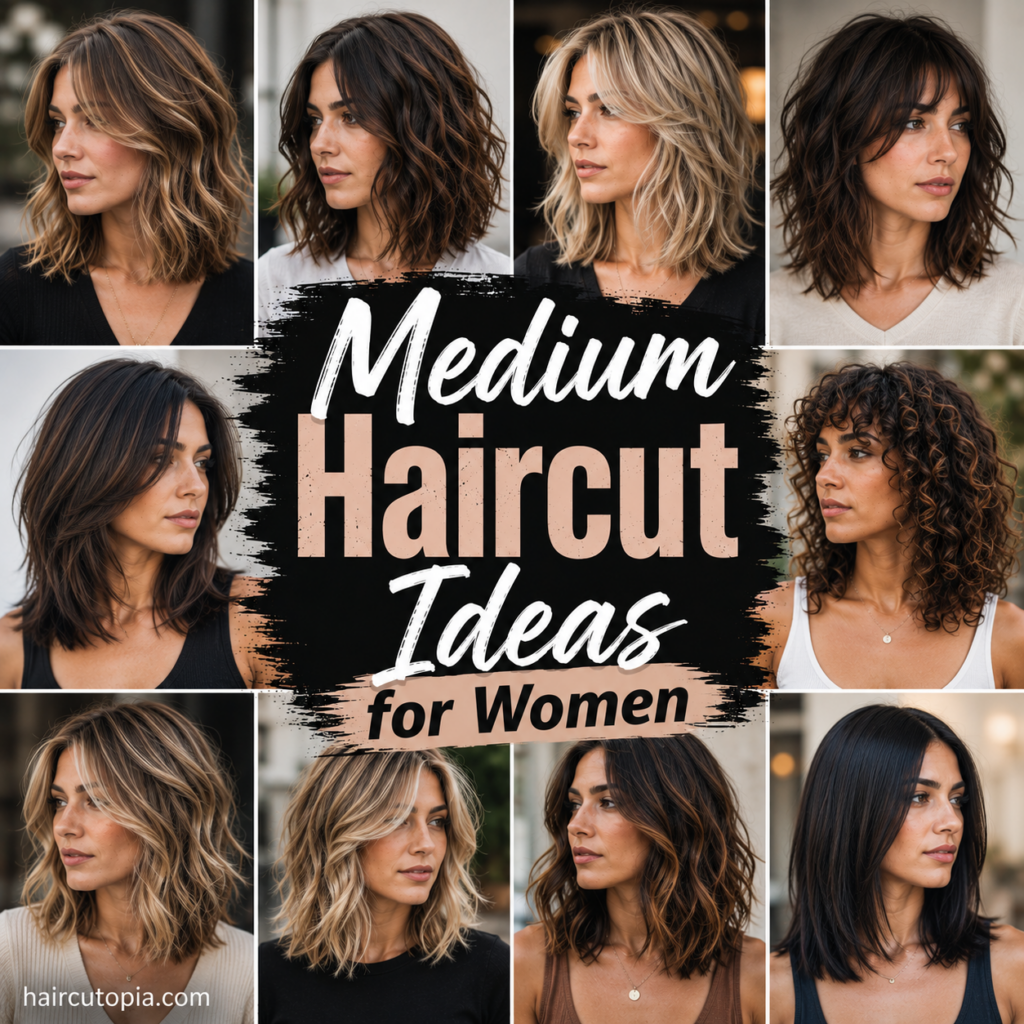
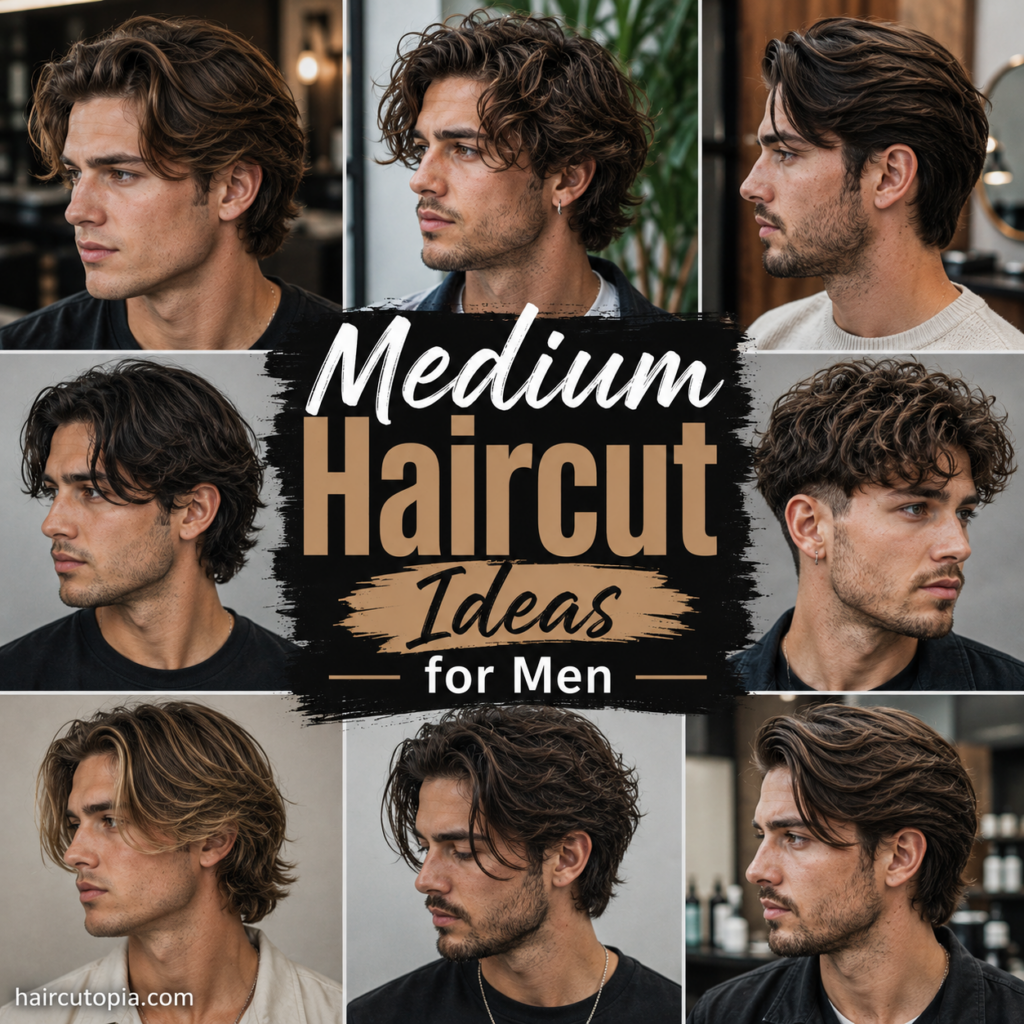
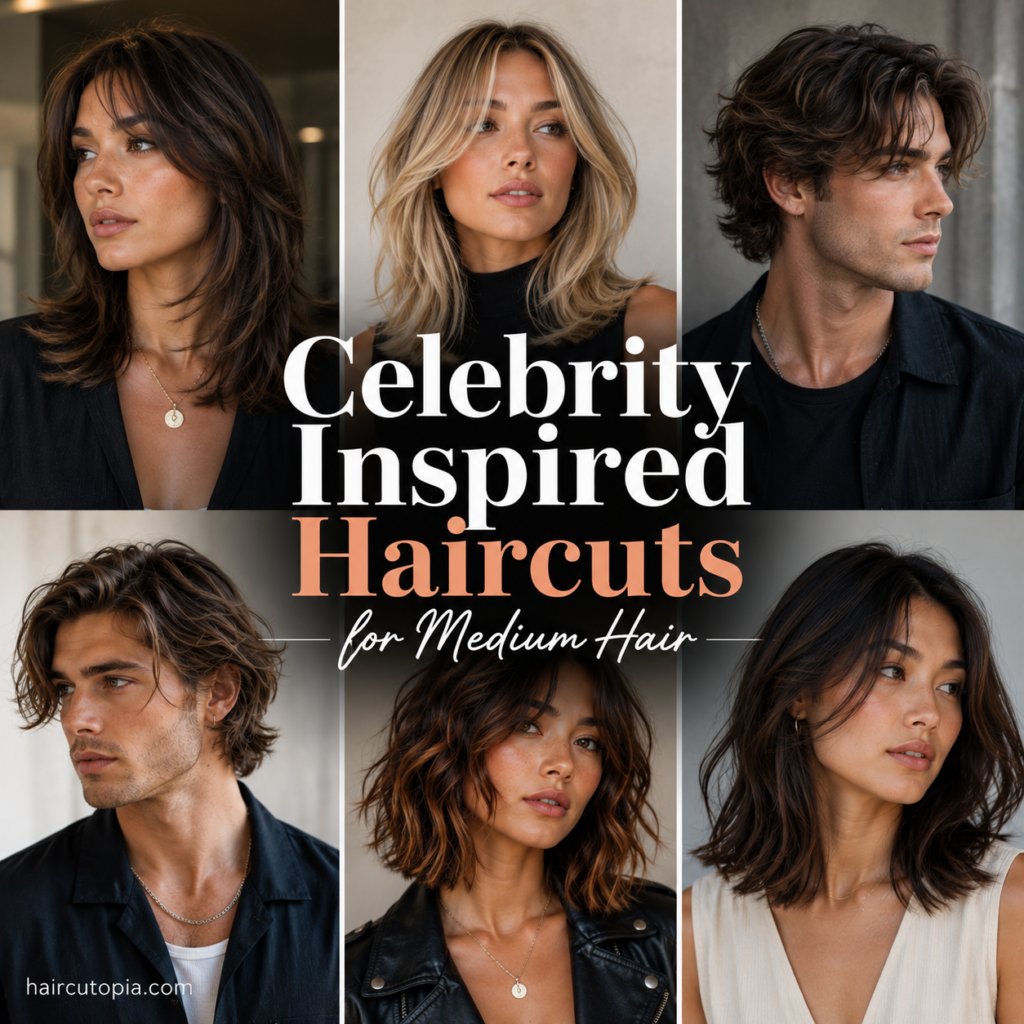
Instead of one dominant style, today’s medium haircuts range from clean collarbone cuts to heavily layered shags, butterfly-inspired layers, textured lobs, curly shapes, and relaxed men’s cuts that preserve more length around the sides and top.
And you don’t necessarily need a dramatic transformation. Sometimes a few face-framing layers, a different fringe, or removing weight from the right areas is enough to make medium hair feel completely new.
If you’re ready for an update but don’t want to go extremely short—or grow your hair significantly longer—these trending haircuts for medium hair offer plenty of possibilities.
What Medium Haircuts Are Trending Right Now?
Medium hair is generally long enough to create movement but short enough for the haircut’s shape to remain noticeable.
Depending on your hair texture and proportions, that can mean anything from around chin length to the shoulders and collarbone.
Some of the biggest medium haircut trends include:
- Collarbone cuts
- Textured lobs
- Blunt lobs
- Butterfly layers
- Face-framing layers
- Medium shags
- Wolf cuts
- Curtain bangs
- Soft full bangs
- Shoulder-length curls
- Layered curly cuts
- Bro flow hairstyles
- Medium-length curtains
- Textured men’s cuts
- Modern mullets
The common thread is movement. Even relatively polished cuts are often being styled with softer finishes instead of rigid, perfectly placed hair.
1. Collarbone Cut
The collarbone cut is one of the most versatile medium hairstyles.
As the name suggests, the ends sit around the collarbone. That provides enough length to pull the hair back while still creating a noticeable change if you’re coming from longer hair.
The cut can be blunt or layered.
A blunt version looks clean and substantial, while layers create additional movement around the ends.
It’s also a practical starting point if you’re thinking about eventually going shorter but aren’t ready for a bob.
2. Textured Lob
The long bob, commonly called the lob, continues to evolve.
A textured lob introduces subtle layers and separation into the classic shape. Instead of forming one perfectly smooth line, the ends have more movement.
The result works especially well with naturally wavy hair.
Straight hair can also wear a textured lob, although you may want to use a lightweight styling cream or texturizing product to emphasize the layers.
3. Blunt Lob
If you prefer stronger lines, consider a blunt lob.
Rather than adding significant layering, the perimeter remains relatively solid. This can make the ends appear thicker and create a cleaner silhouette.
Blunt lobs are particularly useful for fine or straight hair.
They can be worn:
- Sleek and straight
- Softly waved
- With a center part
- With a deep side part
- Tucked behind the ears
- With subtle face-framing pieces
You can also add minimal internal layering without losing the strong outer shape.
4. Butterfly Layers
Butterfly layers have become popular because they can create a dramatic change while preserving much of the overall length.
Shorter pieces around the face flow into longer layers through the sides and back. When styled with volume, the layers move away from the face and create a light, airy appearance.
Medium-length versions feel especially bouncy because there isn’t as much weight pulling the layers downward.
Who Should Try Butterfly Layers?
They work particularly well with medium to thick hair.
If your hair is fine, ask for a softer interpretation with fewer layers. Too much layering can remove density from the ends.
5. Face-Framing Layers
Sometimes you don’t need layers throughout the entire haircut.
Face-framing pieces can update medium hair while leaving most of the shape untouched.
The shortest layers might begin around:
- The cheekbones
- The jaw
- The chin
- The shoulders
Where they start changes the overall effect.
Shorter pieces make a stronger statement, while longer face-framing layers blend more subtly into the rest of the hair.
6. Medium Shag
The shag is built around texture and layering.
Shorter layers near the crown create volume, while longer sections maintain the overall length. The ends are generally lighter and more separated than those of a blunt cut.
Medium-length hair is particularly well suited to the shag because there’s enough room for the layers to develop without becoming extremely long.
Wavy hair often works beautifully with this style because natural movement emphasizes the cut.
7. Medium Wolf Cut
The wolf cut takes the layered concept in a slightly bolder direction.
Volume tends to be concentrated around the top and crown before gradually becoming lighter toward the ends.
Some versions have an obvious shag-meets-mullet shape. Others are much softer.
If you’re curious about the trend but don’t want something extreme, ask for longer layers and less contrast between the crown and perimeter.
8. Shoulder-Length Layers
Shoulder-length hair can sometimes become heavy or triangular if everything is cut to the same length.
Adding layers helps redistribute that weight.
The result is more movement without sacrificing the ability to pull your hair into a ponytail or bun.
Shoulder-length layers work with:
- Straight hair
- Waves
- Loose curls
- Thick hair
- Medium-density hair
The amount of layering should be adjusted according to your natural texture and density.
9. Curtain Bangs With Medium Hair
Curtain bangs and medium-length hair are a natural combination.
The fringe usually separates near the center and gradually becomes longer toward the sides. Those longer pieces can blend directly into face-framing layers.
This creates a continuous shape around the face rather than an isolated section of bangs.
Longer curtain bangs are especially flexible because they can often be tucked behind the ears or incorporated into the rest of the hairstyle.
10. Wispy Bangs
Wispy bangs offer a lighter alternative to a full fringe.
Instead of creating a dense line across the forehead, small sections of hair fall naturally with visible separation between them.
They work well with medium-length cuts because they add detail without competing with the rest of the hairstyle.
Pair them with a lob for a softer look or with a shag if you want additional texture.
11. Full Bangs With Medium Layers
A fuller fringe creates a stronger statement.
Medium-length layered hair provides enough movement to balance the visual weight of the bangs.
Modern full bangs don’t necessarily need to look perfectly straight or rigid. Slight separation and natural movement can make them easier to wear.
The main consideration is maintenance.
Because bangs sit directly around the eyes and eyebrows, you’ll usually notice their growth much sooner than the rest of your haircut.
12. Medium Curly Cut
Medium length gives curls enough room to develop their natural pattern while remaining relatively manageable.
The haircut should distribute volume rather than allowing everything to accumulate around the bottom.
Strategic layers can create a more balanced shape.
Depending on your curl type, you might choose:
- Rounded layers
- Face-framing curls
- A curly shag
- Shoulder-length curls
- A layered curly lob
Shrinkage should always be considered when deciding on the finished length.
13. Rounded Curly Layers
Rounded shapes can make medium curls look especially full and intentional.
Rather than creating a flat top with heavy ends, layers distribute volume around the head.
The exact silhouette can be adjusted according to how much volume you prefer.
A softer rounded shape feels natural and versatile, while more dramatic layering can create a much larger silhouette.
14. Medium-Length Natural Coils
Medium-length coils offer plenty of opportunities for shaping.
The hair can be rounded, layered, tapered slightly around specific areas, or allowed to maintain more length through the sides.
Instead of automatically removing volume, a good cut can use that volume to establish the overall silhouette.
Regular shaping helps keep the style intentional as the hair grows.
15. Bro Flow
Medium-length hair isn’t only trending for women.
The bro flow has become a popular men’s style for anyone who wants more length without committing to truly long hair.
The hair generally moves backward and away from the face, creating a relaxed silhouette.
It works particularly well with naturally wavy hair.
Rather than using heavy styling products, the goal is usually to preserve movement.
16. Men’s Medium-Length Curtains
Curtains have returned as a mainstream men’s haircut.
Hair is parted around the center—or slightly off-center—and allowed to frame both sides of the face.
The style can be neat or deliberately loose.
Straight hair creates a more defined curtain shape, while wavy hair gives it a softer, more casual appearance.
Subtle layering can prevent the sides from becoming too bulky as the hair grows.
17. Men’s Textured Medium Cut
Instead of fading the sides extremely short, more men’s cuts are preserving medium length throughout the top and sides.
Layers create texture while maintaining a fuller silhouette.
This works particularly well for:
- Thick hair
- Wavy hair
- Loose curls
- Straight hair with natural volume
A lightweight cream or matte product can create definition without making the hair look stiff.
18. Medium Curly Hair for Men
Allowing curls to grow to medium length creates significantly more volume and personality than a traditional short curly cut.
Layers can prevent the hair from becoming excessively heavy around the sides.
The exact shape depends on your curl pattern.
Some men prefer a rounded silhouette, while others keep more length through the top and back.
The important thing is choosing a stylist or barber who understands how your curls behave once dry.
19. Modern Medium Mullet
The modern mullet doesn’t always involve an extreme difference between the front and back.
Medium-length versions can use subtle layering to preserve additional length near the neckline while keeping movement around the sides and crown.
The result is softer than the traditional mullet.
Popular variations include:
- Curly mullet
- Shaggy mullet
- Tapered mullet
- Wavy mullet
- Layered mullet
This style works especially well if you want something more expressive than a conventional medium haircut.
20. Medium-Length Side Part
The side part remains a dependable option for medium hair.
For women, a deeper part can instantly change how layers and bangs frame the face.
For men, medium-length side parts create a classic shape without requiring the sides to be clipped extremely short.
Current versions generally have more movement than the heavily gelled side parts of the past.
Letting some natural texture show through keeps the style relaxed.
Trending Medium Haircuts by Hair Type
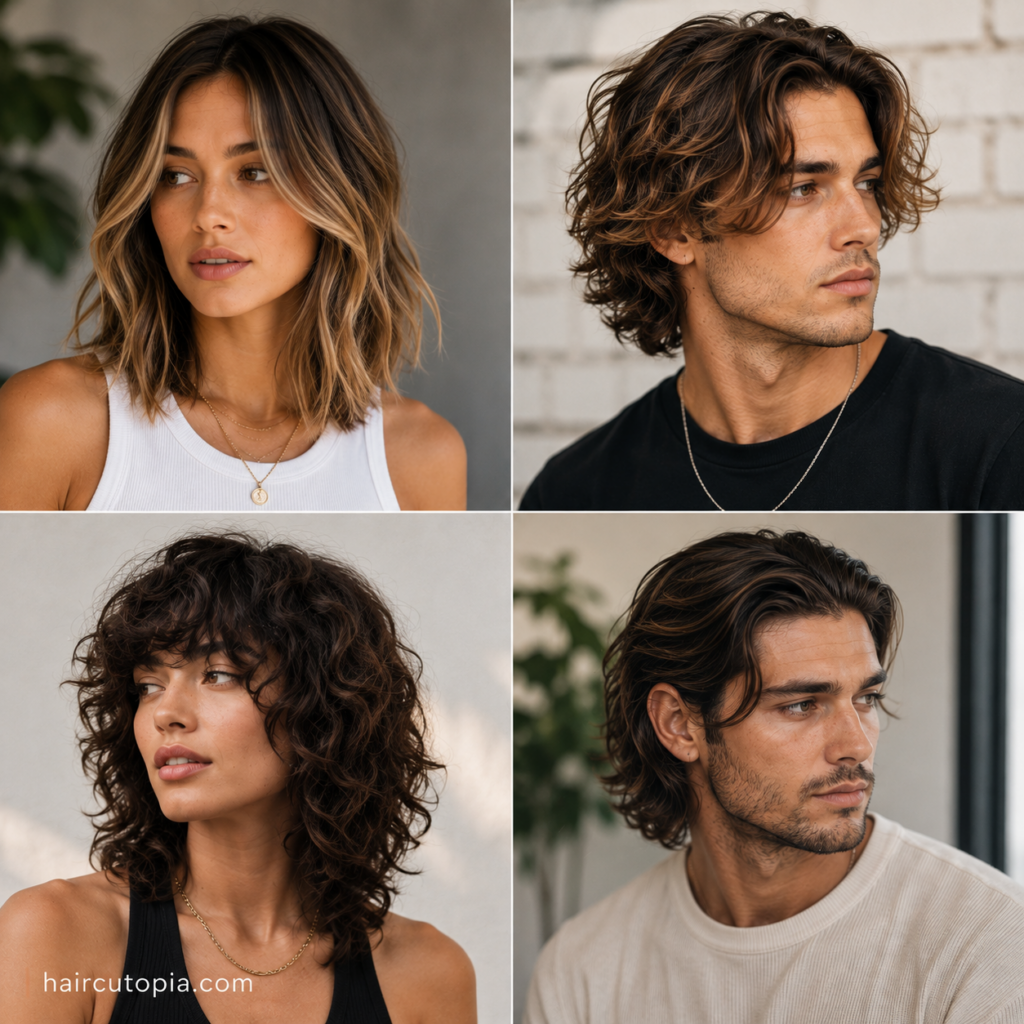
Hair texture can completely change how the same haircut looks, so it’s worth choosing a style that works with what your hair naturally does.
Medium Haircuts for Straight Hair
Straight hair clearly displays the structure of a haircut.
Good options include:
- Blunt lob
- Collarbone cut
- Butterfly layers
- Face-framing layers
- Curtain bangs
- Medium-length curtains
- Layered side parts
Fine, straight hair may benefit from fewer layers so the ends maintain their density.
Medium Haircuts for Wavy Hair
Waves naturally support many of today’s textured styles.
Consider:
- Textured lob
- Medium shag
- Wolf cut
- Bro flow
- Butterfly layers
- Shoulder-length layers
- Medium mullet
If your waves already create movement, you may need surprisingly little styling once the haircut has the right shape.
Medium Haircuts for Curly Hair
Medium length gives curls plenty of room to develop.
Popular options include:
- Rounded curly layers
- Curly shag
- Layered curly lob
- Medium men’s curls
- Curly mullet
- Shoulder-length curls
Shrinkage and curl distribution are more important than simply following a predetermined cutting diagram.
Medium Haircuts for Coily Hair
Coily textures can create impressive shapes at medium lengths.
Consider:
- Rounded natural cuts
- Layered coils
- Shaped Afros
- Medium tapered shapes
- Face-framing coils
A cut that works with natural volume can often require less manipulation than one designed to suppress it.
Best Medium Haircuts for Fine Hair
Fine hair usually benefits from preserving some density around the perimeter.
Good choices include:
- Blunt lob
- Collarbone cut
- Lightly layered shoulder-length cut
- Soft face-framing layers
- Medium bob
- Minimal butterfly layers
You don’t necessarily need to avoid layers.
The key is not removing so much hair that the ends begin looking sparse.
A stylist can create movement through strategic sections while keeping the overall shape relatively full.
Best Medium Haircuts for Thick Hair
Medium length can feel heavy when you have a lot of hair.
Layers are particularly useful here.
Consider:
- Butterfly layers
- Medium shag
- Wolf cut
- Textured lob
- Shoulder-length layers
- Layered curly cut
Internal weight removal can also help reduce bulk without creating extremely short visible layers.
Best Medium Haircuts for Round Faces
If you have a round face and want to create the appearance of additional length, hairstyles with vertical movement can help.
Options might include:
- Collarbone cuts
- Longer face-framing layers
- Butterfly layers
- Medium shags
- Off-center parts
You don’t need to avoid volume completely.
The placement of that volume matters more than simply having it.
Face shape guidelines should be treated as suggestions rather than strict rules.
Best Medium Haircuts for Long Faces
Medium hair can also help visually balance a longer face.
Consider styles that maintain some fullness around the sides, such as:
- Shoulder-length waves
- Textured lobs
- Medium curly cuts
- Shags
- Curtain bangs
- Full bangs
A fringe can visually shorten the forehead, while movement around the cheekbones creates additional width.
Again, these are options rather than requirements.
Is Medium-Length Hair Trending?
Yes. Medium hair has become particularly relevant because it fits naturally with the shift toward softer, more textured hairstyles.
It also offers something short and long hair can’t provide quite as easily: flexibility without excessive length.
You can wear medium hair down, curl it, straighten it, add waves, create ponytails, experiment with half-up styles, or incorporate braids and accessories.
That versatility makes medium length less dependent on any single trend.
Are Layers Trending for Medium Hair?
Layers are one of the biggest themes in current medium-length haircuts.
Butterfly layers, shags, wolf cuts, face-framing pieces, and layered curly cuts all use different forms of layering.
But more layers aren’t automatically better.
Fine hair may benefit from subtle layering, while very thick hair can often handle much more weight removal.
The best approach depends on your density, texture, and desired shape.
Blunt or Layered: Which Is Better for Medium Hair?
Neither is universally better.
A blunt haircut creates a stronger perimeter and can make the ends appear fuller. It often works particularly well for fine or straight hair.
Layered cuts create movement and remove weight. They can be especially useful for thick, wavy, or curly hair.
You can also combine the two.
A haircut might maintain a relatively blunt outer perimeter while using subtle internal layers to create movement.
How to Choose the Right Medium Haircut
Medium length gives you a lot of options, which can also make choosing a haircut more difficult.
Start with a few practical questions.
How Much Length Do You Want to Keep?
Decide where you want the shortest point of the haircut to sit.
For example:
- Chin
- Below the chin
- Shoulders
- Collarbone
That immediately eliminates styles that are shorter or longer than you’re comfortable with.
What Does Your Hair Naturally Do?
Pay attention to how your hair behaves without extensive styling.
Does it fall straight? Form loose waves? Curl tightly? Expand when it dries?
A haircut designed around those characteristics will usually be easier to maintain.
How Much Styling Do You Want to Do?
Butterfly layers can look dramatic after a professional blowout, but consider how they’ll look on a normal Tuesday morning.
If you rarely use heat tools, ask how the haircut will air-dry.
Your everyday version matters more than the salon version.
Do You Want Bangs?
Bangs can dramatically change a medium haircut without sacrificing overall length.
Curtain bangs are generally easier to blend into the rest of the hair as they grow.
Full or shorter bangs create more impact but usually require more maintenance.
What to Tell Your Hairstylist or Barber
Haircut names are useful starting points, but don’t rely on them entirely.
Explain:
- Your preferred finished length
- How much layering you want
- Whether you want bangs
- Where face-framing pieces should begin
- How much volume you prefer
- Whether you normally air-dry
- Which styling products you use
- How frequently you’re willing to get trims
Bring reference photos if possible.
Ideally, choose examples featuring hair with a similar texture and density to your own.
How Often Should You Trim Medium Hair?
Medium hair is generally more forgiving than very short cuts.
As a rough guideline:
- Blunt lobs: every 6–10 weeks
- Layered medium cuts: every 8–12 weeks
- Shags and wolf cuts: around every 8–12 weeks
- Medium curly cuts: around every 8–14 weeks
- Men’s medium styles: around every 6–10 weeks
- Bangs: around every 2–6 weeks depending on length
You may be able to go longer if you like how the haircut evolves as it grows.
How to Style Medium Hair
You don’t need a complicated routine to make medium hair look intentional.
For Natural Texture
Apply a lightweight styling product while the hair is damp and allow your natural waves or curls to develop.
Avoid repeatedly brushing textured hair once it’s dry if doing so causes frizz or disrupts your pattern.
For Volume
A blow dryer can help lift the roots and emphasize layers.
For butterfly cuts and face-framing layers, directing the front pieces away from the face can highlight the shape.
For a Tousled Finish
Texturizing sprays and lightweight creams can create separation without making the hair rigid.
Start with a small amount and add more if needed.
For Sleek Medium Hair
A smoothing product can help control flyaways while preserving shine.
Blunt lobs and collarbone cuts work particularly well with a polished finish because their perimeter becomes more visible.
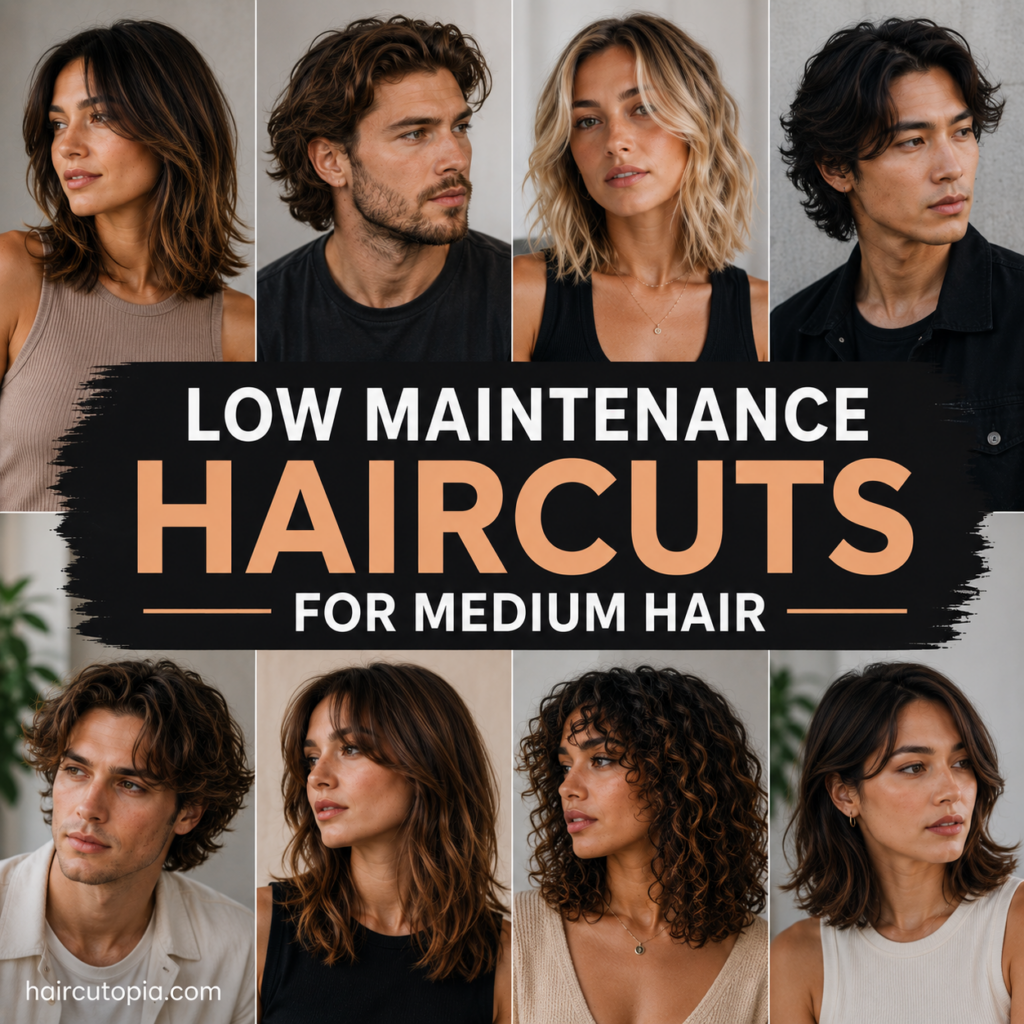
Is Medium Hair Low Maintenance?
Medium hair can offer a good balance between styling flexibility and manageable upkeep.
It’s generally quicker to wash and dry than very long hair while requiring fewer precision trims than a pixie or extremely short bob.
You also have enough length to tie it back when you don’t feel like styling it.
That alone can make medium hair easier to live with day to day.
The lowest-maintenance version will usually be a haircut designed around your natural texture.
How to Grow Short Hair Into Medium Hair
If you’re growing out a pixie, bixie, or bob, regular shaping can make the process much easier.
Growing your hair doesn’t mean avoiding haircuts entirely.
Instead:
- Let the shortest sections gradually catch up.
- Trim the perimeter when it becomes uneven.
- Adjust layers as different sections grow.
- Use transitional styles such as a bixie, bob, and lob.
- Avoid repeatedly cutting the longest sections unless necessary.
Eventually, the shape can transition into a collarbone or shoulder-length cut without going through quite as many awkward stages.
How to Make Medium Hair Feel Different Without Cutting Much Length
Sometimes you’re happy with the length and simply bored with the shape.
You can make a noticeable change by adding:
- Face-framing layers
- Curtain bangs
- Wispy bangs
- A deeper side part
- Soft internal layers
- More texture around the ends
You can also change how you style the same haircut.
Switching from sleek hair to loose waves—or from a middle part to a side part—can make a familiar cut feel surprisingly different.
Final Thoughts on Trending Haircuts for Medium Hair
Medium hair gives you room to experiment without pushing you toward either extreme.
You can keep things clean with a blunt lob, add movement with butterfly or face-framing layers, embrace natural texture with a curly cut, or go in a more expressive direction with a shag, wolf cut, or modern mullet.
Men’s medium hair is also becoming increasingly varied, with curtains, bro flows, curls, and fuller textured cuts providing alternatives to constantly faded sides.
The trend worth paying the most attention to isn’t a single haircut. It’s personalization.
Take the shape you like and adjust it for your hair texture, density, routine, and preferred level of maintenance.
When a haircut works with the way your hair naturally behaves, you spend less time fighting it—and more time actually enjoying it.