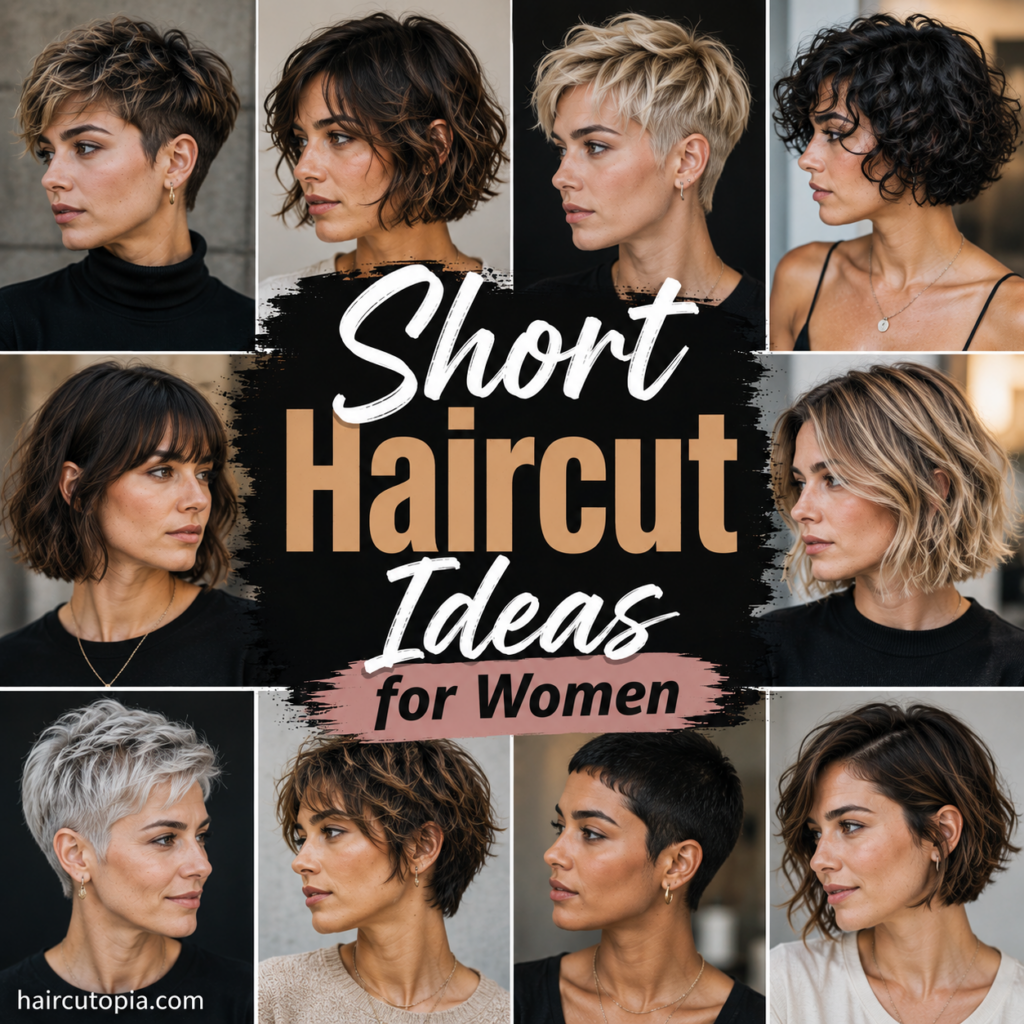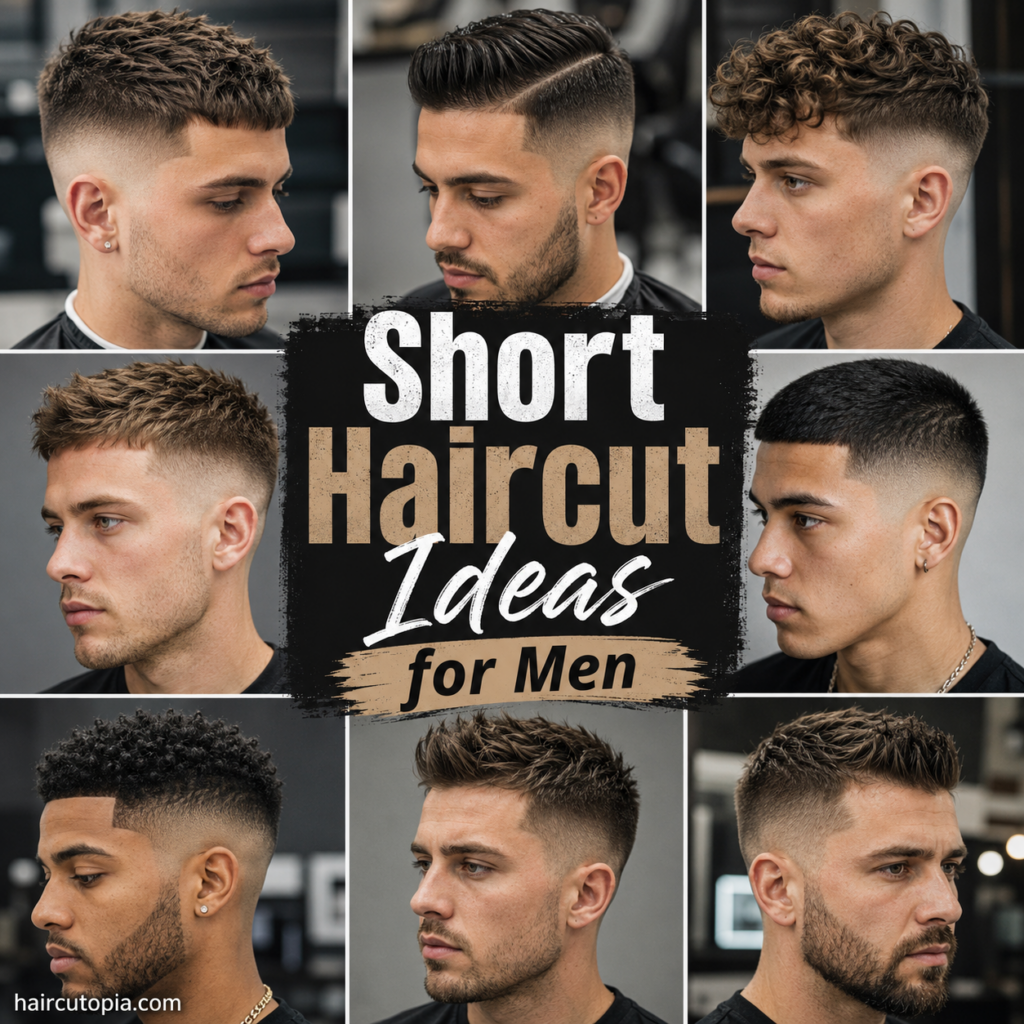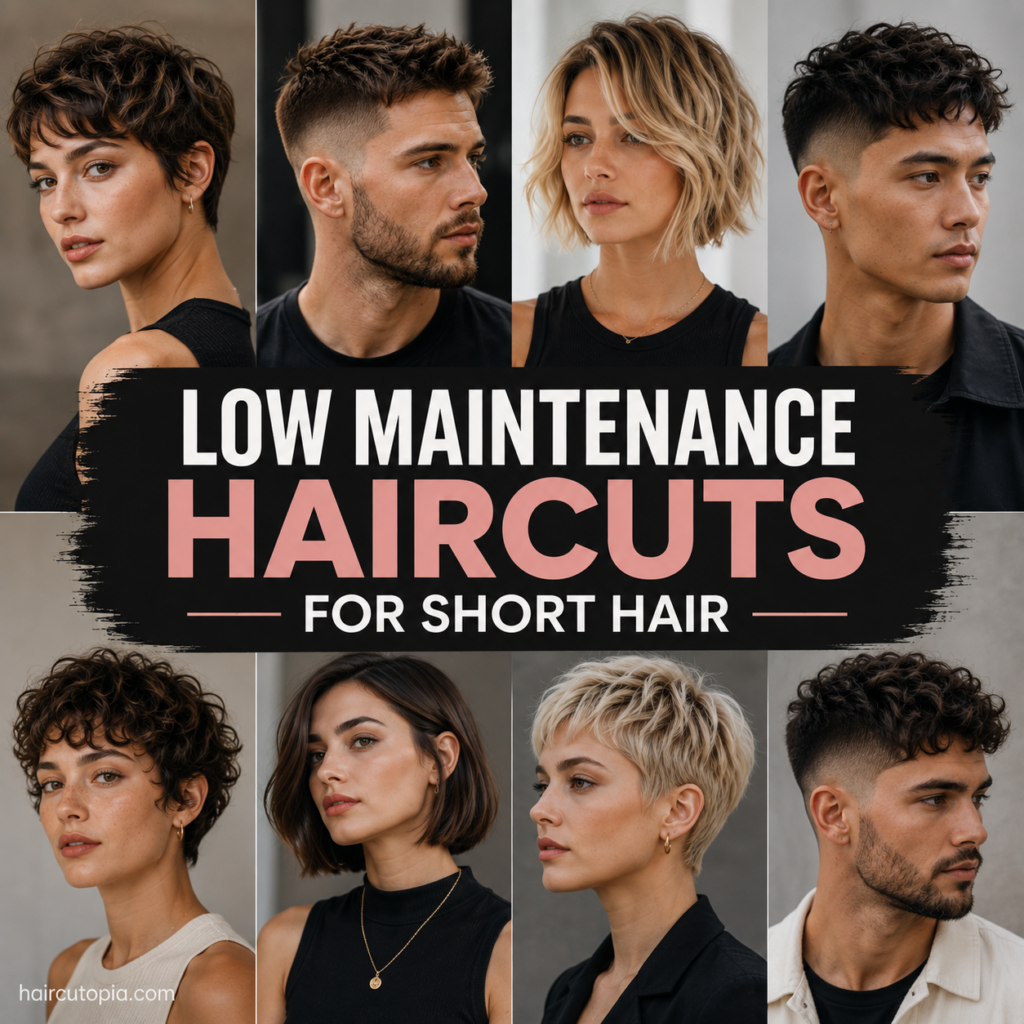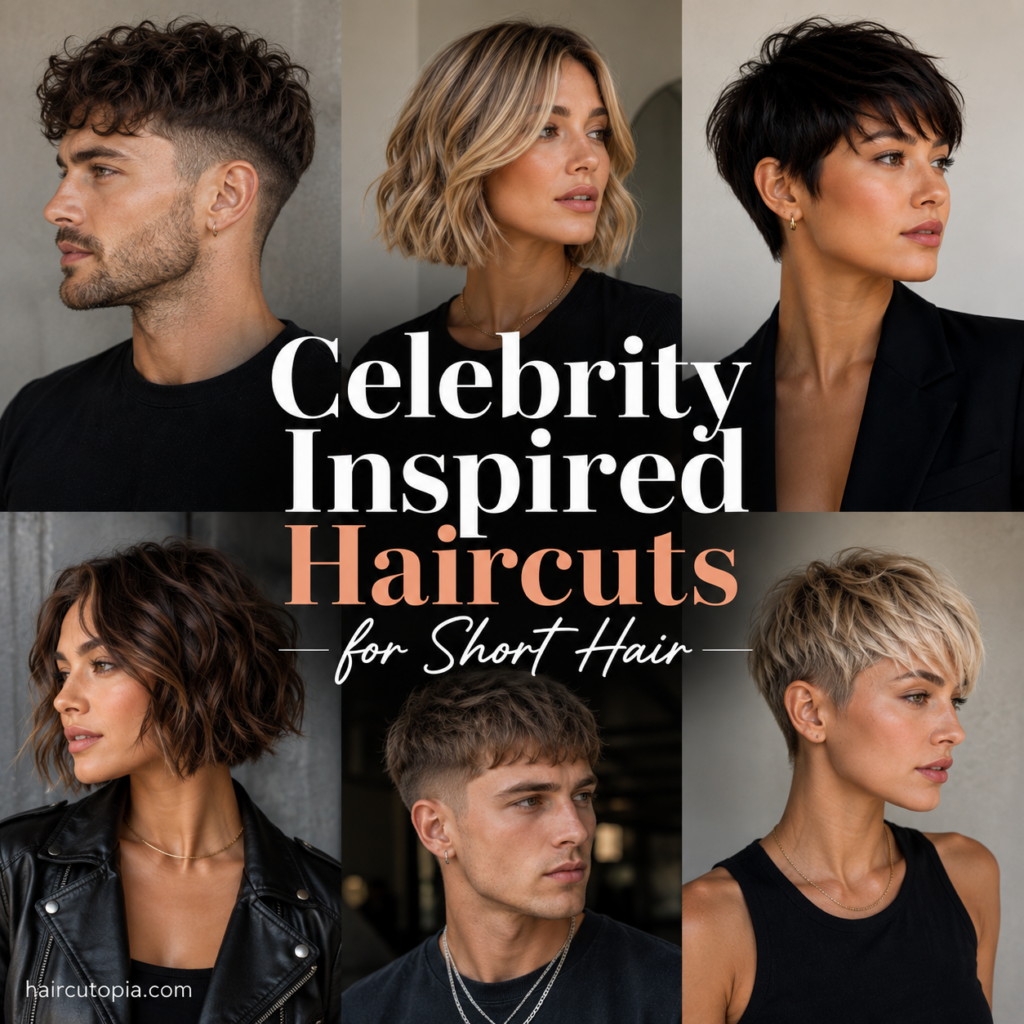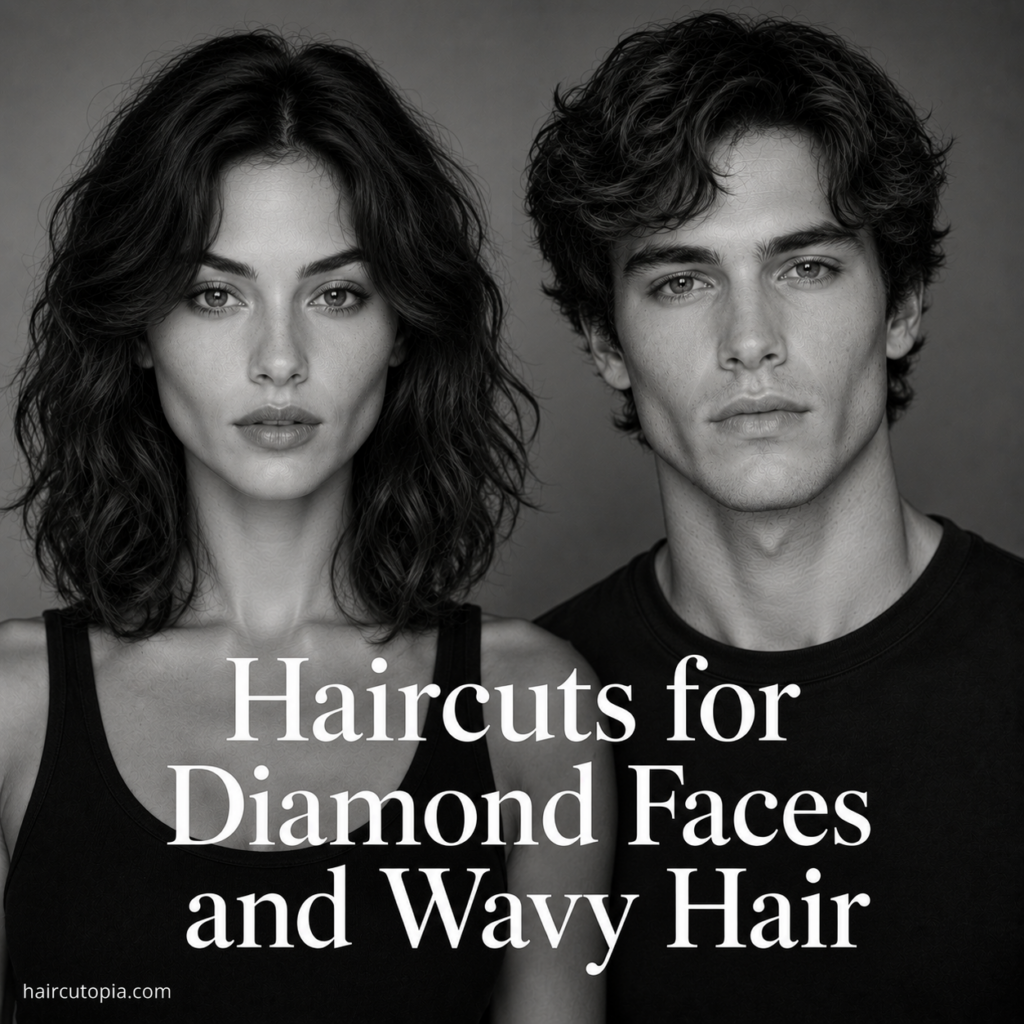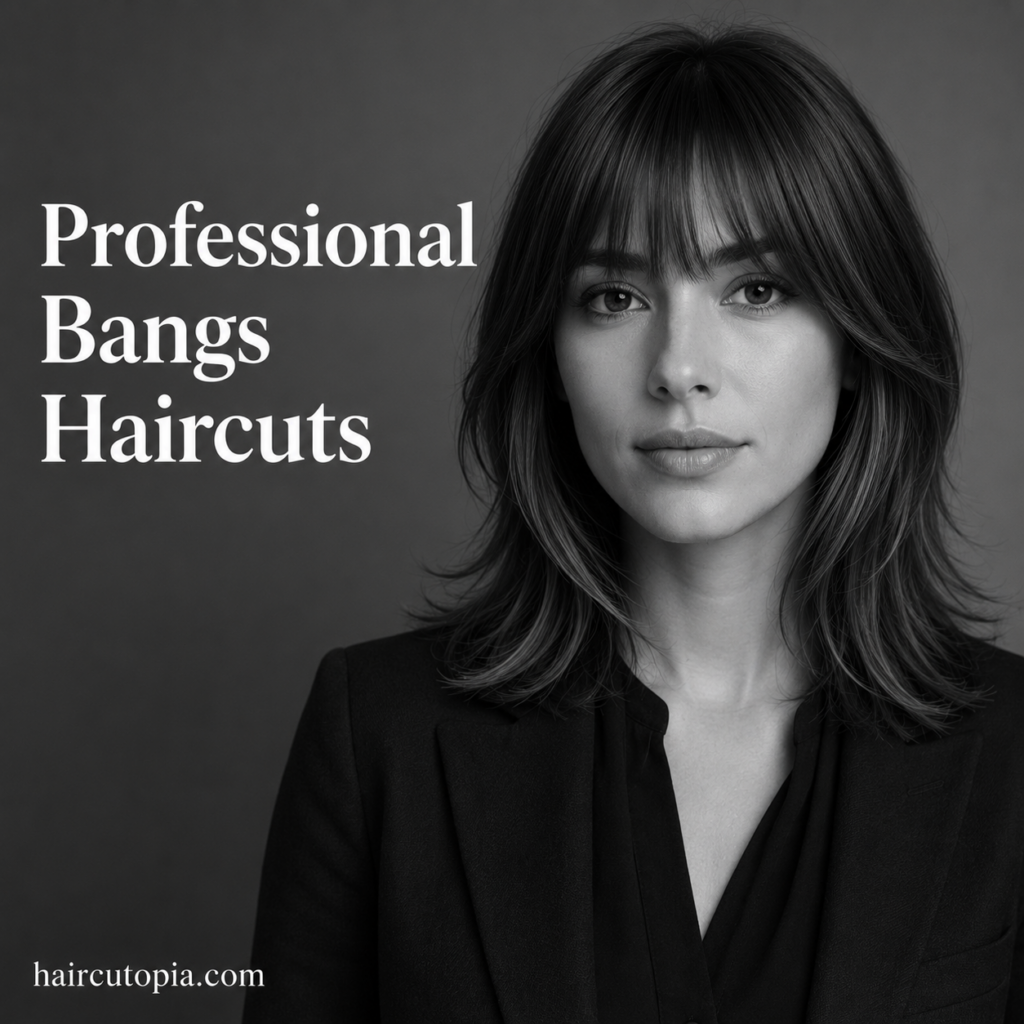
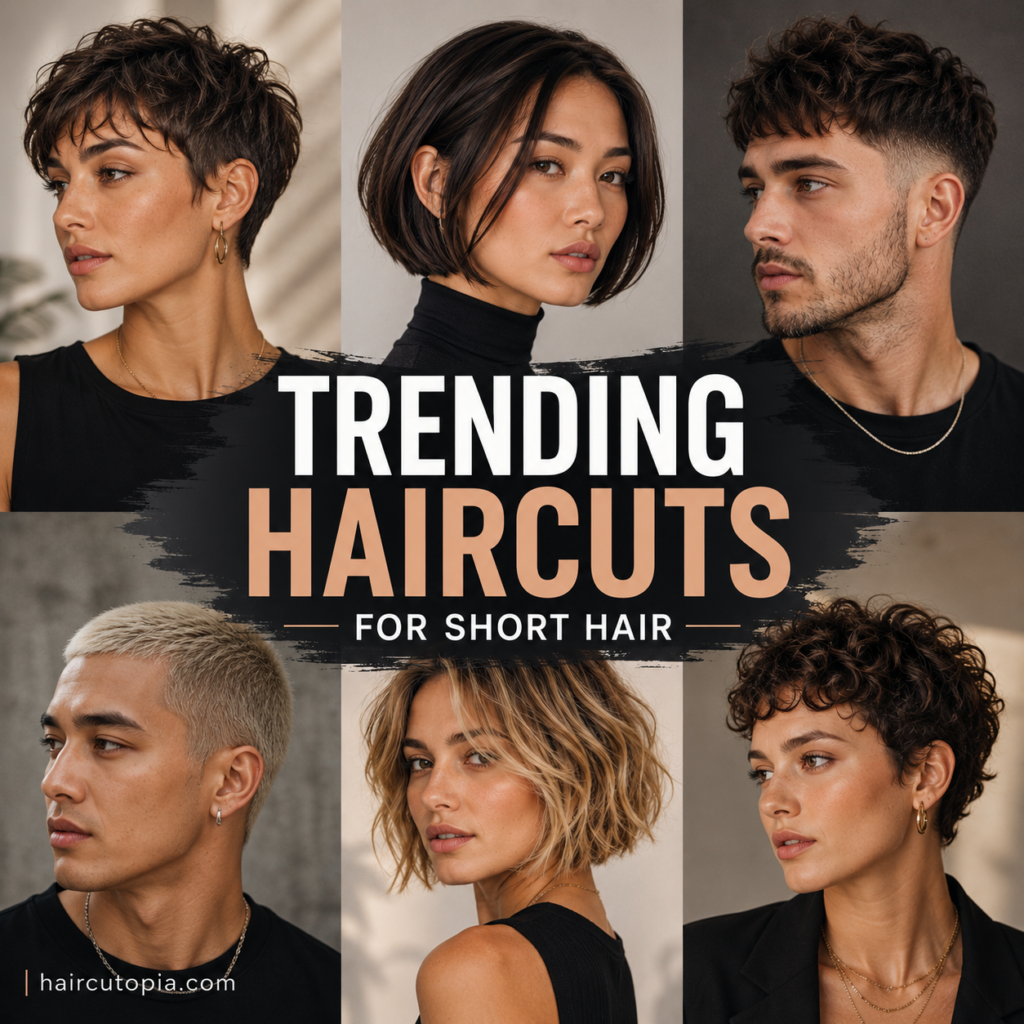
Short hair is having one of those moments where almost anything goes. Clean, blunt lines are popular, but so are tousled layers, soft texture, curls, cropped fringes, and deliberately undone shapes.
That variety makes going short a lot more interesting. You don’t have to choose between a traditional bob and a basic pixie anymore. Today’s short haircuts range from polished jaw-length cuts to heavily textured bixies, modern shags, curly crops, and ultra-short styles that put the focus entirely on your face.
Short hair can also be surprisingly versatile. A few inches of extra length on top can completely change how a pixie behaves, while subtle layers can transform a simple bob from sleek to effortlessly messy.
If you’re considering cutting your hair shorter—or simply want to update the short style you already have—these trending haircuts for short hair offer plenty of inspiration.
What Short Haircuts Are Trending Right Now?
Current short haircut trends aren’t centered around one particular style. Instead, we’re seeing familiar cuts reworked with different lengths, textures, and shapes.
Popular options include:
- Textured bobs
- Blunt bobs
- French bobs
- Italian bobs
- Bixie cuts
- Modern pixies
- Long pixies
- Curly pixies
- Short shags
- Cropped cuts
- Micro bobs
- Short wolf cuts
- Jaw-length layers
- Short cuts with curtain bangs
- Soft, textured fringes
Natural texture is playing a particularly big role. Rather than straightening every wave or controlling every curl, many current cuts are designed around the way the hair already moves.
1. Textured Bob
The textured bob is one of the easiest ways to make short hair feel relaxed rather than overly polished.
It usually falls somewhere between the jaw and shoulders, with subtle layers creating movement through the ends. The exact amount of texture can be adjusted depending on your hair density.
Naturally wavy hair works particularly well with this cut because the movement is already there.
Straight hair can achieve a similar effect with light layering and a small amount of texturizing product.
Why the Textured Bob Works
Unlike a highly structured bob, this haircut doesn’t depend on every strand sitting perfectly in place.
A little messiness can actually improve it.
That makes the textured bob a practical choice if you prefer hair that looks good without requiring a lengthy styling routine every morning.
2. Blunt Bob
At the opposite end of the spectrum is the blunt bob.
Instead of relying on lots of layers, the ends are cut into a stronger, cleaner line. This creates a noticeably structured silhouette.
Blunt bobs are especially useful for fine hair because keeping more density around the perimeter can make the hair appear fuller.
Popular lengths include:
- Jaw length
- Chin length
- Just below the chin
- Above the shoulders
The shorter you go, the more dramatic the shape becomes.
3. French Bob
The French bob is compact, stylish, and slightly playful.
It typically sits around the jawline and is often paired with bangs, although a fringe isn’t essential. The hair can be worn smooth, softly waved, or intentionally tousled.
One of the appealing things about this cut is that it doesn’t have to look overly perfect.
Natural movement can make the style feel even better.
Pair it with wispy bangs for softness or a more defined fringe if you want a stronger statement.
4. Italian Bob
If you like the idea of a bob but want something fuller and softer, consider the Italian bob.
This variation generally keeps a little more weight and length than very short bobs. The shape has enough volume to feel substantial while still sitting well above the shoulders.
It can be worn:
- Smooth and polished
- Tucked behind the ears
- With a deep side part
- Loosely waved
- Tousled for additional volume
The extra length also gives you more styling flexibility than an ultra-short bob.
5. Micro Bob
The micro bob pushes the classic shape even shorter.
It typically ends around the jaw or higher, putting a strong emphasis on the face and neckline.
Because there isn’t much length to hide behind, the exact shape becomes particularly important.
A micro bob can be sleek and geometric or slightly softer with subtle texture. Bangs can make the style even more distinctive.
It’s a bold choice, but if you’re ready for a noticeable change, few short haircuts make a stronger impact.
6. Bixie Cut
Can’t decide between a bob and a pixie?
That’s essentially where the bixie comes in.
A bixie combines the cropped feel of a pixie with some of the additional length and movement of a short bob. Longer pieces around the sides, crown, and fringe prevent it from feeling too severe.
The haircut can be smooth or highly textured.
It’s also a useful transitional style if you’re growing out a pixie but aren’t ready for a full bob.
7. Modern Pixie Cut
The pixie remains one of the defining short haircuts, but modern versions are incredibly varied.
Instead of cutting everything to a similar length, stylists can preserve additional hair around the top, crown, or fringe.
That creates more styling options.
A modern pixie can be:
- Tousled
- Sleek
- Spiky
- Side-swept
- Curly
- Voluminous
- Slicked back
Changing the fringe alone can make the same basic haircut feel completely different.
8. Long Pixie
The long pixie is a softer introduction to very short hair.
It preserves more length around the crown and front while still exposing more of the ears and neckline than a bob.
That extra length makes it easier to experiment with texture.
You can sweep the front to one side, create volume, add waves, or tuck longer pieces behind the ears.
It’s also forgiving as it grows, which can make maintenance a little easier than with an extremely precise cropped pixie.
9. Pixie With Long Bangs
Leaving the fringe noticeably longer creates another variation of the pixie.
The contrast between short sides and a longer front adds movement and gives you more control over how much of your forehead is exposed.
Long bangs can be:
- Swept across the forehead
- Parted in the middle
- Styled upward
- Tucked behind the ear
- Textured and messy
This is a good option if you like short hair but still want enough length around the face to change your look.
10. Curly Pixie
Curls don’t need significant length to make an impact.
A curly pixie keeps enough hair through the top to show the natural curl pattern while trimming the sides and back into a more compact shape.
Depending on your curls, the result can range from soft and subtle to highly voluminous.
The key is accounting for shrinkage.
Curly hair often appears much shorter when dry, so the finished length should be judged based on how your curls naturally sit rather than how they look when wet or stretched.
11. Short Curly Bob
The curly bob allows considerably more volume while keeping the overall haircut short.
Instead of forcing curls into the same shape as a straight bob, the cut can be designed around the individual curl pattern.
Some sections may naturally spring higher than others. That’s part of the character of the style.
A curly bob can sit around the jaw, chin, or slightly below it.
Adding a curly fringe can create an even more distinctive silhouette.
12. Short Shag
The shag is known for layers, movement, and an intentionally relaxed finish.
A short shag brings those characteristics into bob or bixie territory. Layers around the crown create volume, while the ends remain lighter and more separated.
This style works particularly well with wavy hair because natural bends emphasize the layering.
Bangs are common but optional.
Curtain bangs, wispy bangs, and textured fringes can all complement a short shag.
13. Short Wolf Cut
The wolf cut shares some characteristics with the shag but typically creates more noticeable contrast between the fuller crown and lighter lower sections.
Short versions keep that shape compact.
The result can look edgy and dramatic or surprisingly soft depending on how heavily the layers are cut.
Naturally wavy hair is particularly suited to the style because it helps create the slightly undone texture associated with the cut.
14. Short Hair With Curtain Bangs
Curtain bangs aren’t only for long hairstyles.
They can soften bobs, bixies, and longer pixies by adding movement around the forehead and cheekbones.
Unlike a straight-across fringe, curtain bangs typically separate near the center and become longer toward the sides.
That makes them relatively easy to blend into the rest of a short haircut.
Longer curtain bangs can also be tucked away when you want your forehead completely open.
15. Short Hair With Wispy Bangs
Wispy bangs create a lighter effect.
Instead of covering the forehead with a dense fringe, smaller sections of hair fall naturally across it.
They pair especially well with:
- French bobs
- Textured bobs
- Bixies
- Short shags
- Pixies
- Jaw-length cuts
Wispy bangs can make a structured haircut feel softer without dramatically changing its overall shape.
16. Jaw-Length Layered Cut
A jaw-length haircut sits in the sweet spot between a traditional bob and something more heavily layered.
Adding movement around the ends prevents the shape from becoming too triangular or bulky.
The layers can also frame the cheekbones and jawline.
This cut works well with straight, wavy, and lightly curly hair, although the exact layering technique should be adjusted for each texture.
17. Asymmetrical Bob
An asymmetrical bob creates deliberate imbalance.
One side may be slightly longer than the other, or the entire haircut may gradually angle from shorter in the back to longer around the face.
The difference doesn’t need to be extreme.
A subtle asymmetry can make a classic bob feel more modern without becoming difficult to wear.
For a bolder effect, increase the difference in length or combine the cut with an undercut.
18. Short Rounded Cut
Rounded shapes work particularly well with curls and coils.
Instead of trying to reduce all the volume, the haircut intentionally distributes it into a balanced silhouette.
Depending on the texture and length, the shape can be compact or full.
This approach allows natural texture to become the main feature of the haircut.
Strategic trimming keeps the outline intentional while preserving movement throughout the curls or coils.
19. Tapered Natural Cut
A tapered cut keeps additional texture through the top while gradually shortening the sides and back.
It’s particularly versatile for curls and coils because the amount of contrast can be customized.
A subtle taper creates a softer shape. A stronger taper puts considerably more emphasis on the volume at the top.
The style can also be adjusted as the hair grows, making it possible to experiment with different silhouettes over time.
20. Buzz Cut
For the biggest transformation, there’s the buzz cut.
Hair is clipped extremely close to the scalp, putting the focus almost entirely on the face.
Although the style itself is simple, there are still variations.
You can choose:
- One uniform clipper length
- Slightly longer hair on top
- A faded version
- A tapered hairline
- An ultra-short buzz
There’s virtually no daily styling, although maintaining a consistently short length requires regular trims.
Trending Short Haircuts by Hair Type
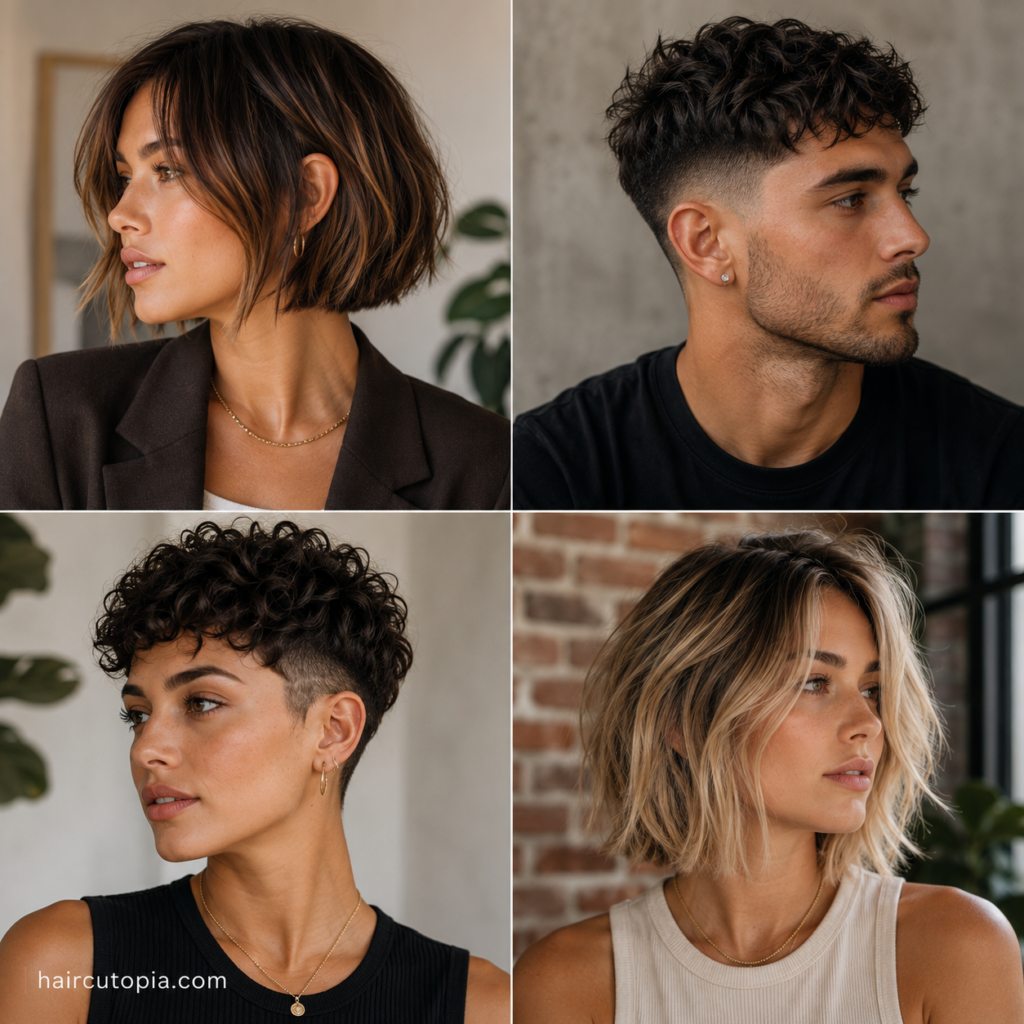
Your natural texture has a major influence on how a short haircut behaves.
Short Haircuts for Straight Hair
Straight hair makes the structure of short cuts especially visible.
Consider:
- Blunt bob
- Micro bob
- French bob
- Bixie
- Modern pixie
- Asymmetrical bob
- Jaw-length cut
Fine, straight hair may benefit from keeping more weight around the ends instead of adding excessive layers.
Short Haircuts for Wavy Hair
Waves naturally complement textured short styles.
Good options include:
- Textured bob
- Short shag
- Short wolf cut
- Bixie
- French bob
- Long pixie
Rather than straightening every wave, choose a shape that lets the natural movement become part of the style.
Short Haircuts for Curly Hair
Short curls can create impressive volume and definition.
Consider:
- Curly bob
- Curly pixie
- Rounded curly cut
- Curly shag
- Tapered curly cut
- Bixie with curls
Shrinkage becomes especially important at shorter lengths. Talk with your stylist about where you want the hair to sit once completely dry.
Short Haircuts for Coily Hair
Coily textures can create beautifully sculpted short hairstyles.
Options include:
- Tapered natural cut
- Rounded crop
- Short shaped Afro
- Buzz cut
- Coily pixie
- Short layered coils
The cut should work with your natural density and growth pattern rather than treating volume as something that automatically needs to be removed.
Best Short Haircuts for Fine Hair
Fine hair can look fuller when the haircut preserves density around the ends.
Some particularly useful options include:
- Blunt bob
- French bob
- Micro bob
- Jaw-length bob
- Bixie with minimal layering
- Long pixie
Too many layers can sometimes make fine hair appear thinner, especially around the bottom.
That doesn’t mean you have to avoid layering entirely. A few strategically placed layers can create movement without sacrificing fullness.
Best Short Haircuts for Thick Hair
Thick hair gives you plenty of volume, but shorter lengths can become bulky if the shape isn’t carefully considered.
Layering can help control that weight.
Good options include:
- Textured bob
- Short shag
- Bixie
- Long pixie
- Short wolf cut
- Layered jaw-length cut
Removing weight internally can sometimes create movement without making the outer layers dramatically shorter.
Are Short Bobs Still Trending?
Yes. In fact, the bob continues to produce new variations rather than being replaced by one particular trend.
The current lineup includes:
- French bobs
- Italian bobs
- Micro bobs
- Blunt bobs
- Textured bobs
- Curly bobs
- Asymmetrical bobs
The differences often come down to length, layering, texture, and how much weight is kept around the perimeter.
That means you can usually find a bob variation even if the classic version doesn’t appeal to you.
Are Pixie Cuts Trending?
Pixie cuts continue to be relevant, particularly because they can be customized so easily.
A very short pixie creates an entirely different look from one with long bangs or significant volume on top.
Curly and textured versions also move away from the idea that a pixie needs to be sleek and perfectly controlled.
If you’re unsure about going extremely short, a bixie or long pixie can be an easier starting point.
Which Short Haircut Is Easiest to Maintain?
That depends on what you mean by maintenance.
A buzz cut requires almost no daily styling, but keeping it consistently short means frequent trimming.
A pixie can also be quick to style, although its shape may change noticeably as it grows.
A textured bob may require less frequent cutting but take a little longer to wash, dry, and style.
For many people, the easiest short haircut is one that works with their natural texture rather than requiring them to straighten, curl, or reshape it every morning.
How to Choose a Short Haircut
Going from long hair to short hair can feel like a major decision. A little planning helps.
Consider How Short You Actually Want to Go
“Short” covers a huge range.
A collarbone-length haircut and a buzz cut are technically both shorter hairstyles, but the experience of wearing them is completely different.
If you’re hesitant, shortening your hair gradually is perfectly reasonable.
You can move from long hair to a lob, then a bob, and eventually a pixie if you decide you want to keep going.
Think About Your Natural Texture
A reference photo shows you the haircut and the model’s hair texture.
Those aren’t the same thing.
If you have curls and the person in your inspiration photo has naturally straight hair, ask your stylist how the same general shape would translate to your texture.
Consider Your Styling Routine
Short hair isn’t automatically wash-and-go.
Some highly structured styles require blow-drying or heat styling to maintain their intended shape.
If you prefer air-drying, say so before the haircut begins.
Think About Growing It Out
You might love short hair and keep it for years. But if you eventually decide to grow it longer, some cuts transition more easily than others.
Bixies and long pixies can provide useful intermediate shapes between very short hair and a bob.
What to Tell Your Hairstylist
Don’t rely entirely on the name of a haircut.
Two people can ask for a “textured bob” and imagine completely different results.
Talk about:
- Where you want the perimeter to fall
- How much length you’re comfortable losing
- Whether you want your ears exposed
- Whether you want bangs
- How much layering you prefer
- How your hair behaves naturally
- How you normally style it
- How often you want to return for trims
Reference photos are extremely helpful, especially when they show hair with a texture similar to yours.
How Often Should You Trim Short Hair?
Short hair often requires more frequent shaping because even a small amount of growth can alter the silhouette.
A general starting point is:
- Buzz cuts: every 2–4 weeks
- Very short pixies: every 4–6 weeks
- Long pixies and bixies: every 5–8 weeks
- Short bobs: every 6–8 weeks
- Textured bobs: every 6–10 weeks
- Short curly cuts: around every 6–12 weeks depending on shape
You can stretch those intervals if you enjoy how the haircut looks as it grows.
How to Style Short Hair
You don’t need a cabinet full of styling products.
A few basics can cover most short hairstyles.
For Texture
A lightweight styling cream, paste, or texturizing spray can separate layers and create definition.
Start with a small amount. Short hair can become overloaded quickly.
For Volume
Mousse or lightweight volumizing products can help lift the roots.
A blow dryer can also make a major difference, especially around the crown.
For Sleek Styles
A smoothing cream or lightweight serum can help control flyaways and create a cleaner finish.
Avoid applying too much product directly around the roots if your hair becomes oily easily.
For Curls
Curl cream, leave-in conditioner, or lightweight gel can help define the natural pattern.
The right amount depends heavily on your curl type and density.
Is Short Hair Low Maintenance?
Sometimes—but not always.
Short hair generally takes less time to wash and dry. You also have less hair to detangle and fewer inches to style.
On the other hand, short cuts reveal changes in shape quickly as they grow.
A precision bob or pixie may require more salon appointments than long layers.
Think of short hair as a tradeoff: often less daily hair to manage, but potentially more frequent professional maintenance.
How to Make a Short Haircut Feel More Personal
You don’t have to wear a trending haircut exactly as you see it online.
Small changes can make the style feel completely different.
Try adjusting:
- Bang length
- Part placement
- Layering
- Overall texture
- Volume at the crown
- Length around the ears
- The shape of the neckline
- How blunt or soft the ends appear
A French bob with full bangs feels very different from the same basic length with no bangs and loose waves.
Use trends as inspiration rather than instructions.
Final Thoughts on Trending Haircuts for Short Hair
Short hair isn’t one look.
It can be sleek and minimal, soft and feminine, textured and messy, curly and voluminous, or cropped almost completely away.
Bobs continue to offer everything from sharp blunt lines to relaxed texture. Pixies are becoming increasingly versatile through longer fringes and natural curls. Shags and wolf cuts bring more movement into shorter lengths, while bixies offer a comfortable middle ground between a bob and a traditional pixie.
The best short haircut is the one that works once you’re back home—not just while you’re sitting in the salon chair.
Consider your natural texture, how much styling you’re willing to do, and how often you want your hair cut. Then take the trend you like and make it your own.
A great short haircut should feel like a change, but it should still feel like you.