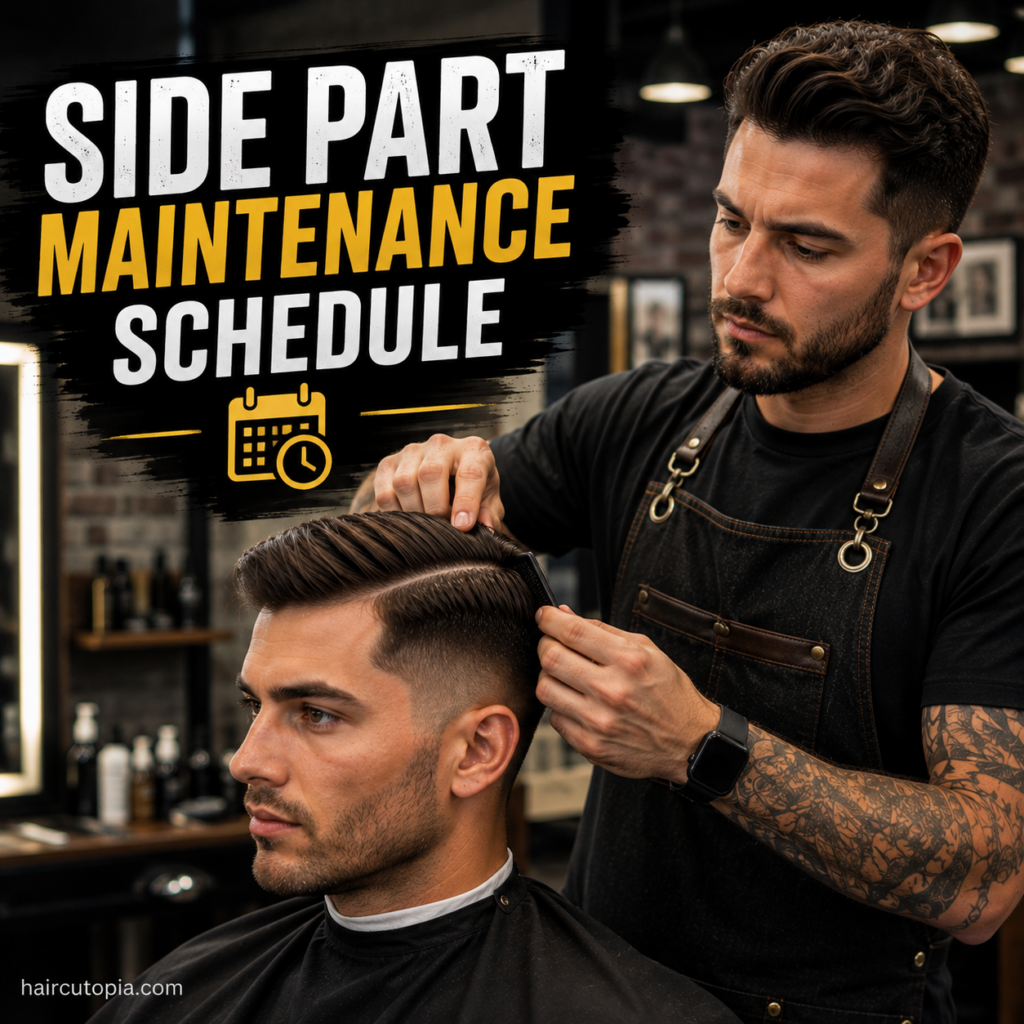
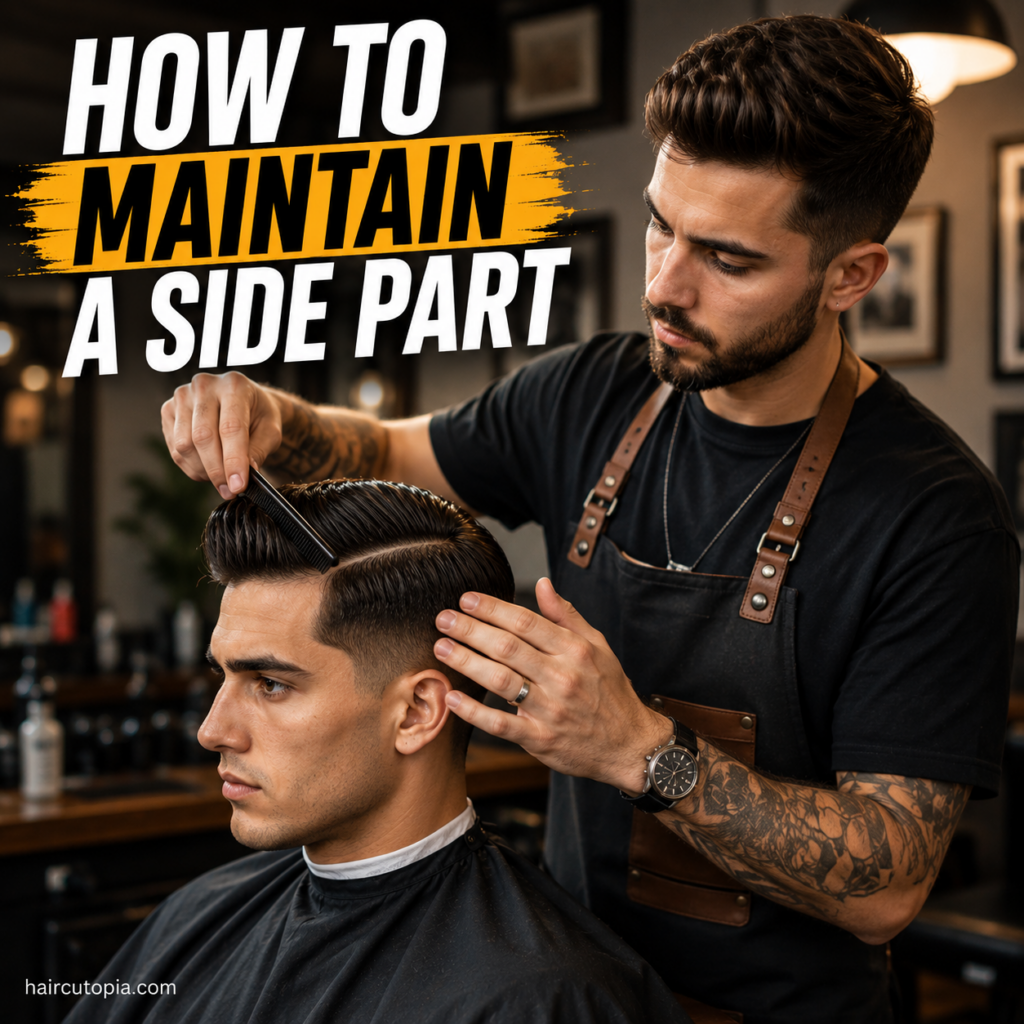
A side part can look sharp without requiring an elaborate grooming routine. The trick is keeping the shape of the haircut intact, styling the hair in the same general direction, and knowing when the sides or part need attention.
Maintenance also depends on the type of side part you have. A longer, classic cut can grow out gracefully for several weeks, while a side part paired with a skin fade or hard part starts losing its crisp appearance much sooner.
The good news is that most of the work can be handled at home. With the right washing routine, a few basic styling techniques, and regular barber visits, you can keep a side part looking intentional instead of simply grown out.
Here’s how to maintain a side part between haircuts.
How Much Maintenance Does a Side Part Need?
A traditional side part is generally a low-to-moderate maintenance hairstyle.
You don’t necessarily need to style it perfectly every morning. In fact, many modern side parts look better with a little natural movement rather than every strand being combed into place.
What requires the most maintenance is usually the haircut surrounding the part.
A side part with longer or tapered sides tends to grow out naturally. Add a skin fade, sharp lineup, or shaved hard part, and you’ll probably notice the growth sooner.
Your routine will typically involve:
- Keeping the top at a manageable length
- Maintaining the sides and neckline
- Training the hair to fall in the desired direction
- Using an appropriate styling product
- Washing out product buildup
- Getting periodic barber cleanups
Once you’ve established a routine, everyday maintenance shouldn’t take very long.
Keep the Right Length on Top
The top needs enough length to establish a visible part and move naturally to either side.
If it becomes too short, the hair may stick up rather than sweep across. If it becomes too long, heavier hair can lose volume and become harder to control.
There’s no single ideal length because hair texture matters.
Straight hair may fall into a defined side part relatively easily. Thick or wavy hair might need additional length or weight removal to sit correctly. Curly hair can be shaped into a looser interpretation of the style rather than being forced into a perfectly straight part.
When you return to the barber, don’t automatically ask to have the same amount removed everywhere.
Explain what happened as the previous haircut grew.
For example:
- “The top got too heavy after a few weeks.”
- “I liked the length but lost volume in the front.”
- “The sides grew out faster than the top.”
- “I’d like to keep more length around the part.”
- “It became difficult to style once it reached this length.”
That information helps your barber adjust the next haircut around how your hair actually behaves.
Find and Maintain Your Natural Part
One of the easiest ways to maintain a side part is to work with the direction your hair naturally wants to grow.
After washing your hair, gently push it backward with your fingers. You’ll often see the hair begin separating naturally toward one side.
That’s a useful starting point for your part.
You can then use the end of a comb or the teeth of a regular styling comb to make the line more defined.
Don’t worry if the part isn’t perfectly straight. A natural side part often looks better with a slight irregularity than an artificially precise line.
If your barber established the part during your haircut, following the same line each time you style can also help the hair settle into a consistent pattern.
Train Your Hair to Stay in a Side Part
Hair doesn’t literally become permanently “trained” into one position, but consistently styling it in the same direction can make your routine easier.
The most effective time to establish the shape is while the hair is damp.
After showering:
- Towel-dry your hair gently.
- Locate your natural part.
- Separate the hair along the part with a comb.
- Direct the larger section across the top.
- Direct the smaller section toward the opposite side.
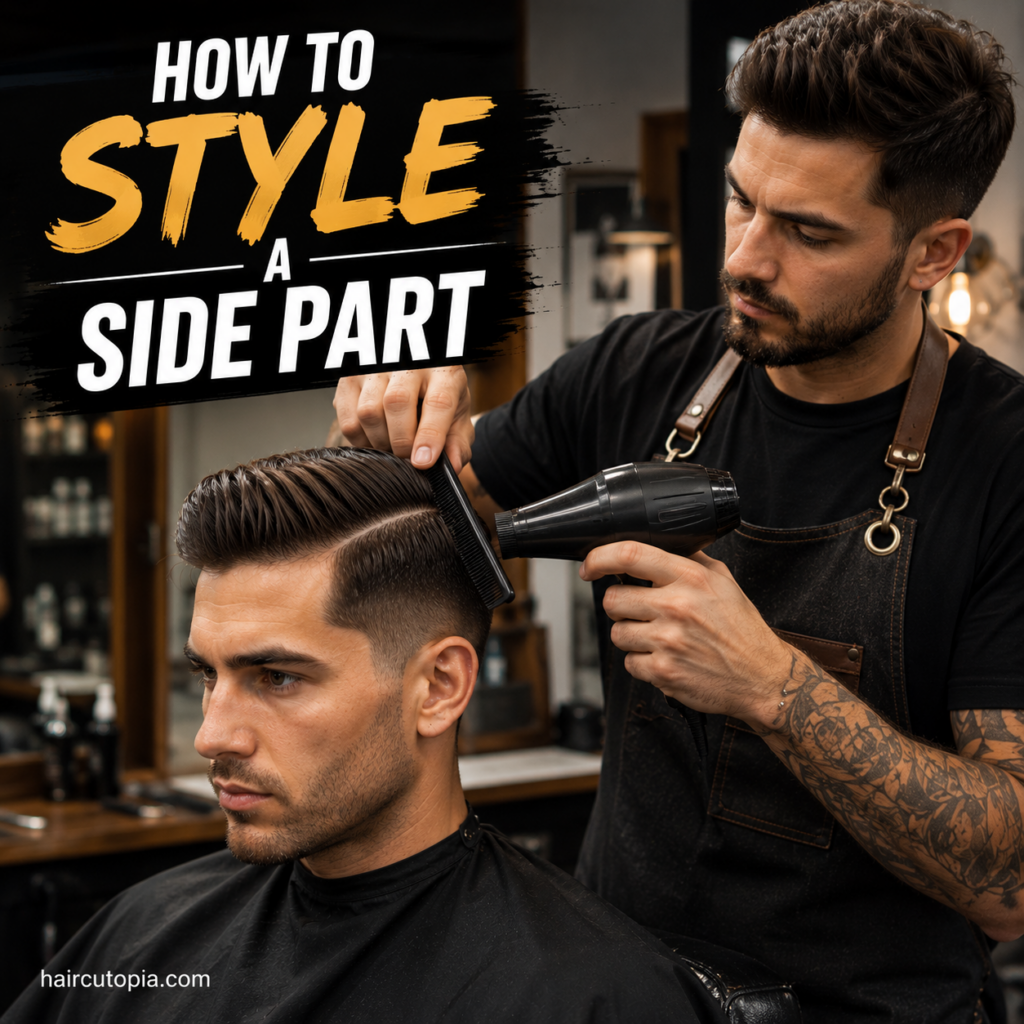
- Blow-dry the hair into position if necessary.
- Apply styling product and make final adjustments.
Doing this consistently can make stubborn sections easier to manage.
It’s especially helpful if your hair tends to fall forward after washing.
Use a Blow Dryer for Better Control
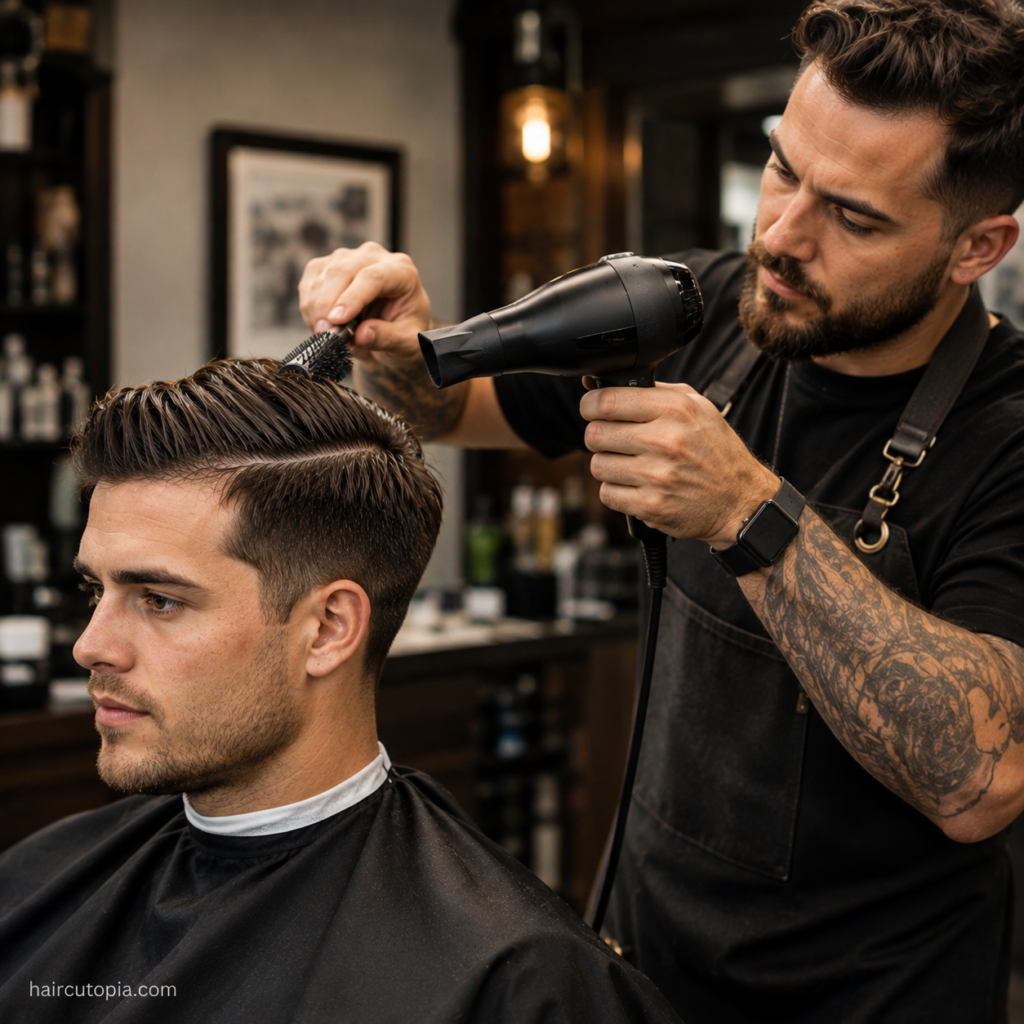
You don’t have to blow-dry a side part, but it can make a noticeable difference.
A blow dryer helps establish the basic shape before styling product is added. It can also create volume at the front and prevent the hair from sitting flat against your scalp.
Start with damp rather than soaking-wet hair.
Use your fingers, comb, or brush to guide the hair away from the part while directing the airflow in roughly the same direction.
For more volume, lift the front slightly while drying it. Once the hair begins holding its shape, finish styling with your preferred product.
Keep the dryer moving rather than concentrating hot air on one area for an extended period. Moderate heat is usually enough for everyday styling.
Choose the Right Styling Product
You don’t need a cabinet full of products to maintain a side part. One good product that matches your hair and desired finish is usually enough.
Pomade
Pomade is a natural match for a classic, polished side part.
It provides control and helps create the smooth, combed finish traditionally associated with the hairstyle. Depending on the formula, pomades can range from relatively natural-looking to noticeably shiny.
Use a small amount first. Too much can make the hair look greasy or overly flat.
Hair Clay
Clay works well if you prefer a modern, textured side part.
It generally provides a drier, more matte appearance and can help create separation without making the hair look slick.
Clay can be particularly useful when you want some volume through the front.
Styling Paste
Paste offers a middle ground between structured and natural.
It can provide enough hold to maintain the direction of the side part while still allowing the hair to move.
This makes it a practical everyday option for casual side-part styles.
Styling Cream
Cream is useful when you want light control without making it obvious that you’re wearing much product.
It’s particularly suited to longer, wavier, or more relaxed side parts where natural movement is part of the look.
Gel
Gel can provide strong hold and a sharply defined finish, but it can also make hair stiff.
If you prefer a softer, touchable side part, pomade, cream, clay, or paste may be a better choice.
Don’t Use Too Much Product
More product doesn’t necessarily mean better hold.
Using too much can weigh down the top, eliminate volume, and create buildup that makes your hair increasingly difficult to style.
Start with a small amount.
Rub the product between your palms until it’s evenly distributed, then work it through your hair. Depending on the style, you may want to begin toward the back and gradually move forward rather than depositing everything directly at the hairline.
You can always add another small amount if needed.
This is especially important with concentrated products such as clay and pomade.
Wash Your Hair as Needed
There’s no universal shampoo schedule for maintaining a side part.
How often you wash depends on your scalp, hair texture, activity level, and the products you use.
Someone using heavier pomade regularly may need to shampoo more frequently than someone using a small amount of lightweight styling cream.
Pay attention to how your hair feels.
Signs that it’s probably time to wash include:
- Noticeable product buildup
- Excessive oiliness
- Hair that feels unusually heavy
- Difficulty getting volume
- Flaking or residue
- Hair that no longer responds normally to styling
When shampooing, focus primarily on cleaning your scalp rather than aggressively scrubbing the lengths of your hair.
Conditioner can also help if your hair tends to become dry or difficult to manage.
Avoid Flattening the Top
A common maintenance problem with side parts is losing volume.
This often happens as the top grows longer or when too much styling product is applied.
Instead of immediately adding more product, try resetting the shape with water and a blow dryer.
Lift the front and direct the hair upward before sweeping it across. Once the volume is established, use a small amount of product to hold it.
If your hair consistently becomes flat a few weeks after a haircut, the issue may be excess weight rather than your styling technique.
Mention it during your next barber visit. Removing strategic bulk can restore movement without dramatically shortening the haircut.
Maintain the Sides and Back
The top gets most of the attention with a side part, but the sides and back often determine whether the haircut still looks fresh.
How quickly they need attention depends on how short they were originally cut.
Classic or Scissor-Cut Sides
Longer sides tend to be forgiving.
You may be able to go several weeks between cuts because the transition from short to longer hair is relatively gradual.
Watch the areas around the ears and neckline. These are often the first places where the haircut starts looking untidy.
Tapered Sides
A taper keeps the hair around the sideburns and neckline particularly clean.
As those areas grow, the haircut becomes softer rather than suddenly looking bad.
This makes a taper a practical option if you like a neat side part but don’t want extremely frequent barber visits.
Faded Sides
Fades require more maintenance because the shortest areas quickly become visible as they grow.
A skin fade will usually lose its freshly cut appearance faster than a longer low fade.
You don’t necessarily need a complete haircut every time. Some barbers offer cleanup appointments that refresh the sides, neckline, and edges while leaving the top largely untouched.
How to Maintain a Hard Part
A hard part needs more attention than a natural side part.
Because the line is shaved into the hair, new growth gradually fills it in. The crisp separation that looked sharp after your haircut can become less obvious relatively quickly.
The safest option is to have your barber redefine it.
Trying to shave the line yourself can be risky because a small mistake can make the part wider, uneven, or positioned differently from the original line.
If you no longer want a hard part, simply allow it to grow.
There may be an awkward period while the shortest hairs catch up, but eventually you can transition back to a natural part.
How Often Should You Get a Side Part Haircut?
For many side parts, getting a haircut approximately every three to six weeks is reasonable.
But the surrounding haircut matters more than the side part itself.
A rough maintenance schedule might look like this:
- Classic side part: every 4–6 weeks
- Side part with taper: every 3–5 weeks
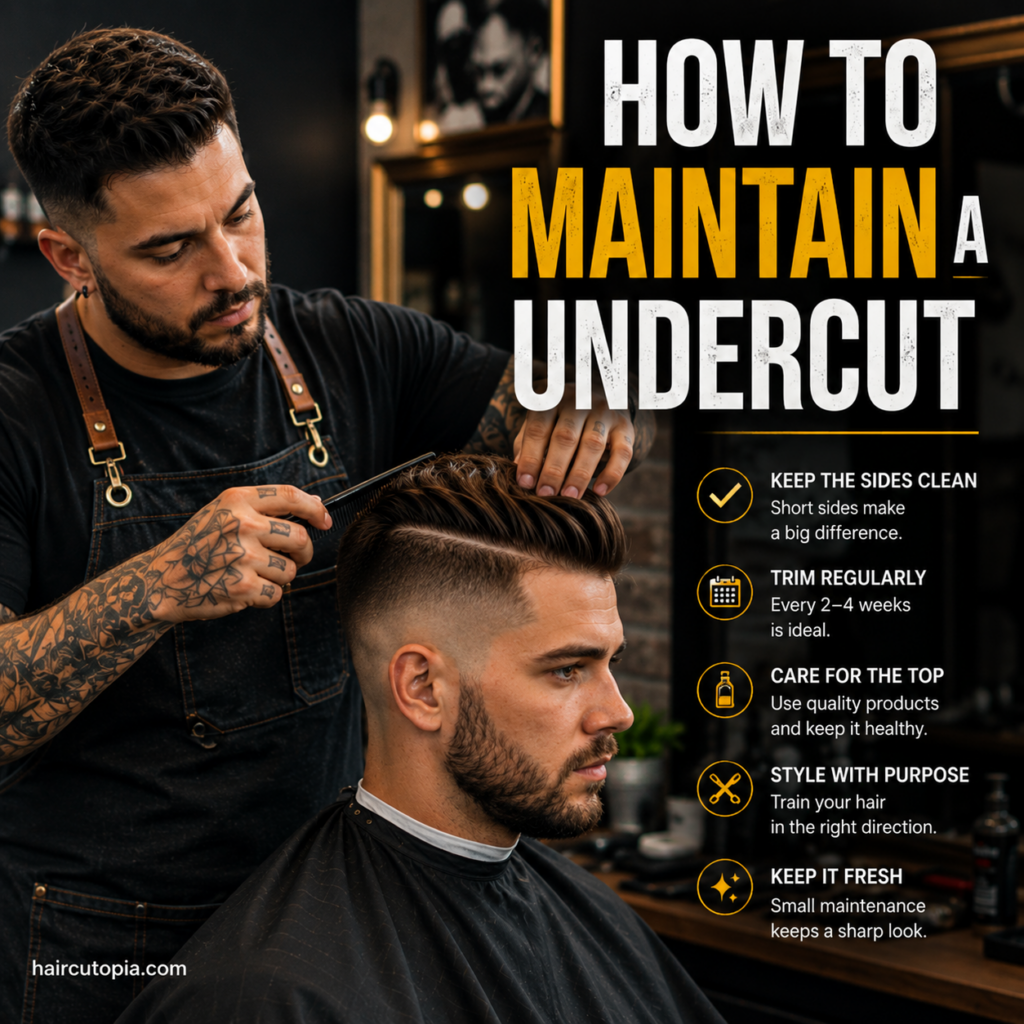
- Side part with low or mid fade: every 2–4 weeks
- Side part with skin fade: roughly every 2–3 weeks for a consistently sharp finish
- Side part with hard part: touch up as the shaved line noticeably grows in
These aren’t strict rules.
If you like how your haircut looks after four weeks, there’s no reason to cut it just because a particular amount of time has passed.
Some people actually prefer their side part after it has grown in slightly.
What to Do Between Barber Visits
You can extend the life of your haircut with a few simple habits.
Keep the neckline and areas around your ears clean, but be cautious about attempting major clipper work yourself.
A small grooming trimmer can help with stray hairs, but trying to recreate a fade without experience can quickly change the shape of the haircut.
Between visits, concentrate on:
- Keeping your hair clean and conditioned
- Maintaining the established part
- Styling the top consistently
- Controlling product buildup
- Cleaning up obvious stray hairs
- Keeping facial hair tidy if it’s blended into the haircut
If the sides become too bulky, it’s usually better to schedule a barber cleanup than attempt to reshape them yourself.
How to Refresh a Side Part Without Washing It
Sometimes your haircut looks fine when you go to bed and completely different the next morning.
You don’t necessarily need to shampoo it again.
Lightly dampen the areas that have lost their shape. You can do this with wet hands or a spray bottle.
Then:
- Re-establish the part with your fingers or a comb.
- Direct the hair back into position.
- Blow-dry it if you need additional volume or control.
- Add a small amount of fresh styling product if necessary.
- Finish with your fingers for a more natural appearance.
If there’s already plenty of product remaining in your hair, water and restyling may be all you need.
Maintaining a Side Part While Growing Your Hair
Growing out a side part doesn’t mean you have to abandon the style.
In fact, a side part can work particularly well during the awkward stages between shorter and medium-length hair.
As the top gets longer, you’ll probably need less frequent length removal but more attention to shape and bulk.
Ask your barber to preserve the length while cleaning up areas that are becoming heavy or uneven.
You can also gradually transition from a structured side part into a looser, swept hairstyle as the hair grows.
Styling cream and lighter products often become more useful at longer lengths because they allow natural movement rather than locking everything into place.
Common Side Part Maintenance Mistakes
Even a straightforward hairstyle can become harder to manage when a few small habits work against it.
Fighting Your Natural Growth Pattern
Forcing your hair to part in a direction it strongly resists can turn a simple morning routine into a daily battle.
You can certainly change the direction of your part, but working with your natural growth pattern is usually easier.
Applying Too Much Product
Heavy product can flatten the top and make freshly washed hair look oily.
Start small and add more only when needed.
Ignoring the Sides
A perfectly styled top won’t completely disguise overgrown sideburns, bulky sides, or an untidy neckline.
The entire haircut contributes to the finished appearance.
Cutting the Hard Part Yourself
It’s tempting to follow the existing line with a trimmer.
One small slip, however, can widen or alter the part. Unless you’re comfortable using clippers, leave precision work to your barber.
Waiting Until the Haircut Is Completely Overgrown
You don’t have to wait until you desperately need a haircut.
If you know your side part looks best around the three-week mark, schedule your next appointment based on that pattern.
A Simple Side Part Maintenance Routine
You can keep the everyday routine surprisingly simple.
In the Morning
- Dampen the hair if necessary.
- Re-establish the part.
- Comb or direct the hair into position.
- Blow-dry for volume if desired.
- Apply a small amount of styling product.
- Make final adjustments with your fingers or comb.
Throughout the Week
Wash your hair according to your scalp and product needs rather than following an arbitrary schedule.
Pay attention to product buildup and dryness, and condition when necessary.
Every Few Weeks
Check the sides, sideburns, neckline, and overall shape.
If the haircut is becoming difficult to style even though the top is still at a good length, a cleanup may be all you need.
How to Make Your Side Part Last Longer
If you want fewer barber visits, choose a version of the haircut designed to grow out naturally.
A classic taper generally requires less visual upkeep than a skin fade. A natural part is easier to grow out than a shaved hard part. Keeping slightly more length on the sides also makes new growth less obvious.
Tell your barber that low maintenance is a priority.
They can adjust the haircut accordingly.
That might mean choosing:
- A low taper instead of a skin fade
- A natural part instead of a hard part
- Slightly longer sides
- A textured rather than highly precise finish
- Enough top length to accommodate several weeks of growth
The easiest haircut to maintain is usually one designed around your actual routine rather than one that only looks good immediately after leaving the barbershop.
Final Thoughts
Maintaining a side part doesn’t have to mean spending 20 minutes in front of the mirror every morning.
Start with a haircut that works with your natural hair, keep the part consistent, and use only enough styling product to provide the control you need. A blow dryer can help with stubborn hair and volume, but even that isn’t necessary for every version of the style.
The biggest difference comes from matching your maintenance routine to the haircut.
A classic side part with a natural taper can remain presentable for weeks, while a skin fade or hard part needs more frequent attention to stay sharp. Neither approach is better—they simply require different levels of upkeep.
Once you know how your own hair grows and when your haircut starts losing its shape, maintaining a side part becomes much easier.