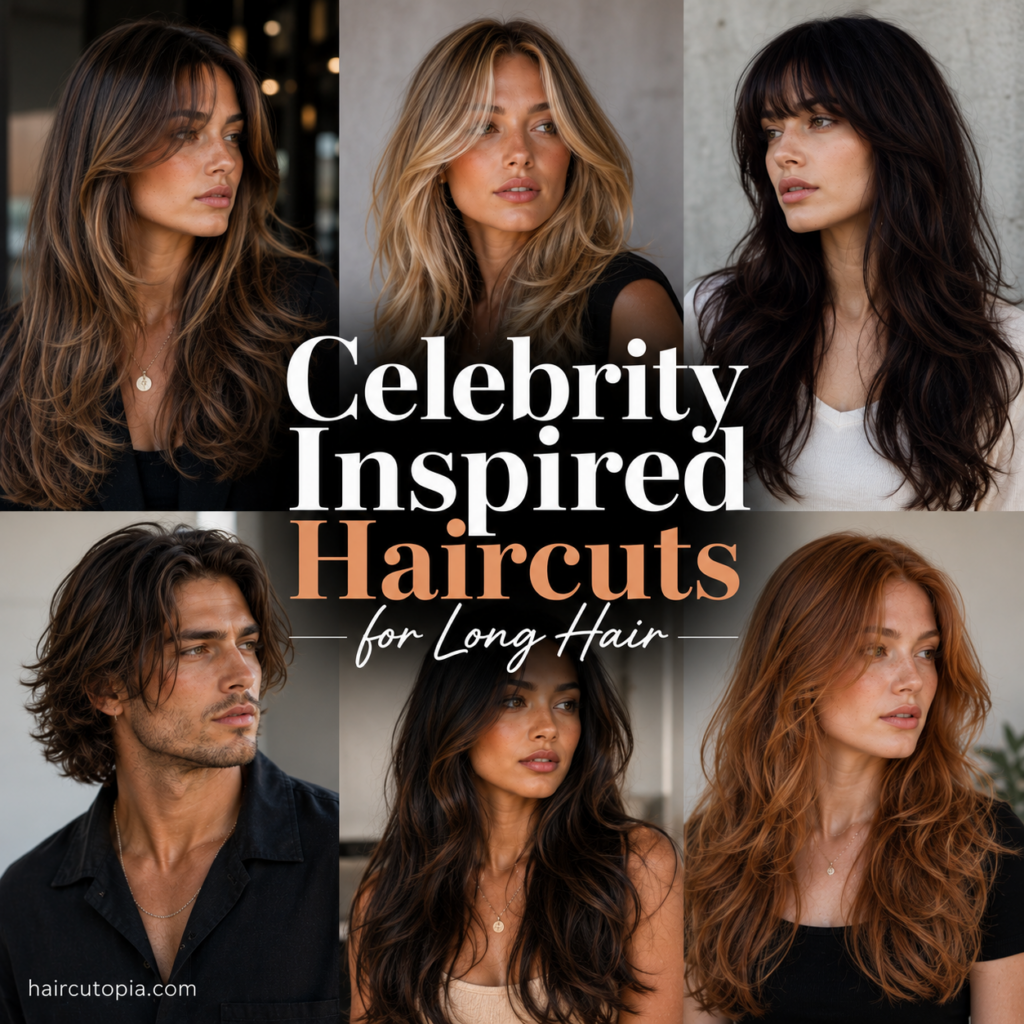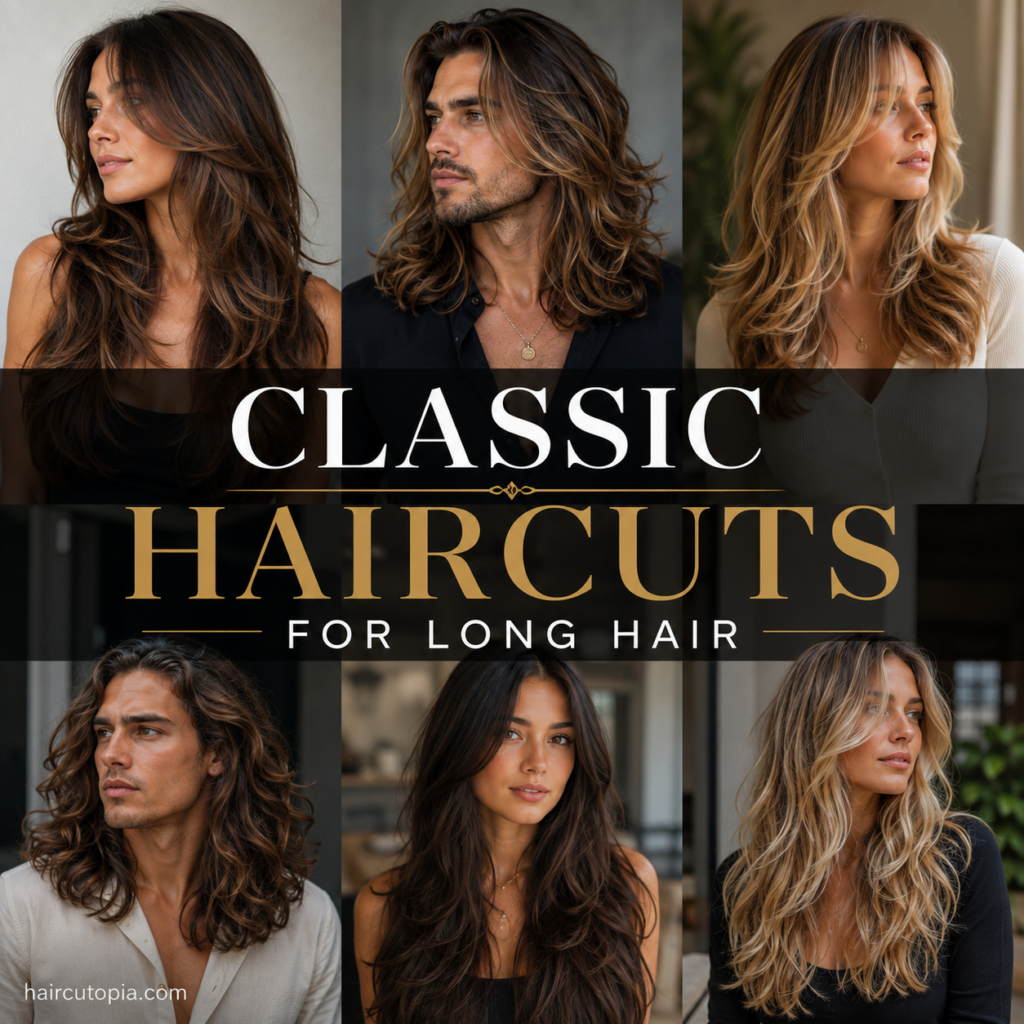
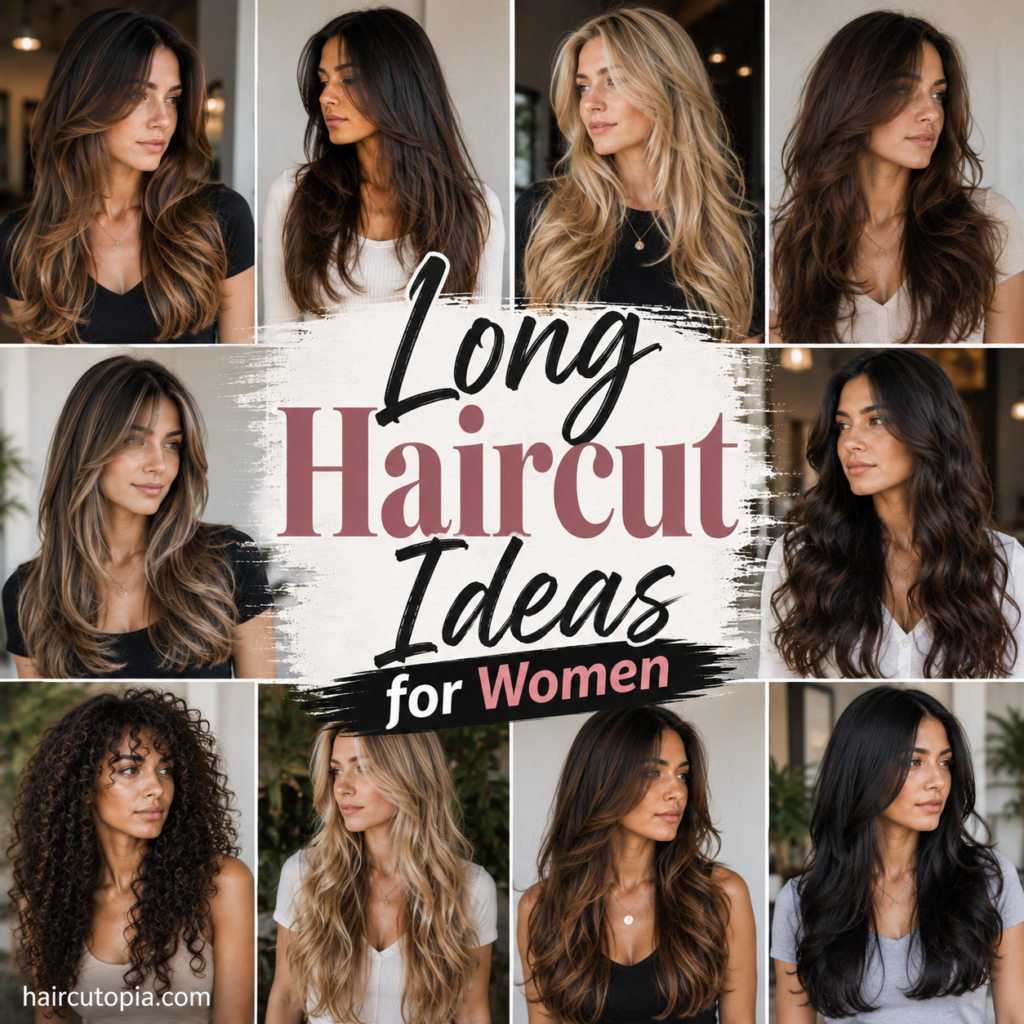
Long hair gives you an incredible amount of freedom. You can keep it simple and flowing, add layers for movement, frame your face with shorter pieces, experiment with bangs, or let natural waves and curls become the main feature.
But length alone doesn’t make a haircut.
When long hair starts feeling heavy, flat, or difficult to style, the problem may be the shape rather than the length itself. A few carefully placed layers can bring back movement. A different perimeter can make the ends look fuller. Even something as simple as changing the front pieces can make long hair feel completely different without sacrificing much length.
Whether you’re growing your hair, maintaining a length you already love, or looking for a noticeable change without going short, these long haircut ideas for women cover classic cuts, layers, bangs, straight hair, waves, curls, thick and fine textures, and plenty of modern styles. If you’re considering taking off more length without going dramatically short, medium haircut ideas for women can offer a useful middle ground with plenty of styling versatility.
What Is Considered Long Hair for Women?
There’s no exact measurement that officially makes hair “long.”
Generally, hair that extends several inches below the shoulders and toward the chest is considered long. Waist-length and hip-length hair obviously fall into this category as well.
Common long-hair lengths include:
- Below the shoulders
- Chest length
- Mid-back length
- Waist length
- Hip length
Texture affects how length appears.
Curly and coily hair can look considerably shorter in its natural state because of shrinkage. Straight hair displays its full length more clearly.
Your height and proportions also matter. The same measured hair length may appear much longer on one person than another.
Classic Long Haircuts for Women
Some long hairstyles never really disappear. They simply evolve as styling trends change.
Long One-Length Hair
A one-length haircut keeps most of the perimeter at approximately the same level.
This creates a strong, full-looking edge and allows the length itself to become the focus.
It’s especially useful for fine or straight hair when preserving density through the ends is important.
One-length hair doesn’t necessarily have to look severe. Softening the perimeter slightly can preserve the overall fullness while creating more natural movement.
Long Layered Hair
Layers create different lengths throughout the haircut.
They can reduce weight, encourage movement, add volume, and help waves or curls form more freely.
Long layers tend to preserve the overall length while creating separation toward the lower portions of the hair.
Long Hair With a Side Part
A side part shifts more volume toward one side of the head.
It’s one of the easiest ways to change long hair without actually cutting it.
A deeper part can create noticeable volume, while a subtle off-center part produces a softer effect.
Long Hair With a Middle Part
A middle part creates relatively symmetrical framing around the face.
It works with straight, wavy, curly, layered, and one-length hair.
Add face-framing layers or curtain bangs and the center part becomes an important part of the overall haircut rather than simply a styling choice.
Modern Long Haircut Ideas for Women
Modern long hair tends to be less about maintaining one perfect shape and more about creating movement.
Long Textured Hair
Texture prevents long hair from looking overly uniform.
Natural waves and curls already create this effect, while straight hair can gain texture through layering and styling.
The goal is usually movement rather than frizz or random unevenness.
Long Hair With Face-Framing Layers
Face-framing layers are one of the easiest ways to change long hair while preserving most of the overall length.
The shortest pieces can begin around the:
- Cheekbones
- Jaw
- Chin
- Shoulders
Where they start changes how dramatic the haircut appears.
Shorter pieces create more obvious framing, while longer ones blend subtly into the rest of the hair.
Butterfly Haircut
The butterfly haircut uses shorter layers through the upper portions and around the face while keeping significant length underneath.
When styled, those shorter layers can sweep away from the face and create a light, voluminous appearance.
The haircut works particularly well when you want the movement of shorter hair without actually giving up your long perimeter.
Long Shag
A long shag uses more noticeable layering throughout the hair.
Shorter crown layers create movement and volume, while the lower sections maintain length.
Shags work particularly well with waves and curls, although straight hair can also create a striking version of the style.
Long Layered Haircut Ideas for Women
Layering is one of the biggest decisions you’ll make with long hair.
The right layers can make hair feel lighter and more dynamic. Too many, however, can remove more density than you intended.
Long Subtle Layers
Subtle layers are ideal if you want movement without dramatically changing the silhouette.
Most of the length remains intact, with gentle differences between sections.
Long Face-Framing Layers
These layers concentrate the biggest changes around the front.
They can connect bangs to the rest of the hair or simply add movement around the face.
Long Choppy Layers
Choppy layers create more obvious separation.
They’re a good choice when you prefer textured, intentionally undone hairstyles rather than a perfectly smooth finish.
Long Rounded Layers
Rounded layering creates movement that follows a softer silhouette around the head and through the lengths.
It can work particularly well with thick or voluminous hair.
Long Feathered Layers
Feathered layers are designed to move outward and away from the face.
When styled with a round brush or similar technique, they create noticeable movement through the front and sides.
Long V-Cut Layers
A V-cut creates a perimeter that gradually becomes longest toward the center of the back.
Viewed from behind, the ends form a subtle or pronounced V shape.
Layers can be incorporated throughout while preserving that longer central point.
Long U-Cut Layers
A U-shaped cut creates a softer curve than a V-cut.
The center remains longer, but the transition toward the sides is more gradual.
This is a useful option if you want shape from the back without creating a sharp point.
Butterfly Haircut Ideas for Long Hair
The butterfly cut has become popular because it can create a dramatic layered appearance without sacrificing the longest sections.
Classic Butterfly Cut
The classic version combines shorter face-framing pieces with longer layers underneath.
When styled away from the face, the upper layers create volume and movement.
Butterfly Cut With Curtain Bangs
Curtain bangs blend naturally into butterfly layers.
The bangs create the shortest framing sections before gradually transitioning into longer pieces.
Butterfly Cut for Thick Hair
Thick hair can benefit from the weight removal created by butterfly layers.
However, the amount of layering should be customized so the ends don’t become unnecessarily thin.
Butterfly Cut for Fine Hair
Fine hair can also wear butterfly-inspired layers, but a more restrained approach may preserve density better.
Longer upper layers can create movement without removing too much hair from the perimeter.
Long Haircuts With Bangs
Bangs can dramatically change long hair while leaving almost all of the overall length untouched.
Curtain Bangs
Curtain bangs divide near the center and gradually become longer toward the sides.
They’re particularly easy to blend into long layers.
Wispy Bangs
Wispy bangs create a lighter fringe that allows portions of the forehead to remain visible.
They can soften long, straight hair without creating a heavy horizontal line.
Blunt Bangs
Blunt bangs create much stronger contrast with long hair.
Pairing a defined fringe with a long, simple perimeter can produce a particularly striking shape.
Bottleneck Bangs
Bottleneck bangs begin shorter toward the middle and gradually lengthen toward the sides.
They transition naturally into face-framing layers.
Side-Swept Bangs
Side-swept bangs move diagonally across the forehead.
They work especially well if you normally wear a side part.
Curly Bangs
Long curly hair can absolutely include bangs.
The key is cutting them with the curl pattern and shrinkage in mind rather than treating them like straight hair.
Long Haircuts for Straight Hair
Straight hair makes the shape of a long haircut highly visible.
Clean perimeters, layers, and face-framing sections are all easy to see.
Good options include:
- Long one-length hair
- Long layers
- V-shaped cuts
- U-shaped cuts
- Butterfly cuts
- Face-framing layers
- Long hair with blunt bangs
- Long hair with curtain bangs
If straight hair tends to lie flat, layers can introduce movement.
However, very fine straight hair may benefit from keeping more density through the ends rather than adding extensive layering.
Long Haircuts for Wavy Hair
Long wavy hair already has natural movement, so the haircut should encourage rather than fight it.
Long Natural Waves
Sometimes the best haircut is simply one that shapes the existing wave pattern.
Long layers can reduce weight and allow more waves to form throughout the hair.
Layered Wavy Hair
Layers can prevent long wavy hair from becoming overly heavy toward the bottom.
The exact placement depends on density and wave pattern.
Wavy Butterfly Cut
Butterfly layers can amplify natural movement around the face and upper sections.
The result tends to look softer than the heavily styled version often seen on straight hair.
Long Wavy Shag
Shag layering and waves are a natural combination.
Shorter crown layers can encourage volume while longer sections retain the overall length.
Wavy Hair With Curtain Bangs
Curtain bangs don’t need to be perfectly straight.
Allowing them to follow the natural wave pattern can create a softer transition into the rest of the haircut.
Long Haircuts for Curly Hair
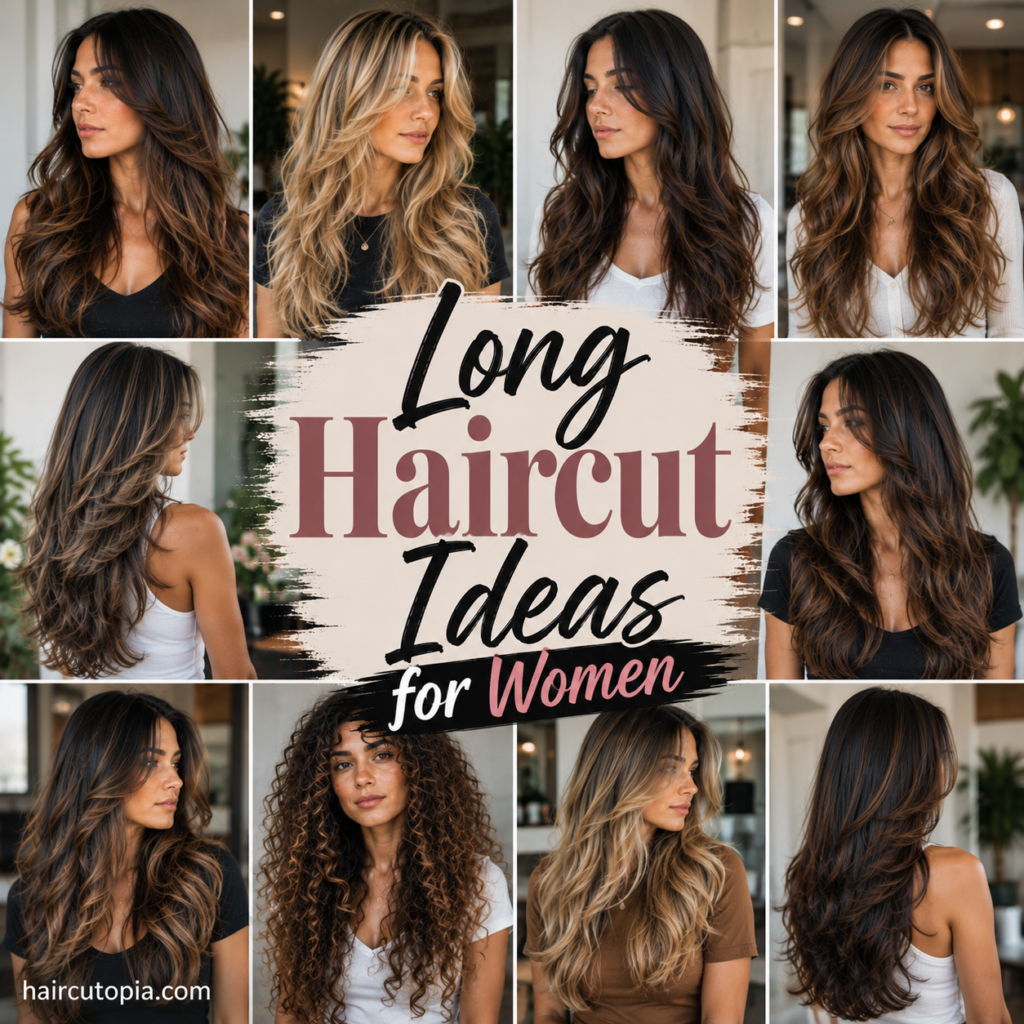
Long curls can create incredible volume and shape, but the weight of the hair becomes increasingly important as it grows.
Long Layered Curls
Layers can distribute curl volume throughout the haircut.
Removing some weight may also allow curls closer to the crown to form more freely.
Long Curly Hair With Bangs
Curly bangs can connect the front of the haircut with the texture throughout the rest of the hair.
They can be full, wispy, or swept slightly to the side.
Rounded Long Curls
A rounded shape distributes volume around the sides rather than allowing everything to hang downward.
This can create a fuller silhouette.
Long Curly Shag
A curly shag uses shorter crown and face-framing layers to create movement throughout long curls.
The haircut can be subtle or deliberately dramatic.
Long Curls With Face-Framing Layers
Shorter curls around the face can create definition without requiring bangs.
Because curls shrink, decide on the desired dry length rather than judging the cut only when the hair is stretched.
Long Haircuts for Coily and Kinky Hair
Long coily and tightly textured hair can be shaped in many different ways depending on how you prefer to wear it.
Possible approaches include:
- Long rounded shapes
- Layered natural hair
- Face-framing coils
- Long tapered shapes
- Natural hair with bangs
- Stretched layered styles
Shrinkage becomes particularly important when discussing length.
Two sections that appear similar while stretched may behave very differently once dry.
A stylist experienced with your texture can shape the hair according to how it naturally sits rather than relying solely on stretched measurements.
Long Haircuts for Thick Hair
Thick hair gives long styles impressive fullness, but the weight can become significant.
If the hair feels heavy or difficult to style, you don’t necessarily need to cut it short. Strategic layering may be enough. But if removing substantial length is something you’re considering, exploring short haircut ideas for women can help you compare cropped and above-the-shoulder options before making a bigger change.
Strategic layering may be enough.
Good options include:
- Long layers
- Butterfly cut
- Long shag
- V-cut layers
- U-shaped layers
- Face-framing layers
- Layered waves
Removing weight selectively is usually preferable to aggressively thinning the entire haircut.
Too much thinning can sometimes create frizz, uneven density, or sparse-looking ends.
Long Haircuts for Fine or Thin Hair
Fine hair can absolutely be worn long.
The main consideration is preserving enough density through the lengths and ends.
Consider:
- One-length long hair
- U-shaped perimeter
- Minimal long layers
- Soft face-framing pieces
- Long blunt cut
- Subtle curtain bangs
Avoid assuming that lots of layers automatically create volume.
For some fine hair, extensive layering does the opposite by removing density from the lower sections.
Lightweight products can also help prevent long fine hair from becoming weighed down.
Long Haircuts for Voluminous Hair
If your hair already has plenty of volume, shaping that volume becomes more important than creating more.
Long layers can distribute fullness throughout the haircut rather than allowing it to concentrate around the bottom.
Consider:
- Rounded layers
- Long shag
- Butterfly layers
- Layered curls
- U-shaped cuts
- Face-framing layers
The ideal shape depends on where your hair naturally expands when dry.
Long Shag Haircuts for Women
The long shag is built around movement.
Unlike subtle long layers, shag layers are meant to be noticeable.
A typical long shag may include:
- Shorter crown layers
- Face-framing pieces
- Curtain bangs
- Choppy ends
- Natural waves
- Curly texture
The haircut can have a soft, wearable shape or a much more dramatic rock-inspired appearance.
The biggest advantage is that it works particularly well with hair that already has some natural movement.
Long Wolf Cut
The wolf cut combines elements of a shag and mullet.
It generally has more volume and shorter layers around the crown with longer sections extending underneath.
A long wolf cut can include:
- Curtain bangs
- Choppy crown layers
- Face-framing pieces
- Textured ends
- Waves or curls
The contrast between the upper and lower sections can be subtle or dramatic.
If you prefer a softer look, ask for longer transitions between the layers.
Long Hair With Face-Framing Layers
Face-framing layers deserve special attention because they can change long hair without removing much length.
Cheekbone-level pieces create a noticeable difference around the front.
Starting near the chin produces a softer effect.
Beginning around the shoulders creates an even more subtle transition.
Think about how you usually wear your hair before choosing the shortest layer.
If you frequently wear a ponytail, shorter front pieces may fall out around your face. That might be exactly what you want—or something you’d rather avoid.
Long Hair With Curtain Bangs
Curtain bangs work particularly well with long hair because there’s plenty of length for them to blend into.
They can be paired with:
- Butterfly cuts
- Shags
- Long layers
- Straight hair
- Waves
- Curls
- Center parts
One practical advantage is the grow-out process.
As curtain bangs become longer, they naturally begin behaving like face-framing layers.
Long Hair With a Middle Part
A center part creates balanced framing and can emphasize symmetrical layers around the front.
It works especially well with butterfly cuts and curtain bangs.
But your part doesn’t need to sit at the mathematical center of your head.
Following your natural growth pattern often creates a softer result and may make everyday styling easier.
Long Hair With a Side Part
The side part is an easy way to introduce asymmetry and volume.
A deep side part can create dramatic lift, particularly with waves or curls.
It can also pair naturally with side-swept bangs and face-framing layers.
If you normally wear a middle part, simply switching sides occasionally can make your existing haircut look surprisingly different.
V-Shaped Long Haircuts
A V-shaped haircut is particularly noticeable from the back.
Instead of creating a straight line across the ends, the perimeter gradually becomes longer toward the center.
The shape can be:
- Soft and subtle
- Long and dramatic
- Combined with layers
- Worn straight
- Worn wavy
A V-cut preserves maximum length through the center while removing more around the sides.
U-Shaped Long Haircuts
The U-cut provides a softer alternative.
Instead of forming a point, the perimeter creates a rounded curve.
This can preserve a full appearance while preventing the ends from forming a completely straight horizontal line.
U-shaped cuts work particularly well with long layers because the two shapes can blend naturally.
Long Blunt Haircuts
Long hair doesn’t have to be heavily layered.
A blunt or nearly blunt perimeter can create a dense, polished appearance.
This is particularly useful for fine hair because the ends aren’t broken into many different lengths.
The haircut can still include subtle face-framing pieces around the front while maintaining a strong perimeter through the back.
Long Haircuts for Women With Glasses
Long hair can frame glasses in countless ways.
If you wear frames every day, consider how bangs and shorter front layers interact with them.
Good combinations include:
- Curtain bangs with long layers
- Side-swept bangs
- Long waves with a middle part
- Face-framing layers
- Long curls
- Simple one-length hair
If you’re planning significant bangs, wear your usual glasses to the salon so your stylist can see exactly where everything falls.
Long Haircut Ideas by Face Shape
Face shape can help you think about proportions, but it shouldn’t dictate your hairstyle.
Hair texture, density, features, glasses, and personal preferences matter just as much.
Long Haircuts for Round Faces
Long layers and face-framing pieces can create vertical movement around the face.
Possible options include:
- Butterfly layers
- Side parts
- Long waves
- Face-framing layers
- V-shaped cuts
Long Haircuts for Square Faces
You can soften a defined jawline with waves and layers or emphasize it with straighter, more structured hair.
Consider:
- Long waves
- Curtain bangs
- Butterfly cuts
- Rounded layers
- Long shags
Long Haircuts for Oval Faces
Oval faces can generally accommodate many long hairstyles.
Straight cuts, layers, waves, curls, bangs, shags, and butterfly cuts are all possibilities.
Long Haircuts for Long or Oblong Faces
Extremely flat hair can emphasize vertical length.
Bangs, waves, curls, and layers that create movement around the sides can change those proportions.
Long Haircuts for Heart-Shaped Faces
Movement around the jaw and lower portions of the hair can complement a narrower chin.
Long waves, curtain bangs, face-framing layers, and U-shaped cuts are worth considering.
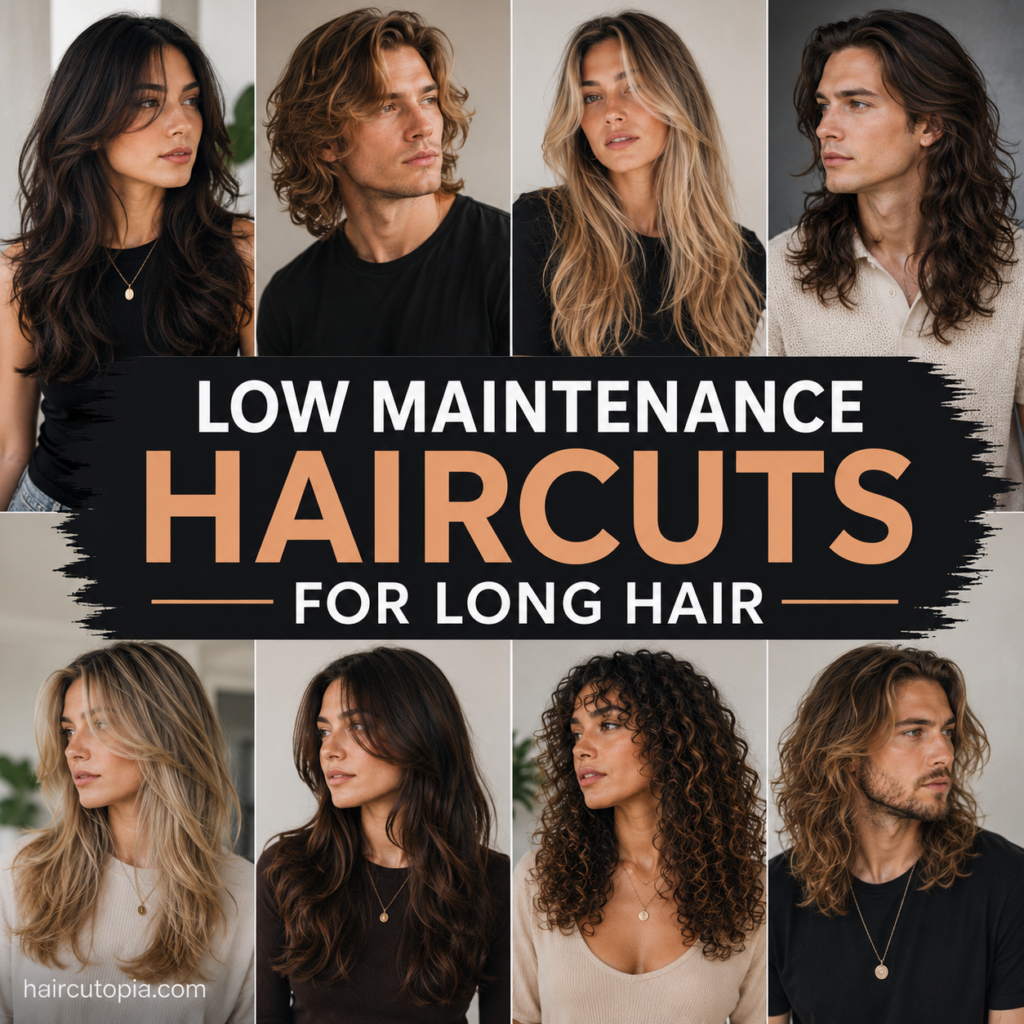
Low-Maintenance Long Haircuts for Women
Long hair requires care simply because there’s more of it, but the haircut itself doesn’t need to demand complicated styling.
Lower-maintenance options include:
- One-length long hair
- Long natural waves
- Subtle long layers
- U-shaped haircut
- Minimal face-framing layers
- Long natural curls
- Long blunt cut
The easiest haircut usually works with your natural texture.
If your hair naturally dries wavy, a haircut designed around those waves will generally require less effort than one that needs to be straightened every day.
Professional Long Haircuts for Women
Long hair can easily transition into professional settings.
Polished options include:
- Sleek long layers
- Straight one-length hair
- Soft waves
- Low ponytail
- Low bun
- Half-up hairstyle
- Controlled curls
- Side-parted long hair
The underlying haircut doesn’t necessarily need to be conservative.
A shag or butterfly cut can look dramatically different depending on how it’s styled.
Long Haircuts for Women Over 40
There isn’t a point where long hair suddenly stops being appropriate.
If you enjoy it and it works with your current texture and density, there’s no reason age alone should determine the length.
Options include:
- Butterfly layers
- Long waves
- U-shaped layers
- Face-framing cuts
- Long curls
- Curtain bangs
If your hair texture has changed over time, adjusting the layering may make the length easier to manage.
Long Haircuts for Women Over 50
Long hair can remain flattering and practical well beyond 50.
If the hair has become finer, preserving density through the ends may become more important.
If it has become wavier, curlier, or coarser, layers may help manage its new behavior.
Consider:
- Long blunt cuts
- Minimal layers
- Soft waves
- Face-framing layers
- U-shaped cuts
- Long silver hair
Choose according to your hair rather than outdated rules about which lengths belong to certain ages.
Long Haircuts for Women Over 60
Long hair can look beautiful at 60, 70, and beyond.
Gray and silver hair can be especially striking when allowed to grow because the additional length displays more tonal variation.
Possible styles include:
- Long silver layers
- Shoulder-to-chest-length gray hair
- Natural waves
- Long curls
- U-shaped cuts
- Soft face-framing layers
Maintenance and hair condition are more useful considerations than age.
Long Haircuts for Gray and Silver Hair
Gray hair doesn’t always behave the same way your pigmented hair did.
It may become coarser, finer, straighter, or more textured.
Choose a haircut based on its current behavior.
Long gray and silver styles can include:
- One-length silver hair
- Long gray layers
- Silver waves
- Long gray curls
- Butterfly layers
- Face-framing silver hair
- Long silver hair with curtain bangs
A strong haircut can make natural color variation part of the overall style.
How to Ask Your Stylist for a Long Haircut
When you’ve spent years growing your hair, the words “just a trim” can feel dangerous.
Be specific.
Instead of relying on vague terminology, discuss exactly what you’re comfortable changing.
Talk about:
- How much overall length can be removed
- Where you want the perimeter to fall
- Whether you prefer a U, V, or straighter shape
- How much layering you want
- Where the shortest layer should begin
- Whether you want face-framing pieces
- Whether you want bangs
- How you normally part your hair
- Whether you frequently wear it up
- How much daily styling you’re willing to do
Reference photos are particularly helpful for layers because words like “long layers” can mean different things to different people.
How to Care for Long Hair
The ends of long hair have been around much longer than the hair near your roots.
That means they’ve experienced more washing, brushing, styling, friction, and environmental exposure.
A simple routine can help keep long hair manageable.
Wash According to Your Hair and Scalp
There’s no universal washing schedule.
Your scalp, texture, activity level, product use, and environment all influence how often washing makes sense.
Condition the Lengths
Conditioner can improve manageability and help reduce tangling.
Concentrate on the areas that need it most rather than automatically applying a heavy amount everywhere.
Detangle Carefully
Start near the ends and gradually work upward.
Trying to force a brush directly through a large knot from the roots can create unnecessary pulling.
Reduce Rough Towel Drying
Gently squeezing or blotting out water creates less friction than vigorously rubbing the hair.
Protect Hair From Excessive Heat
If you regularly use hot styling tools, use appropriate heat protection and avoid more heat than necessary to create the style.
Styling Products for Long Hair
Long hair usually benefits from products that allow movement.
Leave-In Conditioner
Leave-in conditioner can improve manageability and help with tangling.
Styling Cream
A light cream can smooth flyaways and provide gentle control.
Curl Cream
Curl cream can help define naturally curly and wavy textures.
Lightweight Serum
A small amount can smooth the appearance of the lengths and ends.
Volumizing Mousse
Mousse can provide lift around the roots without necessarily adding heavy weight.
Texture Spray
Texture spray can give straight or wavy hair more separation and grip.
With long hair, start with a small amount of product and build gradually.
How Often Should You Trim Long Hair?
There’s no universal trim schedule for long hair.
The right timing depends on the haircut, hair condition, styling habits, and whether you’re actively growing it.
Consider getting a trim when:
- The ends become noticeably rough
- Tangling increases
- The perimeter becomes uneven
- Layers lose their intended shape
- Styling becomes more difficult
- The ends appear noticeably thinner than the rest
If you’re growing your hair longer, tell your stylist before every trim so preserving length remains the priority.
How to Grow Your Hair Longer
Growing long hair mostly requires patience, but maintaining the hair you already have matters too.
A practical approach is:
- Decide on your approximate target length.
- Minimize unnecessary removal of healthy length.
- Trim damaged or difficult ends when needed.
- Handle the hair gently during detangling.
- Avoid excessive tension from very tight hairstyles.
- Adjust your care routine as the hair becomes longer.
- Use transitional styles when awkward lengths appear.
Growth happens gradually, so focusing on maintaining manageable lengths is generally more useful than obsessing over every fraction of an inch.
Choosing the Right Long Haircut for You
Long hair doesn’t have to mean one specific look.
Start with your texture.
Straight hair can showcase clean perimeters and precise layering. Waves naturally complement shags and butterfly cuts. Curls may benefit from carefully distributed layers. Fine hair often looks fuller with fewer layers, while thick hair may become easier to manage once some strategic weight is removed.
Then think about your routine.
Do you usually air-dry your hair? Wear it in a ponytail? Style it with heat? Leave it natural?
A haircut that looks amazing only after a 45-minute styling routine may not be the best choice if you normally have five minutes.
That’s the real advantage of having so many long haircut ideas to choose from.
You don’t need to sacrifice the length you love to make your hair feel different. Sometimes a few layers, a new fringe, or a change in shape is enough to make long hair feel completely new again.
Frequently Asked Questions About Long Haircuts for Women
What are the most popular long haircut ideas for women?
Popular options include long layers, butterfly cuts, face-framing layers, shags, wolf cuts, U-shaped and V-shaped cuts, curtain bangs, long curls, and natural waves.
What haircut is best for long hair?
There isn’t one best haircut. Fine hair may benefit from a fuller perimeter and minimal layering, while thick, wavy, or curly hair may benefit from more strategic layers.
Are layers good for long hair?
Layers can add movement, reduce weight, create volume, and encourage natural texture. The amount and placement should be customized to your hair density and desired style.
What long haircut makes hair look fuller?
One-length cuts, blunt perimeters, U-shaped cuts, and styles with minimal layering can help preserve the appearance of density, particularly with fine hair.
What long haircut is good for thick hair?
Butterfly cuts, long layers, shags, U-shaped cuts, V-shaped cuts, and strategically debulked styles can make thick long hair easier to manage.
Can fine hair be worn long?
Yes. Fine hair can look beautiful long, especially when the ends remain relatively full. Avoid excessive layering if it makes the perimeter look sparse.
What long haircut works with curly hair?
Layered curls, curly shags, rounded cuts, face-framing curls, and curly styles with bangs can all work well. The haircut should account for shrinkage and the natural curl pattern.
What is the difference between a U-cut and V-cut?
A U-cut creates a rounded perimeter when viewed from behind, while a V-cut gradually becomes longer toward the center and forms a more pointed shape.
Is the butterfly haircut good for long hair?
Yes. Long hair provides enough length to create shorter upper and face-framing layers while preserving substantial length underneath, which is the defining idea behind the butterfly cut.
Are long haircuts high maintenance?
Long hair usually requires more washing, drying, conditioning, and detangling than shorter hair. Daily styling, however, can be simple if the haircut works naturally with your texture.