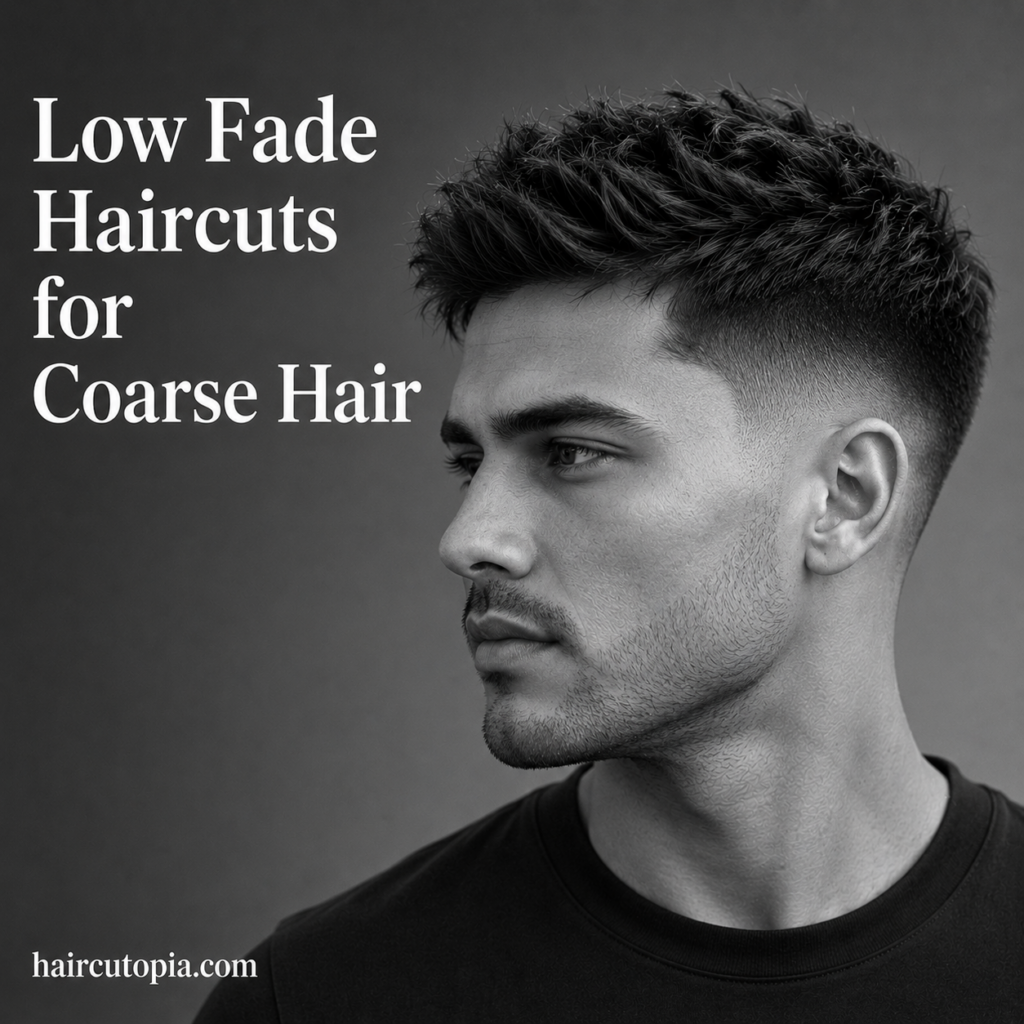
Coarse hair has advantages that plenty of people wish they had. It often looks fuller, creates natural volume, and can hold shape extremely well. But anyone with coarse hair also knows it can become bulky fast, especially around the sides and back.
That’s where a low fade makes a huge difference.
Low fade haircuts for coarse hair help remove excess weight while keeping the natural strength and texture of the hair intact. Instead of fighting thickness, the cut creates balance. The result is cleaner edges, better shape, and a style that feels more controlled without losing character.
Whether your hair is straight, wavy, curly, or somewhere in between, a low fade can make coarse hair easier to wear and easier to style.
What Is a Low Fade Haircut?
A low fade gradually tapers the hair near the ears and neckline before blending into longer hair above.
Unlike higher fades that create stronger contrast, low fades keep more hair through the sides while still delivering a clean appearance.
For coarse hair, this subtle transition works especially well because:
- It removes excess bulk
- It improves overall shape
- It keeps hair from appearing too heavy
- It creates a cleaner silhouette
- It blends naturally into thick textures
Because coarse hair naturally adds volume, low fades help keep everything balanced.
Why Coarse Hair Works Well With Low Fades
One challenge with coarse hair is managing density.
Hair can quickly become too wide around the sides, making even good haircuts lose shape as they grow.
Low fades help solve that problem.
Benefits include:
- Better side profile
- Reduced puffiness
- More definition around the haircut
- Easier daily styling
- Cleaner growth between cuts
Instead of making thick hair feel overwhelming, the fade gives it structure.
Popular Low Fade Haircuts for Coarse Hair
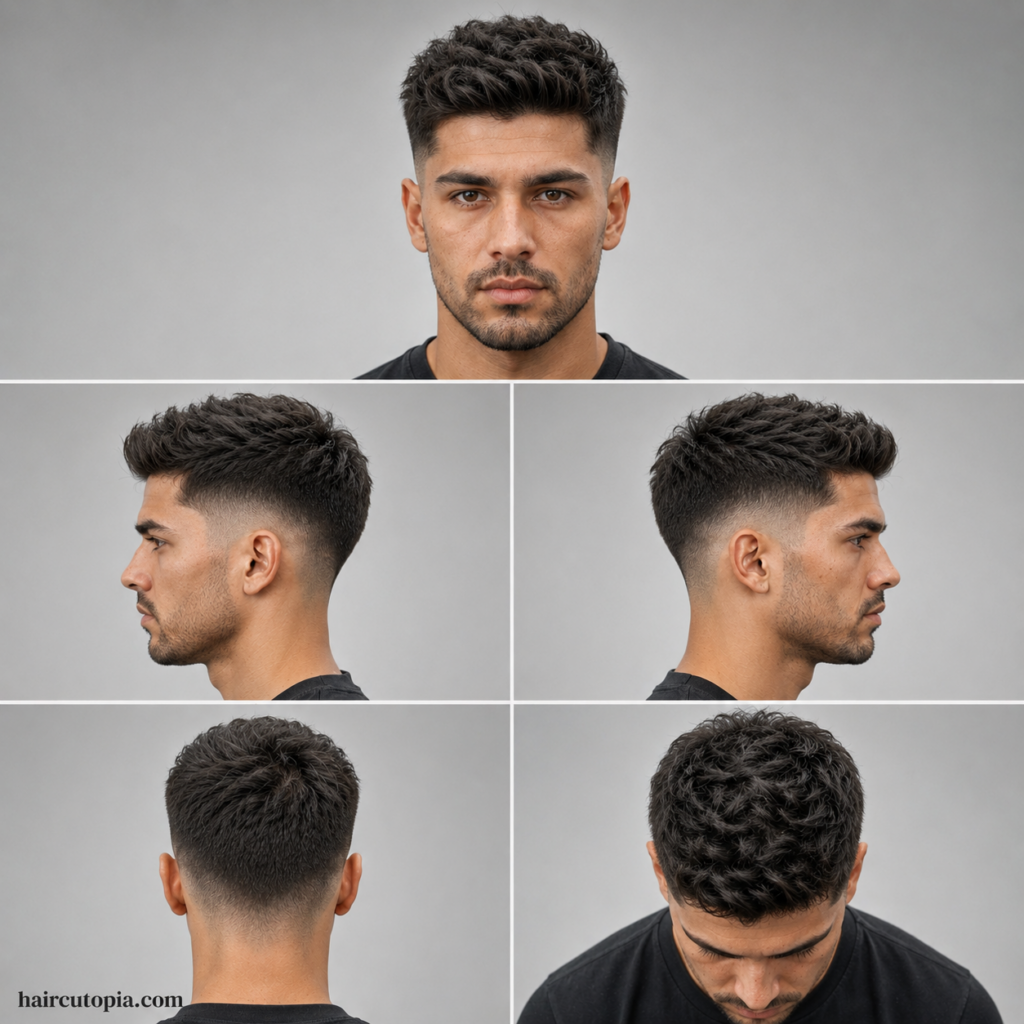
Textured Crop With Low Fade
A textured crop works especially well with coarse hair because thicker strands naturally hold separation and shape.
The fade keeps the sides neat while the top stays layered and relaxed.
Why it works:
- Easy maintenance
- Modern appearance
- Minimal styling effort
- Great for thick hair density
Short Spiky Top With Low Fade
Coarse hair naturally supports spiky styles without needing excessive product.
Keeping the top short while fading the sides creates a clean and athletic look.
Works well for:
- Active lifestyles
- Thick straight hair
- Men wanting low maintenance
Messy Textured Style With Low Fade
Sometimes less structure actually works better.
Coarse hair often creates natural movement and separation, making messy styles look intentional.
A small amount of texture cream usually does the job.
Side Part With Low Fade
Classic styles can work surprisingly well with coarse textures.
The side part adds organization while the fade removes excess heaviness around the edges.
This style often feels:
- Professional
- Timeless
- Easy to customize
Low Skin Fade With Thick Top
If you want stronger contrast, a skin fade creates a sharper transition.
The fuller top stands out while the lower portion fades tightly into skin.
Keep in mind:
- Requires regular upkeep
- Grows out faster
- Needs frequent touch-ups
Brush Up Style With Low Fade
Coarse hair naturally creates volume, which makes brush-up styles easier.
The top gets styled upward while the fade keeps the sides controlled.
This option works particularly well for medium lengths.
Best Hair Length for Coarse Hair
Hair length changes how coarse hair behaves.
Short Length
Short cuts create easier maintenance and cleaner shape.
Benefits include:
- Faster styling
- Less weight
- Simpler upkeep
Medium Length
Medium lengths often create the most flexibility.
You can experiment with:
- Texture
- Volume
- Side parts
- Brush-up styles
- Messy finishes
Longer Lengths
Long coarse hair can create impressive volume but may require layering to prevent bulk.
Without shaping, it can quickly feel too heavy.
Face Shapes That Pair Well With Low Fades
Haircuts often look better when they work with facial proportions.
Oval Face Shape
Almost every low fade variation works well.
Round Face Shape
Height on top can create visual length.
Square Face Shape
Low fades naturally highlight stronger facial structure.
Heart Face Shape
Balanced volume usually works best.
What to Ask Your Barber
Coarse hair behaves differently from finer textures.
Be specific during your appointment.
Mention:
- How low you want the fade
- Desired top length
- Whether you want texture or cleaner shape
- Areas where hair grows especially thick
- How much styling you prefer daily
Small details can make a big difference.
Styling Tips for Coarse Hair
The right haircut helps, but products and technique matter too.
Use Lightweight Products
Heavy products can create stiffness.
Better options include:
- Matte clay
- Texture cream
- Sea salt spray
- Light styling paste
Apply Product to Damp Hair
Slight moisture usually helps distribute products evenly through coarse hair.
Dry hair can sometimes resist styling.
Don’t Fight Natural Texture
Trying to force coarse hair into styles that work against its natural pattern often creates frustration.
Working with texture usually produces better results.
Common Mistakes to Avoid
Leaving Too Much Bulk on the Sides
This is one of the biggest issues with coarse hair.
Removing excess weight creates better balance.
Skipping Maintenance Appointments
Coarse hair often grows outward quickly.
Many people schedule trims every:
- 2–3 weeks for tighter fades
- 3–4 weeks for softer fades
Using Too Much Product
More product rarely equals better results.
Start small and build gradually.
Final Thoughts
Low fade haircuts for coarse hair work because they remove weight where it’s needed while preserving the texture and volume that make thick hair stand out.
Whether you choose a textured crop, side part, brush up, or messy style, a low fade creates a cleaner appearance without making the haircut feel overly aggressive.
Sometimes the key isn’t controlling coarse hair. It’s simply shaping it the right way.