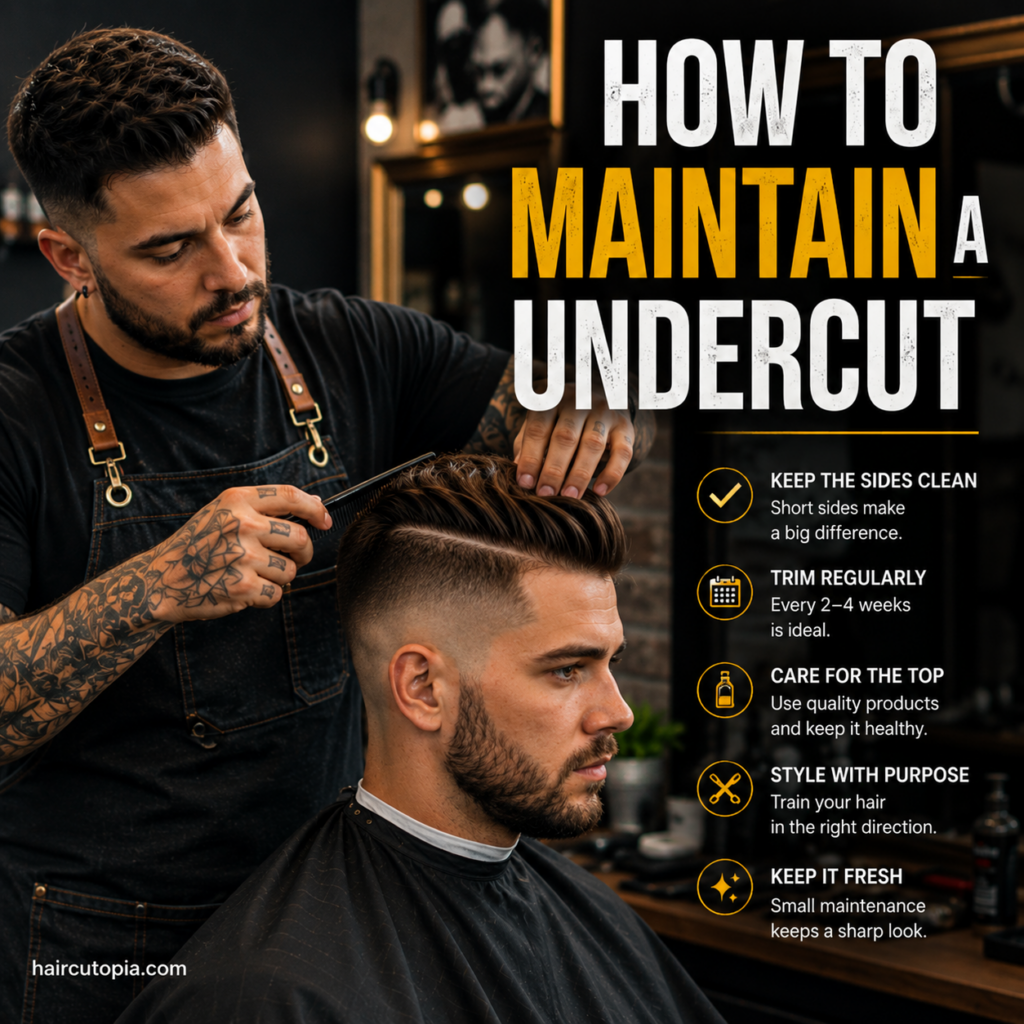
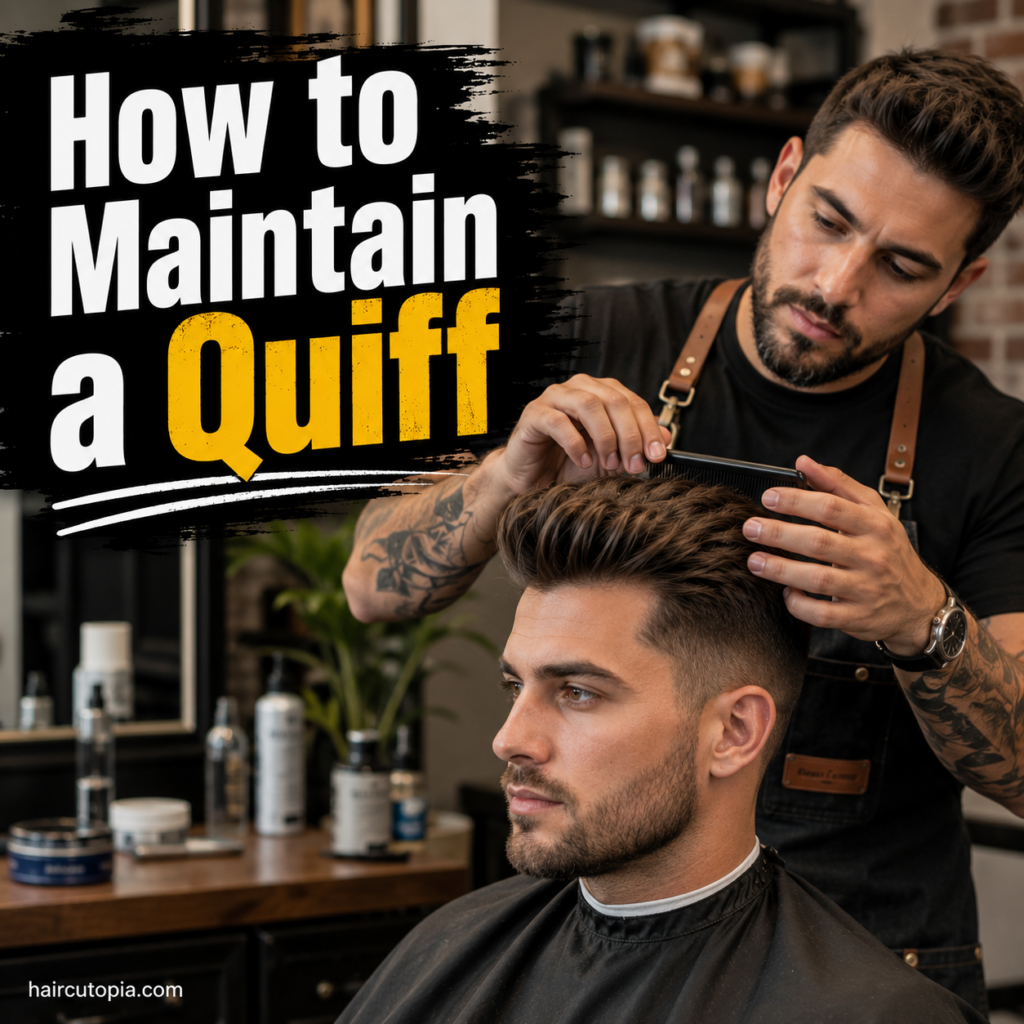
A good quiff can look effortless, but keeping it that way takes a little maintenance.
The good news is that you don’t need an elaborate grooming routine. Most of the work comes down to keeping the haircut properly shaped, learning how to create volume when you style it, and using products that suit your hair instead of fighting against it.
Whether you wear a short textured quiff, a classic version with longer sides, or a modern quiff with a fade, the same basic principles apply.
Here’s how to keep your quiff looking sharp between barber visits.
What Does Quiff Maintenance Involve?
Maintaining a quiff has two sides: maintaining the haircut itself and maintaining the style from day to day.
Your routine will usually involve:
- Keeping enough length at the front
- Getting the sides and back cleaned up regularly
- Washing and conditioning without weighing down the hair
- Blow-drying to restore volume
- Using an appropriate styling product
- Preventing excessive product buildup
- Adjusting your routine as the haircut grows
The exact amount of maintenance depends heavily on the type of quiff you have.
A short textured quiff can be relatively forgiving. A large, structured quiff paired with a skin fade will require more attention.
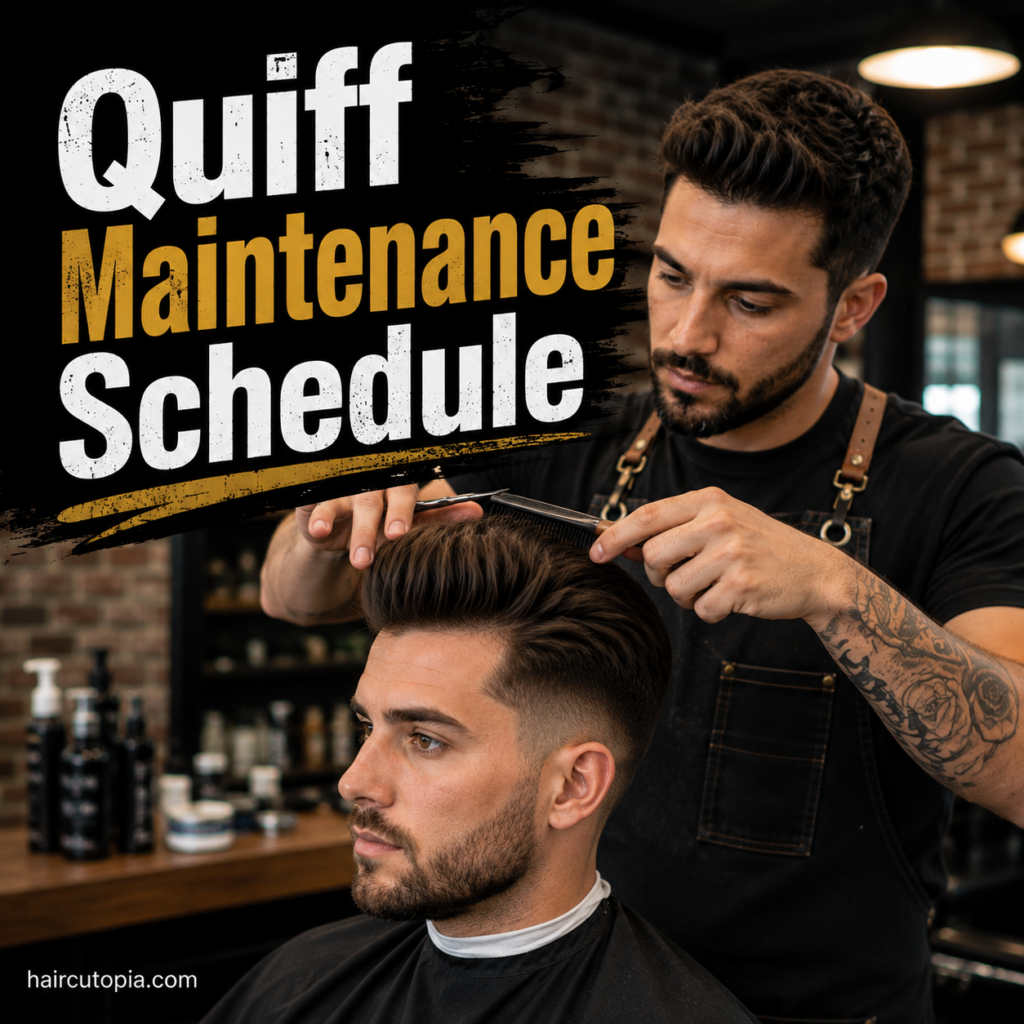
How Often Should You Get a Quiff Trimmed?
For most people, getting a haircut every 3 to 6 weeks is a reasonable starting point.
However, there isn’t one schedule that works for every quiff.
If you have a skin fade or very short sides, you may notice the haircut losing its crisp appearance after just a couple of weeks. A longer, scissor-cut quiff can grow out much more naturally.
A general maintenance schedule looks something like this:
- Skin fade: about every 2 to 3 weeks
- Short fade or taper: about every 3 to 4 weeks
- Classic quiff: about every 4 to 6 weeks
- Longer quiff: roughly every 4 to 8 weeks, depending on the shape
You don’t necessarily need to shorten the top significantly at every appointment.
If you like the length of your quiff, ask your barber to clean up the shape, remove excess bulk, and tidy the sides while preserving length toward the front.
Don’t Let the Front Get Cut Too Short
The front is what gives a quiff its characteristic height.
That makes it one of the most important areas to protect during a maintenance haircut.
If you tell your barber to simply “take some off the top,” you may end up losing more length at the front than you intended.
Instead, be specific.
You might say:
“I like the length in front, so I’d like to keep most of it. Just clean up the shape and remove some weight.”
Your barber can then adjust the haircut without eliminating the length you need for styling.
Maintain the Shape, Not Just the Length
A quiff can become difficult to style even when the hair isn’t particularly long.
Why?
Because the shape changes as it grows.
The sides become heavier, the transition into the top becomes less defined, and excess weight can cause the hair to collapse instead of lifting naturally.
This is why maintenance haircuts aren’t only about making the hair shorter.
Your barber may need to:
- Remove bulk from certain areas
- Rebalance the top
- Restore texture
- Clean up the neckline
- Redefine a taper or fade
- Blend the sides into the longer top
- Preserve extra length toward the front
If your quiff suddenly becomes harder to style even though your technique hasn’t changed, the haircut itself may simply need reshaping.
How to Maintain a Quiff Every Day
You don’t need to completely reconstruct your hairstyle every morning, but a consistent routine helps.
1. Start With Damp Hair
A quiff is usually easier to reshape when the hair is slightly damp.
If you’re styling after a shower, gently towel-dry your hair first.
If your hair is already dry, you can lightly dampen it rather than completely soaking it.
This resets the hair and makes it easier to control its direction.
2. Use a Pre-Styler if You Need Extra Volume
Not everyone needs a pre-styling product.
However, mousse, volumizing spray, sea salt spray, or a lightweight styling cream can make it easier to create volume before applying your main styling product.
The right choice depends on your hair.
Fine hair generally benefits from lightweight products that won’t pull it down. Thick or coarse hair may need something with more control.
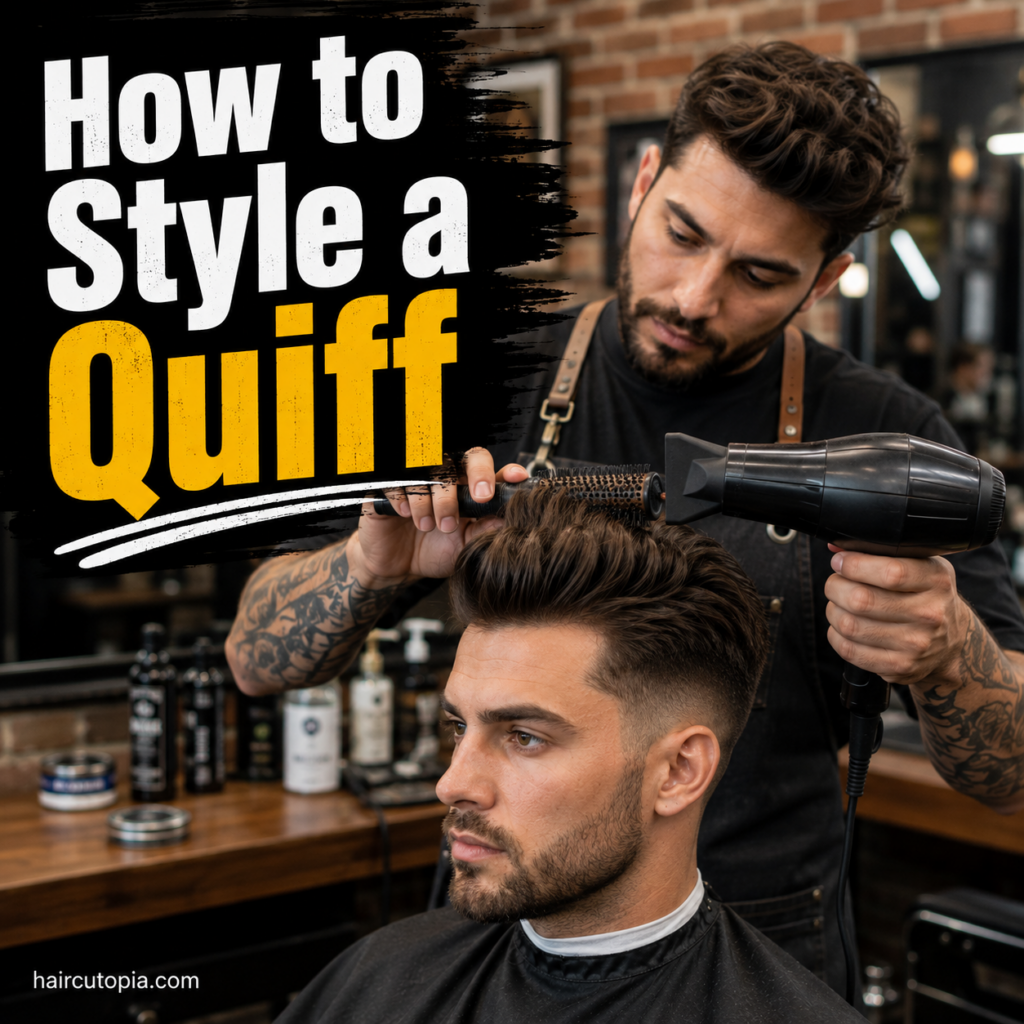
3. Blow-Dry the Quiff Into Shape
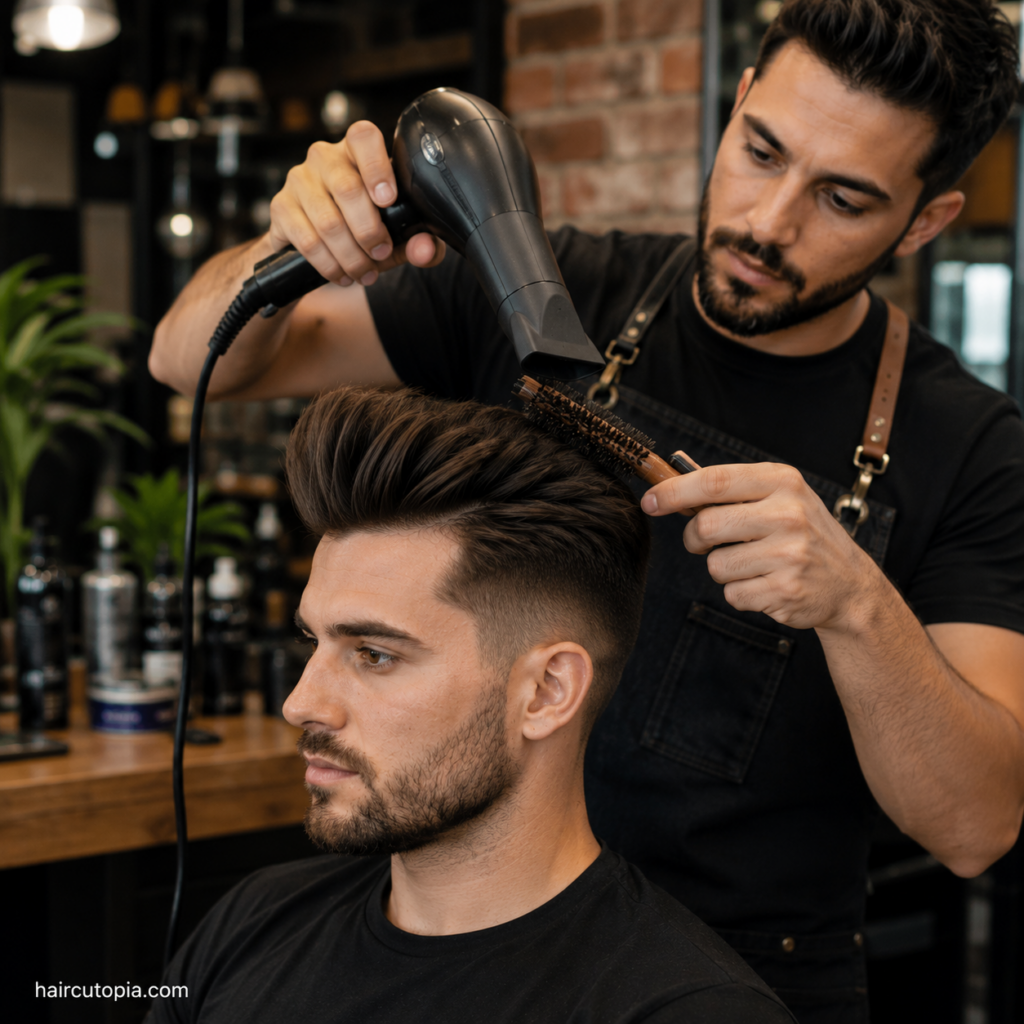
If there’s one styling skill worth learning for maintaining a quiff, it’s blow-drying.
Product can provide hold, but the blow dryer creates much of the actual shape.
Direct the hair upward and slightly backward while blow-drying. You can use your fingers for a looser style or a brush for greater control.
Pay particular attention to the roots.
Creating lift at the roots gives the quiff volume without forcing you to compensate with excessive styling product.
4. Apply Styling Product After Creating the Shape
Once the hair is mostly or completely dry, work a small amount of product between your hands.
Distribute it through the hair rather than putting everything directly onto the front.
Then shape the quiff.
Starting with a small amount is important. Too much product can make the hair heavy, greasy, or difficult to restyle.
You can always add a little more.
5. Finish With Your Fingers or a Comb
Your finishing technique depends on the look you want.
Use your fingers for:
- Textured quiffs
- Messy quiffs
- Natural separation
- Softer finishes
Use a comb or brush for:
- Classic quiffs
- Neater styles
- More controlled shapes
- Smoother finishes
You can also combine the two. Establish the overall shape with a comb and then loosen it slightly with your fingers.
Choosing the Right Product for a Quiff
The best product isn’t necessarily the one with the strongest hold.
You want enough control to maintain the shape without making your hair unnecessarily stiff or heavy.
Matte Clay
Clay works particularly well for textured quiffs.
It can provide:
- Stronger hold
- Lower shine
- Texture
- Definition
Because some clays are relatively heavy, start with a small amount.
Hair Paste
Paste is a versatile option if you want control without an overly rigid finish.
It works well for casual and textured quiffs and can often be restyled during the day.
Pomade
Pomade is better suited to smoother, more traditional quiffs.
Depending on the formula, it can provide moderate to high shine and a more polished appearance.
If you want a loose, matte quiff, pomade may not be your first choice.
Styling Cream
Styling cream provides lighter control.
It can work well for longer, natural-looking quiffs or hair that doesn’t require strong hold.
Hairspray
Hairspray isn’t mandatory, but it can help lock a larger quiff into place.
Rather than soaking the hair, use a light application after you’ve created the shape you want.
This can be particularly useful in humid or windy conditions.
Avoid Using Too Much Product
Adding more product doesn’t always create more hold.
Eventually, it does the opposite.
Too much product adds weight, and weight causes volume to collapse. It can also make the hair look greasy and lead to buildup on the hair and scalp.
If your quiff keeps falling despite using a large amount of product, try using less and spending more time creating the shape with your blow dryer.
The problem may be your foundation rather than your product.
How Often Should You Wash a Quiff?
There isn’t a universal shampoo schedule for quiff hairstyles.
How frequently you wash depends on your scalp, hair type, activity level, and how much styling product you use.
If your hair becomes oily quickly or you use heavy products regularly, you’ll probably need to cleanse it more often.
If your hair is naturally dry, aggressive shampooing may make it harder to manage.
Pay attention to how your hair actually feels.
Signs that it may be time to shampoo include:
- Noticeable oiliness
- Heavy product buildup
- Hair that feels coated
- Reduced volume
- An itchy or uncomfortable scalp
- Hair that no longer responds normally to styling
The goal is clean, manageable hair rather than following an arbitrary number of shampoo days per week.
Don’t Forget Conditioner
Quiffs are often exposed to regular blow-drying and styling, so keeping the hair manageable matters.
Conditioner can help reduce dryness and make longer hair easier to control.
If you have fine hair that loses volume easily, avoid applying a large amount of heavy conditioner near the roots. Focus more on the mid-lengths and ends.
Thicker, coarse, curly, or dry hair may benefit from additional conditioning.
How to Keep a Quiff From Falling Flat
A collapsing quiff is one of the most common styling problems.
There are several possible causes.
Your Hair Is Too Wet
Trying to build a finished quiff while the hair is still very wet makes creating lasting volume difficult.
Remove excess moisture first.
You’re Not Creating Enough Root Lift
The front needs support from the roots.
Blow-dry upward rather than simply pushing the hair backward.
You’re Using Too Much Product
Heavy waxes, clays, creams, and pomades can pull the hair downward.
Try reducing the amount.
Your Haircut Has Become Too Heavy
Sometimes the styling routine isn’t the problem at all.
If the top has accumulated too much weight or the haircut has lost its shape, your barber may need to remove bulk and restore structure.
Your Product Doesn’t Suit Your Hair
Fine hair and very thick hair rarely respond identically to the same styling products.
You may need a lighter or stronger formula depending on your hair’s density and texture.
How to Maintain a Quiff Overnight
A quiff isn’t really designed to survive sleep perfectly.
Even if it looks reasonably intact when you wake up, sections will usually be flattened or pushed in the wrong direction.
Fortunately, you don’t necessarily have to wash your hair again.
In the morning:
- Lightly dampen the areas that lost their shape.
- Use your fingers or a comb to reset the direction.
- Blow-dry the front upward and backward.
- Rework the existing product if possible.
- Add a tiny amount of fresh product only if needed.
For shorter quiffs, this can take just a few minutes.
Longer and more structured styles may require a more complete reset.
Maintaining a Quiff With a Fade
A faded quiff usually requires more frequent barber visits than a classic quiff.
The quiff itself may still look fine while the fade begins growing out.
If you want a consistently sharp appearance, you can ask your barber whether they offer quick fade or edge cleanups between full haircuts.
This allows you to maintain the sides without unnecessarily shortening the top.
A low taper is another option if you’re tired of frequent fade maintenance. Because the transition is less aggressive, the haircut generally grows out more subtly.
Maintaining a Longer Quiff
Longer quiffs give you more styling possibilities, but they can also become heavy.
As the hair grows, you may notice that it:
- Falls forward more easily
- Takes longer to blow-dry
- Requires stronger styling products
- Loses texture
- Separates differently
- Becomes bulky around the sides
You don’t necessarily need a major haircut when this happens.
Ask your barber to preserve the overall length while reshaping or removing excess weight where needed.
This can make a dramatic difference without making the quiff noticeably shorter.
Maintaining a Short Textured Quiff
Short quiffs are generally easier to maintain.
Because there’s less hair to control, styling can often be done with your fingers and a small amount of matte product.
The tradeoff is that the haircut’s proportions may change more noticeably as it grows.
Once the sides become too long or the top loses its texture, the style can begin looking like a generic grown-out short haircut rather than a deliberate quiff.
Regular shaping helps preserve the distinction.
How to Maintain a Quiff in Humid Weather
Humidity can be challenging, especially if your hair naturally curls, waves, or frizzes.
Start by creating a strong shape while blow-drying.
Depending on your hair, you may also benefit from:
- Anti-humidity styling products
- Stronger-hold paste or clay
- Lightweight hairspray
- Anti-frizz products
- Keeping a slightly more natural texture
Trying to force naturally wavy hair into an extremely smooth quiff during humid weather can become a constant battle.
Sometimes embracing a little texture produces a better result.
How to Maintain a Quiff in Wind
A strong gust of wind can undo ten minutes of careful styling surprisingly quickly.
For windy days, stronger hold helps, but don’t turn your hair into a helmet.
Build the shape with a blow dryer first, use an appropriate styling product, and consider a light finishing spray.
Textured quiffs also tend to recover more gracefully than perfectly sculpted styles.
If the hair moves, you can usually reshape it with your fingers.
When Should You Restyle Your Quiff?
You don’t always need to start over.
A good quiff should have at least some flexibility during the day.
If it loses shape:
- Use your fingers to lift the front at the roots.
- Push the hair back into its original direction.
- Rework the existing product.
- Add a very small amount of product if necessary.
If the hair has become wet or completely flattened, you’ll usually get better results by lightly dampening it and using a blow dryer again.
Signs Your Quiff Needs a Haircut
Sometimes it’s difficult to tell whether your styling technique is failing or your haircut has simply grown out.
Your quiff may be ready for a trim if:
- The sides have become noticeably bulky
- A fade has lost its definition
- The front constantly falls despite proper styling
- The top feels excessively heavy
- The haircut no longer holds its intended shape
- Styling takes much longer than it used to
- You need substantially more product to get the same result
If several of these happen at once, booking a barber appointment will probably accomplish more than buying another styling product.
What to Tell Your Barber During a Maintenance Cut
If you’re happy with your quiff, tell your barber exactly what you want to preserve.
For example:
“I want to keep the quiff and most of the length in front. I’d just like the shape cleaned up, some of the weight removed from the top, and the taper tightened.”
If you have a reference photo of your haircut when it looked its best, bring it.
It can even be a photo of yourself after your previous haircut.
That gives the barber a clear target rather than asking them to guess what you mean by “just a trim.”
A Simple Quiff Maintenance Routine
You don’t need to overcomplicate things.
For most quiff hairstyles, a practical routine looks like this:
Daily
- Reset the hair with a little moisture if necessary
- Blow-dry the front for volume
- Apply a small amount of styling product
- Reshape during the day only when needed
Regularly
- Shampoo according to your scalp and product buildup
- Condition as appropriate for your hair type
- Clean styling brushes and combs
- Watch for excessive buildup or dryness
Every Few Weeks
- Check whether the sides need cleaning up
- Have the haircut reshaped when it becomes difficult to style
- Preserve the front if you’re maintaining or growing the quiff
- Adjust your barber schedule based on how quickly your particular haircut loses its shape
Final Thoughts
Maintaining a quiff is mostly about keeping the right balance between length, shape, volume, and product.
The haircut provides the foundation. Your blow dryer creates much of the volume. Styling product helps hold everything together.
Once you understand those roles, quiff maintenance becomes much simpler.
Keep enough length at the front, don’t let the top become unnecessarily heavy, clean up the sides when they lose their shape, and avoid relying on huge amounts of product to fix a haircut that’s overdue for a trim.
With a good cut and a styling routine that works for your hair, maintaining a quiff shouldn’t require starting from scratch every morning.