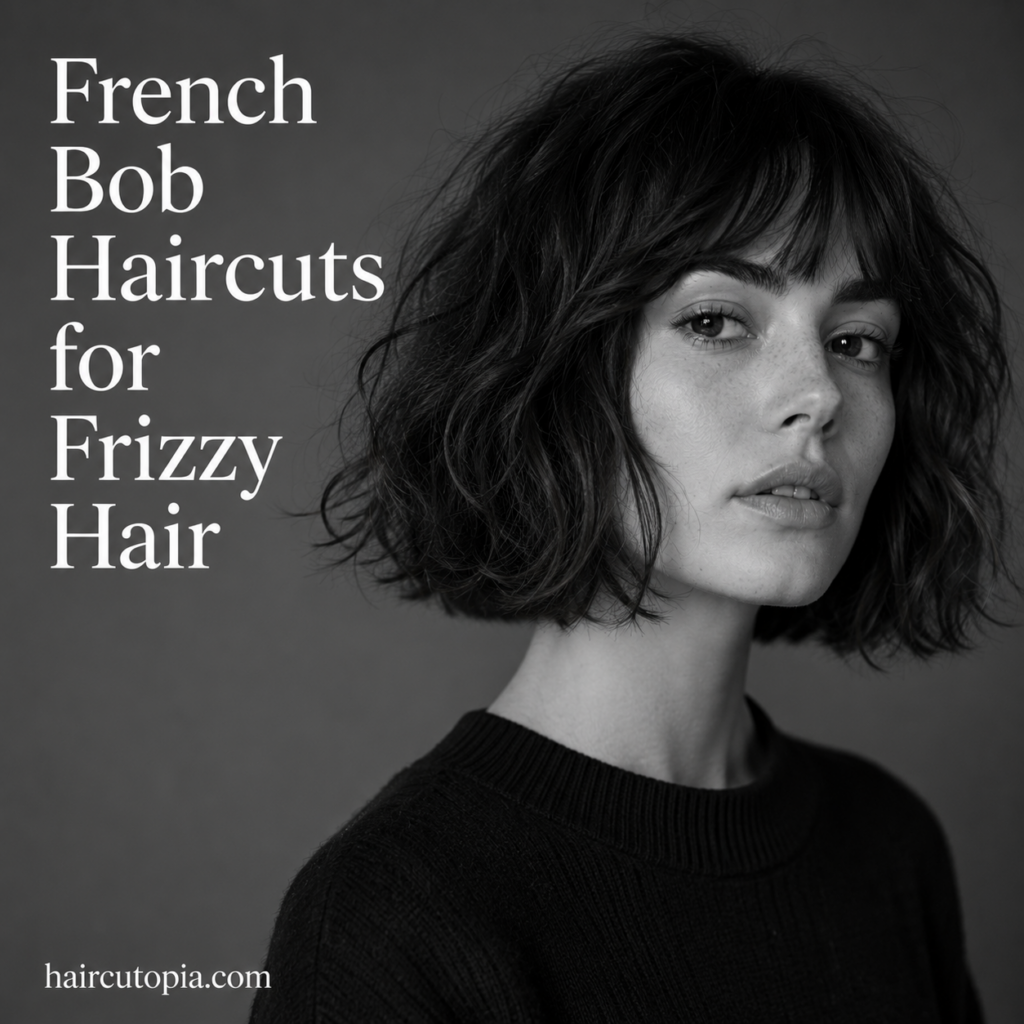
A French bob and frizzy hair can be a surprisingly good combination.
The French bob already has a relaxed quality. It doesn’t have to sit perfectly smooth or look freshly flat-ironed to work. A little texture, movement, and volume can actually make the haircut feel more natural and effortless.
The important part is getting the shape right.
Because a French bob typically ends around the cheekbones, jaw, or chin, removing length can change how your hair behaves. Some hair becomes lighter and fuller. Waves and curls may spring up. Hair that tends to expand in humidity can develop noticeably more volume once there isn’t as much length weighing it down.
That doesn’t mean you need to avoid going short. It simply means your natural texture should be part of the haircut plan.
From softly layered bobs to tousled cuts with bangs, there are plenty of ways to wear a French bob without fighting your hair every morning.
What Is a French Bob?
A French bob is a short bob haircut traditionally cut around the jawline or slightly above it.
Classic versions often include bangs, although fringe isn’t required. Modern French bobs can be blunt, layered, softly textured, sleek, wavy, curly, or intentionally tousled.
Typical features include:
- Cheekbone, jaw, or chin-length hair
- A compact bob silhouette
- Blunt or softly textured ends
- Optional bangs or fringe
- Natural-looking movement
- Relatively simple styling
The French bob is less about following one rigid formula and more about creating a short, face-framing shape.
That flexibility is useful for hair prone to frizz because the haircut can be adapted to the way your hair naturally behaves.
Can You Get a French Bob If Your Hair Is Frizzy?
Absolutely.
Having frizz doesn’t mean you need long hair to keep everything under control.
What matters more is understanding why your hair becomes frizzy and what happens when you remove length.
Frizz can appear with straight, wavy, curly, or coily hair. Humidity, dryness, damage, natural texture, and styling habits can all influence how smooth or expanded the hair looks.
A good French bob doesn’t necessarily eliminate those characteristics.
Instead, the haircut should create a shape that still looks intentional when your hair has some natural volume or texture.
If your hair becomes dramatically fuller in humid weather, tell your stylist. If your waves shrink as they dry, mention that too.
Those details can affect everything from the finished length to the amount of layering you need.
Why a French Bob Can Work Well With Frizzy Hair
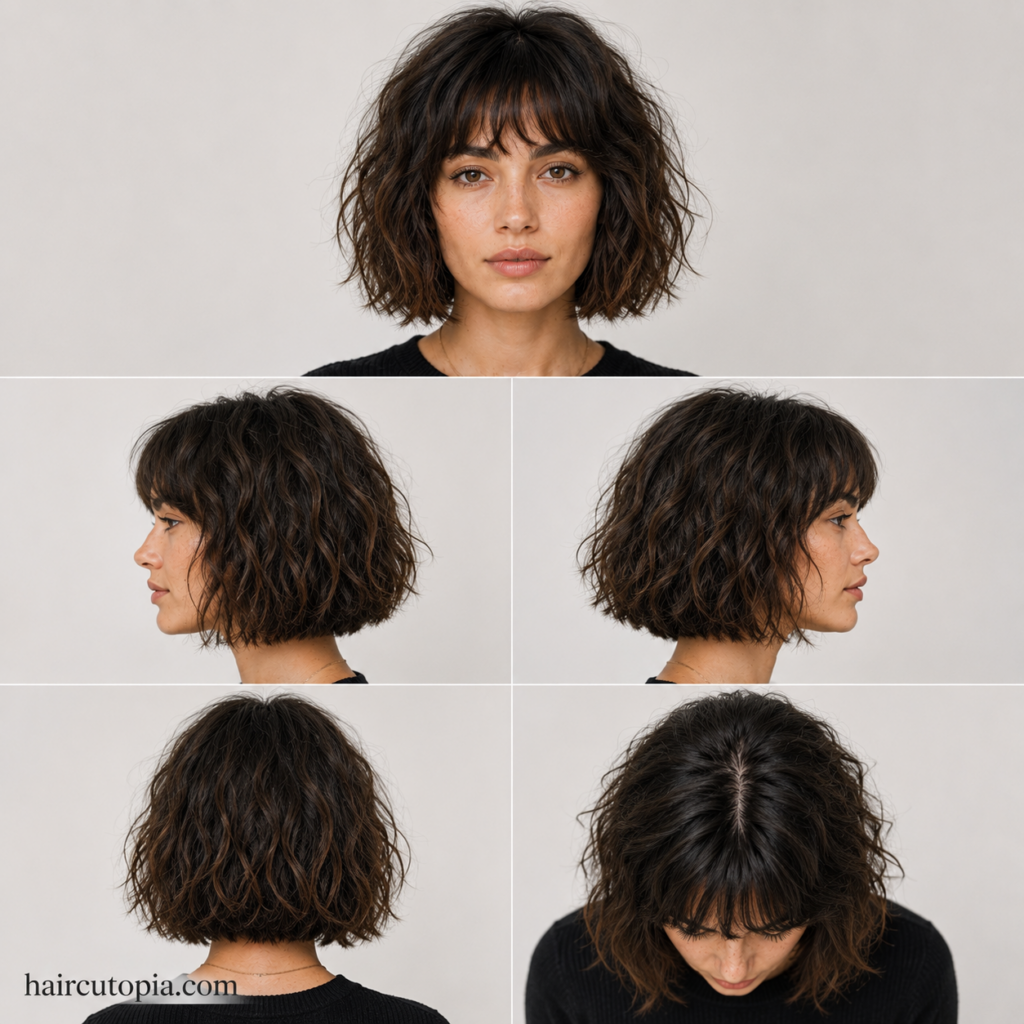
One of the biggest advantages of the French bob is that it doesn’t need to look overly controlled.
Natural Texture Fits the Style
A French bob can look polished, but it can also look slightly undone.
That makes flyaways, bends, waves, and natural volume less disruptive to the overall style than they might be with an extremely sleek precision haircut.
Shorter Hair Can Feel Lighter
Removing several inches of length can make washing, drying, and styling easier.
You have less hair to work with, which may shorten your routine considerably.
However, lighter hair can also become more voluminous. That’s why the shape of the cut matters.
Volume Can Become Part of the Silhouette
Frizz often creates additional fullness.
Instead of trying to flatten all of that volume, a stylist can shape the bob so some fullness becomes part of the finished look.
A softly rounded or tousled French bob can benefit from this.
You Don’t Need Perfectly Uniform Texture
A few pieces may wave more strongly than others. Some ends may flip outward. You might have extra volume around the crown.
A French bob can accommodate those differences without looking unfinished.
Best French Bob Haircuts for Frizzy Hair
There’s no single French bob that’s best for everyone with frizz.
Your natural texture, density, and preferred styling routine should guide the choice.
1. Tousled French Bob
The tousled French bob is one of the easiest variations to pair with frizz.
Instead of aiming for a perfectly smooth surface, the style embraces movement and slight irregularity.
Some sections can bend inward while others flip outward. A little volume around the sides or crown adds to the relaxed appearance.
This is a particularly good direction if you don’t want to straighten your hair every day.
2. Softly Layered French Bob
Careful layering can help distribute volume throughout the haircut.
Rather than allowing all the weight to collect around the bottom, subtle layers create movement and give the shape more balance.
The key is moderation.
Very short or excessive layers can sometimes increase volume and make frizz more noticeable. Longer, strategically placed layers are often easier to control.
3. Chin-Length French Bob
If you’re worried about your hair becoming much fuller when it’s short, consider starting around chin length.
That extra bit of length provides some weight while still giving you the appearance of a short bob.
It’s also easier to shorten the haircut later than it is to immediately undo a cut that feels too short.
A chin-length French bob can be especially useful for wavy or curly hair that shrinks noticeably when dry.
4. Textured French Bob
A textured French bob has a deliberately softer perimeter.
Instead of making every end form one rigid line, subtle texturizing creates separation and movement.
This can help natural texture blend into the haircut rather than contrasting against a highly precise edge.
The finished look should still have enough weight to read as a bob.
5. Blunt French Bob
Frizzy hair doesn’t automatically require layers.
A blunter perimeter can actually help maintain weight through the ends, which may be beneficial for certain textures.
This is particularly useful if your hair is fine or medium in density and becomes fluffy rather than extremely bulky.
The stylist can keep the visible perimeter strong while making subtle adjustments internally if necessary.
6. French Bob With Internal Layers
Internal layering can be useful when you want a relatively blunt-looking bob without keeping all the bulk inside it.
The outer shape remains substantial, while carefully selected sections underneath are shortened to redistribute weight.
This approach can work well for dense hair that expands around the sides.
Because internal layering behaves differently on straight, wavy, and curly textures, it should be customized rather than applied automatically.
7. Wavy French Bob
If your frizz accompanies a natural wave pattern, consider building the haircut around those waves.
A wavy French bob doesn’t require every section to form an identical S-shape.
Uneven bends and slightly fuzzy texture can contribute to the relaxed finish.
The haircut should leave enough length for your wave pattern to develop naturally.
8. Curly French Bob
Curls can create a beautifully rounded French bob with plenty of character.
Shrinkage becomes particularly important here.
The haircut may need to be left longer than expected so the curls settle at the desired position when completely dry.
A stylist familiar with curly hair can also assess where volume needs to remain and where it can be reduced.
9. French Bob With Wispy Bangs
Wispy bangs provide some of the classic French-bob character without creating a heavy fringe.
Smaller pieces fall across the forehead and can blend naturally with a slightly textured haircut.
If your bangs tend to become frizzy, keeping them soft and separated may be easier than trying to maintain one perfectly smooth line.
10. French Bob With Curtain Bangs
Curtain bangs are another forgiving option.
They part near the center and become longer toward the sides, blending into the rest of the bob.
The additional length gives the fringe some weight and allows natural bends to become part of the style.
They’re also relatively easy to grow out.
11. French Bob Without Bangs
If the front of your hair is particularly prone to frizz, you don’t need to add bangs.
A no-bangs French bob can be worn with a center, off-center, or side part.
It also gives you the option of tucking the front sections behind your ears when you want more control.
12. Side-Parted French Bob
A side part can help redistribute volume.
Instead of having equal fullness on both sides, the asymmetrical shape creates a more relaxed silhouette.
It can also provide extra lift around the crown without requiring additional layers.
13. Rounded French Bob
A softly rounded bob can work with naturally voluminous hair rather than against it.
The goal is to create intentional fullness around the sides and back while maintaining a defined perimeter.
This approach is particularly effective when your natural texture already wants to create volume.
14. Shaggy French Bob
A shaggy French bob combines short bob proportions with more obvious layering and movement.
The result is intentionally less polished.
Ends can flip outward, sections around the crown can have additional lift, and the fringe can blend loosely into the sides.
If your hair naturally develops texture and volume, this style allows those qualities to become part of the look.
Blunt or Layered: Which Is Better for Frizzy Hair?
There isn’t a universal answer.
The right choice depends on your density and natural texture.
Layers can distribute weight and encourage movement, but they also create shorter pieces. Depending on your hair, those shorter pieces may spring upward or contribute additional volume.
A blunt cut preserves more weight.
That can sometimes help the hair sit more predictably, although a completely one-length bob may become too wide if your hair is very dense.
Consider a Blunter Bob If:
- Your hair is fine or medium in density
- You want fuller-looking ends
- Your hair becomes fluffy rather than extremely bulky
- You prefer a stronger perimeter
- You want fewer short pieces throughout the haircut
Consider Layers If:
- Your hair is very dense
- Weight collects heavily around the bottom
- You want more movement
- Your natural texture needs room to form
- You prefer a softer, less structured shape
A combination often works best.
You can maintain a strong perimeter while introducing subtle internal or longer layers where they’re actually needed.
How to Avoid a Triangle Shape
A common concern with short, voluminous hair is ending up with a triangular silhouette.
This happens when the crown sits relatively flat while the hair becomes increasingly wide toward the ends.
The solution isn’t necessarily to remove as much hair as possible.
Instead, your stylist can balance the shape through:
- Strategic layering
- Internal weight removal
- Slight graduation
- Crown shaping
- Face-framing pieces
- Adjusting the overall length
Where the weight is removed matters as much as how much is removed.
Taking too much from the wrong areas can create additional short pieces that expand and make the problem worse.
Choosing the Right French Bob Length
Length affects how much weight remains in the hair, so even an inch can make a noticeable difference.
Cheekbone Length
This is the boldest option.
A cheekbone-length French bob removes a significant amount of weight and puts the focus on the upper and middle portions of the face.
Hair that naturally expands may become noticeably fuller at this length.
Jaw Length
Jaw length creates the classic French bob shape.
It’s short enough to feel distinctive while still leaving room for texture and controlled volume.
For many people, this is the sweet spot.
Chin Length
Chin length gives you a little more weight and flexibility.
If you’re uncertain about how your hair will respond to going short, starting here allows you to evaluate the texture before taking the bob higher.
French Bobs for Frizzy Straight Hair
Straight hair can still develop frizz, flyaways, and unwanted volume.
If that’s your texture, a relatively blunt French bob may work well because the weight through the perimeter helps maintain a strong shape.
A softly textured edge can make flyaways feel less noticeable than they would against an extremely sharp, glass-like finish.
For styling, focus on smoothness without trying to make every strand completely flat.
A little movement keeps the haircut looking natural.
French Bobs for Frizzy Wavy Hair
Wavy hair and French bobs are natural partners.
The waves provide movement, while the short shape keeps the style defined.
Instead of brushing out the texture and then recreating waves with heat, consider styling around your natural pattern.
A lightweight wave cream or mousse can encourage definition while maintaining movement.
Some surface frizz can still be present without ruining the look.
French Bobs for Frizzy Curly Hair
With curly hair, the finished dry shape is especially important.
Curls can shrink considerably as they lose moisture, so the wet length doesn’t always predict where the bob will eventually sit.
Your stylist should consider:
- Curl pattern
- Shrinkage
- Density
- Volume distribution
- How you normally dry your hair
- How the curls behave in humidity
A slightly longer French bob can provide room for the curls to spring upward without making the finished haircut unexpectedly short.
Should Frizzy Hair Be Thinned for a French Bob?
Not automatically.
It can be tempting to assume that removing lots of hair will reduce frizz and volume, but aggressive thinning can sometimes have the opposite effect.
Thinning creates shorter strands within the haircut.
On certain textures, those shorter pieces can push outward as they grow or lose the weight that was helping them lie down.
If your hair is genuinely too dense for the desired shape, targeted weight removal may help.
Ask your stylist about options such as:
- Internal layering
- Longer layers
- Selective texturizing
- Subtle graduation
- Carefully placed bulk removal
The technique should be based on your individual hair rather than frizz alone.
Bangs or No Bangs?
Bangs can look fantastic with a French bob, but think about how your hair behaves around your forehead.
Humidity, perspiration, cowlicks, and natural texture can all affect a fringe.
Bangs May Work Well If:
- You like a classic French-inspired look
- Your front sections are relatively easy to style
- You’re comfortable refreshing your fringe
- You want additional framing around your eyes
Consider Skipping Short Bangs If:
- Your hairline has strong cowlicks
- Your fringe changes dramatically in humidity
- You want minimal daily styling
- You frequently tuck your hair away from your face
Curtain or longer wispy bangs are a useful compromise because they don’t depend on maintaining a perfectly straight line across the forehead.
How to Style a French Bob With Frizzy Hair
The goal doesn’t have to be removing every flyaway.
A more realistic approach is creating definition, controlling excessive expansion, and preserving movement.
1. Start With Damp Hair
After washing, gently squeeze out excess water.
Avoid aggressively rubbing the hair with a towel, which can disturb the natural pattern and create additional friction.
2. Apply Styling Products While Damp
Choose products based on your natural texture.
You might use:
- Leave-in conditioner
- Lightweight smoothing cream
- Curl or wave cream
- Mousse
- Styling gel
- Anti-frizz serum
You don’t necessarily need all of them.
Start with a simple routine and add products only when they serve a specific purpose.
3. Encourage Your Natural Texture
If your hair is wavy or curly, scrunch sections gently rather than brushing the texture completely straight.
For straighter hair, distribute product through the lengths and smooth the surface without overworking it.
4. Air-Dry or Diffuse
Air-drying can create a softer, more relaxed finish.
If you use a diffuser, lower airflow can help prevent the hair from being blown around excessively while it dries.
5. Wait Until the Hair Is Dry
Constantly touching your hair while it’s drying can disturb clumps and create additional frizz.
Allow your texture to set before separating or adjusting sections.
6. Finish Where Needed
Once the hair is completely dry, use a small amount of serum or styling cream on areas that need extra control.
Focus on the surface and ends rather than coating the entire haircut.
How to Style a French Bob in Humid Weather
Humidity can change how a short bob behaves.
If your hair tends to expand, trying to maintain an ultra-sleek finish may require considerably more effort on humid days.
A textured approach can be easier.
Rather than fighting every bend or flyaway, encourage your natural pattern and focus on maintaining the overall silhouette.
You can also:
- Use styling products designed to provide hold
- Avoid repeatedly brushing dry textured hair
- Keep your hands out of the hair while it dries
- Tuck one side behind your ear
- Use a small amount of finishing product around the surface
The goal is controlled texture, not necessarily perfectly smooth hair.
French Bobs for Different Face Shapes
A French bob can be adapted to virtually any face shape by adjusting its length, fringe, and volume.
Round Faces
A chin-length version can provide a little more vertical space around the face.
A side part or longer curtain fringe can also create asymmetry.
Oval Faces
Oval faces can experiment with shorter jaw- or cheekbone-length bobs as well as classic versions with bangs.
Square Faces
If you want to soften a defined jaw, consider a textured perimeter or natural movement around the ends instead of an extremely rigid baseline.
Heart-Shaped Faces
Fullness around the jaw can balance a narrower chin.
Curtain or wispy bangs can add softness around the forehead.
Long Faces
A jaw-length bob can create width around the sides, while bangs can visually shorten the forehead.
How Often Should You Trim a French Bob?
Short bobs generally show growth sooner than longer hairstyles.
If you want to preserve a defined jaw-length shape, trimming approximately every 6–8 weeks is a reasonable starting point.
A softer, textured bob may be more forgiving as it grows.
Bangs can require more frequent maintenance, particularly if you choose a short or full fringe.
If frequent salon visits aren’t appealing, a chin-length bob with longer curtain bangs offers an easier grow-out.
What to Ask for at the Salon
The phrase “French bob” can mean different things to different stylists.
Instead of relying on the name alone, describe how you want the haircut to behave.
You could say:
“I’d like a jaw- or chin-length French bob that works with my natural texture. My hair tends to get frizzy and fuller in humidity, so I want movement without creating too much volume around the bottom.”
Then discuss:
- Your desired dry length
- How much your hair expands
- Your natural wave or curl pattern
- Your density
- Whether you want a blunt or soft perimeter
- How much layering you want
- Bangs or fringe
- Your usual drying method
- How much daily styling you’re willing to do
If you normally wear your hair naturally, consider arriving at the salon with your usual texture visible.
That gives your stylist useful information about how the hair actually behaves.
Is a French Bob High Maintenance on Frizzy Hair?
It doesn’t have to be.
A French bob becomes high maintenance when the haircut depends on your hair behaving completely differently from its natural state.
For example, if you have highly textured hair but choose a style that only looks the way you want after extensive straightening, your daily routine may become demanding.
A bob designed around your natural volume can be much simpler.
For lower maintenance, consider:
- Chin or jaw length rather than extremely short
- Soft or internal layering
- A natural-texture finish
- Curtain bangs or no bangs
- A shape that still works with some volume
You’ll still need trims to maintain the silhouette, but everyday styling can remain relatively straightforward.
Common Mistakes to Avoid
A few choices can make a French bob more difficult to manage than it needs to be.
Trying to Eliminate Every Bit of Frizz
Some natural texture is completely compatible with a French bob.
Constantly chasing a perfectly smooth finish can turn a relatively simple haircut into a high-maintenance routine.
Adding Too Many Short Layers
Layers can help distribute weight, but excessive short layers may create more volume.
Your stylist should consider how each layer will behave once the hair dries.
Thinning the Hair Too Aggressively
Removing bulk isn’t the same thing as thinning everything.
Targeted weight removal is generally more useful than automatically taking thinning shears throughout the entire haircut.
Ignoring Shrinkage
Wavy and curly hair can sit significantly higher when dry.
Choose your final length based on how the hair naturally settles, not just how it looks when wet or stretched.
Going Too Short Too Quickly
If you’ve never had a short haircut with your natural texture, chin length gives you an opportunity to see how your hair responds.
You can always shorten it later.
Using Too Much Product
More product doesn’t automatically mean less frizz.
Overloading a short bob can leave it heavy, sticky, or lacking movement.
Start small and adjust from there.
Who Should Consider a French Bob for Frizzy Hair?
A French bob can be an excellent option if you want to work with your natural texture rather than constantly hiding it.
It may be particularly appealing if you:
- Like short hairstyles with natural movement
- Want to remove the weight of longer hair
- Don’t mind some texture and volume
- Want a haircut that can look intentionally tousled
- Prefer a style that doesn’t have to be perfectly smooth
- Are comfortable maintaining a short shape with regular trims
The key is choosing a version that still looks good when your hair behaves like your hair.
That’s far more useful than choosing a haircut based solely on how it looks after a professional blowout.
Final Thoughts
French bob haircuts for frizzy hair work best when natural texture is treated as part of the style rather than a problem that needs to disappear.
A softly layered bob can redistribute volume. A blunt perimeter can preserve useful weight. A chin-length version gives expansive textures more room, while a tousled or shaggy French bob can make natural movement part of the entire look.
There isn’t one cutting technique that works for every person with frizz.
Straight, wavy, and curly hair all behave differently. Density, humidity, shrinkage, and styling habits matter too.
Before choosing your cut, think about how your hair looks on an ordinary day—not only after you’ve spent extra time styling it.
When the shape complements that everyday texture, the French bob becomes much easier to wear.
And if a few flyaways show up? They don’t have to ruin the haircut. On a relaxed French bob, a little imperfection can look completely at home.
Related Posts
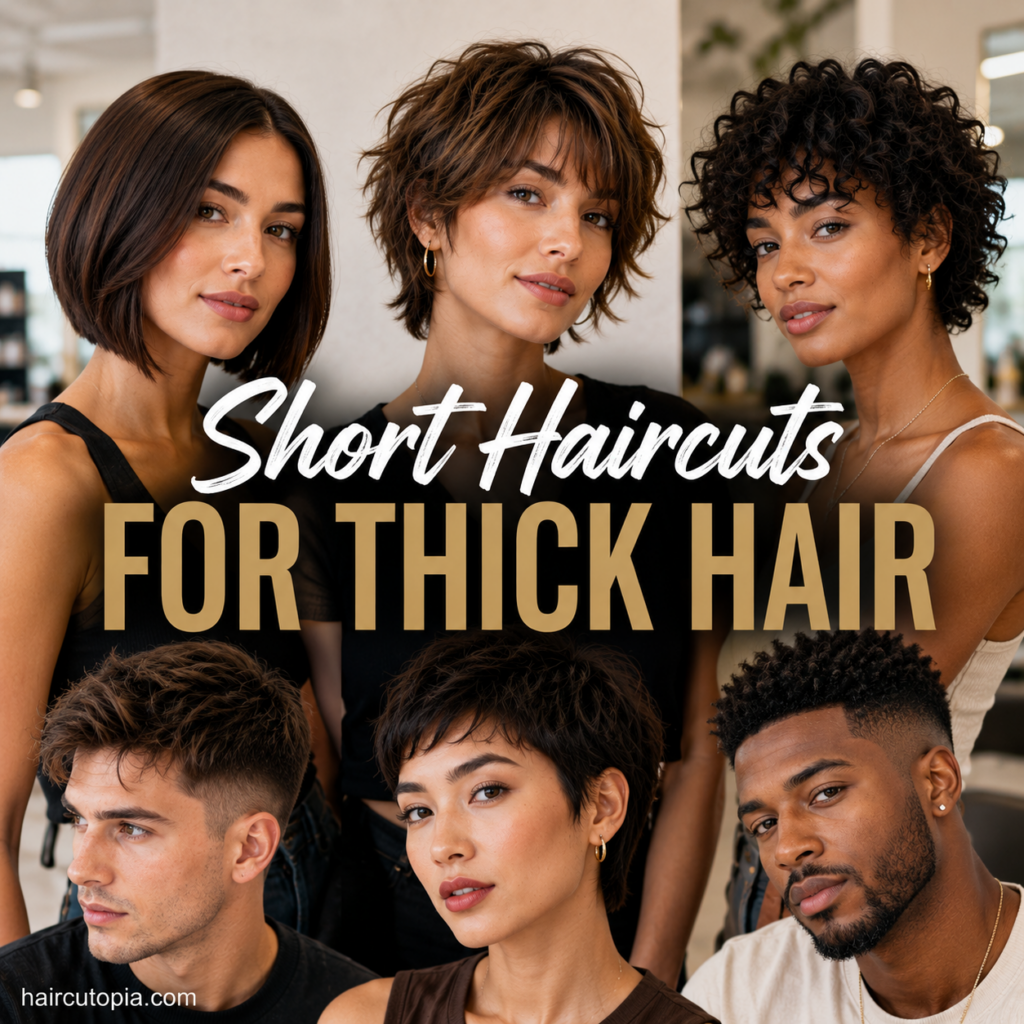 Short Haircuts for Thick Hair: 25 Stylish Ideas & Expert Tips
 A-Line Bob Haircuts for Frizzy Hair: 25 Stylish Cuts That Help Control Frizz and Enhance Shape
 Textured Bob Haircuts for Frizzy Hair: 25 Stylish Cuts That Work With Your Natural Texture
 Textured Bob Haircuts for Coarse Hair: 25 Stylish Cuts That Add Shape and Control