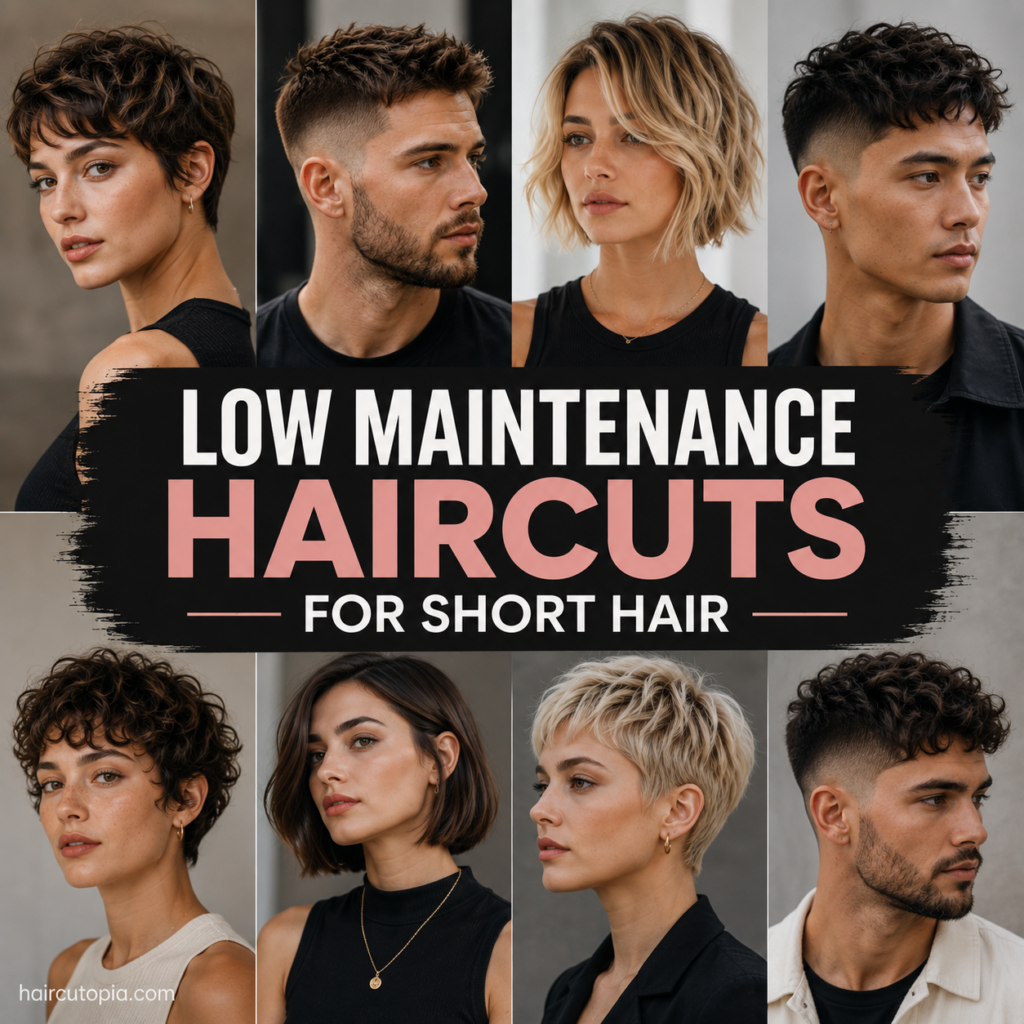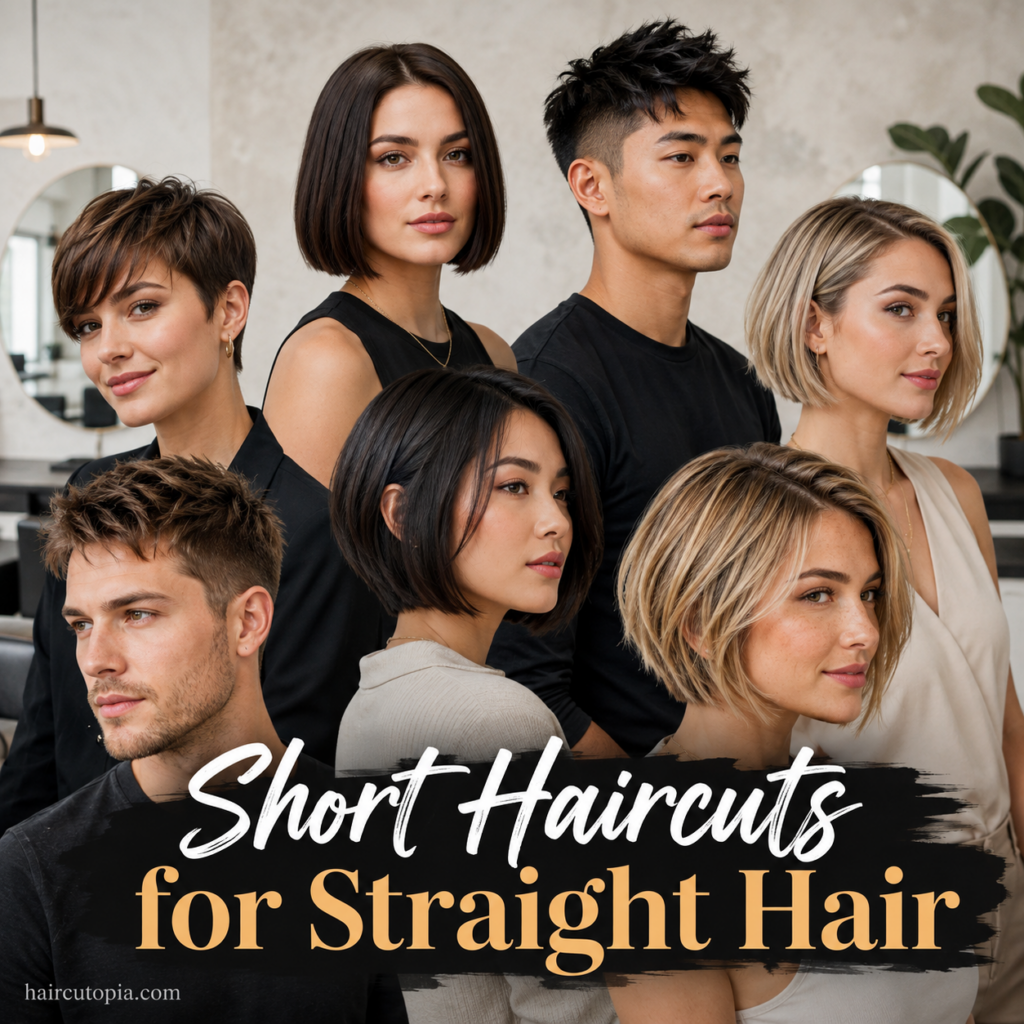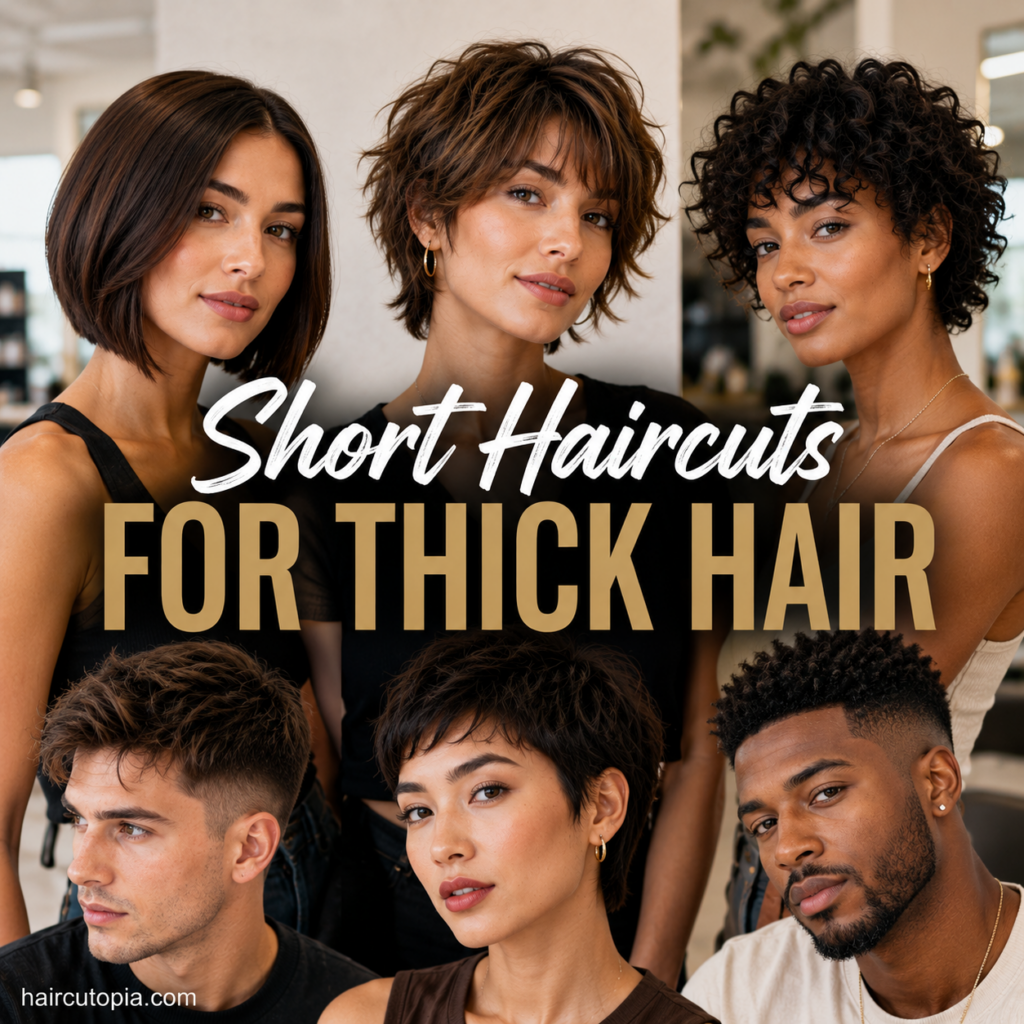
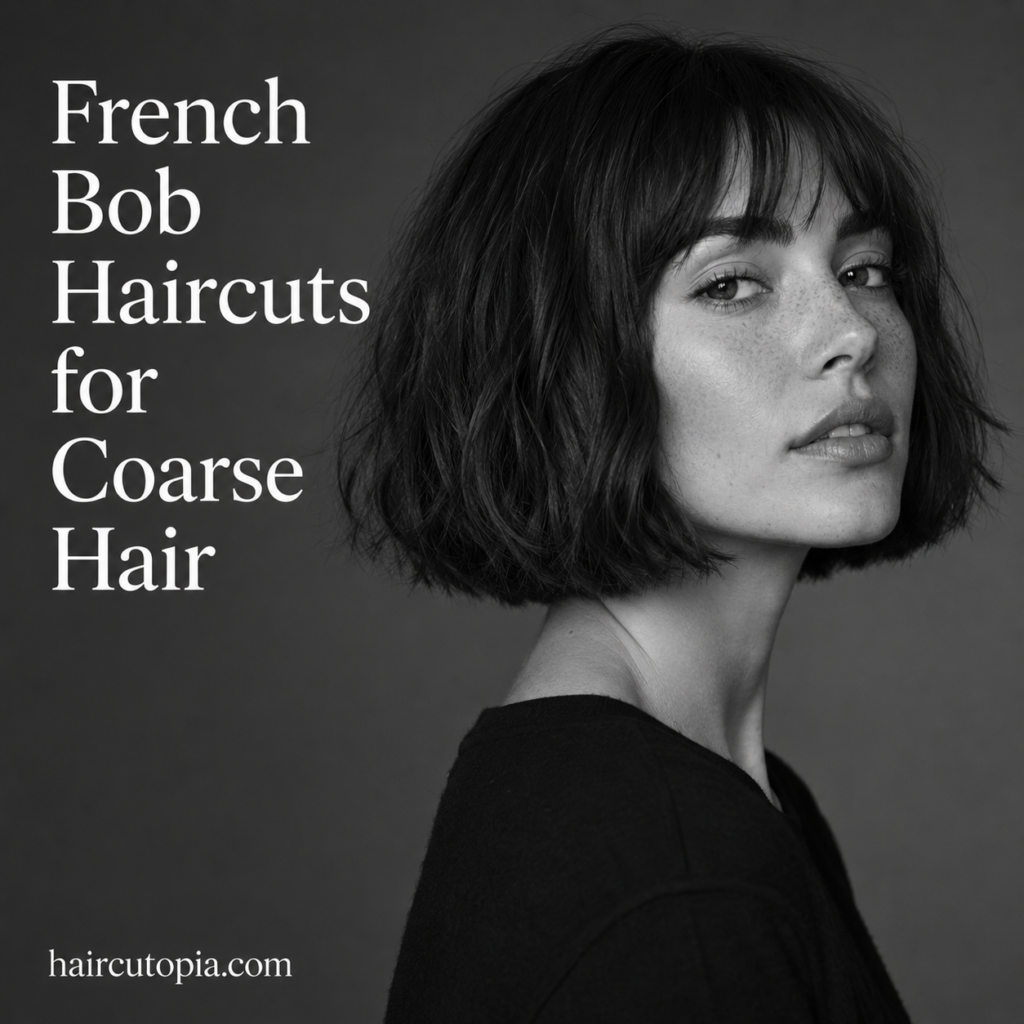
A French bob can look incredible on coarse hair, but the right cut matters.
Coarse strands tend to have plenty of presence. Depending on your density and natural texture, a short bob can look beautifully full and structured—or become heavier and wider than you expected. The difference often comes down to how the haircut is shaped and where weight is removed.
The classic French bob usually falls somewhere around the jaw, often with bangs or a soft fringe. On coarse hair, that basic shape can be adapted with internal layers, textured ends, subtle graduation, or a slightly longer length.
You don’t necessarily need to thin out everything or add lots of layers. In fact, keeping enough weight in the right places is part of what makes a French bob look so good.
Here are some of the best French bob haircuts for coarse hair, along with tips for choosing a length, managing bulk, and styling the cut at home.
What Is a French Bob?
A French bob is a short bob haircut that typically ends around the cheekbones, jaw, or chin.
Traditionally, it’s paired with bangs, although modern versions are often worn without them.
Common features include:
- A short, compact silhouette
- Jaw-length or slightly shorter ends
- Blunt or softly textured edges
- Optional bangs or fringe
- Natural movement rather than overly elaborate styling
The haircut can look sleek and polished or intentionally tousled.
That flexibility is especially useful for coarse hair because the cut can be adjusted around your natural texture instead of forcing every hair type into the same shape.
What Does Coarse Hair Mean?
Coarse hair refers primarily to the thickness of each individual strand.
A coarse strand has a larger diameter than a fine strand. This can give the hair a substantial feel and make individual strands more noticeable.
Coarse hair can also be:
- Straight
- Wavy
- Curly
- Low density
- Medium density
- High density
That distinction is important.
Having coarse hair doesn’t automatically mean you have extremely thick or dense hair. Someone can have coarse individual strands without having an unusually large number of hairs on their head.
When choosing a French bob, both strand thickness and overall density should be considered.
Why a French Bob Can Work Well With Coarse Hair
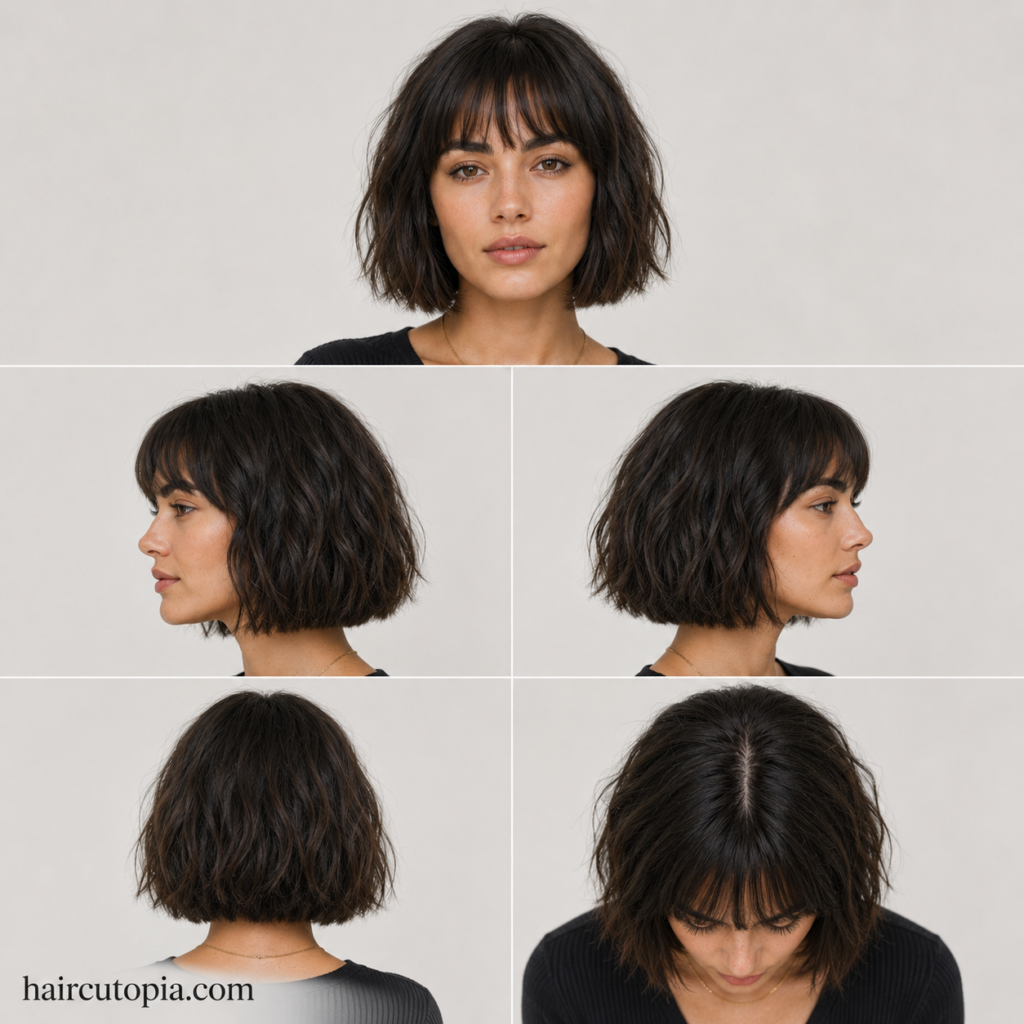
Coarse hair has several qualities that can complement a short bob.
It Naturally Creates a Strong Shape
A French bob relies on a recognizable silhouette.
Coarse strands can give the perimeter enough substance to make that shape clearly visible, particularly around the jaw and sides.
The Ends Can Look Full
Some hair types require careful cutting to prevent the bottom of a bob from appearing thin.
Coarse hair usually doesn’t struggle with a lack of visual weight at the ends.
Instead, the challenge is often controlling that weight so the haircut feels balanced rather than bulky.
Shorter Length Can Remove Excess Weight
Long coarse hair can feel physically heavy, particularly when density is also high.
Going shorter removes a considerable amount of length and can make the hair feel lighter.
However, cutting everything to one short length isn’t always enough. Strategic internal weight removal may still be helpful.
Natural Texture Adds Character
If your coarse hair is wavy or curly, the texture can give a French bob an effortless, slightly undone finish.
Straight coarse hair can produce the opposite effect: a strong, polished bob with a clearly defined perimeter.
Both can work beautifully.
Best French Bob Haircuts for Coarse Hair
The best French bob isn’t necessarily the shortest or most heavily layered version.
Small adjustments to the shape can make the haircut much easier to manage.
1. Classic Jaw-Length French Bob
A jaw-length French bob is a natural starting point.
It creates the classic short silhouette without going as extreme as a cheekbone-length cut.
On coarse hair, the jaw-length perimeter can look particularly full and defined.
If your hair is also very dense, your stylist may remove some internal weight so the sides don’t become excessively wide.
2. Textured French Bob
A textured French bob softens the perimeter and introduces movement through the ends.
Rather than creating one perfectly solid baseline, the stylist can subtly break up the edge.
This can be useful when coarse strands make a blunt perimeter look heavier than you want.
The goal isn’t to make the ends thin. It’s to create enough separation that the haircut moves naturally.
3. Layered French Bob
Layers can be very effective on coarse hair when they’re placed carefully.
Subtle layers remove weight and allow sections of the haircut to move more independently.
They can be particularly helpful if your hair tends to expand outward when cut short.
However, more layers aren’t always better.
Too many short layers can create excessive volume, especially on coarse wavy or curly hair. A stylist who understands your natural texture can determine where weight actually needs to be removed.
4. French Bob With Internal Layers
If you like the appearance of a blunt bob but need less bulk, internal layering may be worth considering.
Internal layers remove weight from within the haircut while allowing the outer perimeter to remain relatively strong.
From the outside, the bob can still look full.
Underneath, however, there is less hair contributing to excessive width and heaviness.
This approach can be especially useful for dense, coarse hair.
5. Chin-Length French Bob
A little extra length can make coarse hair easier to control.
Instead of ending directly at the jaw, a chin-length French bob sits slightly lower.
That additional length adds some weight, which can help prevent certain textures from expanding outward.
It also provides more room for natural waves or curls to form.
If you’re unsure how your coarse hair will react to a very short bob, chin length is a sensible place to start.
6. Blunt French Bob
Yes, coarse hair can wear a blunt bob.
A strong baseline can look striking when you want a structured, graphic shape.
The key is deciding how much weight should remain inside the haircut.
You can maintain a blunt-looking perimeter while subtly removing bulk underneath. This gives you the visual impact of a one-length bob without necessarily keeping every strand at exactly the same length.
7. Soft French Bob
A soft French bob takes the opposite approach.
Instead of emphasizing a sharp baseline, the ends are gently softened to reduce the visual heaviness of the haircut.
This works well if you want a short bob that feels relaxed rather than geometric.
It can also make coarse hair easier to style with a slightly tousled finish.
8. French Bob With Full Bangs
Full bangs create a classic French-inspired look.
Coarse hair can produce a substantial fringe, so your stylist may need to adjust how much hair is included in the bang section.
A fringe that’s too deep can become heavier than expected.
A carefully sized section can give you full-looking bangs without overwhelming the rest of the haircut.
9. French Bob With Wispy Bangs
If a full fringe feels too heavy, wispy bangs offer a lighter alternative.
Smaller sections are allowed to separate across the forehead, creating a softer effect.
This can be particularly flattering when the rest of the haircut has a strong, substantial shape.
The contrast between a full bob and lighter fringe helps keep the overall style balanced.
10. French Bob With Curtain Bangs
Curtain bangs work well if you want face framing without committing to a short fringe.
They typically separate around the center and become longer toward the sides.
On coarse hair, removing enough weight from the fringe can help the pieces fall more naturally.
Longer curtain bangs also tend to be more forgiving as they grow.
11. French Bob Without Bangs
Bangs are completely optional.
Without a fringe, the haircut can feel cleaner and more contemporary.
You also gain more freedom to switch between center and side parts.
For coarse hair, skipping bangs can simplify your styling routine, especially if your hairline has strong growth patterns or cowlicks.
12. Side-Parted French Bob
A side part adds asymmetry and movement to a short bob.
It can be particularly useful if your coarse hair tends to form a very symmetrical or rounded shape.
Moving more hair toward one side changes the distribution of volume and can make the haircut feel less rigid.
13. Tousled French Bob
Coarse hair doesn’t always need to be smoothed into submission.
A tousled French bob embraces natural movement, bends, and slightly imperfect texture.
This approach works especially well with coarse wavy hair.
Instead of straightening everything first, you can enhance the existing texture and allow individual sections to move naturally.
14. Graduated French Bob
A small amount of graduation can help control the shape at the back of a dense bob.
The hair is subtly stacked or shaped so the perimeter doesn’t simply hang as one heavy block.
The effect doesn’t need to be dramatic.
Gentle graduation can provide structure while maintaining the compact character of a French bob.
Blunt or Layered: Which Is Better for Coarse Hair?
This depends on your density, natural texture, and the silhouette you want.
A completely blunt haircut preserves maximum weight.
That can create a beautiful, strong shape on coarse hair with lower or medium density. On very dense hair, however, the same approach may create too much bulk.
Layering removes some of that weight.
A Blunter French Bob May Work If:
- You want a strong, structured shape
- Your overall density isn’t extremely high
- Your hair naturally lies relatively flat
- You prefer polished styling
- You want maximum fullness through the ends
Layers May Help If:
- Your hair is both coarse and very dense
- Short hair tends to expand outward
- You want more movement
- Your bob feels bulky around the sides
- You prefer a softer, less geometric finish
You don’t necessarily have to choose one or the other.
A strong perimeter combined with subtle internal layering can provide the benefits of both.
How to Avoid a Triangle-Shaped Bob
One concern with dense or textured hair is the triangular bob: flatter near the crown and progressively wider toward the bottom.
This happens when too much weight accumulates around the perimeter.
The solution isn’t automatically to thin out the entire haircut.
Instead, your stylist may adjust:
- Internal weight distribution
- Layer placement
- Graduation at the back
- The length of the perimeter
- Face-framing sections
- How much bulk remains near the ends
Your natural texture matters as well.
Coarse straight hair behaves differently from coarse wavy or curly hair, so the same layering technique won’t work equally well for everyone.
Choosing the Right Length for Coarse Hair
Going shorter changes how much weight is available to control the hair.
That makes length particularly important.
Cheekbone Length
A cheekbone-length French bob creates a dramatic, fashion-forward shape.
It also removes a significant amount of weight.
If your coarse hair tends to expand when it’s shorter, this length may create considerably more volume than a longer bob.
Discuss that possibility with your stylist before committing.
Jaw Length
Jaw length provides the classic French bob silhouette.
It’s short enough to feel distinctive while still leaving enough length for strategic shaping and weight distribution.
Chin Length
Chin length is the most conservative of the three.
The additional length can help weigh down coarse strands and provides slightly more styling flexibility.
It’s also an easier starting point if you’ve never worn your coarse hair this short before.
French Bobs for Coarse Straight Hair
Coarse straight hair can produce an exceptionally clean bob.
Because the strands naturally show the outline of the haircut, you can emphasize a blunt perimeter and polished shape.
If the hair is also very dense, internal weight removal can prevent the bob from becoming overly heavy.
Good options include:
- Blunt jaw-length bobs
- Chin-length French bobs
- Internal layering
- Softly textured ends
- Full or wispy bangs
A smoothing product can help control flyaways without sacrificing the natural substance of the hair.
French Bobs for Coarse Wavy Hair
Coarse wavy hair gives the French bob plenty of natural movement.
The main consideration is how much the hair expands or shortens once it dries.
A haircut that appears chin-length when wet may sit noticeably higher after the natural wave pattern returns.
Subtle layering can encourage movement, but excessive short layers may create unwanted volume.
For a relaxed look, allow some waves to flip or bend in different directions rather than trying to make every section identical.
French Bobs for Coarse Curly Hair
A French bob can also work with coarse curls, although curl pattern and shrinkage become especially important.
The finished dry length should guide the haircut.
Removing too much length or weight without considering how the curls respond can dramatically change the silhouette.
A slightly longer starting point can provide more control.
You can always take additional length off once you see how the curls settle.
Should Coarse Hair Be Thinned for a French Bob?
Sometimes—but thinning shouldn’t be automatic.
There’s a difference between strategically removing excess weight and aggressively thinning the entire haircut.
Over-thinning coarse hair can create problems as it grows. Shorter pieces may push outward, create frizz, or make the haircut feel even larger.
Instead, ask your stylist about targeted weight removal.
Depending on your hair, that might involve:
- Internal layering
- Point cutting
- Subtle texturizing
- Graduation
- Selective bulk removal
The technique should be chosen based on your density and texture rather than simply because your strands are coarse.
Bangs or No Bangs?
Both can work beautifully.
The main consideration with coarse hair is how much weight the fringe will have.
Choose Bangs If You Want:
- A more classic French bob appearance
- Extra framing around the eyes
- A stronger overall hairstyle change
- More texture around the forehead
Skip Bangs If You Want:
- Lower maintenance
- More freedom to change your part
- An easier grow-out
- Less daily fringe styling
Curtain or wispy bangs provide a useful middle ground if a full fringe feels too heavy.
French Bobs for Different Face Shapes
Face shape doesn’t determine whether you can wear a French bob.
Instead, use length, bangs, and volume placement to adjust how the haircut frames your features.
Round Faces
A chin-length version provides a little extra length around the face.
A side part or longer curtain bangs can also create a less symmetrical frame.
Oval Faces
Oval faces can experiment with shorter variations, including classic jaw-length and cheekbone-length French bobs.
Square Faces
If you don’t want to emphasize a strong jawline, consider a slightly softened perimeter rather than an extremely blunt edge ending directly at the jaw.
Heart-Shaped Faces
Volume around the lower portion of the bob can complement a narrower chin.
Wispy or curtain bangs can soften the forehead area.
Long Faces
A jaw-length bob can add visual width through the sides.
Bangs can also break up the vertical length of the face.
How to Style a French Bob With Coarse Hair
You don’t necessarily need to make coarse hair completely smooth.
A good styling routine should control the shape while preserving natural movement.
1. Start With Damp Hair
Gently remove excess water after washing.
Avoid aggressively rubbing the hair, particularly if your texture is prone to frizz.
2. Apply Product Strategically
Coarse hair often tolerates richer styling products than very fine hair, but you still don’t need to overload it.
Depending on your texture, consider a smoothing cream, leave-in conditioner, wave cream, or lightweight styling balm.
Concentrate product where you actually need control.
3. Choose Your Finish
For a polished bob, blow-dry the hair in sections while directing the airflow downward.
For a wavy or textured bob, scrunch the hair and air-dry or use a diffuser.
4. Refine Individual Sections
You don’t need to restyle the entire haircut with a hot tool.
If necessary, smooth or reshape individual pieces around the face and perimeter.
5. Finish Lightly
Use a small amount of serum or styling cream on the ends if they need additional control.
Start small. You can always add more.
How to Reduce Bulk Without Flattening the Hair
The goal with coarse hair isn’t always to create less volume.
Often, it’s about putting the volume in better places.
You may want fullness around the crown and sides while reducing excess width near the bottom.
A combination of good cutting and styling can help.
Try:
- Keeping some lift around the roots
- Removing weight internally rather than only from the ends
- Avoiding overly heavy products at the scalp
- Adjusting your part
- Keeping the perimeter long enough for your texture
- Using heat strategically instead of flattening the entire haircut
You still want the French bob to have body.
The objective is balance, not flatness.
How Often Does a French Bob Need Trimming?
Short bobs show growth fairly quickly because the perimeter is such an important part of the haircut.
A trim approximately every 6–8 weeks is a reasonable starting point if you want to preserve a defined French bob shape.
If you’re comfortable letting it grow toward a longer bob, you can usually extend the time between appointments.
Bangs may need more frequent maintenance.
Short, full bangs generally show growth faster than curtain or wispy fringe.
What to Ask for at the Salon
Simply asking for a French bob may not provide your stylist with enough information.
Be specific about how you want the haircut to behave.
You might say:
“I’d like a jaw-length French bob, but my hair is coarse and tends to get bulky when it’s short. I want to keep the ends looking full while removing some internal weight.”
Then discuss:
- Where you want the perimeter to fall
- Your natural texture
- Your overall hair density
- Whether your hair expands when cut shorter
- Blunt versus softened ends
- Internal layers
- Bangs or fringe
- Your usual styling routine
If you normally wear your natural texture, let your stylist see it.
Understanding how your hair behaves without extensive styling can help them choose a shape that works beyond the salon.
Is a French Bob High Maintenance on Coarse Hair?
It can be surprisingly manageable when the haircut is designed properly.
The biggest issue isn’t necessarily daily styling. It’s maintaining the shape as the hair grows.
Coarse, dense hair can begin feeling heavier as a short bob gains length, so regular reshaping may be helpful.
Bangs also add maintenance.
For a simpler version, consider a chin-length French bob without short bangs and with subtle internal weight removal.
That combination gives you the overall French bob look without requiring the most precise upkeep.
Common Mistakes to Avoid
A few common cutting and styling choices can make a French bob harder to manage on coarse hair.
Removing Too Much Weight
Coarse hair doesn’t automatically need aggressive thinning.
Removing too much can cause shorter pieces to expand, particularly with wavy or curly textures.
Keeping Too Much Weight
The opposite can also be a problem.
Very dense coarse hair cut into a completely solid bob may feel bulky around the sides and bottom.
The right amount of weight removal is a balance.
Ignoring Natural Texture
A bob designed for straight hair won’t necessarily behave the same way on waves or curls.
Your natural texture should influence the length and layering.
Going Too Short Immediately
Shorter hair weighs less, which can make certain textures expand.
If you’re uncertain, begin around chin length and evaluate how your hair responds.
Relying on Heavy Products
Coarse hair can handle more moisture than fine hair, but excessive product can still make a short bob feel greasy or stiff.
Use enough to control the texture without eliminating movement.
Who Should Consider a French Bob for Coarse Hair?
A French bob can be a great choice if you want to turn the natural substance of coarse hair into part of the haircut’s shape.
Consider one if you:
- Want a shorter, more defined haircut
- Like full-looking ends
- Want to remove the physical weight of longer hair
- Prefer a strong but adaptable silhouette
- Are willing to have the cut shaped around your natural texture
- Don’t mind regular trims
- Want a style that can look polished or tousled
If your hair is particularly dense, the most important step is finding the right balance between fullness and weight removal.
Final Thoughts
French bob haircuts for coarse hair don’t have to involve aggressively thinning the hair or trying to make it behave like a finer texture.
Coarse strands can actually be one of the haircut’s strengths.
They create substantial ends, a visible silhouette, and plenty of natural presence. The trick is controlling where that weight sits.
A blunt bob can showcase the fullness. Internal layers can reduce bulk without sacrificing the perimeter. A textured version can add movement, while a slightly longer chin-length cut gives dense hair more room to settle.
Most importantly, choose the haircut based on more than strand thickness alone.
Your density, natural texture, growth patterns, preferred length, and everyday styling routine all influence how a French bob will behave.
When those details are taken into account, coarse hair can give a French bob exactly what makes the style so appealing: a strong shape with plenty of character.