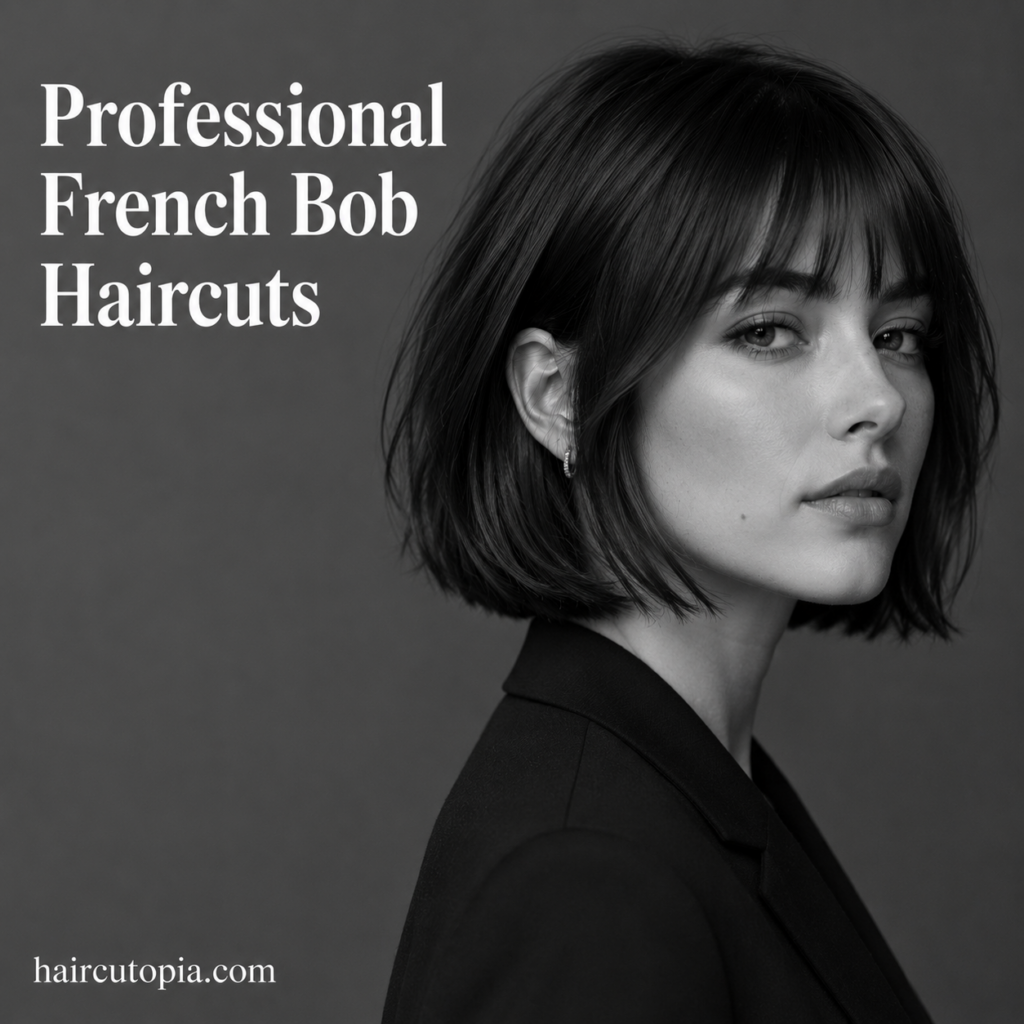
Professional French bob haircuts strike a nice balance between polished and effortless. They have enough structure to look put-together for work, but they don’t need to feel stiff, severe, or overly styled.
The classic French bob is known for its shorter length, defined shape, and often a fringe. For a professional setting, those same features can be refined in different ways. Think smooth blunt ends, subtle layers, soft bangs, controlled waves, or a clean side part.
And “professional” doesn’t have to mean one specific haircut. The right French bob can work in an office, at client meetings, in creative workplaces, or anywhere you want a neat style that’s still modern and personal.
Here are 15 professional French bob haircuts to consider, along with tips for choosing and styling one for your hair.
What Makes a French Bob Look Professional?
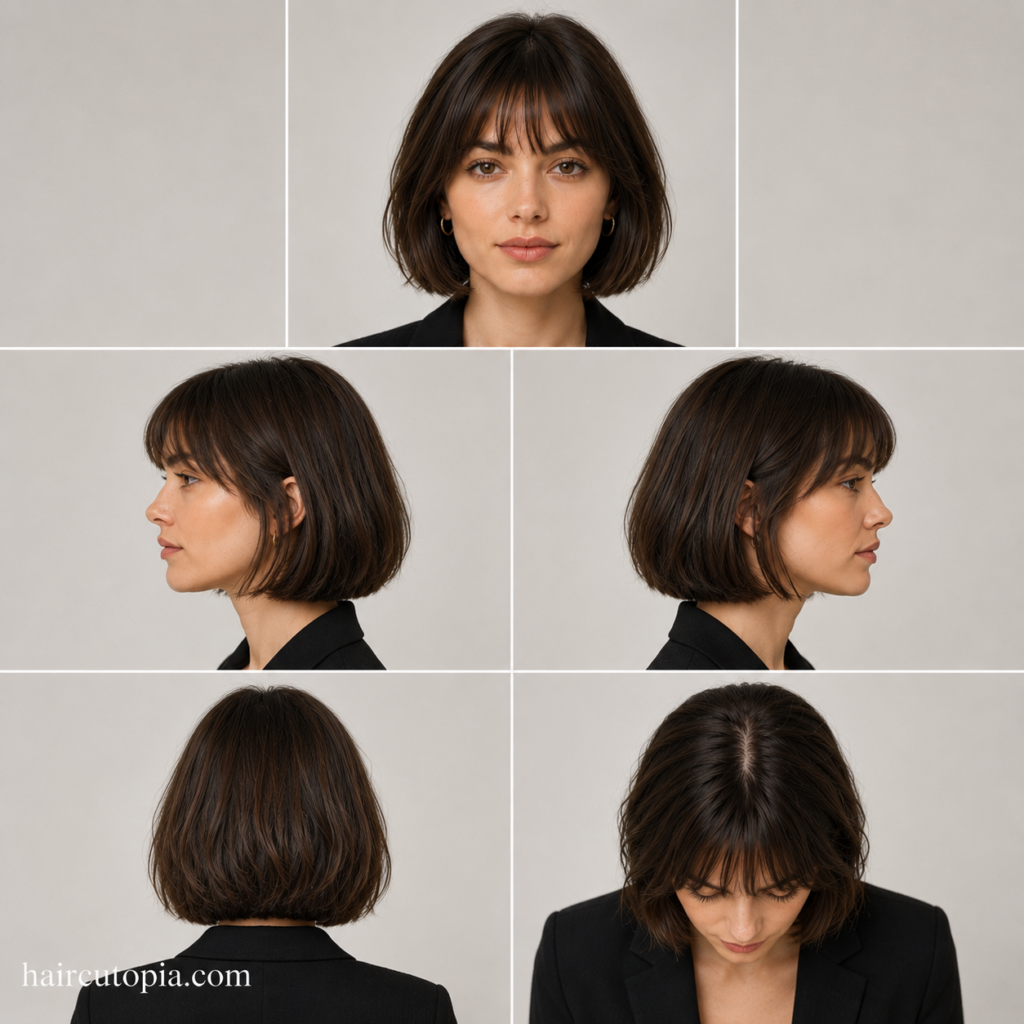
A professional French bob usually combines a defined shape with manageable texture.
It doesn’t necessarily have to be perfectly straight. Waves, curls, and layers can all look polished when the overall silhouette feels intentional.
Common elements include:
- A clean, balanced perimeter
- Chin-length to shoulder-length hair
- Controlled layers
- Well-shaped bangs or face-framing pieces
- Healthy-looking ends
- Natural movement without excessive bulk
- A style that stays manageable throughout the day
Your work environment matters too.
A sleek chin-length bob may feel right for a traditional corporate setting, while a textured or curly French bob can be a natural fit for a more relaxed or creative workplace.
Ultimately, the goal is a haircut that looks intentional and works with your normal routine.
15 Professional French Bob Haircuts to Consider
1. Classic Polished French Bob
The classic French bob is simple, clean, and easy to recognize.
Cut around the chin with a defined perimeter, it creates a neat frame around the face. Pair it with softly shaped bangs or keep the front slightly longer depending on your preference.
For a professional finish, the ends can be styled smooth without making the hair completely flat.
A little natural movement keeps the haircut modern.
This version works especially well if you want a timeless style that can move easily between work and casual settings.
2. Sleek French Bob
A sleek French bob is one of the most polished ways to wear the cut.
The hair is smooth, the perimeter is clearly visible, and flyaways are kept relatively controlled. A center part creates a balanced appearance, while a side part can add softness.
You don’t need to flat iron every strand.
A smooth blowout may provide enough polish while maintaining some movement through the ends.
Finish with a small amount of lightweight smoothing serum if needed.
3. Blunt Professional French Bob
A blunt perimeter creates a strong, intentional silhouette.
Instead of relying on numerous layers, the hair maintains a relatively even baseline. This can make the haircut look especially sharp when worn straight or with a gentle bend at the ends.
A blunt French bob can also work well for fine hair because keeping the ends together may create the appearance of additional fullness.
For a softer professional look, ask your stylist to lightly texturize the perimeter rather than making it extremely precise.
4. Professional French Bob With Soft Bangs
Bangs can work beautifully in professional settings when they’re shaped to blend naturally with the haircut.
Soft bangs sit somewhere between a heavy blunt fringe and very wispy pieces. They frame the forehead without completely dominating the face.
The result feels polished but approachable.
Keep the bangs trimmed around the brows or slightly longer, depending on how you prefer to wear them.
A lightweight styling product can help control separation throughout the day without making the fringe look stiff.
5. French Bob With Side-Swept Bangs
Side-swept bangs offer a softer alternative to straight-across fringe.
The longer pieces move across the forehead and blend into the side of the bob, creating an elegant transition around the face.
This style is particularly useful if you like bangs but want the option of pinning or tucking them away.
It also pairs naturally with a side part.
For work, a smooth blowout can keep the fringe controlled while still allowing it to move naturally.
6. Professional French Bob Without Bangs
Skipping bangs creates one of the simplest professional versions of the French bob.
The front sections remain long enough to tuck behind the ears or frame the face. You can wear a center part for symmetry or move the part slightly to one side.
This version is also relatively low maintenance.
You won’t need separate bang trims, and the longer front sections are easy to pull away from the face when you’re working.
If you prefer uncomplicated styling in the morning, this can be a practical choice.
7. Side-Parted French Bob
A side part can make a French bob feel instantly more polished.
It creates a little asymmetry while adding volume near the crown. The fuller side can fall naturally across the cheek, while the opposite side can be tucked behind the ear.
This works particularly well with chin-length and slightly longer bobs.
It’s also an easy styling change if you already have a French bob and want to give it a different appearance without getting another haircut.
8. Layered Professional French Bob
Layers don’t have to make a bob look messy or overly casual.
Long, controlled layers can remove bulk and introduce subtle movement while maintaining a clean outer shape.
This can be particularly helpful for thick hair.
Instead of thinning the entire haircut aggressively, your stylist can remove weight internally and keep the perimeter relatively strong.
The result is a bob that moves naturally while maintaining a polished silhouette.
9. Wavy Professional French Bob
Waves can absolutely work with a professional French bob.
The key is allowing the texture to look intentional rather than trying to make every wave identical.
Soft bends around the face and through the mid-lengths can create movement without adding excessive volume.
If your hair is naturally wavy, use a lightweight styling cream or mousse to encourage definition.
For straight hair, add a few loose bends with a curling iron or flat iron and gently separate them once cool.
10. Curly Professional French Bob
Natural curls can create a beautiful, polished French bob.
A well-shaped curly bob gives the hair structure while allowing the curl pattern to remain visible. The shape can be rounded, softly layered, or slightly longer toward the front.
The most important consideration is how the curls behave when dry.
Shrinkage can significantly change the finished length, so the haircut should be planned around your natural curl pattern.
For workday styling, a curl cream or lightweight gel can provide definition while helping the shape last throughout the day.
11. Tucked-Behind-the-Ear French Bob
Sometimes the styling makes the haircut.
Tucking one or both sides behind the ears immediately creates a cleaner, more open appearance around the face. It also keeps shorter pieces from falling forward while you’re working.
This style works with bangs or without them.
For a slightly asymmetrical look, tuck just one side behind the ear and leave the opposite side loose.
It’s simple, quick, and doesn’t require changing the actual haircut.
12. Medium-Length Professional French Bob
If a chin-length cut feels too short, consider extending the bob a little farther.
A medium French bob typically falls below the chin and may approach the shoulders. You still get a defined bob shape but with additional styling flexibility.
The longer length can make it easier to:
- Tuck the hair behind both ears
- Create soft waves
- Pin sections back
- Use small clips
- Pull some of the hair into a low ponytail
It’s a practical choice if your workday occasionally requires getting your hair completely away from your face.
13. Long Professional French Bob
A longer French bob brings the perimeter closer to the shoulders or collarbone.
At this length, the haircut overlaps with a lob while maintaining the clean shape and relaxed character associated with French bobs.
It’s one of the most versatile options for professional settings.
Wear it down and sleek for meetings, add soft waves for everyday work, or pull it into a small low ponytail when necessary.
The longer length also has a forgiving grow-out.
14. French Bob for Fine Hair
Fine hair can look polished in a French bob when the perimeter maintains enough density.
A blunt or softly textured baseline can make the ends appear fuller. Too many short layers, on the other hand, may remove more weight than you want.
Keep styling products lightweight.
A small amount of volumizing mousse at the roots can create lift without making the hair feel heavy or sticky.
A smooth blowout with subtle volume is often enough to create a professional finish.
15. French Bob for Thick Hair
Thick hair can create a beautifully substantial bob, but controlling the weight is important.
Without internal shaping, dense hair may become overly wide toward the bottom.
Strategic layering can remove bulk while preserving the outer perimeter. This allows the haircut to sit closer to the head without sacrificing natural fullness.
If your thick hair is also wavy or curly, your stylist should consider how much volume appears once the hair is completely dry.
Professional French Bob With Bangs vs. Without Bangs
Both options can work well in professional settings.
Bangs create a stronger frame around the face and can make a French bob feel more distinctive.
You have several options:
- Blunt bangs for a defined look
- Soft bangs for a balanced finish
- Wispy bangs for lighter coverage
- Curtain bangs for versatility
- Side-swept bangs for easy styling
The main consideration is maintenance.
Shorter bangs may need regular trims and a few minutes of styling each morning.
Without bangs, the front sections can be tucked behind the ears, pinned back, or moved between different parts. That flexibility may be more practical if you want minimal upkeep.
Choosing a Professional French Bob for Your Workplace
There’s no universal haircut that defines “professional.”
Different workplaces have different levels of formality, and your hairstyle should still feel like your own.
Traditional or Corporate Workplaces
For more formal environments, you may prefer a French bob with:
- A clean perimeter
- Subtle layering
- Smooth styling
- Soft or side-swept bangs
- A center or controlled side part
A sleek or softly blown-out finish can make the shape feel especially polished.
Business Casual Workplaces
You have a little more flexibility here.
Natural waves, subtle layers, curtain bangs, and slightly tousled texture can all work while still looking put-together.
Focus on maintaining a strong overall shape rather than making every strand perfect.
Creative Workplaces
Creative environments give you even more room to personalize the cut.
You might choose:
- Shorter bangs
- More noticeable texture
- A micro French bob
- Defined curls
- Shaggy layers
- A dramatic blunt perimeter
The haircut can make more of a statement while still being practical for work.
Remote Work
If most of your work happens on video calls, think about how the haircut frames your face from the front.
Bangs, face-framing pieces, and volume around the sides become more noticeable on camera.
A French bob is particularly useful here because its shape remains visible even when only your head and shoulders are on screen.
Choosing a Professional French Bob for Your Hair Type
The easiest professional hairstyle is usually one that works with your natural texture.
Trying to completely transform your hair every morning can turn a simple bob into a high-maintenance routine.
Fine Hair
For fine hair, preserving density is often more useful than adding lots of layers.
Consider:
- Blunt ends
- Minimal layering
- Lightweight products
- Chin-to-shoulder length
- Soft or wispy bangs
A slightly shorter length can also help prevent the hair from becoming weighed down.
Thick Hair
Thick hair may benefit from internal layers or strategic weight removal.
The goal is to control bulk while keeping the perimeter defined.
Ask your stylist how the haircut will behave when air-dried as well as blow-dried.
Straight Hair
Straight hair naturally emphasizes the shape of a French bob.
A blunt perimeter creates a sharper appearance, while subtle texturizing makes the ends feel softer.
You can wear it completely smooth or add a slight bend for movement.
Wavy Hair
Wavy hair can give a professional French bob natural softness.
Instead of straightening the waves away, consider defining them with lightweight styling products.
Keeping the perimeter shaped prevents the texture from looking shapeless.
Curly Hair
Curly hair works beautifully with a structured bob.
The haircut should account for shrinkage and natural volume.
Depending on your curl pattern, subtle layering may help distribute the volume and create a balanced shape.
How to Ask Your Stylist for a Professional French Bob
The word “professional” can mean different things to different people.
Rather than asking for a professional bob and leaving the interpretation open, describe the exact features you want.
Before your appointment, decide:
- Where you want the perimeter to fall.
- Whether you prefer blunt or textured ends.
- How much layering you want.
- Whether you want bangs.
- How you normally part your hair.
- Whether you need to pull your hair back for work.
- How much time you spend styling it in the morning.
Bring reference photos whenever possible.
Choose examples that show hair similar to your natural texture and density.
Tell your stylist what specifically appeals to you in each photo. The length, bangs, texture, and layering are all separate decisions.
How to Style a French Bob for Work
A professional finish doesn’t have to require a complicated morning routine.
A few simple styling approaches can give the same haircut completely different looks.
Smooth Blowout
Apply heat protectant to damp hair and blow-dry until smooth.
Use a brush to guide the ends rather than aggressively turning them inward.
The finished bob should move naturally.
Sleek and Straight
For a sharper finish, refine the hair with a flat iron after blow-drying.
Keep the ends relatively natural instead of making them completely rigid.
Finish with a small amount of smoothing serum.
Soft Waves
Create loose bends through a few sections using a curling iron or flat iron.
Alternate directions and avoid curling every strand.
Gently separate the waves with your fingers once they’ve cooled.
Natural Texture
If you have waves or curls, work with them.
Apply an appropriate lightweight styling product and air-dry or diffuse. Once the hair is dry, gently adjust the shape with your fingers.
Tucked Behind the Ears
For one of the quickest professional styles, simply tuck the front sections behind one or both ears.
A small amount of smoothing product can keep shorter pieces controlled.
Low Ponytail or Half-Up Style
Longer French bobs may provide enough length for a small ponytail or half-up style.
These options are useful when you need your hair away from your face for part of the workday.
How to Keep a French Bob Looking Polished All Day
Morning styling is only half the challenge. You also want the haircut to hold its shape.
A few simple habits can help:
- Avoid applying too much product at once.
- Choose lightweight formulas appropriate for your texture.
- Keep a small comb or brush available for quick adjustments.
- Use discreet pins if shorter pieces fall forward.
- Apply dry shampoo when roots begin looking oily.
- Protect the hair from excessive heat when restyling.
- Keep the ends regularly trimmed.
You don’t need every strand to remain exactly where it started.
A professional hairstyle can still have natural movement.
How Often Should You Trim a Professional French Bob?
A defined bob usually benefits from regular maintenance.
Around six to ten weeks between trims works for many French bob styles, although your schedule depends on the length and precision of the cut.
A very short, blunt bob may need more frequent shaping.
Longer or textured French bobs usually have a more forgiving grow-out.
Bangs often require attention sooner than the rest of the haircut, particularly if they’re cut near the eyebrows.
Is a French Bob High Maintenance for Work?
Not necessarily.
The haircut itself can actually simplify your routine if it’s designed around your natural texture.
A blunt bob on straight hair may need little more than a quick blow-dry. Naturally wavy hair may work well with air-drying and a small amount of styling cream.
Curly bobs can also be relatively simple once the shape is properly established.
The most maintenance-heavy versions tend to involve:
- Very short bangs
- Extremely precise blunt lines
- A texture significantly different from your natural hair
- Frequent heat styling
If low maintenance is important, tell your stylist before the haircut begins.
How to Transition a Professional French Bob From Work to Evening
You don’t necessarily need to restyle your entire haircut after work.
Small changes can create a different look.
Try switching your part, loosening the texture, adding a few waves, or removing a tucked section from behind the ear.
You could also add a simple hair accessory or create a slightly more tousled finish.
Because the bob already has a defined shape, minor adjustments can make a surprisingly noticeable difference.
Who Should Consider a Professional French Bob?
A professional French bob may be a good fit if you want a hairstyle that’s structured without feeling overly formal.
Consider one if you:
- Want a polished everyday haircut
- Prefer short to medium-length hair
- Need manageable morning styling
- Like defined haircut shapes
- Want the option of bangs
- Need a style that transitions beyond work
- Prefer a haircut that works with natural texture
- Want something modern without being overly trendy
The most successful version will be adapted to your hair rather than copied exactly from someone else.
Frequently Asked Questions
Is a French bob professional?
Yes. A French bob can look very polished when the haircut has a defined shape and works well with your natural texture. Sleek, blunt, wavy, curly, and softly layered versions can all work in professional settings.
What French bob is best for an office?
A classic chin-length or medium French bob with a clean perimeter is a versatile option. Soft bangs, subtle layers, or a side part can personalize the haircut while keeping the overall shape polished.
Can you wear bangs in a professional hairstyle?
Yes. Blunt, wispy, curtain, soft, and side-swept bangs can all work. Keeping the fringe well-shaped and choosing a style that’s manageable for your hair can make daily styling easier.
Is a French bob suitable for fine hair?
Yes. A blunt or lightly textured perimeter can help fine hair appear fuller. Keeping layers minimal may also preserve density through the ends.
Is a French bob suitable for thick hair?
Yes. Thick hair can create a full French bob, although internal layering or strategic weight removal may help control bulk.
Can curly hair look professional in a French bob?
Absolutely. A properly shaped curly French bob can look polished while maintaining the hair’s natural texture. The cut should account for curl pattern, volume, and shrinkage.
Is a French bob easy to style before work?
It can be. A haircut designed around your natural texture may require only a quick blow-dry, air-dry, curl refresh, or smoothing routine in the morning.
What length French bob is easiest to maintain?
Medium and longer French bobs tend to have the most forgiving grow-out. They also provide more flexibility for tucking, pinning, or pulling sections away from the face.
How often should I trim a professional French bob?
Many French bobs can be maintained with trims around every six to ten weeks. Very short, blunt styles and bangs may require more frequent maintenance.
Final Thoughts
Professional French bob haircuts don’t have to look conservative or overly styled.
The best versions combine a strong shape with enough movement to feel natural. You can keep things sleek and blunt, add soft waves, embrace curls, introduce subtle layers, or frame your face with bangs.
Think about your actual workday when choosing the cut.
If you spend mornings rushing out the door, prioritize a shape that works with your natural texture. If you regularly need your hair away from your face, consider a medium or longer French bob that can be tucked or pulled back.
Most importantly, choose a version that feels comfortable beyond the workplace too.
A great professional haircut shouldn’t only look good during working hours. It should be something you enjoy wearing everywhere else as well.