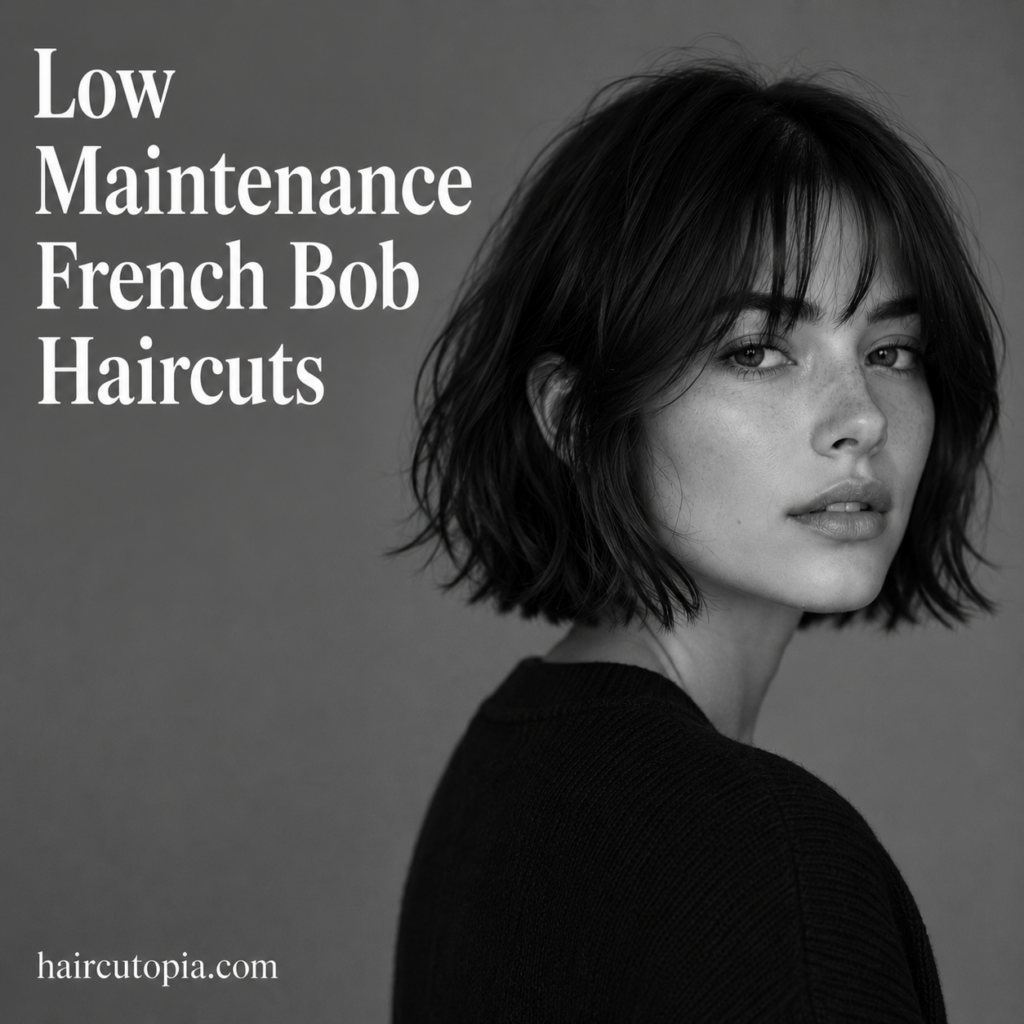
Low maintenance French bob haircuts are perfect for anyone who loves the chic shape of a bob but doesn’t want to spend every morning fighting with a blow-dryer and flat iron.
The French bob already lends itself to an effortless look. A little texture, a slightly imperfect wave, or a few loose pieces can actually make the haircut look better. The trick is choosing a version that works with your natural hair instead of requiring constant styling to maintain its shape.
That might mean skipping high-maintenance bangs, keeping your natural waves, choosing subtle layers, or leaving enough length to tuck the hair behind your ears.
If easy styling is high on your priority list, these French bob ideas offer plenty of ways to keep the look chic without making your routine complicated.
What Makes a French Bob Low Maintenance?
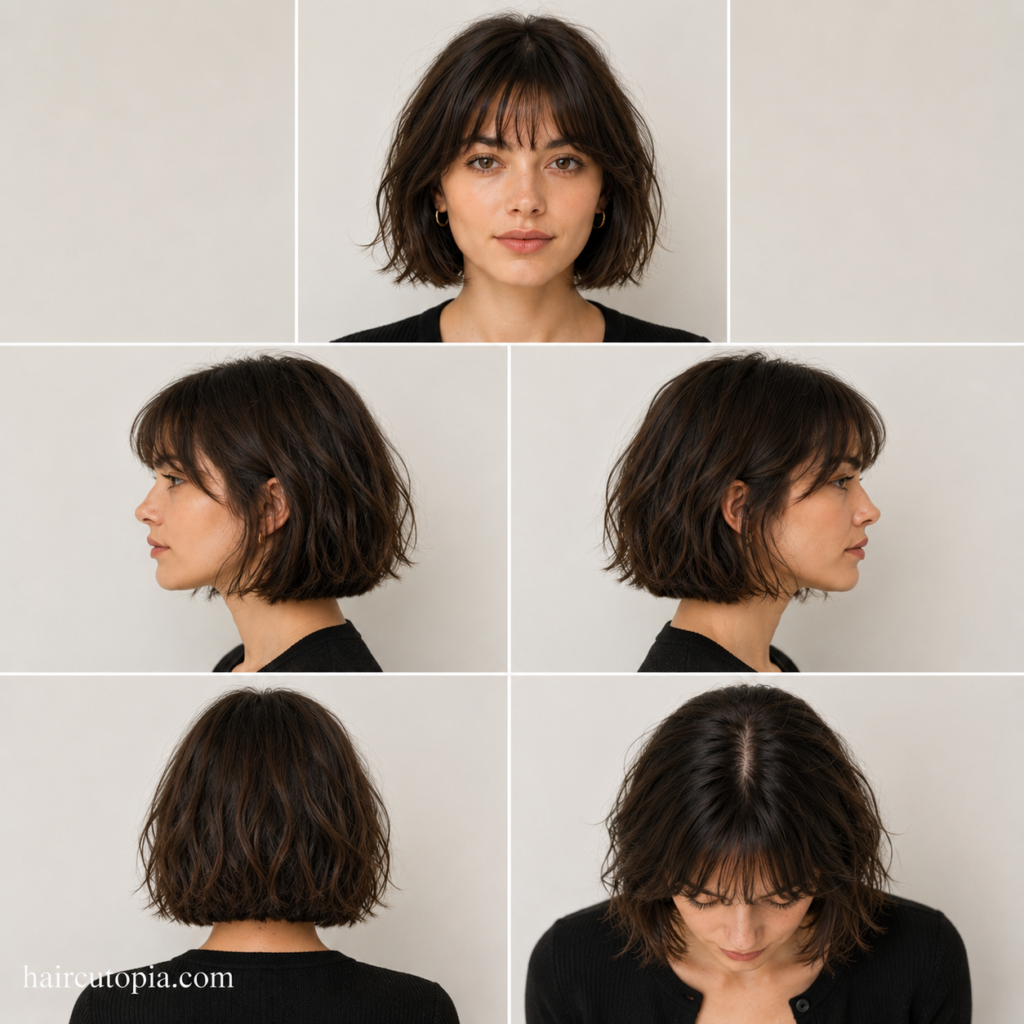
A low maintenance French bob isn’t necessarily a haircut you can completely ignore.
Short hair still needs occasional trims, and bangs may require some extra attention. But the right cut can dramatically reduce how much styling you need to do every day.
The easiest versions usually have a few things in common:
- They work with your natural hair texture.
- The shape still looks good when slightly grown out.
- They don’t rely on daily heat styling.
- Layers are placed strategically rather than excessively.
- The length is easy to tuck or pin back.
- Bangs are optional or designed for an easy grow-out.
- The haircut can air-dry into a flattering shape.
The biggest factor is your individual hair.
A sleek blunt bob might be extremely easy for someone with naturally straight hair but require daily styling for someone with strong waves. Meanwhile, a textured bob could be almost effortless for naturally wavy hair.
So instead of looking for one universally low-maintenance haircut, look for the French bob that asks the least from your particular texture.
15 Low Maintenance French Bob Haircuts to Consider
1. Classic Natural French Bob
A classic French bob doesn’t need to be perfectly polished.
Cut around the chin with a simple perimeter, it can be allowed to follow the hair’s natural movement rather than being straightened into place every morning.
The key is getting the initial shape right.
Ask your stylist for a cut that works with the way your hair naturally falls. If your ends tend to flip slightly or your hair develops a subtle wave when air-dried, those characteristics can become part of the style.
A little imperfection gives the French bob its relaxed character.
2. French Bob Without Bangs
If maintenance is your biggest concern, skipping bangs is one of the easiest decisions you can make.
Without fringe, there’s no need for frequent bang trims or daily adjustments around the forehead. The front sections can simply blend into the rest of the haircut.
You also gain more styling flexibility.
Wear a center part, move it to the side, or tuck the front pieces behind your ears when you want them out of the way.
As the haircut grows, the longer front sections transition naturally into a medium bob.
3. Wavy French Bob
Naturally wavy hair can make a French bob surprisingly easy to manage.
Instead of straightening the texture away, choose a haircut that allows the waves to form naturally. Subtle shaping can prevent the bob from becoming too bulky while maintaining its relaxed silhouette.
On many days, styling can be as simple as applying a lightweight product to damp hair and letting it air-dry.
If a few waves fall differently from the others, leave them alone.
Uniformity isn’t necessary for this style.
4. Tousled French Bob
The tousled French bob practically benefits from not looking perfect.
Rather than relying on smooth, precise styling, the haircut embraces separated ends, loose bends, and natural movement.
This makes it forgiving on busy mornings.
A small amount of texture spray or styling cream can provide definition, but you don’t need to curl every section individually.
Use your fingers to adjust the shape and you’re done.
5. French Bob With Wispy Bangs
If you want bangs without choosing a heavy fringe, wispy bangs can be a practical compromise.
Because they’re lighter and less structured, they don’t need to sit in one perfectly straight line.
They can separate naturally across the forehead or be swept slightly to one side.
As wispy bangs grow, they also begin blending into the sides of the haircut relatively easily.
You’ll still need occasional trims, but the grow-out tends to be softer than with very short, blunt bangs.
6. French Bob With Curtain Bangs
Curtain bangs are another lower-maintenance alternative to traditional fringe.
They separate around the center of the forehead and gradually become longer toward the sides.
The biggest advantage is flexibility.
You can style them forward, sweep them away from the face, or eventually allow them to grow into face-framing layers.
Because they’re designed to be longer, a little growth doesn’t immediately ruin the shape.
7. Softly Layered French Bob
Strategic layers can help a bob fall into place with less effort.
The important word is strategic.
Instead of adding lots of short layers, your stylist can use subtle internal shaping to remove bulk or encourage natural movement.
This can be particularly useful for thick or wavy hair.
When the weight is distributed properly, the haircut may air-dry into a more balanced shape without requiring extensive heat styling afterward.
8. Blunt French Bob for Straight Hair
For naturally straight hair, a simple blunt bob can be one of the easiest options.
The strong perimeter does most of the work.
With minimal layering, the hair naturally falls into a clean shape. Depending on your texture, you may only need to brush or comb it into place.
A small amount of smoothing product can control flyaways if needed.
The catch is that blunt bobs can show growth more clearly than softer cuts, so you may still want regular trims if maintaining a precise length is important to you.
9. Curly French Bob
A curly French bob can be very low maintenance when it’s cut specifically for the natural curl pattern.
Rather than straightening the hair every day, the haircut allows the curls to create the texture and volume.
The shape matters enormously.
A stylist experienced with curly hair can account for shrinkage, density, and differences between curls so the bob maintains a balanced silhouette when dry.
Daily styling may involve little more than refreshing the curls with water or your preferred lightweight styling product.
10. Medium French Bob
Going slightly longer can make the French bob easier to manage.
A medium version usually falls below the chin and gives you enough length to tuck the hair behind your ears or pin sections back.
That extra flexibility is useful on days when the hair isn’t cooperating.
Medium bobs also tend to have a more forgiving grow-out than very short cuts.
Instead of quickly losing their shape, they gradually transition toward a longer bob.
11. Long French Bob
If salon maintenance is your main concern, a longer French bob deserves consideration.
The hair can extend toward the shoulders or collarbone while maintaining the clean shape and relaxed styling associated with a French bob.
Longer versions offer several practical advantages.
You may be able to create a small ponytail, half-up style, or claw clip look. You can also go longer between trims without the change in length being as noticeable.
This makes the long French bob especially useful if you want the aesthetic without committing to frequent salon visits.
12. Side-Parted French Bob
A side part can create instant shape without much actual styling.
Moving the part naturally adds volume around the crown and gives the front of the haircut some asymmetry.
One side can be tucked behind the ear while the fuller side falls naturally around the face.
If your roots are looking flat, switching the direction of your part can also provide a quick lift.
No heat tools required.
13. French Bob With Face-Framing Pieces
Longer pieces around the face can make a French bob more forgiving.
Instead of committing to traditional bangs, the front sections are subtly shaped to create movement around the cheekbones or jawline.
These pieces are long enough to tuck behind the ears when necessary.
They’re also easy to grow out because they gradually blend into the rest of the haircut.
This is a good option if you want some framing around your face without adding a separate bang-maintenance routine.
14. Air-Dried French Bob
An air-dried French bob isn’t one exact haircut. It’s more of an approach to choosing the cut.
Tell your stylist that you want the haircut designed around how your hair behaves without heat styling.
That may influence the length, layering, weight distribution, and perimeter.
For naturally straight hair, the result might be a clean blunt bob. For waves, it may involve subtle layering. For curls, the shape may need to account for shrinkage.
The goal is simple: your haircut should still make sense after you wash it and walk away.
15. Grown-Out French Bob
Sometimes the easiest French bob is one that’s intentionally designed to look good as it grows.
Instead of maintaining an extremely precise jaw-length line, choose a softer perimeter and enough length to transition naturally toward a medium bob.
Wispy or curtain bangs can also help because they become face-framing pieces as they grow.
This approach is ideal if you like changing your haircut occasionally but don’t want to visit the salon every few weeks just to preserve one exact shape.
Which French Bob Is the Lowest Maintenance?
There isn’t one answer for everyone.
The lowest-maintenance French bob is generally the one closest to your natural texture.
If you have naturally straight hair, that might be a blunt bob without bangs.
If your hair is wavy, a softly layered or tousled bob may require less work.
For curls, a properly shaped curly bob that accounts for shrinkage can eliminate the need to straighten the hair.
If you want fewer salon visits, medium and longer French bobs generally offer the most forgiving grow-out.
For the simplest overall routine, consider combining:
- No bangs or longer curtain bangs
- A medium length
- Minimal, strategic layering
- Your natural texture
- A slightly softened perimeter
That combination gives you plenty of room for the haircut to move and grow without needing constant correction.
Low Maintenance French Bob With Bangs vs. Without Bangs
Bangs are one of the biggest factors affecting maintenance.
Traditional short fringe may need regular trims to keep it out of your eyes. It can also require some morning styling, particularly if your hair develops cowlicks or changes direction overnight.
That doesn’t mean you have to avoid bangs completely.
Lower-maintenance options include:
- Wispy bangs
- Curtain bangs
- Longer fringe
- Side-swept bangs
- Face-framing pieces
These styles generally tolerate growth better than very short blunt bangs.
For the absolute simplest routine, however, a French bob without bangs usually wins.
Choosing a Low Maintenance French Bob for Your Hair Type
Your natural texture should guide the haircut.
A style that’s easy for one person can be frustrating for another.
Fine Hair
Fine hair usually benefits from maintaining enough weight through the ends.
Consider:
- A blunt or softly textured perimeter
- Minimal layering
- Chin-to-shoulder length
- Lightweight products
- No bangs or wispy fringe
Avoid excessive layering if your priority is maintaining fullness.
A lightweight volumizing product around the roots may be enough for everyday styling.
Thick Hair
Thick hair may need more internal shaping to become truly low maintenance.
Without it, a bob can become bulky around the jawline or shoulders.
Strategic layers can remove excess weight while preserving the outer shape.
The right weight distribution can make air-drying much easier because the hair naturally settles into a more balanced silhouette.
Straight Hair
Naturally straight hair works particularly well with simple blunt French bobs.
You may not need much styling beyond brushing the hair and smoothing the ends.
If your roots tend to fall flat, switching your part or adding a small amount of volumizing product can create lift.
Wavy Hair
Wavy hair is naturally suited to relaxed French bobs.
Choose a haircut that encourages the wave rather than requiring you to straighten it.
A small amount of styling cream, mousse, or another lightweight product can help define the texture while air-drying.
Curly Hair
For curly hair, the quality of the cut is especially important.
A French bob should be shaped with shrinkage and natural volume in mind.
Once the shape is right, daily styling can become relatively simple because the curls provide the movement automatically.
How to Ask Your Stylist for a Low Maintenance French Bob
Be clear that low maintenance is one of your priorities.
Don’t just show a reference photo without explaining how you actually style your hair.
Tell your stylist:
- How often you use heat tools.
- Whether you normally air-dry.
- How much time you spend on your hair in the morning.
- How frequently you’re willing to get trims.
- Whether you want bangs.
- How your natural hair behaves when completely dry.
- Whether you need enough length to tuck or tie it back.
These details can influence the haircut significantly.
If you almost never blow-dry your hair, your stylist should know that before choosing a shape that only works after a professional blowout.
How to Style a French Bob in Five Minutes
A French bob doesn’t need an elaborate routine every morning.
For many textures, a quick refresh is enough.
For Straight Hair
Brush or comb the hair into place and adjust your part.
Apply a tiny amount of lightweight smoothing product to the ends if needed.
If one section has bent overnight, dampening just that section and quickly restyling it may be easier than redoing the entire haircut.
For Wavy Hair
Lightly dampen areas that have lost their shape.
Scrunch the hair with your fingers and add a small amount of styling product if necessary.
Allow it to air-dry while you get ready.
For Curly Hair
Refresh flattened curls with a little water or your usual curl-refreshing product.
Reshape individual pieces with your fingers rather than completely wetting and restyling the entire head.
For Extra Volume
Change your part.
Moving the hair in the opposite direction from where it normally sits can provide immediate root lift.
Use your fingers to loosen the roots rather than aggressively brushing through the style.
How to Air-Dry a French Bob
Air-drying can dramatically reduce daily effort, but the process starts with a haircut that supports your natural texture.
After washing, gently remove excess water without aggressively rubbing the hair.
Apply a lightweight product appropriate for your texture.
Then arrange your part and allow the hair to settle where you want it before it begins drying.
Try not to constantly touch it.
Once the hair is completely dry, you can gently separate waves, curls, or ends with your fingers.
If necessary, adjust only a couple of sections with a heat tool instead of styling the entire haircut.
How Often Does a Low Maintenance French Bob Need Trimming?
Trim frequency depends on how precise you want the haircut to remain.
A very short blunt French bob may begin looking noticeably different after several weeks because small amounts of growth change where the perimeter falls.
Softer and longer versions are more forgiving.
A general range of around six to twelve weeks can work depending on the cut and your preferences.
If minimizing salon visits is important, consider:
- A medium or longer bob
- Soft rather than ultra-precise ends
- Minimal bangs
- Curtain or wispy fringe
- A shape designed to grow into a lob
You don’t necessarily need to maintain the exact same length year-round.
Allowing the bob to evolve as it grows can be part of the style.
How to Make Your French Bob Easier to Maintain
The haircut itself matters more than having a shelf full of styling products.
A few choices can make your routine significantly easier:
- Work with your natural texture.
- Avoid more layering than your hair actually needs.
- Choose bangs based on realistic maintenance.
- Keep enough length to tuck hair behind your ears.
- Ask for a shape that looks good air-dried.
- Choose a softer perimeter if you want longer between trims.
- Avoid relying on daily heat styling to make the cut work.
- Bring realistic reference photos to your stylist.
Most importantly, tell your stylist what your hair looks like on an ordinary day.
That’s more useful than describing what it looks like immediately after leaving a salon.
Short vs. Medium vs. Long French Bob for Easy Maintenance
Length can make a noticeable difference in maintenance.
Short French Bob
A short French bob creates the most distinctive silhouette.
It can be easy to style, especially on naturally straight or softly textured hair, but the length may need more frequent trimming to stay precise.
Medium French Bob
Medium length offers a useful balance.
It’s still clearly a bob but provides enough hair for tucking, pinning, and more forgiving growth.
For many people, this is the sweet spot between style and practicality.
Long French Bob
A long French bob usually provides the most flexibility.
You may be able to create a small ponytail, use clips, or wear half-up styles. Growth is also less immediately noticeable.
If fewer salon visits are a priority, the longer version may be the easiest option.
What to Avoid If You Want a Low Maintenance French Bob
Some features can increase the amount of work required.
That doesn’t mean you can’t choose them, but it’s useful to know what you’re signing up for.
Consider carefully before choosing:
- Extremely short blunt bangs
- A highly precise micro bob
- Heavy layering that requires styling to sit correctly
- A haircut that fights your natural texture
- A length that can’t be tucked away when needed
- A shape that only works after flat ironing
- Frequent dramatic texture changes
A beautiful haircut that requires 30 minutes of styling every morning isn’t low maintenance if you only want to spend five.
Choose based on your real routine.
Who Should Consider a Low Maintenance French Bob?
A low maintenance French bob can be a great fit if you want a noticeable hairstyle without a complicated daily routine.
It may be especially appealing if you:
- Prefer air-drying
- Don’t regularly use heat tools
- Want shorter hair with styling flexibility
- Like natural texture
- Don’t want frequent salon visits
- Want a haircut with a forgiving grow-out
- Prefer quick morning styling
- Want something that can look good slightly tousled
The goal isn’t to find a haircut that requires absolutely no attention.
It’s to find one that still looks intentional without demanding much effort.
Frequently Asked Questions
Is a French bob low maintenance?
It can be. French bobs that work with your natural texture and have a forgiving shape can require relatively little daily styling. Very precise cuts and short bangs generally need more upkeep.
What is the easiest French bob to maintain?
A medium French bob without bangs is one of the most versatile low-maintenance options. It has enough length to tuck behind the ears and tends to grow out more gradually than a very short bob.
Can you air-dry a French bob?
Yes. A French bob can be an excellent air-dry haircut when it’s shaped around your natural texture. Tell your stylist that air-drying is important to you before the cut.
Are French bobs with bangs high maintenance?
They can require more maintenance than versions without bangs. Wispy and curtain bangs usually have a more forgiving grow-out than very short blunt fringe.
How often should a French bob be trimmed?
Many French bobs can be trimmed around every six to twelve weeks, depending on the length and how precise you want the shape to remain. Short blunt cuts may need attention sooner.
What French bob is best for naturally wavy hair?
A softly layered or tousled French bob can work particularly well with natural waves. Strategic layering can encourage movement while preventing excessive bulk.
Can thick hair have a low maintenance French bob?
Yes. Internal shaping or carefully placed layers can reduce bulk and help thick hair fall into place naturally, potentially reducing the need for daily styling.
Is a French bob easy to grow out?
Generally, yes. The haircut naturally transitions into a medium bob and eventually a lob. Softer perimeters and longer bangs make the transition even easier.
Is a French bob good if I don’t style my hair?
It can be, but the haircut needs to work with your natural texture. Ask your stylist to design the shape around how your hair looks when air-dried rather than assuming you’ll heat-style it every day.
Final Thoughts
Low maintenance French bob haircuts work best when the haircut does most of the styling for you.
Instead of choosing a shape that requires your natural hair to behave completely differently, lean into what it already wants to do.
Straight hair can look great with a simple blunt perimeter. Waves can become part of a tousled French bob. Curls can provide natural volume and movement. And if you want fewer trims, a medium or longer version can give you a much more forgiving grow-out.
Bangs are optional, too. Wispy and curtain styles can provide that classic French-inspired feel without requiring the precision of very short fringe.
Think about what your hair looks like five minutes after you wake up, not just how you’d like it to look after 30 minutes of styling.
A truly low maintenance French bob should make your everyday routine easier—and still look good when you haven’t tried too hard.