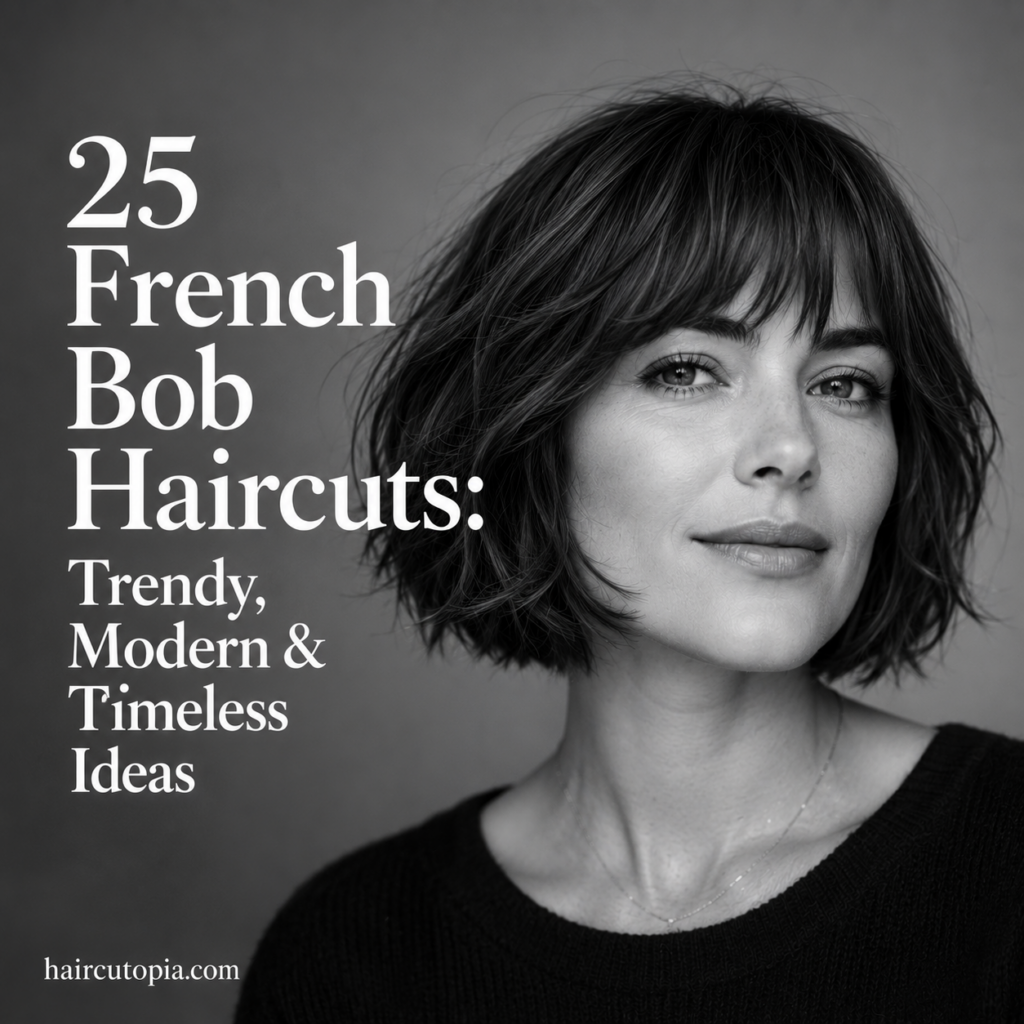
The French bob has been around for generations, yet somehow it never really feels dated. Maybe that’s because the basic idea is so simple: a short, face-framing bob with plenty of personality and just enough imperfection to keep it interesting.
Traditionally, a French bob falls somewhere between the cheekbones and chin. Bangs are common, especially a full or softly textured fringe, but they’re certainly not required.
Modern French bobs have stretched those boundaries even further. You’ll see blunt versions with sharp ends, airy layered cuts, natural curls, tousled waves, micro bangs, curtain bangs, and slightly longer bobs that barely skim the jaw.
The result is a haircut that can feel classic one moment and completely contemporary the next.
If you’re thinking about going shorter, these 25 French bob haircuts offer plenty of ideas to bring to your next salon appointment.
What Is a French Bob?
A French bob is a short bob haircut traditionally cut around the jaw or chin.
Unlike some highly structured bobs, it often has a softer, more relaxed finish. Natural texture isn’t something that needs to be eliminated. A little bend, wave, separation, or movement can actually make the haircut feel more authentic.
Common French bob features include:
- Cheekbone-to-chin length
- A defined but not necessarily severe perimeter
- Full, wispy, or textured bangs
- Natural movement
- Soft face framing
- Slightly undone styling
You don’t need every one of those elements.
Today’s French bob is more of a starting point than a strict formula, which is exactly why there are so many ways to wear it.
1. Classic French Bob
Start with the haircut that inspired all the variations.
The classic French bob sits around the chin with a relatively clean perimeter and a soft fringe across the forehead.
It works especially well with straight or gently wavy hair, where the simple shape can remain visible without looking overly rigid.
For a traditional finish, keep the ends full but not perfectly stiff. A small amount of texture gives the haircut that relaxed quality associated with the French bob.
2. Chin-Length French Bob
If you’re unsure how short to go, chin length is a versatile starting point.
The hair falls directly around the lower face, emphasizing the jaw while preserving enough length to create waves or tuck the sides behind the ears.
It can be worn with bangs or without them.
This length is also a practical transition if you’re coming from shoulder-length or longer hair and aren’t ready for a dramatically shorter cut.
3. Blunt French Bob
The blunt French bob emphasizes a strong, clean baseline.
Instead of heavily layering the ends, most of the hair remains at a similar length. This creates a graphic silhouette that can look particularly striking on straight hair.
A blunt perimeter can also make fine hair appear fuller because fewer layers are removing density from the bottom.
For a softer result, add subtle internal texture while keeping the outer line strong.
4. French Bob With Full Bangs
Full bangs create one of the most recognizable French bob combinations.
The fringe usually falls near the eyebrows, drawing attention toward the eyes and giving the haircut a strong face-framing effect.
The bangs can be relatively blunt or slightly textured depending on the look you prefer.
Keep maintenance in mind. Full bangs generally need more frequent trims than longer fringe styles.
5. French Bob With Wispy Bangs
Wispy bangs give the French bob a lighter, airier appearance.
Instead of forming a solid block across the forehead, individual pieces are separated to create softness.
This works particularly well if you want bangs but don’t want them to dominate the haircut.
Wispy fringe can also be easier to transition into longer face-framing pieces as it grows.
6. French Bob With Curtain Bangs
Curtain bangs bring a softer, more open shape to the front of the haircut.
They’re typically shorter near the center and become gradually longer toward the sides.
You can wear them close to the forehead for a more noticeable fringe or sweep them outward when you want your face more open.
Pair them with a chin-length bob for a relaxed modern interpretation of the classic French style.
7. French Bob With Micro Bangs
Micro bangs make the French bob considerably bolder.
The fringe sits well above the eyebrows, exposing more of the forehead and creating a strong editorial look.
This style works especially well when you want the haircut itself to make a statement.
Just remember that very short bangs are a commitment. If you decide you don’t like them, they’ll need time to grow into a longer fringe.
Starting with longer bangs and gradually going shorter is a safer approach if you’re uncertain.
8. French Bob Without Bangs
You don’t need bangs to wear a French bob.
Removing the fringe puts more emphasis on the bob’s length and perimeter while opening up the forehead.
You can change the personality of the haircut simply by changing your part.
Try:
- A center part
- A soft side part
- A deep side part
- A slightly off-center part
A no-bangs French bob also requires less fringe maintenance between salon appointments.
9. Wavy French Bob
Waves and French bobs naturally complement each other.
The movement softens the short perimeter and creates a relaxed, slightly undone finish.
If your hair already has natural waves, work with them rather than trying to create a perfectly smooth bob.
A lightweight wave cream or mousse can help encourage definition without making the hair stiff.
The waves don’t need to match. Slightly irregular bends often make the haircut look more effortless.
10. Tousled French Bob
The tousled French bob takes that relaxed feeling even further.
Rather than creating polished waves, the hair has soft bends, separated pieces, and a deliberately imperfect finish.
It’s a great option if you like hair that looks styled without appearing overly done.
Use your fingers to shape the hair rather than trying to position every strand perfectly.
A little texture through the ends can help create the right amount of separation.
11. Layered French Bob
Layers give the French bob additional movement and can change how volume is distributed throughout the haircut.
They don’t have to be dramatic.
Subtle internal layers can remove weight from thick hair while preserving the bob’s recognizable outer shape.
Layers can also encourage natural waves and create more lift around the crown.
The key is adding enough movement without losing the strong short-bob silhouette.
12. Textured French Bob
A textured French bob sits somewhere between a blunt bob and a noticeably layered haircut.
The overall shape remains fairly simple, but the ends have additional separation.
This can prevent thick or wavy hair from feeling too heavy around the jaw.
It’s also a forgiving haircut to style because the finish isn’t supposed to look perfectly uniform.
13. Curly French Bob
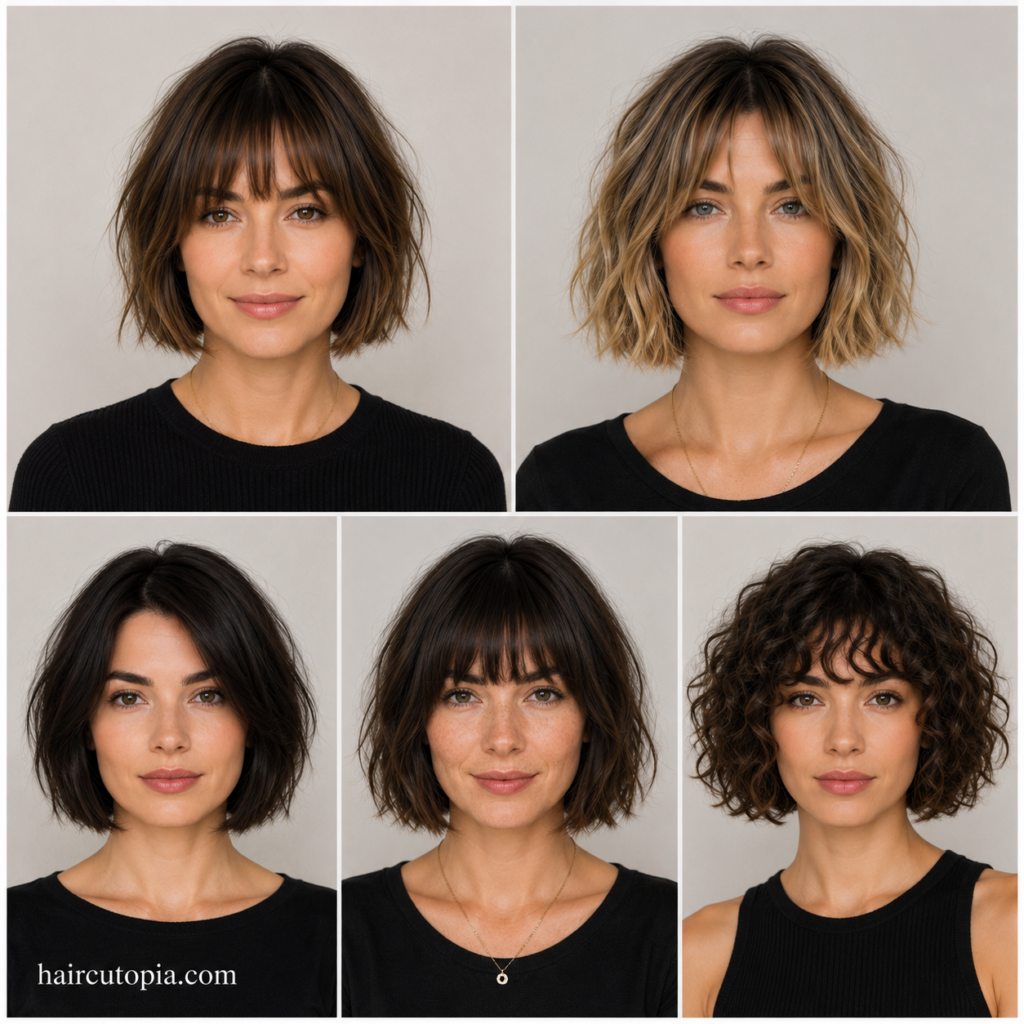
Curly hair gives the French bob an entirely different character.
Natural curls create volume and movement while the shorter length keeps the overall shape defined.
A curly French bob may be softly rounded, subtly layered, or slightly longer around certain areas depending on the curl pattern.
Shrinkage is important when choosing the length.
Hair that reaches the chin when wet can sit noticeably higher when dry, so your stylist should account for how your individual curls behave.
Curly bangs can complete the look without needing to be straightened.
14. French Bob for Fine Hair
Fine hair can work extremely well with a French bob.
The shorter length removes some of the weight that can pull longer hair downward, while a stronger perimeter creates the appearance of fuller ends.
Avoid automatically adding lots of layers.
For fine hair, you may get better results from:
- A blunt or semi-blunt baseline
- Minimal internal layering
- Soft fringe
- Lightweight styling products
- Gentle volume at the roots
The goal is to preserve density while giving the haircut enough movement to avoid looking flat.
15. French Bob for Thick Hair
Thick hair brings plenty of natural body to a French bob.
The challenge is controlling where that volume sits.
If a thick bob is cut completely to one length, the bottom can sometimes become overly wide or heavy.
Strategic internal layering can remove bulk without making the haircut look thin.
Ask your stylist to preserve the outer bob shape while reducing weight in the areas where your hair naturally becomes dense.
16. Sleek French Bob
The sleek French bob puts all the attention on shape.
Hair is worn smooth, allowing the clean perimeter and short length to stand out.
A center part creates a minimalist, modern look, while adding bangs brings the style closer to the traditional French bob.
This finish works naturally with straight hair but can also be achieved with careful blow-drying.
If you regularly use heat tools, apply heat protection and avoid using more heat than necessary.
17. French Bob With Side-Swept Bangs
Side-swept bangs soften the forehead and blend naturally into the sides of the haircut.
They work particularly well with a side part and can add movement around the face without creating a heavy fringe.
They’re also relatively forgiving during grow-out.
As the bangs become longer, they gradually transition into face-framing layers.
18. French Bob With Face-Framing Layers
Face-framing layers add softness without requiring layers throughout the entire haircut.
Shorter pieces around the cheeks gradually blend toward the main length of the bob.
They can create additional movement around the front while leaving the back relatively full.
This approach works particularly well with curtain bangs or a center part.
19. Slightly Longer French Bob
Not every French bob needs to stop directly at the jaw.
Keeping the length around the chin or slightly below gives you a softer introduction to the style.
The additional length can make it easier to:
- Tuck hair behind your ears
- Add waves
- Clip back the sides
- Experiment with different parts
- Grow the haircut into a longer bob
It’s an excellent option if you’re interested in short hair but don’t want to make the biggest possible change immediately.
20. French Bob With a Center Part
A center part gives the French bob a clean, balanced appearance.
Without bangs, it can feel minimalist and contemporary.
With curtain bangs, the center part becomes softer and more romantic.
This version works particularly well when you want the shape of the bob itself to be the main feature.
Tucking both sides behind the ears can make the haircut look even sharper.
21. Side-Parted French Bob
Moving the part to one side instantly changes the balance of a French bob.
The heavier side can create natural lift and volume, while the opposite side can be tucked behind the ear.
This is an easy way to refresh the haircut without changing the actual cut.
A side part can work with bangs, face-framing pieces, waves, or a sleek finish.
22. French Bob With Rounded Volume
Some French bobs have a softer, more rounded silhouette.
Instead of creating a sharp straight line around the bottom, subtle layering and styling build gentle volume through the sides and back.
This works especially well with thick, wavy, or naturally voluminous hair.
The key is keeping the shape controlled enough that the bob still looks intentional.
23. Shaggy French Bob
A shaggy French bob blends the compact shape of a bob with some of the movement associated with a shag.
Layers are more noticeable, the ends have additional separation, and the overall finish is less polished.
A textured fringe can tie the entire style together.
This variation works especially well if you want a French bob that feels casual, modern, and slightly edgy rather than classic.
24. French Bob With Natural Gray or Silver Hair
Gray and silver hair can look particularly striking in a French bob.
The short shape gives the hair definition, while layers and texture allow different shades of silver, white, and charcoal to stand out.
You can wear the haircut sleek for a polished appearance or embrace natural movement for something softer.
If your gray hair feels drier or coarser than it once did, moisturizing products can help maintain softness without weighing down the cut.
25. Soft Grown-Out French Bob
A French bob doesn’t stop looking good the moment it grows past its original length.
A softer version can gradually transition into a longer bob.
This works especially well when the haircut starts slightly longer and avoids an extremely rigid perimeter.
Curtain bangs, side-swept bangs, and face-framing pieces can also blend naturally as they grow.
If you don’t want salon appointments every few weeks, ask your stylist to create a French bob that will maintain its balance as it becomes longer.
Which French Bob Is Right for Your Hair Type?
Hair texture can make the same haircut look completely different from one person to another.
Rather than fighting that difference, use it to choose your version.
Straight Hair
Straight hair makes the shape of a French bob particularly visible.
Blunt, sleek, center-parted, and classic versions all work naturally with straighter textures.
If you want more movement, subtle layers or a few soft bends can keep the haircut from feeling too rigid.
Wavy Hair
Wavy hair is naturally suited to tousled and textured French bobs.
A little layering can encourage movement, but you may not need much styling beyond a lightweight wave product.
Curly Hair
A curly French bob should be shaped around the curl pattern rather than treated like a straight bob.
Account for shrinkage and consider strategic layering to distribute volume.
Fine Hair
Preserve density.
A stronger perimeter and minimal layering can help the ends look fuller.
Thick Hair
Focus on controlling weight.
Internal layers can create movement while preventing too much bulk from collecting around the bottom of the haircut.
Choosing a French Bob for Your Face Shape
Face shape can be a useful starting point, but it shouldn’t become a list of restrictions.
Small changes to length, fringe, parting, and volume can customize almost any French bob.
Round Face
A chin-length or slightly longer bob can create a longer visual line.
A side part or curtain bangs can also add movement through the front.
Oval Face
Oval faces can experiment with a broad range of French bob variations, including shorter lengths and stronger bangs.
Square Face
Soft waves, textured ends, and face-framing layers can introduce movement around a defined jaw.
Keeping the bob slightly longer is another option if you want a softer outline.
Heart-Shaped Face
A chin-length bob can add visual balance around the lower portion of the face.
Wispy, curtain, or side-swept bangs can complement the shape.
Long Face
Volume through the sides can create balance, while bangs can bring attention toward the center of the face.
These are guidelines rather than rules. Personal preference matters more than matching a haircut to a particular face-shape category.
Which Bangs Look Best With a French Bob?
Bangs can dramatically change the overall style.
Full Bangs
The classic choice.
Full fringe creates a strong frame around the eyes and gives the haircut its traditional French-inspired appearance.
Wispy Bangs
Choose wispy bangs when you want a softer, lighter fringe.
They’re less dominant and can be easier to grow out.
Curtain Bangs
Curtain bangs provide flexibility.
Wear them toward the center when you want more fringe or sweep them outward when you prefer an open forehead.
Micro Bangs
Micro bangs create a much bolder look.
They’re distinctive but require more commitment because of their very short length.
Side-Swept Bangs
A practical option that blends easily into face-framing layers as it grows.
No Bangs
Skipping bangs creates a cleaner, simpler French bob and eliminates fringe maintenance entirely.
What to Ask for at the Salon
The phrase “French bob” can describe several different haircuts, so don’t rely on the name alone.
Bring reference photos and explain what you actually like about them.
Talk to your stylist about:
- Exactly where you want the length to fall.
- Whether you prefer blunt or textured ends.
- How much layering you want.
- Whether you want bangs.
- How much natural volume you prefer.
- Whether you normally air-dry or blow-dry.
- How much daily styling you’re willing to do.
Your natural hair should be part of the conversation.
A haircut that looks great after a professional blowout but doesn’t work with your normal routine probably isn’t the right version for you.
How to Style a French Bob
One of the best things about the French bob is that styling can be relatively simple.
For a Natural Finish
Apply a lightweight styling product to damp hair and let your natural texture do most of the work.
Air-dry or diffuse depending on your hair type.
For Soft Waves
Create a few loose bends rather than curling every section.
Leaving the ends more relaxed creates a less polished, more natural finish.
For Tousled Texture
Use a small amount of texture product and separate individual pieces with your fingers.
Avoid making the hair stiff.
For More Volume
Concentrate your volumizing product near the roots.
Fine hair can become weighed down quickly if too much product is applied through the lengths.
For a Sleek Finish
Blow-dry the hair smooth while directing the ends into the desired shape.
Finish with a small amount of smoothing product if necessary.
How Often Does a French Bob Need a Trim?
Short bobs show growth faster than longer hairstyles because relatively small changes in length alter the overall silhouette.
If you want to maintain a precise short shape, trims around every six to eight weeks are a reasonable starting point.
Softer, longer, or deliberately tousled versions can often go longer between appointments.
Bangs may need attention sooner than the rest of the haircut.
If frequent appointments aren’t appealing, choose a French bob designed to grow into a longer shape gracefully.
Is a French Bob High Maintenance?
It depends entirely on the version.
A precise, sleek bob with short full bangs can require regular styling and salon maintenance.
A longer, textured French bob that works with your natural waves may be considerably easier.
For lower maintenance, consider:
- Keeping the length slightly longer
- Working with your natural texture
- Choosing soft or textured ends
- Avoiding overly complicated layering
- Wearing curtain or side-swept bangs
- Skipping bangs entirely
- Choosing a shape that looks good air-dried
The easiest haircut is usually the one that requires the least effort to make your natural hair behave differently.
Why the French Bob Remains Timeless
Hair trends come and go quickly, but the French bob has a simple foundation that makes it easy to reinterpret.
The classic version can look polished and timeless.
Add waves and it becomes relaxed. Make the perimeter blunt and it feels contemporary. Add micro bangs and suddenly it’s bold and editorial. Introduce curls or a shaggy texture and the same basic haircut takes on another personality entirely.
That’s the real appeal of the French bob.
It’s recognizable without being restrictive.
Final Thoughts on French Bob Haircuts
The best French bob isn’t necessarily the most traditional one.
It’s the version that works with your hair.
Fine hair may look fuller with a blunt perimeter, while thick hair can benefit from strategic layers. Natural waves bring effortless movement, and curls can turn the short bob into a beautifully dimensional shape.
Then you can customize the details.
Add full bangs for the classic look, wispy fringe for softness, curtain bangs for flexibility, or skip the fringe entirely. Keep the cut sleek and precise or let it become textured and tousled.
If you’re nervous about going short, start with a chin-length or slightly longer version. You can always take more length off later.
With 25 French bob haircut ideas to choose from, there’s no need to follow one exact formula. Use the classic French bob as inspiration, then make the haircut your own.
Related Posts
 Short Blunt Cut Haircuts: 25 Chic Styles That Make a Bold Statement
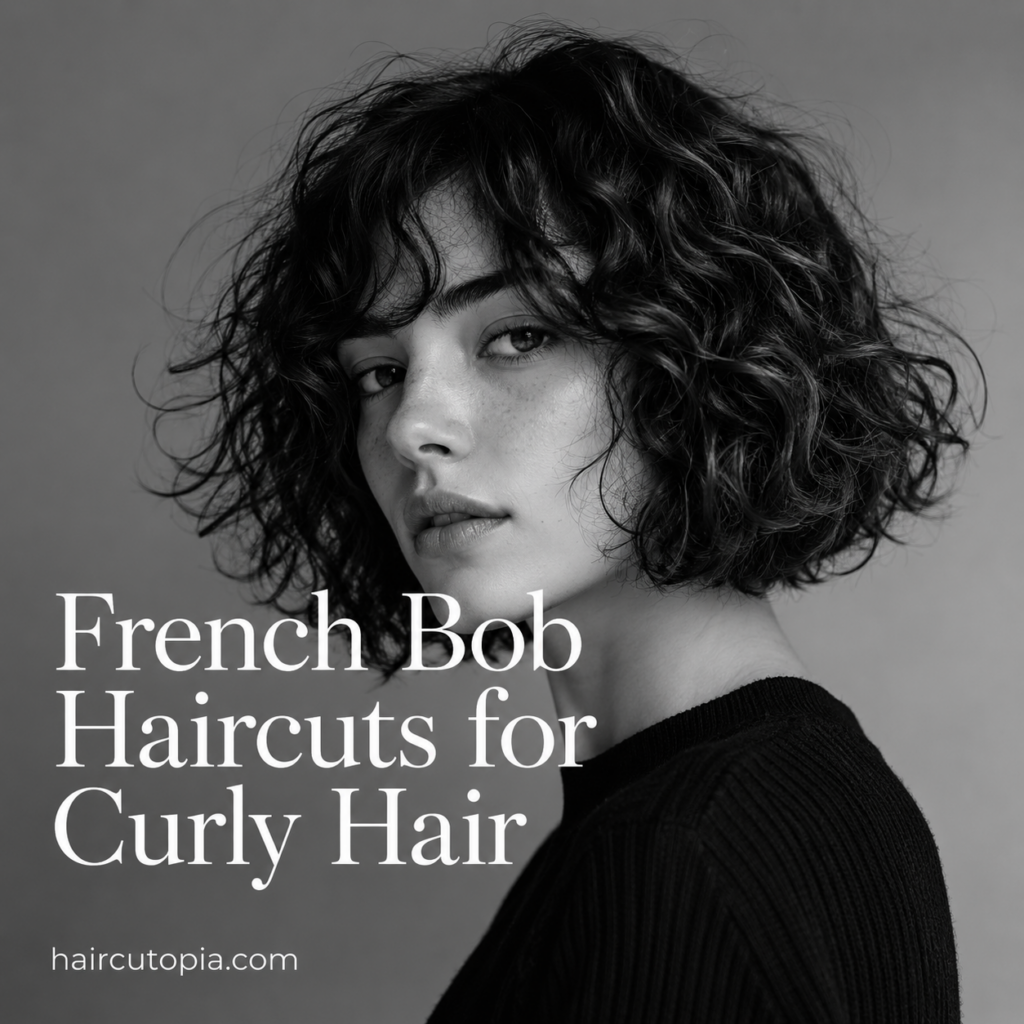 French Bob Haircuts for Curly Hair: Chic, Short Styles That Embrace Natural Texture
 Short Bob Haircuts for Diamond Faces: 25 Flattering Styles That Highlight Your Best Features
 Low Maintenance Pixie Haircuts: Easy, Stylish Cuts for Everyday Life