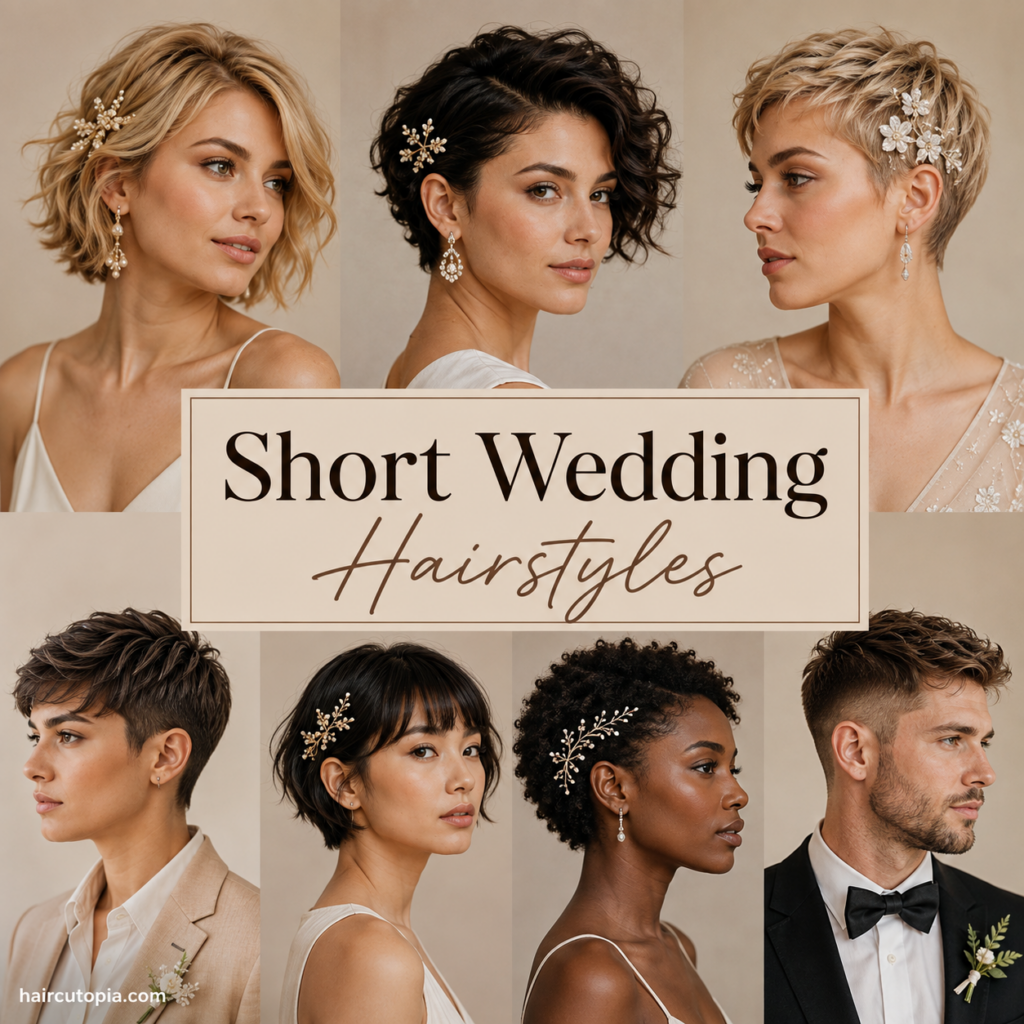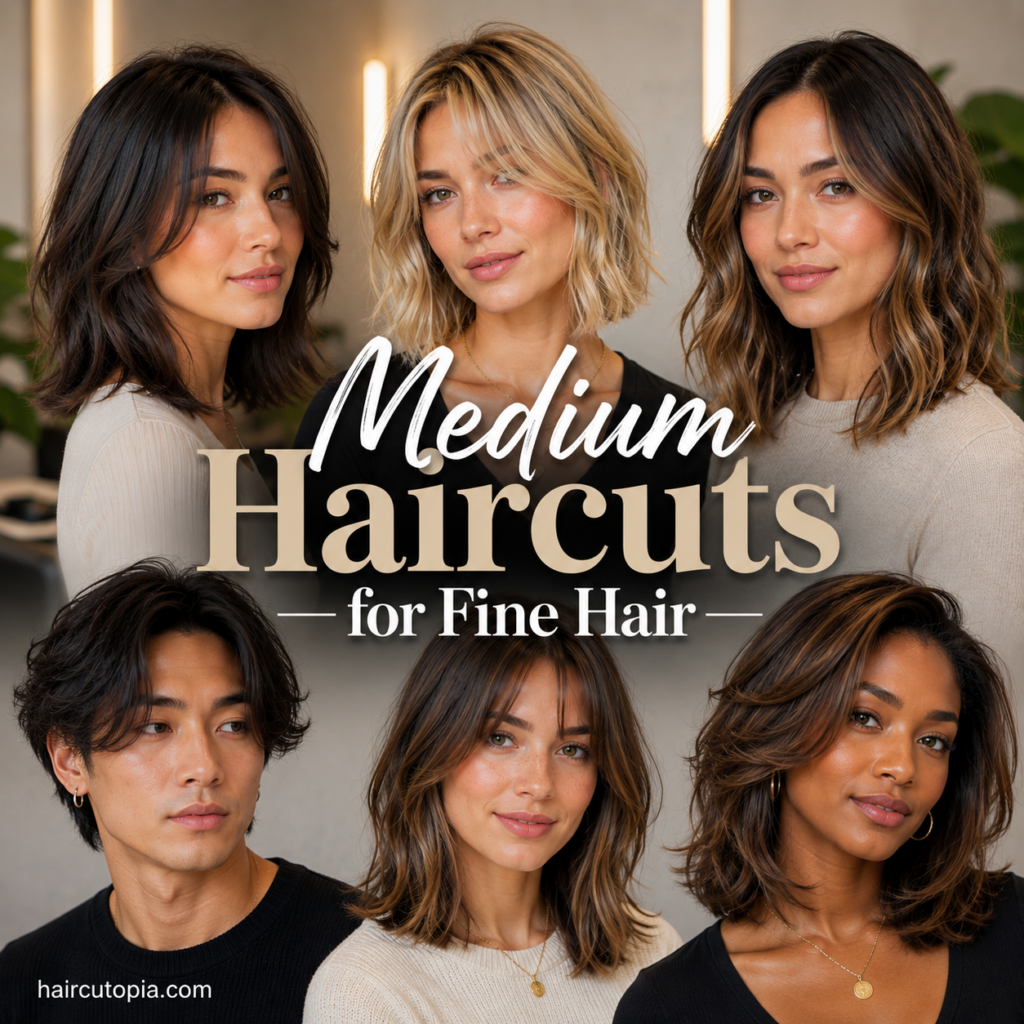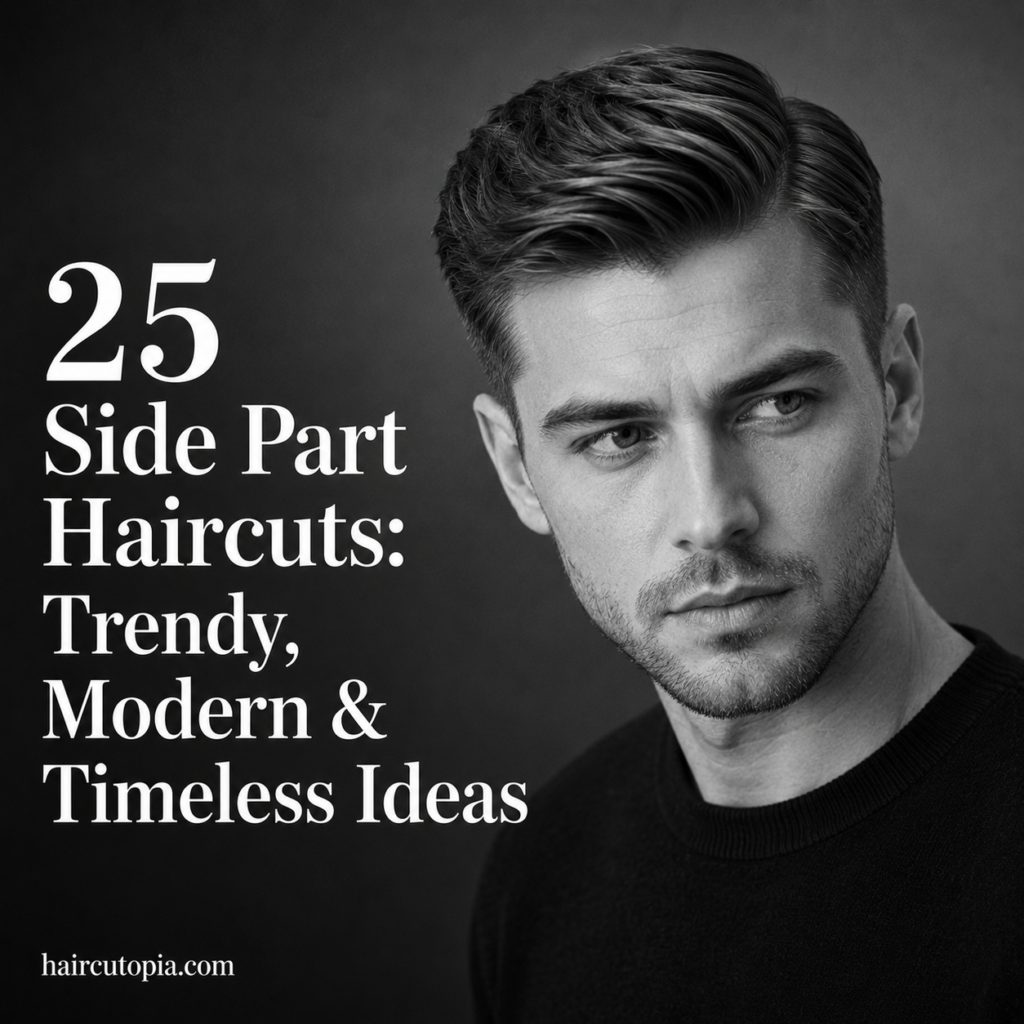
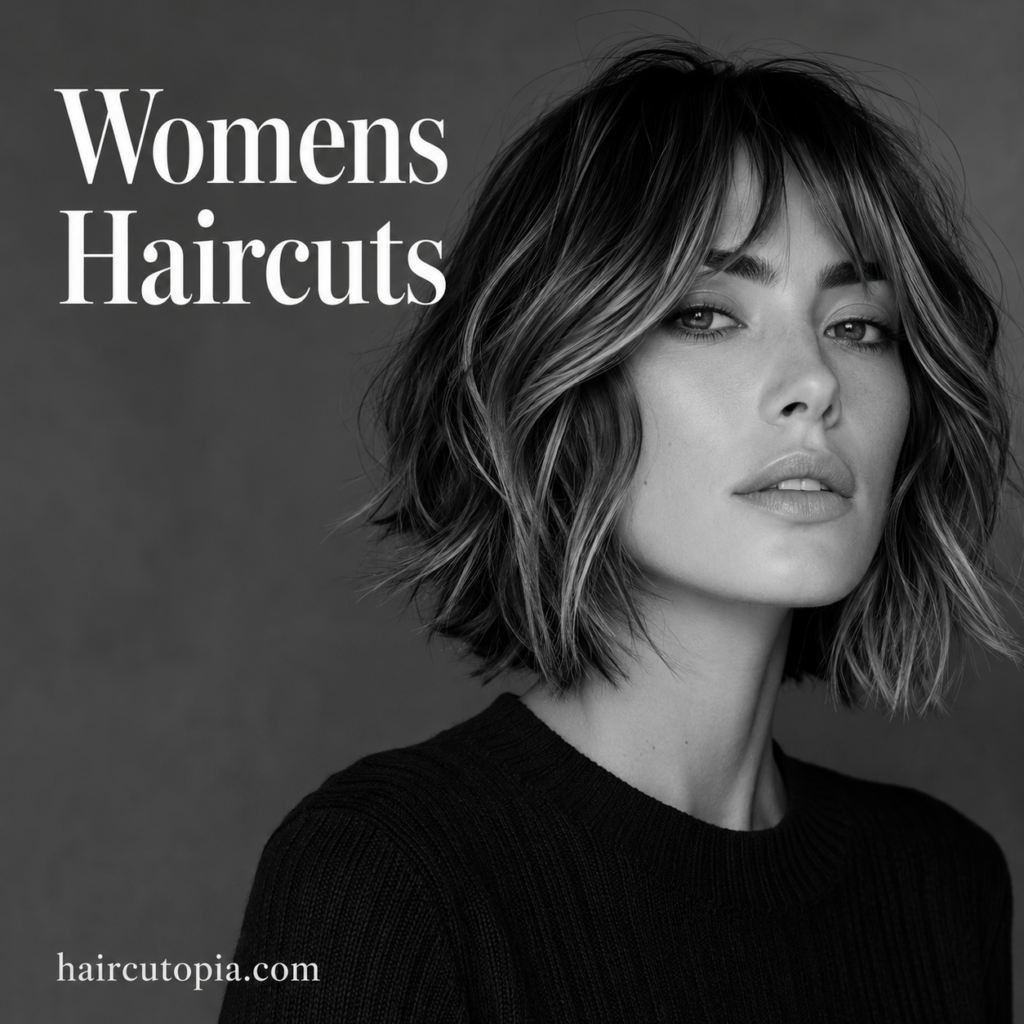
A great haircut can change much more than the length of your hair. The right cut can bring out your natural texture, frame your face, make everyday styling easier, and give your entire look a fresh direction.
The challenge is deciding which haircut actually works for you.
Women’s haircuts range from ultra-short pixies and structured bobs to flowing layers, shags, lobs, and long styles. Some cuts are polished and precise, while others are intentionally soft, textured, or undone. Even small details—like bangs, face-framing pieces, or the placement of layers—can completely change the finished look.
The best haircut isn’t necessarily the one that happens to be trending right now. It’s the one that fits your hair texture, face shape, lifestyle, styling preferences, and personality.
This guide covers the major types of women’s haircuts, how to choose between them, and what to consider before your next salon appointment.
How to Choose the Right Women’s Haircut
Finding a haircut you love starts with looking beyond the photo that inspired you.
Two people can get technically similar haircuts and end up with very different results. Hair density, texture, growth patterns, face shape, and styling all influence how a cut falls.
Before committing to something new, think about a few practical factors.
Your Natural Hair Texture
Your natural texture is one of the most important considerations.
Straight hair often highlights clean lines and precision particularly well. Blunt bobs, sleek lobs, and structured cuts can look especially sharp because the shape remains easy to see.
Wavy hair naturally works with movement. Shags, textured bobs, butterfly cuts, and layered styles can enhance that movement rather than flattening it.
Curly hair has its own shape and volume, so the placement of layers becomes particularly important. Thoughtfully placed layers can create balance while allowing curls to form naturally.
Coily hair offers enormous versatility as well, from short sculpted shapes to rounded cuts and longer layered styles.
Rather than fighting your natural texture every morning, consider a haircut designed to work with it.
Your Hair Density
Texture describes the shape of individual strands, while density refers to how much hair you have.
Fine or lower-density hair can sometimes look fuller with stronger perimeter lines and carefully controlled layering. Too many layers may remove more weight than desired.
Thick or high-density hair may benefit from internal layering, graduation, or strategic weight removal. These techniques can create movement without making the haircut appear overly bulky.
Your stylist can help determine how much layering makes sense for your particular hair.
Your Face Shape
Face shape can be useful when choosing a haircut, but it shouldn’t become a rigid set of rules.
Common face shapes include:
- Oval
- Round
- Square
- Heart
- Diamond
- Oblong or rectangular
Instead of thinking that certain face shapes “cannot” wear certain haircuts, think about proportion.
Face-framing layers can draw attention toward the cheekbones. Bangs can visually change the proportions of the forehead. Volume around the sides can create width, while longer vertical lines can create the impression of length.
Small adjustments allow many popular haircuts to work across different face shapes.
Your Styling Routine
Be realistic about how much time you want to spend styling your hair.
Some seemingly effortless haircuts actually require regular blow-drying, straightening, curling, or product application to maintain their intended shape.
Others are much more forgiving.
Ask yourself:
- Do I normally air-dry or blow-dry my hair?
- Am I comfortable using hot tools?
- How many styling products do I typically use?
- How often am I willing to visit the salon?
- Do I regularly wear my hair in a ponytail or bun?
- Do I want a polished or more relaxed finish?
A haircut that fits your actual routine is much easier to enjoy long term.
Popular Types of Women’s Haircuts
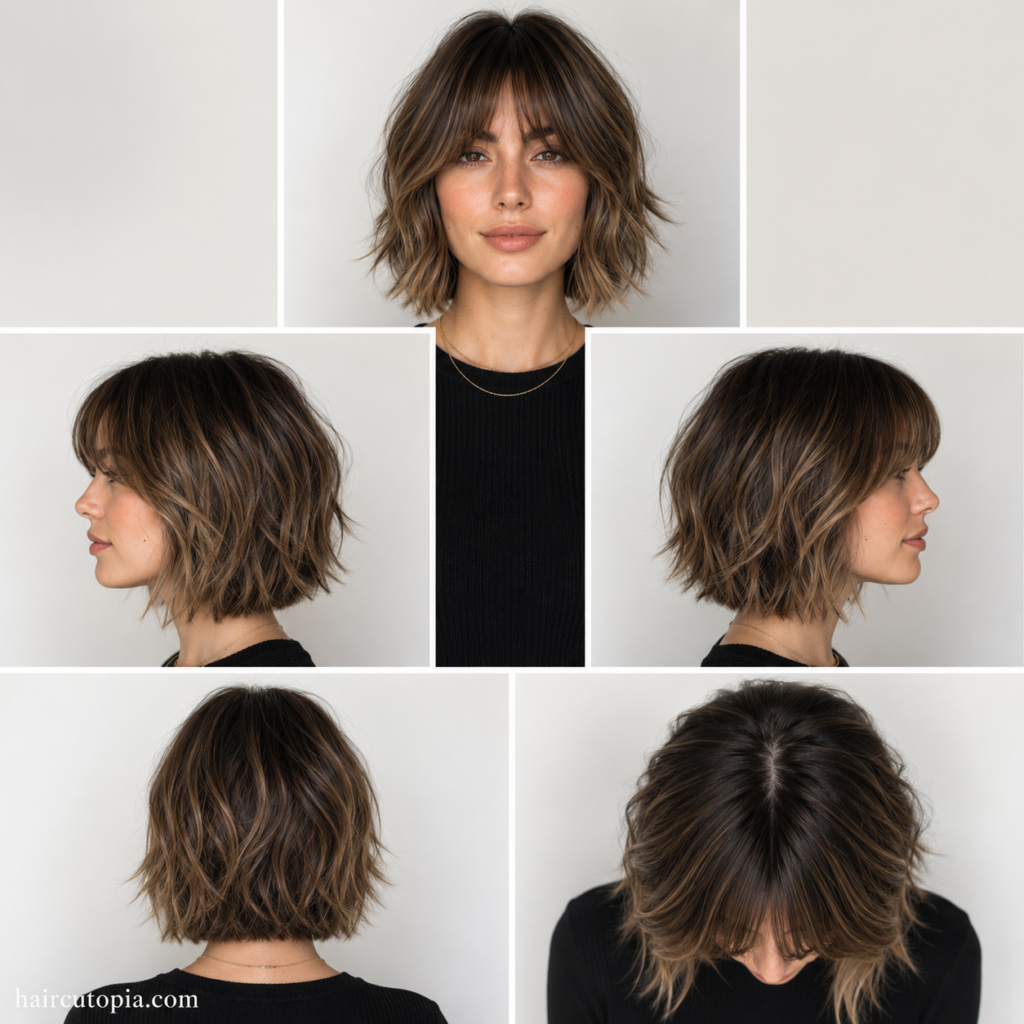
There are countless variations of women’s haircuts, but most modern styles are built around several recognizable shapes.
Understanding the differences can make browsing haircut inspiration much easier.
Bob Haircuts
The bob haircut is one of the most recognizable women’s haircuts ever created.
Traditionally, a bob falls somewhere around the jawline, although modern interpretations can be slightly shorter or longer. What makes the bob so versatile is how easily its basic shape can be customized.
A bob can be:
- Blunt and structured
- Softly layered
- Tousled and textured
- Angled
- Curly
- Wavy
- Sleek and straight
- Paired with bangs
The perimeter can create a strong visual line, while subtle layers can introduce softness and movement.
Bobs can also work across a surprisingly wide range of hair textures. The key is adjusting the shape and weight distribution to suit the individual.
Short Bob Haircuts
Short bob haircuts typically sit around the jaw or slightly above it.
They create a noticeable frame around the face and can feel especially fresh when transitioning from longer hair.
A short bob can have a sharp, graphic finish or a softer shape with texture through the ends. Adding bangs can make the style feel even more distinctive.
Because the neckline and perimeter are highly visible, short bobs generally benefit from regular trims.
Textured Bob Haircuts
A textured bob takes the classic bob shape and gives it more movement.
Rather than creating one perfectly uniform line, the stylist may use layers, point cutting, or other texturizing techniques to soften the ends.
The result can feel relaxed and modern.
Textured bobs are particularly appealing for people who prefer hair that doesn’t need to look perfectly styled to work.
A-Line Bob Haircuts
An A-line bob is usually shorter toward the back and gradually becomes longer toward the front.
That forward angle creates a distinctive silhouette without necessarily requiring dramatic layering.
The difference between the front and back can be subtle or pronounced depending on the desired look.
French Bob Haircuts
The French bob is a shorter interpretation of the traditional bob, often sitting around the jaw or slightly higher.
It frequently appears with bangs and a relaxed texture rather than an overly polished finish.
What gives the French bob its appeal is its simplicity. The haircut has a clear shape but can still look natural and slightly undone.
Lob Haircuts
The lob haircut—short for “long bob”—offers a middle ground between short and long hair.
Most lobs fall somewhere between the shoulders and collarbone.
This extra length makes the haircut extremely versatile. It still has the clean shape associated with a bob but leaves enough hair for ponytails, loose buns, waves, and other everyday styles.
Lobs can be worn:
- Blunt
- Layered
- Angled
- Wavy
- Curly
- Sleek
- Textured
For someone interested in shorter hair but hesitant to commit to a jaw-length bob, the lob can be an approachable transition.
Long Bob Haircuts
Long bob haircuts and lobs are often discussed interchangeably, although long bob styles can cover a wider range of slightly longer bob-inspired cuts.
A long bob preserves some of the structure of a traditional bob while allowing more movement and styling flexibility.
It can also be a practical choice when growing out shorter hair because the shape can remain intentional during the transition.
Pixie Haircuts
Pixie haircuts take short hair in a completely different direction.
Instead of maintaining a bob-like perimeter, pixies are cropped closer around the sides and back with varying amounts of length through the top.
Pixie cuts can look:
- Soft and feminine
- Sleek and polished
- Tousled and casual
- Edgy and sculpted
- Voluminous
- Piecey and textured
One of the biggest advantages of a pixie is how much personality can be created with relatively little hair.
However, short does not automatically mean maintenance-free. Pixies often require more frequent salon visits because small amounts of growth can noticeably change the shape.
Long Pixie Haircuts
A long pixie haircut leaves additional length through the top, fringe, sides, or all three.
That extra hair creates more styling flexibility than a traditional cropped pixie.
Long pixies can be swept to the side, worn with texture, styled with volume, or allowed to fall naturally around the face.
They can also provide a comfortable transition for someone considering very short hair for the first time.
Bixie Haircuts
The bixie haircut combines characteristics of a bob and a pixie.
It generally has more length and movement than a traditional pixie but feels shorter and more layered than a classic bob.
That in-between shape is exactly what makes the bixie interesting.
Layers can create volume and texture, while longer pieces around the face preserve some of the softness associated with a bob.
The bixie can be particularly useful for someone who wants short hair without committing to an extremely close crop.
Shag Haircuts
Shag haircuts are built around layers, texture, and movement.
Rather than creating a perfectly controlled silhouette, the shag embraces a more relaxed shape. Shorter layers around the crown can add volume while longer sections maintain overall length.
Many shags also incorporate bangs.
Modern shag haircuts can range from subtle to dramatic. Some have only gentle layering, while others feature obvious separation between the shorter and longer sections.
Shags can work especially well with naturally wavy or textured hair because movement is already part of the haircut’s character.
Wolf Cut Haircuts
The wolf cut shares some characteristics with the shag but usually creates an even more noticeable contrast between shorter layers around the top and longer hair underneath.
The result is intentionally textured and slightly wild.
Depending on how dramatically it is cut, a wolf cut can feel edgy or surprisingly wearable.
Softer versions use blended layers to create movement without producing an extreme silhouette. More dramatic versions emphasize crown volume and heavily textured lengths.
The haircut works particularly well when you want your hair to have visible shape rather than simply hanging at one length.
Butterfly Haircuts
The butterfly cut uses cascading layers to create volume and movement while preserving longer lengths.
Shorter layers around the face and upper sections of the hair create lift, while the longest sections remain relatively untouched.
When styled with a round brush or large rollers, those layers can sweep away from the face and create the airy appearance associated with the haircut.
This makes the butterfly cut particularly attractive to someone who wants a noticeable transformation without sacrificing much overall length.
Layered Haircuts
Layered haircuts are among the most versatile styles because they use different lengths throughout the hair to influence movement, volume, and overall shape.
Layers can be:
- Long and blended
- Short and choppy
- Soft and subtle
- Heavily textured
- Concentrated around the face
- Distributed throughout the haircut
The amount of layering matters.
Fine hair may benefit from strategic rather than excessive layering, while very thick hair may use layers to remove weight and create movement.
Long Layered Haircuts
Long layers are ideal when you want movement without dramatically changing your overall length.
The shortest layers can begin around the chin, shoulders, or even lower depending on the desired effect.
Long layers can prevent very long hair from appearing heavy or shapeless while maintaining enough length for braids, ponytails, buns, and other styles.
Face-Framing Layers
Face-framing layers concentrate shorter pieces around the front of the haircut.
These pieces can begin near the cheekbones, jawline, chin, or lower depending on the desired effect.
Face-framing layers can:
- Add movement around the face
- Highlight certain facial features
- Break up very long hair
- Soften a blunt perimeter
- Blend into bangs
- Add shape without heavily layering the entire haircut
They are also relatively easy to customize.
Someone who wants a subtle change might choose long pieces beginning around the chin, while someone wanting a more dramatic transformation could start the layers much higher.
Bangs Haircuts
Bangs can dramatically change a haircut without requiring a major change in overall length.
They bring more attention to the eyes and upper part of the face while creating an additional layer of shape.
Popular types of bangs include:
- Blunt bangs
- Wispy bangs
- Side-swept bangs
- Curtain bangs
- Micro bangs
- Bottleneck bangs
- Textured bangs
- Curly bangs
Bangs do require some consideration before committing.
They may need frequent trimming, and certain types require daily styling to sit correctly. Cowlicks and natural growth patterns around the hairline can also affect the finished result.
Curtain Bangs
Curtain bangs are usually parted around the center or slightly off-center and gradually become longer toward the sides.
They frame the face rather than covering the forehead with one solid line.
One reason curtain bangs remain popular is their versatility. They can blend into layered haircuts, shags, butterfly cuts, bobs, and long hairstyles.
Longer curtain bangs can also be easier to grow out than shorter, blunt fringe.
Blunt Cut Haircuts
A blunt cut emphasizes a strong perimeter with minimal visible layering through the ends.
The result can look sleek, polished, and intentionally simple.
Blunt cuts are particularly effective when the goal is to make the ends appear substantial. On fine hair, maintaining weight around the perimeter can sometimes create the appearance of greater fullness.
That doesn’t mean the entire haircut must contain absolutely no layering. A stylist may incorporate subtle internal shaping while preserving the strong exterior line.
Short vs. Medium vs. Long Haircuts
Length has a major influence on both appearance and maintenance.
There isn’t one universally easiest length. Each has advantages and tradeoffs.
Short Haircuts
Short styles include pixies, bixies, short bobs, and other cropped shapes.
They can make the haircut itself a major part of your overall look and may reduce drying time considerably.
The tradeoff is maintenance.
Because there is less length, even an inch of growth can significantly alter the silhouette. Regular salon appointments may be necessary to keep a precise shape.
Medium-Length Haircuts
Medium hair generally falls somewhere around the shoulders or collarbone.
This range includes many lobs, long bobs, layered cuts, and shags.
Medium hair offers a useful balance between shape and versatility. There’s enough length for many updos while still allowing the haircut to have a noticeable structure.
For someone unsure whether to go short, shoulder or collarbone length can be a comfortable starting point.
Long Haircuts
Long hair offers enormous styling flexibility, but length alone doesn’t create shape.
Layers, face-framing pieces, bangs, and perimeter design can keep long hair from feeling heavy or flat.
Long hair may also require more attention to the condition of the ends. Regular trims can help remove splitting and maintain a healthier-looking perimeter.
Best Women’s Haircuts for Fine Hair
Fine hair refers to the diameter of each individual strand, although fine hair can still be relatively dense.
The goal isn’t always to add as many layers as possible. In fact, excessive layering can sometimes make the perimeter appear thinner.
Cuts that can work particularly well include:
- Blunt bobs
- Short bobs
- Lobs
- Long bobs
- Soft pixies
- Bixies
- Lightly layered medium cuts
A strong baseline can create the appearance of fuller ends.
When layers are added, keeping them intentional can help maintain body while still providing movement.
Best Women’s Haircuts for Thick Hair
Thick hair can support dramatic shapes, but controlling weight is often an important part of the haircut.
Strategic layering can prevent the hair from becoming overly bulky.
Good options can include:
- Long layered haircuts
- Shags
- Butterfly cuts
- Wolf cuts
- Layered bobs
- Textured lobs
- Bixies
- Long pixies
The exact technique matters as much as the haircut name.
Removing too much weight in the wrong places can create unwanted expansion, so a stylist should consider how the hair naturally falls before deciding where to layer or texturize.
Best Women’s Haircuts for Straight Hair
Straight hair makes the lines of a haircut highly visible.
This can be perfect for precise styles such as:
- Blunt cuts
- French bobs
- A-line bobs
- Lobs
- Sleek pixies
- Long layers
If you want additional movement, subtle layering or face-framing pieces can prevent straight hair from feeling too static.
Best Women’s Haircuts for Wavy Hair
Natural waves pair beautifully with cuts that encourage movement.
Shags, textured bobs, layered lobs, wolf cuts, and longer layered styles can all work well.
A haircut that follows the natural wave pattern can also reduce the amount of heat styling required.
Rather than forcing every section into the same shape, the goal can be to let the texture create some of the finished style naturally.
Best Women’s Haircuts for Curly Hair
Curly hair needs careful attention to shape.
Because curls shrink and spring differently depending on their pattern, the finished dry length can look quite different from the length during cutting.
Layering can help distribute volume and prevent unwanted shapes, but the placement needs to be intentional.
Curly bobs, layered curls, curly shags, rounded cuts, and longer layered styles can all be beautiful options.
Finding a stylist experienced with your particular curl pattern can make a significant difference.
How Face Shape Can Influence Your Haircut
Face-shape guidelines should be treated as suggestions rather than restrictions.
The goal is usually to decide where you want volume, softness, length, or emphasis.
Oval Faces
Oval faces can generally experiment with a wide variety of haircut shapes.
Bobs, pixies, bangs, layers, shags, and longer cuts can all work well.
Rather than focusing heavily on balancing proportions, you can often choose based on hair texture and personal style.
Round Faces
Longer face-framing pieces, layered cuts, lobs, and styles with volume near the crown can create different proportions around a round face.
That doesn’t mean short hair is off limits.
A well-designed bob or pixie can look equally striking.
Square Faces
Soft layers, textured cuts, waves, and face-framing pieces can create contrast with a defined jawline.
Alternatively, a blunt bob can intentionally emphasize strong facial structure rather than trying to soften it.
Both approaches can work—it depends on the look you prefer.
Heart-Shaped Faces
Bobs, lobs, curtain bangs, and face-framing layers can work beautifully with heart-shaped faces.
Volume or movement around the lower portion of the haircut can help create visual balance.
Long or Oblong Faces
Bangs and styles that create volume toward the sides can visually change the proportions of a longer face.
Shoulder-length cuts, bobs, shags, and layered styles can all be considered.
Again, these aren’t rules. They’re simply tools for understanding how different shapes interact.
Low-Maintenance Women’s Haircuts
“Low maintenance” means different things to different people.
For some, it means minimal styling. For others, it means fewer salon appointments.
Those aren’t always the same thing.
A pixie may take only a few minutes to style but require frequent trims. Long layers may go much longer between major reshaping appointments but take more time to wash, dry, and style.
If convenience is your priority, consider:
- Your natural texture
- How the haircut grows out
- Whether it requires heat styling
- How often the fringe needs trimming
- Whether the cut can still be tied back
- How much styling product is necessary
A haircut that looks good when air-dried in your natural texture is often one of the easiest options to maintain day to day.
How Often Should You Get a Haircut?
There isn’t one perfect haircut schedule.
How frequently you need a trim depends on the length, shape, hair condition, and how precise you want the style to remain.
As a general guideline:
- Very short pixies may need reshaping every 4–6 weeks.
- Short bobs and structured cuts may benefit from trims around every 6–8 weeks.
- Medium-length styles can often go approximately 8–12 weeks.
- Longer layered hair may be comfortable with longer intervals depending on the condition of the ends.
Bangs may need attention sooner than the rest of the haircut.
These are only starting points. If your haircut still looks and feels good, you don’t necessarily need to follow an exact calendar.
How to Ask Your Hairstylist for the Haircut You Want
A haircut name alone doesn’t always tell a stylist exactly what you have in mind.
One person’s idea of a long bob might sit at the shoulders, while another imagines something closer to the collarbone.
Photos can make communication much easier.
Bring several examples if possible and point out exactly what you like about each one.
You might say:
- “I like how the layers begin around her cheekbones.”
- “I want this length but not this much volume.”
- “I like the shape but want longer bangs.”
- “I want to keep enough length for a ponytail.”
- “I normally air-dry my hair, so I need something that works naturally.”
Also mention what you don’t want.
That information can be just as useful.
Your stylist can then explain how the inspiration may need to be adapted for your texture, density, growth patterns, or current length.
What to Consider Before Making a Dramatic Hair Change
Going from waist-length hair to a pixie is very different from adding a few long layers.
Before making a major change, consider how much flexibility you want afterward.
Think About Your Daily Routine
Imagine the haircut on an ordinary Tuesday morning, not only freshly styled at the salon.
Will you actually style the bangs?
Will you miss putting your hair into a ponytail?
Are you comfortable visiting the salon more frequently?
Those practical questions matter.
Consider a Transitional Haircut
You don’t necessarily have to make the entire change at once.
Someone with long hair who eventually wants a bob might first try a collarbone-length lob.
Someone considering a short pixie could begin with a longer bixie or long pixie.
A transitional haircut gives you an opportunity to experience shorter hair before going further.
Understand the Grow-Out Process
Hair grows, but growing out a highly structured short haircut can involve several transitional stages.
If you change styles frequently, ask your stylist how the haircut is likely to evolve as it gets longer.
How to Keep Your Haircut Looking Fresh
A salon appointment creates the shape, but your everyday routine helps maintain the look.
Start with products appropriate for your hair type rather than simply buying whatever happens to be trending.
Fine hair may benefit from lightweight products that don’t overwhelm the strands. Thick or coarse hair may need additional moisture and smoothing. Curly and coily textures may benefit from products that support definition and hydration.
Heat protection is also important if you regularly use blow-dryers, curling irons, flat irons, or other hot tools.
Most importantly, pay attention to how your haircut changes as it grows.
If it becomes difficult to style, loses its shape, or the ends begin feeling rough, it may be time for a trim.
Finding Your Personal Haircut Style
Hair trends are useful for inspiration, but they shouldn’t dictate every decision.
The same haircut can also be adapted in dozens of ways.
A bob can be sleek and minimalist or messy and textured. A pixie can feel soft and classic or bold and edgy. Long hair can be heavily layered or almost completely blunt.
Start by identifying what you consistently like.
Maybe you’re drawn to:
- Strong, clean lines
- Soft movement
- Lots of volume
- Effortless texture
- Face-framing pieces
- Short, statement-making cuts
- Long, flowing layers
- Vintage-inspired shapes
- Modern minimalist styles
Patterns will begin to emerge.
Those preferences are often more useful than trying to chase every new haircut trend.
Frequently Asked Questions About Women’s Haircuts
What is the most versatile women’s haircut?
Medium-length cuts such as lobs and shoulder-length layered styles are among the most versatile because they provide noticeable shape while retaining enough length for different hairstyles.
However, versatility depends heavily on your texture and styling habits.
What haircut makes hair look thicker?
Blunt or softly layered cuts can help create the appearance of fuller ends, particularly for fine or lower-density hair.
Bobs and lobs with strong perimeter lines are popular options.
Do layers make hair look thinner?
They can if too much hair is removed.
Strategic layering can create movement and volume, while excessive layering on fine or lower-density hair may reduce fullness through the ends.
What haircut is easiest to maintain?
A haircut that works naturally with your texture is often easiest to style.
Medium and longer cuts may require less frequent reshaping, while very short hair can be quicker to style but usually needs more regular trims.
Are bangs high maintenance?
Some are.
Short blunt bangs generally require more frequent trimming and styling, while longer curtain or side-swept bangs can be more forgiving as they grow.
Can any face shape wear short hair?
Yes.
Short hair can be adapted through fringe length, volume placement, texture, and the shape around the sides and neckline. Face shape can help guide those details rather than determine whether short hair is allowed.
Should I choose my haircut based on trends?
Trends can provide inspiration, but your natural hair, routine, and personal preferences should have more influence over the final decision.
A haircut you enjoy maintaining will usually serve you better than a trendy style that doesn’t fit your everyday life.
Final Thoughts on Choosing a Women’s Haircut
There has never been just one definition of a great women’s haircut.
A sharp French bob can feel just as modern as long butterfly layers. A textured shag offers something completely different from a sleek blunt cut, while pixies and bixies prove that even very short hair can offer plenty of styling possibilities.
Instead of searching for the haircut everyone else is wearing, look for the features that work for you.
Consider your natural texture, density, face shape, styling habits, desired maintenance level, and how much change you’re comfortable making. Then use those factors to narrow down the cuts that fit your life.
The best haircut should still feel like your hair—just with a shape that makes you enjoy it even more.
Related Posts
 Haircuts for Oval Faces: The Complete Guide to Finding Your Most Flattering Style
 Haircuts for Round Faces: The Complete Guide to Finding Your Most Flattering Style
 Medium Haircuts for Long Faces: 20 Flattering Styles That Create Perfect Balance
 Bob Haircuts for Oval Faces: 25 Stylish Cuts That Perfectly Complement Your Features