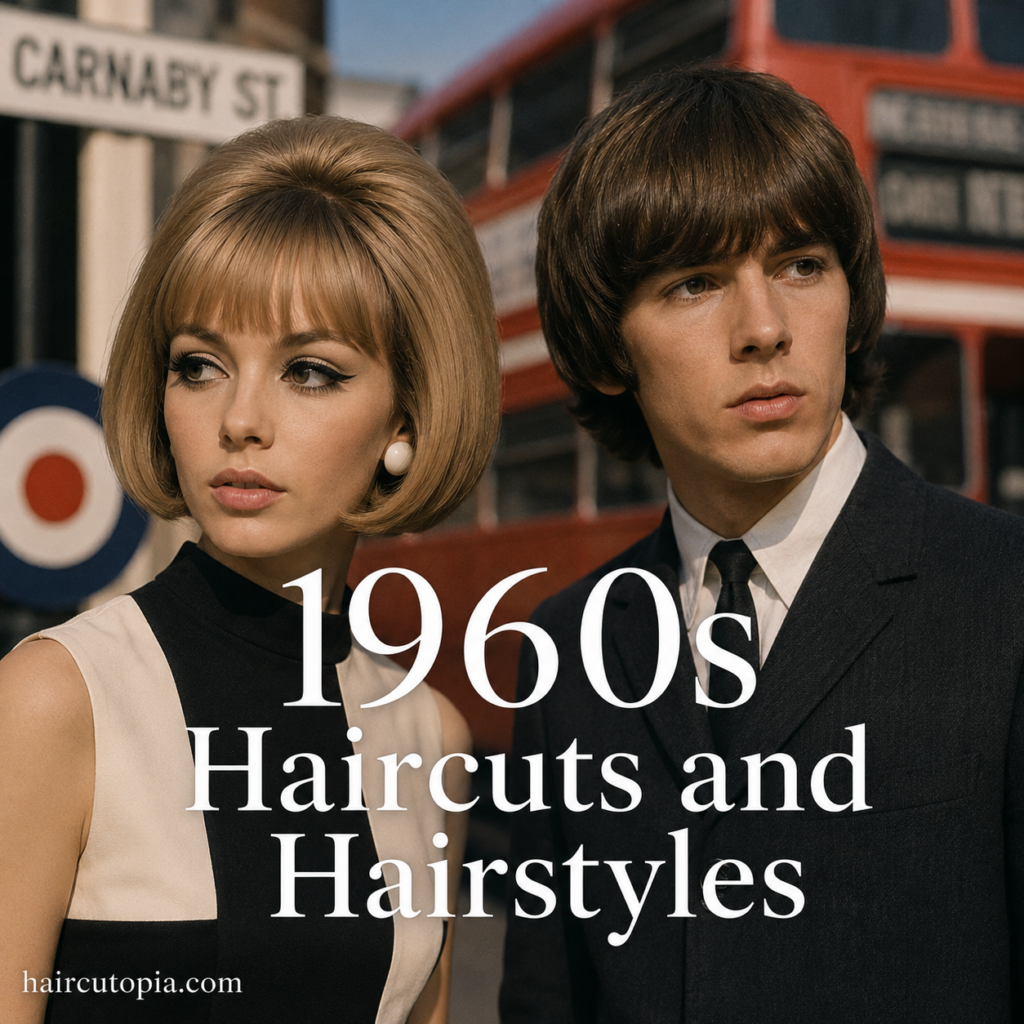
Few decades changed hairstyles as dramatically as the 1960s. The era began with polished curls, carefully set bouffants, and elegant short cuts, then gradually moved toward sharper geometric shapes, playful pixies, long natural hair, and the free-spirited looks associated with the counterculture movement.
It was a decade when hair became much more than a finishing touch. Hairstyles could signal sophistication, youth, rebellion, creativity, or a connection to a particular cultural movement. Television, fashion magazines, music, Hollywood, and an increasingly influential youth culture helped new styles spread quickly.
Women’s hair ranged from towering beehives to sleek Vidal Sassoon-inspired cuts. Men’s styles evolved from conservative side parts and crew cuts toward longer, more relaxed shapes as rock music transformed youth fashion.
That variety is exactly what makes 1960s hair so interesting. There wasn’t one defining look. Instead, the decade produced several distinct styles that continue to influence modern haircuts today.
How Hairstyles Changed During the 1960s
The early 1960s still carried many influences from 1950s haircuts and hairstyles, including structured curls, short sculpted cuts, carefully arranged volume, and neatly groomed men’s styles.
By the middle of the decade, things started changing quickly.
London became a major center of youth fashion, bringing Mod style, geometric haircuts, shorter skirts, and a cleaner, more graphic approach to beauty. At the same time, musicians were challenging traditional ideas about how men should wear their hair.
By the late 1960s, another shift had taken place. Hair became increasingly natural and individualistic.
Longer lengths, looser texture, center parts, and natural curls reflected the growing counterculture movement.
Several forces helped drive these changes:
- Youth culture
- Rock and pop music
- British Mod fashion
- Hollywood and television
- The counterculture movement
- Advances in haircutting techniques
- Changing attitudes toward personal expression
- The growing influence of celebrity style
The result was one of the most varied decades in hairstyling history.
Defining Features of 1960s Hairstyles
Although the decade included many different looks, a few characteristics stand out.
Dramatic Volume
Big hair became one of the defining trends of the early and middle 1960s.
Women created height through teasing, rollers, and generous amounts of hairspray.
Volume was concentrated around the crown in styles such as:
- Bouffants
- Beehives
- Flipped hairstyles
- Voluminous bobs
Geometric Shapes
Not every hairstyle was big.
The Mod movement introduced an entirely different approach built around clean lines and carefully engineered shapes.
Short geometric cuts could feature:
- Sharp angles
- Rounded contours
- Precise bangs
- Defined edges
- Carefully controlled layering
Short Women’s Hair
The pixie and other cropped hairstyles challenged the idea that glamorous hair needed to be long.
Short hair could look sophisticated, youthful, and fashion-forward.
Longer Men’s Hair
Men’s hair gradually became longer as the decade progressed.
Rock musicians played a particularly important role in making longer cuts fashionable among younger men.
Natural Texture
Toward the end of the decade, highly structured hairstyles began sharing the spotlight with more natural looks.
Straight hair, curls, Afros, and relaxed waves became increasingly visible.
The Most Popular Women’s Haircuts of the 1960s
The decade produced several women’s cuts that still feel surprisingly modern.
The Pixie Cut
The pixie became one of the defining short haircuts of the era.
Its cropped shape highlighted the face while offering a completely different silhouette from the voluminous hairstyles popular at the beginning of the decade.
Typical features included:
- Short sides
- Cropped back
- Slightly longer top
- Delicate fringe
- Close-fitting shape
Twiggy helped make very short hair synonymous with Mod fashion later in the decade, while earlier stars had already demonstrated how elegant cropped hair could be.
Modern pixies still borrow heavily from these 1960s shapes.
The Five-Point Cut
Vidal Sassoon transformed haircutting during the decade with precisely engineered geometric styles.
The famous five-point cut created a dramatic shape using carefully placed points around the ears and neckline.
Rather than relying heavily on rollers and styling, the haircut itself provided much of the structure.
That concept was revolutionary.
It helped move women’s hairstyling toward the precision-cutting techniques that remain central to modern salon work.
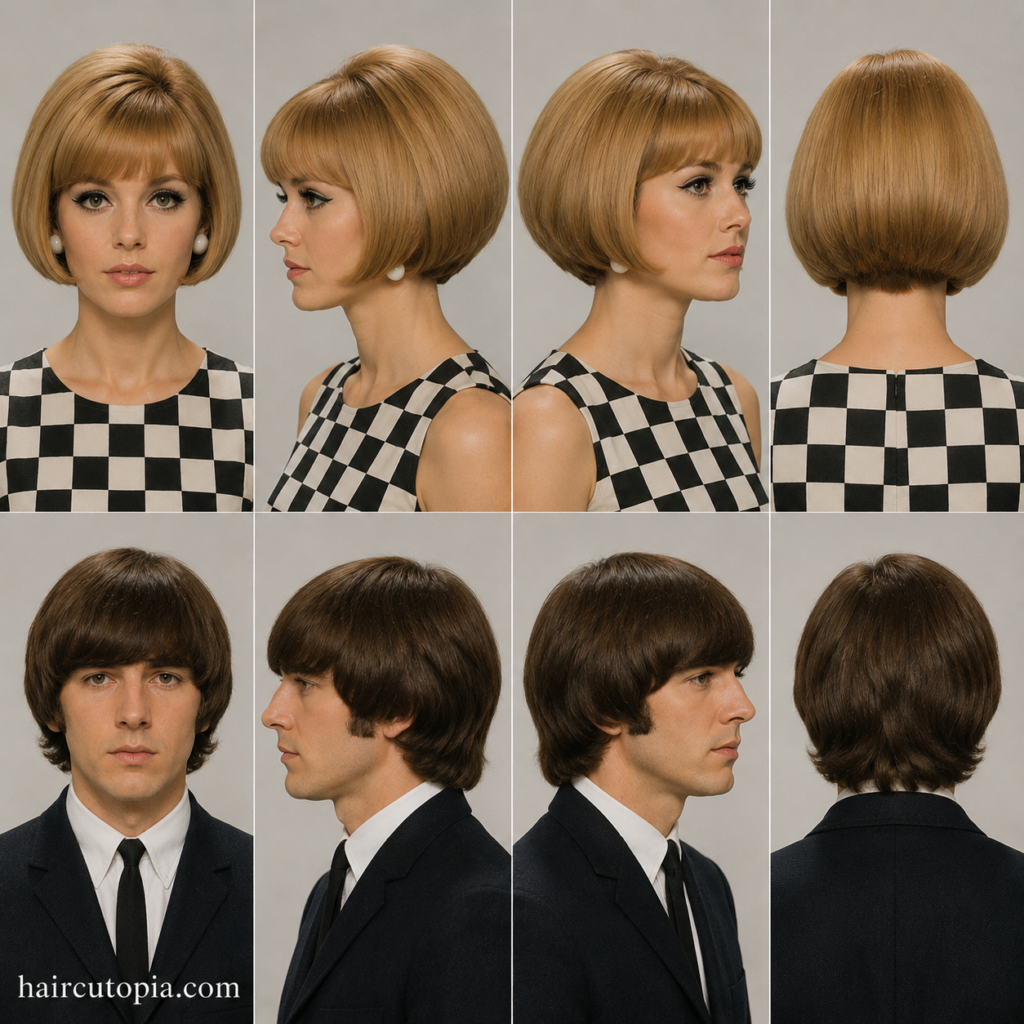
Geometric Bob
The bob returned with a distinctly modern personality.
Instead of soft curls, Mod-inspired bobs emphasized clean lines and deliberate shapes.
They often featured:
- Straight or curved bangs
- Defined perimeter
- Smooth texture
- Rounded or angular silhouettes
These cuts looked especially striking when paired with the graphic makeup and fashion of the era.
Short Rounded Cut
Short rounded hairstyles were another popular option.
Hair followed the natural shape of the head while maintaining softness around the crown and sides.
These cuts offered an elegant middle ground between a pixie and a traditional bob.
Shoulder-Length Cut
Not everyone wanted short hair.
Medium-length cuts remained extremely popular and could be styled with:
- Flipped ends
- Bouffant volume
- Soft curls
- Headbands
- Smooth straight finishes
Their versatility made them ideal for everyday styling.
The Most Iconic Women’s Hairstyles of the 1960s
Some of the decade’s most memorable looks came from styling rather than the haircut itself.
The Beehive
Few hairstyles are more instantly recognizable.
The beehive featured dramatic height at the crown, creating a tall rounded silhouette.
Hair was usually teased extensively before being smoothed over the surface and secured into place.
A finished beehive could be worn:
- Completely up
- Half-up
- With bangs
- With curled ends
- With decorative accessories
Although exaggerated versions became famous, everyday beehives could be much more subtle.
The Bouffant
The bouffant was similar to the beehive but usually featured broader, softer volume.
Instead of concentrating all the height directly on top, volume could extend around the crown and sides.
The result was glamorous without necessarily becoming towering.
The Flip
The flip hairstyle became a classic 1960s look.
Hair was generally worn around chin to shoulder length, with the ends deliberately curled outward.
The style could be combined with:
- Side-swept bangs
- Headbands
- Crown volume
- Center or side parts
It was youthful, polished, and relatively easy to adapt.
Half-Up Bouffant
The half-up bouffant combined crown volume with loose hair around the shoulders.
It provided the height fashionable during the era while retaining the softness of longer hair.
Modern bridal and formal hairstyles still use variations of this silhouette.
Sleek Mod Hair
At the opposite end of the spectrum was sleek Mod styling.
Instead of teasing hair upward, it emphasized smooth texture and precise lines.
Combined with a geometric haircut, the effect was futuristic by 1960s standards.
Long Hair in the 1960s
Long hair became increasingly important as the decade progressed.
Early in the 1960s, long hair was often carefully curled or styled. By the late 1960s, straighter and more natural finishes became fashionable.
Popular long hairstyles included:
- Center-parted straight hair
- Loose waves
- Long natural curls
- Braids
- Headband styles
- Flower accessories
This transition reflected broader cultural changes.
Hair was becoming less about perfect conformity and more about personal identity.
Popular Men’s Haircuts of the 1960s
Men’s hair experienced its own transformation during the decade.
Classic Side Part
At the beginning of the 1960s, the traditional side part remained extremely common.
Typical features included:
- Tapered sides
- Neat neckline
- Moderate length on top
- Defined part
It was appropriate for work, school, and formal occasions.
Crew Cut
Short crew cuts remained popular, particularly among conservative men.
They offered easy maintenance and a clean appearance.
Pompadour
The pompadour didn’t disappear when the 1950s ended.
Some men continued wearing elevated front sections, although styles gradually became softer and less heavily sculpted.
Mop-Top
The arrival of The Beatles helped transform men’s hair.
Their famous mop-top hairstyles featured:
- Longer fringe
- Fuller sides
- Longer back
- Rounded shape
Compared with conservative early-1960s haircuts, the look appeared radical.
It quickly became one of the most influential men’s hairstyles of the decade.
Longer Layered Hair
By the late 1960s, some men allowed their hair to grow considerably longer.
These styles often featured:
- Natural movement
- Longer sideburns
- Less structured shapes
- Shaggy texture
This shift toward longer lengths, natural movement, and shaggy texture helped lay the groundwork for the more relaxed 1970s haircuts and hairstyles that followed.
The Afro and the Natural Hair Movement
One of the most culturally significant developments of the late 1960s was the growing visibility of natural Black hairstyles.
Rather than chemically straightening or altering natural texture, more Black men and women began embracing their natural hair.
The Afro became particularly important.
It represented far more than fashion. For many people, natural hair became connected with Black identity, pride, self-expression, and the broader cultural changes surrounding the Civil Rights and Black Power movements.
Afros varied considerably in:
- Size
- Shape
- Density
- Length
The movement helped challenge narrow mainstream beauty standards and would have an enormous influence on hairstyles throughout the 1970s and beyond.
Celebrity Influence on 1960s Hair
Celebrities had tremendous influence on hair trends.
Women drew inspiration from figures including:
- Audrey Hepburn
- Brigitte Bardot
- Elizabeth Taylor
- Jackie Kennedy
- Twiggy
- Jean Shrimpton
- Diana Ross
- Mia Farrow
Each represented a different side of 1960s beauty.
Jackie Kennedy helped popularize polished bouffants. Brigitte Bardot became associated with relaxed volume and long, sensual hairstyles. Twiggy helped define the Mod aesthetic, while Mia Farrow’s extremely short cut demonstrated how striking minimalist hair could be.
Men were equally influenced by musicians and actors.
Popular style references included:
- The Beatles
- The Rolling Stones
- Steve McQueen
- Sean Connery
- Paul Newman
Music increasingly became one of the strongest forces shaping men’s fashion.
How The Beatles Changed Men’s Hair
It’s difficult to discuss 1960s men’s hairstyles without mentioning The Beatles.
When the group became internationally famous, their longer hair immediately attracted attention.
By modern standards, their early mop-top cuts weren’t particularly long. At the time, however, they challenged conventional grooming expectations.
Young men began requesting:
- Longer fringe
- Fuller sides
- Rounded silhouettes
- Less severe tapering
As rock music evolved, men’s hairstyles continued getting longer.
This helped establish a connection between music, youth culture, and hairstyling that remains powerful today.
Hair Accessories of the 1960s
Accessories could completely change a hairstyle.
Popular choices included:
- Wide headbands
- Thin headbands
- Scarves
- Decorative clips
- Bows
- Ribbons
- Flowers
Headbands worked especially well with flips and bouffants.
Toward the end of the decade, flowers and bohemian accessories complemented longer, more natural hairstyles.
Hair Care and Styling Products of the 1960s
Creating towering volume wasn’t easy.
Hairspray became an essential part of many beauty routines.
Other common products and tools included:
- Setting lotion
- Rollers
- Hair dryers
- Teasing combs
- Bobby pins
- Pomade
- Styling creams
- Hairbrushes
Women frequently set their hair in rollers before brushing, teasing, and shaping it into the desired silhouette.
Why Teasing Became So Important
Teasing, also known as backcombing, helped create the internal structure required for bouffants and beehives.
Small sections were combed toward the scalp, creating a cushion of hair underneath.
The outer layer could then be smoothed over the teased section.
The result was dramatic height without visible tangles.
From Salon Sets to Precision Haircuts
One of the decade’s most important changes happened inside salons.
Traditional women’s hairstyling often relied heavily on roller sets. The haircut created a foundation, but much of the final shape came from styling.
Precision haircutting changed that approach.
Stylists such as Vidal Sassoon developed cuts designed to fall naturally into recognizable shapes.
Instead of forcing hair into place every morning, the geometry of the haircut did more of the work.
This philosophy helped establish many techniques used in contemporary hairstyling.
Early 1960s vs. Late 1960s Hairstyles
Looking at the beginning and end of the decade almost feels like comparing two different eras.
Early 1960s Hair
Common characteristics included:
- Bouffants
- Roller-set curls
- Short polished haircuts
- Flipped ends
- Conservative men’s cuts
- Heavy use of hairspray
Late 1960s Hair
Styles increasingly featured:
- Long straight hair
- Natural curls
- Afros
- Center parts
- Longer men’s hair
- Geometric Mod cuts
- Bohemian accessories
The change illustrates just how rapidly fashion evolved during the decade.
How Fashion Influenced 1960s Hairstyles
Hair and clothing evolved together.
Early in the decade, polished hairstyles complemented:
- Tailored dresses
- Skirt suits
- Gloves
- Structured coats
Mod fashion later introduced:
- Miniskirts
- Geometric prints
- Bold colors
- Go-go boots
- Graphic makeup
Precision haircuts perfectly matched this cleaner, futuristic aesthetic.
Late-decade fashion moved toward:
- Flowing fabrics
- Fringe
- Floral prints
- Denim
- Bohemian clothing
Hair became longer and less structured alongside it.
1960s Hairstyles for Different Hair Lengths
The decade offers plenty of inspiration regardless of length.
Short Hair
Popular options included:
- Pixie cuts
- Geometric crops
- Short rounded cuts
- Sculpted bobs
Short hair works especially well for recreating Mod-inspired looks.
Medium Hair
Medium lengths were ideal for:
- Flips
- Bouffants
- Half-up styles
- Rounded bobs
- Soft curls
This was arguably the most versatile length of the decade.
Long Hair
Longer hair could be styled with:
- Center parts
- Loose waves
- Crown volume
- Headbands
- Braids
- Natural texture
Long styles became particularly fashionable during the later years.
How to Give a 1960s Hairstyle a Modern Update
You don’t need to recreate every historical detail to borrow inspiration from the era.
Modern versions usually work best when one recognizable element becomes the focus.
For example:
- Add subtle crown volume rather than a towering bouffant.
- Wear a modern bob with slightly flipped ends.
- Pair a pixie with soft contemporary texture.
- Keep a center-parted long style loose and natural.
- Try a geometric bob with modern balayage or dimensional color.
- Style a pompadour with a matte finish rather than heavy shine.
The goal doesn’t have to be historical accuracy. A small reference to the decade can create plenty of character.
The Lasting Influence of 1960s Haircuts and Hairstyles
The decade left an unusually large footprint on modern hairstyling.
Styles with clear 1960s roots include:
- Pixie cuts
- Precision bobs
- Geometric cuts
- Flipped bobs
- Curtain-like center parts
- Crown volume
- Modern pompadours
- Long natural hairstyles
Even contemporary runway looks regularly revisit exaggerated beehives and Mod-inspired shapes.
Perhaps more importantly, the decade helped change the philosophy of hairstyling itself.
Precision cutting demonstrated that a great haircut could create structure without requiring hours of daily styling, while the natural hair movement challenged conventional ideas about what beautiful hair should look like.
Both ideas remain highly relevant today.
Choosing a 1960s-Inspired Hairstyle Today
There’s enough variety within the decade to suit many preferences.
For a Polished Look
Consider:
- Bouffant
- Soft flip
- Rounded bob
- Classic side part
For a Bold Fashion Look
Try:
- Geometric bob
- Five-point-inspired cut
- Short pixie
- Dramatic beehive
For a Relaxed Look
Consider:
- Long center-parted hair
- Natural waves
- Loose curls
- Simple headband styling
For Men’s Hair
Options range from:
- Traditional side parts
- Crew cuts
- Pompadours
- Mop-tops
- Longer layered styles
You can go unmistakably retro or simply borrow the shape and adapt it to modern styling.
Frequently Asked Questions
What was the most popular hairstyle in the 1960s?
There wasn’t one single hairstyle that dominated the entire decade. Bouffants, beehives, flips, pixies, geometric bobs, long straight hair, and natural styles were all influential at different points.
What was the beehive hairstyle?
The beehive was a high-volume hairstyle created by teasing hair and shaping it into a tall, rounded silhouette around the crown.
Did women wear short hair in the 1960s?
Yes. Short hairstyles became extremely fashionable, particularly pixies, geometric crops, and precision bobs associated with Mod fashion.
When did long straight hair become popular?
Longer, straighter hairstyles became increasingly fashionable during the middle and later years of the decade as youth and counterculture trends grew.
What hairstyles did men wear in the 1960s?
Men wore everything from traditional crew cuts and side parts to pompadours, Beatles-inspired mop-tops, and increasingly long hairstyles toward the end of the decade.
Why was the Afro important in the 1960s?
The Afro became associated with natural Black hair, cultural pride, identity, and broader social movements. Its significance extended well beyond fashion.
Did people really use a lot of hairspray?
Yes. Structured bouffants and beehives often required substantial hold, making hairspray an essential styling product for many women.
Are 1960s hairstyles still fashionable?
Very much so. Pixies, geometric bobs, flipped ends, center parts, natural texture, and crown volume regularly return in modern hairstyling.
Final Thoughts
The 1960s weren’t defined by a single haircut. They were defined by change.
The decade opened with polished bouffants, carefully set curls, conservative men’s cuts, and plenty of hairspray. Then Mod fashion introduced sharp geometric shapes and daring short haircuts. Rock music helped men’s hair grow longer, while the later counterculture movement encouraged more relaxed, natural styles.
At the same time, the growing natural hair movement gave styles such as the Afro cultural importance that extended far beyond beauty and fashion.
That remarkable variety is why 1960s hair remains so influential.
A modern pixie, precision bob, flipped lob, natural Afro, center-parted long style, or textured men’s cut may look completely contemporary, yet each can carry a recognizable connection to the decade.
More than half a century later, the 1960s continue to remind us that hairstyles aren’t just about what’s fashionable. They’re also a way to express identity, culture, creativity, and change.
Related Posts
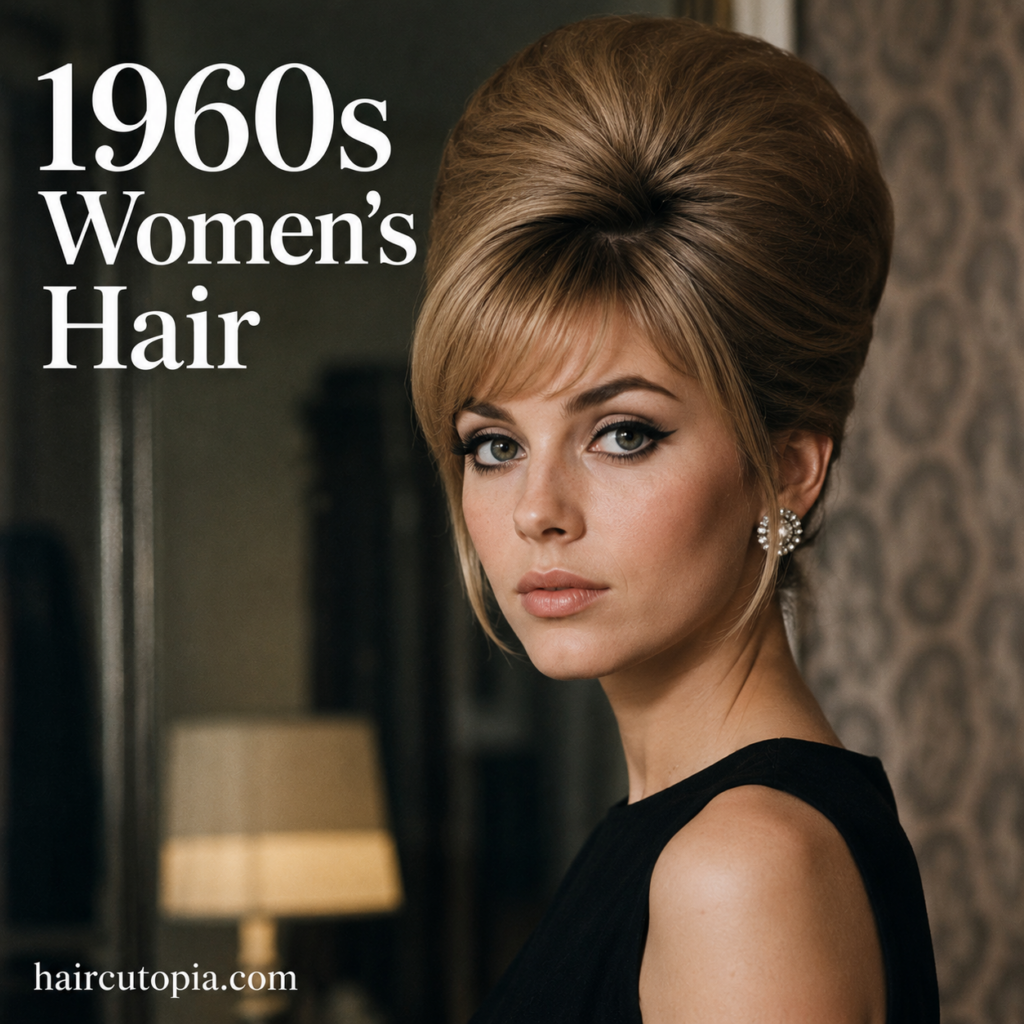 1960s Women’s Hair: The Elegant and Revolutionary Styles That Defined a Fashion Era
 1960s Men’s Hair: The Classic Styles That Defined an Iconic Decade
 1960s Iconic Haircuts: The Legendary Styles That Shaped a Generation
 1970s Haircuts and Hairstyles: The Complete Guide to an Era of Layers, Texture, and Individual Style