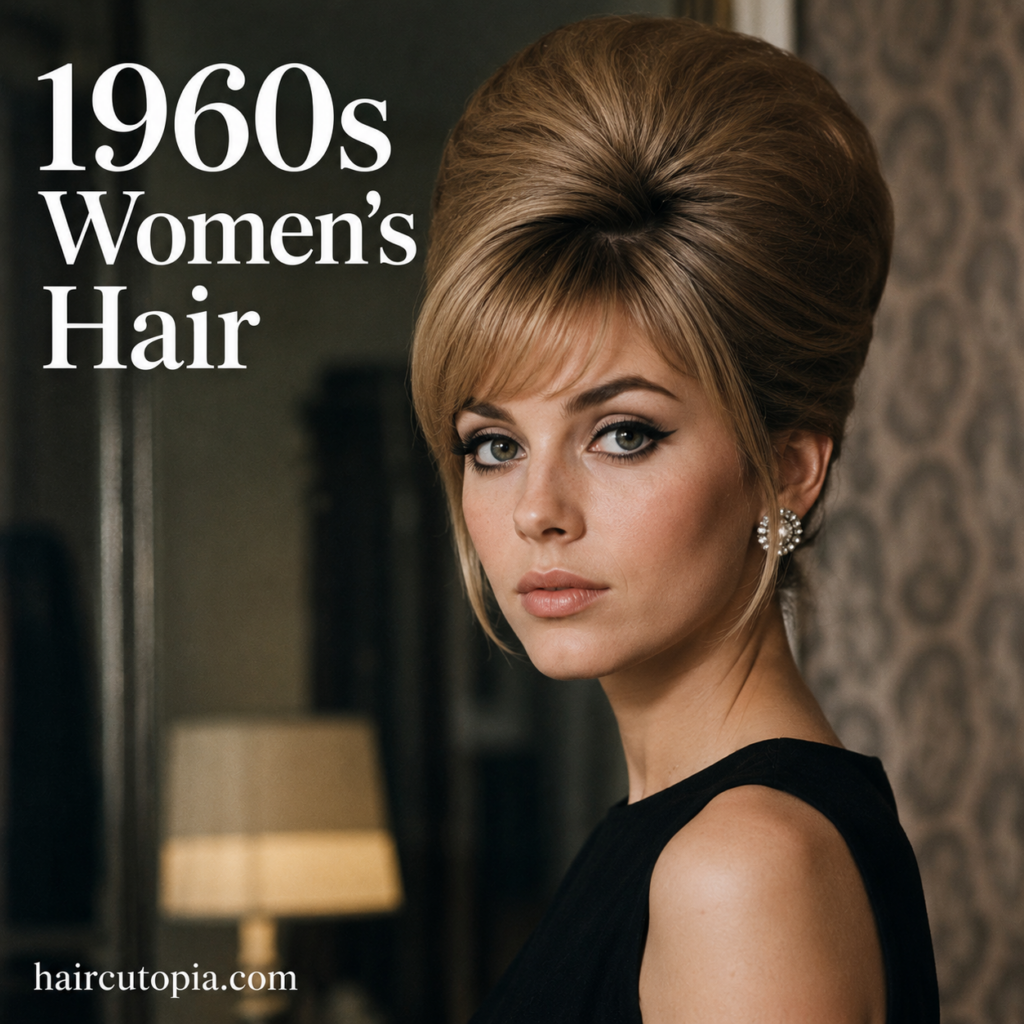
The 1960s was one of the most exciting decades in the history of women’s hairstyles. Hair evolved from polished, structured styles in the early years to bold geometric cuts, dramatic volume, and eventually the long, natural looks that defined the late 1960s.
This decade wasn’t just about fashion—it was about self-expression. Influenced by British Mod culture, Hollywood stars, supermodels, musicians, and the growing counterculture movement, women’s hairstyles became more diverse than ever before.
Many of today’s most popular hairstyles, including the blunt bob, pixie cut, curtain bangs, and long layered hair, can trace their origins back to the 1960s.
Whether you’re exploring vintage fashion or looking for timeless haircut inspiration, here’s everything you need to know about 1960s women’s hair.
Why the 1960s Changed Women’s Hairstyles Forever
The decade represented a major shift in hairstyling.
Before the 1960s, many women relied on heavily curled, set hairstyles that required rollers, teasing, and regular salon visits. Haircuts were often hidden beneath elaborate styling techniques.
The 1960s introduced a different philosophy.
Stylists began creating haircuts that naturally held their shape through precision cutting rather than excessive styling.
At the same time, fashion became younger, more playful, and more experimental.
Major influences included:
- The British Invasion
- The Mod fashion movement
- Hollywood films
- Fashion magazines
- Television
- The hippie movement
- Advances in professional haircutting techniques
The result was one of the most creative decades in hair history.
The Evolution of Women’s Hair Throughout the Decade
Early 1960s (1960–1963)
The beginning of the decade still reflected classic elegance.
Popular features included:
- Soft curls
- Bouffants
- Rounded silhouettes
- Hair spray for volume
- Polished finishes
Most hairstyles required regular maintenance.
Mid-1960s (1964–1966)
This period introduced some of history’s most influential haircuts.
Popular trends included:
- Precision bobs
- Pixie cuts
- Sharp fringes
- Geometric shapes
- Smooth finishes
Hair became an important part of modern fashion.
Late 1960s (1967–1969)
Toward the end of the decade, hairstyles became more relaxed.
Women embraced:
- Long hair
- Natural waves
- Soft layers
- Center parts
- Minimal styling
This effortless aesthetic would continue into the 1970s.
The Most Iconic 1960s Women’s Hairstyles
The Beehive
Few hairstyles are more recognizable than the beehive.
This dramatic updo became one of the defining looks of the decade.
Characteristics included:
- Towering height
- Heavy teasing
- Smooth outer layers
- Hair spray for hold
- Elegant finish
Although it required significant styling, it became a symbol of glamorous 1960s fashion.
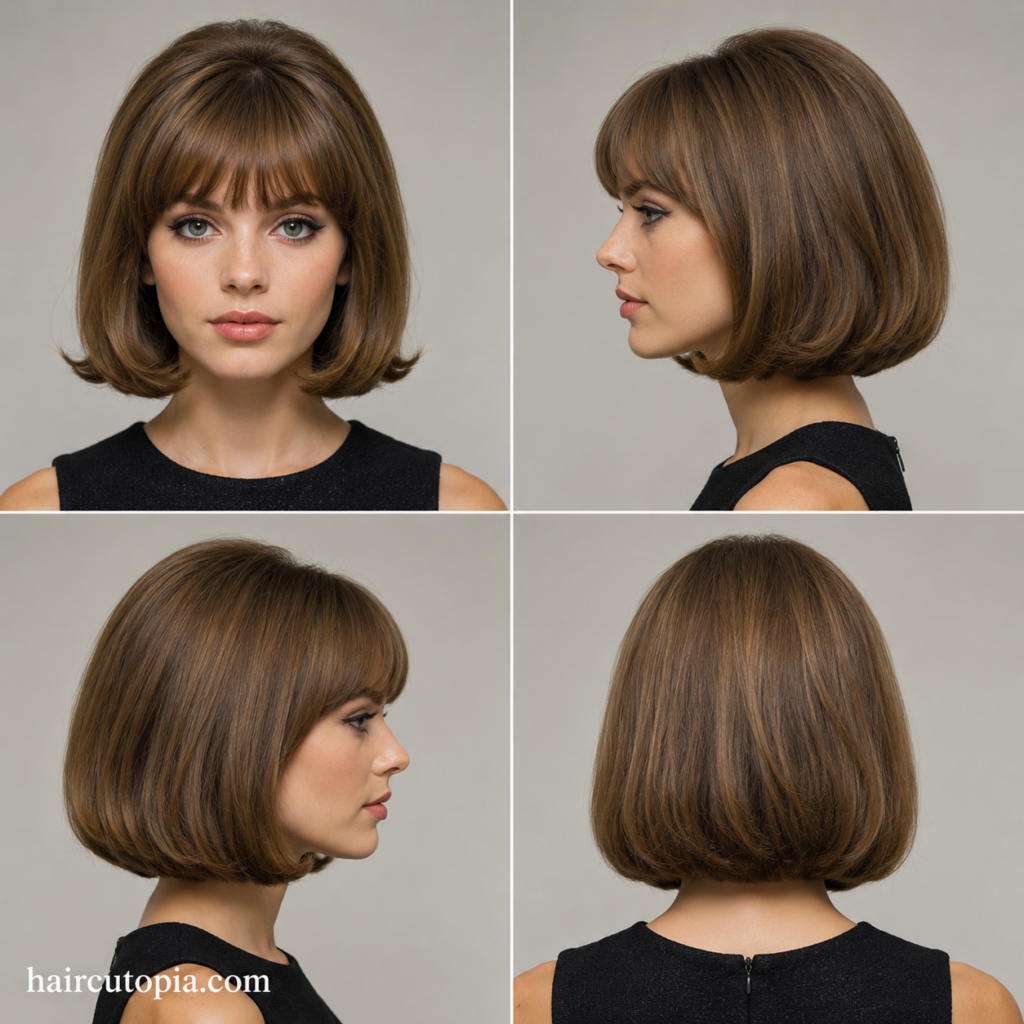
The Vidal Sassoon Bob
The Vidal Sassoon bob revolutionized haircutting.
Unlike previous styles that relied on rollers, this precision haircut naturally fell into place.
Its defining features included:
- Blunt ends
- Geometric lines
- Chin-length silhouette
- Smooth finish
- Minimal layers
It remains one of the most influential haircuts ever created.
The Pixie Cut
The pixie cut challenged traditional ideas of feminine beauty.
Its features included:
- Very short sides
- Slightly longer crown
- Soft fringe
- Sleek styling
- Clean silhouette
The haircut projected confidence while remaining timeless and elegant.
The Pageboy
The pageboy offered a softer alternative to the blunt bob.
Popular characteristics included:
- Rounded edges
- Curled-under ends
- Medium length
- Thick appearance
- Smooth texture
Its classic shape continues to inspire modern hairstyles.
The Flip Hairstyle
The flip became one of the decade’s most playful trends.
Unlike inward-curled styles, the ends flipped outward for movement.
Features included:
- Shoulder-length hair
- Flipped ends
- Side part
- Smooth roots
- Light volume
It balanced sophistication with youthful energy.
Long Straight Hair
By the late 1960s, many women embraced naturally long hair.
Rather than creating elaborate updos, they focused on:
- Healthy shine
- Center parts
- Soft movement
- Light layering
- Minimal styling
This natural aesthetic reflected changing cultural attitudes.
The Influence of the Mod Movement
The Mod movement transformed women’s fashion and hairstyling.
Unlike earlier glamorous styles, Mod hair emphasized:
- Clean lines
- Precision cuts
- Symmetry
- Minimal accessories
- Bold silhouettes
Many modern blunt bobs still reflect this design philosophy.
The Hippie Movement and Natural Hair
The late 1960s saw a dramatic shift away from structured hairstyles.
Instead of teasing and heavy hairspray, women embraced natural beauty.
Popular late-decade trends included:
- Long flowing hair
- Center parts
- Natural waves
- Minimal products
- Air-dried texture
This relaxed style influenced hairstyles throughout the 1970s.
Popular Hair Accessories
Accessories played a major role throughout the decade.
Common choices included:
- Wide headbands
- Velvet ribbons
- Silk scarves
- Decorative combs
- Floral accessories
- Hair bows
- Barrettes
These simple additions completed many iconic looks.
Hair Products Women Used During the 1960s
Haircare products evolved alongside hairstyles.
Popular products included:
- Hair spray
- Setting lotion
- Rollers
- Teasing combs
- Blow dryers
- Hair cream
- Bobby pins
- Hair nets
Later in the decade, lighter styling creams became more common as natural hairstyles gained popularity.
Choosing a 1960s Hairstyle for Your Hair Type
Straight Hair
Perfect for:
- Vidal Sassoon bob
- French bob
- Pixie cut
- Pageboy
Straight hair naturally showcases precision cutting.
Wavy Hair
Ideal choices include:
- Flip hairstyle
- Long layers
- Shoulder-length cuts
- Curtain fringe
Natural movement complements these styles beautifully.
Curly Hair
Excellent options include:
- Rounded bobs
- Layered cuts
- Voluminous pixies
- Soft natural curls
Texture adds extra personality to vintage-inspired looks.
Thick Hair
Works well with:
- Beehives
- Blunt bobs
- Long layered cuts
- Pageboys
Thicker hair easily maintains fuller silhouettes.
Fine Hair
Fine hair benefits from:
- Pixie cuts
- Precision bobs
- Flip hairstyles
- Chin-length cuts
These styles maximize the appearance of volume.
How to Modernize 1960s Women’s Hair
Vintage hairstyles don’t have to look like costumes.
Modern updates include:
- Softer layers
- Less teasing
- Natural texture
- Lightweight styling products
- Face-framing pieces
- Relaxed finishes
These changes make classic styles easier to wear every day.
Modern Hairstyles Inspired by the 1960s
Today’s salons continue to revisit many iconic 1960s designs.
Popular examples include:
- Blunt bobs
- French bobs
- Curtain bangs
- Modern pixies
- Long layered hair
- Textured pageboys
- Soft shags
- Rounded bobs
While updated with contemporary techniques, their inspiration is unmistakably vintage.
Why 1960s Women’s Hair Remains Popular
The hairstyles of the 1960s continue to inspire because they combine elegance with individuality.
Whether someone prefers polished sophistication or effortless natural beauty, the decade offers styles that suit nearly every personality and hair type.
More importantly, these hairstyles introduced ideas that remain central to modern hairstyling:
- Precision cutting
- Wearable silhouettes
- Versatility
- Individual expression
- Timeless design
Tips for Recreating 1960s Hair Today
If you’re trying a vintage-inspired look, keep these ideas in mind:
- Start with a haircut that suits your face shape.
- Use volumizing products instead of excessive teasing.
- Choose lightweight styling products for movement.
- Add vintage accessories for authenticity.
- Modernize classic shapes with softer texture.
- Focus on healthy, shiny hair.
- Bring reference photos to your stylist.
These small adjustments help recreate the spirit of the decade without making the hairstyle feel dated.
Frequently Asked Questions
What was the most popular women’s hairstyle in the 1960s?
The beehive, Vidal Sassoon bob, pageboy, pixie cut, and long straight hair were among the decade’s most iconic styles.
Were 1960s hairstyles difficult to maintain?
Some styles, like the beehive, required regular teasing and hairspray, while precision cuts such as the Sassoon bob were designed to be easier to manage.
Did women wear bangs in the 1960s?
Yes. Full fringes, blunt bangs, and soft side-swept bangs were all popular depending on the hairstyle.
What hair accessories were fashionable?
Headbands, scarves, ribbons, barrettes, bows, and decorative combs were widely worn throughout the decade.
Are 1960s hairstyles still in style?
Absolutely. Modern bobs, pixie cuts, curtain bangs, layered hair, and rounded shapes all draw inspiration from the hairstyles of the 1960s.
Final Thoughts
The story of 1960s women’s hair is one of innovation, creativity, and lasting influence. From the glamorous height of the beehive to the revolutionary precision of the Vidal Sassoon bob and the effortless beauty of long natural hair, the decade introduced styles that continue to shape modern hairstyling.
More than half a century later, these iconic looks remain favorites because they offer something for everyone—whether you love polished sophistication, bold geometric cuts, or relaxed, natural elegance. The enduring appeal of 1960s women’s hairstyles proves that great design never goes out of fashion.