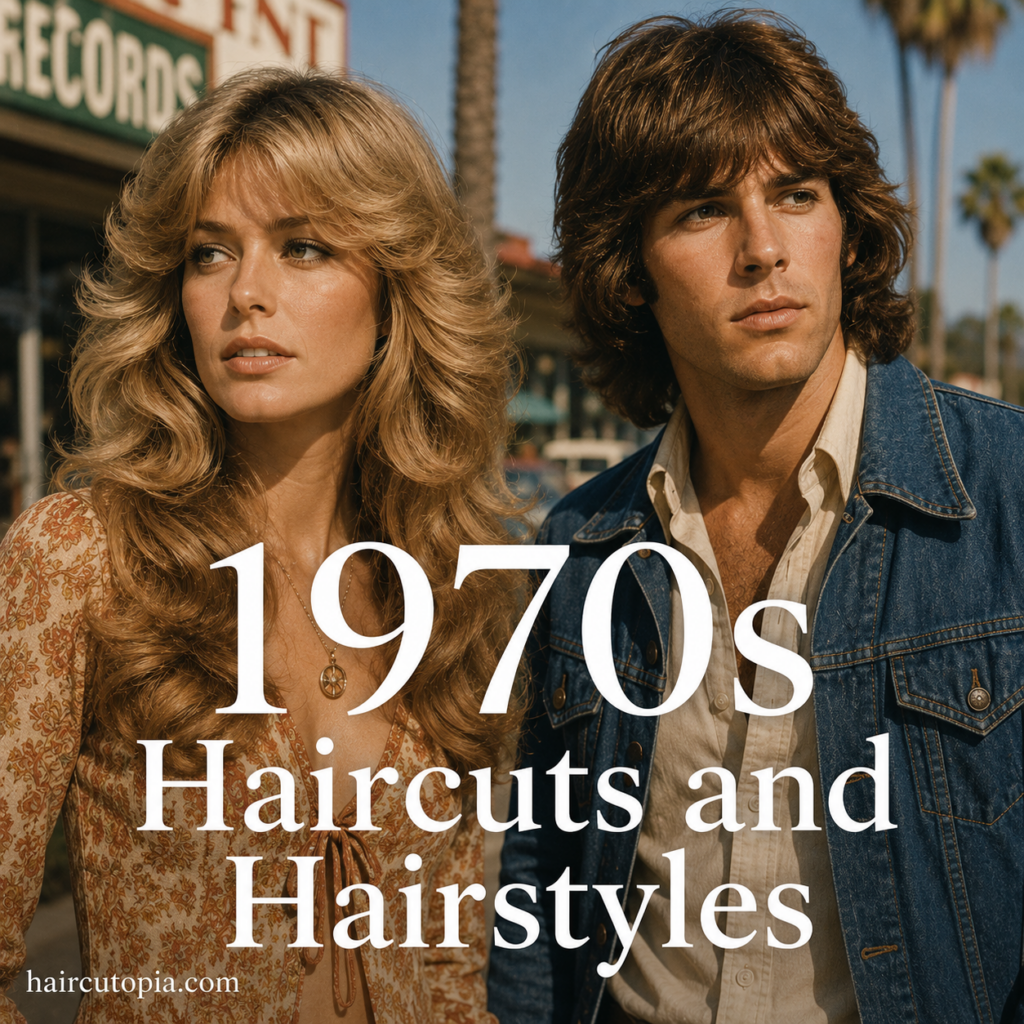
The 1970s were one of the most diverse decades in hair history. Instead of one polished look dominating the entire era, hairstyles reflected an expanding mix of music, fashion, cultural movements, and changing ideas about personal expression.
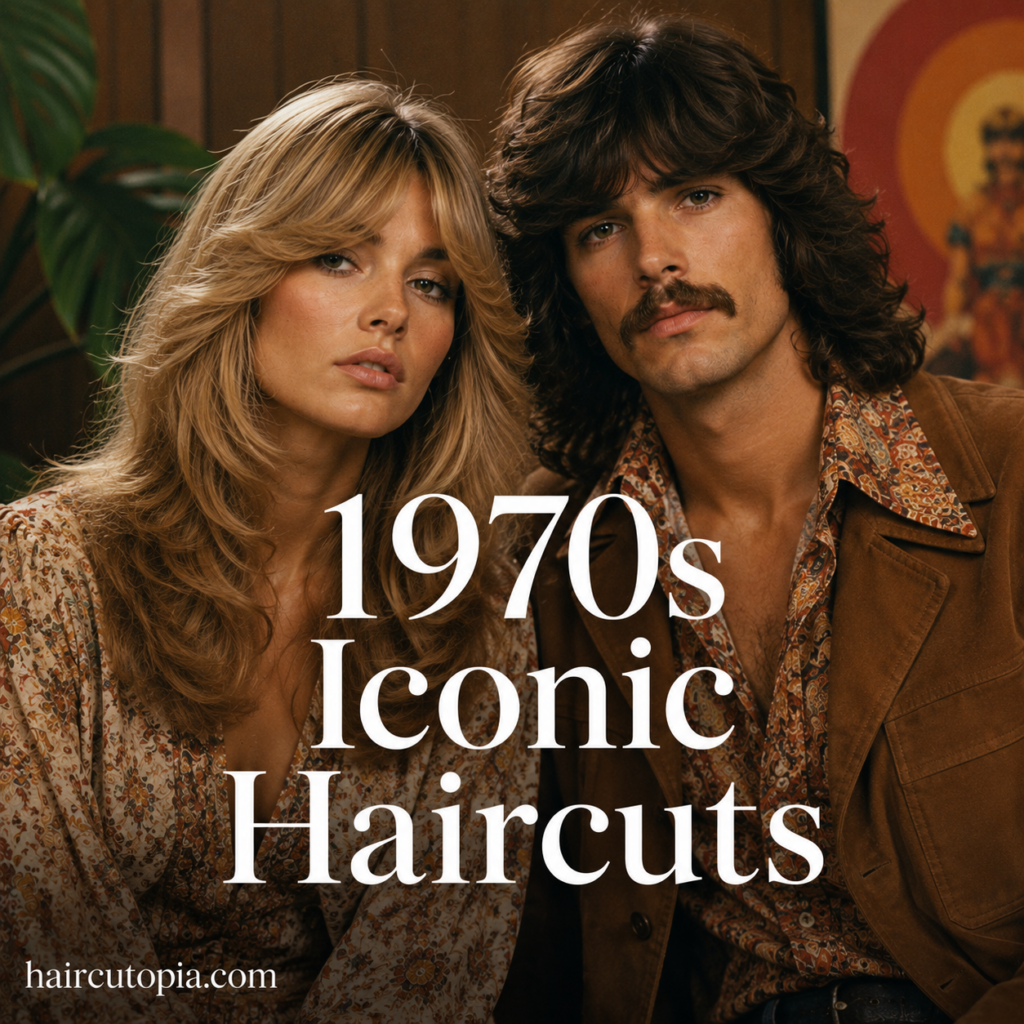
Hair could be long and feathered, short and shaggy, naturally curly, dramatically voluminous, or completely effortless. Women’s styles ranged from Farrah Fawcett-inspired feathered layers to sleek center-parted lengths, while men’s hair grew noticeably longer and more relaxed than it had been in previous decades.
The Afro became one of the era’s most recognizable and culturally significant hairstyles. Punk arrived near the end of the decade with deliberately unconventional cuts, while disco encouraged glamorous volume and movement.
Many hairstyles that feel completely modern today—the shag, curtain-style fringe, feathered layers, long center parts, textured men’s cuts, and natural curls—have strong connections to the 1970s.
This guide explores the haircuts, hairstyles, cultural influences, and styling trends that made the decade such an important chapter in hair history.
How Hair Changed During the 1970s
The transition from 1960s haircuts and hairstyles into the early 1970s was fairly natural. Longer hair, center parts, natural texture, and counterculture-inspired styling were already gaining popularity, and during the new decade, those ideas expanded into an enormous variety of looks.
Hairstyles became less rigid.
Instead of relying primarily on rollers, teasing, and carefully sculpted shapes, many people wanted hair that moved naturally.
Several influences helped shape the decade:
- Rock music
- Disco
- The natural hair movement
- Hollywood and television
- Surf culture
- Punk
- Glam rock
- Women’s changing fashion
- Growing youth culture
- Unisex fashion trends
Personal expression became increasingly important.
There was no longer one universally accepted definition of fashionable hair.
Defining Features of 1970s Hairstyles
Despite the variety, several characteristics appeared repeatedly throughout the decade.
Layers
Layering became one of the biggest developments in 1970s hair.
Rather than maintaining a solid perimeter, stylists created movement by cutting different lengths throughout the hair.
Layers worked especially well with:
- Feathered hair
- Shag cuts
- Long hairstyles
- Wavy textures
- Men’s medium-length cuts
The technique remains fundamental to hairstyling today.
Natural Movement
Hair wasn’t always expected to stay perfectly in place.
Loose waves, curls, feathering, and intentionally tousled finishes gave hairstyles more personality.
Center Parts
The center part became one of the decade’s defining features.
It appeared on:
- Long straight hair
- Feathered cuts
- Men’s hairstyles
- Shags
- Natural curls
Its simple symmetry complemented the relaxed fashion of the era.
Longer Lengths
Both men and women embraced longer hair.
Men’s hairstyles in particular changed dramatically compared with the conservative grooming standards common just a decade earlier.
Volume
Not every 1970s hairstyle was relaxed and flat.
Feathered cuts, Afros, disco styles, and glamorous blowouts could create substantial volume.
The difference was movement. Hair often looked fuller without the stiff structure associated with earlier bouffants and beehives.
The Most Popular Women’s Haircuts of the 1970s
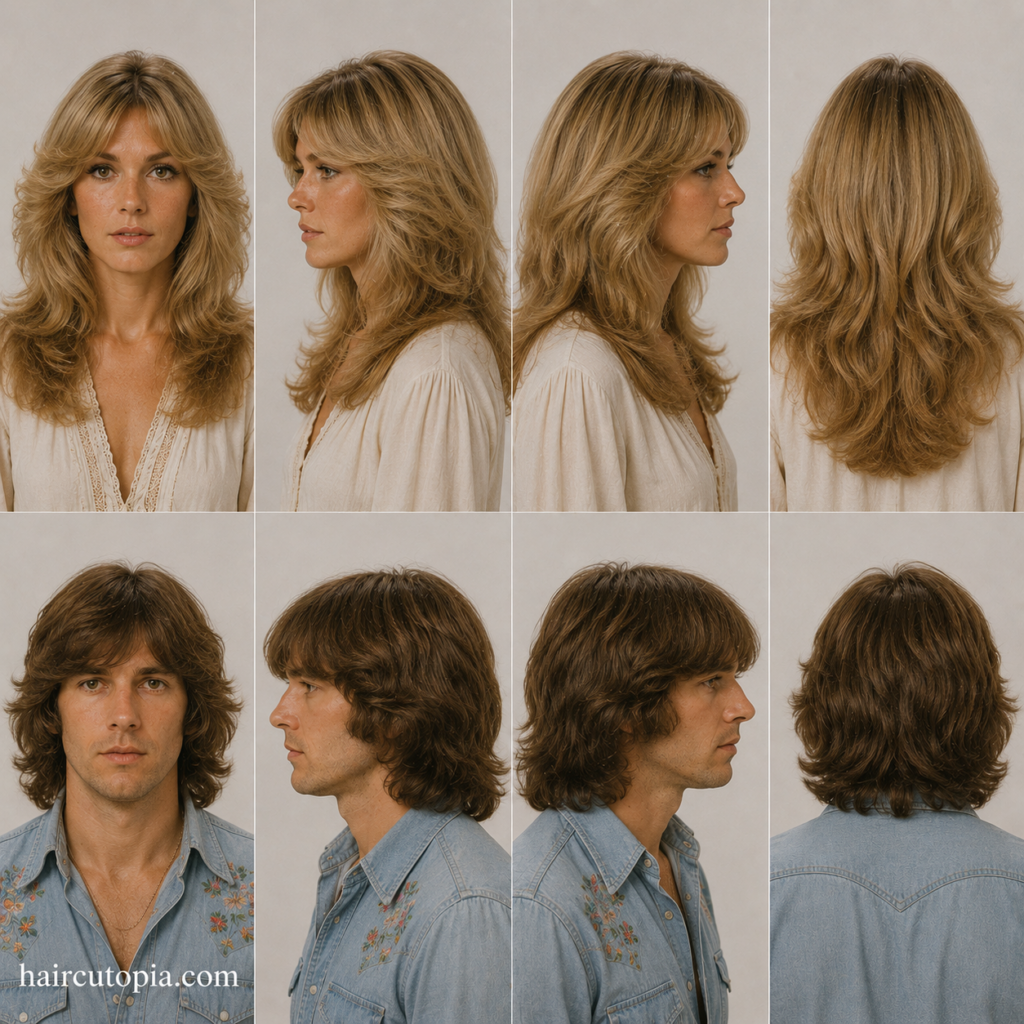
The decade introduced several cuts that continue to cycle back into fashion.
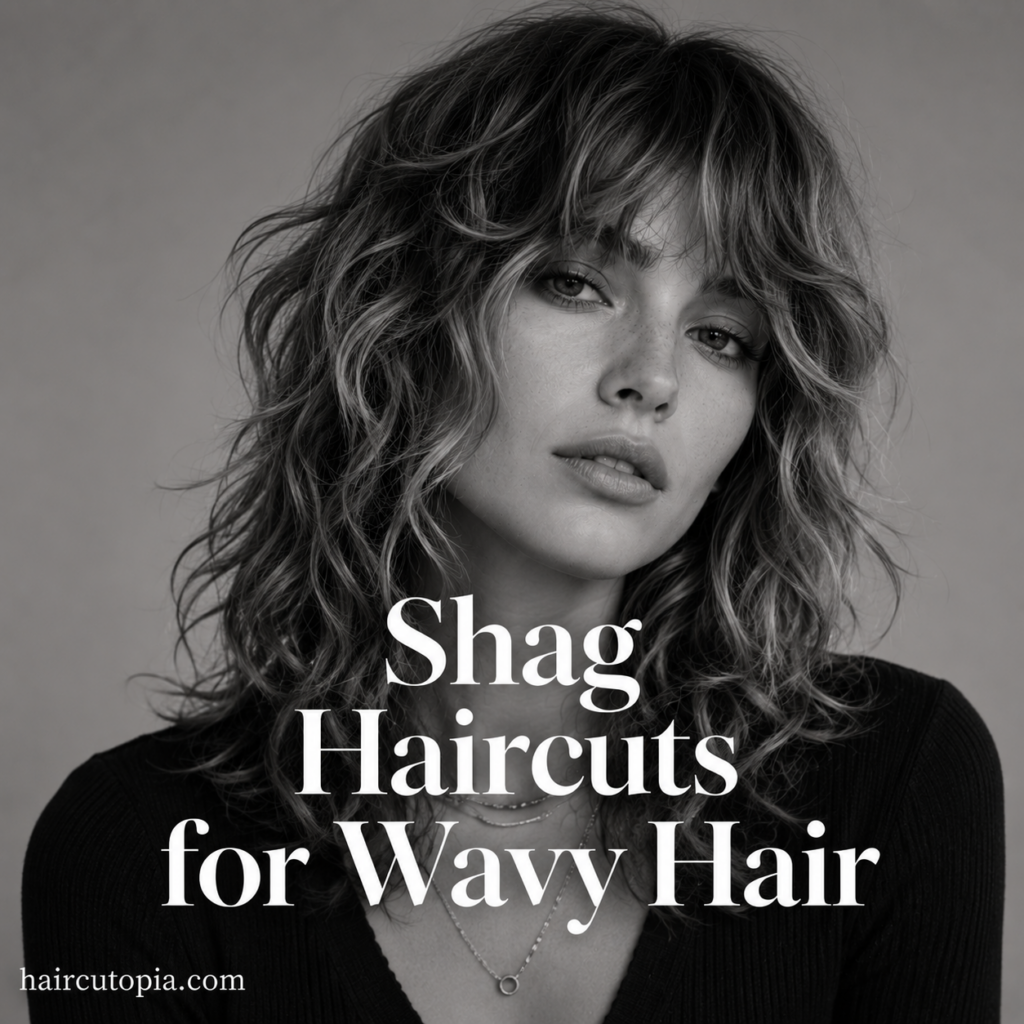
The Shag Haircut
Few haircuts capture the 1970s better than the shag.
The classic shag featured:
- Heavy layering
- Shorter crown sections
- Longer lengths around the perimeter
- Textured ends
- Plenty of movement
It could look glamorous, rebellious, rock-and-roll, or effortlessly casual depending on how it was styled.
The shag worked with straight, wavy, and curly hair, which helped make it incredibly versatile.
Modern shag haircuts remain heavily influenced by these original 1970s shapes.
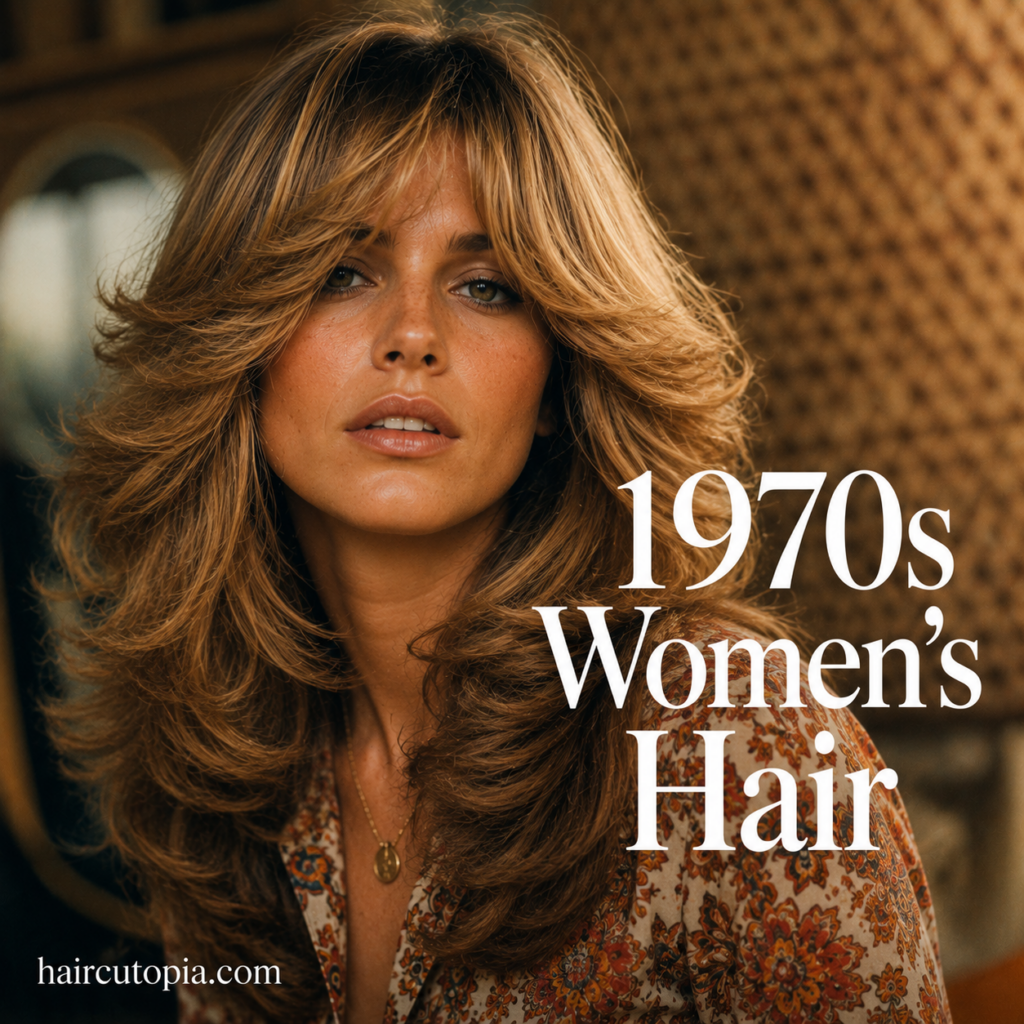
Feathered Haircut
Feathered layers became one of the decade’s biggest trends.
Hair was cut so the layers could sweep backward away from the face, creating a light, wing-like effect.
The style became particularly famous after Farrah Fawcett appeared on television with her signature feathered hairstyle.
Typical features included:
- Face-framing layers
- Center part
- Flipped-back ends
- Crown volume
- Long flowing shape
The look became one of the defining hairstyles of the late 1970s.
Long Layered Cut
Women who wanted to keep their hair long often added layers for movement.
Instead of one heavy length, layers allowed the hair to fall naturally around the shoulders and back.
These cuts worked beautifully with both straight and wavy textures.
Short Shag
Not every shag was long.
Shorter versions featured choppy layers around the crown with textured sides and fringe.
These cuts had an edgy, youthful personality that connected naturally with rock fashion.
Pageboy-Inspired Cut
Smooth pageboy shapes also appeared during the decade.
Hair typically curved inward around the jaw or shoulders, creating a clean silhouette that contrasted with heavily layered styles.
The Most Iconic Women’s Hairstyles of the 1970s
Styling transformed these haircuts into some of the decade’s most memorable looks.
Farrah Fawcett Feathered Hair
Farrah Fawcett’s hairstyle became a cultural phenomenon.
Her long layers swept dramatically away from the face, creating volume without appearing stiff.
The hairstyle typically featured:
- Center part
- Large face-framing layers
- Flipped-back sides
- Full crown
- Soft movement
Modern butterfly cuts and heavily layered blowouts often show a clear connection to this style.
Long Straight Hair
At the opposite end of the spectrum was an incredibly simple look: long, straight hair.
A center part allowed the hair to fall naturally around the face.
The style had roots in late-1960s counterculture fashion and remained popular throughout the early 1970s.
Feathered Bob
Shorter hair could also incorporate feathering.
Layered bobs with swept-back sides created a lighter, more dynamic silhouette than the precision bobs of the previous decade.
Curly Shag
Naturally wavy and curly textures worked especially well with shag cuts.
Layers allowed curls to form at different lengths, creating volume and movement throughout the hairstyle.
Disco Hair
As disco became a major cultural force, glamorous hairstyles returned in a new form.
Disco hair often featured:
- Large curls
- High volume
- Glossy finishes
- Bouncy movement
- Dramatic shapes
The look was designed to move, making it perfectly suited to the dance floor.
The Afro and Natural Hair in the 1970s
The natural hair movement that gained visibility during the late 1960s became even more influential throughout the 1970s.
The Afro emerged as one of the decade’s most powerful and recognizable hairstyles.
Rather than altering natural texture to conform to Eurocentric beauty standards, many Black men and women embraced their natural hair.
Afros could range from compact rounded shapes to large, dramatic silhouettes.
For many people, natural hairstyles represented:
- Black pride
- Cultural identity
- Self-expression
- Empowerment
- Resistance to restrictive beauty standards
Figures including Angela Davis helped make the Afro highly visible during the era, while musicians, performers, and everyday people wore natural styles in countless variations.
The influence extended far beyond the decade. Natural hair continues to play an important role in beauty, culture, and personal identity today.
Braids and Other Natural Hairstyles
The Afro wasn’t the only important natural hairstyle of the decade.
Braids and other traditional African-inspired styles also gained greater mainstream visibility.
Styles included:
- Cornrows
- Individual braids
- Beaded braids
- Natural curls
- Twists
Celebrities helped bring some of these hairstyles into popular culture, while their history and cultural significance extended far beyond fashion trends.
Popular Men’s Haircuts of the 1970s
Men’s hairstyles became noticeably more varied during the decade.
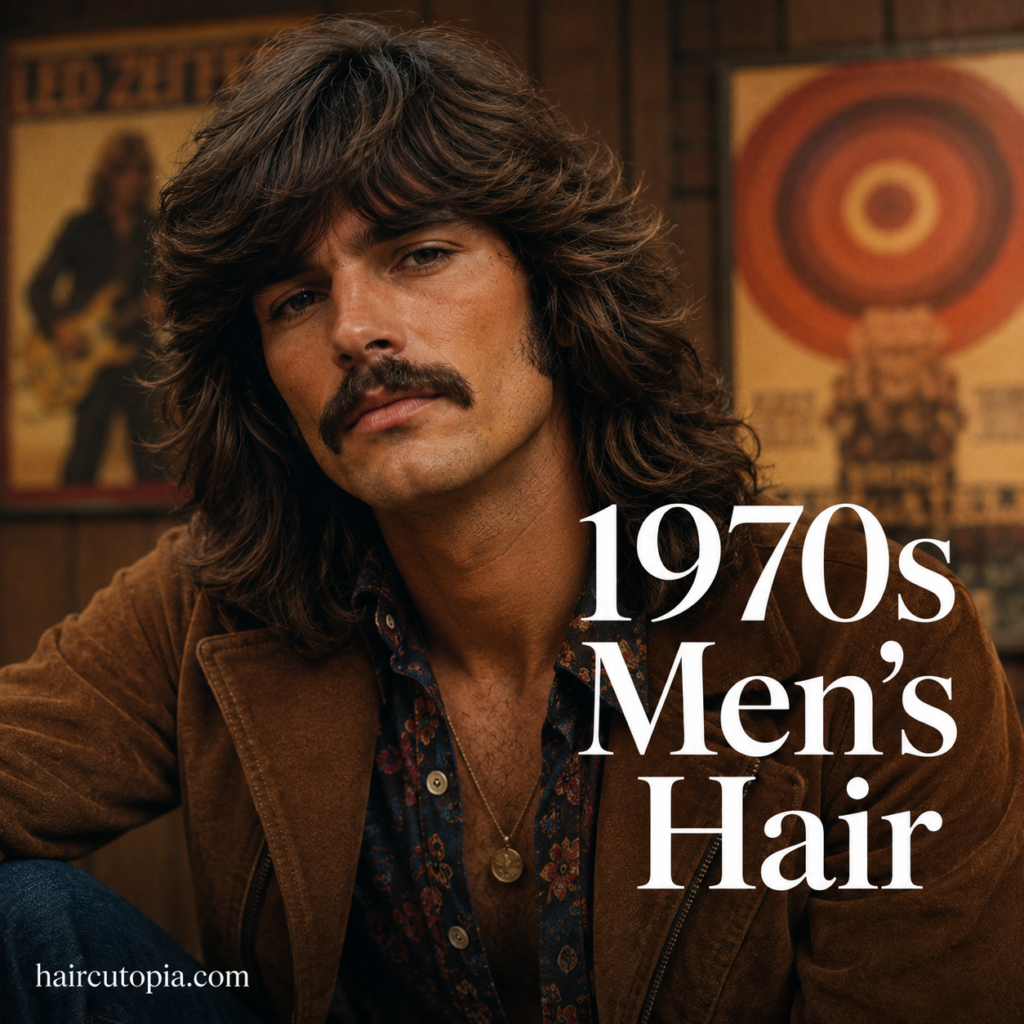
Long Layered Hair
Long hair became widely associated with rock musicians and youth culture.
Styles often reached:
- The ears
- The jawline
- The shoulders
- Beyond the shoulders
Natural texture was usually encouraged rather than heavily controlled.
Men’s Shag
The shag wasn’t limited to women.
Men wore layered cuts with:
- Longer fringe
- Textured crown
- Fuller sides
- Longer back
Rock musicians helped make the look particularly popular.
Feathered Men’s Hair
Feathering became a unisex trend.
Medium-length men’s hair could be swept away from the face to create a soft, flowing shape.
Sideburns
Long sideburns became an unmistakable part of men’s grooming.
They ranged from subtle extensions to thick, dramatic shapes reaching toward the jaw.
Shorter Layered Cuts
Men who didn’t want long hair could still embrace the decade’s relaxed aesthetic through softer, layered versions of traditional cuts.
The Rise of the Mullet
Although the term “mullet” became widely recognized later, hairstyles featuring shorter hair at the front and sides with noticeably longer hair at the back were already appearing during the 1970s.
Rock and glam musicians helped establish the shape.
Early versions were often more blended and layered than the exaggerated mullets associated with the 1980s.
This transitional style helped pave the way for one of the following decade’s most recognizable haircuts.
Glam Rock and 1970s Hair
Glam rock brought theatrical styling into mainstream fashion.
Artists used hair alongside makeup and clothing to create dramatic personas.
Popular glam-rock hair characteristics included:
- Shaggy layers
- Bold volume
- Unusual color
- Long fringe
- Mullet-like shapes
- Androgynous styling
David Bowie became one of the era’s most influential style figures, demonstrating how hair could become part of an artistic identity rather than simply following conventional fashion.
Punk Hair Arrives
By the late 1970s, punk culture introduced a radically different approach.
Instead of polished or naturally flowing hair, punk hairstyles could be deliberately rough, uneven, spiked, or unconventional.
Common features included:
- Choppy cuts
- Short crops
- Spikes
- Unusual colors
- Asymmetrical shapes
Punk rejected many mainstream beauty expectations.
The movement would have an even greater influence on alternative hairstyles during the 1980s.
Disco and the Return of Glamorous Volume
While punk embraced rebellion, disco went in another direction entirely.
The disco scene encouraged glamour.
Hair needed movement and personality under nightclub lights.
Women often wore:
- Voluminous curls
- Feathered layers
- Full blowouts
- Natural Afros
- Long flowing styles
Men also experimented with longer, fuller hairstyles.
The overall effect was expressive rather than restrained.
Celebrity Influence on 1970s Hair
Television, movies, and music created some of the decade’s biggest hair icons.
Women drew inspiration from figures such as:
- Farrah Fawcett
- Jane Fonda
- Cher
- Diana Ross
- Donna Summer
- Goldie Hawn
- Stevie Nicks
- Debbie Harry
Men’s hairstyles were influenced by figures including:
- David Bowie
- Robert Plant
- John Travolta
- Mick Jagger
- Roger Daltrey
- Shaun Cassidy
Each represented a different side of the decade.
Farrah Fawcett embodied glamorous feathering, while Cher became associated with exceptionally long, sleek hair. Diana Ross showcased dramatic natural texture and disco glamour, and Debbie Harry helped introduce a harder-edged punk and New Wave aesthetic.
How Farrah Fawcett Changed Hair Fashion
Few celebrity hairstyles have influenced an entire decade as strongly as Farrah Fawcett’s feathered layers.
Her famous look featured long hair cut into cascading layers that opened away from the face.
The shape created volume around the cheekbones and sides without requiring a rigid hairstyle.
Women began requesting similar cuts in salons across the country.
Its influence remains easy to spot today.
Modern styles inspired by the look include:
- Butterfly cuts
- Long face-framing layers
- Feathered blowouts
- Curtain-style layers
- Voluminous layered cuts
The techniques have changed, but the basic silhouette remains remarkably familiar.
Hair Accessories of the 1970s
Accessories reflected the relaxed personality of the decade.
Popular options included:
- Headbands
- Scarves
- Bandanas
- Flowers
- Decorative combs
- Barrettes
- Hair clips
Bohemian styles frequently incorporated natural-looking accessories.
Disco fashion, meanwhile, could feature more glamorous decorative pieces.
Hair Care and Styling Products of the 1970s
Hair styling began shifting away from the stiff finishes associated with earlier decades.
People increasingly wanted movement.
Popular products and tools included:
- Hair dryers
- Round brushes
- Curling irons
- Hot rollers
- Hairspray
- Styling mousse
- Hair creams
- Combs and picks
The Blow Dryer Changes Everyday Styling
Handheld blow dryers became increasingly important during the decade.
Combined with a round brush, they made it easier to create:
- Feathered layers
- Flipped ends
- Volume
- Smooth finishes
Blow-drying became a central part of home hairstyling.
How the 1970s Changed Haircutting
Layering became increasingly sophisticated.
Instead of relying primarily on styling techniques to create shape, hairdressers could build movement directly into the haircut.
This was especially important for shags and feathered styles.
Strategically placed layers could:
- Remove weight
- Create volume
- Frame the face
- Encourage natural texture
- Produce movement
Modern haircutting still relies heavily on these principles.
Early 1970s vs. Late 1970s Hairstyles
Like the 1960s, the decade changed considerably from beginning to end.
Early 1970s Hair
Common looks included:
- Long straight hair
- Center parts
- Natural texture
- Afros
- Relaxed men’s styles
- Bohemian influences
Mid-1970s Hair
Layering became increasingly prominent.
Popular looks included:
- Shags
- Feathered cuts
- Medium-length men’s hair
- Natural curls
- Rock-inspired styles
Late 1970s Hair
Fashion became increasingly diverse.
Popular influences included:
- Farrah-style feathering
- Disco volume
- Punk cuts
- Glam-rock hair
- Early mullet shapes
By the end of the decade, hairstyles were becoming bigger and more experimental, setting the stage for the bold volume, dramatic cuts, and expressive 1980s haircuts and hairstyles that followed.
How Fashion Influenced 1970s Hairstyles
Fashion and hairstyles evolved together throughout the decade.
Bohemian fashion paired naturally with:
- Long hair
- Center parts
- Braids
- Loose waves
Rock fashion complemented:
- Shags
- Long layered hair
- Messy texture
Disco fashion encouraged:
- Big curls
- Feathering
- Glamorous volume
Punk introduced:
- Choppy cuts
- Spikes
- Unusual colors
The diversity of fashion helped create an equally diverse range of hairstyles.
1970s Hairstyles for Different Hair Lengths
The decade offers inspiration for nearly every length.
Short Hair
Popular options included:
- Short shag
- Layered crop
- Feathered bob
- Pageboy-inspired styles
Short cuts could look polished or edgy depending on the styling.
Medium Hair
Medium lengths were ideal for:
- Shags
- Feathering
- Face-framing layers
- Curled styles
This length offered plenty of movement without requiring extremely long hair.
Long Hair
Long hairstyles included:
- Straight center-parted hair
- Feathered layers
- Long shags
- Natural curls
- Loose waves
Long hair became particularly associated with rock and bohemian fashion.
How to Wear a 1970s Hairstyle Today
Many 1970s hairstyles require surprisingly little updating.
Try a Modern Shag
A contemporary shag keeps the layered structure but can feature softer transitions and customized fringe.
Add Face-Framing Layers
Long layers around the face create the feathered movement associated with the decade without making the hairstyle look overly retro.
Choose Curtain Bangs
Curtain-style fringe pairs naturally with long layers and center parts.
Embrace Natural Texture
Allowing waves or curls to create the shape can capture the relaxed spirit of the era.
Try a Feathered Blowout
A round brush and blow dryer can recreate the swept-back movement of classic feathered hair with a softer modern finish.
Why 1970s Hairstyles Are Popular Again
Hair trends are cyclical, but the return of 1970s-inspired hair makes particular sense.
Modern hairstyling increasingly favors:
- Movement
- Texture
- Layers
- Individuality
- Natural finishes
Those ideas were central to the 1970s.
The popularity of butterfly cuts, curtain bangs, modern shags, layered blowouts, and center parts demonstrates how easily the decade translates into contemporary style.
Rather than looking like costumes, many updated 1970s hairstyles simply look current.
The Lasting Influence of 1970s Haircuts and Hairstyles
Few decades contributed more recognizable elements to modern hairstyling.
The legacy includes:
- Shag haircuts
- Feathered layers
- Face-framing layers
- Center parts
- Natural texture
- Long men’s hair
- Layered men’s cuts
- Voluminous blowouts
- Early mullet shapes
The decade also helped expand ideas about who could wear particular hairstyles.
Long hair became increasingly normal for men. Short layered cuts became fashionable for women. Natural Black hair gained greater visibility, while glam rock and punk challenged traditional ideas about gender and appearance.
Hair became an increasingly powerful form of individual expression.
Choosing a 1970s-Inspired Hairstyle
The best option depends on the type of look you want.
For Glamour
Consider:
- Feathered layers
- Large curls
- Voluminous blowout
- Long face-framing layers
For Rock-and-Roll Style
Try:
- Shag
- Choppy layers
- Longer fringe
- Textured men’s cut
For a Relaxed Look
Consider:
- Long center-parted hair
- Natural curls
- Loose waves
- Simple long layers
For Something Bold
Explore:
- Glam-rock layers
- Punk-inspired crops
- Early mullet shapes
- Dramatic volume
The key is movement and personality rather than perfect styling.
Frequently Asked Questions
What was the most popular hairstyle in the 1970s?
Several styles defined the decade, but feathered hair, shag haircuts, long center-parted styles, and Afros were among the most recognizable.
What was Farrah Fawcett’s hairstyle called?
Her famous hairstyle is generally described as a feathered layered haircut. Long face-framing layers were styled outward to create dramatic movement and volume.
Were shag haircuts popular in the 1970s?
Yes. The shag became one of the defining haircuts of the era and was worn by both women and men.
Did men have long hair in the 1970s?
Yes. Longer men’s hairstyles became widely associated with rock music, youth culture, and changing fashion.
Were Afros popular in the 1970s?
Yes. The Afro became highly visible during the decade and carried important cultural associations with Black pride, identity, natural hair, and self-expression.
Were center parts fashionable?
Very much so. Center parts appeared on long straight hair, feathered cuts, shags, natural styles, and men’s haircuts.
Did the mullet exist in the 1970s?
Hairstyles featuring shorter front and side sections with longer hair at the back existed during the decade, particularly within rock and glam culture. The style became even more recognizable during the 1980s.
What products were used to create feathered hair?
Blow dryers, round brushes, rollers, curling irons, and hairspray helped create and maintain feathered movement.
Are 1970s hairstyles fashionable today?
Absolutely. Modern shags, butterfly cuts, curtain bangs, center parts, layered blowouts, and feathered styles all show strong 1970s influence.
Final Thoughts
The 1970s transformed hair into an increasingly personal form of expression.
There wasn’t one hairstyle everyone was expected to wear. Instead, the decade offered an extraordinary range of possibilities.
You could wear long straight hair with a simple center part, dramatic feathered layers, a textured shag, a natural Afro, glamorous disco curls, or a rebellious punk-inspired cut. Men’s hair could be conservative, shoulder-length, feathered, shaggy, or influenced by glam rock.
That freedom is one reason the decade continues to feel relevant.
Modern hairstyling values texture, movement, individuality, and cuts that work with the natural character of the hair—all ideas that flourished during the 1970s.
From Farrah Fawcett’s iconic feathered layers to rock-inspired shags and the growing celebration of natural texture, the hairstyles of the 1970s didn’t simply define an era. They helped shape the way we think about hair today.