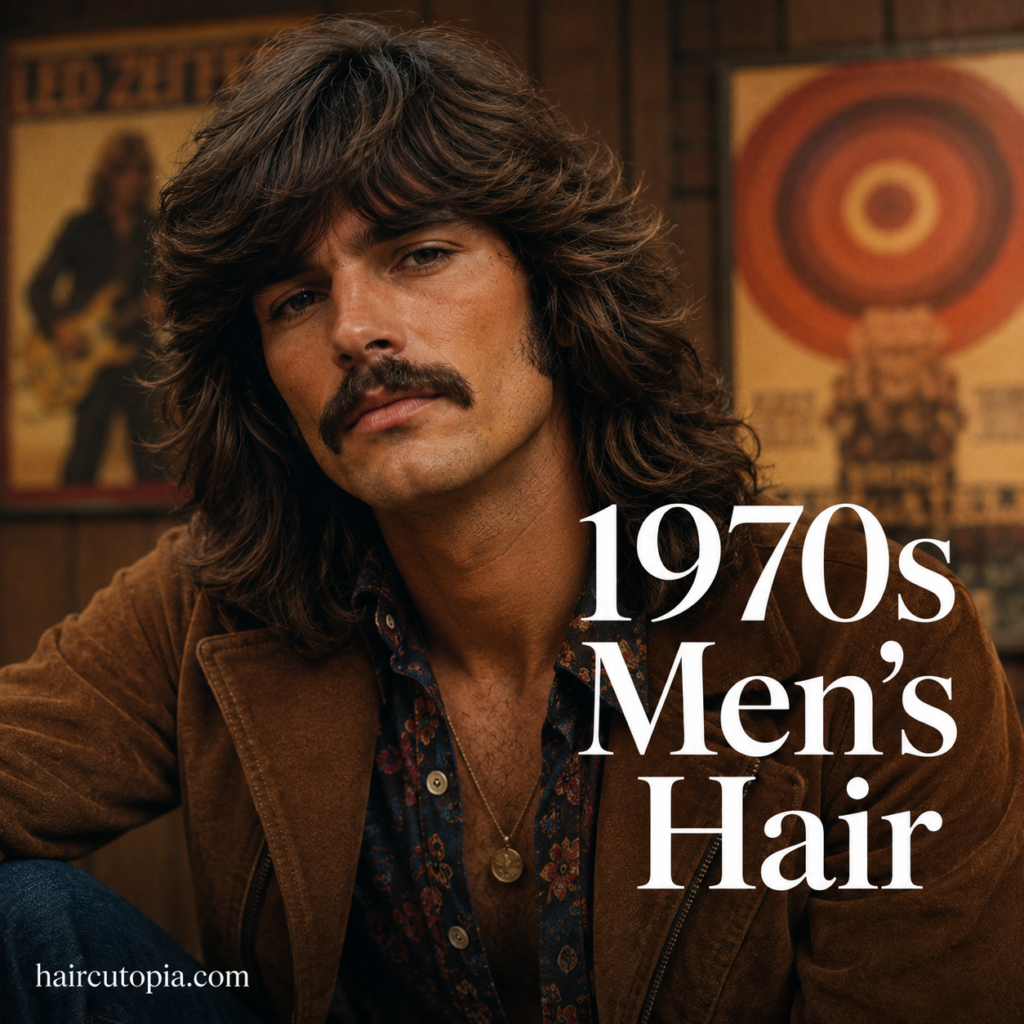
The 1970s marked one of the most influential eras in men’s hairstyling. It was a decade when personal style took center stage, and men’s hair became longer, more expressive, and far more diverse than in previous generations. Whether inspired by rock musicians, Hollywood stars, athletes, or the growing disco scene, hairstyles reflected individuality rather than conformity.
Unlike the clean-cut styles of the 1950s and 1960s, 1970s men’s hair embraced movement, texture, volume, and natural growth. Long layered cuts, feathered styles, shag haircuts, and thick mustaches became defining features of the era.
Many modern hairstyles—including the wolf cut, textured shag, curtain haircut, and layered medium-length styles—owe much of their popularity to the innovations of the 1970s.
In this guide, we’ll explore the decade’s most iconic men’s hairstyles, what made them so memorable, and why they continue to inspire today’s barbers and stylists.
Why 1970s Men’s Hair Was So Different
The 1970s represented a major shift in men’s fashion and grooming.
Instead of maintaining short, conservative hairstyles, many men embraced longer hair that reflected their personality and interests.
Several influences shaped the decade’s biggest hair trends:
- Rock and roll
- Glam rock
- Disco culture
- Hollywood actors
- Professional athletes
- Surf culture
- The growing popularity of salon styling for men
This created one of the most diverse periods in men’s haircut history.
35 Iconic 1970s Men’s Hairstyles
1. The Shag Haircut
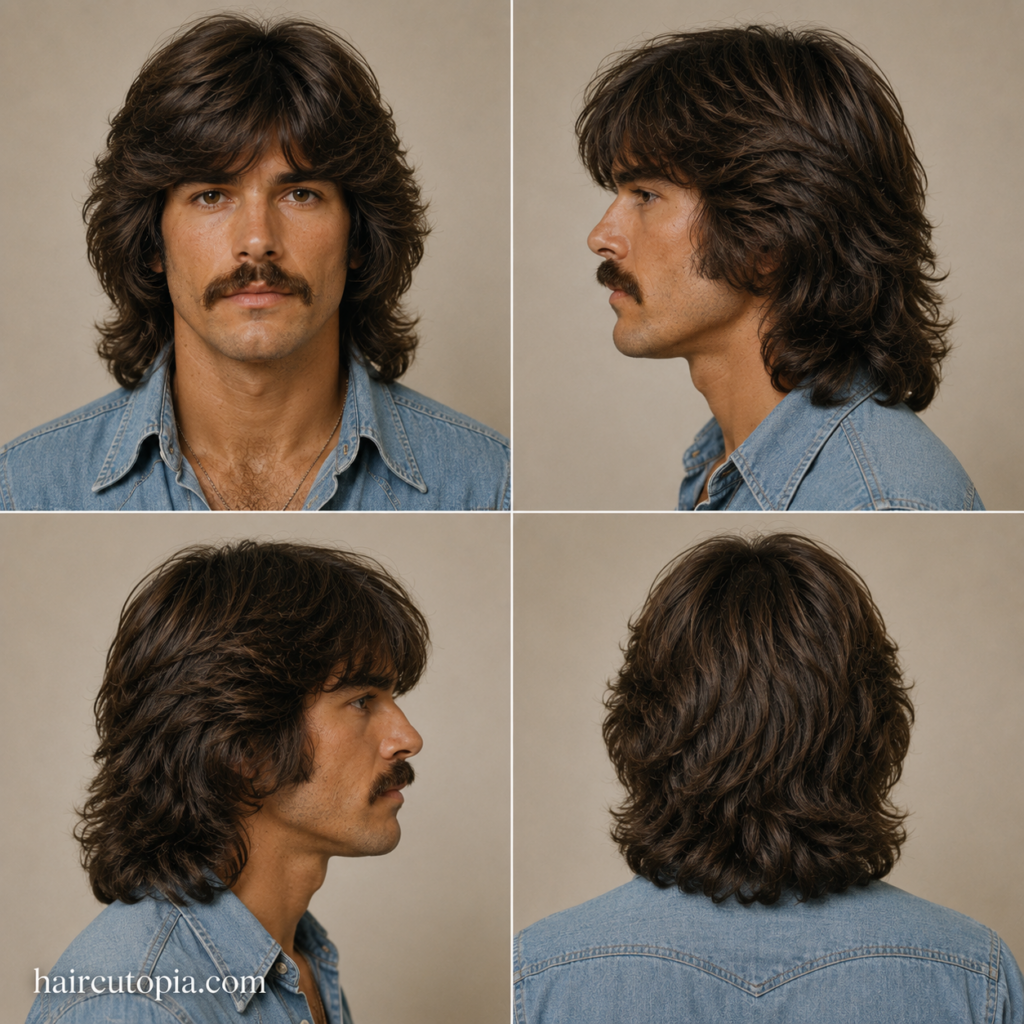
The shag became the signature men’s haircut of the decade.
Featuring heavy layers and textured ends, it created effortless movement and a relaxed appearance.
Key characteristics included:
- Medium to long length
- Choppy layers
- Natural volume
- Wispy fringe
Today, the shag continues to influence modern men’s hairstyles.
2. Feathered Hair
Feathered hairstyles weren’t just for women.
Many men wore layered hair that was blow-dried away from the face to create soft movement and volume.
This style worked especially well with medium-length hair.
3. Medium-Length Layers
Medium-length layered hair became one of the decade’s most versatile looks.
Benefits included:
- Easy styling
- Natural movement
- Fuller appearance
- Adaptability for different hair types
4. Long Rocker Hair
Inspired by rock musicians, many men embraced longer hairstyles that extended past the shoulders.
These cuts emphasized natural texture rather than polished perfection.
5. Curtain Hair
A center part with long fringe created one of the decade’s most recognizable silhouettes.
Today’s curtain haircut is heavily inspired by this look.
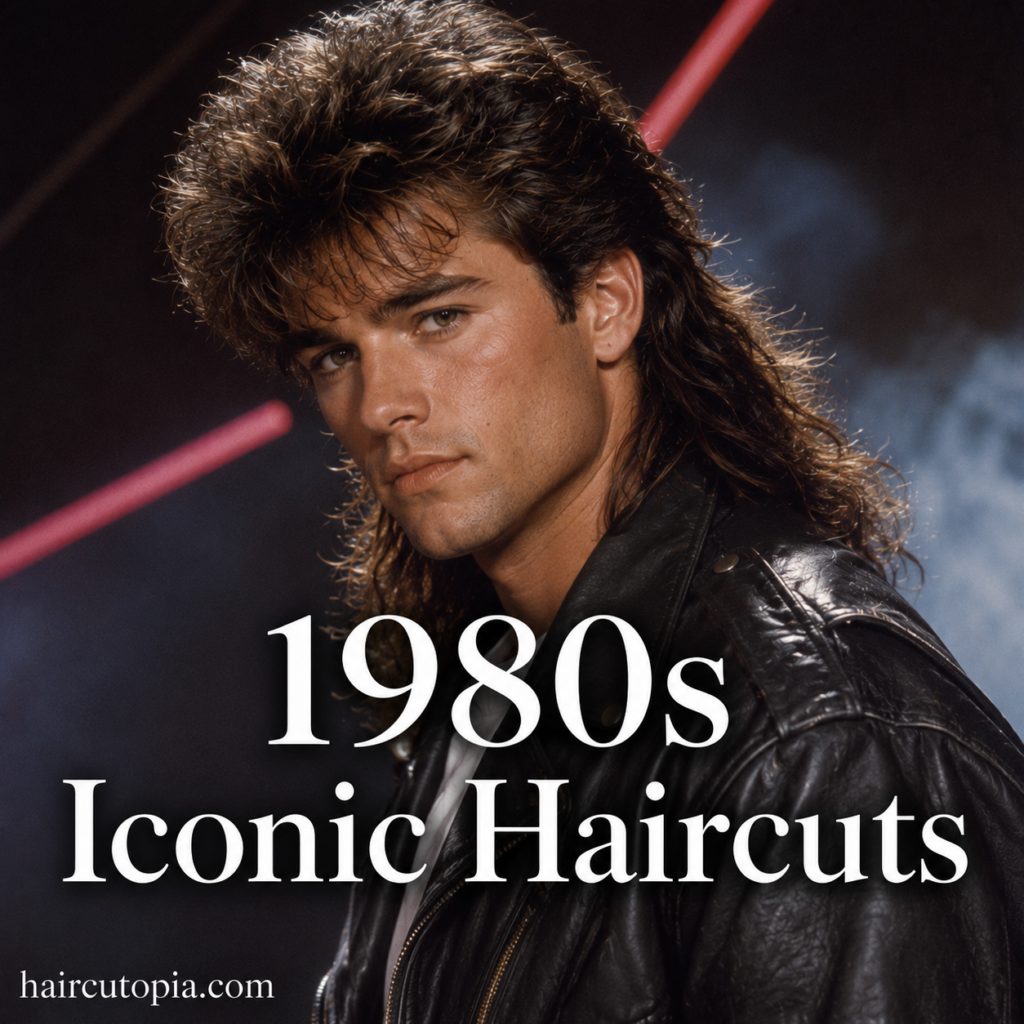
6. The Mullet (Early Version)
Before becoming exaggerated in the 1980s, the early mullet featured subtle layering and a smooth transition from shorter sides to longer back sections.
7. Curly Shag
Naturally curly hair paired perfectly with shag layering.
The result added shape while reducing excess weight.
8. Afro Hairstyles
The afro became one of the most culturally significant men’s hairstyles of the decade.
It celebrated natural texture and individuality.
9. The Mop Top Evolution
Inspired by the Beatles, the mop top gradually evolved into a longer, shaggier hairstyle during the 1970s.
10. Shoulder-Length Hair
Shoulder-length styles reflected the relaxed attitudes of the era and became increasingly mainstream.
11. The Layered Cut
Professional stylists refined layering techniques that made men’s hair lighter and easier to style.
12. Side-Part Layers
Although center parts dominated, classic side parts remained popular for professional settings.
13. Long Straight Hair
Straight hair looked especially striking when worn long with minimal layering.
A center part completed the classic look.
14. Wavy Layered Hair
Natural waves added texture without requiring extensive styling.
This effortless appearance became a defining trend.
15. Thick Mustache with Medium Hair
Few combinations define the 1970s better than layered hair paired with a full mustache.
This iconic pairing remains instantly recognizable.
16. Blow-Dried Volume
Salon blowouts became increasingly common among men.
Instead of stiff hairstyles, stylists focused on natural movement.
17. Face-Framing Layers
Longer pieces around the face softened the overall silhouette while adding dimension.
18. Razor-Cut Texture
Razor cutting created lighter movement and softer edges.
Many modern textured hairstyles still use similar techniques.
19. Soft Sideburns
Long, well-groomed sideburns became an essential feature of many hairstyles.
They complemented medium and long cuts perfectly.
20. Natural Texture
Rather than fighting their hair’s natural pattern, many men embraced curls, waves, and volume.
21. Air-Dried Hair
Not every hairstyle required extensive styling.
Air-dried texture became fashionable throughout the decade.
22. Layered Back
Longer layers at the back added movement while maintaining balanced proportions.
23. Relaxed Professional Hair
Many office-friendly hairstyles softened during the decade with added length and texture.
24. Bohemian Waves
Inspired by the counterculture movement, long waves reflected creativity and individuality.
25. Classic Salon Layers
Men increasingly visited salons instead of traditional barbershops for advanced layered cutting techniques.
26. Soft Fringe
Long fringe naturally blended into surrounding layers instead of being sharply defined.
27. Rounded Volume
Rounded silhouettes created balanced movement without excessive height.
28. Layered Curls
Strategic layering allowed curly hair to appear fuller while remaining manageable.
29. The Surf Look
Sunlight, saltwater, and natural texture inspired relaxed surfer hairstyles that remained popular throughout the decade.
30. Low-Maintenance Hair
Many iconic cuts looked best with minimal styling.
Natural movement became more desirable than perfect precision.
31. Personalized Haircuts
Stylists increasingly customized haircuts to suit each individual’s face shape and hair type.
32. Healthy Shine
Healthy-looking hair became a priority.
Conditioning products gained popularity throughout the decade.
33. Layered Crown
Gentle layering around the crown created fullness without relying on heavy teasing.
34. Soft Volume
Unlike the dramatic hairstyles of the following decade, 1970s volume remained natural and touchable.
35. Individual Style
The defining trend of the decade wasn’t one haircut—it was the freedom to wear hair in ways that reflected personal identity.
Facial Hair Trends of the 1970s
Hair wasn’t limited to the head.
Facial hair became an essential part of many men’s looks.
Popular styles included:
- Thick mustaches
- Chevron mustaches
- Full beards
- Sideburns
- Beard and mustache combinations
- Short boxed beards
Well-groomed facial hair often complemented layered hairstyles perfectly.
Hair Types That Worked Best
One reason these hairstyles remain popular is their versatility.
Straight Hair
Great choices include:
- Feathered layers
- Curtain hair
- Medium-length cuts
- Long layered styles
Wavy Hair
Ideal for:
- Shags
- Surfer styles
- Bohemian waves
- Medium-length layers
Curly Hair
Excellent options include:
- Curly shags
- Layered curls
- Rounded cuts
- Natural volume
Coily Hair
Popular styles included:
- Afros
- Rounded natural shapes
- Well-defined curls
- Protective grooming routines
How to Style 1970s Men’s Hair Today
You don’t need vintage products to recreate the look.
Try these techniques:
- Start with a layered haircut.
- Apply lightweight volumizing mousse.
- Blow-dry using a round brush if desired.
- Let natural texture remain visible.
- Use a matte cream or texture spray.
- Avoid overly stiff styling products.
- Finish with light-hold hairspray if needed.
The goal is movement rather than perfection.
Why 1970s Men’s Hairstyles Are Trending Again
Today’s hairstyles borrow heavily from the decade because they emphasize natural texture and versatility.
Modern cuts inspired by the 1970s include:
- Wolf cuts
- Curtain hairstyles
- Textured shags
- Medium-length layers
- Feathered hair
- Soft mullets
- Flow hairstyles
Contemporary stylists update these classics with softer layering and lighter styling products.
Frequently Asked Questions
What was the most popular men’s hairstyle of the 1970s?
The shag haircut was arguably the decade’s signature men’s hairstyle, closely followed by feathered layered hair and medium-length cuts.
Did most men have long hair during the 1970s?
Not everyone, but longer hairstyles became much more common than in previous decades. Medium-length layered hair was especially popular.
Were mustaches popular in the 1970s?
Yes. Thick mustaches became one of the defining grooming trends of the decade and were often paired with layered hairstyles.
Are 1970s men’s hairstyles fashionable today?
Absolutely. Modern wolf cuts, curtain hairstyles, textured shags, and feathered layers all draw inspiration from the 1970s.
How do you modernize a 1970s men’s haircut?
Ask your barber or stylist for soft layers, natural texture, and medium length while avoiding excessive volume or overly dramatic styling.
Final Thoughts
The 1970s transformed men’s hairstyling by encouraging individuality, longer lengths, and natural texture. Instead of one standard haircut, the decade celebrated personal expression through layered shags, feathered styles, afros, surfer-inspired waves, and shoulder-length cuts.
Those innovations continue to shape modern grooming. Many of today’s most popular men’s hairstyles borrow directly from the cutting techniques and styling philosophies that emerged during the 1970s.
Whether you’re looking for subtle retro inspiration or a complete vintage makeover, the iconic men’s hair trends of the 1970s offer timeless ideas that still look fresh decades later.