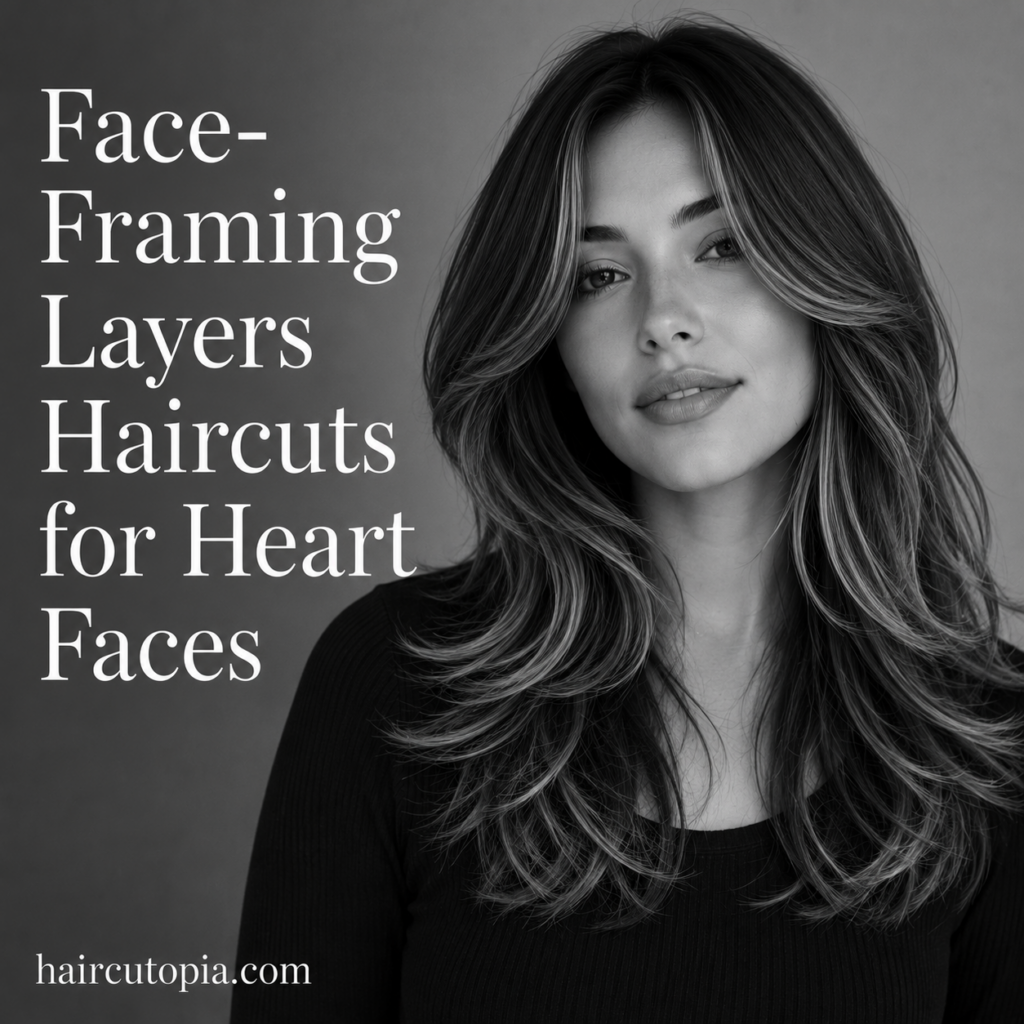
If you have a heart-shaped face, you already have one of the most recognizable and flattering face shapes. Defined by a wider forehead, prominent cheekbones, and a narrower chin, heart faces naturally draw attention to the upper half of the face.
The right face-framing layers can enhance those beautiful features while creating balance and softness around the jawline. Whether you prefer long flowing hair, a trendy butterfly cut, or a chic shoulder-length style, well-placed layers can make your haircut feel effortless and perfectly tailored to your face shape.
In this guide, you’ll discover why face-framing layers work so well for heart-shaped faces, how to choose the right layering technique, and 25 stunning haircut ideas to inspire your next salon visit.
Why Face-Framing Layers Flatter Heart-Shaped Faces
Heart-shaped faces are naturally widest across the forehead and gradually narrow toward the chin. Face-framing layers help create visual balance by adding softness around the lower half of the face while gently framing the cheekbones.
Some of the biggest benefits include:
- Softening the forehead
- Drawing attention to the eyes and cheekbones
- Creating fullness around the jawline
- Adding movement and texture
- Blending bangs seamlessly into the haircut
- Making long hair feel lighter and more dynamic
The goal isn’t to hide your face shape—it’s to enhance its naturally elegant proportions.
What Makes Face-Framing Layers Ideal for Heart Faces?
Layer placement is everything.
For heart-shaped faces, layers that begin around the cheekbones, lips, or chin tend to be the most flattering. They help create width near the lower half of the face, balancing the naturally narrower chin.
Very short, bulky layers near the forehead can sometimes make the upper portion of the face appear wider, so softer, blended transitions usually create the most harmonious look.
Choosing the Best Layer Length
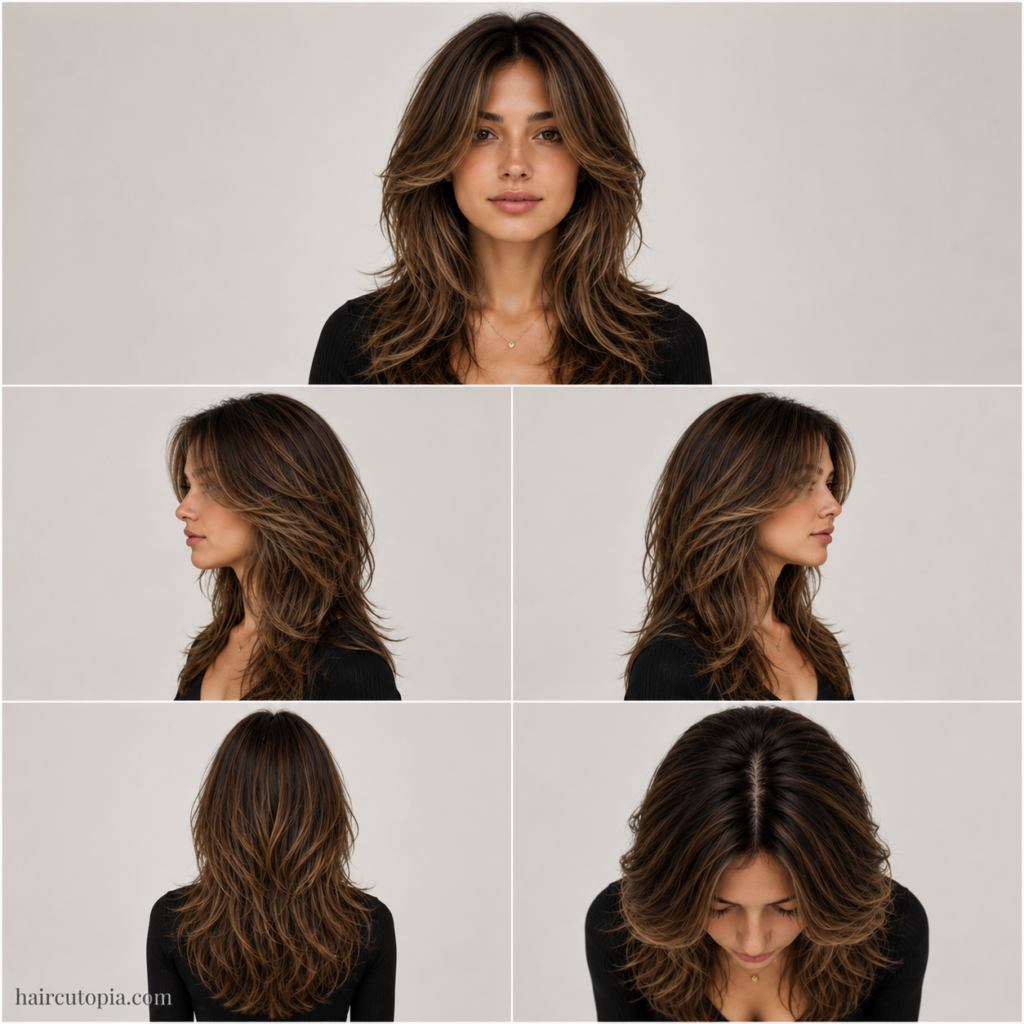
Short Face-Framing Layers
Starting around the eyes or cheekbones, these layers create:
- Volume
- Texture
- Youthful movement
They’re especially popular with shag cuts and textured hairstyles.
Medium Face-Framing Layers
Layers beginning around the nose or lips provide a balanced, versatile look that’s easy to style for everyday wear.
This is one of the most universally flattering options.
Long Face-Framing Layers
Beginning below the chin, long layers create graceful movement while helping add visual balance to the lower portion of the face.
They’re ideal for long hairstyles and elegant blowouts.
25 Face-Framing Layers Haircuts for Heart Faces
1. Long Soft Layers
Long blended layers create beautiful movement while maintaining overall length.
This timeless style works well for nearly every hair texture.
2. Curtain Layers
Curtain-inspired layers naturally soften the forehead while framing the eyes and cheekbones.
They remain one of today’s most requested hairstyles.
3. Butterfly Haircut
The butterfly haircut combines shorter face-framing layers with long flowing lengths underneath.
It offers:
- Lightweight volume
- Bounce
- Natural movement
without sacrificing length.
4. Layered Lob
A shoulder-length lob paired with soft framing pieces creates a polished look that’s easy to maintain.
5. Feathered Layers
Feathered ends add softness and remove excess weight while keeping plenty of movement throughout the haircut.
6. Chin-Length Framing Pieces
Layers that fall near the chin help create fullness where heart-shaped faces naturally become narrower.
This makes them especially flattering.
7. Face-Framing Layers with Curtain Bangs
Curtain bangs blend beautifully into surrounding layers while balancing the forehead.
Together they create an effortlessly modern hairstyle.
8. Soft Shag
A modern shag introduces texture and movement without overwhelming delicate facial features.
9. Layered Waves
Soft waves paired with face-framing layers produce a relaxed, beach-inspired look that flatters almost everyone.
10. Invisible Layers
Invisible layers remove weight from inside the haircut while maintaining a sleek appearance.
Perfect if you prefer polished styles.
11. Mid-Length Layers
Medium-length layered cuts offer versatility while keeping styling simple.
They transition easily from casual to formal occasions.
12. Rounded Layers
Rounded layering creates fullness through the lower half of the hairstyle, helping balance facial proportions.
13. Long Layers with Side Part
A side part naturally softens the forehead while adding volume through the crown.
It’s a simple change with a noticeable effect.
14. Wispy Front Layers
Delicate wispy pieces create softness without dramatically changing the haircut.
Ideal for subtle updates.
15. Layered U-Cut
A U-shaped haircut preserves fullness while allowing the front layers to frame the face beautifully.
16. Shoulder-Length Textured Cut
Texture throughout the ends creates movement while preventing medium-length hair from feeling bulky.
17. Voluminous Blowout Layers
Large blowouts showcase face-framing layers by adding bounce and luxurious movement.
18. Air-Dried Layers
If you prefer low-maintenance styling, blended layers enhance your natural texture with minimal effort.
19. Money Piece Layers
Bright front highlights paired with face-framing layers naturally draw attention toward the eyes.
20. Curly Face-Framing Layers
Curly hair benefits from strategic layering that enhances curl definition while balancing facial proportions.
21. Layered V-Cut
The V-shaped perimeter creates flowing movement while maintaining dramatic length.
22. Soft Flipped Layers
Slightly flipped ends create a playful finish with subtle retro charm.
23. Long Textured Layers
Textured long layers keep hair from feeling heavy while creating effortless movement.
24. Sleek Straight Layers
Straight hair looks polished with carefully blended face-framing pieces that add dimension without sacrificing shine.
25. Classic Face-Framing Layers
Simple blended layers remain one of the most timeless and flattering options for heart-shaped faces.
Sometimes less really is more.
Best Hair Types for Face-Framing Layers
Fine Hair
Longer blended layers help preserve fullness while creating natural movement.
Great choices include:
- Invisible layers
- Butterfly cut
- Layered lob
- Soft long layers
Thick Hair
Thick hair becomes lighter and easier to manage with strategic layering.
Recommended styles include:
- Feathered layers
- Rounded layers
- Butterfly haircut
- Long shag
Straight Hair
Straight hair beautifully showcases blended layers that add movement and shape.
Wavy Hair
Natural waves become more defined when excess weight is removed through soft layering.
Curly Hair
Curly hair thrives with customized layering that enhances volume while maintaining balanced proportions.
Should You Get Bangs?
Heart-shaped faces pair especially well with soft bangs because they help balance a broader forehead.
Some excellent options include:
- Curtain bangs
- Wispy bangs
- Side-swept bangs
- Bottleneck bangs
- Long layered fringe
Avoid overly blunt, heavy bangs if you prefer a softer overall appearance.
Styling Tips for Face-Framing Layers
To make your layers stand out:
- Blow dry the front pieces away from your face.
- Use a round brush to add gentle curves.
- Curl only the front sections for natural movement.
- Apply texture spray for volume.
- Finish with lightweight shine serum on the ends.
These simple techniques help maintain a fresh salon look every day.
How Often Should You Trim Face-Framing Layers?
To keep your haircut looking polished:
- Every 6–8 weeks for shorter layered cuts
- Every 8–10 weeks for medium-length styles
- Every 10–12 weeks for long layered hair
Routine trims also reduce split ends and help preserve the shape of the layers.
Frequently Asked Questions
Are face-framing layers good for heart-shaped faces?
Yes. They’re one of the most flattering haircut techniques because they soften the forehead while creating balance around the chin.
Where should face-framing layers start?
Most stylists recommend beginning around the cheekbones, lips, or chin to create the most balanced appearance.
Should heart-shaped faces get curtain bangs?
Absolutely. Curtain bangs are one of the best choices because they gently frame the forehead and blend seamlessly into face-framing layers.
Do face-framing layers work with curly hair?
Yes. Curly hair often benefits from customized layering that removes bulk while enhancing curl definition and facial balance.
Can I keep my hair long with face-framing layers?
Definitely. Long face-framing layers preserve your overall length while adding softness, movement, and dimension around the face.
Final Thoughts
Face-framing layers are one of the easiest ways to complement a heart-shaped face. By adding softness around the cheeks and chin while balancing a broader forehead, they create a beautifully harmonious look that feels modern and effortless.
Whether you’re drawn to a butterfly haircut, soft curtain bangs, long flowing layers, or a chic shoulder-length style, the right face-framing layers can enhance your natural features without requiring a dramatic transformation. Work with your stylist to customize the placement of your layers based on your hair texture, lifestyle, and personal style, and you’ll enjoy a haircut that looks flattering from every angle.
Related Posts
 Blunt Cut Haircuts for Teen Girls: 25 Stylish Ideas for a Fresh, Modern Look
 Shag Haircuts for Curly Hair: 25 Gorgeous Styles Full of Shape, Bounce, and Volume
 Pixie Haircuts for Oval Faces: 25 Stylish Cuts That Perfectly Complement Your Features
 Pixie Haircuts for Diamond Faces: 25 Flattering Styles to Balance Your Features