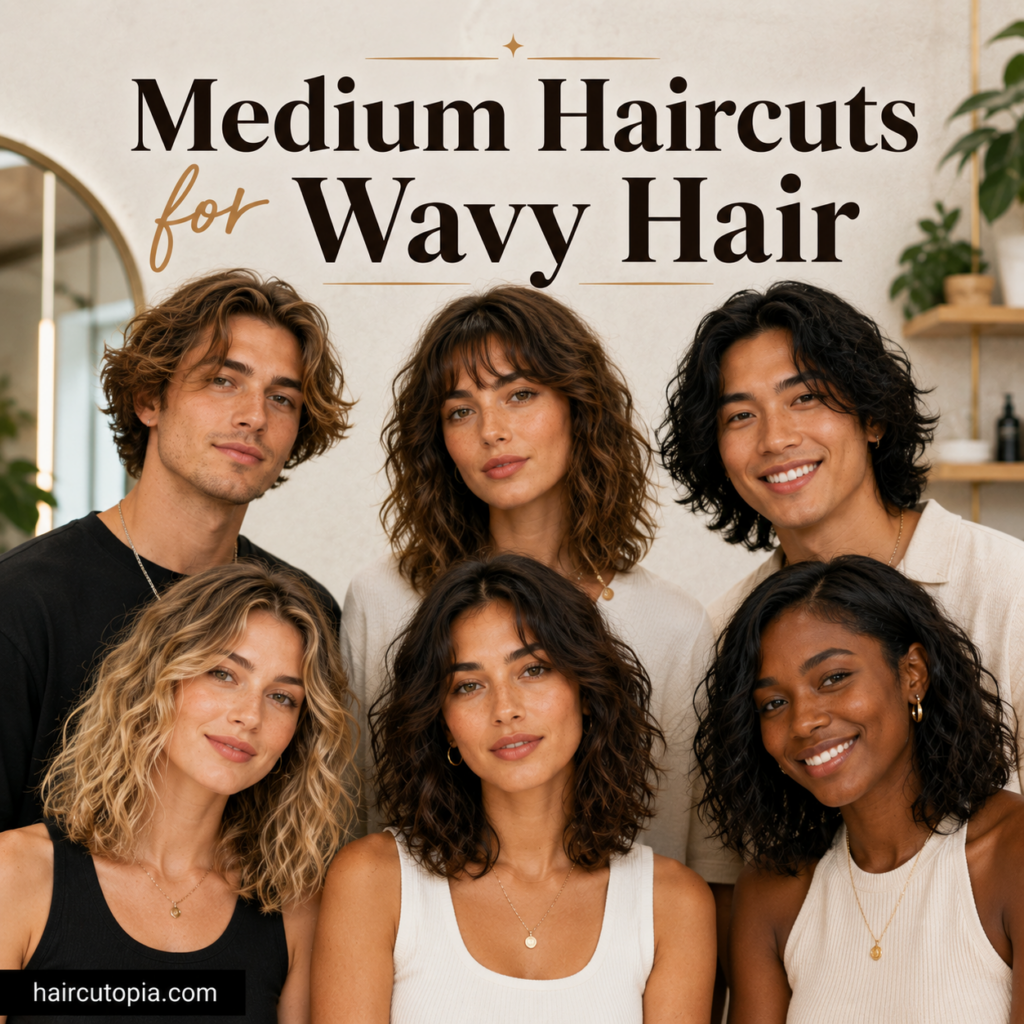
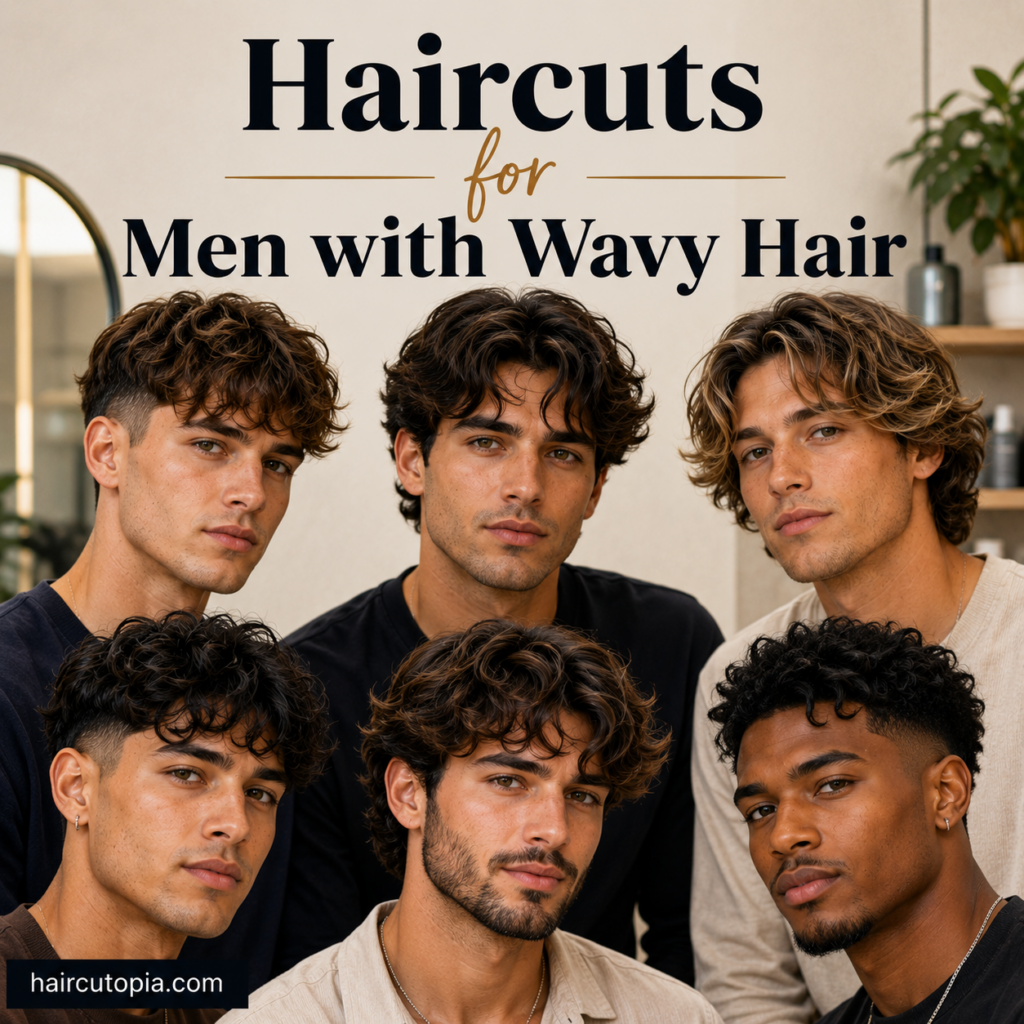
Wavy hair gives men something a lot of hairstyles are designed to create artificially: natural texture.
That movement can make even a simple haircut look more interesting. A short crop gets extra definition. A medium-length cut develops an effortless, slightly messy shape. Grow it longer and the waves become an even bigger part of the style.
The challenge is figuring out how much of that texture you actually want.
Cut wavy hair very short and some of the pattern may disappear. Leave too much weight in the wrong places and the hair can become bulky or flat. The right haircut finds a balance, giving your waves enough length to show while keeping the overall shape manageable.
Whether you want something clean and professional, relaxed and low-maintenance, or longer and more textured, there are plenty of options.
Here are some of the best haircuts for men with wavy hair and how to choose one that works with your natural texture.
Why Wavy Hair Works So Well for Men’s Haircuts
Wavy hair falls somewhere between straight and curly, although the exact pattern varies considerably from person to person.
Some men have loose bends that only become noticeable once the hair gets longer. Others have strong S-shaped waves that are almost curly.
That natural movement can add:
- Texture
- Volume
- Definition
- Shape
- Visual thickness
- A more relaxed finish
It also means you may not need much styling to make a haircut look intentional.
The most important thing is leaving enough length in the right areas for your wave pattern to develop.
Best Haircuts for Men with Wavy Hair
There’s no single haircut that works for every guy with waves. Hair density, wave strength, face shape, and how much maintenance you’re willing to do all matter.
These cuts are good starting points.
1. Wavy Textured Crop
The textured crop is one of the easiest short haircuts for wavy hair.
The sides and back are kept relatively short while enough length remains on top to show some natural movement.
Instead of trying to make every strand sit perfectly, the style uses the wave pattern to create texture.
It works particularly well if you want something short without completely eliminating your natural waves.
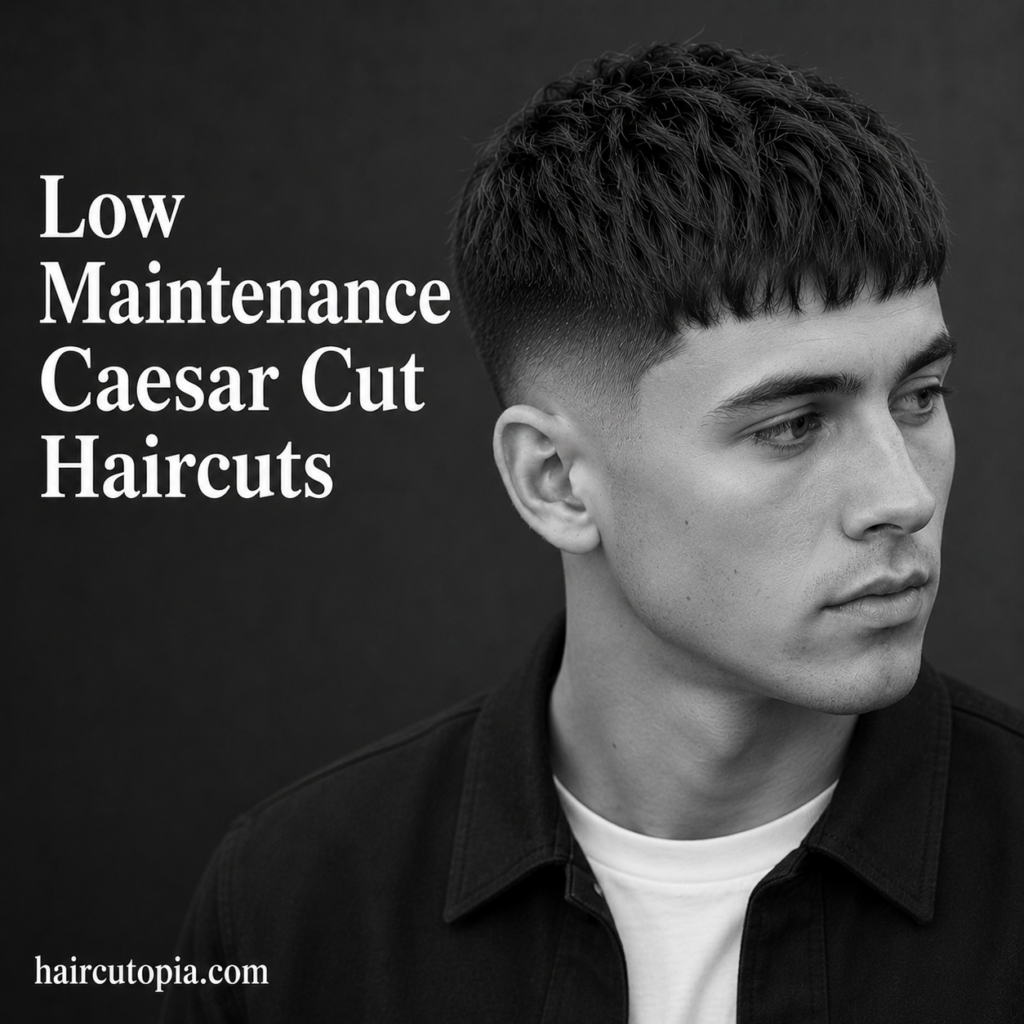
2. Wavy French Crop
A French crop keeps the sides shorter and brings the hair on top forward toward the forehead.
On straight hair, the fringe can look fairly structured. Wavy hair gives it a softer, more textured finish.
The fringe can be kept short and neat or left slightly longer for more noticeable movement.
It’s also a practical option if you prefer not to spend much time styling your hair upward or backward.
3. Wavy Crew Cut
A crew cut is short, clean, and relatively easy to maintain.
The hair gradually becomes longer toward the front, leaving a little more room for texture than a uniform buzz cut.
If your waves are subtle, they may only show slightly at this length. Stronger wave patterns can still create visible movement through the top.
This is a good option if you want a traditional short haircut but don’t necessarily want everything cut to the same length.
4. Wavy Fade
A fade can be paired with almost any wavy hairstyle.
The sides and back gradually transition from shorter hair into the longer section above, creating contrast that makes the texture on top more noticeable.
Common options include:
- Low fade
- Mid fade
- High fade
- Taper fade
- Skin fade
A lower fade generally leaves a softer, more natural shape. Higher or skin fades create stronger contrast and usually require more frequent maintenance.
5. Wavy Taper
A taper is a good alternative if you want cleaner edges without dramatically shortening the sides.
The hair gradually becomes shorter around the sideburns and neckline while more length remains through the sides.
That makes it particularly useful for medium wavy hairstyles where you want to preserve some natural fullness.
A taper also tends to grow out more subtly than a high fade.
6. Wavy Side Part
A side part works well when you want natural texture without an overly casual haircut.
The waves give the style movement while the part provides structure.
You can keep the sides tapered for a cleaner appearance or leave them longer for a softer, more traditional shape.
Avoid using so much product that the waves become completely flattened. A little natural separation usually makes the style more interesting.
7. Wavy Quiff
A quiff keeps additional length toward the front so the hair can be styled upward and slightly backward.
Wavy hair naturally adds texture to the shape, which means the quiff doesn’t need to look perfectly smooth.
This style generally works best with medium length on top.
A matte or lightweight styling product can provide some control while still allowing the waves to remain visible.
8. Wavy Fringe
Instead of pushing the hair backward or creating a part, a wavy fringe lets the front fall naturally toward the forehead.
This can be worn short and textured or considerably longer.
It’s especially useful if your strongest waves are toward the front of your hair.
The sides can be faded, tapered, or left longer depending on the overall look you want.
9. Messy Wavy Hair
“Messy” doesn’t have to mean uncut.
A good messy wavy haircut usually has enough structure underneath to keep the hair from becoming shapeless.
Layers or strategic weight removal can create movement while allowing the waves to fall naturally.
The goal is controlled texture rather than trying to position every individual section.
A small amount of styling cream, mousse, or matte product is often enough.
10. Wavy Curtains
Curtain hairstyles work particularly well with medium wavy hair.
The hair is parted near the center and allowed to fall toward both sides of the face.
Natural waves prevent the style from looking too flat or uniform.
The length can range from around eyebrow level to considerably longer, depending on how much movement you want.
A softer taper around the sides can keep the haircut balanced without removing too much of its relaxed shape.
11. Wavy Bro Flow
The bro flow is designed around natural movement.
Instead of keeping the sides significantly shorter than the top, the hair is allowed to grow to a medium length and flow backward or away from the face.
Wavy hair is especially suited to this style because the texture creates shape without requiring a heavily structured haircut.
It’s a good option if you want longer hair but aren’t ready to grow it past the shoulders.
12. Wavy Shag
A men’s shag uses layers to create movement throughout medium or longer hair.
It works particularly well when your waves become more noticeable as your hair grows.
Shorter layers around the crown can create volume, while longer sections maintain movement around the sides and back.
The haircut can be subtle or deliberately shaggy depending on how much contrast you want between the layers.
13. Wavy Wolf Cut
The wolf cut combines shaggy layering with some of the shape associated with a mullet.
Modern versions range from dramatic to surprisingly subtle.
Wavy hair helps blend the layers together, creating a natural textured appearance.
If you like longer hair but want more volume around the crown, a softer wolf cut can be a good option.
14. Wavy Undercut
An undercut creates a strong difference between longer hair on top and very short hair around the sides and back.
The contrast makes the waves on top stand out.
You can wear the longer section forward, swept backward, parted, or left naturally messy.
Keep in mind that an undercut generally requires more maintenance than a softer taper because the difference between the lengths becomes noticeable as it grows.
15. Slicked-Back Wavy Hair
Wavy hair doesn’t have to be completely straightened to wear it back.
In fact, allowing some of the natural pattern to remain can give a slicked-back style more dimension.
Medium length generally works best.
Rather than using a very heavy product that flattens everything, try something that provides enough hold to direct the hair backward while preserving some texture.
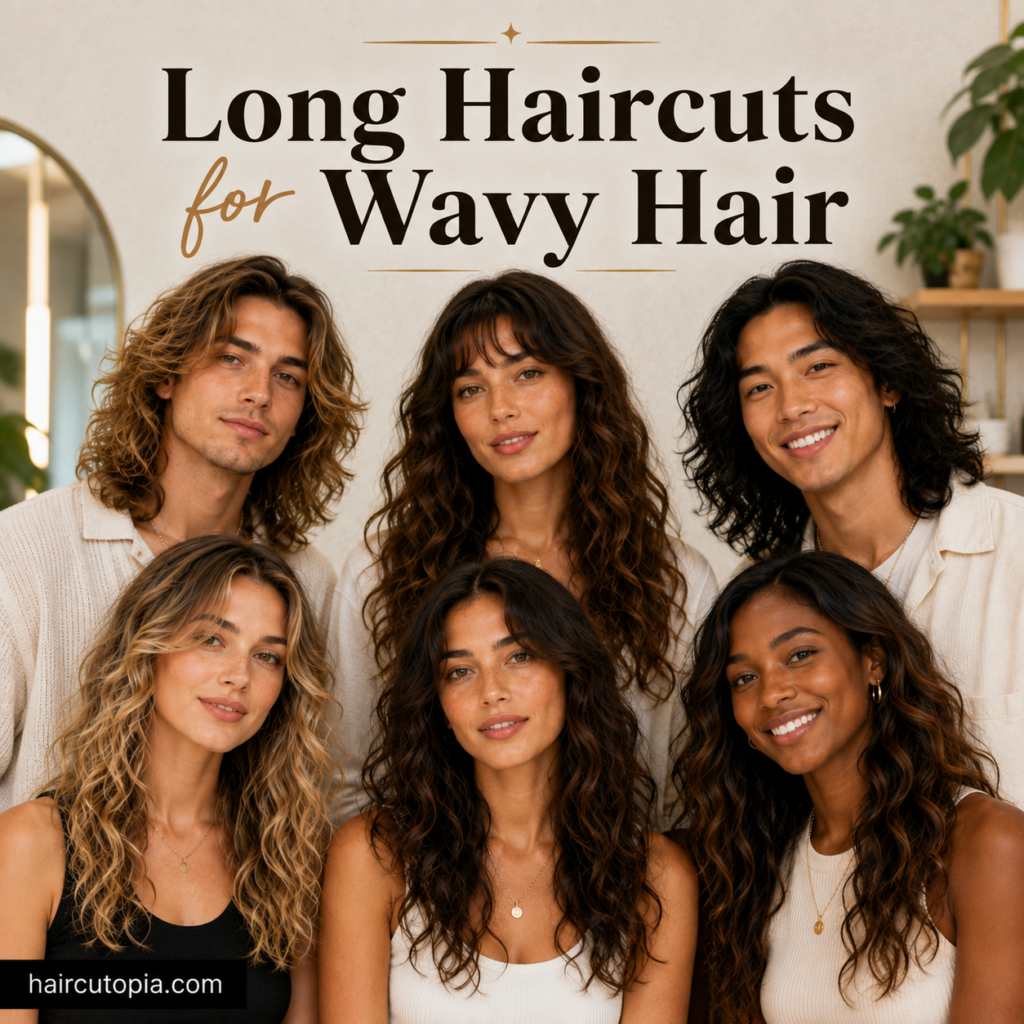
16. Long Wavy Hair
Growing wavy hair longer allows the natural pattern to become a major part of the hairstyle.
Depending on your wave type, the hair may form loose bends, defined S-shapes, or sections that look almost curly.
Long layers can prevent the hair from becoming overly heavy while adding movement throughout the lengths.
Regular trims can also help keep the ends looking intentional while you’re growing it.
Short Haircuts for Men with Wavy Hair
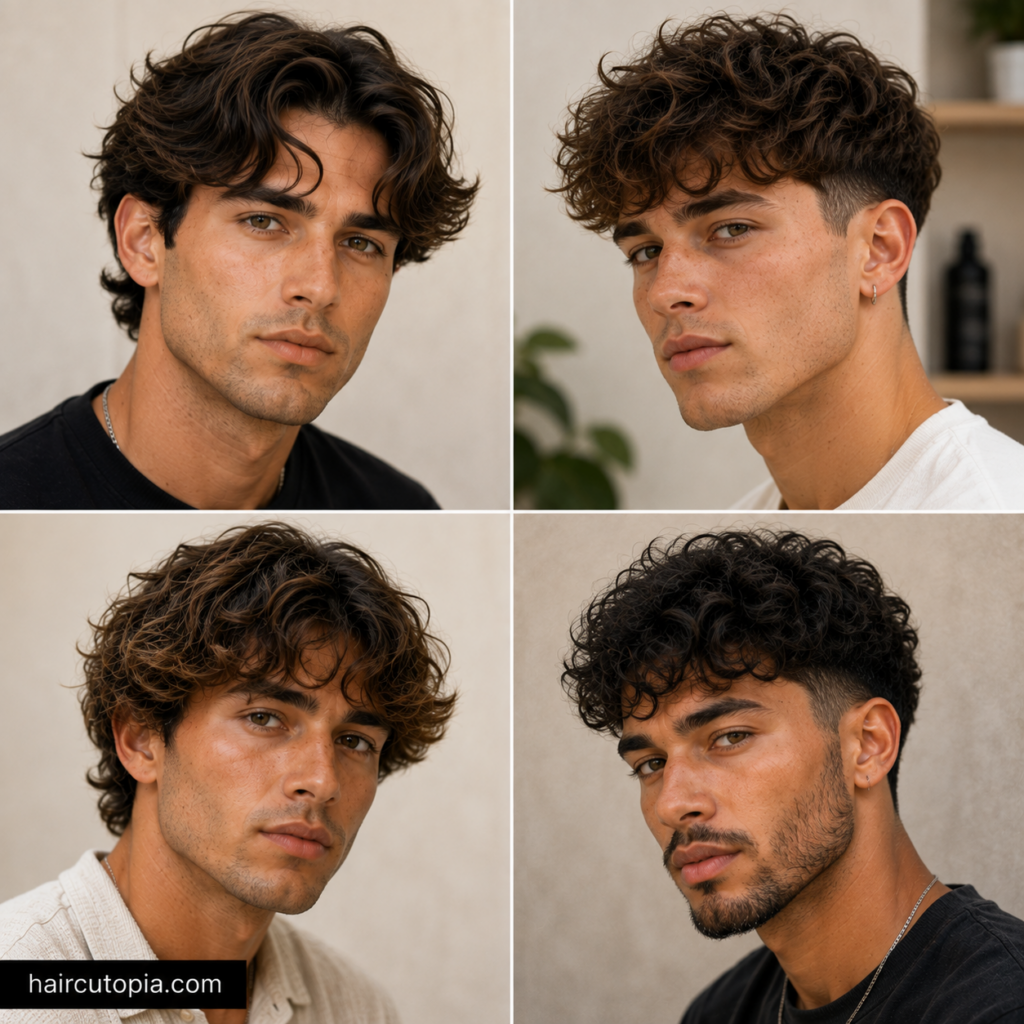
If you want something easy to manage, shorter styles are the obvious place to start.
Good options include:
- Textured crops
- French crops
- Crew cuts
- Short wavy fringes
- Tapered cuts
- Fades with a textured top
The main decision is how much length to leave on top.
Cutting the hair extremely short can reduce the appearance of your waves. If texture is important to you, leave enough length for at least part of the wave pattern to form.
Medium Haircuts for Men with Wavy Hair
Medium length is often where wavy hair becomes most versatile.
There’s enough hair for the pattern to become visible without the weight associated with very long hair.
Consider:
- Curtains
- Side parts
- Quiffs
- Bro flows
- Medium fringes
- Shags
- Layered cuts
- Brushed-back styles
Medium hair usually requires a little more styling than a short crop, but you also gain considerably more flexibility.
Long Haircuts for Men with Wavy Hair
Long wavy hair works best when the haircut creates some shape rather than simply allowing everything to grow indefinitely.
Long layers can remove excess weight while keeping the overall length.
You can also experiment with:
- Long shags
- Wolf cuts
- Center parts
- Shoulder-length cuts
- Face-framing layers
- Long brushed-back styles
If your hair becomes flatter near the roots as it grows, that’s often caused by the additional weight. Strategic layering may help bring some movement back.
Haircuts for Different Wavy Hair Types
Men’s wavy hair is commonly grouped into Types 2A, 2B, and 2C.
You don’t need to fit perfectly into one category. Many people have multiple textures across different areas of the head.
Still, understanding the general pattern can make choosing a haircut easier.
Haircuts for Men with Type 2A Wavy Hair
Type 2A hair has a loose wave pattern that can look almost straight when cut short.
Medium lengths often make the texture more noticeable.
Good choices include:
- Side parts
- Curtains
- Bro flows
- Quiffs
- Medium layered cuts
- Longer textured crops
Avoid overly heavy styling products if your waves flatten easily.
Haircuts for Men with Type 2B Wavy Hair
Type 2B hair usually forms more noticeable S-shaped waves.
This texture works with everything from short crops to longer layered styles.
Consider:
- Textured crops
- Wavy fringes
- Tapers
- Curtains
- Shags
- Bro flows
- Medium layered cuts
Leaving enough length for the wave pattern to develop can make styling considerably easier.
Haircuts for Men with Type 2C Wavy Hair
Type 2C hair has strong waves and may form loose curls in some sections.
This hair type often has plenty of natural volume.
Good options include:
- Textured fades
- Longer crops
- Wavy fringes
- Shags
- Wolf cuts
- Layered medium styles
- Long wavy hair
Because stronger waves can shrink when dry, be careful about judging the final length while the hair is wet.
Haircuts for Men with Thick Wavy Hair
Thick wavy hair gives you plenty of texture to work with, but it can become bulky if the haircut doesn’t distribute the weight properly.
A barber or stylist may remove weight internally or add layers rather than simply cutting everything shorter.
Good options include:
- Textured crops
- Tapers
- Medium layered styles
- Shags
- Bro flows
- Wolf cuts
- Long layered hair
If your hair tends to become triangular as it grows, removing some weight through the sides can help create a more balanced shape.
Haircuts for Men with Fine Wavy Hair
Fine wavy hair benefits from keeping enough density to avoid looking sparse.
Too much thinning or aggressive layering can work against you.
Styles with a stronger overall shape tend to work well, including:
- Textured crops
- Crew cuts
- Side parts
- Quiffs
- Medium cuts with minimal layers
- Soft curtains
Lightweight styling products are usually preferable to heavy waxes and creams that can pull the hair down.
Choosing a Wavy Haircut for Your Face Shape
Face shape isn’t a strict rulebook for choosing a haircut, but it can help you decide where you want volume and length.
Round Faces
Styles with some height on top can create more vertical balance.
Quiffs, textured tops, side parts, and cuts with shorter sides are all options to consider.
Oval Faces
Oval faces work with a wide range of wavy hairstyles.
Short crops, curtains, fades, shags, quiffs, and longer styles can all work depending on your texture and preferences.
Square Faces
Wavy texture can complement a stronger jawline.
Tapers, textured crops, side parts, medium flows, and layered styles all provide options without needing to hide the natural shape of the face.
Heart-Shaped Faces
Styles that retain some fullness around the sides can help balance a wider forehead and narrower chin.
Curtains, fringes, medium flows, and layered styles can work particularly well.
Long or Oblong Faces
Be cautious about creating excessive height at the top while cutting the sides extremely short.
Medium styles, curtains, fringes, and cuts that maintain some volume around the sides can create a more balanced silhouette.
Fade or Taper: Which Is Better for Wavy Hair?
Both can work. They simply create different results.
A fade creates stronger contrast between the short sides and longer wavy hair on top. It’s ideal if you want a cleaner, sharper haircut.
A taper is more subtle.
It keeps more length through the sides while gradually shortening the hair around the sideburns and neckline.
Choose a fade if you like a crisp, high-contrast look.
Choose a taper if you want your haircut to grow out more naturally or prefer to keep more of your wavy texture around the sides.
How to Style Men’s Wavy Hair
One of the advantages of wavy hair is that you usually don’t need to create texture from scratch.
Instead, styling is mostly about encouraging what’s already there.
For a natural finish:
- Start with damp rather than soaking-wet hair.
- Apply a small amount of styling product.
- Work it through without aggressively flattening the waves.
- Scrunch or shape the hair with your hands.
- Air-dry or use a diffuser on low heat.
- Make small adjustments once the hair is completely dry.
Depending on your haircut, mousse, styling cream, lightweight gel, or a matte product can work.
Start with less product than you think you need. You can always add more.
How to Make Men’s Wavy Hair More Defined
If your hair looks wavy when wet but loses definition as it dries, technique may matter as much as product.
Try:
- Applying product while the hair is damp
- Scrunching rather than repeatedly combing
- Air-drying without touching it constantly
- Using a diffuser
- Avoiding very heavy products
- Keeping enough length for the wave to form
Your haircut also matters.
If your hair is too short for your individual wave pattern, no styling product can completely recreate the texture that would naturally appear at a longer length.
How Often Should Men with Wavy Hair Get a Haircut?
It depends on the style.
A fade or very short cut may need maintenance every two to four weeks if you want it consistently sharp.
A taper or medium haircut can often go four to eight weeks.
Longer layered styles may go eight to twelve weeks or more, especially if you like a relaxed grow-out.
There’s no requirement to follow an exact schedule. Get it cut when the shape stops working the way you want it to.
What to Tell Your Barber or Stylist
Don’t just say, “Make it shorter.”
Explain how you actually wear your hair.
Tell them:
- How much styling you normally do
- Whether you air-dry or blow-dry
- How short you’re willing to go
- Whether you want your waves emphasized
- Which areas become bulky
- Whether you want a fade or softer taper
- How often you’re willing to get haircuts
- Whether you want to grow your hair longer
Photos are useful, but choose references with a hair texture reasonably similar to yours.
A haircut can look completely different on straight, wavy, and curly hair even when the lengths are technically the same.
Frequently Asked Questions About Men’s Wavy Haircuts
What haircut is best for men with wavy hair?
Textured crops, tapers, fades, curtains, side parts, bro flows, shags, and layered medium cuts all work well. The best haircut depends on your wave pattern, hair density, desired length, and maintenance preferences.
Is wavy hair attractive on men?
Wavy hair offers natural texture, volume, and movement that works with many men’s hairstyles. Choosing a haircut that allows the natural pattern to show can make the texture more noticeable.
Should men with wavy hair get layers?
Layers can be useful for medium and long wavy hair because they remove weight and create movement. Short haircuts don’t always require traditional layering, although texturizing can help create a similar effect.
Is a fade good for wavy hair?
Yes. A fade creates contrast between shorter sides and textured hair on top. Low and taper fades create a softer transition, while high and skin fades produce a sharper look.
Is a taper good for wavy hair?
Yes. Tapers are particularly useful if you want cleaner edges while preserving more length and texture through the sides.
What length is best for men’s wavy hair?
There’s no single best length. Short hair is easier to maintain, while medium hair tends to show the wave pattern more clearly. Longer hair allows the waves to become a major part of the overall hairstyle.
How do I keep wavy hair from getting frizzy?
Avoid aggressively towel-drying or repeatedly brushing your hair once it’s dry. Applying a lightweight styling product while the hair is damp and allowing it to dry with minimal handling can help maintain definition.
Final Thoughts on Haircuts for Men with Wavy Hair
Wavy hair gives you plenty of options.
If you prefer something short and easy, a textured crop, French crop, taper, or fade can keep things manageable while leaving enough movement on top.
At medium length, curtains, side parts, quiffs, and bro flows give the wave pattern more room to develop. And if you’re willing to grow it out, shags, wolf cuts, and longer layered styles can make your natural texture the main feature.
You don’t need to force wavy hair into behaving like straight hair.
A good haircut should give the waves enough room to form, remove weight where it’s actually needed, and fit the amount of styling you’re realistically willing to do.
If you can wake up, make a few adjustments, and still like the way your hair falls, you’ve probably found the right one.