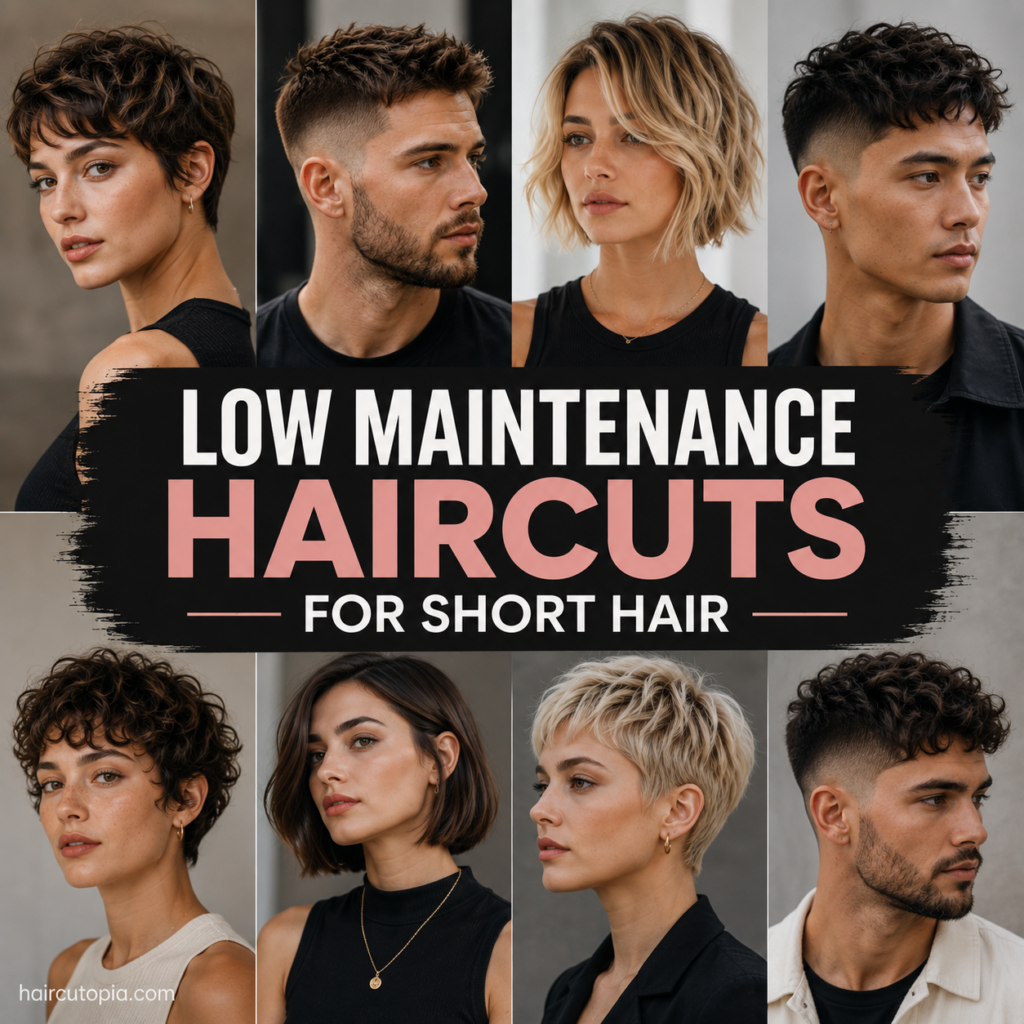
Short hair is supposed to make life easier. Less drying time, fewer tangles, and no wrestling with several feet of hair before you’ve even had coffee.
But anyone who’s had the wrong short haircut knows that’s only half the story.
Some short styles practically fall into place on their own. Others need a blow dryer, round brush, flat iron, styling wax, and a surprising amount of patience to look the way they did when you left the salon.
The best low maintenance haircuts for short hair are different. They’re designed around natural texture, simple shapes, and cuts that still look intentional when they’re not perfectly styled.
From pixies and cropped bobs to textured shags and short curly cuts, these styles prove you don’t need a complicated routine to have interesting hair.
What Makes a Short Haircut Low Maintenance?
Length alone doesn’t determine how easy a haircut is.
In fact, extremely precise short styles can sometimes require more upkeep than longer hair because new growth becomes noticeable quickly.
A genuinely low-maintenance short haircut usually:
- Works with your natural texture
- Air-dries reasonably well
- Requires little or no heat styling
- Doesn’t depend on every strand sitting perfectly
- Uses texture and movement to its advantage
- Can be refreshed quickly
- Maintains a flattering shape as it grows
There’s also salon maintenance to consider.
A pixie may take two minutes to style but need trimming every few weeks. A chin-length textured bob may take slightly longer in the morning but can often go much longer between appointments.
The right choice depends on which type of maintenance you’d rather avoid.
1. Classic Pixie Cut
The classic pixie remains one of the easiest ways to dramatically simplify your daily hair routine.
The sides and back are kept short while slightly more length is usually left through the top. Because there’s so little hair to manage, washing and drying are quick.
For everyday styling, you may only need to run your fingers through it.
A small amount of styling cream, paste, or wax can add definition when you want a more polished finish.
The tradeoff is trimming. Pixies can lose their original shape relatively quickly as they grow.
2. Long Pixie
A long pixie gives you the convenience of short hair with more styling flexibility.
Extra length through the top and front allows you to wear the hair naturally tousled, swept to one side, tucked behind the ears, or lightly textured.
It’s also more forgiving as it grows than an extremely short pixie.
If you eventually want longer hair, a long pixie provides a natural starting point for transitioning into a bixie or bob.
3. Textured Pixie
A perfectly smooth pixie can require more styling than you’d expect.
A textured pixie solves that problem by making separation and movement part of the haircut.
Instead of trying to get every strand perfectly positioned, you can work a small amount of matte paste through the hair with your fingers and let the pieces fall naturally.
This style works particularly well with naturally straight, wavy, or slightly coarse hair.
4. Tousled Pixie
The tousled pixie takes the relaxed approach even further.
It’s intentionally soft and slightly undone, which makes morning styling forgiving. Bedhead isn’t necessarily the enemy here—it can actually provide some of the texture you’re trying to create.
Dampen any sections that aren’t cooperating, reshape them with your fingers, and you’re often ready to go.
5. Curly Pixie
Natural curls can give a pixie plenty of personality without requiring complicated styling.
A curly pixie keeps enough length for the curl pattern to remain visible while removing the bulk associated with longer hair.
The shape matters enormously.
A stylist familiar with curly hair can position the length so curls naturally create volume where you want it.
For everyday styling, leave-in conditioner or curl cream may be all you need.
6. Tapered Pixie
A tapered pixie gradually shortens the hair toward the sides and neckline while keeping more length on top.
That contrast gives the haircut structure even when the top isn’t heavily styled.
You can wear the longer section smooth, textured, curly, or slightly messy.
Because the neckline is shorter, however, you’ll probably notice growth there before you notice it on top.
7. Bixie Cut
The bixie combines elements of a bob and pixie.
It’s longer and softer than a traditional pixie but shorter and more layered than most bobs. That middle ground gives you texture without requiring much length.
A good bixie should have movement.
Instead of trying to make it perfectly smooth, let the layers create a relaxed shape.
This works especially well for women who want short hair without committing to an ultra-cropped style.
8. Classic Bob
The classic bob has survived countless hair trends for good reason.
It’s simple, versatile, and adaptable to many textures.
The length generally falls somewhere between the jaw and chin, although slightly longer variations are common.
Straight hair can create a naturally sleek bob, while waves give the same cut a softer finish.
If low maintenance is your priority, ask your stylist to shape the bob around how your hair naturally dries.
9. Blunt Bob
A blunt bob creates a strong perimeter with relatively little layering.
This simplicity can make the haircut particularly manageable for straight or slightly wavy hair.
It’s also a popular option for fine hair because keeping the ends together can create the appearance of greater density.
You don’t necessarily need to flat-iron it perfectly straight.
A slightly imperfect blunt bob can look modern and relaxed.
10. Textured Bob
A textured bob is ideal if you don’t want your short haircut to depend on a perfectly smooth finish.
Subtle layers create movement throughout the hair.
Natural waves, bends, and slightly messy sections become part of the style rather than something that needs correcting.
For many hair types, styling can be as simple as applying a lightweight texture product and letting the hair air-dry.
11. French Bob
Usually sitting around jaw length, the French bob has a compact shape with plenty of personality.
It often includes bangs, although they’re not mandatory.
What makes the style appealing from a maintenance standpoint is its relaxed finish. It doesn’t have to look perfectly blown out.
Soft texture and natural movement fit the aesthetic.
If you’re trying to minimize salon appointments, consider a longer fringe rather than very short bangs.
12. Chin-Length Bob
A chin-length bob gives you a clearly defined short haircut without going into pixie territory.
The length creates enough movement to wear the hair straight, wavy, tucked behind the ears, or slightly tousled.
It can be cut blunt for a stronger shape or lightly layered for more texture.
If your hair naturally falls fairly straight, this can be one of the easiest short cuts to air-dry.
13. Short Layered Bob
Adding layers to a bob can reduce weight and make the haircut easier to manage, particularly for thick hair.
The layers don’t need to be dramatic.
Soft internal layering can help the hair move naturally while maintaining the recognizable bob shape.
This can also prevent dense hair from creating an overly triangular silhouette.
14. Wavy Bob
If your hair naturally waves, don’t automatically straighten it.
A wavy bob is built around that movement.
The stylist can adjust the length and layering so the waves create a balanced shape rather than expanding unpredictably.
Daily styling may only require a lightweight cream, mousse, or texture spray.
Scrunch, air-dry, and leave it alone.
15. Curly Bob
A curly bob allows natural curls to create most of the visual interest.
The haircut provides the shape; your texture provides the styling.
Because curls shrink as they dry, deciding on length requires some care. The finished dry length may be significantly shorter than the hair appears while wet.
Once the shape is right, however, a curly bob can be remarkably easy to wear.
16. Short Shag
The short shag embraces layers, texture, and movement.
Unlike a precise bob, it isn’t supposed to look perfectly controlled.
That makes it particularly forgiving for wavy and textured hair.
The layers encourage volume while preventing the hair from feeling too heavy. A little natural frizz or uneven movement can actually complement the style.
If you like air-drying, a short shag deserves serious consideration.
17. Soft Shag
Not ready for dramatic shag layers?
The soft shag uses more blended layering to create a subtler version of the look.
You still get movement around the face and throughout the ends, but the overall shape feels less edgy and more versatile.
It’s particularly useful if you want a short haircut that can look casual one day and polished the next.
18. Short Wolf Cut
The wolf cut combines shaggy layering with a little more volume around the crown.
Short versions can be playful without becoming difficult to manage.
This haircut tends to work best when you’re comfortable with an intentionally imperfect finish.
Trying to smooth every layer into place defeats the purpose.
Let the hair move naturally, use a little texture product when needed, and allow the layers to create the shape.
19. Short Hair With Curtain Bangs
Curtain bangs can soften a short haircut without requiring the commitment of traditional blunt bangs.
They’re longer, divided toward the center, and designed to blend into the surrounding hair.
That longer shape also makes them easier to grow out.
Curtain bangs work particularly well with short bobs, shags, and longer pixies.
You may need to reshape them occasionally after sleeping, but they tend to be more forgiving than shorter fringe styles.
20. Short Hair With Side-Swept Bangs
Side-swept bangs are another manageable alternative to straight-across fringe.
Because they naturally move into the rest of the haircut, they don’t have to sit in exactly the same position every day.
They can also gradually become face-framing layers as they grow.
Pair them with a pixie, bixie, or short bob for a softer overall look.
21. Cropped Shag
A cropped shag sits closer to pixie length but keeps the layered texture associated with a shag.
The result is short, messy, and intentionally relaxed.
This style is particularly useful for hair that already has some natural movement.
Rather than spending time creating texture, you’re simply encouraging what’s already there.
22. Short Rounded Cut
A rounded short haircut creates a soft silhouette around the head.
It can work particularly well for curls and coils because the natural texture provides volume while the cut controls the overall shape.
Instead of styling individual sections into position, daily maintenance focuses more on moisture and definition.
The haircut itself provides the structure.
23. Tapered Natural Cut
A tapered natural cut keeps more length through the top while gradually shortening the sides and back.
This creates a defined silhouette while showcasing natural curls or coils.
Because the sides are shorter, there’s less hair to manage.
The longer top can be shaped with curl cream, leave-in conditioner, gel, or whatever products already work well with your texture.
24. Short Natural Curls
Sometimes the simplest option is to keep curls short and let them behave like curls.
A well-shaped short curly haircut reduces excess weight while preserving enough length for the curl pattern to remain visible.
Instead of straightening or reshaping the hair every morning, focus on keeping it moisturized.
A quick water refresh and small amount of curl product may be enough between wash days.
25. Buzz Cut
For anyone comfortable going extremely short, the buzz cut takes minimal styling to another level.
Hair is clipped close to the scalp, leaving virtually nothing to brush, blow-dry, straighten, or curl.
The style can look striking while making everyday hair care incredibly simple.
There are still a couple of considerations.
The scalp becomes much more visible, making sun protection important. And if you want to maintain the ultra-short appearance, you’ll need regular trims.
26. Undercut Pixie
An undercut pixie removes significant length from underneath or around the sides while keeping more hair on top.
That reduces bulk and can make thick hair easier to manage.
The longer top still provides styling flexibility, while the hidden or visible undercut creates contrast.
This haircut does require periodic cleanup if you want the undercut to remain sharp.
27. Ear-Length Bob
An ear-length bob sits between a longer pixie and traditional chin-length bob.
It’s short enough to feel distinctly cropped while maintaining a simple, recognizable shape.
The style can be sleek or textured depending on your hair type.
Tucking one or both sides behind the ears also provides an instant styling option when you don’t want to do anything else.
28. Short Hair With Face-Framing Layers
You don’t need dramatic layering to give short hair more movement.
A few carefully placed pieces around the face can soften a bob or longer cropped cut while leaving most of the shape intact.
Keeping these pieces relatively long makes them easier to manage.
They can be worn naturally, tucked back, or blended into the rest of the hair.
29. Asymmetrical Bob
An asymmetrical bob uses slightly different lengths from one side to the other.
It sounds complicated, but the strong shape means the haircut itself creates much of the visual interest.
You don’t need elaborate curls or styling to make it noticeable.
A subtle asymmetry is generally easier to grow out than an extremely dramatic difference in length.
30. Short Wash-and-Wear Cut
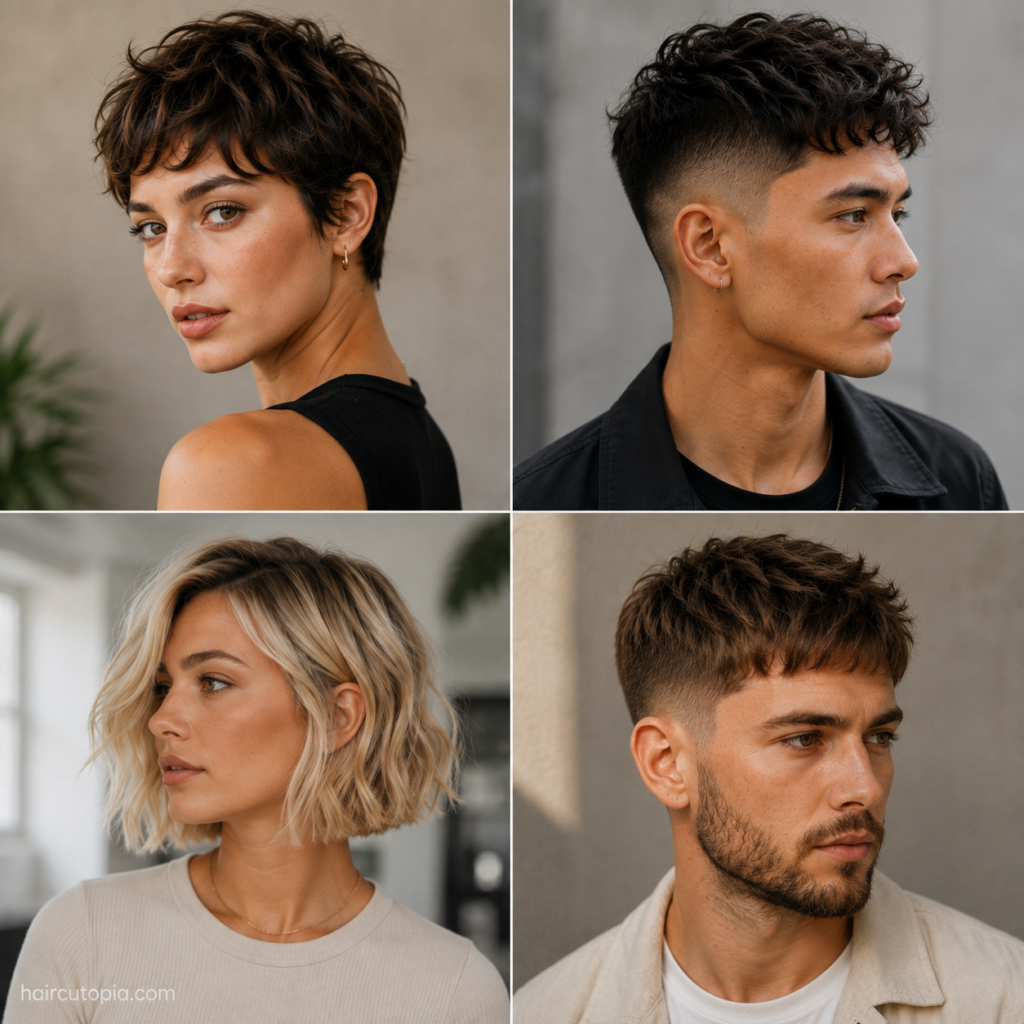
Sometimes the best low maintenance haircut doesn’t need a specific trend attached to it.
A wash-and-wear cut is simply shaped around what your hair naturally does.
Your stylist considers:
- Natural texture
- Growth patterns
- Density
- Cowlicks
- Curl or wave direction
- How the hair behaves when air-dried
The goal is straightforward: wash it, add minimal product if needed, let it dry, and still feel like you have an actual hairstyle.
For genuine everyday convenience, that’s hard to beat.
Best Low Maintenance Short Haircuts by Hair Type
The easiest haircut for someone else isn’t necessarily the easiest one for you.
Natural texture should be one of the biggest factors in your decision.
Straight Hair
Straight hair often works particularly well with simple shapes.
Consider:
- Blunt bob
- Chin-length bob
- Classic bob
- Long pixie
- Bixie
- Textured pixie
If your hair naturally dries smooth, take advantage of it rather than choosing a style that requires creating artificial texture every morning.
Wavy Hair
Waves pair beautifully with less structured short cuts.
Good options include:
- Textured bob
- Wavy bob
- Short shag
- Soft shag
- Bixie
- Short wolf cut
A little texture product can enhance the pattern without completely restyling the hair.
Curly Hair
With curly hair, shape is often more important than precise styling.
Consider:
- Curly bob
- Curly pixie
- Short shag
- Rounded curly cut
- Short natural curls
Make sure your stylist accounts for shrinkage and understands how your curls behave when dry.
Coily Hair
Coily textures can look incredible in short shapes that highlight natural volume.
Options include:
- Tapered natural cut
- Short rounded cut
- Short natural curls
- Cropped natural styles
- Buzz cut
A simple moisturizing routine can often replace extensive daily styling.
Fine Hair
Fine hair can benefit from cuts that maintain density through the ends.
Try:
- Blunt bob
- Classic bob
- Chin-length bob
- Long pixie
- Bixie
Too many layers can sometimes remove more density than you want, so strategic placement matters.
Thick Hair
Thick hair often benefits from controlled weight removal.
Consider:
- Textured bob
- Layered bob
- Short shag
- Undercut pixie
- Bixie
- Long pixie
Internal layering can make a major difference without making the haircut look excessively layered.
Which Short Haircuts Grow Out the Best?
This is worth considering before making the cut.
Very short hair can be incredibly easy day to day while requiring more frequent salon visits.
If you want a short style that can grow for a while without becoming awkward, consider:
- Long pixie
- Bixie
- Textured bob
- Soft shag
- Chin-length bob
- Short layered bob
- Longer French bob
Soft edges and blended layers generally change more gracefully than extremely precise lines.
A long pixie can gradually become a bixie, which can then transition into a short bob. Planning that progression with your stylist can make growing short hair considerably easier.
Are Short Haircuts Actually Lower Maintenance?
Sometimes.
Short hair is generally faster to wash and dry. There’s also less hair to detangle, condition, curl, straighten, or otherwise manage.
But there’s a catch.
Short hairstyles often depend heavily on shape.
When a pixie grows an inch, the difference can be obvious. When shoulder-length hair grows an inch, most people won’t notice.
So think of maintenance in two categories.
Daily Maintenance
Short hair often wins.
You have less hair to wash, dry, and style.
Salon Maintenance
Medium and longer hair often wins.
The shape usually changes more gradually, allowing more time between appointments.
If you’re choosing short hair specifically because you want less maintenance, decide which type matters most to you.
How Often Should Short Hair Be Trimmed?
There’s no universal schedule, but the shorter and more precise the haircut, the sooner growth becomes noticeable.
A general guideline is:
- Buzz cut: about every 2–4 weeks
- Very short pixie: about every 4–6 weeks
- Long pixie: about every 5–8 weeks
- Bixie: about every 6–10 weeks
- Short bob: about every 6–10 weeks
- Textured bob or shag: about every 8–12 weeks
You don’t have to follow those timelines exactly.
Hair growth rate, texture, haircut shape, and how polished you like your hair to look all affect how often you’ll want a trim.
How to Make Short Hair Easier to Style
The right haircut should already eliminate much of the work.
A few additional choices can simplify things even further.
Work With Your Natural Part
If your hair naturally separates in one direction, forcing it into a completely different part every morning creates extra work.
Tell your stylist where your hair naturally wants to sit.
Pay Attention to Cowlicks
Cowlicks become particularly noticeable with short hair.
Rather than fighting them, an experienced stylist can incorporate them into the haircut.
Sometimes leaving a section slightly longer or cutting it shorter can completely change how manageable it feels.
Use Less Product
Short hair usually requires much less styling product than you think.
Start with a small amount and add more only when necessary.
Depending on the haircut, useful options include:
- Styling cream for soft control
- Matte paste for separation
- Mousse for lightweight volume
- Texture spray for movement
- Curl cream for definition
- Leave-in conditioner for moisture
Using too much can make short hair feel heavy or greasy surprisingly quickly.
Learn the Water Reset
One of the easiest tricks for short hair doesn’t involve styling product at all.
Water.
If your pixie or bob looks strange after sleeping, lightly dampening the problem area can reset the hair’s shape. Then use your fingers or a brush to guide it back into place.
You don’t necessarily need to wash your entire head.
What to Ask Your Stylist
A reference photo is useful, but your stylist also needs to understand your routine.
Be specific.
You might say:
“I want short hair, but I usually air-dry and don’t want to use hot tools every morning. I’d like something that works with my natural texture and still looks good as it grows.”
Also discuss:
- How often you’re willing to get trims
- Whether you use a blow dryer
- Your natural texture
- How much styling product you normally use
- Any cowlicks that bother you
- Whether you want bangs
- Whether you prefer polished or tousled hair
- How much time you’re willing to spend styling
That information can completely change how your stylist interprets “low maintenance.”
What Is the Lowest Maintenance Short Haircut?
If daily styling is the only consideration, the buzz cut is probably the simplest.
There’s virtually nothing to style.
For something less dramatic, a well-shaped pixie can also be extremely quick.
If you want more versatility and fewer salon appointments, however, a textured bob or bixie may offer a better balance.
For naturally curly hair, a short curly cut designed around your curl pattern can be easier than trying to maintain a straightened style.
There isn’t one universal winner.
The lowest maintenance haircut is the one that requires the least amount of effort to make your natural hair look intentional.
Should You Get Bangs With Short Hair?
You certainly can, but choose carefully if easy maintenance is your priority.
Short, blunt bangs usually require more attention. They’re affected by sleep, humidity, oil, and growth relatively quickly.
More forgiving options include:
- Curtain bangs
- Long wispy bangs
- Side-swept bangs
- Longer textured fringe
These can blend into the haircut as they grow rather than immediately looking overdue for a trim.
Choosing the Best Low Maintenance Haircut for Short Hair
Start with your natural hair.
If it’s straight, a clean bob or long pixie may practically style itself. If it’s wavy, textured bobs and shags can turn that movement into an advantage. If it’s curly or coily, choose a shape designed specifically around the natural pattern.
Then consider your tolerance for salon visits.
A very short pixie might save you time every morning but require regular reshaping. A textured bob may take slightly longer to dry but give you more flexibility between appointments.
Finally, be realistic about styling.
Don’t choose a haircut that requires a 20-minute blowout if you know you’re going to air-dry it most mornings.
The best low maintenance haircuts for short hair make your normal routine easier rather than asking you to create an entirely new one.
When the cut, texture, and lifestyle all work together, short hair can be exactly what it’s supposed to be: simple, stylish, and easy to live with.
Related Posts
 Low Maintenance Short Bob Haircuts: 25 Easy Styles That Always Look Great
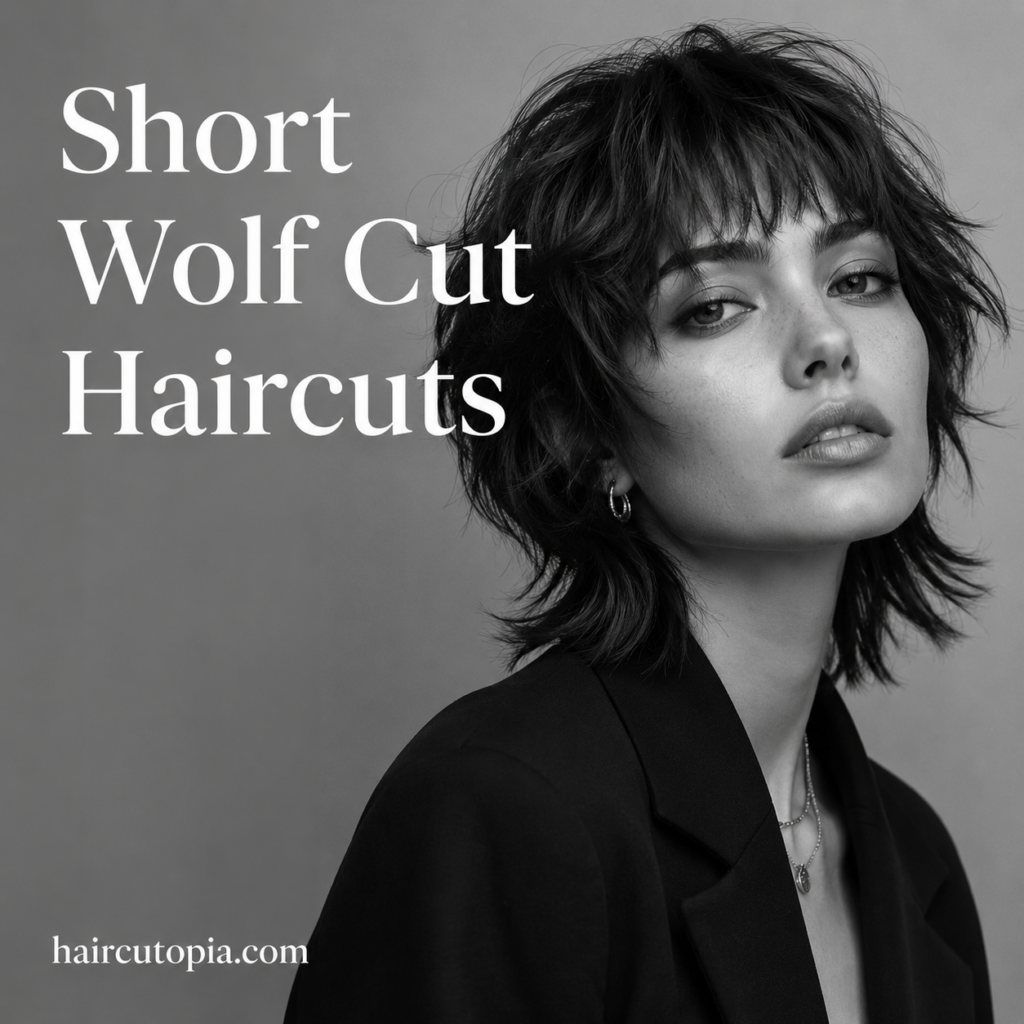 Short Wolf Cut Haircuts: 35 Chic Ideas for a Bold, Low-Maintenance Look
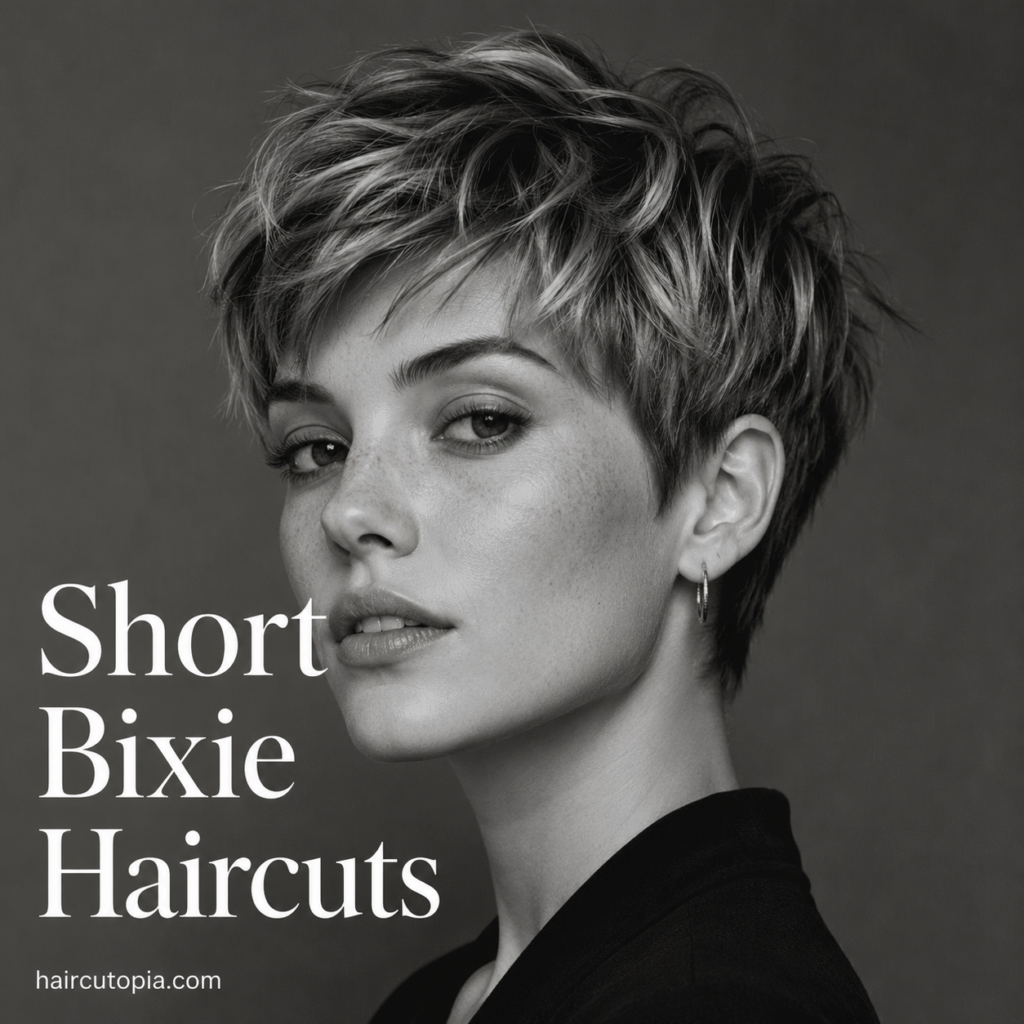 Short Bixie Haircuts: 27 Chic Ideas That Are Modern, Low-Maintenance, and Full of Style
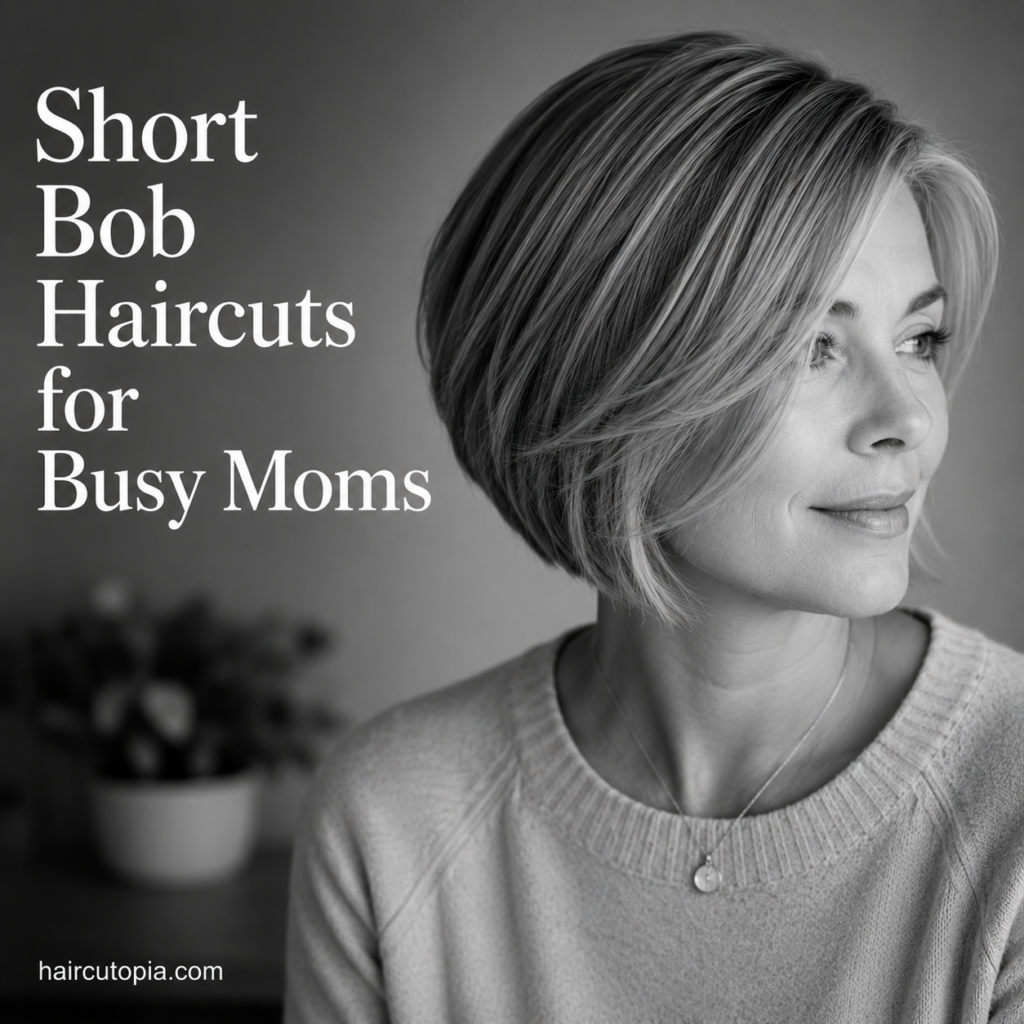 Short Bob Haircuts for Busy Moms: Stylish, Low-Maintenance Looks That Save Time