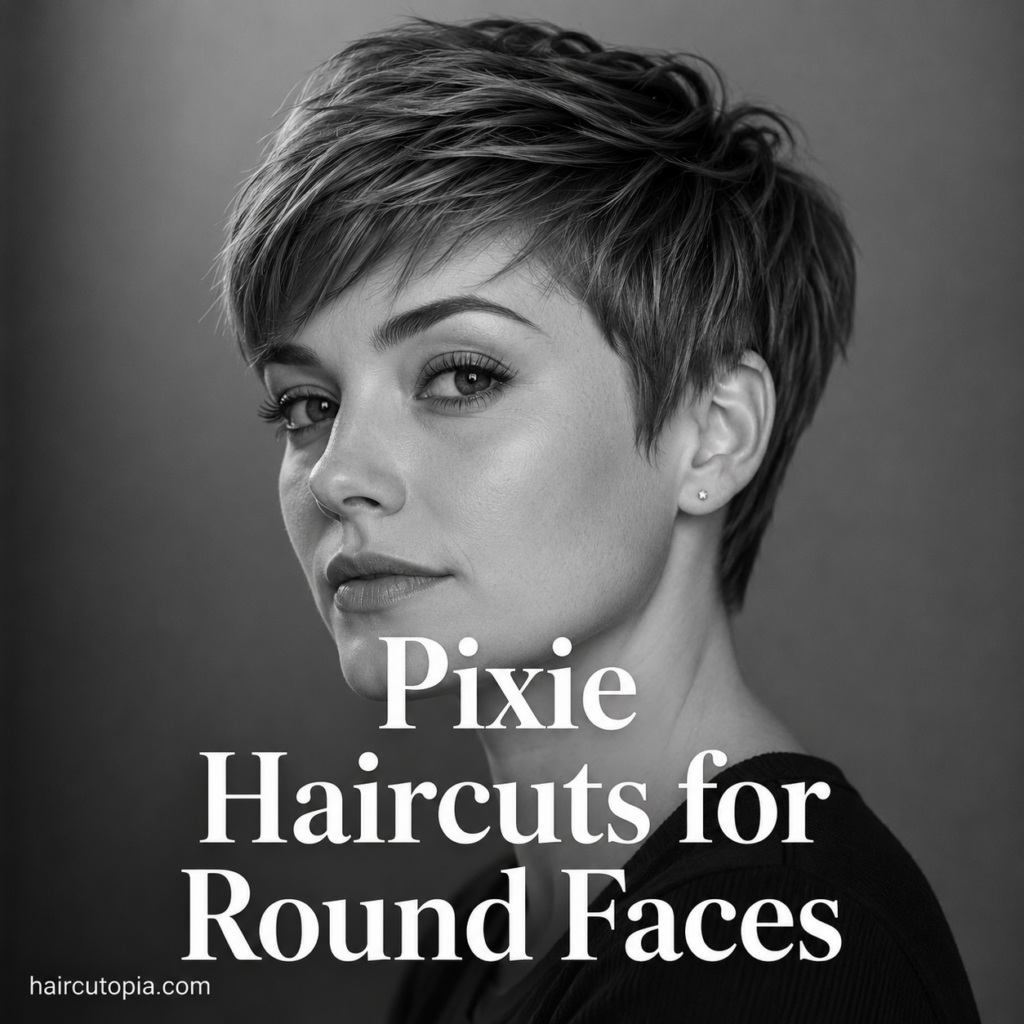
A pixie haircut can be one of the most flattering hairstyles for a round face when it’s tailored to enhance your natural features. The right pixie adds height, creates the illusion of length, and frames your face in all the right places without feeling overly structured.
If you’ve been wondering whether a pixie cut will suit your face shape, the answer is yes. The secret isn’t simply choosing a pixie—it’s choosing the right version of one.
This guide covers everything you need to know about pixie haircuts for round faces, including the most flattering styles, styling tips, what to avoid, and how to choose a cut that complements your hair texture and lifestyle.
Why Pixie Haircuts Work for Round Faces
Round faces typically feature:
- Soft, curved jawlines
- Full cheeks
- Similar width and length measurements
- Rounded chin
A well-designed pixie haircut balances these proportions by adding vertical movement and creating subtle angles.
The best pixie styles often include:
- Extra volume at the crown
- Longer layers on top
- Side-swept bangs
- Textured finishes
- Slight asymmetry
These details naturally elongate the face while drawing attention to the eyes and cheekbones.
What Makes a Pixie Flattering on a Round Face?
When choosing a pixie haircut, look for styles that create visual height rather than width.
Great features include:
- Lift through the crown
- Long side fringe
- Tapered sides
- Piecey texture
- Soft layering
- Deep side parts
- Longer front sections
These elements help create a slimmer, more balanced appearance without hiding your face.
Best Pixie Haircuts for Round Faces
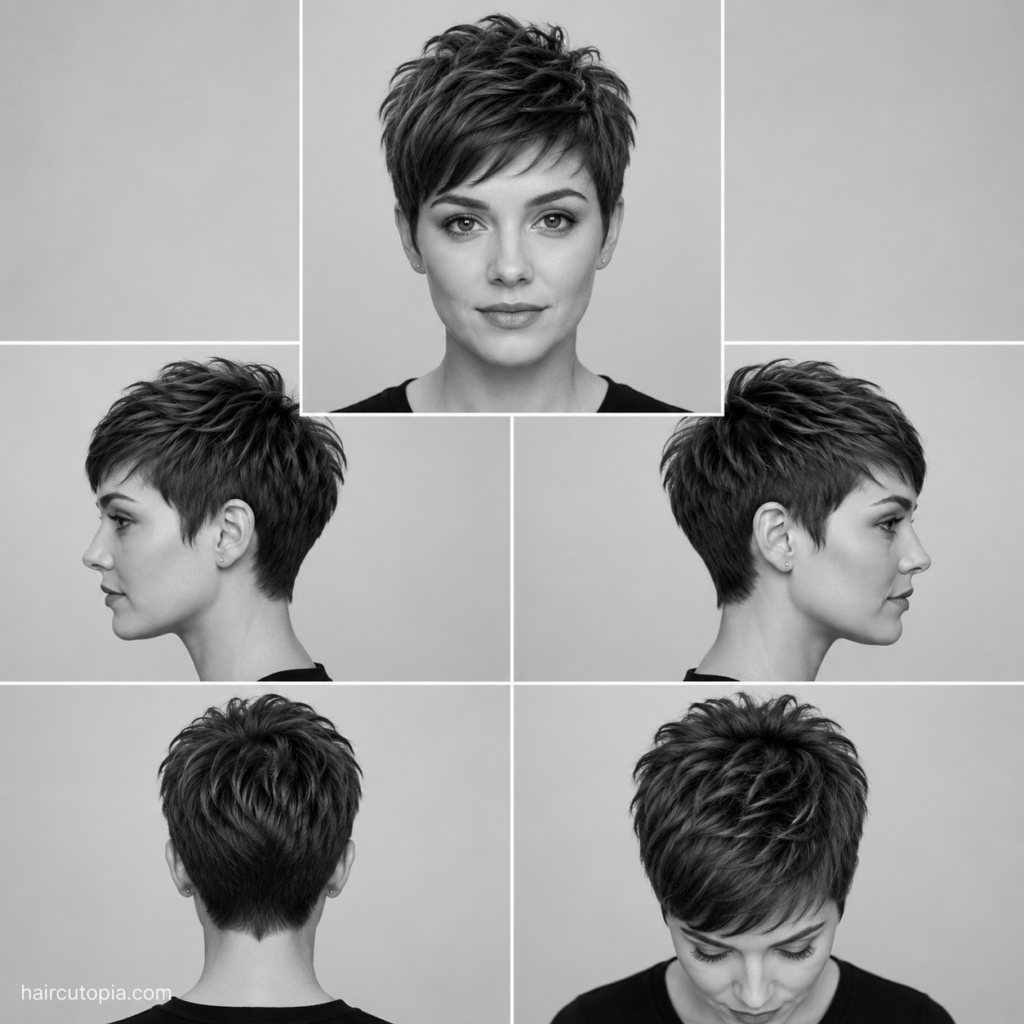
1. Long Pixie with Side-Swept Bangs
One of the most universally flattering options.
Long bangs break up the roundness of the face while adding softness and movement.
Best for:
- Fine hair
- Thick hair
- Straight hair
- First-time pixie wearers
2. Textured Pixie Cut
Choppy layers add dimension and keep the haircut from looking too rounded.
Texture also creates a modern, effortless appearance that’s easy to style.
Works especially well for:
- Medium-density hair
- Thick hair
- Naturally wavy hair
3. Pixie with Volume on Top
Adding height at the crown visually lengthens the face.
This style creates one of the strongest balancing effects for round face shapes.
Use:
- Volumizing mousse
- Texture powder
- Blow dryer with a round brush
4. Asymmetrical Pixie
An asymmetrical pixie instantly introduces diagonal lines that soften facial fullness.
One side remains noticeably longer, creating movement instead of symmetry.
This is ideal if you like modern, fashion-forward hairstyles.
5. Layered Pixie with Feathered Ends
Feathered layers prevent the haircut from appearing bulky around the cheeks.
Instead, they create softness while maintaining shape.
Great for:
- Thick hair
- Medium hair
- Aging hair needing extra movement
6. Pixie Bob
Not ready for an ultra-short cut?
A pixie bob combines the best features of both hairstyles.
Benefits include:
- Longer front pieces
- Easy styling
- More versatility
- Soft face framing
It’s one of the safest transitions into shorter hair.
7. Undercut Pixie
An undercut removes bulk from the sides while emphasizing height on top.
This creates a leaner overall silhouette.
Perfect for:
- Thick hair
- Dense hair
- Anyone wanting lower maintenance around the neckline
8. Curly Pixie
Natural curls can look incredible on a round face when shaped properly.
The key is keeping volume upward instead of outward.
Ask your stylist for:
- Rounded layering through the crown
- Tapered sides
- Defined curl shaping
9. Wavy Pixie
Soft waves naturally add texture without overwhelming facial features.
This style looks relaxed, feminine, and modern.
Sea salt spray or curl cream can enhance natural movement.
10. Pixie with Curtain Bangs
Curtain bangs create vertical framing that subtly narrows the face.
Combined with a longer pixie, this creates a softer appearance than blunt bangs.
11. Choppy Pixie
Random, uneven layers add personality while preventing the haircut from feeling too neat or rounded.
The result is youthful and easy to style.
12. Tapered Pixie
Shorter sides with gradual blending toward the neckline create structure.
The shape naturally elongates the face.
This cut works well for professional environments and everyday wear.
13. Side-Part Pixie
A deep side part instantly creates asymmetry.
It also adds lift without requiring much styling effort.
This simple adjustment can dramatically change how a pixie frames the face.
14. Platinum Pixie
A bold color can emphasize the haircut’s texture and layers.
Lighter shades often make the haircut feel more dimensional, especially with textured styling.
15. Messy Pixie
An intentionally tousled finish creates volume exactly where it’s most flattering.
This effortless style suits almost every age and hair texture.
Pixie Haircuts by Hair Type
Fine Hair
Look for:
- Layered pixies
- Crown volume
- Side-swept bangs
- Texture sprays
Avoid overly flat styles.
Thick Hair
Choose:
- Undercuts
- Internal layers
- Tapered backs
- Feathered ends
These reduce bulk while maintaining movement.
Curly Hair
Focus on:
- Shape
- Curl definition
- Tapered sides
- Layered crown
A curl specialist can help maximize your natural texture.
Wavy Hair
Natural waves pair beautifully with:
- Long pixies
- Textured pixies
- Shaggy pixies
- Piecey styling
Styling Tips for Round Faces
Small styling changes make a huge difference.
Try to:
- Blow-dry upward for extra height.
- Sweep bangs diagonally across the forehead.
- Add texture instead of sleekness.
- Use lightweight styling products.
- Leave some length around the front.
These techniques create balance without adding unnecessary width.
What to Avoid
Not every pixie is equally flattering.
Consider avoiding:
- Very heavy blunt bangs
- Rounded mushroom shapes
- Excessive width around the cheeks
- Flat crowns
- Even, symmetrical bowl-like cuts
These styles can emphasize facial roundness instead of balancing it.
Best Hair Colors for Pixie Haircuts
Color can enhance the haircut just as much as the cut itself.
Popular choices include:
- Soft blonde balayage
- Rich brunette
- Copper
- Chocolate brown
- Platinum blonde
- Silver
- Warm caramel highlights
- Dimensional brunette highlights
Adding subtle highlights also helps showcase texture and layering.
How Often Should You Trim a Pixie?
Pixie haircuts need regular maintenance to keep their shape.
Typical schedule:
- Every 4–6 weeks for very short pixies
- Every 6–8 weeks for longer pixies
- Every 8 weeks for pixie bobs
Regular trims keep the style looking polished and intentional.
Daily Maintenance
Most pixie cuts require surprisingly little time each morning.
Many styles can be refreshed in:
- 5–10 minutes
- A small amount of styling cream
- Texture spray
- Light hairspray if needed
Because there’s less hair to manage, styling often becomes faster than longer hairstyles.
Frequently Asked Questions
Is a pixie haircut good for round faces?
Yes. The right pixie haircut can make a round face appear longer and more balanced by adding height, texture, and strategic framing.
Should round faces have bangs with a pixie?
Side-swept or curtain bangs are usually the most flattering because they create diagonal lines that soften facial fullness.
Can women over 50 wear a pixie with a round face?
Absolutely. Layered pixies, tapered pixies, and textured styles are especially popular because they add movement while remaining easy to maintain.
Will a pixie make my face look wider?
Only certain styles can have that effect. Choosing volume at the crown instead of the sides helps elongate the face rather than emphasizing its width.
What is the easiest pixie to style?
A textured pixie with longer layers is one of the easiest options. A little styling cream or texture spray is often all that’s needed for a polished look.
Final Thoughts
A pixie haircut can be an incredibly flattering choice for a round face when it’s customized to your features, hair texture, and personal style. Whether you prefer a sleek tapered cut, a playful textured pixie, or a longer pixie bob, the right shape can create balance while highlighting your best features.
The most successful pixie isn’t about following trends—it’s about choosing a cut that adds height, movement, and confidence. Work with an experienced stylist who understands face shapes, and don’t be afraid to personalize the cut with layers, bangs, or color that make it uniquely yours.
Related Posts
 Short Haircuts for Thick Hair: 25 Stylish Ideas & Expert Tips
 Haircuts for Oval Faces and Curly Hair: 35 Gorgeous Styles That Let Your Curls Shine
 Curtain Bangs Haircuts for Thin Hair: 25 Flattering Styles That Add Volume and Movement
 Face-Framing Layers Haircuts for Straight Hair: 25 Sleek Styles That Add Movement and Dimension