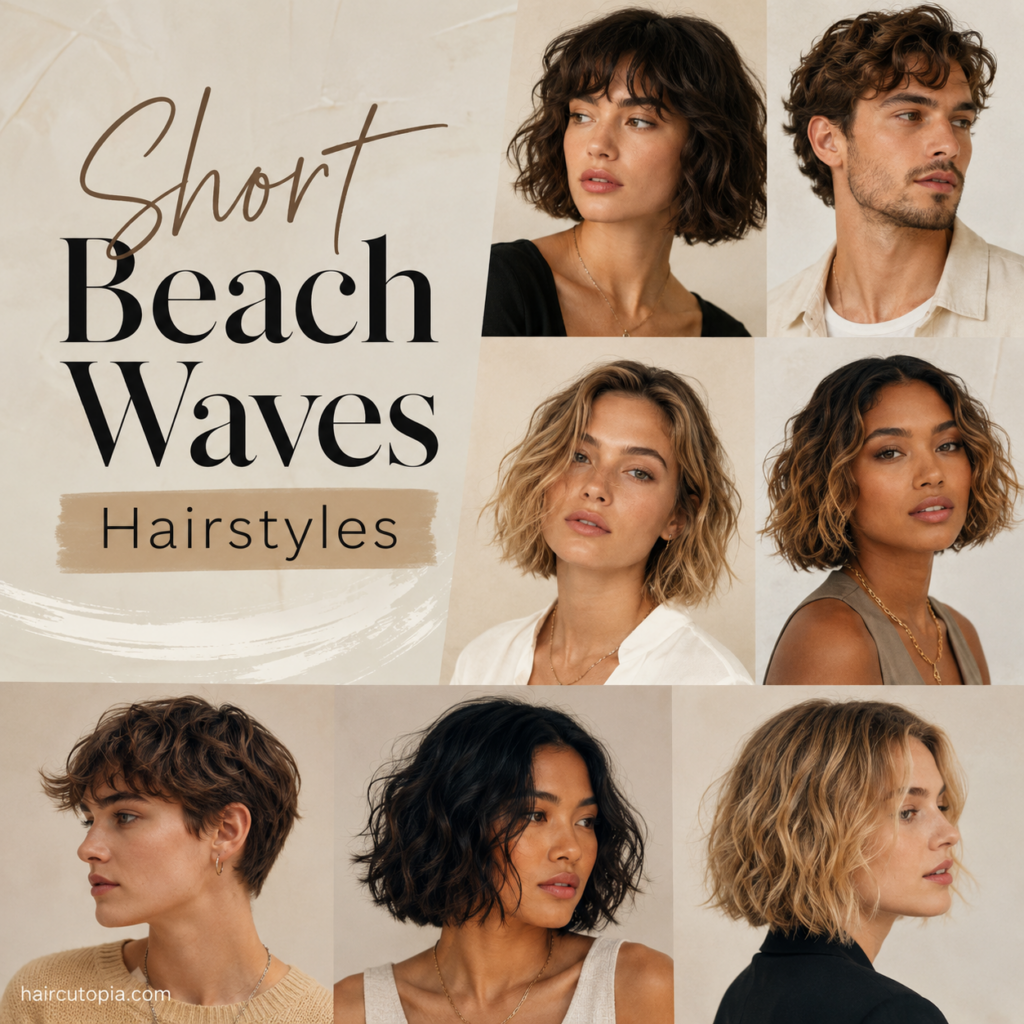
Beach waves have a way of making short hair look effortlessly put together. They add movement, texture, and just enough volume without making your hairstyle feel overly styled. And despite the name, you definitely don’t need a day at the beach to wear them.
Short beach waves can work on everything from cropped bobs to shoulder-skimming cuts. They can be loose and barely there, tousled and messy, or polished enough for a night out. The trick is finding the type of wave that complements your haircut, hair texture, and the amount of styling you’re willing to do.
If you’re looking for a relaxed hairstyle that works across seasons, here are some of the best short beach waves hairstyles to try.
Why Beach Waves Work So Well on Short Hair
Beach waves are especially flattering on shorter cuts because they create dimension without requiring much length. Even a small bend through the middle of the hair can completely change the shape of a bob or lob.
They can also help:
- Give fine hair the appearance of more volume
- Add movement to blunt haircuts
- Bring out layers and textured ends
- Soften angular or structured cuts
- Make second-day hair easier to style
- Create a casual look that can still be dressed up
Unlike perfectly formed curls, beach waves don’t need to match. In fact, a little inconsistency usually makes them look better.
1. Tousled Beach Waves on a Short Bob
A short bob with tousled waves is one of the easiest ways to give a classic haircut a more relaxed personality.
Instead of curling every section into a defined spiral, create loose bends throughout the hair. Leave the ends slightly straighter to keep the finished look modern rather than overly curled.
This style works particularly well with chin-length and slightly longer bobs.
Best for
- Straight to naturally wavy hair
- Blunt or lightly layered bobs
- Fine to medium hair
- Casual everyday styling
Use your fingers rather than a brush when finishing the hairstyle. Separating the waves by hand helps preserve the slightly undone texture.
2. Soft Beach Waves With a Side Part
Changing your part can make short waves look surprisingly different.
A deeper side part creates natural lift around the crown and gives the waves more movement on one side. It’s a simple option if your usual center-parted hairstyle feels a little flat.
The style can also create a slightly more polished appearance without losing the relaxed feel of beach waves.
Tuck the lighter side behind one ear for an easy finishing touch.
3. Messy Beach Waves With Textured Ends
Not every beach wave needs to be soft and polished.
Messier waves paired with piecey ends create a more casual, lived-in finish. Rather than curling the hair uniformly, alternate the direction of your waves and allow a few sections to remain relatively straight.
A small amount of texture spray can help emphasize separation.
The goal isn’t to make your hair look messy in the literal sense. You want controlled imperfection: movement, separation, and slightly uneven waves that don’t look carefully arranged.
4. Beach Waves on a Blunt Bob
A blunt bob can sometimes appear very structured because so much of the hair ends at the same length. Adding waves breaks up that strong horizontal line.
Keep most of the movement through the middle of the hair while leaving the bottom inch or so less curled.
This gives you the contrast of a clean haircut with softer texture.
Blunt bobs with beach waves can work especially well when you want a hairstyle that transitions easily from daytime to evening.
5. Short Beach Waves With Curtain Bangs
Curtain bangs and beach waves naturally complement each other.
The bangs frame the face while the waves continue that movement throughout the rest of the hairstyle. Rather than tightly curling the bangs, style them away from the face with a gentle bend.
This combination works nicely with:
- Short layered cuts
- Bobs
- Long bobs
- Shag-inspired hairstyles
Keeping the bangs softer than the rest of the hair usually creates the most natural-looking result.
6. Center-Parted Short Beach Waves
A center part gives beach waves a clean, balanced shape.
This version looks especially good when the waves begin around cheekbone or jaw level rather than directly at the roots. The smoother top contrasts with the textured lengths underneath.
For a modern finish, alternate the direction of your waves while keeping the pieces closest to your face turned slightly outward.
That small detail can help open up the face.
7. Beach Waves With Face-Framing Layers
If your short haircut includes layers around your face, waves can make them much more noticeable.
Style the shortest face-framing pieces slightly away from your cheeks while keeping the rest of the waves loose and irregular.
The result creates movement around the face without needing dramatically layered hair.
This is also a useful styling approach if you’re growing out shorter front pieces or bangs.
8. Loose Waves on a Short Lob
The lob sits somewhere between short and medium-length hair, making it one of the easiest cuts for beach waves.
Because there’s a little more length to work with, you can create broader, softer waves instead of small bends.
Try keeping the roots relatively smooth and concentrating the waves through the middle and lower sections.
For an especially relaxed finish, gently loosen the waves with your fingers once the hair has completely cooled.
9. Short Beach Waves With Wispy Bangs
Wispy bangs add softness without covering as much of the forehead as heavier fringe.
Combined with loose waves, they create an airy hairstyle that doesn’t feel too structured. Keep the bangs relatively straight or give them only a slight bend so they don’t compete with the texture throughout the rest of the hair.
This look can be particularly flattering on softly layered bobs.
10. Voluminous Beach Waves
Beach waves don’t always have to lie close to the head.
If you prefer more volume, concentrate on creating lift at the roots before styling the lengths. A lightweight volumizing mousse or root-lifting product can help.
Once the hair is dry, create loose waves and gently separate them.
Avoid adding too much heavy styling product afterward. Excess product can pull short hair downward and take away the volume you just created.
11. Barely-There Waves
Sometimes one or two bends are enough.
Barely-there beach waves are ideal if you prefer minimalist hairstyles or don’t want your short hair to look obviously curled.
Instead of wrapping an entire section around a curling iron, create a gentle bend through the middle and leave the ends straight.
The finished hairstyle should look almost like your hair naturally dried that way.
12. Beach Waves With Flipped-Out Ends
For something slightly more playful, combine loose waves with subtly flipped ends.
Create soft bends through the hair, then direct selected ends outward. You don’t need to flip every piece. A few strategically placed sections can give the hairstyle plenty of movement.
This works particularly well with layered bobs and shorter shoulder-length cuts.
13. Short Beach Waves With Highlights
Waves can make dimensional hair color much more noticeable.
Highlights, balayage, and other multi-tonal color techniques catch the light differently as the hair bends. This can make the texture appear more defined even when the waves themselves are subtle.
You don’t need dramatic color contrast, either. Soft tonal variation can be enough to emphasize movement.
14. Naturally Wavy Short Hair
If your hair already has some natural wave, you may not need a curling iron at all.
Instead, work with the texture you have.
Apply a lightweight wave-enhancing product to damp hair, gently scrunch upward, and allow it to air-dry or use a diffuser on a low setting.
Once dry, separate any sections that have clumped together too much.
Natural waves won’t necessarily look identical from one side to the other, and that’s perfectly suited to the beach-wave aesthetic.
15. Polished Short Beach Waves
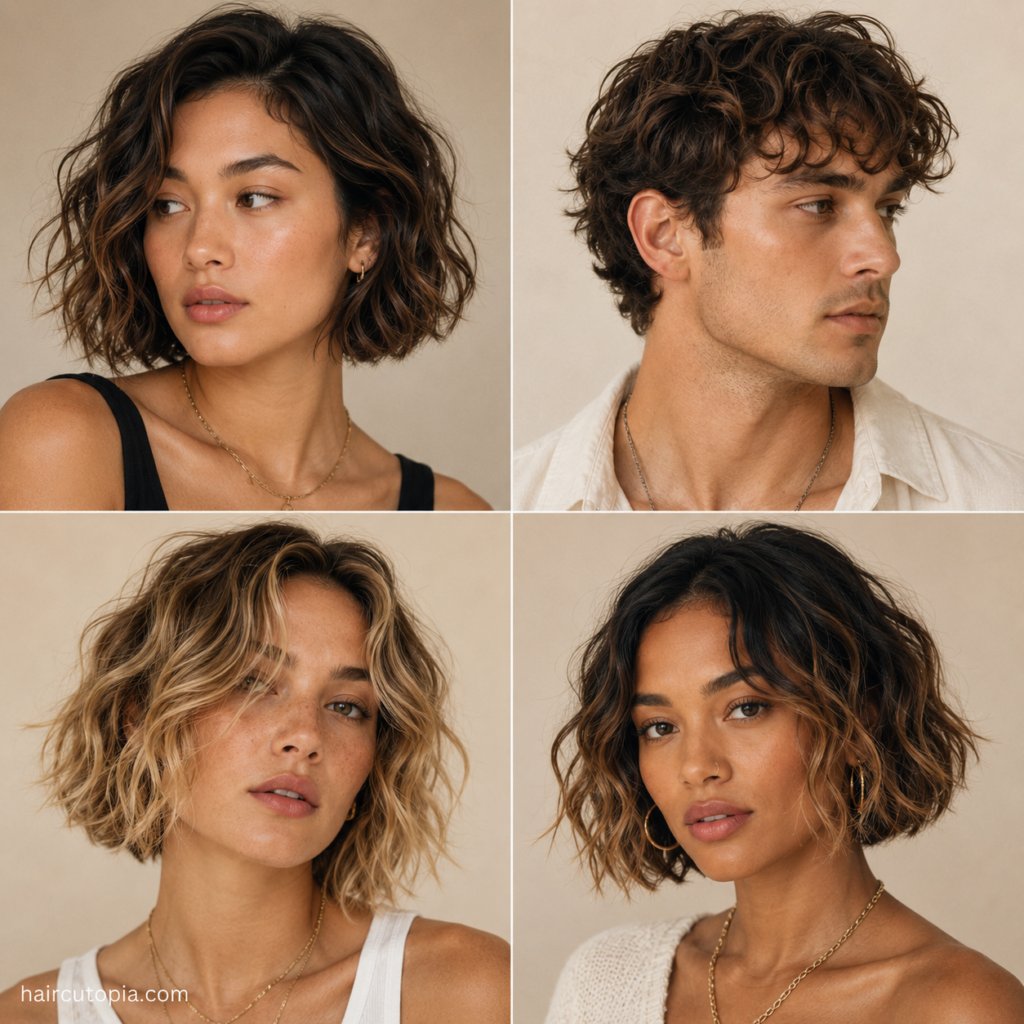
Beach waves can also look refined.
For a cleaner version, use slightly larger sections and create smooth, consistent bends. Keep flyaways under control and finish with a lightweight product that adds definition without making the hair stiff.
This variation works well for:
- Dinner dates
- Weddings
- Parties
- Work events
- Photos
- Special occasions
You still want movement, but with a little less intentional messiness.
How to Create Beach Waves on Short Hair
Short hair requires slightly different styling than long hair. There’s less length to wrap around a tool, so small adjustments can make a big difference.
Using a Curling Iron or Wand
A curling tool is one of the simplest ways to create controlled waves.
- Start with completely dry hair and apply heat protectant.
- Divide your hair into manageable sections.
- Take a small section and wrap or curl the middle portion.
- Leave the ends slightly straighter.
- Alternate the direction of some sections.
- Curl front pieces away from your face.
- Allow everything to cool.
- Loosen the waves gently with your fingers.
- Finish with a small amount of texture spray if needed.
Avoid immediately brushing freshly curled hair. Giving the waves time to cool helps them maintain their shape.
Using a Flat Iron
A flat iron can create bends rather than traditional curls, which is perfect for a beachy texture.
Clamp a small section of hair, rotate the iron slightly, and glide it downward. You can alternate the direction of the bends for a less uniform result.
This technique may take a little practice, especially on very short hair.
Creating Heatless Beach Waves
If you want to minimize heat styling, try working with damp—not soaking wet—hair.
Depending on your length, you can loosely twist or braid sections before allowing them to dry. Shorter hair may not stay in traditional braids easily, so small twists can sometimes work better.
Once dry, undo the sections and separate the texture gently with your fingers.
Heatless methods tend to produce less predictable waves, but that can actually work in your favor when you’re aiming for a relaxed beach look.
How to Make Short Beach Waves Look Natural
The difference between beach waves and traditional curls usually comes down to how perfect they look.
For a more natural finish:
- Alternate your curl direction
- Don’t curl every section exactly the same way
- Leave some ends straighter
- Avoid curling all the way to the root
- Use different-sized sections
- Break apart waves with your fingers
- Keep styling products lightweight
- Allow a few imperfect pieces to remain
If every curl is identical, the hairstyle can start looking more formal than beachy.
Choosing the Right Styling Products
Short hair can become weighed down quickly, so more product isn’t necessarily better.
Texture Spray
Texture spray can add separation and give waves a slightly lived-in appearance. Apply it lightly, especially if your hair is fine.
Sea Salt Spray
Sea salt sprays can help create a beach-inspired texture, particularly on naturally wavy hair. However, some formulas can leave hair feeling dry, so they may not be ideal for everyone or for daily use.
Lightweight Mousse
Mousse can provide volume and hold without the heaviness of some creams or waxes.
Flexible-Hold Hairspray
If your waves tend to disappear quickly, a flexible hairspray can help them last while preserving movement.
Heat Protectant
If you’re using a curling iron, wand, or flat iron, heat protectant should be part of your styling routine.
Beach Waves for Fine Short Hair
Fine hair often benefits from beach waves because the added texture can make the hairstyle appear fuller.
Try using smaller sections rather than creating a few large waves. This produces more movement throughout the haircut.
Keep heavier oils and creams away from the roots, where they can flatten the hair.
A little root volume paired with irregular waves can make a short bob look noticeably fuller.
Beach Waves for Thick Short Hair
With thick hair, the challenge is often creating definition without adding too much width.
Working in sections helps ensure the waves aren’t concentrated only on the top layer.
If your haircut is heavily layered, you may find that you need very little styling. A few bends through the outer sections can be enough to emphasize the shape that’s already there.
How to Make Beach Waves Last Longer
Short waves can loosen during the day, particularly on naturally straight hair.
To improve their staying power:
- Avoid using too much conditioner near the roots before styling.
- Start with completely dry hair when using hot tools.
- Use lightweight styling products.
- Let each wave cool before touching it.
- Avoid repeatedly running your hands through your hair.
- Finish with flexible hold rather than heavy hairspray.
You can also refresh individual sections the following day instead of completely restyling your hair.
Common Beach Wave Mistakes to Avoid
Beach waves are forgiving, but a few styling habits can make them harder to achieve.
Curling Every Piece the Same Way
Uniform curls can create a polished, traditional curled hairstyle rather than relaxed waves.
Curling the Ends Too Much
Leaving the ends slightly straighter is one of the easiest ways to create a modern beach-wave shape.
Using Too Much Product
Short hair doesn’t have much length to distribute heavy styling products. Start with less than you think you need and add more only if necessary.
Brushing Too Soon
Immediately brushing through hot curls can cause them to fall before they’ve had a chance to set.
Trying to Make Every Wave Perfect
Beach waves are supposed to have variation. A slightly uneven section can actually make the finished hairstyle look more natural.
Are Beach Waves Good for Very Short Hair?
They can be, although the technique changes as the hair gets shorter.
If you don’t have enough length to create a full wave, focus on adding small bends and texture instead. Even subtle movement can soften a short bob or grown-out pixie.
You can also concentrate texture on the longer top sections while leaving shorter pieces relatively untouched.
Short Beach Waves for Different Occasions
One of the biggest advantages of beach waves is how easily they can change depending on the styling around them.
For an everyday look, keep them loose and tousled with minimal product.
For work, use softer waves with a clean center or side part.
For an evening out, add more definition and volume.
For special occasions, create smoother waves and pair them with accessories, tucked-back sections, or a polished side part.
The basic hairstyle stays similar while the finishing details change the overall mood.
Final Thoughts on Short Beach Waves Hairstyles
Short beach waves don’t need to look like perfectly formed curls. Their appeal comes from movement, texture, and a little imperfection.
A blunt bob can become softer with a few loose bends. A layered cut can gain more definition. Fine hair can appear fuller, while naturally wavy hair may only need a little encouragement to create the look.
Experiment with how much wave you actually need. Sometimes the most convincing beachy hairstyle comes from styling less—not more.
Whether you prefer tousled waves, subtle bends, face-framing texture, or a more polished finish, beach waves are an easy way to give short hair a fresh look without completely changing your haircut.