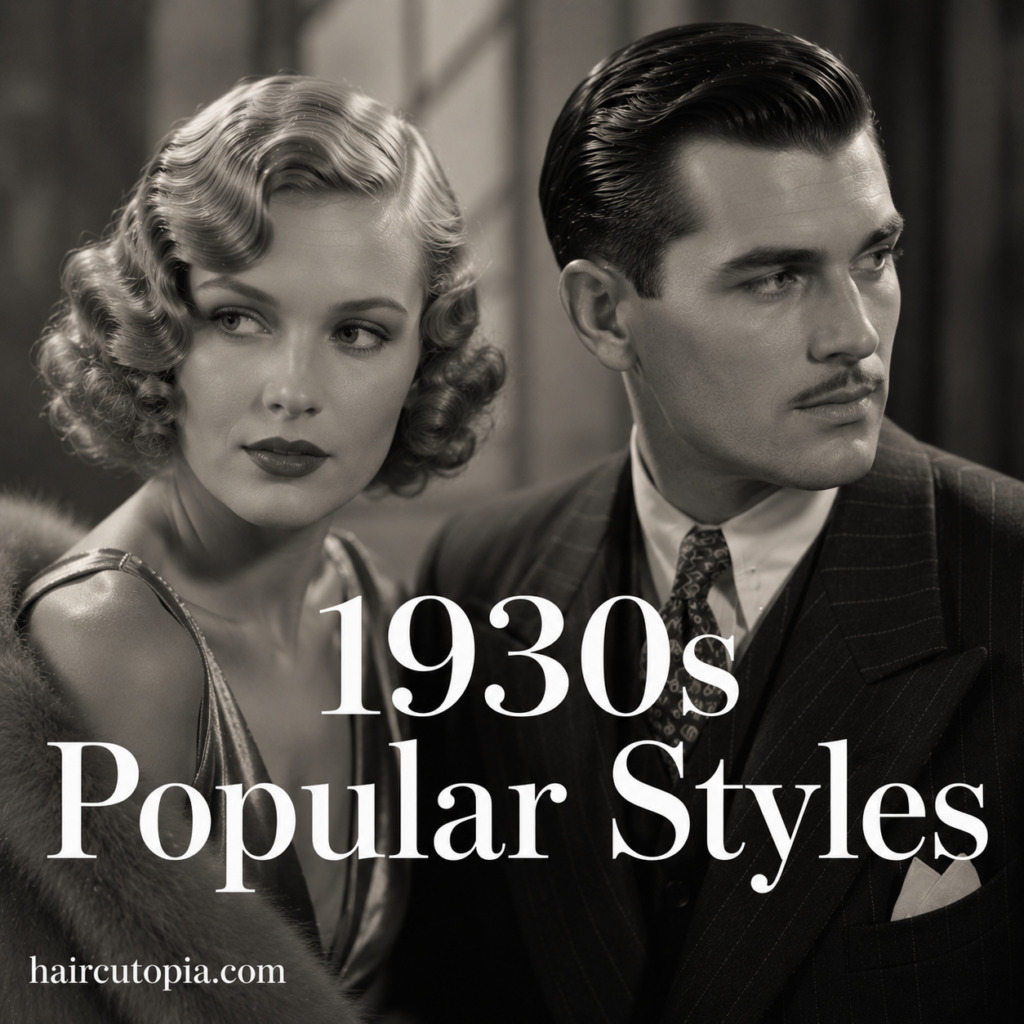
The 1930s had a distinctive approach to hair: polished, deliberate, and increasingly glamorous.
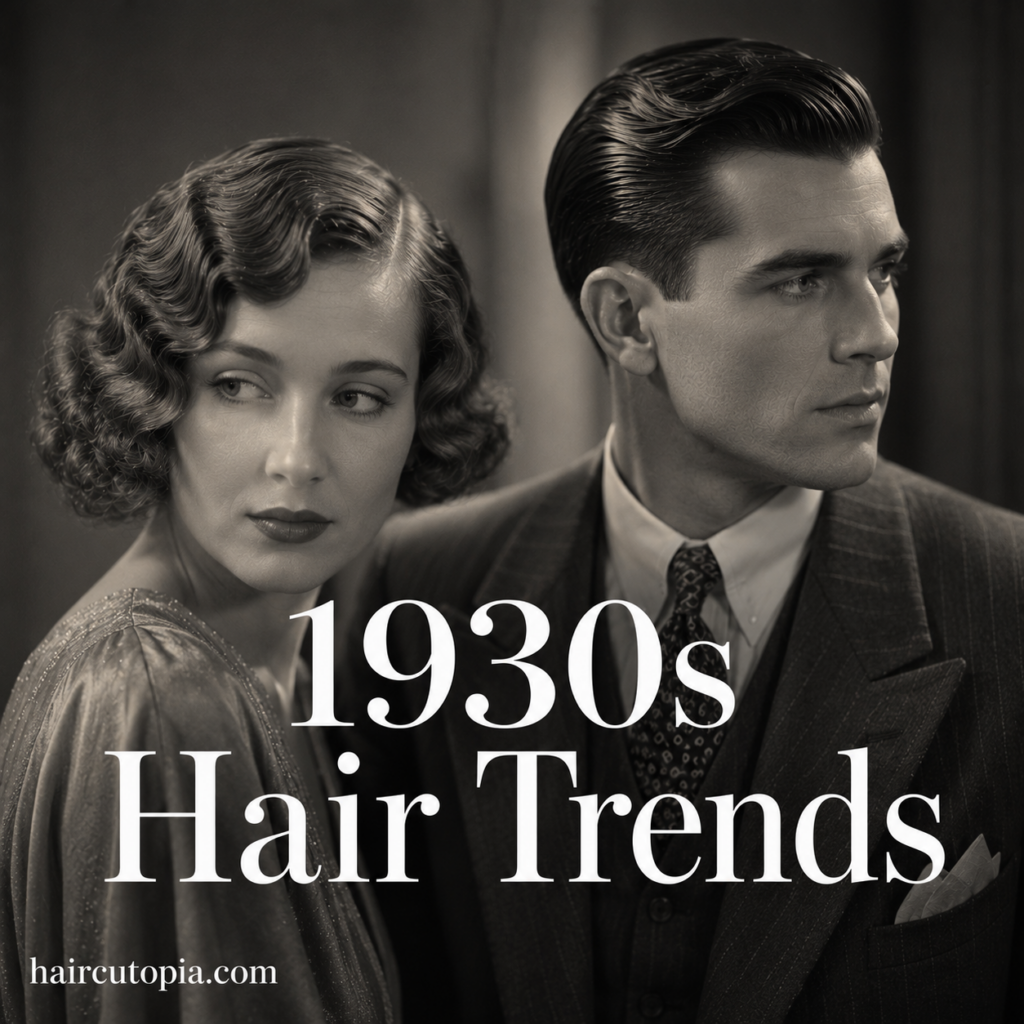
Women’s hair began the decade relatively short, carrying over many influences from the 1920s. As the years passed, those compact styles gradually softened. Bobs grew longer, curls became fuller, and shoulder-length hair started appearing more frequently. Finger waves remained recognizable, but they shared space with softer waves, brushed curls, and elegant side-swept styles.
Men’s hair followed a more consistent formula. Shorter sides, longer hair on top, defined side parts, and slick finishes created the classic well-groomed look associated with the era.
Hollywood added another layer. Movie stars turned hairstyles into recognizable parts of their public images, while magazines and advertisements helped those looks reach people far beyond the movie theater.
So, which styles were actually popular in the 1930s?
From sculpted finger waves and waved bobs to slick side parts and longer Hollywood curls, these are the hair looks that helped define the decade.
What Hair Styles Were Popular in the 1930s?
Popular hair styles varied considerably depending on the year, hair length, occasion, and individual.
Early in the decade, women’s styles were generally shorter and closer to the head. By the late 1930s, hair had become noticeably longer and fuller.
Men’s grooming changed less dramatically.
Some of the most recognizable styles of the decade included:
- Finger waves
- Waved bobs
- Curly bobs
- Deep side parts
- Side-swept waves
- Pin-curl sets
- Marcel-style waves
- Nape-length styles
- Shoulder-length curls
- Brushed-out waves
- Curled-under ends
- Classic men’s side parts
- Slicked-back men’s hair
- Side-swept men’s styles
- Neatly tapered cuts
These styles shared a common quality: they looked intentional.
The deliberately undone texture common in modern hairstyling wasn’t the defining aesthetic. Hair was usually shaped, combed, waved, curled, or slicked into a recognizable form.
1. Finger Waves
Few styles are more closely associated with the early 20th century than finger waves.
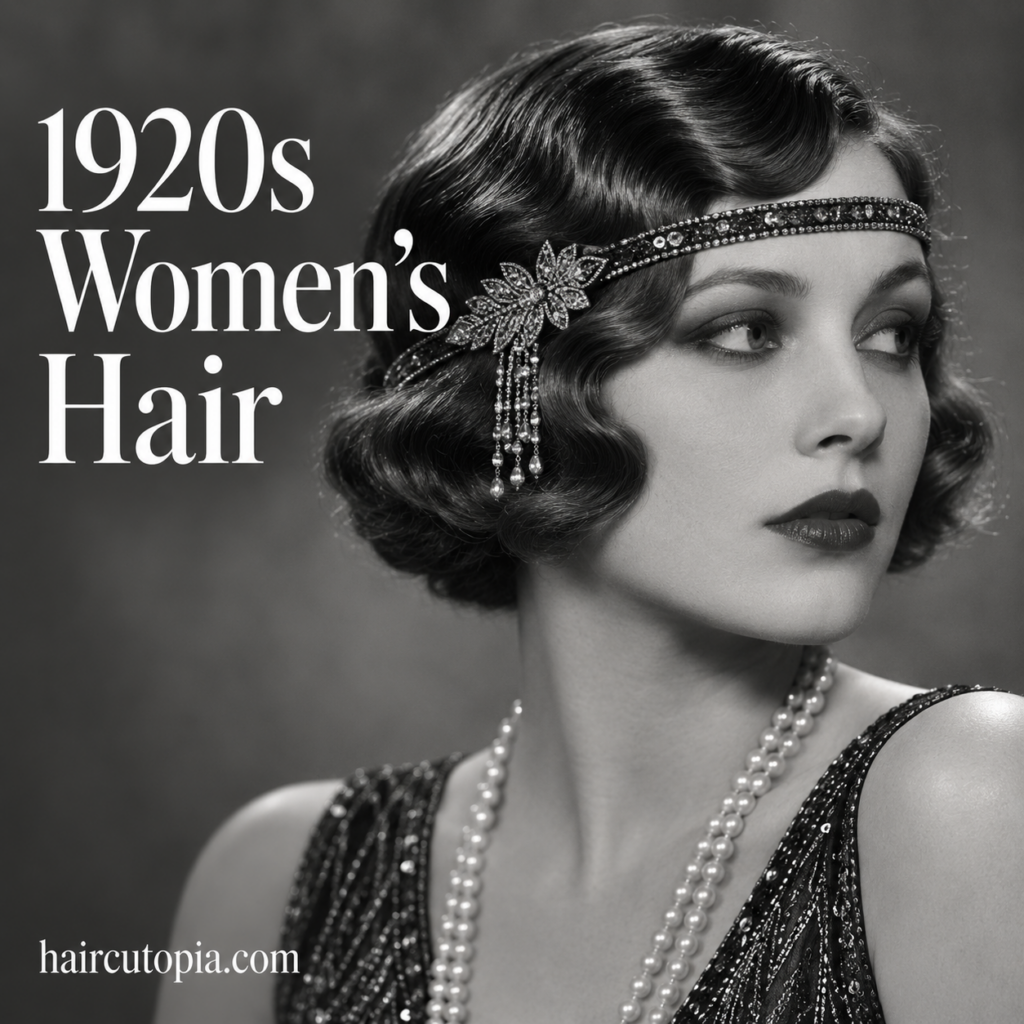
Although already fashionable during the 1920s, finger waves remained an important style during the early 1930s.
The technique created repeating S-shaped curves that followed the contours of the head. On shorter hair, these waves could sit close to the scalp before transitioning into curls around the ears or neckline.
A typical finger-wave style might include:
- A deep side part
- Smooth S-shaped ridges
- Close-fitting sides
- Small curls near the ears
- A polished finish
The look could be dramatic, but it was also practical because it worked beautifully with the short hair many women already had.
2. The Waved Bob
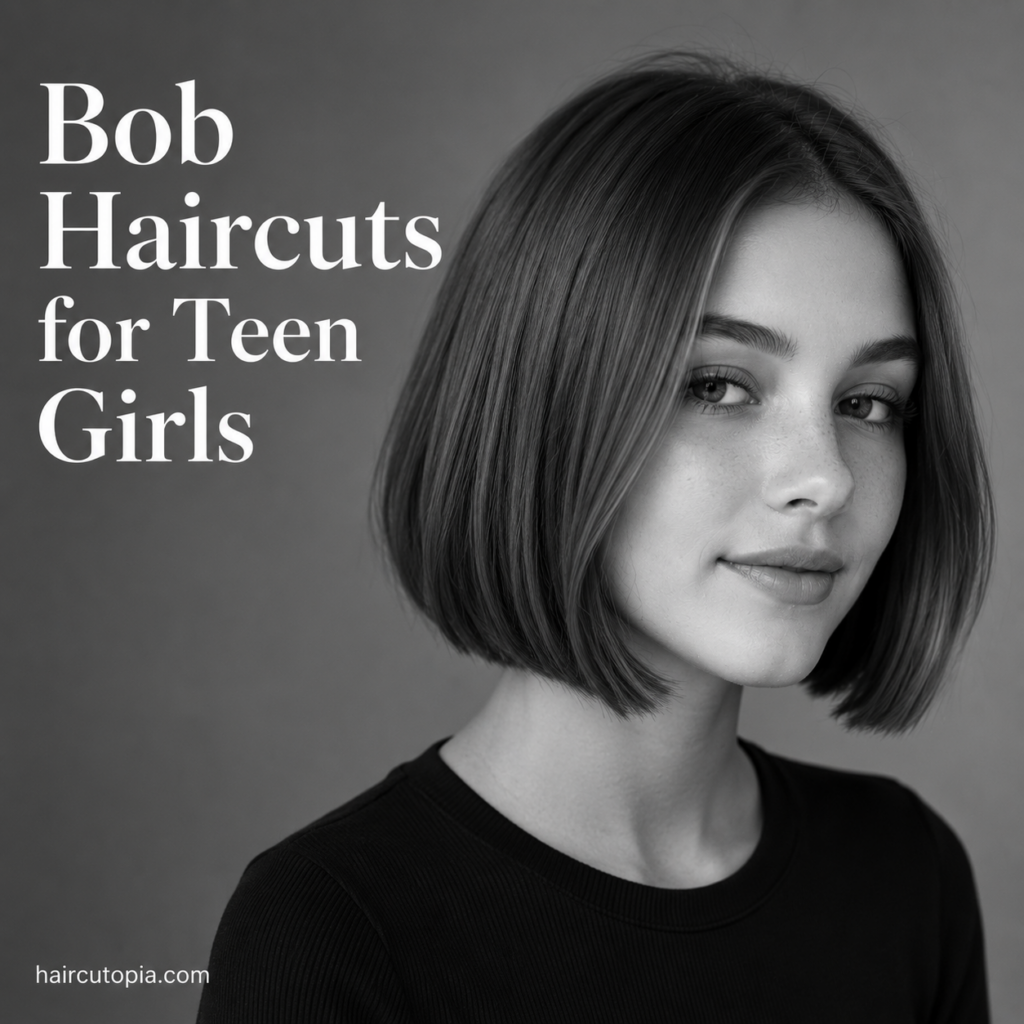
The bob didn’t disappear when the 1920s ended.
Instead, it changed.
The 1930s version often looked softer and less geometric. Rather than allowing the hair to hang in a sharp straight line, waves added movement through the sides.
The ends could be curled inward or arranged into small curls near the jaw and neck.
This made the waved bob an ideal transitional style. It maintained the convenience of shorter hair while fitting the decade’s movement toward softer beauty.
3. The Curly Bob
Curls offered another way to soften short hair.
A curly bob could remain smooth near the crown before becoming fuller around the ears and jawline.
Compared with tightly sculpted finger waves, the style often looked more romantic and relaxed.
As the decade progressed, curls became increasingly prominent, making the curly bob particularly representative of the shift from 1920s sharpness toward 1930s softness.
4. Deep Side-Parted Hair
The deep side part was everywhere.
Women used it to create an asymmetrical sweep across the forehead, often combining it with waves or curls.
Men used the same basic idea differently, establishing a crisp direction for neatly combed top hair.
The side part worked because it could transform almost any length.
A short bob looked more dramatic with a strong side part. Longer hair gained an elegant sweep. Men’s hair immediately appeared more structured.
It became one of the decade’s most versatile styling details.
5. Side-Swept Waves
Side-swept waves took the deep part one step further.
The heavier section of hair moved across the forehead before flowing into a wave pattern along the side of the face.
This asymmetrical arrangement photographed beautifully and complemented the glamorous beauty aesthetic associated with Hollywood.
The style could be worn with shorter bobs or longer hair, allowing it to evolve throughout the decade.
6. Marcel-Style Waves
Structured waves remained a major feature of formal 1930s hair.
Marcel waving had existed well before the decade, but its smooth, repeating wave pattern fit perfectly with 1930s fashion.
The waves looked carefully sculpted rather than naturally tousled.
They could be combined with:
- Side parts
- Short bobs
- Medium-length hair
- Curled ends
- Formal evening looks
For anyone trying to recreate a distinctly vintage appearance today, structured waves are still one of the easiest ways to communicate the period.
7. Pin-Curl Styles
Pin curls were incredibly useful because they could create many different finished looks.
Hair was divided into sections, wound into curls, and secured while setting. Once dry, the curls could be released and arranged according to the desired shape.
They might remain individually defined or be brushed together.
Pin-curl sets could create:
- Soft waves
- Tight curls
- Curled ends
- Face-framing curls
- Fuller sides
- Smooth Hollywood-style waves
This versatility made pin curls useful both professionally and at home.
8. Small Face-Framing Curls
Not every 1930s style relied on curls throughout the entire head.
Small curls could be placed strategically near the temples, ears, cheeks, or nape.
This was particularly useful with shorter hair.
The curls softened the face and added decorative detail without creating excessive volume.
Combined with a smooth crown and sculpted waves, they produced an unmistakably period-inspired appearance.
9. The Nape-Length Style
As women began growing out the shorter cuts of the previous decade, nape-length hair became increasingly common.
It offered more styling flexibility than a jaw-length bob without yet reaching the shoulders.
Waves could extend farther down the head, while curls had more space around the neckline.
This intermediate length helped shape the gradual evolution of women’s hair throughout the decade.
10. Curled-Under Ends
Smooth hair with curled-under ends offered a polished alternative to waves throughout the entire length.
The crown and mid-lengths could remain controlled while the bottom curved inward.
The result was neat, rounded, and feminine.
As hair became longer during the middle and later years of the decade, curled ends became increasingly useful for maintaining a controlled silhouette.
11. Brushed-Out Curls
Setting the hair in curls didn’t necessarily mean wearing those curls individually.
Brushing could transform them.
Once a curl set was completely dry, careful brushing encouraged individual curls to merge into larger waves.
The result was smoother and more fluid.
This technique helped create the continuous wave patterns associated with classic Hollywood styling and remains a foundation of many vintage-inspired looks today.
12. Shoulder-Length Waves
By the late 1930s, women’s hair was getting noticeably longer.
Shoulder-length hair allowed waves to become larger and more flowing than the compact patterns possible on short bobs.
Instead of remaining close to the scalp, the hair could move naturally around the shoulders.
This was an important development because it pointed directly toward the fuller hairstyles of the 1940s.
13. Longer Hollywood Curls
Hollywood glamour increasingly favored soft, beautifully arranged curls.
Longer hair could remain relatively smooth around the crown before becoming fuller through the lower sections.
The finished style combined structure with movement.
These weren’t necessarily enormous curls. The emphasis was on creating a harmonious shape rather than maximizing volume.
By the end of the decade, this softer silhouette had become an important alternative to the tightly sculpted styles of the early 1930s.
14. Smooth, Sculpted Evening Hair
Formal occasions called for particularly polished styling.
Evening hairstyles could emphasize stronger waves, carefully placed curls, deep side parts, and noticeable shine.
Hair was designed to complement elegant clothing rather than appear casual.
Popular evening elements included:
- Glossy waves
- Defined curl patterns
- Sculpted sides
- Smooth crowns
- Dramatic side parts
The Hollywood image of 1930s glamour drew heavily from this highly finished approach.
15. The Classic Men’s Side Part
For men, the side part was arguably the defining hairstyle of the decade.
The formula was straightforward.
Hair remained shorter through the sides and back while enough length was left on top to establish a strong part and comb the hair neatly into position.
Styling product provided control and shine.
The style could be conservative or slightly more dramatic depending on the length on top, but the basic shape remained recognizable.
It’s also one of the 1930s styles that requires almost no reinterpretation to wear today.
16. Slicked-Back Men’s Hair
Slicked-back hair provided an alternative to the obvious side part.
The top was combed backward away from the forehead and held with styling product.
Traditional versions generally maintained a smooth transition between the longer top and shorter sides.
That’s an important distinction when recreating the style today.
Pairing a slicked top with an extremely tight modern skin fade creates a different silhouette. A softer taper tends to look more consistent with the period.
17. The Men’s Side Sweep
Some men’s styles fell somewhere between a side part and a slick-back.
Hair could be directed diagonally across the head, creating movement while remaining controlled.
The look worked especially well with slightly longer top hair.
It offered a polished appearance without requiring the hair to lie completely flat.
18. Naturally Wavy Men’s Hair
Men with natural waves could incorporate their texture into a fashionable hairstyle.
A defined side part established structure while the top retained some visible movement.
The key was intentional styling.
The waves generally followed the direction of the hairstyle rather than being deliberately tousled.
This created a softer version of the classic groomed look.
19. The Neatly Combed Short Style
Not every popular hairstyle needed to be glamorous.
A simple short haircut could be combed neatly with a subtle side part and still fit comfortably within the decade’s aesthetic.
This practical approach suited everyday life.
The sides and back remained tidy, while a small amount of additional length on top allowed the hair to be directed into place.
Simple, clean grooming was often enough.
20. The Formal Men’s Slick-Back
Formal men’s styling tended to emphasize an especially smooth finish.
Hair was combed backward or slightly toward one side and secured with product.
Visible shine was perfectly acceptable—and often desirable.
Combined with tailored evening clothing, the result created the sophisticated leading-man image strongly associated with the decade.
Popular Women’s Styles in the Early 1930s
The early years remained heavily influenced by the previous decade.
Short hair was still common, and many hairstyles followed the shape of the head closely.
Popular choices included:
- Finger waves
- Short waved bobs
- Deep side parts
- Small side curls
- Nape-length bobs
- Sculpted waves
- Close-fitting styles
The emphasis was generally on shape rather than volume.
Even curls tended to be carefully positioned rather than allowed to expand dramatically.
Popular Women’s Styles in the Mid-1930s
By the middle of the decade, hair was becoming softer and longer.
Women growing out their bobs had more length around the nape and sides, opening up additional styling possibilities.
Common characteristics included:
- Longer bobs
- Softer wave patterns
- Larger curls
- Curled ends
- Side-swept styles
- Fuller lower sections
The silhouette was gradually expanding.
Hair still looked controlled, but it no longer needed to hug the head as closely as it had earlier.
Popular Women’s Styles in the Late 1930s
The late 1930s represented a clear transition toward the following decade.
Hair increasingly approached shoulder length.
Larger waves and curls created more movement, while the overall silhouette became fuller.
Popular late-decade elements included:
- Shoulder-length hair
- Brushed waves
- Larger curls
- Side-swept lengths
- Fuller ends
- Smooth crowns
- Softer silhouettes
Look at a late-1930s hairstyle beside an early-1940s style and the relationship becomes obvious.
Popular Men’s Styles Throughout the 1930s
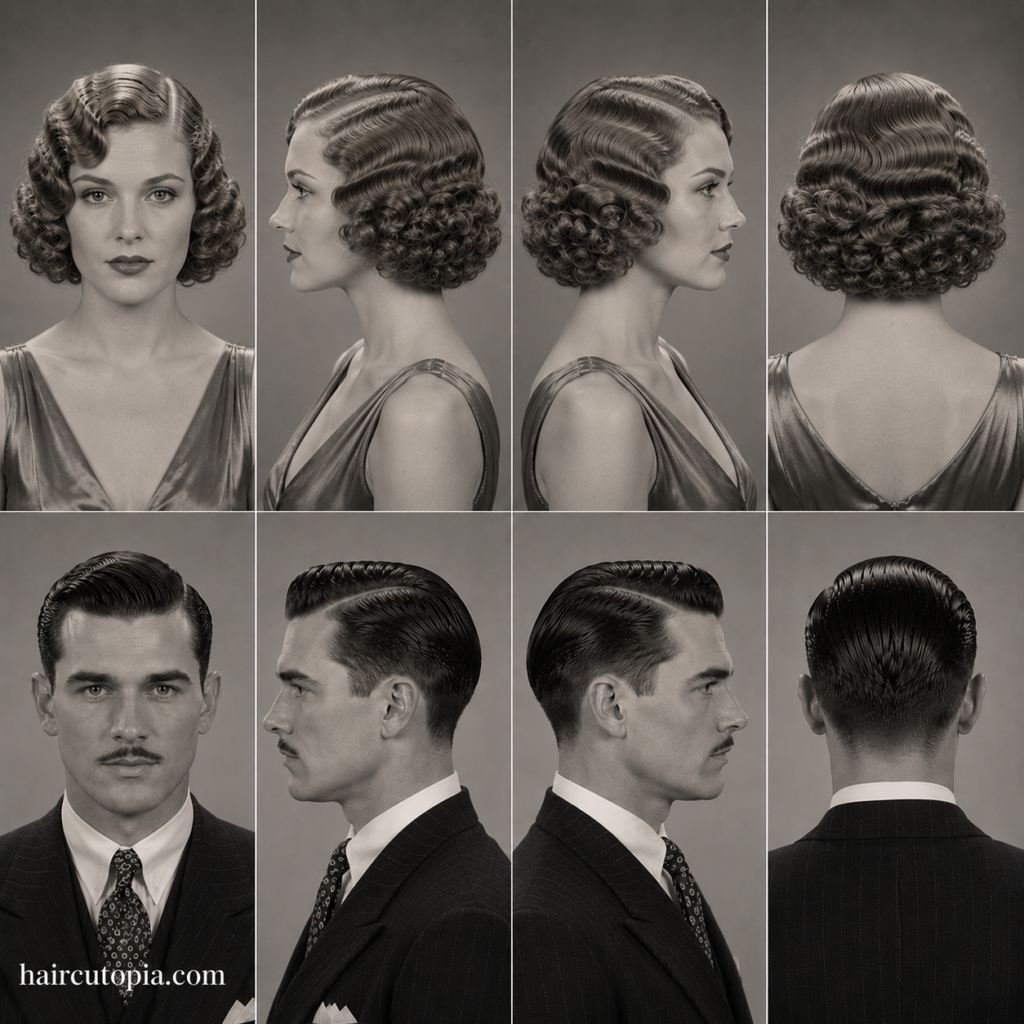
Men’s fashion didn’t experience the same dramatic shift in hair length.
The basic formula remained fairly stable:
- Keep the sides and back relatively short.
- Leave more length on top.
- Establish a clear direction.
- Comb the hair neatly.
- Use styling product for control.
The differences came largely from how the top was arranged.
It might be side-parted, swept across, slicked backward, or allowed to retain some natural wave.
This consistency is one reason classic men’s styles from the period have aged so well.
Hollywood’s Most Popular Hair Looks
Hollywood helped establish an aspirational version of 1930s beauty.
Film stars appeared with professionally styled hair under carefully controlled lighting, while promotional photographs carried those looks into magazines and advertisements.
Jean Harlow became particularly famous for her platinum-blonde image and glamorous waves.
Marlene Dietrich was known for sophisticated styling, including sculpted waves and dramatic side parts.
Greta Garbo helped represent the softer, elegant wave patterns that became increasingly fashionable.
Men’s grooming received similar visibility.
Clark Gable embodied the polished leading-man appearance of the period, while Cary Grant became another enduring reference for classic men’s grooming.
Hollywood didn’t invent every popular style, but it gave fashionable hair extraordinary visibility.
Everyday Styles vs. Hollywood Styles
It’s important not to confuse Hollywood publicity photographs with the way everyone styled their hair every morning.
Professional hairstylists, studio lighting, makeup artists, and carefully staged photographs created an idealized image.
Everyday hair could be simpler.
A woman might wear a basic waved or curled style rather than an elaborate Hollywood set. A man could simply keep his hair short and neatly combed instead of recreating a movie star’s exact hairstyle.
The Great Depression also affected what people could realistically spend on beauty and grooming.
Practicality mattered.
Home styling techniques allowed people to adapt fashionable ideas without requiring constant professional appointments.
How the Great Depression Shaped Popular Styles
The economic conditions of the decade created an interesting contrast.
Hollywood projected glamour at a time when many households were facing serious financial hardship.
Adaptable hairstyles therefore had obvious value.
A single haircut could be changed through:
- A different part
- Finger waving
- Pin curling
- Brushing
- Curl placement
- Changing the direction of the waves
- Curling only the ends
This made styling an economical way to create variety.
Men similarly benefited from straightforward cuts that could be maintained through regular combing and grooming.
Popular Hair Products of the 1930s
The polished appearance of 1930s hair often depended on styling products.
Common product categories included:
- Pomades
- Brilliantine
- Hair oils
- Hair tonics
- Setting lotions
- Shampoos
- Wave-setting products
Men commonly used grooming products to establish direction, maintain their side parts, and add shine.
Women relied on setting products to help waves and curls maintain their shapes.
Modern recreations can use contemporary alternatives such as mousse, gel, pomade, setting spray, curl cream, or hairspray.
Popular Hair Colors of the 1930s
Natural brunette, black, blonde, and red shades were all seen throughout the decade.
Hollywood, however, helped make dramatic hair color increasingly visible as a fashion statement.
Platinum blonde became particularly iconic.
Jean Harlow’s famous light hair helped associate the shade with glamorous screen beauty.
The appearance was especially striking in black-and-white photography and film.
Hair color was becoming more than a background detail. For certain stars, it became part of an instantly recognizable public image.
1920s vs. 1930s Popular Hair Styles
The boundary between decades wasn’t immediate, but the overall change is clear.
Popular 1920s Styles
The previous decade is strongly associated with:
- Very short bobs
- Shingle cuts
- Eton crops
- Geometric silhouettes
- Close-fitting styles
- Finger waves
Shortness itself was a major fashion statement.
Popular 1930s Styles
The 1930s increasingly favored:
- Softer bobs
- Longer hair
- More curls
- Flowing waves
- Deep side parts
- Shoulder-length styles
- Hollywood-inspired glamour
The transition was essentially from shorter and sharper toward longer and softer.
1930s vs. 1940s Popular Hair Styles
By the late 1930s, the foundations of 1940s hair were already visible.
Women’s hair had gained length and volume.
During the 1940s, those trends developed into increasingly recognizable styles featuring:
- Larger curls
- Rolled sections
- Fuller silhouettes
- Shoulder-length hair
- Structured front sections
- Victory rolls
Men’s styles remained comparatively consistent, although wartime life would influence grooming and practicality.
Which 1930s Styles Are Still Popular Today?
Quite a few.
They may have different names or modern finishes, but the underlying ideas remain familiar.
Styles with clear modern equivalents include:
- The bob
- Deep side parts
- Hollywood waves
- Brushed curls
- Side-swept waves
- Slick-backs
- Classic tapers
- Men’s side parts
- Wavy side-part styles
Finger waves also continue to appear in editorial styling, formal looks, and modern interpretations across different hair textures.
The biggest difference is usually the finish.
Modern styling tends to allow more natural texture and movement, while authentic 1930s styles often emphasized stronger control.
How to Wear a 1930s-Inspired Style Today
You don’t need to recreate an archival photograph exactly.
Taking one recognizable feature from the decade is often enough.
For a modern feminine or gender-neutral interpretation, try:
- A bob with soft S-waves
- A deep side part with natural curls
- Shoulder-length Hollywood waves
- A smooth crown with curled ends
- Sculpted face-framing waves
For a traditionally masculine interpretation, consider:
- A classic scissor taper with a side part
- A softly slicked-back style
- Natural waves combed to one side
- A longer top with a controlled side sweep
Using lighter products can preserve the shape while giving the hair a more contemporary finish.
Frequently Asked Questions About 1930s Popular Styles
What was the most popular women’s hairstyle in the 1930s?
There wasn’t one hairstyle that dominated the entire decade.
Short waved bobs and finger waves were especially recognizable during the early years, while longer waves and curls became increasingly popular later.
What was the most popular men’s hairstyle in the 1930s?
The classic side part was one of the most common and recognizable men’s styles.
Shorter sides and back were paired with longer top hair that could be neatly combed and held with styling product.
Were finger waves popular in the 1930s?
Yes.
Finger waves remained particularly fashionable during the early 1930s after becoming popular during the previous decade.
Were bobs still popular during the 1930s?
Yes, but they evolved.
Many 1930s bobs became softer, longer, and more heavily styled with waves or curls than the sharp geometric bobs strongly associated with the 1920s.
Did women wear long hair in the 1930s?
Yes.
Women’s fashionable hair generally became longer throughout the decade. By the late 1930s, shoulder-length styles were increasingly visible.
What were popular men’s hair styles in the 1930s?
Side parts, slicked-back hair, side sweeps, and neatly combed wavy styles were all popular.
Shorter sides and longer top hair provided the foundation for most of these looks.
Why were side parts so popular?
A side part immediately gave hair direction and structure.
For women, it created an elegant asymmetrical sweep. For men, it provided the foundation for a clean, neatly combed style.
What made 1930s hairstyles look different from modern styles?
The biggest difference is often the finish.
Hair was generally more controlled, with deliberately arranged waves, curls, or comb lines. Visible shine was also common.
Modern hairstyles frequently emphasize softer texture and a more effortless appearance.
What 1930s style is easiest to wear today?
A classic side part, soft waved bob, or shoulder-length Hollywood wave can reference the decade without looking overly historical.
For men, a traditional scissor taper with a side part is particularly easy to incorporate into a modern haircut.
Did everyone wear glamorous hairstyles in the 1930s?
No.
Hollywood images represent the most polished end of the spectrum.
Everyday hairstyles were often simpler and needed to fit people’s budgets, routines, occupations, and access to professional styling.
Why 1930s Popular Styles Still Matter
The hairstyles people wore during the 1930s tell the story of a decade caught between two very different fashion eras.
At the beginning, women’s hair still reflected the short, compact shapes that had revolutionized style during the 1920s. Finger waves, bobs, and close-fitting curls remained everywhere.
Then the silhouette began changing.
Hair grew toward the shoulders. Waves became softer. Curls became larger. Hollywood glamour became increasingly influential.
By the end of the decade, many of the ingredients of 1940s hair were already in place.
Men’s styles followed a steadier path. Side parts, slicked-back tops, natural waves, and neat tapers established a classic grooming formula that has remained relevant for generations.
That’s ultimately why so many popular 1930s styles don’t feel entirely unfamiliar today.
The techniques and products have changed, but the foundations—bobs, waves, curls, side parts, tapers, and slick-backs—are still part of modern hair.
Nearly a century later, the 1930s remain one of the clearest examples of how vintage style can continue shaping what we wear today.