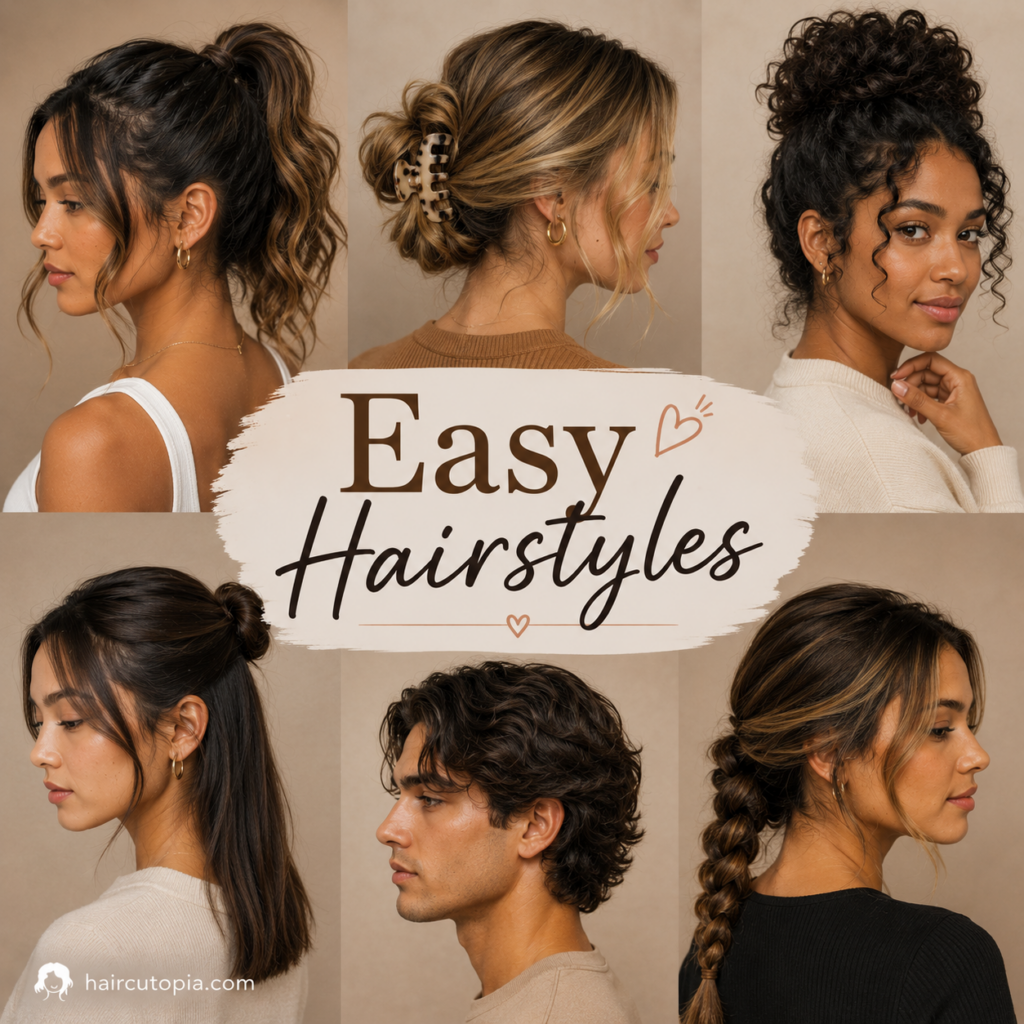
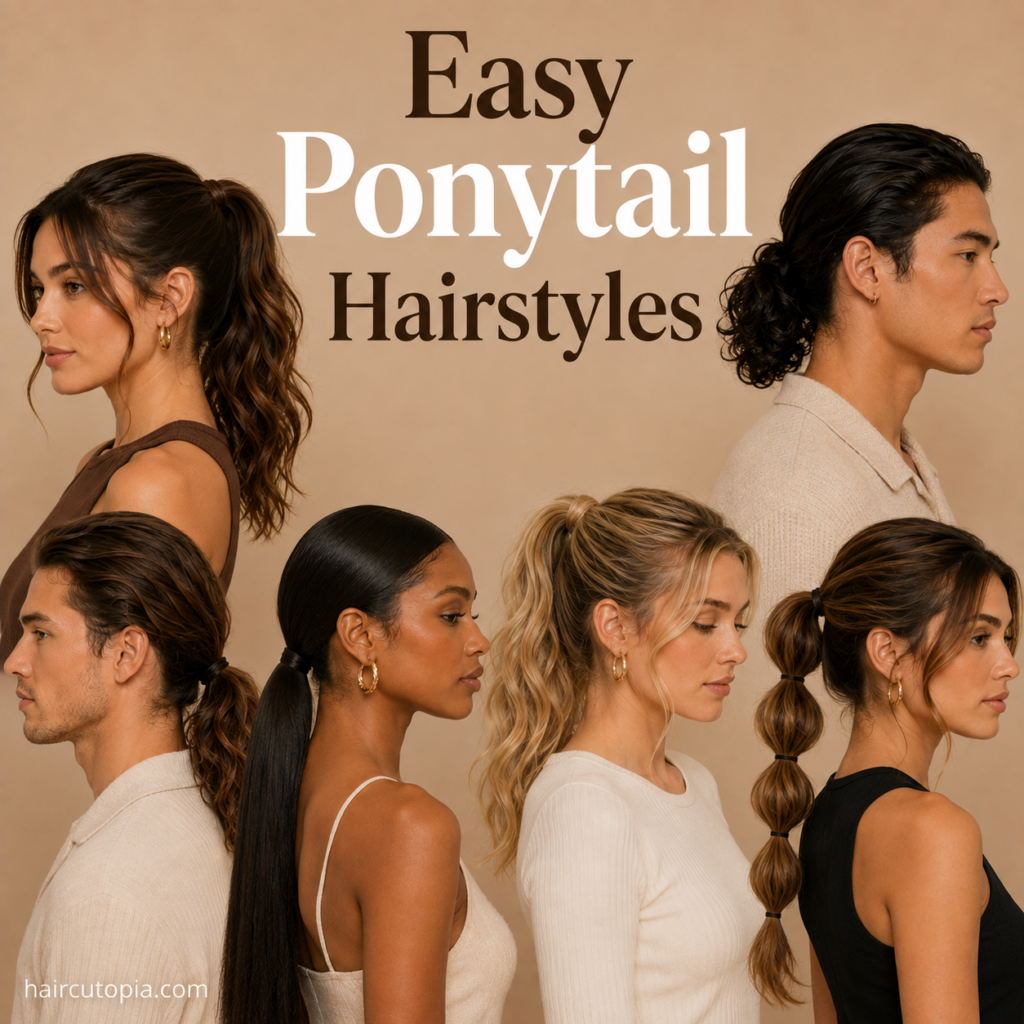
A ponytail is probably one of the first hairstyles most of us learn, but simple doesn’t have to mean boring. With a different part, a little texture, or one small styling detail, an everyday ponytail can look surprisingly put together.
That’s what makes ponytails so useful. You can spend two minutes getting your hair out of your face before heading out the door, or take a few extra minutes to create something polished enough for work, dinner, or a special occasion.
Better yet, many easy ponytail hairstyles work with different lengths and textures. Straight, wavy, curly, coily, fine, or thick hair can all be adapted to versions of the styles below.
Here are 25 ponytail ideas that look good without turning your morning into a full styling session.
Why Ponytails Are So Easy to Customize
The basic technique couldn’t be simpler: gather your hair and secure it.
Everything after that is optional.
Changing just one element can give you a completely different hairstyle. You might move the ponytail higher, change your part, loosen the crown, add waves, or hide the elastic.
You can also use accessories such as:
- Scrunchies
- Ribbons
- Hair cuffs
- Bows
- Headbands
- Decorative elastics
- Clips
That means you don’t necessarily need to learn 25 completely different techniques. Many of the best ponytail variations start with the same basic style.
1. Classic Mid-Height Ponytail
When you want something reliable, start with the classic.
Gather your hair toward the middle of the back of your head and secure it with an elastic. Brush the front smooth for a cleaner look or use your fingers to gather the hair if you prefer a softer finish.
A mid-height ponytail is particularly versatile because it isn’t as dramatic as a high ponytail or as understated as a low one.
It’s the everyday option that works almost anywhere.
2. Easy High Ponytail
A high ponytail instantly creates more lift.
Gather your hair near the crown and secure it firmly. Once it’s in place, divide the ponytail into two sections and gently pull them apart to tighten the base.
You can leave the length natural or add a little texture.
For layered hair, don’t worry if a couple of pieces fall around the face. Leaving them loose can make the hairstyle look more intentional.
3. Simple Low Ponytail
Few hairstyles are easier than a low ponytail.
Gather your hair at the nape and secure it without pulling excessively tight. That’s really all you need to do.
For a cleaner finish, create a center part first. For something more relaxed, skip the precise part and gather your hair loosely with your fingers.
This style works especially well on days when you don’t want much tension on your scalp.
4. Messy Ponytail
A messy ponytail should feel relaxed rather than completely accidental.
Start with your natural texture or add a few loose waves. Gather your hair into a mid-height or high ponytail, then gently pull at small sections around the crown.
Leave a few pieces around the face.
Don’t worry about eliminating every bump or flyaway. A little imperfection is what gives this style its character.
5. Sleek Low Ponytail
The sleek low ponytail looks polished but doesn’t require an elaborate technique.
Create a center or side part and brush your hair smoothly toward the nape. Secure it with an elastic and use a small amount of styling cream or gel to tame flyaways.
Keep the ponytail straight for a minimalist look or let your natural texture show through the length.
6. Wrapped Ponytail
Want to make an ordinary ponytail look more finished in about a minute?
Hide the elastic.
Create your ponytail as usual, then take a small section of hair from underneath. Wrap that piece around the elastic until it’s covered.
Secure the end underneath with a bobby pin.
This simple trick works with high, middle, and low ponytails.
7. Wavy Ponytail
If your hair is naturally wavy, this one requires almost no additional work.
Gather the hair without brushing away all the texture and secure it at your preferred height.
For straight hair, add a few loose waves beforehand. They don’t need to be perfectly uniform.
In fact, slightly uneven waves often make the finished ponytail look more relaxed and natural.
8. Curly Ponytail
Natural curls already bring movement and volume to a ponytail.
Instead of trying to smooth or straighten the entire hairstyle, let your texture become the focal point.
A high ponytail can create a full cascading effect, while a low or mid-height placement gives the curls a softer shape.
Use your fingers rather than a brush to adjust the ponytail once it’s secured so you don’t unnecessarily disturb the curl pattern.
9. Ponytail With Face-Framing Pieces
Sometimes the easiest way to improve a ponytail is to leave some hair out.
After securing your ponytail, gently pull out a couple of sections around the temples or use existing face-framing layers.
You can leave them straight, naturally textured, or give them a slight bend.
It’s particularly useful for layered hair because you don’t have to fight every shorter section into the elastic.
10. Center-Part Low Ponytail
A defined center part makes a basic low ponytail look immediately more intentional.
Part your hair down the middle, smooth both sides backward, and secure the hair at the nape.
You can tuck the front sections behind your ears for an even cleaner appearance.
It’s easy, understated, and works especially well when you’re aiming for a minimalist look.
11. Side-Part Ponytail
If you normally wear your hair parted down the middle, switching to the side can make the same ponytail feel surprisingly different.
Create a subtle or deep side part before gathering your hair.
Pair it with a low ponytail for a softer finish or a mid-height ponytail for an everyday style.
No new technique required—just move the part.
12. Scrunchie Ponytail
A scrunchie does two jobs at once: it secures your hair and becomes part of the hairstyle.
For something casual, create a loose low ponytail and add a larger scrunchie.
For a more playful look, wear one with a high ponytail.
You can coordinate the fabric with your outfit or choose something that adds contrast.
13. Bubble Ponytail
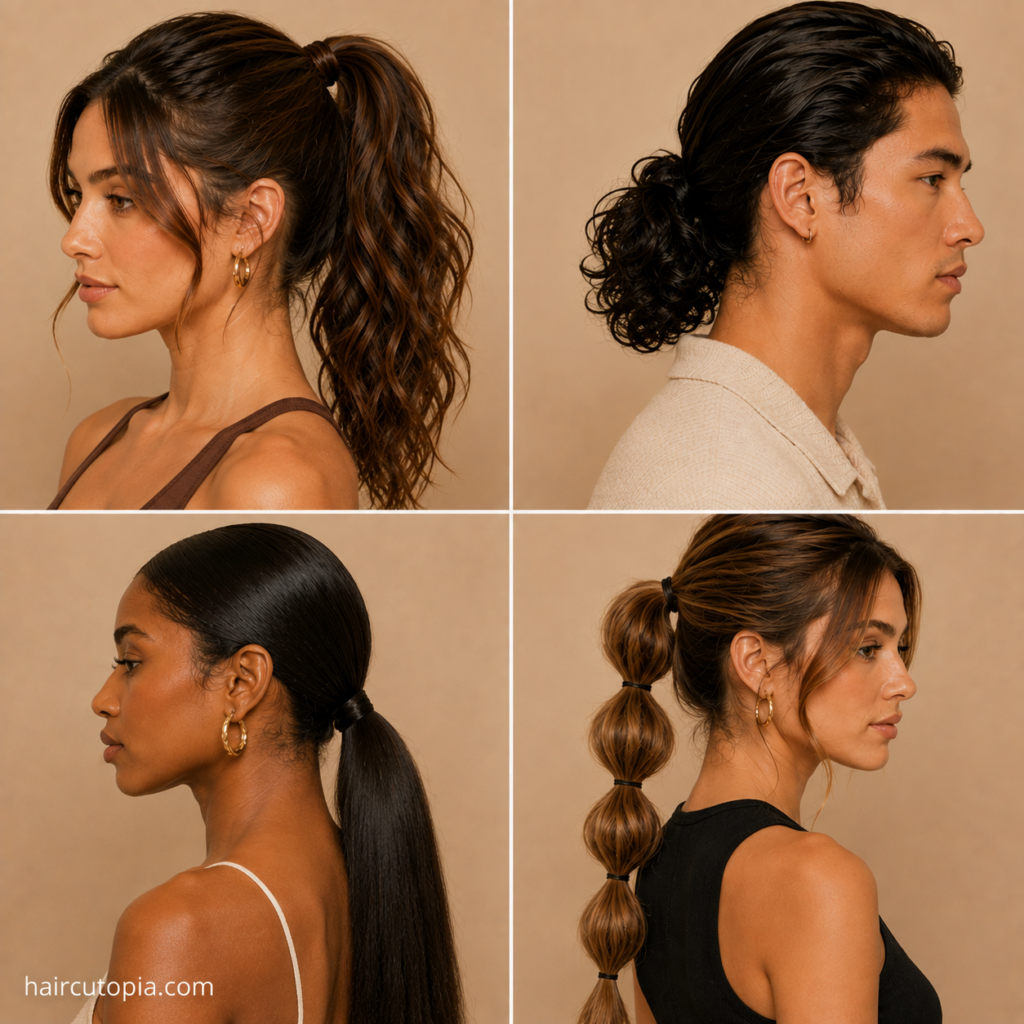
The bubble ponytail looks more complicated than it is.
Start with a regular ponytail. Place another elastic a few inches below the first one, then gently pull outward on the hair between the two elastics.
Continue down the length.
The number of bubbles depends entirely on how long your hair is. Shorter hair might accommodate one or two, while long hair gives you room for several.
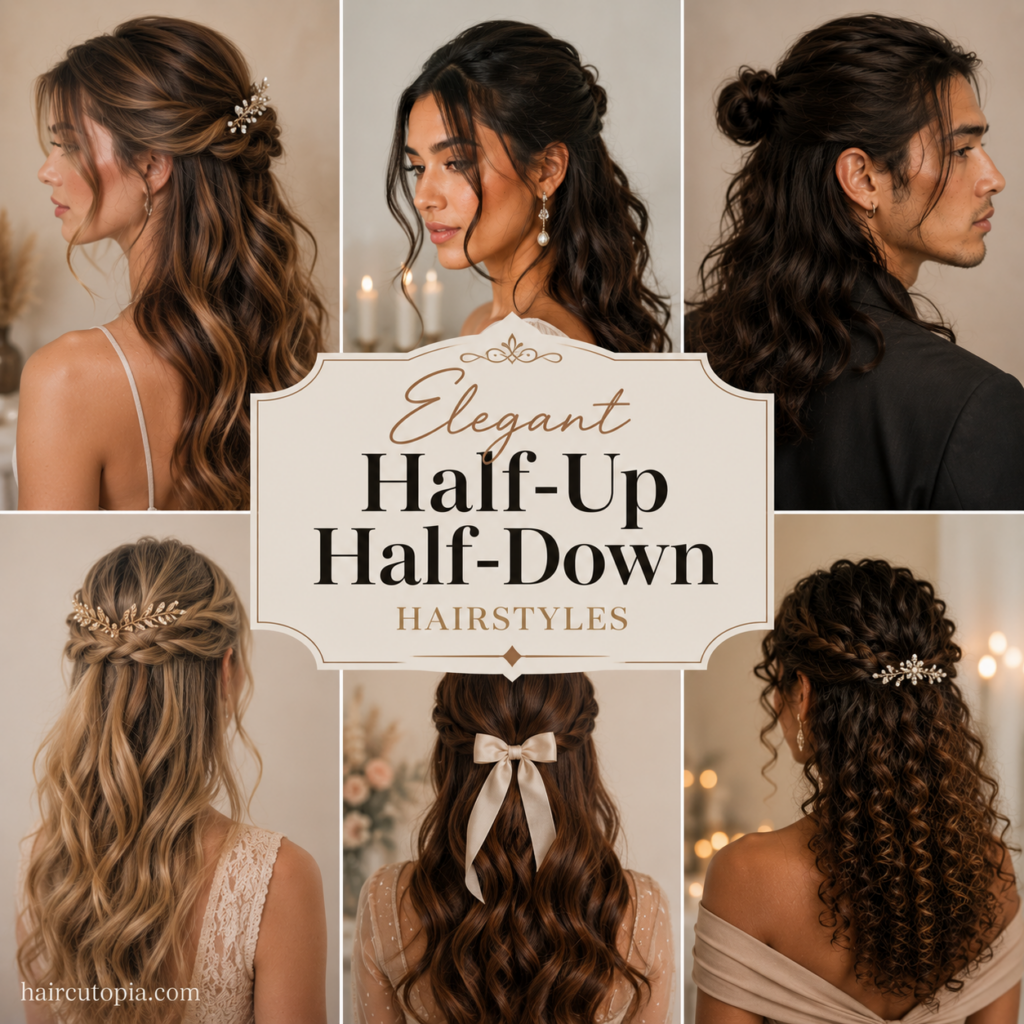
14. Half-Up Ponytail
When you can’t decide between wearing your hair up or down, do both.
Gather the upper section of hair from around your temples and crown. Secure it at the back while leaving everything underneath loose.
A higher placement creates more lift, while a lower half-up ponytail feels softer.
This style works particularly well with waves and curls, but straight hair can look equally good.
15. Flipped Ponytail
The flipped ponytail is one of the easiest ways to create a little detail around the base.
Here’s how:
- Create a low ponytail.
- Loosen the elastic slightly.
- Make a small opening in the hair above the elastic.
- Flip the ponytail through the opening.
- Gently tighten and adjust the hair.
You’ll end up with a twisted effect around the base without having to actually learn a complicated twist.
16. Loose Low Ponytail
This is the ponytail for days when you want your hair back but don’t want it pulled tightly.
Gather your hair loosely near the nape and secure it with a soft elastic or scrunchie.
Use your fingertips to release a little hair around the crown and sides.
A few loose strands around the face work well here, too.
The finished style should feel soft rather than structured.
17. Textured Ponytail
Texture can make even the most basic ponytail more interesting.
You don’t need to curl every section. Add a few bends or waves throughout the hair, then gather everything into a ponytail.
Once secured, gently separate sections with your fingers.
The irregular texture creates movement and can also make the ponytail appear fuller.
18. Ponytail With Crown Volume
If your ponytail tends to look flat from the front, focus on the crown rather than the ponytail itself.
Before securing your hair, gently lift or tease the roots near the crown.
Create the ponytail, then carefully pull upward on small sections at the top of your head.
Make tiny adjustments rather than pulling out large pieces. You’ll have much more control over the final shape.
19. Easy Braided Ponytail
You don’t need an elaborate braiding technique for this one.
Create a regular ponytail first, then braid the length using a basic three-strand braid. Secure the end with another elastic.
You can keep the braid tight and clean or gently pull at the edges to make it look fuller.
Longer hair creates a more dramatic braid, but medium-length hair can work too.
20. Ponytail With a Small Accent Braid
If you want something even easier than braiding the entire ponytail, braid just one small section.
You can create a thin braid near your temple and incorporate it into the ponytail or braid a small piece within the ponytail itself.
It’s a subtle detail, but it changes the overall look without adding much styling time.
21. Ribbon Ponytail
Tie a ribbon around the base of your ponytail and suddenly a very basic hairstyle feels dressed up.
A low ponytail with a ribbon creates a softer look, while a high ponytail feels more playful.
If you have long hair, you can leave the ends of the ribbon hanging alongside the ponytail.
Just make sure the hair is secured with an actual elastic underneath. The ribbon can be decorative rather than responsible for holding everything together.
22. Claw-Clip Lifted Ponytail
A small claw clip can help give your ponytail a little extra height.
Create a regular ponytail and separate the hair into an upper and lower section near the base. Position a small clip underneath the upper section where it won’t be immediately visible.
The clip pushes the hair upward, creating the appearance of a fuller ponytail.
This trick works particularly well when your hair tends to fall flat after you secure it.
23. Double Ponytail
The double ponytail is useful when you want the illusion of more length and volume.
Divide your hair horizontally into two sections.
Create one ponytail with the upper section and another directly underneath it. Arrange the upper ponytail so it hides the lower elastic.
When the two sections blend together, they can look like one longer ponytail.
Waves or curls make it easier to disguise the separation between the two.
24. Sporty Ponytail
For workouts, walks, errands, or busy days, practicality matters more than perfection.
Gather your hair into a secure high or mid-height ponytail. Use a strong elastic and add a headband if shorter pieces tend to escape around the hairline.
If your hair is particularly thick or heavy, a mid-height placement may be more comfortable than putting everything directly on top of your head.
The goal here is simple: secure, comfortable, and out of the way.
25. Easy Polished Ponytail
You can create a ponytail that looks appropriate for dinner, an event, or a dressier occasion without spending an hour on your hair.
Start by adding a few loose waves through the length.
Create a mid-height or low ponytail, smooth the sides, and add a little volume at the crown.
Wrap a small section of hair around the elastic and leave one or two carefully styled pieces around the face.
Those few finishing touches can make an everyday ponytail feel considerably more polished.
Easy Ponytail Hairstyles for Different Hair Lengths
Not every ponytail works exactly the same way at every length.
The good news is that you can usually adapt the placement or technique.
Shorter Hair
If your hair is just long enough to pull back, focus on low ponytails and half-up styles.
Short pieces that don’t reach the elastic can be pinned back or intentionally left loose.
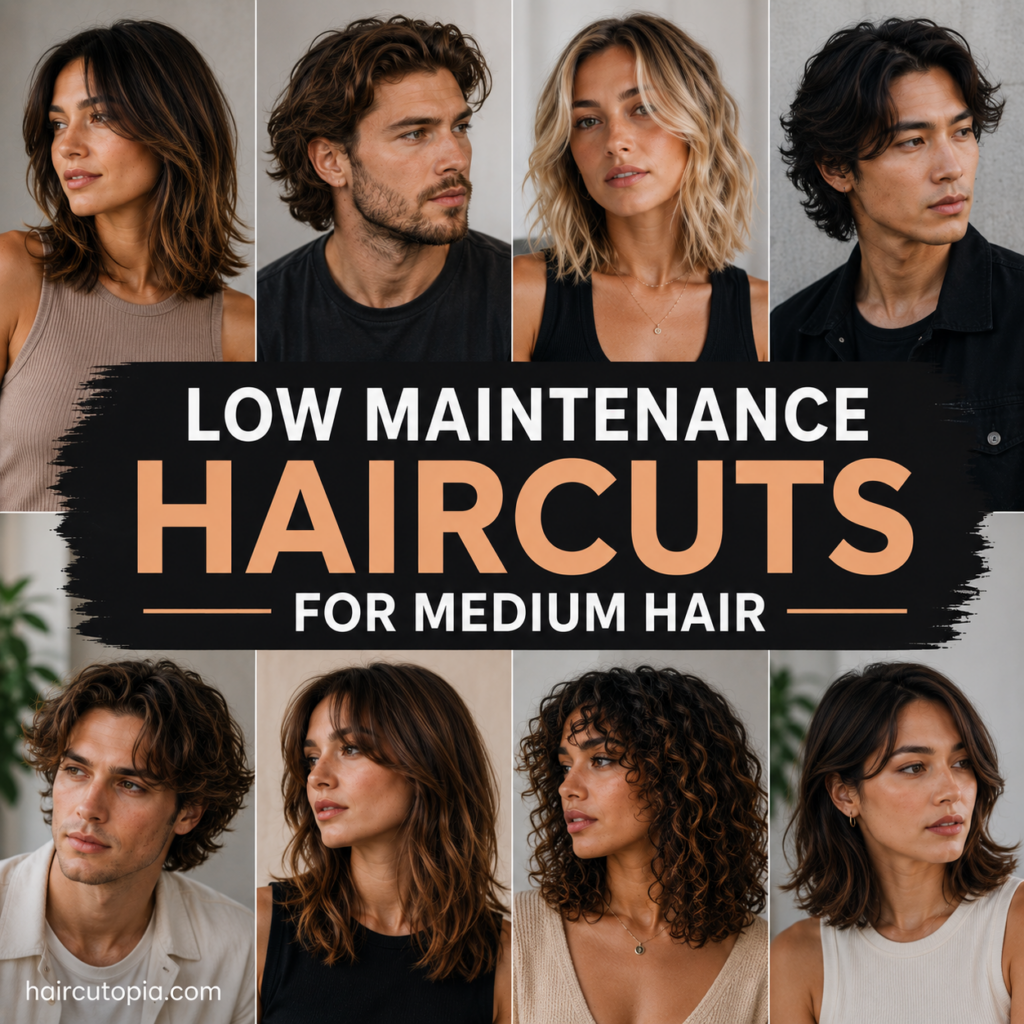
Medium-Length Hair
Medium hair gives you more options without becoming too heavy.
Try:
- Mid-height ponytails
- Low ponytails
- Messy ponytails
- Half-up styles
- Wrapped ponytails
- Short bubble ponytails
- Wavy or curly ponytails
High ponytails can work as well, although shorter layers near the nape may need a little help staying in place.
Long Hair
Long hair gives you the most room to experiment.
Bubble ponytails, braided ponytails, high styles, double ponytails, ribbons, and longer textured looks become particularly easy to create when you have more length.
Easy Ponytails for Different Hair Textures
Your natural texture can actually make ponytail styling easier when you work with it rather than against it.
Straight Hair
Straight hair is great for sleek and minimalist ponytails.
Try a center-part low ponytail, wrapped-base style, bubble ponytail, or polished high ponytail.
For additional fullness, add a few waves before pulling it back.
Wavy Hair
Wavy hair already has the movement that many textured ponytail styles need.
Use your fingers to gather the hair instead of brushing out all the texture.
Loose, messy, low, and voluminous ponytails are especially easy options.
Curly Hair
Curly hair naturally creates a fuller ponytail.
High and mid-height styles showcase the curls, while a lower placement creates a softer shape.
Try to avoid unnecessary brushing once the curls are styled.
Coily Hair
Coily hair can create beautifully full ponytails and puff-inspired styles.
Depending on the look you want, you can smooth the perimeter while keeping the ponytail textured or embrace texture throughout the entire hairstyle.
Fine Hair
Fine hair can sometimes look smaller once it’s pulled back.
Adding waves, creating crown volume, or using the double-ponytail technique can help create the appearance of more fullness.
Lightweight styling products are usually preferable to anything that weighs the hair down.
Thick Hair
Thick hair already gives a ponytail plenty of presence.
The bigger concern is often comfort. Use an elastic strong enough to support the hair and experiment with lower placements if a high ponytail feels too heavy.
How to Make a Simple Ponytail Look Better
You don’t have to learn another hairstyle every time you want something different.
Take your regular ponytail and change one thing.
For example:
- Move it higher or lower.
- Switch your part.
- Wrap hair around the elastic.
- Add waves or curls.
- Pull out face-framing pieces.
- Create volume at the crown.
- Add a ribbon or scrunchie.
- Incorporate one small braid.
- Smooth the front.
- Loosen the crown.
You can combine two or three of these ideas, but you don’t need to.
Often the easiest ponytails look best when there’s one obvious styling detail rather than several competing for attention.
How to Make an Easy Ponytail Look Fuller
If your ponytail feels a little flat, texture is your friend.
Waves and curls visually separate the hair, which makes the ponytail appear wider. You can also gently loosen the crown to balance the volume through the length.
Another quick trick is to divide the secured ponytail in half and gently pull the two sides away from each other. This tightens the elastic while helping the ponytail sit slightly higher.
For longer hair, the double-ponytail technique can create an even bigger difference.
How to Keep Your Ponytail in Place
An easy hairstyle isn’t very useful if you’re fixing it every 20 minutes.
Start with an elastic appropriate for your hair thickness. Fine hair may need something smaller, while thick or very long hair usually requires more support.
You can also:
- Add bobby pins beneath the base for support.
- Use a small amount of styling product around flyaways.
- Avoid excessive slippery products near the roots.
- Add a little texture before styling.
- Use a headband for short front layers.
- Choose a lower placement if your hair is particularly heavy.
Your ponytail should feel secure without feeling painful.
How to Avoid Making Ponytails Too Tight
It’s tempting to keep tightening a ponytail whenever it starts slipping, but tighter isn’t always better.
If the style is uncomfortable around your hairline or scalp, loosen it or move it lower.
You can also rotate between high, middle, and low ponytails instead of securing your hair in exactly the same position every day.
Smooth, hair-friendly elastics without exposed metal can reduce unnecessary snagging when putting your hair up and taking it down.
What You Need for Easy Ponytail Hairstyles
You don’t need a drawer full of styling tools.
A basic ponytail kit might include:
- Hair elastics
- Bobby pins
- A brush or comb
- A few small clear elastics
- A scrunchie
- Light styling cream or gel
- Optional texturizing or volumizing product
A curling or straightening tool can give you additional options, but plenty of ponytail styles can be created using your natural texture.
Frequently Asked Questions About Easy Ponytail Hairstyles
What is the easiest ponytail hairstyle?
A classic low or mid-height ponytail is usually the easiest. Gather the hair, secure it with an elastic, and adjust the crown or front pieces as needed. Adding a defined part can make it look more polished without requiring additional styling.
How can I make a basic ponytail look cute?
Try leaving out face-framing pieces, adding a scrunchie or ribbon, wrapping hair around the elastic, or creating a little volume at the crown. Even one small change can make a basic ponytail feel more styled.
What ponytail is easiest for medium-length hair?
Low and mid-height ponytails are usually easiest because more of the hair can reach the elastic. Half-up ponytails are another simple option, especially for layered hair.
What ponytail works best for long hair?
Long hair works with almost every variation, including high ponytails, bubble ponytails, braided styles, double ponytails, and loose low ponytails. If the hair is very thick or heavy, a lower placement may be more comfortable.
How do I make my ponytail look good without heat?
Work with your natural texture. Try a messy or loose ponytail, create crown volume with your fingers, add a braid, hide the elastic with hair, or use an accessory. None of these techniques requires heat styling.
How do I make a ponytail look fuller?
Add waves or natural texture, loosen the crown, gently separate the ponytail with your fingers, or try the double-ponytail technique. Avoid applying too much heavy product, particularly if your hair is fine.
Can ponytails work for special occasions?
Absolutely. A smooth crown, wrapped base, loose waves, subtle volume, and a few carefully styled face-framing pieces can turn a simple ponytail into a polished hairstyle suitable for many events.
Final Thoughts
The best easy ponytail hairstyles don’t require complicated techniques. They take something you already know how to do and add one or two small details.
Start with the basics. Try your ponytail higher or lower than usual. Change your part. Leave a couple of pieces around your face. Add texture, hide the elastic, or use an accessory.
Once you start experimenting, you’ll quickly realize how many different looks can come from the same basic hairstyle.
And that’s really the appeal of a good ponytail: it’s quick when you need it to be, but there’s always another way to make it your own.