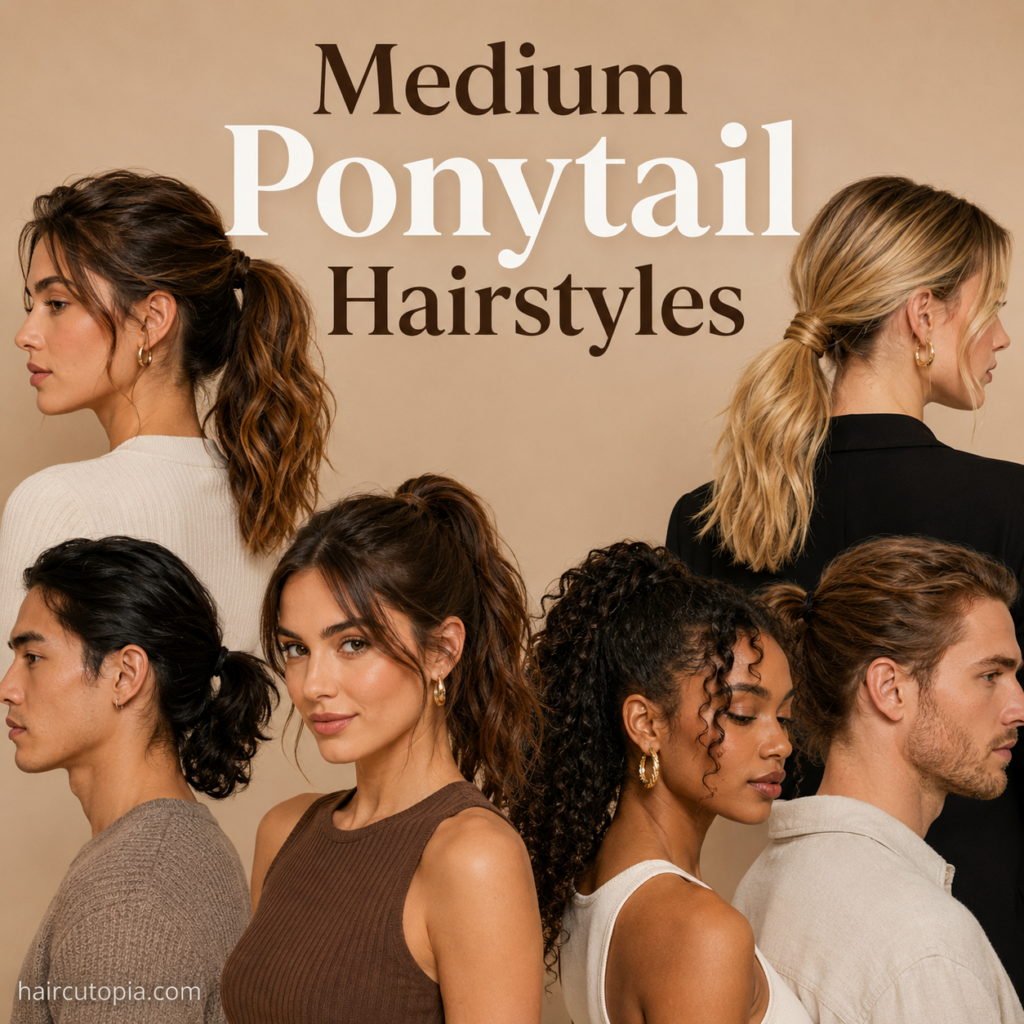
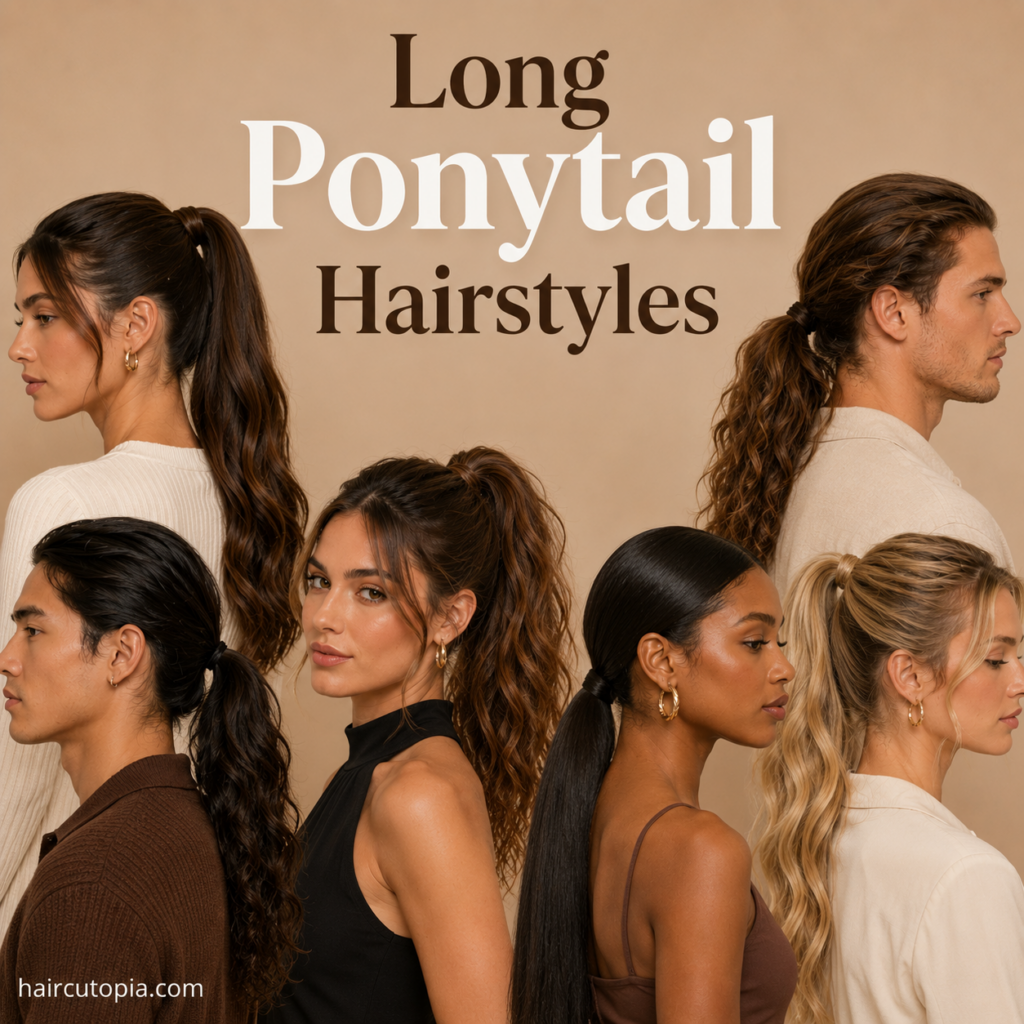
Long hair gives you a lot to work with, and few styles take advantage of that length quite like a ponytail. You can wear it high and dramatic, low and understated, sleek enough for a night out, or loose and textured when you want something more relaxed.
The best part is that a long ponytail doesn’t need to be complicated. Sometimes changing the placement, adding a little texture, or wrapping a strand around the elastic is enough to make an everyday ponytail feel completely different.
Whether your hair is straight, wavy, curly, coily, fine, or thick, these long ponytail hairstyles offer plenty of inspiration for putting all that length to good use.
Why Long Hair Is Perfect for Ponytails
With long hair, even a basic ponytail has presence. The extra length creates movement and makes details like waves, curls, braids, and bubble sections much easier to see.
You also have more freedom with placement. Long hair can usually reach a high ponytail without shorter sections falling out, while low ponytails have enough length to drape naturally down the back.
Long ponytails can be:
- Sleek and polished
- Loose and romantic
- Messy and textured
- Curly and voluminous
- Braided or twisted
- High and dramatic
- Low and minimalist
- Styled with accessories
That versatility is what keeps the ponytail from feeling like just a practical way to get your hair out of your face.
1. Classic High Ponytail
A high ponytail is one of the easiest ways to show off long hair.
Gather your hair toward the crown and secure it firmly with an elastic. The higher placement allows the length to fall freely behind you while creating lift around the face.
For a cleaner finish, smooth the sides with a brush and wrap a small section of hair around the elastic.
If you prefer something softer, loosen a few strands around the hairline and let the ponytail keep its natural texture.
2. Sleek High Ponytail
The sleek high ponytail takes the classic version in a more polished direction.
The focus is on a smooth crown, clean sides, and a sharply defined ponytail. Straightening the length can emphasize the dramatic shape, especially on very long hair.
A small amount of gel or styling cream can help control flyaways around the hairline. Finish by wrapping hair around the base to conceal the elastic.
The result is simple but striking.
3. Long Wavy Ponytail
Adding waves can completely change the appearance of a long ponytail.
Instead of hanging straight down, the hair develops movement and dimension. Loose waves can also make the ponytail appear fuller, which is especially helpful for finer hair.
You can wave your hair before creating the ponytail or style only the length afterward.
Keep the waves slightly irregular if you want a relaxed finish rather than perfectly uniform curls.
4. Long Curly Ponytail
Curly hair and long ponytails are a natural combination.
Pulling the hair back allows the curls to become the main feature, creating plenty of volume and movement through the length.
A high placement creates a bold, cascading effect, while a mid-height ponytail lets the curls fall naturally down the back.
Try to preserve your curl pattern rather than brushing through the ponytail once it’s secured.
5. Low Sleek Ponytail
A low ponytail can look incredibly polished on long hair.
Create a center or side part, smooth the hair toward the nape, and secure it close to the neck. Keep the ponytail straight for a minimalist finish or add a slight bend through the ends.
Wrapping a strand around the elastic makes the style look even cleaner.
This is one of those hairstyles that works just as easily with casual clothes as it does with something more dressed up.
6. Messy Long Ponytail
A messy ponytail doesn’t mean simply throwing your hair up and hoping for the best.
The most flattering versions usually combine deliberate texture with a slightly undone finish.
Start with waves or natural texture. Pull the hair into a mid-height or high ponytail, then gently loosen sections around the crown.
Leave a few pieces around the face and avoid smoothing every flyaway.
You want the ponytail to feel relaxed without losing its shape.
7. Voluminous High Ponytail
Long hair can sometimes become weighed down by its own length. Adding volume near the roots helps balance that weight.
Before creating your ponytail, use a volumizing product or gently tease underneath the crown. Secure the hair high on the head and loosen the crown slightly with your fingertips.
You can also add waves to the ponytail itself for additional fullness.
This works particularly well when you want a glamorous ponytail without adding complicated details.
8. Long Ponytail With Face-Framing Pieces
Leaving a few sections around the face can soften almost any ponytail.
Pull the majority of your hair back while keeping shorter layers or two small sections loose near the temples.
Those pieces can be worn naturally or given a slight curl.
This technique works with high, middle, and low ponytails and is particularly flattering when you already have long layers around the face.
9. Center-Part Low Ponytail
A center part paired with a long low ponytail creates a clean, balanced silhouette.
Part the hair evenly, smooth each side toward the nape, and secure the ponytail low.
The length becomes the focal point, so you can keep it straight and glossy or add subtle waves.
For an even more streamlined look, tuck the front sections behind your ears before securing the ponytail.
10. Side-Part Ponytail
Sometimes changing your part is all it takes to make a familiar hairstyle feel new.
A side part adds asymmetry and can create more volume through the front of the hair. Pair it with a low ponytail for a softer look or a mid-height ponytail for something more casual.
A deep side part can feel more dramatic, while a subtle one keeps the style understated.
11. Bubble Ponytail
Long hair gives you enough space to create a full bubble ponytail from top to bottom.
Start with a regular ponytail. Add another elastic several inches below the base, then gently pull outward on the hair between the two elastics.
Continue down the length, spacing the elastics evenly.
Once everything is secured, adjust each section until the “bubbles” have the fullness you want.
For a softer finish, use clear or hair-colored elastics. For something more playful, make the elastics part of the look.
12. Braided Ponytail
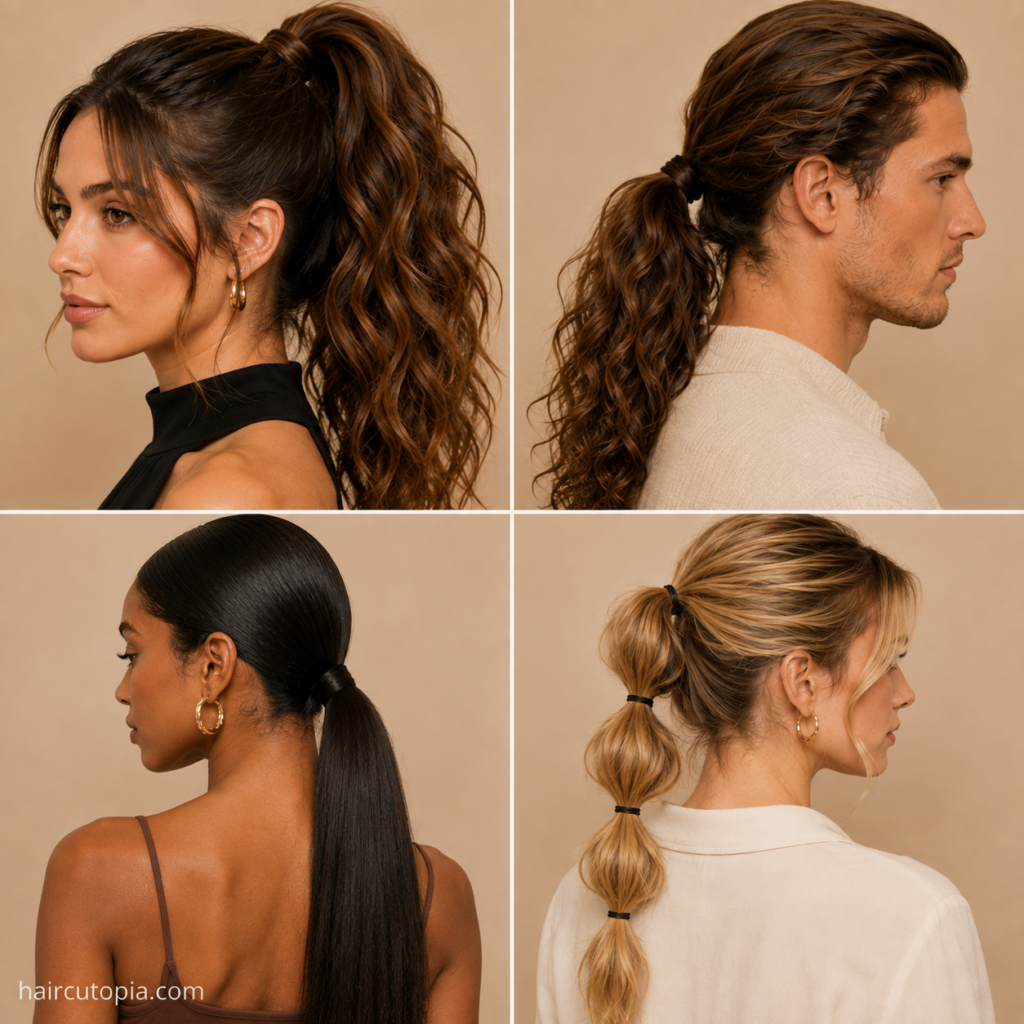
A braid adds texture while still allowing you to keep the basic ponytail shape.
Create a high or mid-height ponytail first, then braid the entire length. A traditional three-strand braid is the easiest option, but long hair gives you room to experiment with other techniques.
You could also braid only part of the ponytail and leave the ends loose.
Either way, the extra length makes the braid more noticeable.
13. High Curly Ponytail
If you have naturally curly or coily long hair, placing the ponytail high can create a beautiful cascading shape.
Gather the hair near the crown while preserving the natural texture through the ponytail.
You can smooth the hair around the perimeter for contrast or leave everything more textured for a softer result.
A few curls around the face can tie the whole style together.
14. Ponytail With Curtain Bangs
Curtain bangs work especially well with long ponytails because they provide shape around the face while the rest of the hair stays pulled back.
Style the bangs with a gentle outward bend and create your ponytail at whatever height feels most flattering.
A high ponytail creates more contrast between the bangs and the length, while a low ponytail produces a softer overall look.
15. Wrapped-Base Ponytail
Hiding the elastic is one of the simplest ways to upgrade a ponytail.
After securing your hair, take a small section from underneath the ponytail. Wrap it around the elastic until the band is completely covered.
Secure the end underneath with a bobby pin.
Because long hair gives you plenty of length to work with, you can make the wrapped section thin and subtle or wider and more noticeable.
16. Long Ponytail With Crown Volume
If you like the look of a ponytail but don’t want your hair completely flat against your head, add some height at the crown.
Gently tease the roots underneath the crown before pulling the hair back.
After securing the ponytail, use your fingertips to carefully loosen small sections at the top.
Keep the sides relatively controlled so the volume looks intentional rather than uneven.
17. Half-Up Long Ponytail
You don’t have to pull all your hair back to get the ponytail effect.
For a half-up ponytail, gather the upper section from around the temples and crown while leaving the rest of your length loose.
This gives you the lift of a ponytail while still showing off your long hair.
Try it with:
- Loose waves
- Defined curls
- Straight hair
- A high half-ponytail
- A small wrapped base
- Face-framing layers
It’s also a useful option when you want your hair away from your face without wearing a full updo.
18. Extra-Long Straight Ponytail
If your hair is especially long, sometimes the length itself is enough to make a statement.
A straight ponytail emphasizes that length without adding unnecessary detail.
Smooth the hair, secure it at a high or mid-height position, and keep the ponytail straight from base to ends.
A polished finish around the crown helps make the simplicity feel deliberate.
19. Loose Low Ponytail
Not every long ponytail needs to be tightly secured.
A loose low ponytail works beautifully with naturally wavy or lightly curled hair. Gather the hair at the nape without pulling it tightly against the scalp.
Gently loosen the crown and allow a few pieces to fall around the face.
The result feels soft, relaxed, and effortless.
20. Flipped Low Ponytail
The flipped ponytail adds a subtle twisted detail without requiring much additional styling.
Create a low ponytail and loosen the elastic slightly.
Make an opening directly above the elastic, then flip the ponytail through it. Tighten the elastic gently once the hair is in place.
Long hair makes the twist especially noticeable because the length continues flowing beneath it.
21. Long Ponytail With a Scrunchie
A scrunchie can turn an everyday ponytail into part of the outfit.
Use a large scrunchie around a high ponytail for a playful look or choose a smaller, more understated version for a low ponytail.
Long hair creates enough visual weight that larger accessories usually don’t overwhelm the hairstyle.
You can also coordinate the scrunchie with your clothing or use it as a contrasting detail.
22. Long Ponytail With a Ribbon
A ribbon is another easy way to dress up a ponytail.
Tie one around the base and allow the ends to hang alongside the hair. Long ribbons work particularly well with low ponytails because they follow the natural vertical line of the hairstyle.
You can keep the bow small and subtle or make it more prominent depending on the occasion.
23. Twisted Ponytail
A twisted ponytail creates detail around the base while leaving most of the length loose.
Take sections from each side of the head, twist them toward the back, and secure them together with the rest of the hair.
The twists can be tight and polished or slightly loosened for a more romantic appearance.
Long wavy hair works particularly well with this style because the texture continues naturally below the twisted sections.
24. Long Ponytail With Small Braids
You don’t have to braid the entire ponytail to incorporate braided details.
Instead, add one or two small braids around the hairline, through the sides, or within the ponytail itself.
These smaller details can add texture without taking attention away from the length.
They also work particularly well with casual, festival-inspired, and textured ponytail styles.
25. Glamorous Long Ponytail
For special occasions, a long ponytail can easily replace a more traditional updo.
Start by adding waves or large curls through the length. Create some lift at the crown and pull the hair into a high or mid-height ponytail.
Smooth the sides, wrap hair around the elastic, and arrange the curls so they fall naturally.
A couple of styled pieces around the face can soften the finished look.
The result has the drama of an elaborate hairstyle without requiring every section of hair to be pinned into place.
How to Make a Long Ponytail Look Fuller
Long hair doesn’t automatically mean a thick-looking ponytail. Fine hair or heavy length can sometimes make a ponytail appear flatter than expected.
Fortunately, a few styling changes can create more visual volume.
Add Waves or Curls
Texture makes individual sections of hair separate visually instead of hanging together in one straight line.
Even loose waves can make a noticeable difference.
Create Root Volume
Adding lift at the crown balances the weight of long hair.
Try a volumizing product, gentle teasing underneath the surface, or simply loosen the crown after securing the ponytail.
Fluff the Ponytail
Use your fingers to separate the length rather than brushing everything together.
If you’ve curled your hair, allow the curls to cool before gently separating them.
Try a Double Ponytail
The double-ponytail technique can create the appearance of both extra volume and length.
Divide your hair horizontally into two sections. Create a ponytail with the upper section, then another directly underneath it.
Position the upper ponytail so it conceals the lower elastic.
Once the two sections blend together, they can look like one longer, fuller ponytail.
How to Keep a Long Ponytail From Falling Flat
Long hair has weight, which means a high ponytail may gradually slide downward during the day.
A few adjustments can help it stay in place:
- Choose a strong elastic designed for your hair thickness.
- Avoid applying too much slippery serum near the roots.
- Secure the ponytail firmly without making it painfully tight.
- Use bobby pins beneath the base for additional support.
- Start with slightly textured hair rather than freshly conditioned, slippery strands.
- Position very heavy hair slightly lower on the head.
If your ponytail repeatedly causes scalp discomfort, lowering it is usually better than simply tightening the elastic.
Choosing a Long Ponytail for Your Hair Texture
Your natural texture can help determine which ponytail requires the least effort while still looking intentional.
Straight Hair
Straight long hair is ideal for sleek high ponytails, minimalist low ponytails, bubble styles, and wrapped-base looks.
If you want additional fullness, add some texture before putting it up.
Wavy Hair
Waves naturally create movement, making them perfect for loose, messy, romantic, and voluminous ponytails.
Avoid overbrushing if you want to preserve the wave pattern.
Curly Hair
Long curly hair creates plenty of volume without much additional styling.
High ponytails can emphasize the curls, while lower placements allow them to cascade naturally down the back.
Coily Hair
Long coily hair can create striking high ponytails and voluminous pony styles. You can contrast a smoother perimeter with natural texture through the length or keep the entire hairstyle textured.
Fine Hair
Fine long hair often benefits from waves, root volume, and strategic placement.
Avoid loading the hair with too many heavy styling products, which can make the ponytail look flatter.
Thick Hair
Thick long hair creates naturally substantial ponytails but can also become heavy.
Strong elastics and slightly lower placements may feel more comfortable, particularly when you’re wearing the hairstyle for several hours.
High vs. Mid vs. Low Ponytails
Where you place your ponytail can change the entire feel of the hairstyle.
High Ponytail
A high ponytail creates lift and puts the length on display. It’s a good option when you want something bold, sporty, or glamorous.
Mid-Height Ponytail
The middle placement is probably the most versatile. It keeps the hair away from your face without creating as much tension as a very high ponytail.
Low Ponytail
Low ponytails feel softer and more understated. They’re also a good option for very long or thick hair because the lower position can reduce some of the pulling at the scalp.
There isn’t a universally best height. Try moving the ponytail around and see how each position changes the way your hair frames your face.
How to Make a Long Ponytail Look More Polished
You don’t need to completely change the hairstyle to make an everyday ponytail look more finished.
Try one or two small details:
- Wrap a section around the elastic.
- Define your center or side part.
- Smooth flyaways around the hairline.
- Add loose waves through the ponytail.
- Curl the ends.
- Leave out intentional face-framing pieces.
- Add subtle crown volume.
- Use a ribbon, scrunchie, cuff, or other accessory.
- Incorporate a small braid or twist.
Usually, one deliberate detail is enough.
How to Protect Long Hair When Wearing Ponytails
Ponytails are convenient, but wearing the same tight style in the same position every day can put repeated tension on certain areas of the hair.
You don’t have to stop wearing them. A little variety can help.
Consider rotating between high, middle, and low placements rather than securing the elastic in exactly the same spot every day.
It can also help to:
- Avoid pulling the hair excessively tight.
- Use smooth elastics without exposed metal.
- Give your hair occasional breaks from tight styles.
- Detangle the length gently before styling.
- Remove elastics carefully rather than pulling them through the hair.
- Avoid repeatedly tightening your ponytail throughout the day.
Comfort matters. If your ponytail feels painfully tight, that’s usually a good sign to loosen it.
Frequently Asked Questions About Long Ponytail Hairstyles
What is the best ponytail for long hair?
It depends on your hair texture and the look you want. High ponytails showcase length and create lift, while low ponytails are comfortable and polished. Wavy and voluminous ponytails are particularly useful when you want long hair to appear fuller.
How do I make my long ponytail look better?
Small details make a big difference. Try adding waves, creating volume at the crown, wrapping hair around the elastic, defining your part, or leaving a few intentional pieces around your face.
How can I make a long ponytail look thicker?
Adding waves or curls is one of the easiest methods. You can also gently tease underneath the ponytail, create root volume, or use the double-ponytail technique to give the appearance of additional fullness.
Is a high or low ponytail better for long hair?
Both work well. High ponytails emphasize length and create more lift, while low ponytails generally feel softer and may be more comfortable for very thick or heavy hair.
Can men with long hair wear ponytail hairstyles?
Yes. Long ponytails work across hair types and aren’t limited to one gender. Low and mid-height ponytails are common choices, while curly, wavy, braided, and half-up versions offer additional options.
Are ponytails damaging to long hair?
A ponytail itself isn’t necessarily damaging, but repeatedly wearing extremely tight styles can place tension on the hair and hairline. Changing placement, using smooth elastics, and avoiding excessive tension can make ponytails gentler for regular wear.
Final Thoughts
Long ponytail hairstyles can be as simple or as styled as you want them to be.
On busy days, a classic high or low ponytail gets your hair out of the way in minutes. When you want something different, waves, curls, braids, twists, bubbles, accessories, or a wrapped base can transform essentially the same hairstyle.
Your hair texture can do much of the work for you, too. Straight hair creates clean lines, waves add movement, curls bring natural volume, and coily textures can produce beautifully full ponytails.
Experiment with different heights and finishes rather than relying on the same placement every day. With long hair, even a small change can make your ponytail look like an entirely different hairstyle.