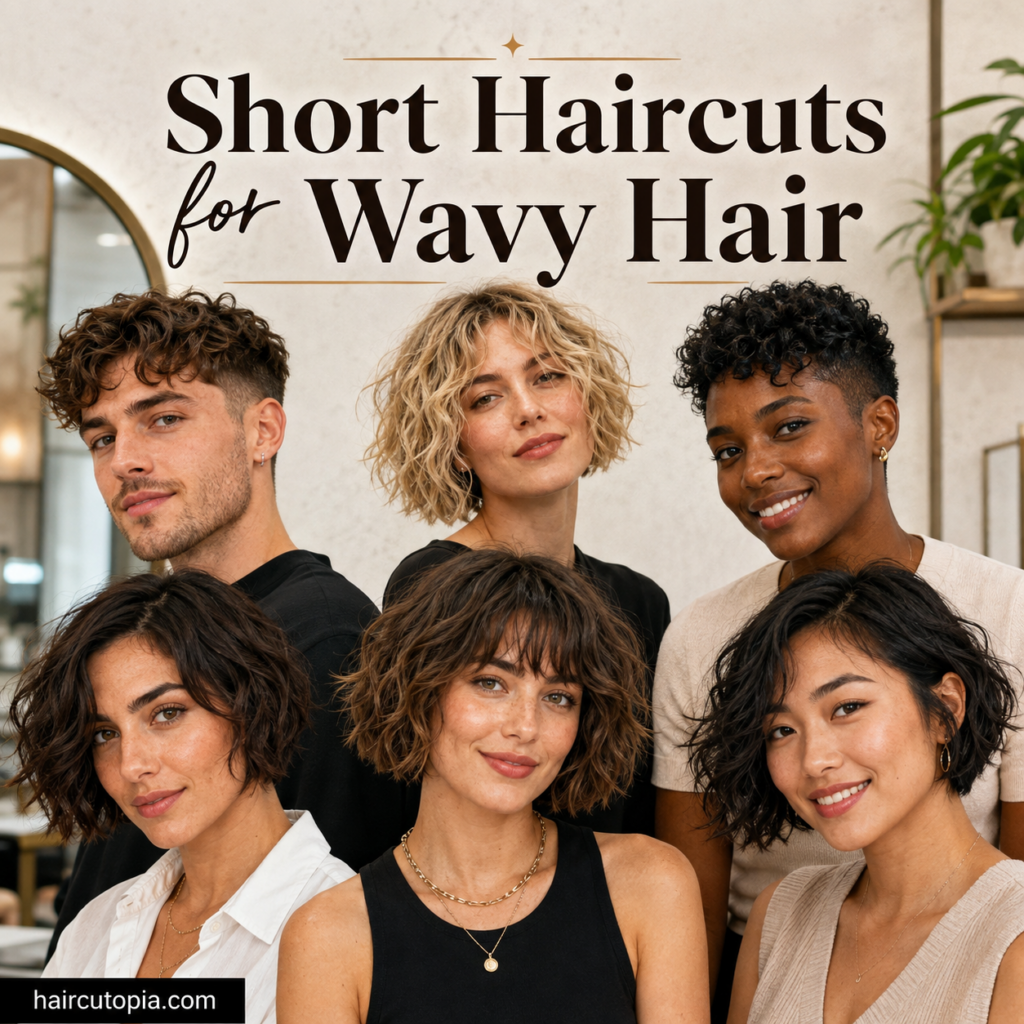
Wavy hair sits in that sweet spot between straight and curly. It has natural movement, texture, and volume, but it can also have a mind of its own. Cut it too bluntly and the waves may disappear. Remove too much weight and suddenly everything gets bigger than expected.
That’s why the best short haircuts for wavy hair work with the natural wave pattern rather than trying to control it.
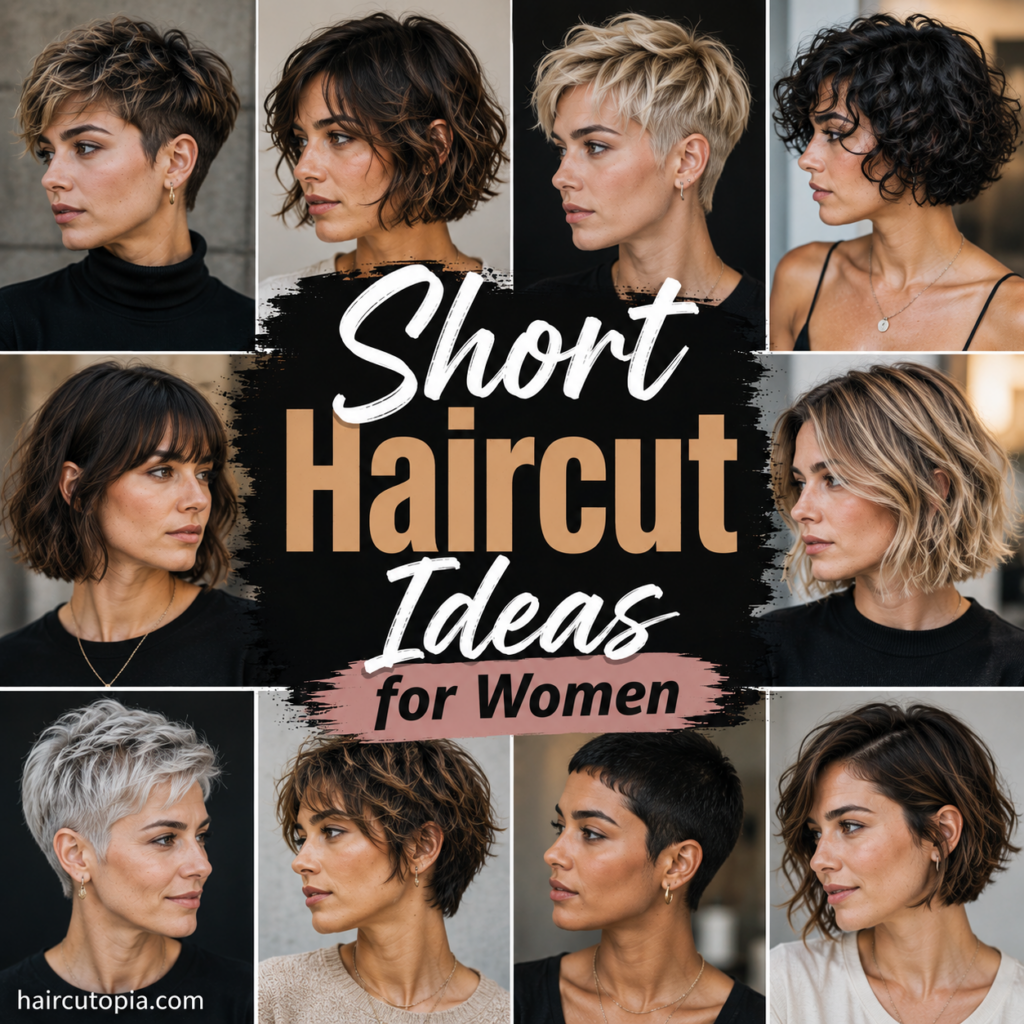
Whether your waves are loose and subtle or closer to defined curls, going short can make them look more noticeable while cutting down on styling time. From textured bobs and layered crops to pixies and shags, there are plenty of options that let wavy hair do what it does best.
Here are some of the best short haircuts for wavy hair, along with tips for choosing a cut that suits your texture, face shape, and everyday routine.
Why Wavy Hair Works So Well with Short Haircuts
Wavy hair naturally brings movement to shorter styles. Where straight hair may need styling products or heat tools to create texture, wavy hair often already has it.
Removing length can also take away some of the weight that stretches waves downward. As a result, a shorter haircut may make your natural pattern look more defined.
A good short cut can help:
- Bring out your natural wave pattern
- Add volume and movement
- Remove heavy or damaged ends
- Create shape around the face
- Reduce drying and styling time
- Make fine hair appear fuller
- Give thick wavy hair a more intentional shape
The key is getting the shape and layering right. Wavy hair can shrink, expand, or fall differently depending on humidity, styling, and how much weight is removed.
Best Short Haircuts for Wavy Hair
There isn’t one short haircut that works for every type of wave. Some people want something soft and easy to grow out, while others are ready for a dramatic crop.
These styles make particularly good use of natural wavy texture.
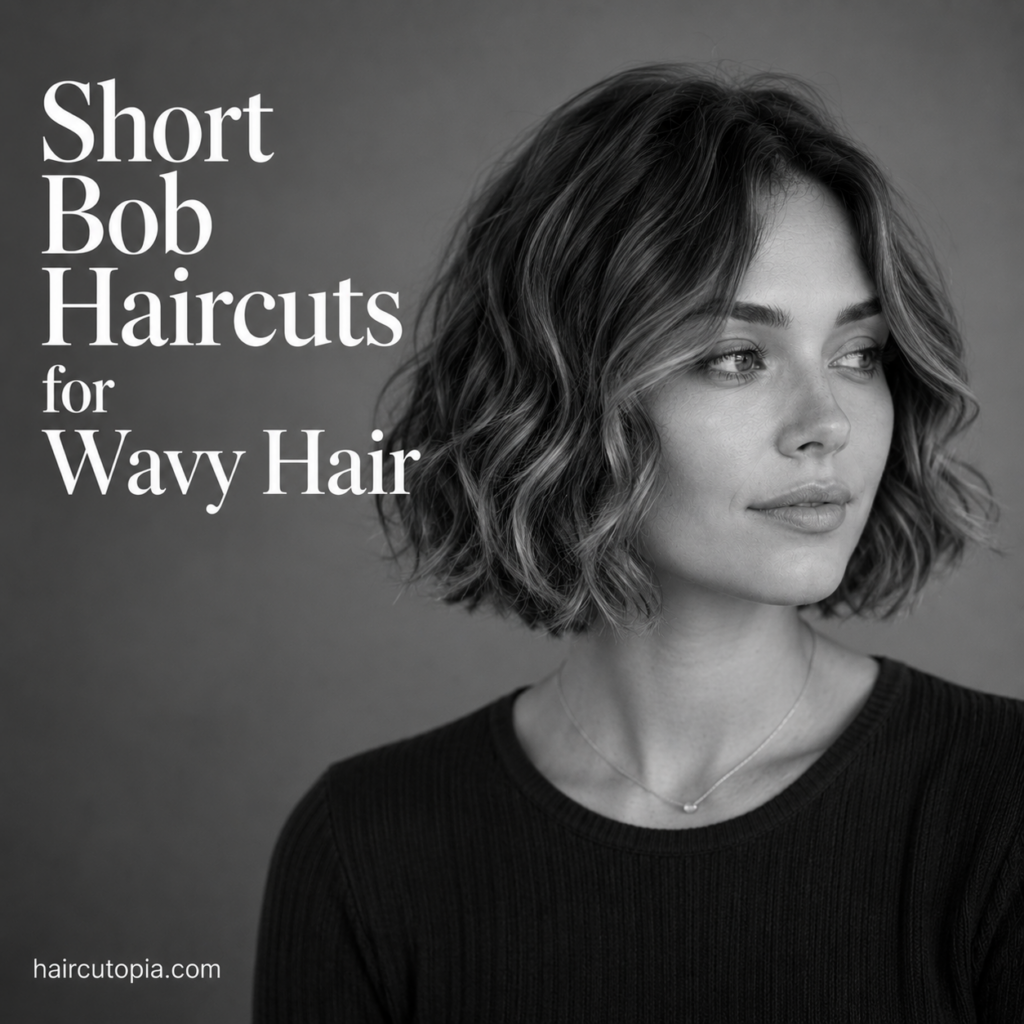
1. Wavy Bob
The classic bob is one of the easiest places to start if you want to go shorter without making a dramatic jump.
Usually cut somewhere between the jaw and shoulders, a wavy bob has enough length to show off the natural pattern while still feeling noticeably short.
A slightly textured or layered version tends to work especially well because the waves keep the cut from looking too rigid.
If your hair becomes wider as it gets shorter, ask your stylist to consider how much volume will develop around the sides before deciding exactly where the bob should fall.
2. Layered Wavy Bob
Adding layers can give a traditional bob more movement and prevent the bottom from becoming too heavy.
This is particularly helpful for medium or thick wavy hair. Strategically placed layers remove weight without eliminating the fullness that makes the style attractive.
For finer waves, fewer and longer layers are usually safer. Too many short layers can make fine hair look thinner at the ends.
3. Short Shag
If you like hair that looks a little undone, the short shag and wavy texture are a natural match.
Shags typically combine multiple layers with plenty of movement around the crown and face. Instead of creating a perfectly smooth silhouette, the haircut encourages texture.
On wavy hair, that can produce an effortless, lived-in look without requiring much styling.
A short shag is especially worth considering if your hair tends to look flat at the roots but becomes wavier through the lengths.
4. Wavy Pixie Cut
A pixie cut can make natural waves surprisingly noticeable.
Keeping some extra length on top allows the hair to bend, wave, or curl while the shorter sides create contrast. The result can range from soft and feminine to edgy and highly textured depending on the shape.
A longer pixie is a good starting point if you’re nervous about going extremely short. It gives you more flexibility for styling and generally makes the transition easier.
5. Long Pixie
The long pixie falls somewhere between a traditional pixie and a very short bob.
There is usually more length around the top, front, or sides, giving your natural waves room to form. You can wear it swept to one side, tousled forward, tucked behind the ears, or styled with more volume.
It’s also a practical choice if you want a short haircut without committing to frequent trims around every part of the head.
6. Wavy Bixie
The bixie combines elements of a bob and pixie.
It has the cropped feeling of a pixie but keeps enough length and softness to create movement around the face and sides. Natural waves make the style even more textured.
A bixie can be especially flattering when cut with soft layers rather than sharp, uniform lines.
It’s also a good transitional haircut if you eventually want to move from a bob to a pixie—or grow a pixie back out.
7. French Bob
A French bob is typically shorter than a classic bob, often ending around the jaw or slightly above it.
Paired with natural waves, the cut has a relaxed quality that keeps it from feeling overly precise. It can be worn with bangs, a soft fringe, or without either.
The jaw-length shape draws attention toward the cheekbones and jawline, so the exact length can be adjusted based on the features you want to emphasize.
8. Chin-Length Wavy Bob
Not quite ready for a very short cut?
A chin-length bob provides a noticeable change while leaving enough hair for your waves to develop.
The length works with everything from loose S-shaped waves to more defined patterns. It can also be styled with a middle part, side part, tucked behind the ears, or pinned back.
Because chin-length cuts create a strong horizontal line around the face, adding subtle layers or texture can make the shape feel softer.
9. Short Wolf Cut
The wolf cut combines shaggy layers with some of the shape associated with a mullet, although modern versions can be much more subtle.
On naturally wavy hair, the layers help create volume near the crown while allowing the lower sections to move freely.
You don’t need to go extreme. A softer short wolf cut can provide the same textured effect without creating a dramatic difference between the front and back.
10. Short Wavy Hair with Bangs
Bangs and waves don’t have to be enemies.
In fact, letting bangs retain some of their natural texture can make them easier to maintain than constantly trying to straighten them.
Options include:
- Curtain bangs
- Wispy bangs
- Side-swept bangs
- Textured fringe
- Short shaggy bangs
- Longer face-framing bangs
Keep in mind that wavy bangs can shrink when they dry. Cutting them slightly longer gives you room for the natural pattern to form.
11. Asymmetrical Wavy Bob
An asymmetrical bob creates a more distinctive shape by keeping one side slightly longer than the other.
Waves soften the difference in length, so the asymmetry doesn’t necessarily have to look dramatic.
This is a good option if you like the practicality of a bob but want something less traditional.
12. Wavy Crop
A short crop keeps the hair close around the sides and back while leaving enough texture on top for the natural waves to show.
It can be styled neatly or left deliberately tousled.
For thicker hair, removing some bulk internally can help the cut sit closer to the head. Fine hair may benefit from keeping more density through the top.
13. Undercut with Wavy Top
For a bolder look, an undercut creates contrast between very short sides or back and longer wavy hair on top.
The longer section provides enough room for texture while the undercut removes significant bulk.
It can work particularly well for very dense wavy hair, although maintaining the short sections usually means more frequent trips to the barber or salon.
14. Ear-Length Wavy Cut
An ear-length cut is shorter than a traditional bob but longer and softer than many pixies.
Keeping some length around the ears gives the waves enough room to bend naturally. Depending on the layering, the style can look polished, vintage-inspired, or intentionally messy.
It’s another good middle ground for anyone interested in short hair but not quite ready for a close crop.
Short Haircuts for Different Wavy Hair Types
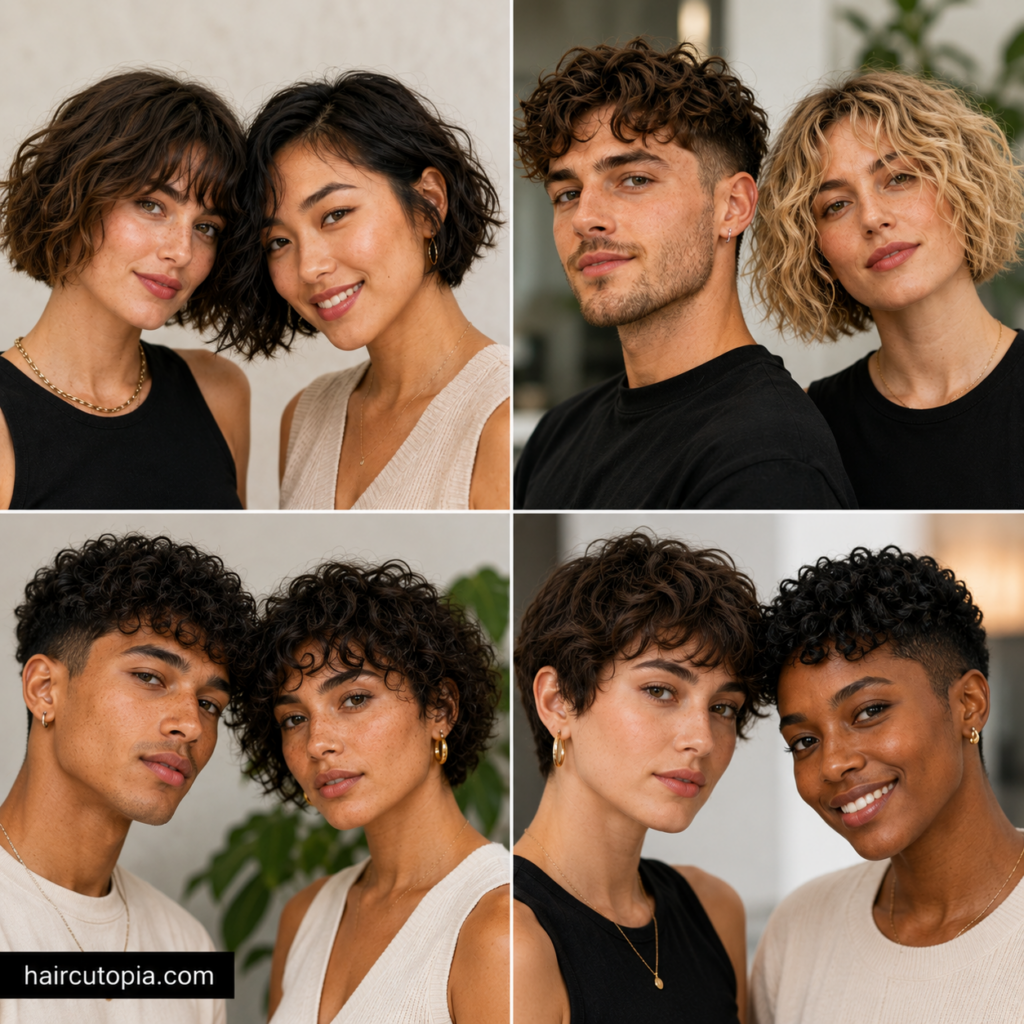
Not all wavy hair behaves the same way.
Wave patterns are commonly grouped into Types 2A, 2B, and 2C. Knowing roughly where your hair falls can help when choosing a short haircut.
Short Haircuts for Type 2A Wavy Hair
Type 2A hair usually has loose, subtle waves and may appear nearly straight in some areas.
Because the pattern is relatively gentle, overly aggressive layering can sometimes remove too much density.
Good options include:
- Blunt or lightly textured bobs
- Chin-length bobs
- Long pixies
- Soft layered crops
- Bixies
Lightweight styling products are generally preferable because heavy creams can flatten subtle waves.
Short Haircuts for Type 2B Wavy Hair
Type 2B waves usually have a more noticeable S-shaped pattern.
This texture works particularly well with layered styles because there is enough natural movement for the layers to emphasize.
Consider a:
- Layered bob
- Short shag
- French bob
- Bixie
- Textured crop
- Soft wolf cut
A little layering can encourage definition while preventing the ends from feeling overly heavy.
Short Haircuts for Type 2C Wavy Hair
Type 2C hair has stronger waves and may form loose curls in certain areas.
Because this texture can have more volume and shrinkage, your stylist should account for how the hair behaves when completely dry.
Styles with enough length for the pattern to form are often easiest to manage.
Good choices include:
- Layered wavy bobs
- Shags
- Longer pixies
- Bixies
- Textured crops
Avoid assuming the haircut will sit exactly where it does when the hair is wet. A cut that looks chin-length while damp may finish noticeably shorter once the waves spring back.
Short Wavy Haircuts for Fine Hair
Fine wavy hair presents an interesting balance. You want enough layering to encourage movement without removing so much hair that the ends look sparse.
A relatively blunt perimeter can help maintain the appearance of density.
Some good options are:
- Blunt wavy bob
- Chin-length bob
- Long pixie
- Soft bixie
- Lightly layered bob
Instead of using heavy styling creams, try lightweight mousse, foam, or a small amount of wave-enhancing product.
Volume at the roots can also make the overall haircut look fuller.
Short Wavy Haircuts for Thick Hair
Thick wavy hair can look fantastic short, but weight distribution matters.
Simply cutting everything to one length may create excessive width around the bottom. Thoughtful layering can remove bulk and create a more balanced shape.
Short shags, layered bobs, wolf cuts, and textured pixies can all work well.
Your stylist may also remove internal weight rather than relying entirely on visible layers. This helps reduce bulk while preserving the overall silhouette.
Choosing a Short Wavy Haircut for Your Face Shape
Face shape doesn’t need to dictate your haircut, but it can help you decide where to place length and volume.
Round Faces
Styles that create some height or vertical movement can complement round faces.
Consider longer pixies, asymmetrical bobs, layered crops, or bobs that fall slightly below the chin.
Oval Faces
Oval faces generally work well with a wide range of short hairstyles.
Pixies, bobs, shags, bixies, and cropped styles can all be adjusted to highlight different features.
Square Faces
Soft waves naturally contrast with a more defined jawline.
Layered bobs, side-swept pixies, textured shags, and face-framing layers can create additional movement around the face.
Heart-Shaped Faces
Haircuts that create some fullness around the jaw can balance a wider forehead and narrower chin.
Chin-length bobs, French bobs, bixies, and styles with curtain bangs can work particularly well.
Long or Oblong Faces
Rather than adding all the volume at the crown, consider styles that create some width through the sides.
Wavy bobs, short shags, and textured cuts with bangs can help create that balance.
Should Wavy Hair Be Layered When Cut Short?
Often, yes—but not automatically.
Layers can encourage waves to form by removing some of the weight pulling them downward. They can also prevent thick hair from developing a triangular shape.
But more layers aren’t always better.
Fine or low-density wavy hair may look fuller with minimal layering. Thick, dense hair can usually handle considerably more.
The best layering strategy depends on:
- Hair density
- Wave pattern
- Strand thickness
- Desired volume
- Haircut length
- How much shrinkage you experience
Instead of simply asking for “lots of layers,” show your stylist the overall shape and amount of volume you’re trying to achieve.
How to Style Short Wavy Hair
One of the biggest advantages of short wavy hair is that styling doesn’t need to be complicated.
A simple routine is often enough.
- Apply styling product to damp hair.
- Distribute it gently through the lengths.
- Scrunch upward to encourage your natural waves.
- Air-dry or use a diffuser on low heat.
- Avoid repeatedly touching the hair while it dries.
- Once dry, gently separate any sections that feel too stiff.
Depending on your hair, mousse, lightweight gel, curl cream, or texturizing products may help.
You don’t necessarily need several products at once. Start with one and see how your hair responds.
How to Keep Short Wavy Hair from Getting Frizzy
Some frizz is simply part of having textured hair, and it can actually contribute to a relaxed, voluminous look.
If you want more definition, however, a few habits can help.
Avoid aggressively rubbing wet hair with a traditional bath towel. Instead, gently squeeze out excess water with a microfiber towel or soft cotton T-shirt.
Applying styling products while the hair is still damp can also help waves form into more defined sections.
Other useful habits include:
- Avoiding excessive heat
- Using conditioner regularly
- Detangling gently
- Limiting unnecessary brushing when dry
- Using a diffuser at a lower speed
- Sleeping on a satin or silk pillowcase if friction causes frizz
The goal doesn’t have to be eliminating every stray hair. A little softness often makes wavy hairstyles look more natural.
How Often Should You Trim Short Wavy Hair?
Short hairstyles usually need more frequent maintenance than long hair because small amounts of growth can noticeably change their shape.
A very short pixie or crop may benefit from a trim roughly every four to six weeks.
Bobs, bixies, and shags can often go longer—around six to ten weeks—depending on how structured the haircut is and whether you like the way it grows out.
If you prefer a relaxed style, you may be able to stretch the time between appointments.
What to Ask Your Stylist
Photos are useful, but explain what you actually like about the haircut rather than relying on the image alone.
Talk about:
- How much time you normally spend styling
- Whether you air-dry or diffuse
- How much volume you want
- Whether your hair shrinks significantly
- Areas that tend to become especially wavy
- Whether you regularly straighten your hair
- How frequently you’re willing to get trims
If you usually wear your hair naturally wavy, make that clear before the cut begins.
Your stylist needs to understand how you actually wear your hair—not just how it looks freshly washed at the salon.
Is Short Hair Good for Wavy Hair?
For many people, absolutely.
Short hair can remove the weight that stretches waves out, allowing more texture and movement to appear. It can also make daily styling quicker and give fine or flat hair more lift.
The tradeoff is that short cuts tend to require more regular trims, and removing length can sometimes make wavy hair more voluminous than expected.
That’s why the best haircut isn’t necessarily the shortest or trendiest one. It’s the one that works with your natural texture and the amount of maintenance you’re comfortable with.
Frequently Asked Questions About Short Wavy Haircuts
What is the best short haircut for wavy hair?
Layered bobs, chin-length bobs, bixies, shags, and longer pixies are all versatile options. The best choice depends on your wave pattern, density, face shape, and preferred level of maintenance.
Does wavy hair get curlier when cut short?
It can. Removing length reduces the weight pulling on the hair, which may allow waves or loose curls to spring up more noticeably. The effect varies depending on your natural texture.
Is a bob good for wavy hair?
Yes. Bobs are particularly versatile for wavy hair because they leave enough length for the wave pattern to develop while still creating a clearly defined short hairstyle.
Should fine wavy hair have layers?
Fine wavy hair can benefit from subtle layering, but too many layers may remove density and make the ends appear thin. Keeping a stronger perimeter with carefully placed layers is often a better approach.
Are pixie cuts good for wavy hair?
Yes. A pixie with extra length through the top can showcase natural waves while keeping the sides and back manageable. Longer pixies also offer more styling flexibility.
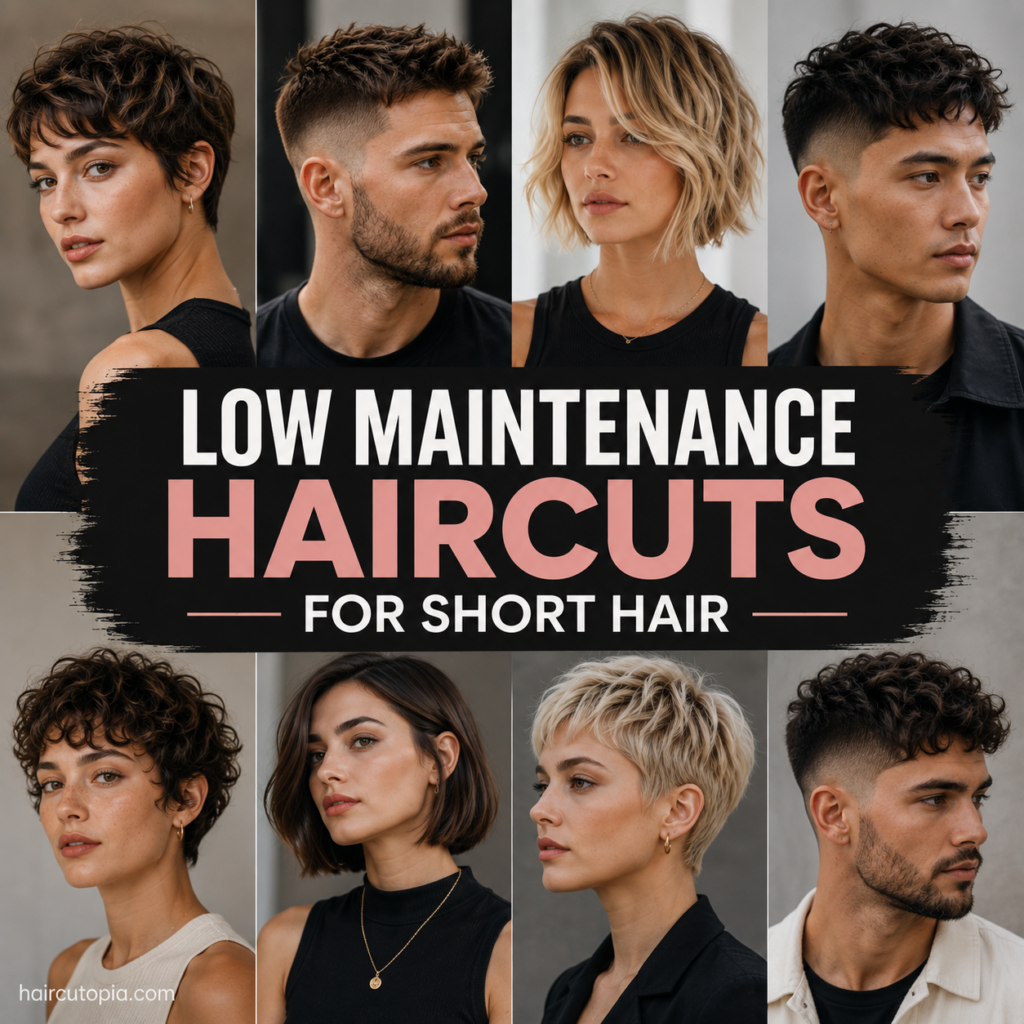
Can short wavy hair be low maintenance?
It can be low maintenance day to day, especially if you embrace your natural texture. However, very short cuts generally require more frequent trims to maintain their shape.
Final Thoughts on Short Haircuts for Wavy Hair
Natural waves already provide much of what makes a short haircut interesting: texture, movement, and volume.
The right cut simply gives those waves a better shape.
A chin-length bob is a comfortable starting point if you’re hesitant about losing too much length. A layered bob or shag can bring out more movement, while a bixie or pixie offers a bigger transformation.
Most importantly, choose a haircut based on how your own hair behaves. Two people can technically have the same wave type and still need completely different cuts because of differences in density, thickness, shrinkage, and styling habits.
Work with your natural texture rather than fighting it, and short wavy hair can be surprisingly easy—and fun—to wear.