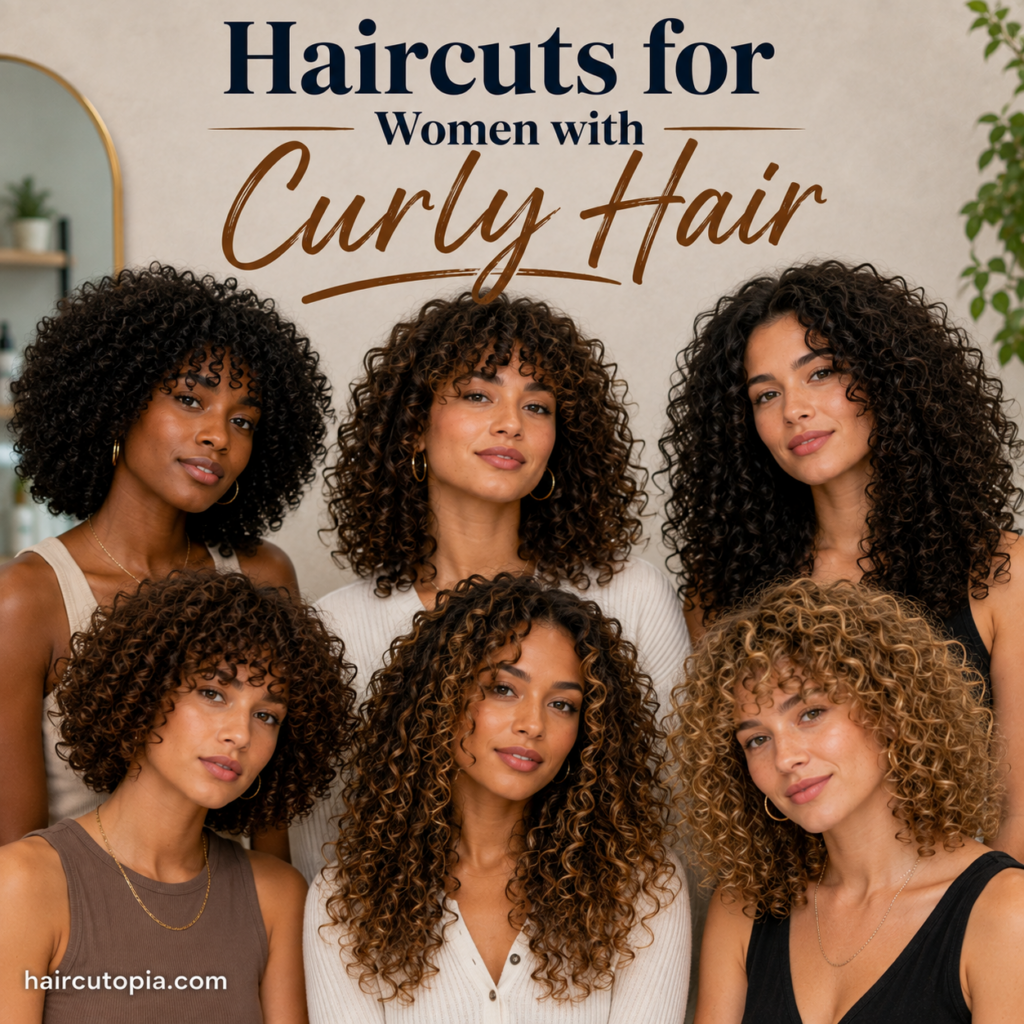
Curly hair already brings plenty of personality to a haircut. The trick is finding a shape that lets those curls move naturally without creating too much bulk, flattening the roots, or turning everyday styling into a project.
For some women, that means a short curly pixie that takes minutes to style. For others, it’s a shoulder-length layered cut that offers a little more versatility. And if you love your length, strategic layers can make long curls feel lighter without sacrificing the hair you’ve spent years growing.
There’s no single haircut that’s universally best for curly hair. Your curl pattern, density, face shape, lifestyle, and preferred amount of maintenance all matter.
Below, we’ll explore some of the best haircuts for women with curly hair, from cropped styles and bobs to shags, butterfly cuts, and long layers.
What Makes a Good Haircut for Curly Hair?
A great curly haircut isn’t just about length. Shape matters just as much.
Straight hair tends to fall downward, while curly hair expands in multiple directions. That’s why a haircut that looks balanced on straight hair can behave completely differently once curls enter the picture.
A well-designed curly haircut can:
- Encourage natural curl definition
- Reduce unwanted bulk
- Create movement
- Prevent flat roots
- Frame the face
- Make styling easier
- Give curls a more balanced silhouette
The goal isn’t necessarily to remove volume. For many curly hairstyles, volume is part of what makes the cut work. It’s about placing that volume where it complements the overall shape.
Things to Consider Before Choosing a Curly Haircut
Saving inspiration photos is a great starting point, but your own hair should ultimately guide the decision.
Curl Pattern
Loose waves and tight coils don’t respond to a haircut in the same way.
Loose curls may need additional length before their pattern becomes noticeable. Tighter curls can spring considerably shorter once weight is removed.
A stylist experienced with curly hair can account for those differences.
Hair Density
Two people can have similar curl patterns but completely different densities.
Thick curly hair often benefits from strategic weight removal, while fine curls may need more fullness around the ends.
Shrinkage
Shrinkage is one of the biggest considerations when cutting curly hair.
A haircut that appears shoulder-length while wet could sit considerably higher once completely dry.
This is especially important when cutting bangs or shorter face-framing pieces.
Your Styling Routine
Think about how you actually wear your hair.
If you almost always air dry and wear your curls naturally, tell your stylist. If you regularly straighten your hair or alternate between different textures, that matters too.
Your haircut should work with your real routine, not just how your hair looks when professionally styled.
Best Haircuts for Women with Curly Hair
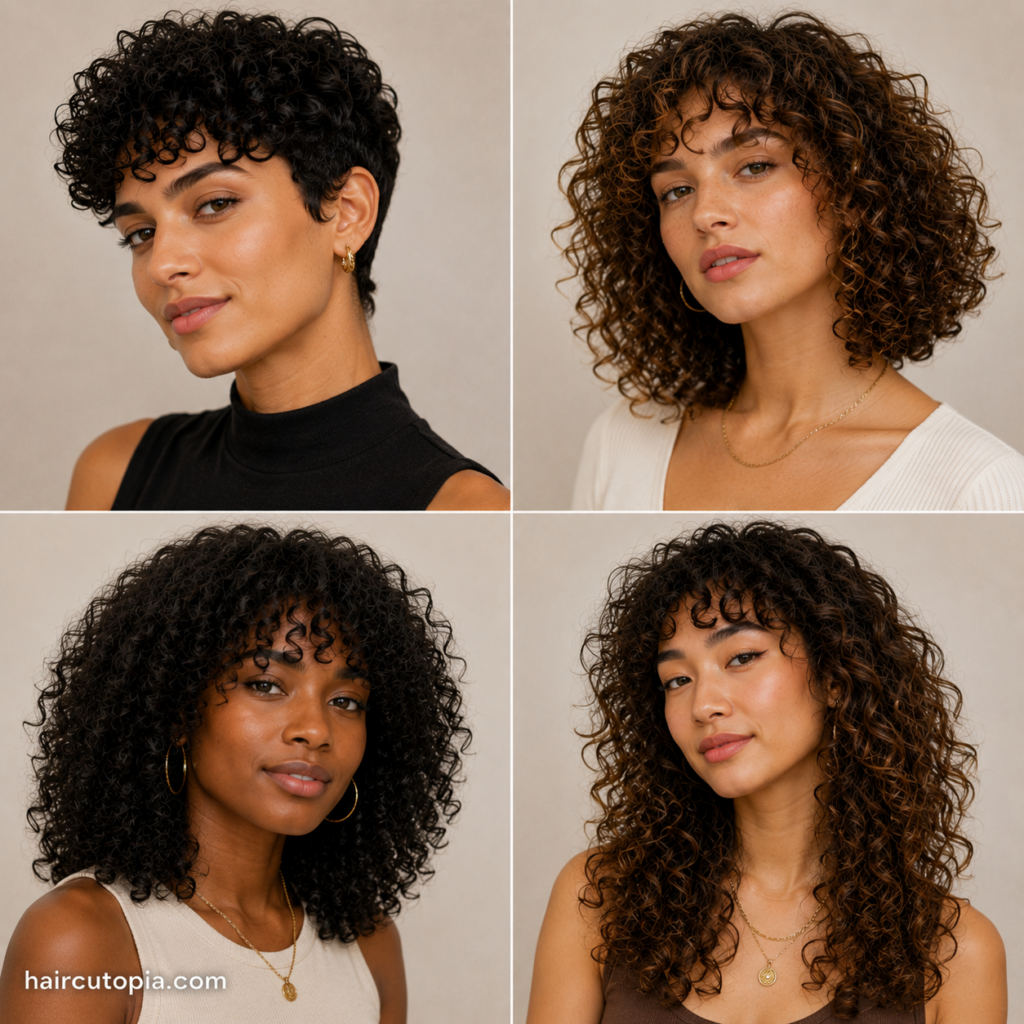
From short crops to waist-length layers, curly texture works with far more haircuts than people sometimes realize.
Curly Pixie Cut
A curly pixie puts natural texture front and center while eliminating much of the weight associated with longer curls.
The sides and back can be kept relatively short while leaving enough length on top for the curl pattern to remain visible.
This style works especially well if you want:
- Quick styling
- Lightweight hair
- Natural volume on top
- A bold, defined shape
Keep in mind that shorter curls may spring up considerably once excess weight is removed.
Long Curly Pixie
If a traditional pixie feels too short, a longer version provides a softer alternative.
Extra length around the top and front allows curls to frame the face while the back remains manageable.
It’s also easier to grow out than an extremely cropped pixie.
Curly Bixie
The bixie falls somewhere between a bob and a pixie.
It has the lightness of short hair but leaves enough length to create movement around the face.
Curly texture gives this cut an intentionally tousled appearance that works particularly well with subtle layers.
Classic Curly Bob
A curly bob is timeless for a reason.
Usually falling somewhere between the jaw and shoulders, the bob provides enough length for curls to form while maintaining a clearly defined shape.
Depending on your curl pattern, it can look polished, playful, voluminous, or all three.
Layered Curly Bob
Adding layers changes the character of a traditional bob.
Rather than having all the curls end around the same point, layers distribute volume throughout the haircut.
This can be particularly helpful for thick curly hair that tends to become bottom-heavy.
French Bob with Curls
The French bob typically sits around the jaw or chin and has a slightly undone quality.
Natural curls make it feel even more effortless.
Pairing the cut with a soft curly fringe can create a flattering face-framing effect.
Shoulder-Length Curly Cut
Shoulder length is one of the most versatile choices for curly hair.
It’s long enough for ponytails and simple updos but short enough to avoid some of the weight and drying time associated with longer curls.
Subtle layers can prevent the ends from becoming too heavy.
Curly Lob
The long bob, commonly called a lob, typically sits around the shoulders or slightly below them.
It works well if you want to go shorter without making a dramatic change.
A layered curly lob offers movement while preserving enough length for plenty of styling options.
Curly Shag
Few haircuts embrace natural texture quite like the shag.
Layers are distributed throughout the hair, creating lift near the crown and movement through the lengths.
The result is intentionally relaxed rather than perfectly sculpted.
Curly shags are especially useful for thick hair because layers can remove weight while preserving volume.
Curly Wolf Cut
The wolf cut combines characteristics of a shag and a mullet.
It generally features shorter layers around the crown with progressively longer sections toward the back.
On curly hair, the transitions tend to appear softer because the natural texture blends the layers together.
Butterfly Cut for Curly Hair
The butterfly cut creates shorter face-framing layers while keeping much of the overall length intact.
This makes it an appealing option for women who want a noticeable change without losing long hair.
On curly textures, those shorter layers can encourage extra bounce around the face and crown.
Curly Hair with Curtain Bangs
Curtain bangs don’t belong exclusively to straight or wavy hair.
When adapted for curls, they can frame the forehead and cheekbones while blending naturally into the rest of the haircut.
The important part is accounting for shrinkage. Curly bangs should generally be cut with their dry length in mind.
Curly Hair with Full Bangs
A full curly fringe creates a stronger statement.
Rather than separating toward the sides like curtain bangs, the curls fall more directly across the forehead.
This pairs especially well with:
- Shags
- Bobs
- Wolf cuts
- Medium layered styles
Face-Framing Curly Layers
You don’t need to completely change your haircut to make it feel different.
Face-framing layers can refresh medium or long curly hair while preserving most of the length.
Shorter curls around the cheekbones and jaw add movement and draw attention toward the face.
Rounded Curly Cut
A rounded cut distributes volume evenly around the head.
Instead of trying to flatten naturally full curls, the haircut intentionally creates a soft, balanced silhouette.
It’s particularly effective with dense curls and coils.
Tapered Curly Cut
A tapered cut keeps more length toward the top while gradually shortening the sides and back.
This reduces bulk while preserving plenty of curl definition.
It’s a strong option for women who want short hair without committing to an extremely close crop.
Medium Curly Layers
Medium-length curls often benefit from layering because this length can become heavy around the bottom.
Strategic layers add movement while helping the curls stack more naturally.
It’s an easy style to customize based on density and curl pattern.
Long Curly Layers
Long layers are one of the most versatile choices for women who want to preserve length.
Rather than dramatically changing the silhouette, the layers remove some weight and encourage movement throughout the hair.
They can also prevent long curls from looking flat near the roots and overly full toward the ends.
U-Shaped Curly Cut
Viewed from behind, a U-shaped cut creates a soft rounded perimeter.
It’s an excellent option for long curly hair because it maintains length through the center while gently shaping the sides.
The effect is subtle but can make long curls appear more intentional and balanced.
V-Shaped Curly Cut
A V-cut creates a more pronounced point toward the center of the back.
This works especially well for very long hair when you want to preserve maximum length while creating a defined silhouette.
Adding layers can prevent the shape from feeling too heavy.
Long Curly Shag
A long shag combines the movement of heavily layered hair with the versatility of longer curls.
Shorter layers around the crown create lift while the remaining length provides fullness.
It’s a great option if your long hair feels heavy or lacks shape.
Curly Hair with Invisible Layers
Invisible layers remove internal weight without creating obviously different lengths throughout the exterior of the haircut.
They’re useful when you want your hair to feel lighter but still prefer a relatively full, uniform appearance.
Side-Parted Curly Cut
Sometimes changing the balance of a haircut can make as much difference as changing the length.
A deeper side part creates instant asymmetry and can add volume around the crown.
It works particularly well with bobs, lobs, and longer layered curls.
Blunt Curly Cut
Layers aren’t mandatory for everyone.
Fine or lower-density curly hair can sometimes benefit from a more blunt perimeter because it makes the ends appear fuller.
A stylist may still add very subtle internal shaping while keeping the exterior relatively solid.
Curly Cut with Side-Swept Bangs
Side-swept bangs offer a softer alternative to a full fringe.
They blend easily into face-framing layers and can work across short, medium, and long hairstyles.
They’re also a good starting point if you’ve never worn curly bangs before.
Best Curly Haircuts for Women by Hair Length
Choosing your preferred length can make narrowing down your haircut much easier.
Short Curly Hair
Short cuts emphasize texture and generally require less washing and drying time.
Consider:
- Curly pixie
- Long pixie
- Bixie
- French bob
- Tapered cut
- Short layered bob
Short curls can spring significantly higher after cutting, so shrinkage needs to be considered carefully.
Medium Curly Hair
Medium length provides an excellent balance between versatility and manageable maintenance.
Popular choices include:
- Shoulder-length layers
- Curly lob
- Shag
- Wolf cut
- Rounded layers
- Curtain bangs
This length also gives you enough hair for ponytails and many simple updos.
Long Curly Hair
Long hair gives curls plenty of room to develop while offering the widest range of styling possibilities.
Good options include:
- Long layers
- Butterfly cut
- U-shaped cut
- V-shaped cut
- Long shag
- Face-framing layers
As the hair gets longer, strategic weight removal can help preserve bounce near the roots.
Best Haircuts for Women by Curl Type
Curl type isn’t the only factor in choosing a haircut, but it can help guide the overall shape.
Wavy to Loose Curly Hair
Looser curls can become stretched when hair grows long.
Styles that encourage movement include:
- Layered lob
- Butterfly cut
- Shag
- Face-framing layers
- Shoulder-length cut
Moderate layering can help the curl pattern appear more defined.
Defined Curls
Defined ringlets are extremely versatile.
They work beautifully with:
- Curly bob
- Shag
- Medium layers
- Rounded cuts
- Long layers
The main goal is usually balancing volume rather than creating it from scratch.
Tight Curls and Coils
Tighter textures often experience more shrinkage and naturally create greater volume.
Consider:
- Tapered cuts
- Rounded cuts
- Layered bobs
- Medium rounded layers
- Long shaped curls
Working with a stylist experienced with tighter textures can make a significant difference in the finished shape.
Choosing a Curly Haircut for Your Face Shape
You don’t need to follow rigid face-shape rules, but they can be useful if you’re deciding between several styles.
Oval Face
Oval faces work with most curly haircuts.
Consider:
- Pixie cuts
- Curly bobs
- Shags
- Butterfly cuts
- Long layers
You can experiment with both volume and length.
Round Face
If you’d like to visually elongate your face, look for styles that create some height or vertical movement.
Try:
- Long layers
- Side parts
- Butterfly cuts
- Layered lobs
Face-framing pieces that begin below the cheekbones can also create a lengthening effect.
Square Face
Soft curls naturally complement a stronger jawline.
Good choices include:
- Rounded layers
- Curly lob
- Shag
- Curtain bangs
- Long layered curls
Heart-Shaped Face
Adding some fullness around the jaw can balance a broader forehead.
Consider:
- Chin-length curly bob
- Shoulder-length layers
- Curtain bangs
- Rounded curls
Long Face
Styles that create width rather than excessive height tend to create balance.
Try:
- Curly bob
- Shoulder-length layers
- Full curly fringe
- Rounded cuts
- Curtain bangs
Should Women with Curly Hair Get Layers?
Layers are useful for many curly haircuts, but they aren’t automatically necessary.
For thick or dense hair, layers can remove excess weight and help curls move more freely.
They may help:
- Reduce bottom-heavy volume
- Encourage definition
- Create lift near the roots
- Improve overall shape
- Add movement
Fine curly hair requires a little more caution.
Too many short layers can remove fullness from the ends. A more subtle approach—or even a mostly blunt cut—may work better.
The goal isn’t simply to “add layers.” It’s to put them where your particular hair needs them.
Should Curly Hair Be Cut Wet or Dry?
You’ll find experienced curly stylists who use both approaches.
Dry cutting allows the stylist to see exactly where individual curls naturally sit and how much they shrink.
Wet cutting can make it easier to establish structure and create consistent sections.
Some stylists combine the two by establishing the main shape wet and refining individual curls after the hair dries.
Rather than focusing exclusively on the technique, look for a stylist with a strong portfolio of finished hair similar to your texture.
How to Style Curly Hair After a Haircut
The right cut should make styling easier, not more complicated.
Start with Moisture
Curly hair tends to need consistent hydration.
A basic routine may include:
- Gentle shampoo
- Moisturizing conditioner
- Leave-in conditioner
- Curl cream, mousse, or gel
You don’t necessarily need all of them at once.
Apply Products While Hair Is Damp
Styling products usually distribute more evenly through damp or wet curls.
Work the product through the hair and gently scrunch upward to encourage curl formation.
Diffuse for More Volume
A diffuser distributes airflow without blasting curls apart.
Use low or moderate heat and avoid moving the hair excessively while drying.
Air Dry for Simplicity
If you prefer air drying, apply your products and then leave the curls alone as much as possible.
Constantly touching partially dry curls is an easy way to create frizz.
Break the Cast
If you use a gel that dries firm, wait until the hair is completely dry.
Then gently scrunch the curls to soften the cast while maintaining definition.
How Often Should Curly Hair Be Trimmed?
There’s no universal schedule, but the haircut itself provides a useful guide.
Generally:
- Pixies and tapered cuts: every 4–6 weeks
- Bobs: every 6–8 weeks
- Medium layered cuts: every 8–10 weeks
- Long curly hair: every 10–12 weeks
If you’re growing your hair, you may be able to stretch appointments longer while still trimming damaged ends as needed.
The bigger signal is your haircut’s shape. If curls are becoming difficult to style or the silhouette has lost its balance, it may be time for a trim.
Common Curly Hair Mistakes to Avoid
Ignoring Shrinkage
Curly hair rarely dries at exactly the length it appears when wet.
This becomes especially important with bangs and short cuts.
Removing Too Much Weight
Thinning curly hair aggressively can create frizz and uneven curl formation.
Weight removal should be intentional rather than automatic.
Brushing Dry Curls
Dry brushing often separates curl clumps and creates unwanted frizz.
Detangle when your hair is wet or damp, ideally while conditioner provides slip.
Overloading Hair with Product
More product doesn’t necessarily create better definition.
Heavy creams and oils can weigh down fine curls and create buildup.
Copying a Haircut Without Considering Texture
A haircut you love may look completely different on another curl pattern.
Use inspiration photos as a starting point, then adapt the style to your own hair.
Simple Curly Hair Care Routine
You don’t need an elaborate routine to keep curls looking healthy.
Wash Day
- Cleanse your scalp as needed.
- Condition the lengths and ends.
- Detangle gently while conditioned.
- Rinse.
- Apply leave-in or styling product.
- Scrunch curls into shape.
- Air dry or diffuse.
Between Washes
Refresh curls with a little water rather than immediately adding more product.
If certain areas need extra definition, apply a very small amount of curl cream or leave-in conditioner and reshape those curls individually.
At Night
Reducing friction while sleeping can help preserve your hairstyle.
Options include:
- Satin or silk pillowcase
- Satin bonnet
- Loose pineapple
- Loose braid for longer curls
The best method depends on your length and curl pattern.
What to Ask Your Stylist
Good communication can make the difference between a haircut you tolerate and one you love.
Before cutting, discuss:
- Your natural curl pattern
- How much shrinkage you experience
- Your normal styling routine
- How much length you’re comfortable losing
- Whether you usually wear your hair curly
- Where you prefer volume
- How often you’re willing to get trims
Bring inspiration photos if you have them, ideally showing hair with a similar curl pattern and density.
Also tell your stylist what you don’t want. If you’re worried about losing too much length or ending up with excessive volume around the crown, say so before the cutting begins.
Frequently Asked Questions
What is the best haircut for women with curly hair?
There isn’t one universally best haircut. Layered bobs, lobs, shags, rounded cuts, butterfly cuts, and long layers can all work beautifully. The best choice depends on your curl pattern, density, preferred length, and maintenance routine.
Are layers good for curly hair?
Layers can be excellent for curly hair because they remove excess weight and create movement. However, fine or lower-density curls may benefit from fewer layers to preserve fullness.
What haircut makes curly hair look fuller?
Blunt bobs, rounded cuts, and lightly layered styles can make fine curly hair appear fuller. Avoid excessive layering if maintaining density is your priority.
What haircut reduces volume in thick curly hair?
Long layers, shags, invisible layers, and strategically layered bobs can remove excess weight from thick curls without eliminating their natural texture.
Are bangs good for curly hair?
Yes. Curtain bangs, full curly fringes, and side-swept bangs can all work beautifully. They should be cut with shrinkage in mind so they don’t end up significantly shorter than expected.
Is short or long hair better for curly hair?
Neither is inherently better. Short hair usually requires less washing and drying time but may need more frequent trims. Long curls offer greater styling versatility but generally require more conditioning and detangling.
How do I know which curly haircut will suit me?
Start with your natural curl pattern and density, then consider your preferred length, face shape, styling habits, and maintenance tolerance. A stylist experienced with your curl type can help adapt a haircut you like to your individual hair.
Final Thoughts
The best haircuts for women with curly hair have one thing in common: they work with the natural texture rather than trying to disguise it.
That could mean a playful pixie, a classic curly bob, an easy shoulder-length lob, a heavily layered shag, or long curls shaped with subtle layers. There isn’t one correct length or silhouette.
Pay attention to how your curls behave, how much volume you enjoy, and how much time you’re willing to spend styling. Then choose a haircut that supports those preferences.
Most importantly, don’t underestimate the value of a stylist who genuinely understands curly hair. A thoughtfully shaped cut can make curls easier to style, give them better movement, and let their natural texture become the best part of the hairstyle.