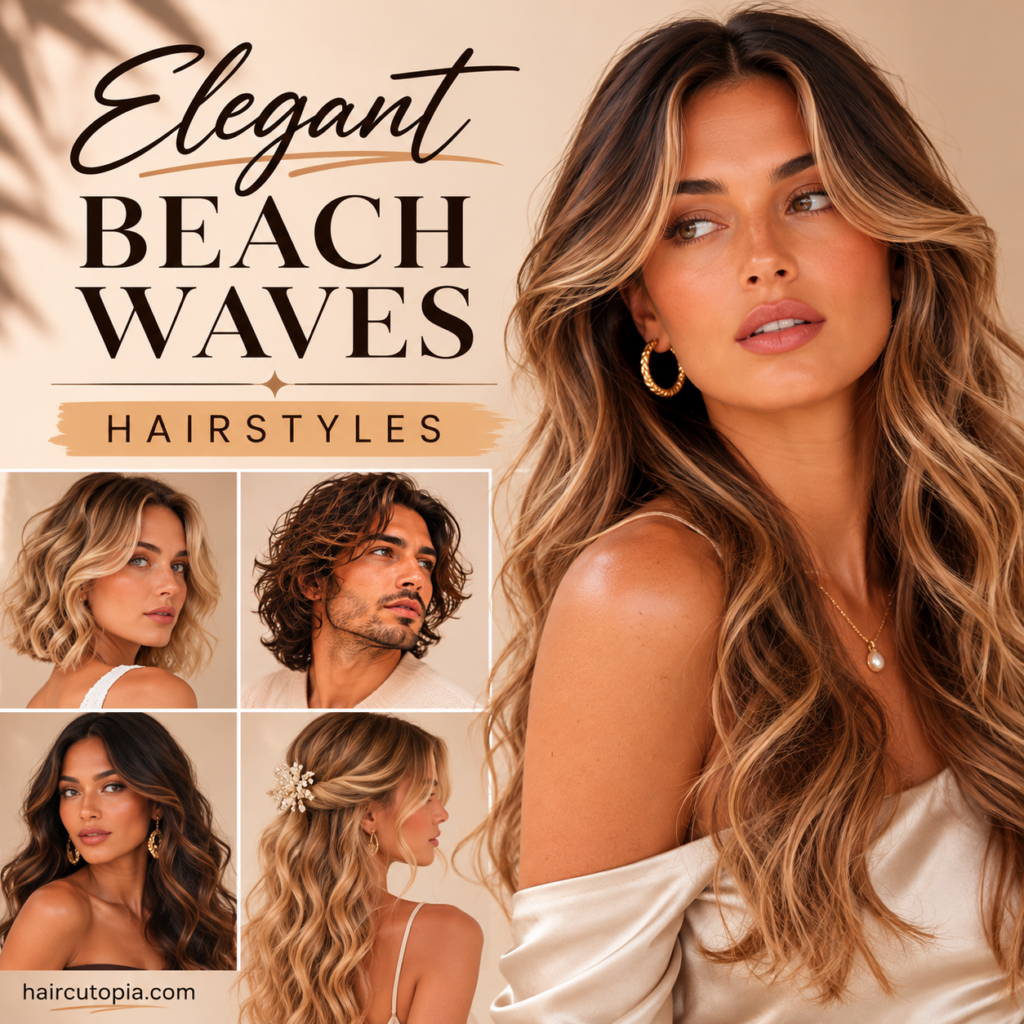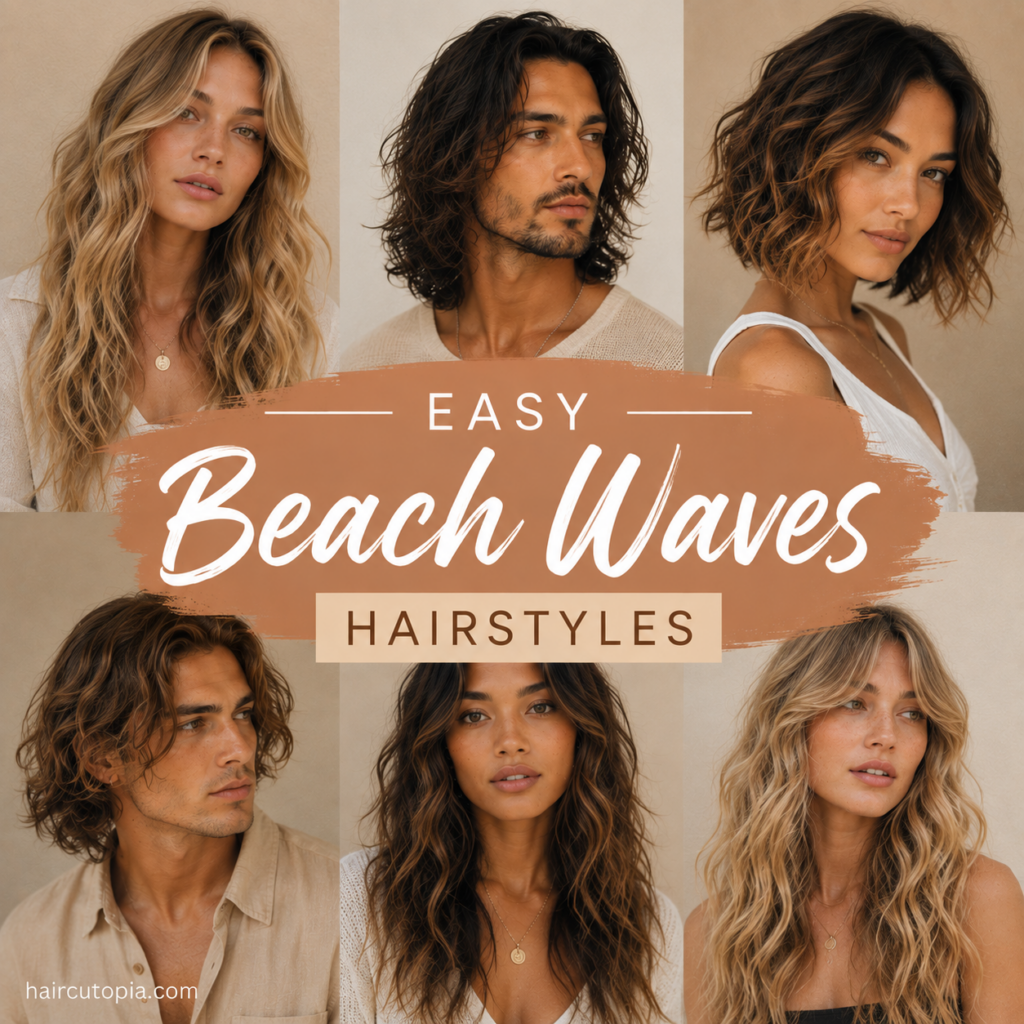
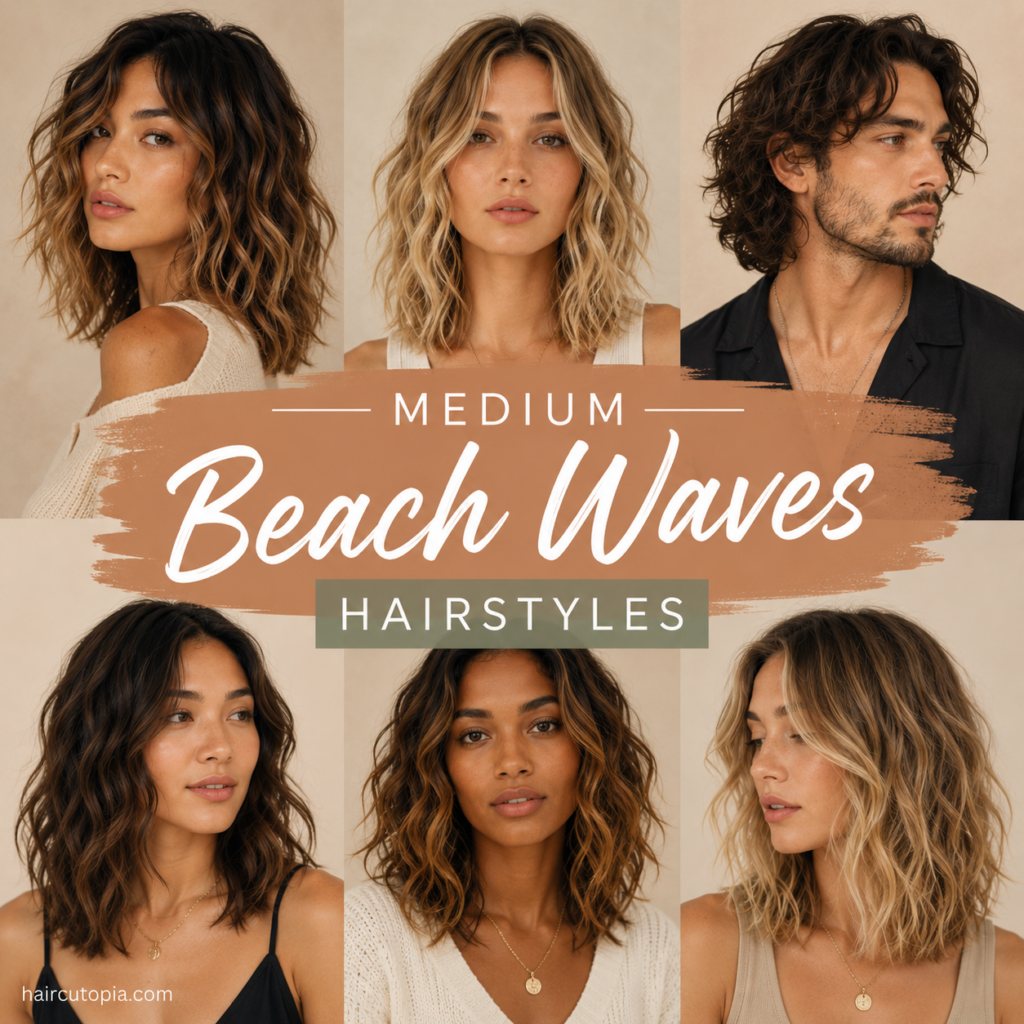
Medium-length hair and beach waves are an easy match. There’s enough length for the waves to develop naturally, but not so much hair that styling becomes an all-morning project.
The look can be loose and barely there, textured and tousled, or smooth enough for a wedding or evening out. Beach waves also work with plenty of medium hairstyles, including shoulder-length cuts, lobs, layered styles, bangs, and naturally wavy hair.
And despite the name, beach waves aren’t limited to summer. They’re really about relaxed movement rather than looking like you’ve just walked in from the ocean.
If you’re looking for ideas, these medium beach waves hairstyles range from casual everyday texture to more polished styles you can dress up.
Why Beach Waves Work So Well on Medium Hair
Medium hair gives you a lot of room to experiment.
With shorter hair, creating a full wave can sometimes be tricky. Very long hair, meanwhile, can become heavy enough to pull loose waves downward. Medium lengths tend to sit right in the sweet spot.
Beach waves can help:
- Add movement to straight hair
- Make fine hair appear fuller
- Bring out layers and dimensional color
- Soften blunt or structured cuts
- Give thick hair more shape
- Refresh second-day hair
- Transition easily from casual to polished styling
You also don’t need every section to look identical. A little variation is part of what makes beach waves feel natural.
1. Classic Medium Beach Waves
Classic beach waves are loose, relaxed, and slightly imperfect.
Instead of creating defined curls from root to tip, concentrate the movement through the middle of your hair. Leaving the ends straighter helps create that recognizable beachy finish.
Alternate the direction of a few waves so they don’t blend into one uniform curl pattern.
This is a versatile option for shoulder-length hair and longer lobs because it works with both casual and dressed-up outfits.
2. Tousled Shoulder-Length Beach Waves
Shoulder-length hair can look especially good with slightly messier waves.
Rather than smoothing every flyaway and separating each curl perfectly, allow the hair to fall naturally. Use your fingers to break apart the waves and create a little separation.
A lightweight texture spray can add definition without making the hair feel stiff.
The finished look should have movement without appearing overly styled.
3. Medium Beach Waves With a Center Part
A center part gives beach waves a balanced, modern shape.
Keep the hair around the crown relatively smooth and allow the waves to become more noticeable around cheekbone or jaw level. This creates a nice contrast between the cleaner top and textured lengths.
The front sections can be directed slightly away from the face to keep the hairstyle open and relaxed.
Center-parted waves work particularly well with:
- Shoulder-length hair
- Long bobs
- Face-framing layers
- Balayage or highlights
- Medium layered cuts
It’s a simple style, but one that can look very polished with minimal effort.
4. Side-Parted Medium Beach Waves
Moving your part to the side instantly changes the shape of your waves.
A deeper side part creates extra volume on one side while allowing the opposite side to sit closer to the head. This asymmetry can make the hairstyle feel more dramatic without requiring a completely different styling technique.
Try tucking one side behind your ear for an easy finishing touch.
For more volume, gently lift the roots around the heavier side of the part rather than adding tighter curls.
5. Beach Waves With Face-Framing Layers
Face-framing layers and beach waves work beautifully together because the waves make those shorter pieces more noticeable.
Style the front layers away from your face with a soft bend instead of a tight curl. Continue with looser, alternating waves through the rest of your hair.
The result is movement around the face without making the hairstyle look overly layered.
This style can also work well when you’re growing out curtain bangs or shorter front pieces.
6. Medium Beach Waves With Curtain Bangs
Curtain bangs naturally flow into beach waves.
Instead of curling the bangs downward, style them slightly outward and away from the face. The bend should be softer than the waves throughout the rest of the hair.
This creates a smooth transition between your fringe and longer layers.
Curtain bangs with medium beach waves can feel relaxed enough for everyday wear while still looking styled enough for an evening out.
7. Messy Medium Beach Waves
If perfectly polished hair isn’t your thing, lean into the messy version.
Use different-sized sections while styling and alternate the direction of your waves. You can even leave a few pieces almost straight.
Once everything has cooled, gently separate the hair with your fingers.
A small amount of texture spray can help emphasize individual pieces, but don’t overdo it. Messy beach waves should still feel light and movable.
8. Soft, Barely-There Beach Waves
Beach waves don’t have to be dramatic.
Barely-there waves create gentle bends rather than obvious curls. They’re a great choice if you want your hair to look naturally wavy rather than noticeably styled.
Use larger sections and focus the bend around the middle of your hair.
Keep the roots smooth and the ends relatively straight.
The finished result can be especially flattering on medium blunt cuts where a little movement is enough to soften the overall shape.
9. Voluminous Medium Beach Waves
If you like bigger hair, beach waves can provide plenty of volume without turning into traditional curls.
Start by creating lift around the roots. Then add loose waves through the middle and lower sections.
Once your hair has cooled, separate the waves carefully instead of brushing them completely flat.
For fine hair, a lightweight volumizing mousse can help. For thicker hair, concentrate volume around the crown rather than throughout the entire width of the hairstyle.
10. Beach Waves on a Medium Blunt Cut
A blunt haircut has a strong, clean perimeter. Beach waves soften that structure without taking away from the shape of the cut.
Create loose bends through the mid-lengths while keeping the bottom section relatively straight.
This allows the blunt ends to remain visible.
The combination gives you the best of both worlds: a structured haircut with relaxed texture.
11. Layered Medium Beach Waves
Layers become much more noticeable once you add movement.
Instead of curling all of your hair into one consistent pattern, allow the shorter and longer layers to create their own shapes.
This can add dimension throughout the hairstyle while preventing medium hair from looking heavy.
If your haircut already has substantial layering, you may need fewer waves than you think. Sometimes styling only selected sections is enough.
12. Beach Waves With Wispy Bangs
Wispy bangs can soften medium beach waves without becoming the main focus of the hairstyle.
Keep the fringe relatively light and natural. A slight bend is usually enough.
You don’t necessarily need to match the bangs to the wave pattern in the rest of your hair. In fact, keeping them softer can create a more effortless finish.
This pairing works particularly well with lightly layered medium hair.
13. Medium Beach Waves With Flipped Ends
A few outward-facing ends can give classic beach waves a playful twist.
Create your waves normally, then direct selected ends outward rather than curling everything underneath.
Don’t flip every piece. A handful of strategically placed sections usually looks more natural.
This style works especially well with layered cuts because the different lengths naturally create movement around the shoulders.
14. Defined Beach Waves
Beach waves are usually associated with an undone finish, but they can also be more defined.
Use slightly smaller sections and create consistent S-shaped bends throughout the hair. Once the waves cool, separate them carefully rather than aggressively tousling them.
You’ll get more visible definition while maintaining the relaxed character of the hairstyle.
Defined beach waves can be a good option when you want your hair to hold its shape for longer.
15. Naturally Wavy Medium Hair
If your hair already has natural movement, you may not need to create beach waves from scratch.
Instead, focus on defining what’s already there.
Apply a lightweight wave-enhancing product to damp hair and gently scrunch upward. Allow your hair to air-dry or use a diffuser on a low setting.
Once completely dry, separate any sections that have clumped together.
Don’t worry if your waves aren’t symmetrical. Natural variation fits perfectly with this style.
16. Medium Beach Waves With Balayage
Beach waves are particularly good at showing off dimensional hair color.
Balayage creates gradual shifts between darker and lighter tones. Once the hair is waved, those colors catch the light at different angles and become more noticeable.
The same effect can work with:
- Traditional highlights
- Babylights
- Face-framing highlights
- Dimensional brunette color
- Blonde highlights
- Caramel tones
You don’t need high-contrast color. Even subtle tonal differences can make waves appear more dimensional.
17. Beach Waves With a Deep Side Part
For a more dramatic variation, move beyond a standard side part and create a deeper one.
The heavier side naturally gains height and volume, while the opposite side can be tucked behind the ear.
This can turn otherwise casual beach waves into something that feels a little more glamorous.
It’s an easy option for dinners, parties, dates, and special events because you don’t need to change the actual wave pattern very much.
18. Polished Medium Beach Waves
Sometimes you want beachy movement without the messy finish.
Polished beach waves use smoother, more consistent bends with fewer flyaways. The hair still moves naturally, but the overall shape looks more intentional.
This variation works well for:
- Weddings
- Date nights
- Work events
- Parties
- Holiday gatherings
- Photos
Finish lightly. Too much hairspray can quickly take away the softness that makes the style appealing.
19. Second-Day Beach Waves
Beach waves don’t always need freshly washed hair.
In fact, medium hair can sometimes hold texture better on the second day.
Refresh any flattened sections with a curling iron or flat iron rather than restyling your entire head. A small amount of dry shampoo around the roots can help restore volume.
Then use your fingers to blend the newly styled pieces into the existing waves.
It’s faster and often looks even more natural.
20. Loose Beach Waves With Straight Ends
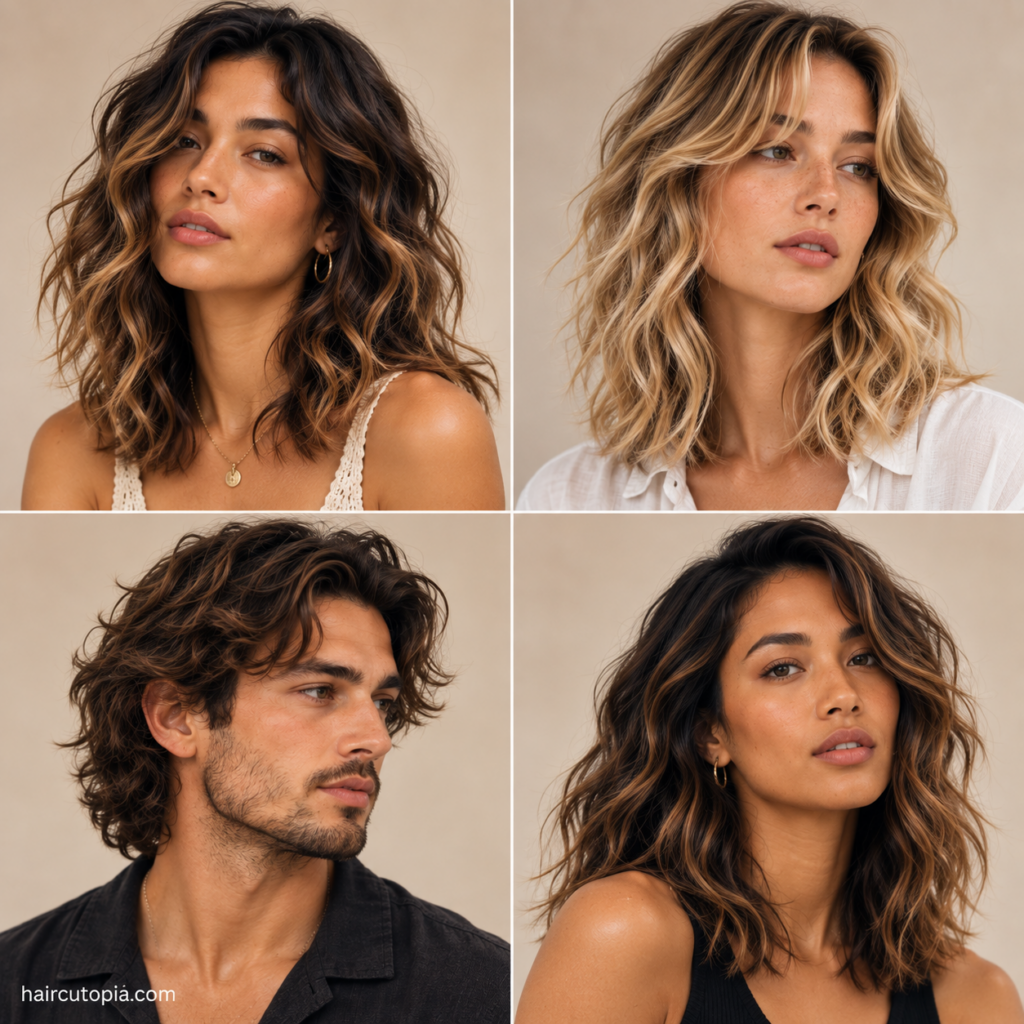
One of the easiest ways to give medium waves a modern appearance is leaving the ends straight.
Concentrate your waves through the middle portion of the hair and stop before reaching the bottom.
The contrast between textured mid-lengths and straighter ends creates an intentionally undone finish.
It’s also helpful if you’re trying to avoid the overly curled look that can happen when every section is wrapped from root to tip.
How to Create Beach Waves on Medium Hair
There are several ways to create beach waves, and medium-length hair gives you enough room to experiment with different techniques.
Using a Curling Iron or Wand
A curling iron or wand gives you the most control over where your waves appear.
- Start with completely dry hair.
- Apply heat protectant according to the product directions.
- Divide your hair into manageable sections.
- Take a section and curl primarily through the mid-length.
- Leave some of the ends straighter.
- Alternate the direction of neighboring sections.
- Direct the pieces around your face outward.
- Let the waves cool completely.
- Separate them gently with your fingers.
- Finish with a lightweight texture spray or flexible hairspray if needed.
Avoid immediately brushing through freshly styled hair. Allowing the waves to cool first can help preserve their shape.
Creating Beach Waves With a Flat Iron
A flat iron is useful when you want bends instead of traditional curls.
Take a section of hair, clamp the iron gently, and rotate your wrist as you move downward. You can create an S-shaped pattern by changing direction as you work toward the ends.
The technique can take some practice, but it produces a relaxed texture that works particularly well on medium hair.
Heatless Beach Waves
You can also create waves without hot tools.
Start with slightly damp hair and divide it into loose braids or twists. Let your hair dry completely before taking them out.
Then gently separate the texture with your fingers.
The exact result will depend on your natural hair texture, how tightly you braid or twist the sections, and how many sections you create.
Larger, looser sections generally produce softer waves.
How to Make Medium Beach Waves Look Natural
The key to natural-looking beach waves is avoiding too much uniformity.
Real waves don’t repeat themselves perfectly from one section to another.
Try these simple adjustments:
- Alternate the direction of your waves
- Use slightly different section sizes
- Leave some ends straighter
- Keep the roots relatively smooth
- Avoid curling every section to the same height
- Separate waves with your fingers
- Leave a few subtle imperfections
- Use styling products sparingly
If your waves look too perfect, gently breaking them apart can immediately make the hairstyle feel more relaxed.
Best Styling Products for Medium Beach Waves
The right product depends on your hair texture and the finish you’re trying to create.
Texture Spray
A lightweight texture spray can create separation and make freshly styled hair look more lived-in.
Sea Salt Spray
Sea salt spray can enhance texture, especially if your hair already has some natural wave. Some formulas can feel drying, though, so use one that works well with your hair type.
Volumizing Mousse
Mousse can provide extra body around the roots and help fine or flat hair hold its shape.
Wave-Enhancing Cream
If your hair is naturally wavy, a lightweight styling cream can help define your existing texture without requiring as much heat styling.
Flexible-Hold Hairspray
Flexible hairspray can help maintain your waves while allowing them to move naturally.
Heat Protectant
Use heat protection whenever you’re styling with a curling iron, wand, or flat iron.
Medium Beach Waves for Fine Hair
Beach waves can make fine medium-length hair appear noticeably fuller.
The trick is avoiding products that weigh it down.
Use lightweight formulas and create waves using smaller or medium-sized sections. You can also add subtle lift around the roots before styling.
Avoid applying heavy oils near the scalp. If you use a finishing oil, concentrate a very small amount on the ends.
Medium Beach Waves for Thick Hair
Thick hair already has plenty of body, so you may want to focus more on definition than volume.
Work in sections to make sure you’re creating waves underneath the top layer rather than styling only the surface.
If your hair feels too wide after waving it, keep the roots smoother and concentrate the texture farther down.
Layers can also help distribute the volume more naturally.
Medium Beach Waves for Straight Hair
Naturally straight hair sometimes needs extra help holding waves.
Allow each section to cool completely before breaking it apart. Starting with a little lightweight styling product can also provide additional grip.
Avoid making your waves extremely loose from the beginning. They will usually relax naturally as you wear them.
How to Make Beach Waves Last Longer
Nobody wants to spend time styling their hair only to watch the waves disappear an hour later.
A few small changes can help:
- Start with completely dry hair when using hot tools.
- Apply styling products lightly rather than saturating the hair.
- Let each wave cool before touching it.
- Avoid repeatedly running your fingers through your hair.
- Use flexible hold rather than making the hair stiff.
- Refresh only the sections that flatten the following day.
Hair texture makes a difference, so don’t be afraid to adjust your technique.
Common Beach Wave Mistakes
Beach waves are fairly forgiving, but certain habits can make them look more like traditional curls.
Curling Every Section in the Same Direction
This encourages the curls to blend together. Alternating directions creates more separation.
Curling All the Way to the Ends
Leaving some length straight at the bottom can create a more modern, beachy appearance.
Starting Every Wave at the Root
Beach waves generally look more relaxed when the movement begins slightly lower.
Using Too Much Styling Product
Heavy product can reduce movement and make medium hair look weighed down.
Brushing Too Aggressively
If you want to loosen the waves, start with your fingers. You can always soften them further afterward.
Trying to Make Everything Perfect
One slightly straighter section isn’t a problem. Neither is an uneven bend.
Those little differences are often what make the hairstyle look believable.
How to Choose the Right Beach Waves for Your Haircut
Your haircut can help determine which version of beach waves looks best.
For blunt medium cuts, try loose bends with straighter ends to soften the strong perimeter.
For layered hair, allow the waves to emphasize the different lengths.
For curtain bangs, keep the front sections soft and directed away from the face.
For fine hair, prioritize volume and texture without using heavy products.
For thick hair, keep the roots smoother and use the waves to create definition through the lengths.
There’s no single beach-wave pattern that works for everyone. The best version is the one that works with your existing haircut rather than fighting against it.
Are Medium Beach Waves Still in Style?
Beach waves have lasted because they’re less of a specific haircut trend and more of a styling technique.
You can make them softer, messier, more defined, or more polished depending on the look you want. They also adapt easily as haircut trends change.
A blunt lob with subtle bends looks completely different from heavily layered hair with tousled waves, even though both fall under the beach-wave umbrella.
That versatility gives the style plenty of staying power.
Final Thoughts on Medium Beach Waves Hairstyles
Medium-length hair is practically made for beach waves.
There’s enough length to create visible movement while still keeping the hairstyle relatively quick to manage. You can wear the waves tousled and casual one day, then smooth and polished the next without changing your haircut.
The biggest thing to remember is that beach waves aren’t supposed to be perfect.
Leave a few ends straight. Alternate your wave direction. Let some pieces fall differently from others. Work with your layers and natural texture instead of trying to make every section identical.
Sometimes the best medium beach waves are the ones that look like you didn’t spend very long creating them—even if you know otherwise.