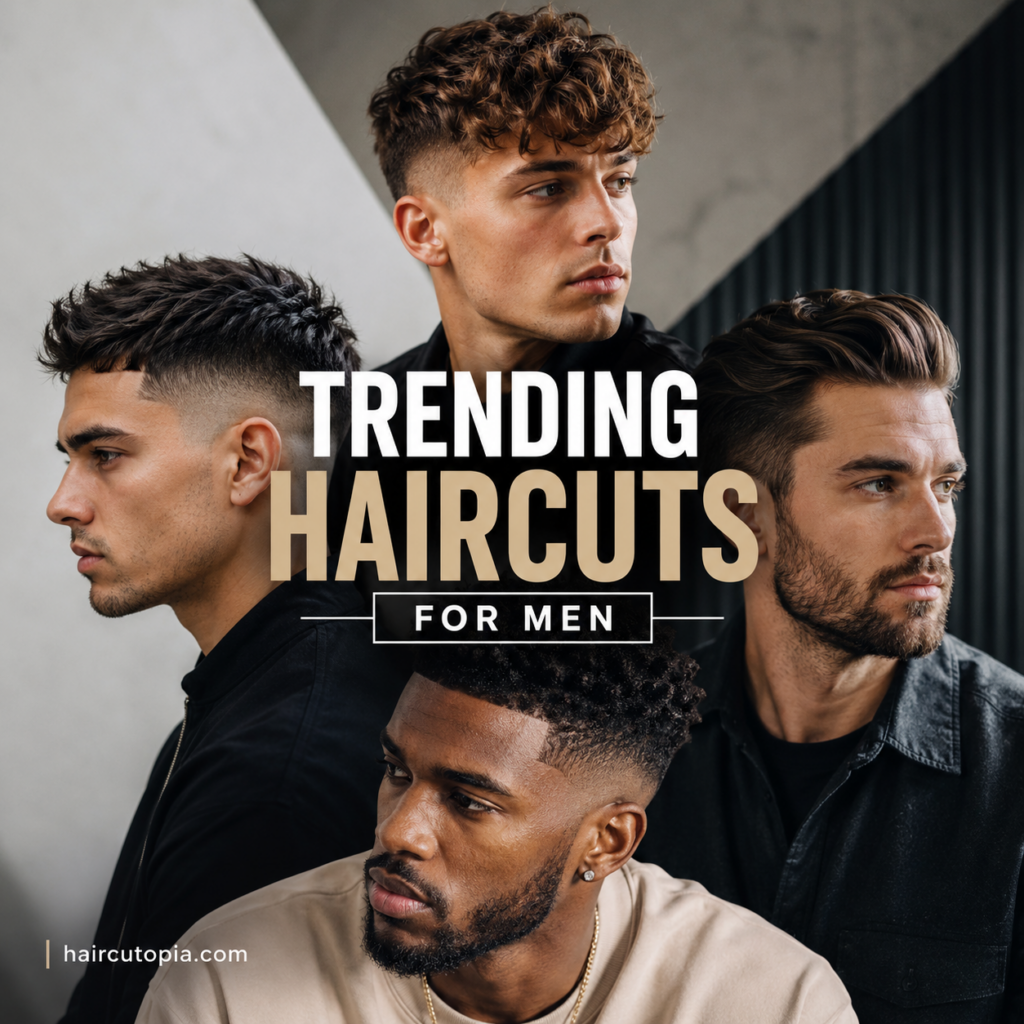
Men’s hair trends are always changing, but the best haircuts rarely come down to chasing whatever happens to be popular at the moment. A good cut should work with your hair texture, face shape, lifestyle, and the amount of styling you’re actually willing to do each morning.
Right now, men’s hairstyles are leaning toward a mix of clean structure and natural movement. Fades and tapers are still everywhere, but they’re being paired with longer tops, textured finishes, curls, waves, and more relaxed silhouettes. At the same time, classic cuts such as the crew cut, buzz cut, and side part continue to evolve rather than disappear.
Whether you want something sharp and professional or a haircut with more personality, there are plenty of current styles to choose from. Here are the trending haircuts for men worth considering and what to know before asking your barber for one.
What Men’s Haircuts Are Trending Right Now?
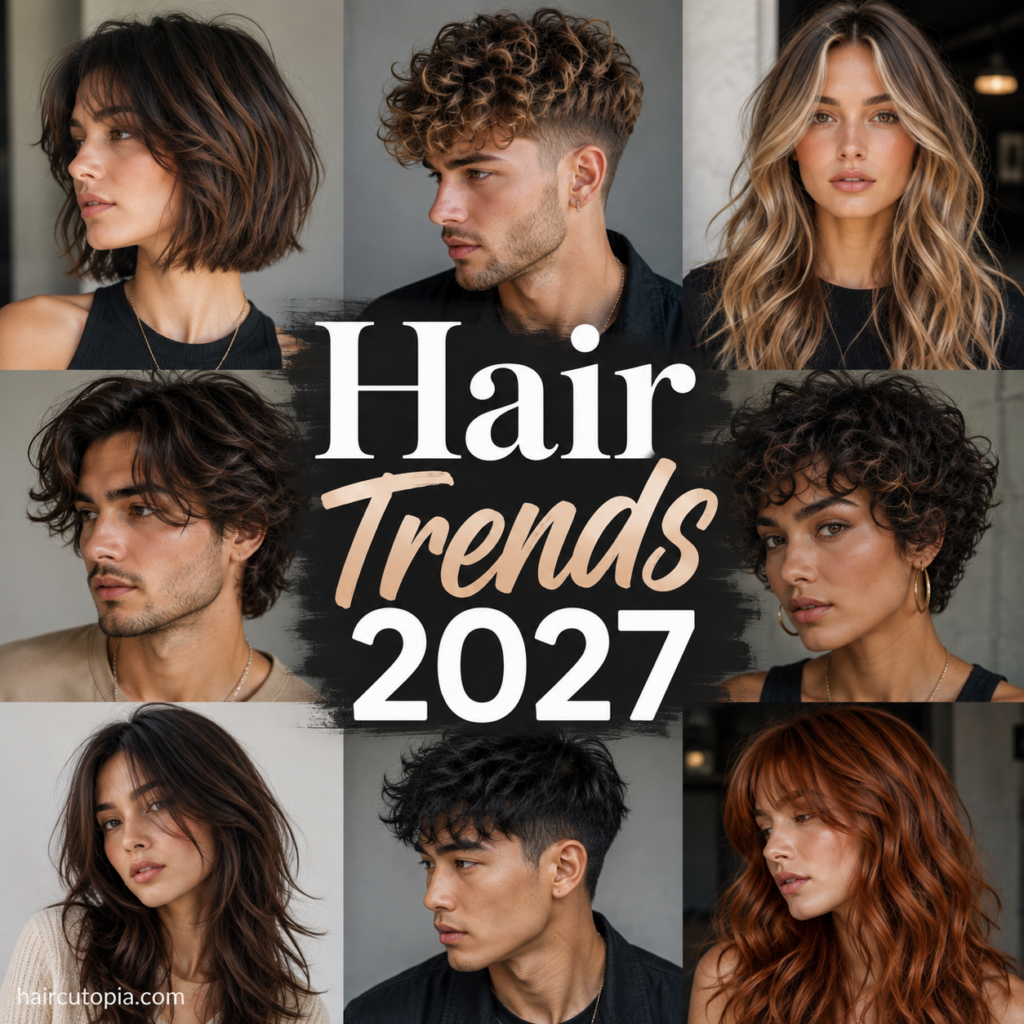
Current men’s haircut trends aren’t dominated by a single look. Instead, several styles are popular at the same time, ranging from extremely short cuts to medium-length and longer hairstyles.
Some of the biggest trends include:
- Textured crops
- Low and mid tapers
- Modern fades
- Messy fringes
- Curly and wavy tops
- Modern mullets
- Bro flow hairstyles
- Middle parts and curtains
- Buzz cuts
- Crew cuts
- Slick backs
- Textured quiffs
One noticeable shift is toward haircuts that preserve more natural texture. Rather than making every strand perfectly uniform, many modern styles allow curls, waves, layers, and controlled messiness to become part of the finished look.
1. Textured Crop
The textured crop has become a staple of modern men’s hair because it manages to look stylish without requiring an elaborate morning routine.
Hair is generally kept short on the sides with additional length across the top. Instead of combing the top perfectly into place, it’s cut and styled to create visible texture.
Why It Works
The textured crop can be adapted to straight, thick, wavy, and slightly curly hair. It’s also relatively easy to maintain between barber visits.
A matte clay, paste, or lightweight styling product can help separate the strands without creating an overly glossy finish.
For an even more current appearance, pair the textured top with a low taper rather than an extremely high skin fade.
2. Low Taper Fade
The low taper fade is one of the most versatile choices for men who want their haircut to look fresh without dramatically changing the overall hairstyle.
Instead of fading a large portion of the sides, the transition happens primarily around the sideburns, ears, and neckline. The result is subtle and clean.
A low taper can be combined with:
- Curls
- Waves
- Textured crops
- Quiffs
- Afros
- Side parts
- Longer fringes
- Slick backs
Because relatively little hair needs to be removed, the cut works particularly well for anyone who wants definition while keeping some fullness around the sides.
3. Textured Fringe
Fringes have become a major part of contemporary men’s hairstyles.
Rather than sweeping everything backward, the hair is allowed to move toward the forehead. The fringe itself may be short and choppy, long and loose, curly, or deliberately messy.
The style can soften an otherwise sharp haircut and gives you plenty of room to experiment with texture.
Who Should Try It?
A textured fringe works particularly well with straight or wavy hair, although curly versions can look equally striking.
If you have naturally thick hair, your barber can remove some weight and introduce layers so the fringe moves more naturally instead of sitting heavily across the forehead.
4. Modern Mullet
The mullet has moved far beyond the exaggerated versions associated with previous decades.
Modern variations tend to use softer transitions, textured layers, fades, or tapers to make the difference between the front and back less severe.
Some men choose only a little additional length around the back of the neck. Others deliberately lean into the shape with considerably longer hair.
Popular Mullet Variations
Current versions include:
- Taper mullet
- Curly mullet
- Burst fade mullet
- Textured mullet
- Short mullet
- Shaggy mullet
This is one of the more expressive options on the list, so it makes sense for someone who wants their haircut to stand out.
5. Bro Flow
Not every trending haircut involves clippers.
The bro flow is a medium-length style where the hair naturally moves backward and away from the face. Instead of creating a rigid shape with heavy styling products, the goal is relaxed movement.
It works particularly well with naturally wavy or slightly curly hair.
The key is maintaining enough layering that the hairstyle looks intentional. Without occasional shaping, medium-length hair can quickly become bulky around the ears and sides.
6. Middle Part and Curtains
The middle part has returned as a mainstream men’s hairstyle, especially for medium-length hair.
Sometimes called curtains, the style separates the hair near the center and allows each side to frame the face. Modern versions can be polished, layered, messy, or combined with a taper.
Straight hair creates a more defined curtain effect, while waves produce a softer and more casual appearance.
You don’t necessarily need a perfectly centered part either. Moving it slightly to one side can create a more natural look.
7. Buzz Cut
The buzz cut never completely disappears, but its simplicity has helped it remain relevant.
Hair is clipped very short across the head, making it one of the easiest men’s haircuts to style. Different clipper lengths can dramatically change its appearance.
A buzz cut can also be combined with:
- Skin fades
- Low fades
- Line-ups
- Tapers
- Beard fades
Although daily styling is almost nonexistent, keeping a buzz cut looking consistently sharp usually means getting it trimmed regularly.
8. Crew Cut
The crew cut sits somewhere between a buzz cut and a longer textured hairstyle.
The sides remain short while the top keeps enough length to create a subtle shape. The front is usually slightly longer than the crown, allowing it to be styled upward or forward.
It’s a dependable option for men who want something clean without going extremely short.
A traditional crew cut looks polished and conservative, while adding texture and a taper gives it a more contemporary feel.
9. Curly Top With Taper
More men are choosing haircuts that emphasize their natural curl pattern instead of cutting it extremely short.
A curly top with a taper keeps volume and definition where it matters while cleaning up the hairline, sideburns, and neckline.
The contrast can be subtle or dramatic depending on how much length you leave on top.
Styling Curly Hair
Avoid using so much product that the curls become stiff. Depending on your curl type, a leave-in conditioner, curl cream, or lightweight styling product can provide definition while allowing the hair to move naturally.
Regular conditioning can also help curls maintain a softer, healthier-looking appearance.
10. Slick Back With Taper
The slick back remains a classic, but modern versions tend to feel less rigid.
Instead of coating the hair in a heavy, high-shine product, the current approach often keeps some texture and movement. A taper around the sides can provide definition without creating the disconnected appearance of a traditional undercut.
For a relaxed finish, run a small amount of styling cream or pomade through the hair and guide it backward with your fingers rather than combing every strand perfectly into place.
11. Textured Quiff
The quiff gives you height at the front without requiring the extreme volume of a traditional pompadour.
Modern quiffs are generally looser and more textured. The sides may be tapered or faded while several inches of length remain on top.
This style works particularly well for men with thick or wavy hair because the natural volume helps create the shape.
A blow dryer can make a big difference. Directing the hair upward and slightly backward while drying creates volume before styling product is added.
12. French Crop
The French crop is a short haircut featuring cropped sides and a relatively short top that moves toward the forehead.
Unlike longer textured fringes, the front is generally kept compact and controlled. That makes it practical for men who want some personality without maintaining significant length.
The French crop can be worn neat or deliberately messy, and it pairs easily with a taper or fade.
13. Burst Fade
A burst fade creates a curved fade around the ear rather than following the same transition across the entire side of the head.
The technique works with several hairstyles, but it has become especially recognizable alongside mullets, mohawks, curls, and textured cuts.
Because the fade curves around the ear, more length can remain toward the back of the head.
The haircut can be subtle, but a high-contrast burst fade creates a much bolder appearance.
14. Messy Waves
Men with naturally wavy hair don’t necessarily need to straighten or heavily control it.
Medium-length messy waves take advantage of the hair’s natural movement. Strategic layering removes unnecessary weight while allowing waves to form throughout the top and sides.
Sea salt spray or a lightweight texturizing product can enhance separation, but the goal is usually a touchable finish rather than a stiff one.
This style looks casual, although a well-executed cut is what keeps the messiness looking intentional.
15. Side Part With a Modern Taper
The side part is another traditional haircut that continues to evolve.
Instead of sharply defined, heavily gelled hair, modern side parts often feature softer texture and a less obvious parting line. A low or mid taper keeps the sides neat.
It’s particularly useful if you need a hairstyle that can move between professional and casual settings.
Wear it neatly combed for work, then loosen the top with your fingers for a more relaxed appearance.
16. High and Tight
The high and tight has military roots but has expanded into several modern variations.
The sides and back are cut extremely short, while the top remains slightly longer. The difference in length produces a clean, masculine silhouette with very little styling required.
Modern versions may incorporate texture, fades, or slightly more length on top.
It’s an especially practical choice if you prefer short hair and don’t want to spend much time styling it.
17. Shaggy Layers
Longer men’s hair is also moving toward softer, layered shapes.
Shaggy haircuts use multiple lengths to create movement instead of allowing everything to grow evenly. The result can work especially well with waves and curls.
Depending on the length, the hair may fall around the ears, cheekbones, jawline, or shoulders.
The important part is getting the layers right. Too much weight can make longer hair look flat, while excessive layering can make the ends appear thin.
18. Caesar Cut
The Caesar cut features short hair throughout with a small fringe styled forward.
It shares some characteristics with the French crop but is generally shorter and more uniform. Modern interpretations often introduce texture on top and a taper or fade around the sides.
It’s simple, practical, and doesn’t require complicated styling.
For men who prefer short hairstyles but want something more distinctive than a standard buzz cut, the Caesar is worth considering.
Trending Haircuts by Hair Type
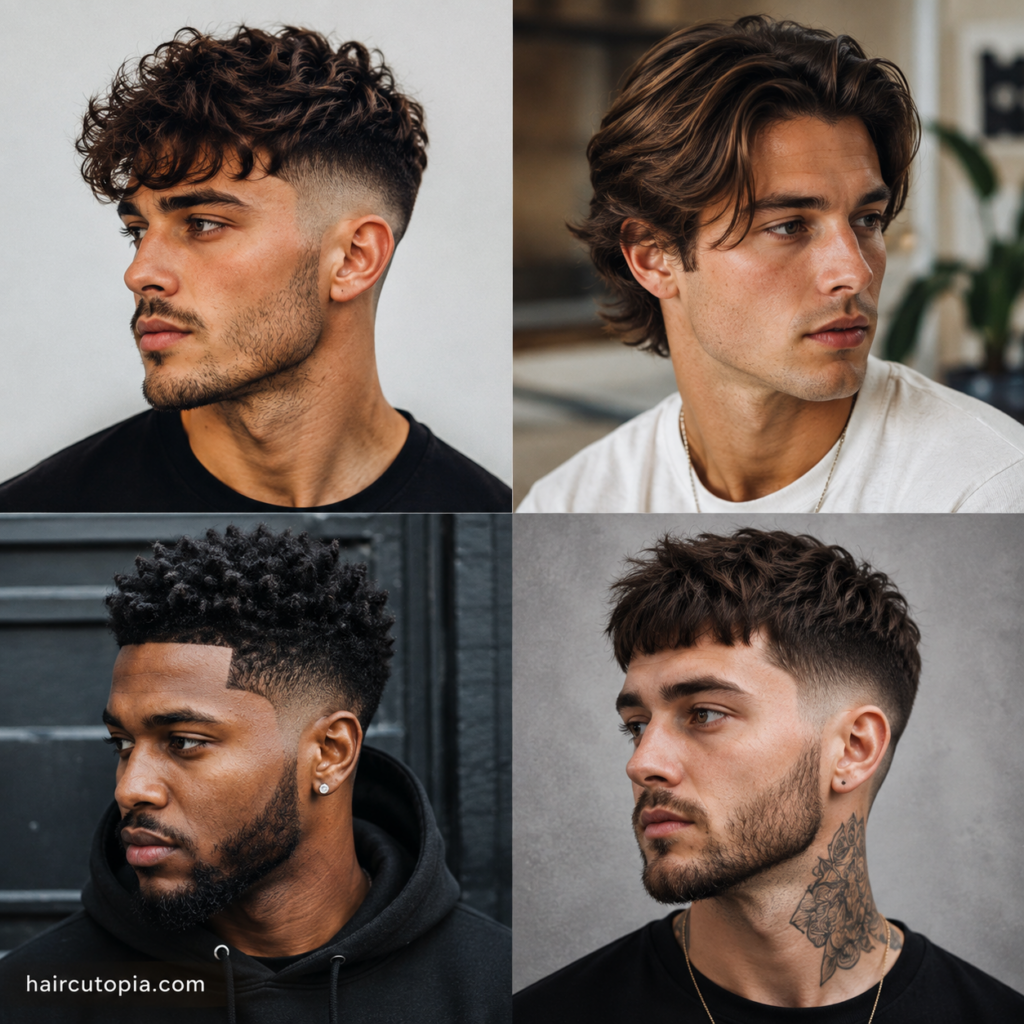
A haircut that looks great on straight hair may behave completely differently on tight curls. Working with your natural texture usually makes styling easier.
Straight Hair
Straight hair works particularly well with styles that rely on defined shapes and visible separation.
Consider:
- Textured crop
- French crop
- Middle part
- Side part
- Quiff
- Slick back
Adding layers can prevent longer straight hair from looking too heavy or flat.
Wavy Hair
Wavy hair naturally provides movement, making it ideal for many of today’s more relaxed styles.
Good options include:
- Bro flow
- Textured fringe
- Messy waves
- Modern mullet
- Middle part
- Textured quiff
Avoid fighting every wave. A haircut designed around the natural pattern will generally be easier to maintain.
Curly Hair
Curls can create impressive volume and texture without much artificial styling.
Popular choices include:
- Curly taper
- Curly fringe
- Burst fade
- Curly mullet
- Medium layered curls
- Short curls with faded sides
The amount of shrinkage should be considered when deciding how much length to remove.
Coily Hair
Coily and tightly textured hair opens up plenty of possibilities beyond simply cutting everything short.
Options include:
- Tapered Afro
- Low taper
- High-top styles
- Defined short coils
- Burst fades
- Shape-ups
A barber experienced with your specific texture can help maintain the desired shape while preserving enough length for definition.
Trending Haircuts by Hair Length
If you’re not sure where to begin, deciding how much hair you want to maintain can quickly narrow your options.
Short Haircuts
For minimal styling, consider:
- Buzz cut
- Crew cut
- Caesar cut
- French crop
- High and tight
- Short textured crop
Short cuts generally require less daily styling, although fades and sharp hairlines may need frequent barber visits to stay crisp.
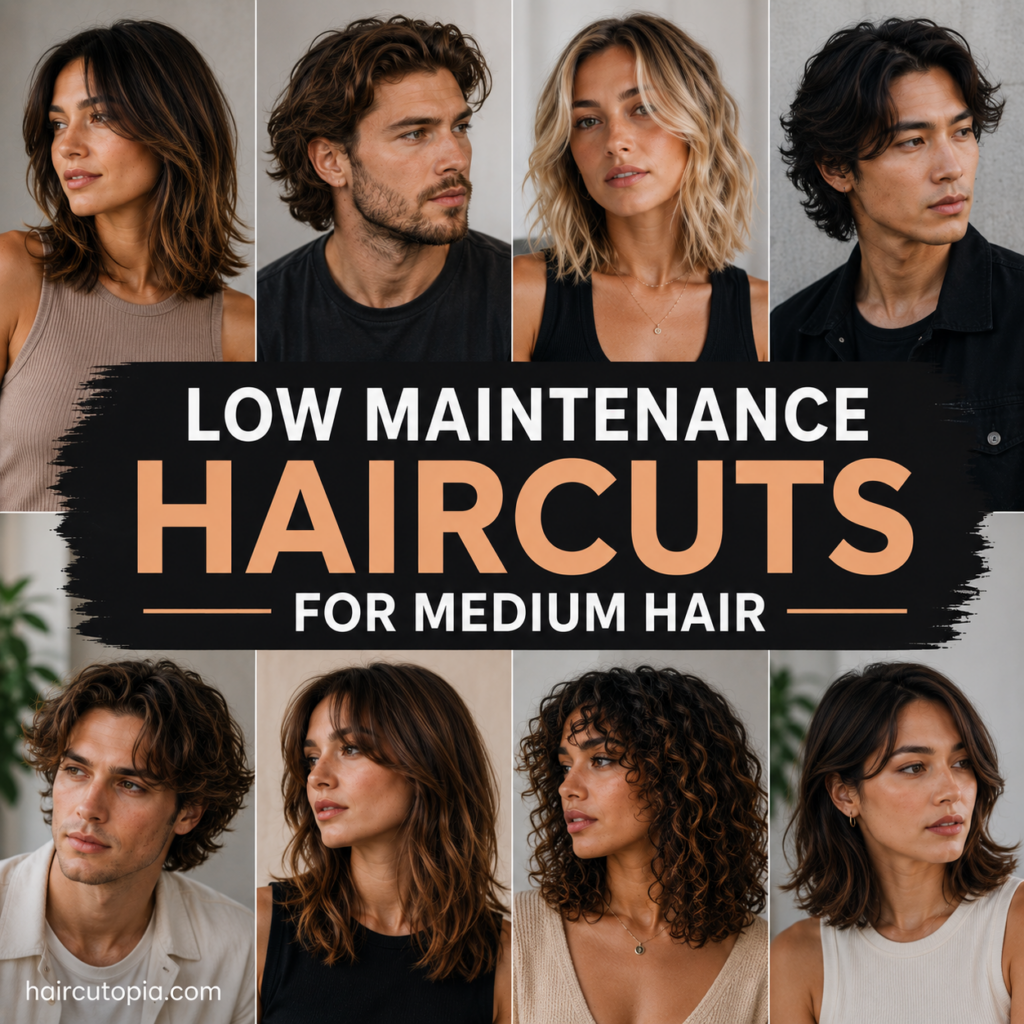
Medium-Length Haircuts
Medium hair gives you significantly more styling flexibility.
Popular choices include:
- Textured fringe
- Quiff
- Bro flow
- Middle part
- Slick back
- Modern mullet
This length is ideal if you like changing your hairstyle depending on the occasion.
Longer Haircuts
Longer styles emphasize movement, texture, and layering.
Consider:
- Shaggy layers
- Long bro flow
- Shoulder-length waves
- Longer curtains
- Layered curls
- Long modern mullet
Long hair doesn’t necessarily mean avoiding the barber. Occasional trims and shaping can prevent the style from becoming excessively bulky or uneven.
Fade vs. Taper: Which One Should You Choose?
Fades and tapers are often mentioned interchangeably, but they create different effects.
A fade generally transitions from longer hair into extremely short hair or skin across a larger portion of the sides and back. Depending on where that transition begins, it may be described as a low, mid, or high fade.
A taper is usually more conservative. The shortening happens primarily near the sideburns and neckline while more hair remains on the sides.
Choose a fade when you want stronger contrast.
Choose a taper when you want a softer transition or prefer maintaining more fullness around the sides.
Neither is automatically better. It comes down to the hairstyle you’re combining it with and how dramatic you want the finished cut to look.
How to Choose the Right Trending Haircut
A haircut can be popular and still be completely wrong for your hair.
Before choosing a style, think about four things.
1. Your Hair Texture
Start with what your hair naturally wants to do.
If your hair curls, a style designed around curls will usually require less effort than one requiring you to straighten them every morning.
The same applies to straight, wavy, thick, fine, or coily hair.
2. Your Face Shape
Hair can visually change the proportions of your face.
Adding height can make a rounder face appear longer, while a fringe may soften a longer face. Keeping some width around the sides can also balance certain facial proportions.
These aren’t strict rules. They’re simply useful considerations when deciding between several similar styles.
3. Your Styling Routine
Be realistic about how much time you want to spend on your hair.
Some hairstyles require little more than towel drying and a small amount of product. Others may involve blow-drying, brushing, applying multiple products, or reshaping throughout the day.
If you want to get ready quickly, choose accordingly.
4. Your Maintenance Schedule
A skin fade can look extremely sharp immediately after a haircut, but the contrast begins changing as soon as the hair grows.
Longer layered styles can often go much longer between appointments.
Think about how frequently you’re willing to visit your barber before committing to a cut that depends on extremely precise edges.
What to Tell Your Barber
Knowing the name of a haircut helps, but names aren’t always interpreted exactly the same way by every barber.
Be specific about:
- How much length you want removed
- How long you want the top
- Whether you want a taper or fade
- Where you want the fade to begin
- Whether you prefer natural or sharp edges
- How you normally style your hair
- How much maintenance you’re comfortable with
If you’re trying something significantly different, bringing a few reference photos is often more useful than relying entirely on a haircut name.
A good barber can then adjust the inspiration to suit your hair texture, growth pattern, and facial proportions rather than simply copying the photograph.
How Often Should You Get a Haircut?
There isn’t one schedule that works for every hairstyle.
As a general guideline:
- Skin fades and very sharp cuts: around every 2–3 weeks
- Short tapers and crops: around every 3–5 weeks
- Crew cuts and short textured styles: around every 4–6 weeks
- Medium-length styles: around every 6–10 weeks
- Longer layered hairstyles: around every 8–12 weeks or as needed
These are only starting points. Hair growth rate, budget, personal preference, and how polished you want the haircut to remain all matter.
How to Keep a Trending Haircut Looking Good
The haircut itself does most of the work, but a few basic habits can help maintain it.
Use Less Product Than You Think
Starting with a small amount is usually better than immediately applying a large scoop.
You can always add more.
Too much product can weigh down texture and make freshly washed hair appear greasy.
Choose the Right Finish
Different products create very different results.
- Matte clay works well for textured styles.
- Pomade can provide control and shine.
- Styling cream gives a softer, more natural finish.
- Sea salt spray can emphasize waves and loose texture.
- Curl cream can help define curls and reduce frizz.
Your hair thickness and texture matter just as much as the hairstyle when selecting a product.
Learn to Use a Blow Dryer
A blow dryer isn’t only for long hair.
It can help create volume in quiffs, direct fringes, shape middle parts, and control stubborn growth patterns. Often, getting the hair into the right position while drying means you’ll need less styling product afterward.
Are Fades Still Trending?
Yes, but fades are no longer the only dominant approach to men’s hair.
High-contrast skin fades remain popular, particularly with short hairstyles. However, softer low fades and tapers offer an alternative for men who want a cleaner outline without removing as much hair.
Longer sides are also becoming more visible as medium-length, layered, and naturally textured hairstyles gain popularity.
In other words, you don’t need a fade for a haircut to look modern.
Are Longer Hairstyles for Men Trending?
Longer hairstyles continue to have a strong place in men’s hair trends.
Medium-length curtains, bro flows, shaggy cuts, longer curls, and modern mullets all allow significantly more movement than the extremely tight sides that dominated many previous men’s haircut trends.
Growing your hair out doesn’t mean simply avoiding haircuts, though.
Strategic trimming and layering can help control bulk and create a deliberate shape during the awkward stages between short and long hair.
Which Trending Haircut Is Easiest to Maintain?
For minimal daily styling, a buzz cut is difficult to beat.
Crew cuts, Caesar cuts, and short textured crops are also relatively straightforward.
If you’re comfortable with slightly longer hair, a well-cut bro flow or naturally wavy style may require surprisingly little styling because the haircut works with your existing texture.
The easiest haircut is ultimately one that matches how your hair naturally behaves.
Final Thoughts on Trending Haircuts for Men
The best thing about current men’s haircut trends is the variety.
You can go extremely short with a buzz cut, keep things polished with a crew cut or taper, embrace natural curls, experiment with a textured fringe, or grow your hair into a bro flow or layered style.
You also don’t have to copy a trend exactly.
Use popular haircuts as inspiration, then adjust the length, texture, fade, taper, and styling to suit you. A haircut that complements your natural hair and fits your daily routine will usually look better than one chosen simply because it’s popular.
Trends will keep changing. A haircut that feels comfortable, looks intentional, and is easy for you to maintain has a much better chance of sticking around.