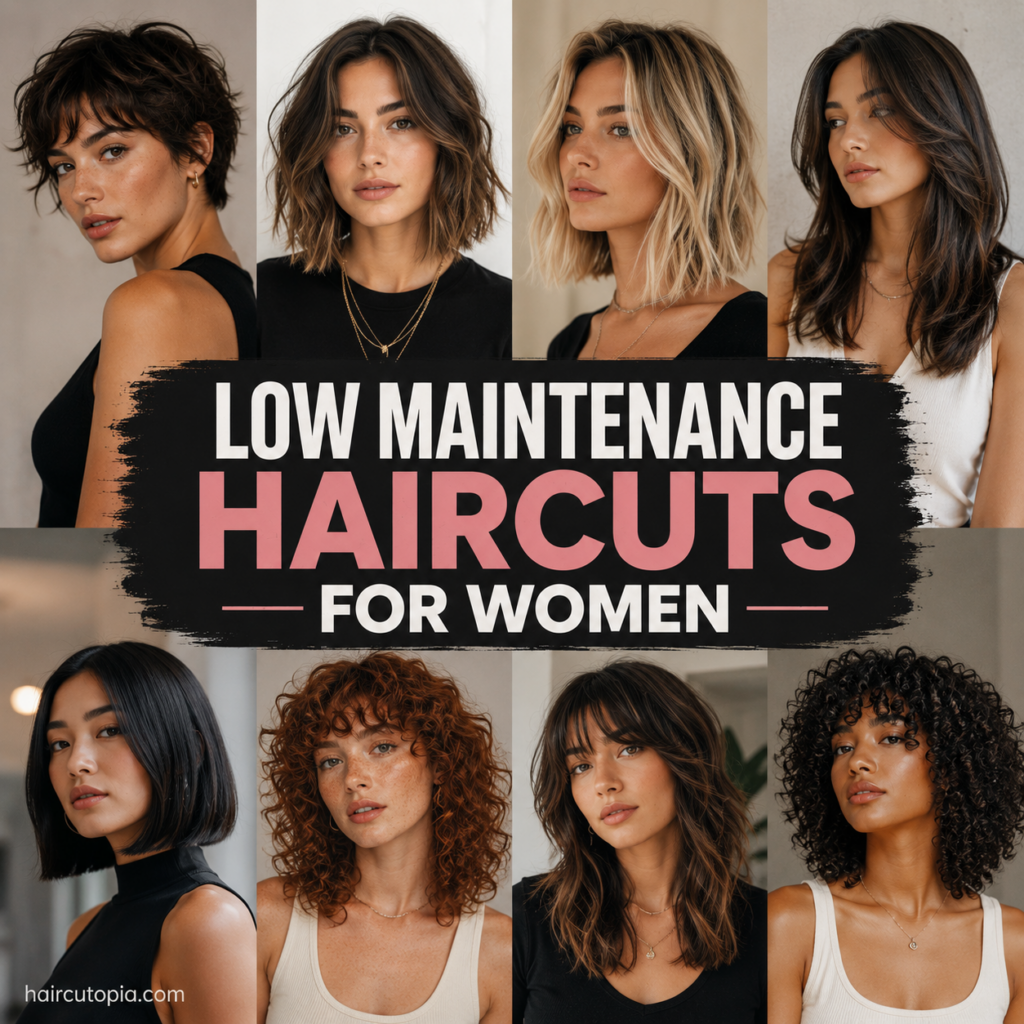
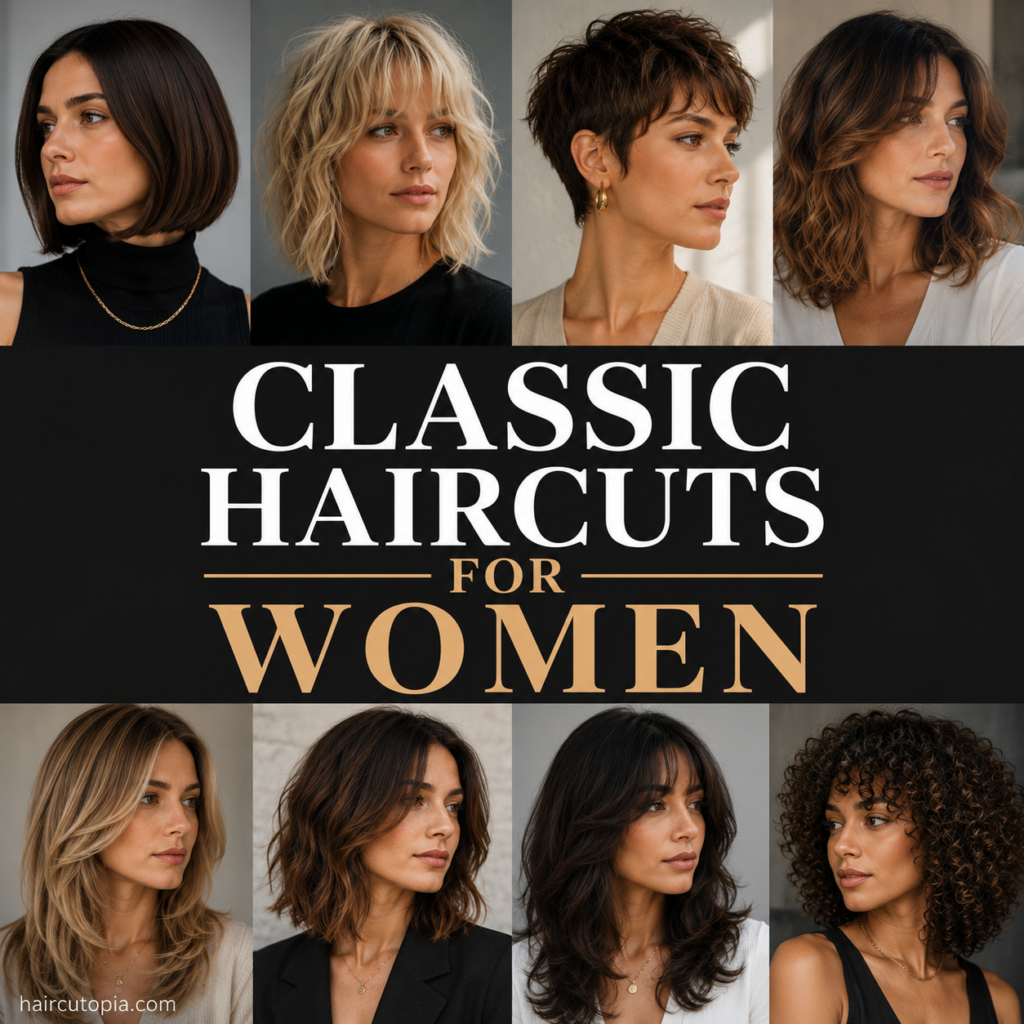
Some haircuts belong to a particular decade. Others somehow look good no matter what year it is.
Classic haircuts for women fall into that second group. The details may change—softer layers, more natural texture, different bangs—but the basic shapes have survived decades of changing beauty trends.
Think of the bob, pixie, long layers, or a polished shoulder-length cut. None of these styles needs to feel dated. In fact, many of today’s trending haircuts are modern interpretations of looks that have been around for years.
If you’re searching for a haircut with staying power, these classic women’s haircuts offer plenty of inspiration.
What Makes a Women’s Haircut Classic?
A classic haircut isn’t necessarily conservative or simple. What makes it classic is its ability to keep working even as trends change around it.
The strongest timeless cuts tend to have balanced proportions and enough flexibility to be personalized.
They can also usually be adapted to different:
- Hair textures
- Hair densities
- Face shapes
- Personal styles
- Ages
- Styling routines
A bob from decades ago might have been smooth and carefully shaped, while today’s version could have loose waves and an intentionally undone finish. The underlying haircut is still recognizable.
That’s one reason classic styles have such longevity. You can update the details without completely reinventing the cut.
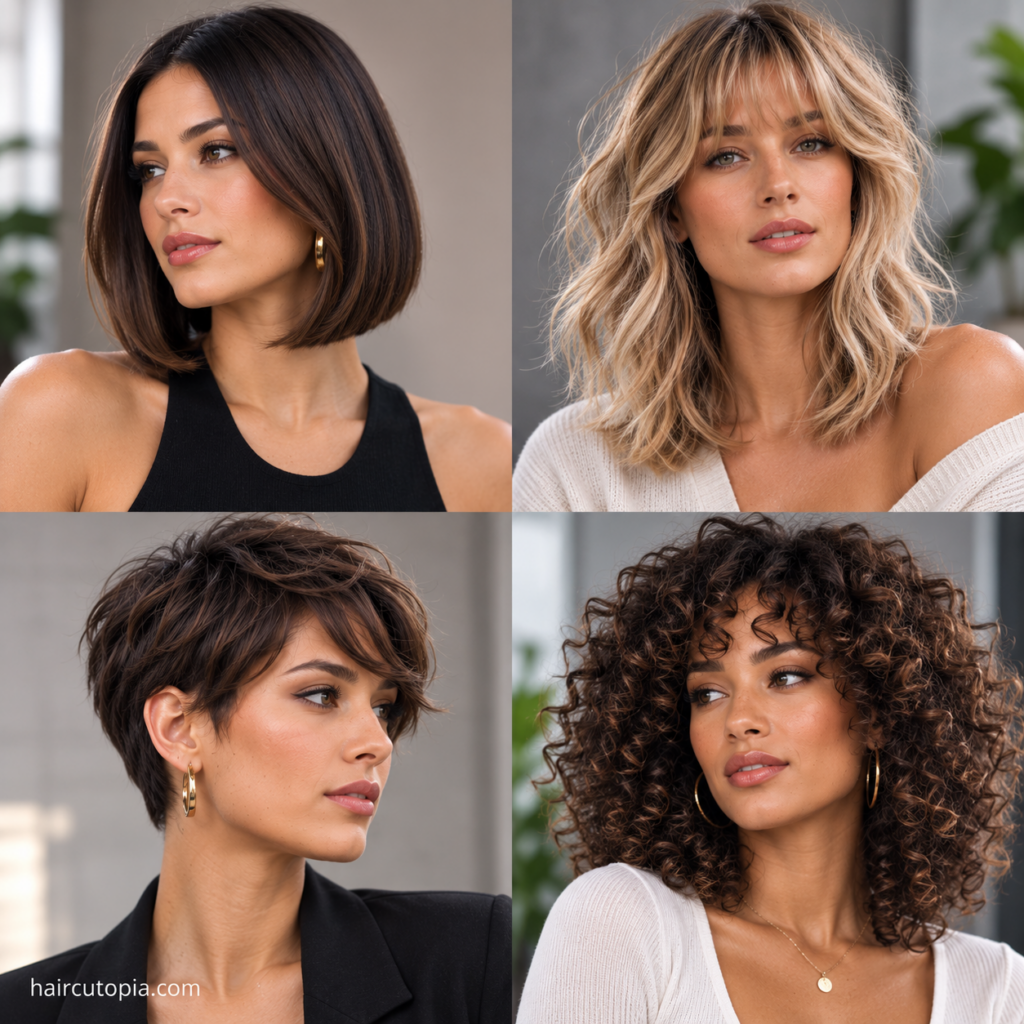
1. The Classic Bob
Few women’s haircuts have as much staying power as the bob.
A traditional bob generally falls somewhere between the jawline and shoulders, creating a strong, recognizable shape. It can be cut bluntly for a precise finish or softened with subtle layering.
The classic bob also works with more textures than its sleek reputation might suggest.
Straight hair creates a sharp silhouette, while waves give the cut movement. Curly hair can turn the same basic shape into something fuller and more dimensional.
Why the bob remains popular
The bob sits in that useful space between short and long hair. It makes a noticeable change without necessarily requiring the commitment of a pixie or crop.
It can also be customized with:
- Curtain bangs
- Side-swept bangs
- Blunt bangs
- Face-framing layers
- A center or side part
- Subtle internal layers
That flexibility has helped keep the bob relevant generation after generation.
2. The Blunt Bob
The blunt bob takes the classic shape and makes the perimeter the main feature.
Instead of heavily layered ends, the hair is cut to create a relatively solid line. This gives the haircut a strong, polished appearance and can make the ends look visually fuller.
Blunt bobs can fall at the jaw, chin, or slightly below.
They are particularly striking on straight hair, but they don’t have to be worn perfectly smooth. A slightly tousled blunt bob creates an interesting contrast between a precise haircut and relaxed styling.
3. The French Bob
Short, chic, and instantly recognizable, the French bob typically sits around the jawline and is often paired with bangs.
It tends to feel less rigid than some traditional bobs. Natural texture, loose movement, and a slightly imperfect finish are all part of its appeal.
The French bob can be especially flattering if you want your haircut to frame the cheekbones and jaw.
How to wear it today
Rather than styling every strand into place, allow the hair to move naturally.
A little texture spray or lightweight styling cream can add definition without making the cut look overly polished.
4. The Lob
The long bob—or lob—offers the familiar shape of a bob with extra length.
Most versions fall somewhere around the shoulders or collarbone. That additional length makes the lob one of the most versatile classic haircuts for women.
It is short enough to feel like a meaningful haircut but usually long enough to pull back.
A lob can be worn:
- Straight and sleek
- Softly waved
- Curly
- Center-parted
- Side-parted
- With bangs
- With face-framing pieces
If you’re considering shorter hair but aren’t ready for a chin-length bob, the lob is an easy middle ground.
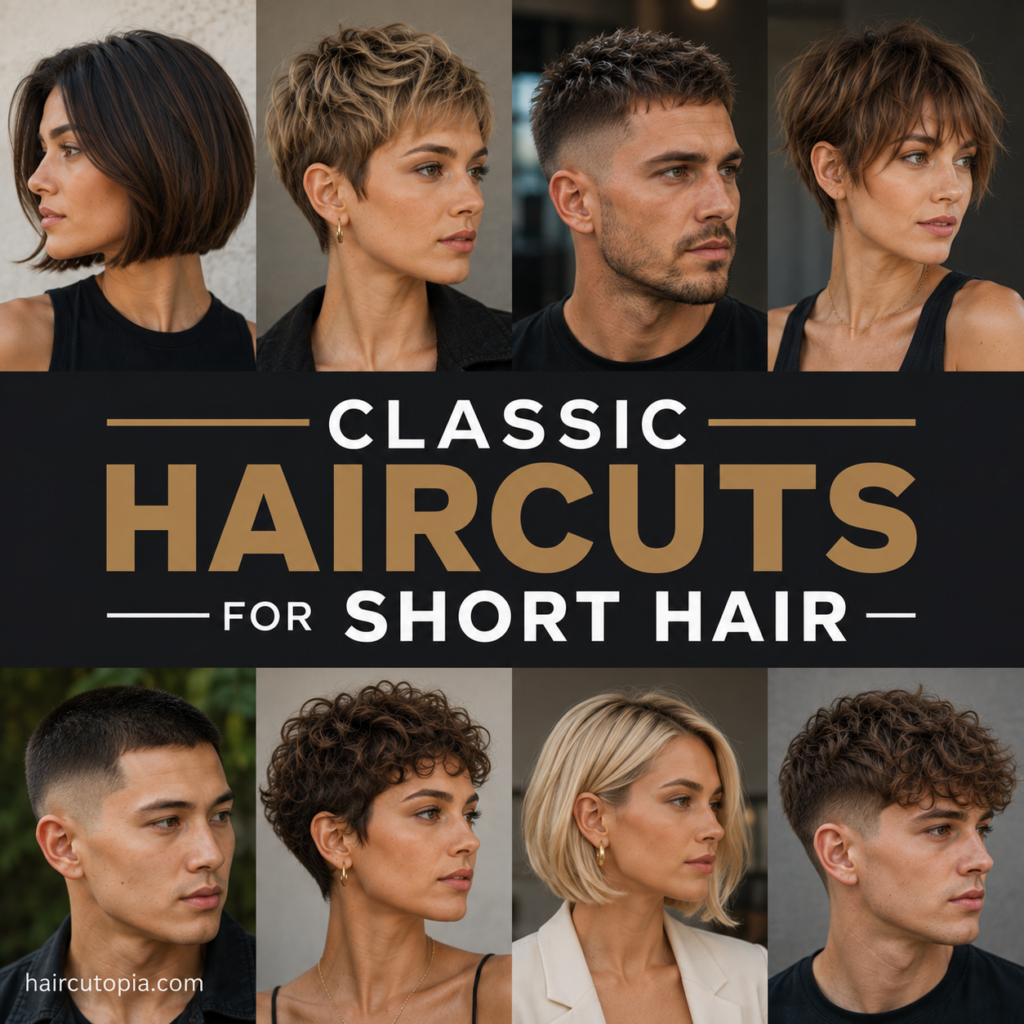
5. The Pixie Cut
The pixie is one of the most iconic short haircuts for women.
Traditional pixies are cropped closely around the sides and back while leaving slightly more length through the top. From there, the haircut can range from soft and feminine to sharp and sculptural.
Modern pixies frequently incorporate texture, longer bangs, tapered sides, or deliberately messy styling.
Is a pixie cut easy to maintain?
Daily styling can be extremely quick, but the haircut itself usually needs regular trimming to preserve its shape.
That’s an important distinction. Less hair doesn’t always mean fewer salon visits.
For someone who enjoys a defined short hairstyle and doesn’t mind keeping up with trims, the pixie can be incredibly practical.
6. The Bixie
The bixie combines characteristics of a bob and pixie.
Although the name feels modern, the general idea of a longer, layered crop has appeared repeatedly throughout women’s hairstyling.
There is more length and movement than you’d typically find in a pixie, particularly around the sides, back, and fringe.
The result feels soft and slightly undone.
A bixie can be a useful transitional haircut if you’re growing out a pixie or experimenting with shorter hair without committing to an extremely cropped style.
7. Shoulder-Length Hair
Sometimes the most timeless haircut is also one of the simplest.
Shoulder-length hair works because it offers enough length for styling while remaining relatively manageable.
It can be worn with a blunt perimeter for a fuller appearance or with layers to encourage movement.
This length also accommodates plenty of styling options, including:
- Ponytails
- Buns
- Half-up styles
- Waves
- Straight styles
- Braids
- Updos
For anyone who changes hairstyles frequently, shoulder-length hair provides a particularly flexible foundation.
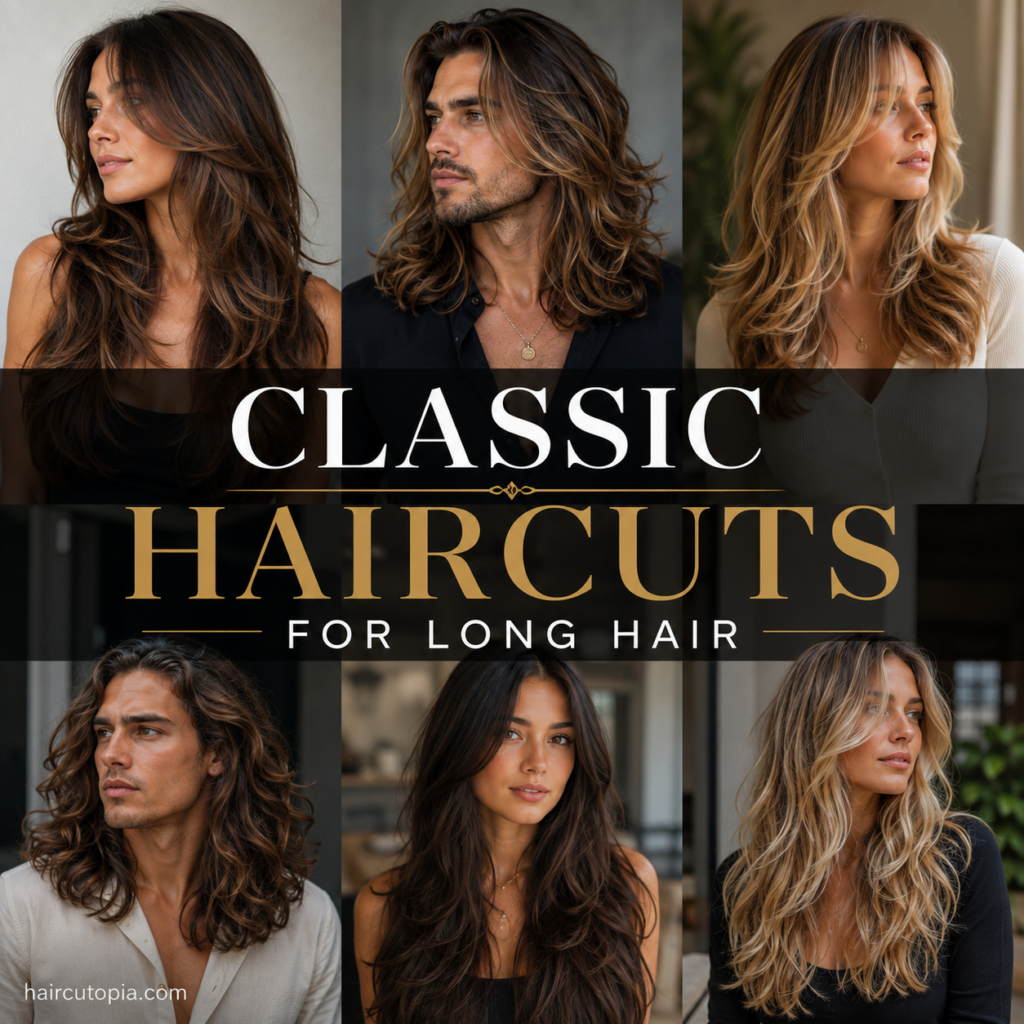
8. Long Layers
Long hair can become heavy when everything is cut to one length. Layers help break up that weight and introduce movement.
Classic long layers preserve the overall length while creating shorter sections throughout the hair.
The effect can be subtle or dramatic depending on where those layers begin.
Who can wear long layers?
Long layers can work with straight, wavy, and curly textures.
For thick hair, layering can remove some bulk and encourage movement. With finer hair, more restrained layering can preserve fullness while preventing the cut from looking flat.
The key is matching the amount of layering to the density and texture of the hair.
9. Face-Framing Layers
Face-framing layers concentrate shorter pieces around the front of the haircut.
They can begin around the cheekbones, jawline, chin, or even lower depending on the desired effect.
One reason face-framing layers remain so popular is that you don’t need to change the entire haircut to create a noticeable difference.
They can be added to:
- Long hair
- Medium-length cuts
- Lobs
- Layered bobs
- Curly hairstyles
They also pair naturally with curtain bangs.
10. The Shag
The shag has moved in and out of the spotlight many times, but it never really disappears.
Its defining features are layers, texture, and movement. Many versions include shorter layers around the crown and longer sections toward the perimeter.
The classic shag can look dramatically different depending on the hair texture.
On straight hair, it can appear edgy and piecey. Wavy and curly textures can create a softer, fuller silhouette.
Modernizing a classic shag
Today’s shags often use more blended layering than their retro counterparts.
Curtain bangs, natural waves, and softer face-framing pieces can preserve the character of the haircut without making it look like a costume from another decade.
11. The Classic Layered Cut
Not every layered haircut needs to be a shag.
A traditional layered cut uses gradual differences in length to create movement while maintaining a balanced overall shape.
This makes it one of the easiest classic haircuts to customize.
Layers can be:
- Long and subtle
- Rounded
- Feathered
- Face-framing
- Lightly textured
- Concentrated around the ends
A good layered cut should work with the hair rather than making everyday styling unnecessarily complicated.
12. The One-Length Cut
At the opposite end of the spectrum is the one-length haircut.
Instead of obvious layers, the perimeter is kept relatively consistent. This creates a clean shape and can help the ends appear thicker.
One-length cuts work at several lengths, from a short bob to hair that falls well past the shoulders.
They’re especially useful if you prefer a simple silhouette or want to emphasize the natural density of your hair.
13. The Pageboy
The pageboy is a distinctive vintage haircut that continues to inspire modern styles.
Traditionally, it features a rounded shape with the ends turning inward and a defined fringe across the forehead.
A contemporary version doesn’t have to be nearly as structured.
Stylists can soften the perimeter, introduce subtle texture, or modify the bangs while retaining the rounded shape that makes the pageboy recognizable.
It’s a good example of how an unmistakably retro haircut can be reinterpreted rather than simply reproduced.
14. The Graduated Bob
A graduated bob creates shape by keeping the back slightly shorter while gradually introducing more length toward the front.
Depending on how dramatic the graduation is, the result can be subtle or sharply angled.
This construction can add volume through the back of the haircut while maintaining longer pieces around the face.
Modern versions tend to use softer transitions than some of the highly stacked bobs associated with previous trends.
15. The Angled Bob
An angled bob uses a noticeable difference between the front and back lengths.
The front sections are typically longer, producing a forward-moving silhouette that frames the face.
It can be worn sleek for a highly defined shape or styled with waves to make the angle more understated.
Keeping the graduation subtle is one way to give this classic cut a more contemporary appearance.
16. The Rounded Bob
The rounded bob emphasizes softness and volume.
Rather than creating a completely straight perimeter, the cut is shaped to follow the contours of the head. The ends may curve inward slightly, producing a polished silhouette.
It can work particularly well for anyone who likes the structure of a bob but wants something softer than an extremely blunt cut.
With modern styling, the rounded bob can also be worn with more movement and less of the perfectly sculpted finish associated with vintage versions.
17. Long Hair With a Center Part
Sometimes the styling choice becomes part of the haircut’s identity.
Long hair with a center part is about as straightforward as it sounds, yet the combination has appeared repeatedly throughout fashion and beauty history.
The simplicity puts more attention on healthy-looking lengths, the condition of the ends, and the way the hair naturally falls.
Adding subtle layers or face-framing pieces can prevent very long hair from feeling heavy while preserving the classic shape.
18. Long Hair With Side-Swept Bangs
Side-swept bangs have been reinvented countless times.
They can be short and dramatic or long enough to blend gradually into face-framing layers.
Longer versions are particularly versatile because they can be worn across the forehead, tucked behind the ear, or blended into the rest of the hair.
If you want bangs without committing to a full blunt fringe, side-swept bangs provide a softer alternative.
19. Classic Bangs
A full fringe can completely change the appearance of an otherwise simple haircut.
Traditional bangs are usually cut across the forehead, but small differences in length, density, and texture create very different results.
Options include:
- Blunt bangs
- Wispy bangs
- Rounded bangs
- Brow-length bangs
- Micro bangs
- Textured bangs
Bangs do require some upkeep, especially as they grow, but they remain one of the easiest ways to transform a familiar haircut.
20. Curtain Bangs
Curtain bangs have become especially visible in recent years, but their history goes back much further.
They are generally shorter toward the center and gradually become longer toward the sides, creating a parted effect around the face.
Because they blend into surrounding layers, curtain bangs can feel less restrictive than a straight-across fringe.
They work particularly well with medium and long layered hair, shags, and lobs.
Classic Haircuts vs. Trendy Haircuts
There’s more overlap between classic and trendy hairstyles than you might expect.
Hair trends frequently revisit existing shapes rather than creating something entirely new. The difference is often in the styling.
A classic bob can suddenly feel current when it’s paired with natural waves and a center part. A pixie becomes more contemporary with textured length through the top. Long layers can be updated with dramatic face-framing pieces.
Classic haircuts often emphasize:
- Balanced shapes
- Versatility
- Softer transitions
- Wearable proportions
- Long-term styling flexibility
More trend-focused haircuts may use:
- Dramatic layering
- Unusual proportions
- Extreme length differences
- Strong texture
- Bold fringes
- More experimental shapes
Neither approach is inherently better. It comes down to whether you want your haircut to follow a particular moment or adapt easily as trends evolve.
How to Choose the Right Classic Haircut
The haircut you save on your phone isn’t automatically the haircut that will behave the same way on your head.
Hair texture, density, growth patterns, styling habits, and face shape all influence the final result.
Consider your natural texture
Straight hair can emphasize the precision of bobs, blunt cuts, and geometric shapes.
Wavy hair naturally complements layered cuts, lobs, shags, and longer styles.
Curly and coily hair can also work beautifully with classic shapes, particularly when the haircut is designed around the natural curl pattern rather than forcing the hair into a different texture.
Consider your hair density
Thick hair may benefit from carefully placed layers that remove bulk without sacrificing the overall shape.
Fine hair often looks fuller when the perimeter retains more weight. Excessive layering can sometimes make the ends appear thinner, so subtlety may work better.
Think about your daily routine
Consider how you actually wear your hair on an average morning.
Do you blow-dry it? Air-dry it? Curl it? Straighten it? Pull it into a ponytail five minutes before leaving the house?
A haircut that complements your normal routine will usually be easier to live with than one that requires an entirely new styling process every day.
Choosing a Classic Haircut for Your Face Shape
Face shape can provide useful guidance, but it shouldn’t become a strict rulebook.
The placement of volume, layers, bangs, and length can all change how a haircut frames the face.
For example, longer face-framing layers can create vertical movement, while a chin-length bob emphasizes the jaw area. Bangs draw attention toward the eyes, and volume around the sides can alter the visual proportions of the haircut.
Rather than asking which haircut you’re “allowed” to wear, talk with your stylist about adjusting a style you already like.
A few centimeters of length or a change in layering can make a significant difference.
How to Ask Your Stylist for a Classic Haircut
Knowing the haircut name helps, but photos and specific details are usually more useful.
When discussing your haircut, explain:
- Where you want the overall length to fall.
- Whether you want visible or subtle layers.
- How much hair you normally style each day.
- Whether you regularly wear your hair up.
- What you like or dislike about your current cut.
- How often you’re willing to return for trims.
Bring reference photos when possible.
Ideally, choose examples featuring hair with a texture and density similar to yours. A haircut photographed on extremely thick, straight hair may behave very differently on fine curls, even if the length is identical.
How to Make a Classic Haircut Look Modern
You don’t necessarily need a completely different haircut to refresh your look.
Small changes can have a surprisingly large effect.
Add natural texture
Instead of styling hair into a perfectly controlled shape, let some of its natural movement show.
Soft waves, curls, and slightly undone finishes can immediately make traditional cuts feel more relaxed.
Change your part
Moving from a side part to a center part—or the other way around—can noticeably change how a familiar haircut frames your face.
Introduce face-framing pieces
A few carefully placed shorter sections around the face can update long or medium-length hair without sacrificing much overall length.
Try bangs
Curtain, wispy, blunt, or side-swept bangs can transform an established haircut while keeping its basic shape intact.
Adjust the length
Even a small length change can shift the personality of a cut.
A shoulder-length lob feels different from one sitting just above the collarbone. A jaw-length bob creates a different silhouette than one that reaches the shoulders.
Maintaining a Classic Women’s Haircut
How often you need a haircut depends on the style.
Short, highly structured cuts generally show growth sooner. Pixies and precise bobs may need more frequent attention if you want to preserve their original shape.
Long layers tend to grow out more gradually.
Between salon appointments:
- Use conditioner appropriate for your hair type.
- Limit excessive heat when possible.
- Use heat protection before hot tools.
- Keep bangs trimmed if they’re part of the style.
- Avoid overloading fine hair with heavy products.
- Trim damaged ends before they become difficult to manage.
- Choose styling products based on texture rather than trends.
Healthy-looking hair can make even the simplest haircut appear more polished.
Are Classic Haircuts for Women Still Trending?
Yes, although they rarely return in exactly the same form.
That’s what makes watching haircut trends interesting.
The bob keeps coming back at different lengths. The pixie alternates between sleek and textured versions. Shags become softer or more dramatic. Bangs cycle between blunt, wispy, side-swept, and curtain styles.
Long layered hair changes too, with different eras emphasizing volume, feathering, face framing, or more natural texture.
The foundation stays familiar while the details evolve.
This means you don’t necessarily need to chase a completely new hairstyle every time trends change. Starting with a strong classic cut gives you room to update your look through styling, texture, bangs, layers, and subtle changes in length.
Final Thoughts on Classic Haircuts for Women
Classic haircuts have lasted for a reason.
The bob, pixie, lob, shag, layered cut, shoulder-length style, and long layered haircut can all be reinvented without losing what made them appealing in the first place.
The best choice isn’t necessarily the haircut getting the most attention right now. It’s the one that works with your natural hair, fits your routine, and gives you enough flexibility to wear it the way you actually want.
Trends can provide inspiration. A classic shape gives you somewhere solid to start.