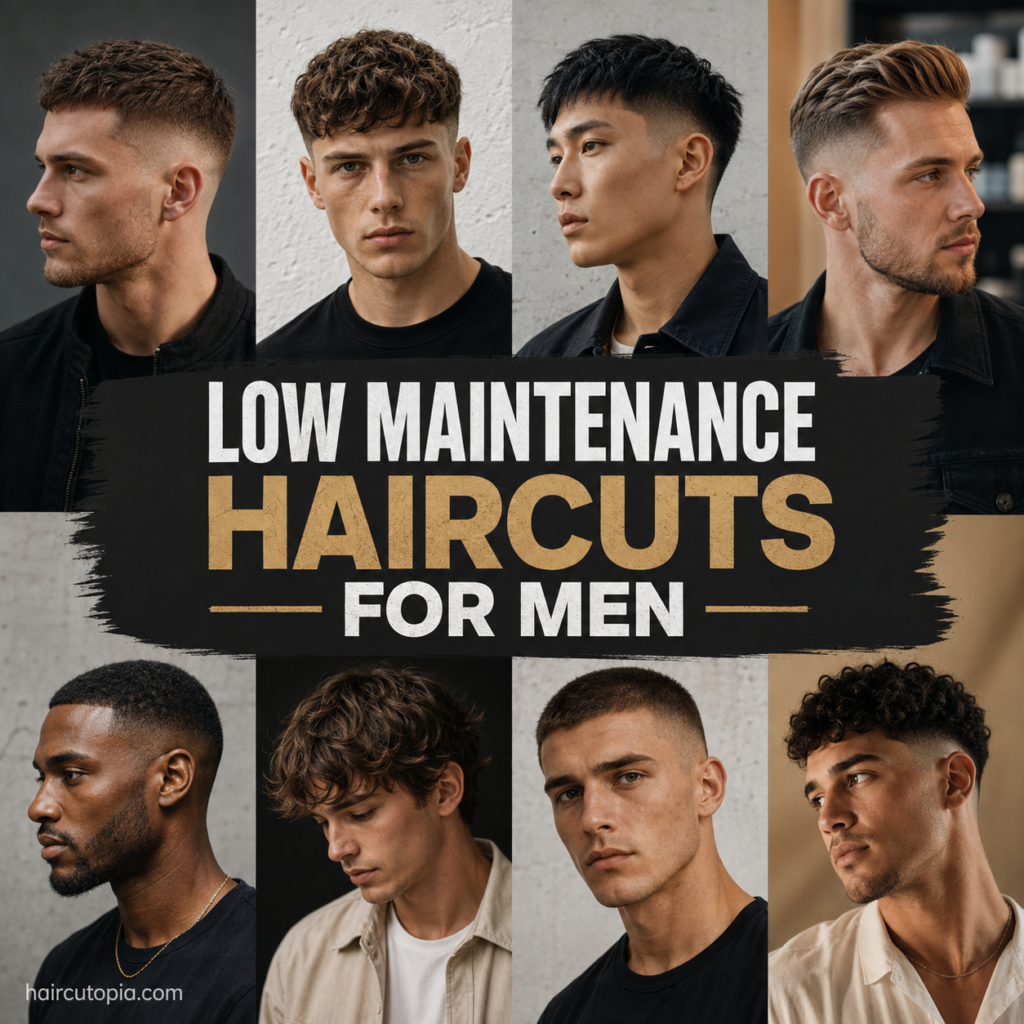
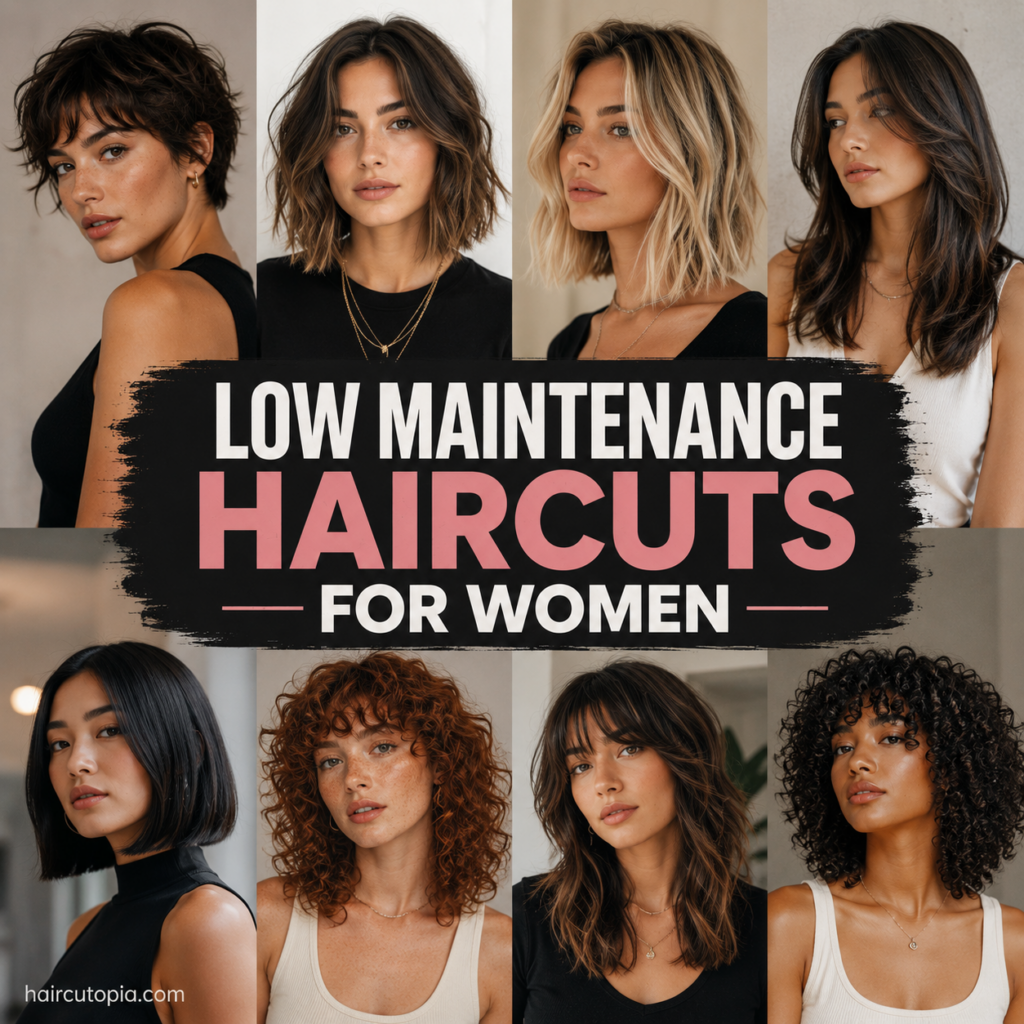
A great haircut can make getting ready noticeably easier. Instead of spending every morning blow-drying, straightening, curling, or trying to convince your hair to cooperate, the right cut can do much of the work on its own.
That’s the appeal of low maintenance haircuts for women. They’re designed to complement your natural texture, grow out gracefully, and still look intentional when you don’t have time for a full styling routine.
And low maintenance doesn’t have to mean short. Pixies and bobs are obvious choices, but shoulder-length cuts, shags, long layers, and naturally textured styles can be surprisingly easy to manage too.
The key is finding a haircut that works with your hair rather than against it.
What Makes a Women’s Haircut Low Maintenance?
There’s more to maintenance than how long you spend styling your hair.
A very short, precise haircut might take only a few minutes to style but require frequent salon appointments. A longer layered cut could take slightly more effort at home while growing beautifully for months.
A truly manageable haircut usually has several of these qualities:
- Works with your natural texture
- Air-dries well
- Requires minimal heat styling
- Doesn’t depend on perfect placement
- Looks good with a little natural movement
- Can be styled with one or two products
- Grows out without quickly losing its shape
Before choosing a cut, think about what kind of maintenance you actually want to avoid.
1. Classic Bob
Few haircuts have stayed relevant as long as the bob.
Usually falling somewhere between the jaw and shoulders, the classic bob creates a defined shape without requiring long layers or complicated styling.
Straight hair can make a bob look naturally sleek, while wavy hair gives it a softer, more relaxed finish.
For the easiest version, ask your stylist for a shape that works with your natural texture so you can air-dry whenever possible.
2. Blunt Bob
A blunt bob keeps the ends relatively even instead of using lots of layers.
The clean perimeter can make the hair appear fuller, which is particularly useful for fine or medium-density hair.
It also creates a strong shape without needing elaborate styling.
A perfectly polished blunt bob may require some heat styling, but a slightly relaxed version can look equally stylish with natural movement.
3. Textured Bob
If a perfectly smooth bob sounds like too much work, try a textured version.
Subtle layers and movement prevent the haircut from looking overly structured. That means a little wave, bend, or imperfection actually contributes to the finished look.
Textured bobs work especially well for naturally wavy hair.
Add a small amount of texturizing spray, scrunch gently, and let the hair do its thing.
4. French Bob
The French bob typically sits around the jawline and often includes a fringe or soft bangs.
It has a deliberately effortless quality that makes slightly tousled texture feel appropriate rather than unfinished.
Depending on your hair texture, you can wear it smooth, softly waved, or naturally messy.
One consideration is the fringe. Bangs may require more frequent trimming than the rest of the haircut, so choose a longer or softer fringe if minimizing salon visits is a priority.
5. Lob
The long bob, usually called a lob, is one of the most versatile low maintenance haircuts for women.
It generally falls somewhere around the shoulders or collarbone, giving you the appearance of shorter hair without sacrificing the ability to pull it back.
That’s especially useful on rushed mornings.
A lob can be:
- Air-dried naturally
- Worn straight
- Styled with loose waves
- Pulled into a ponytail
- Worn half-up
- Tucked behind the ears
It also tends to grow out more gracefully than very short cuts.
6. Blunt Lob
A blunt lob combines the manageable length of a long bob with a strong, simple perimeter.
Because there aren’t many layers to control, styling can be straightforward.
This cut can be especially flattering on fine hair because the fuller-looking ends help create the impression of density.
If your hair is naturally straight or slightly wavy, you may find that very little daily styling is necessary.
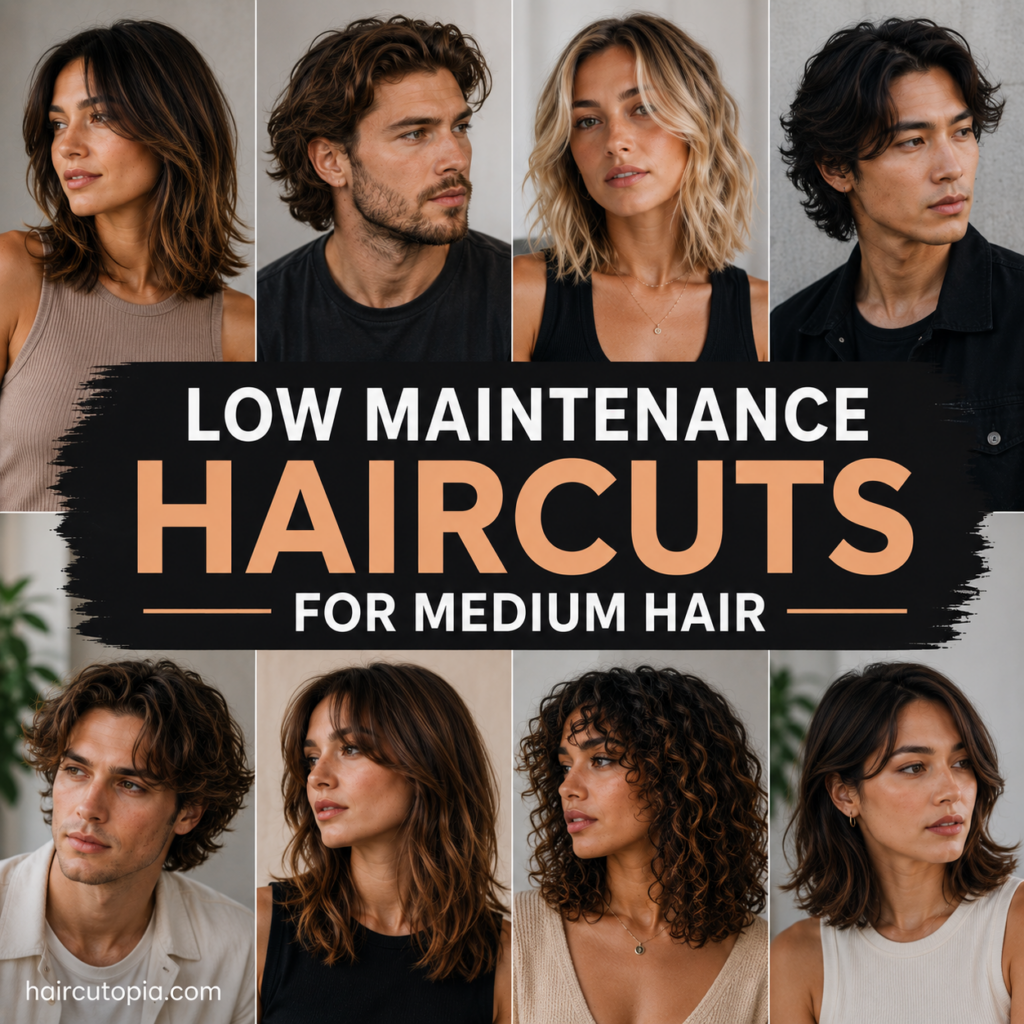
7. Shoulder-Length Cut
Sometimes simplicity wins.
A straightforward shoulder-length haircut offers enough length for versatility without the additional drying, detangling, and styling time associated with very long hair.
It’s long enough for a ponytail or bun but short enough to feel manageable.
This is also a good starting point if you’re unsure whether you want to commit to a bob.
8. Shoulder-Length Hair With Long Layers
Adding a few long layers can prevent shoulder-length hair from feeling heavy or triangular.
The key word is long.
Too many short layers may require additional styling to sit correctly, while longer layers create movement without dramatically changing the overall shape.
This works particularly well for thick, wavy, or dense hair.
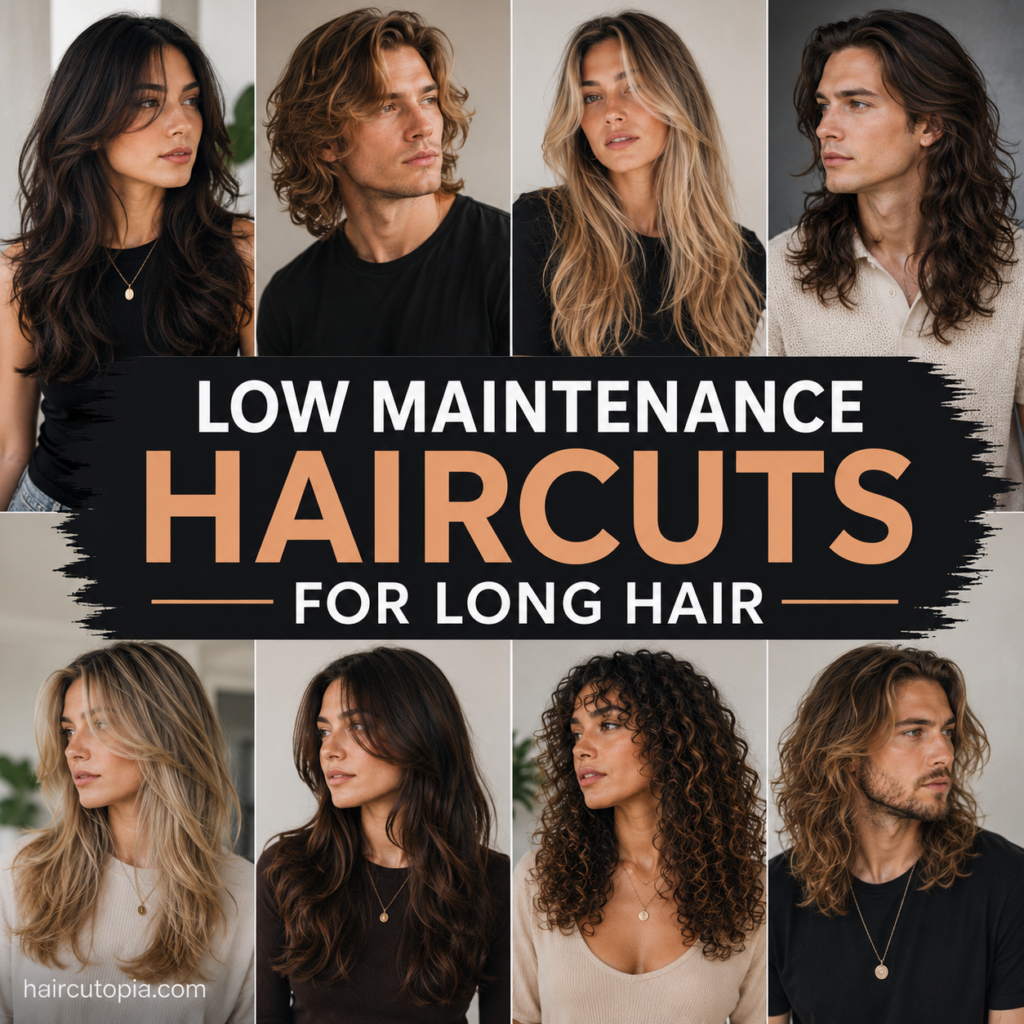
9. Long Layers
You don’t have to sacrifice long hair to simplify your routine.
Long layers remove weight and create movement while preserving overall length. They’re especially useful for thick hair that tends to feel heavy or flat.
Because the layers blend gradually into the haircut, they can also grow out naturally.
If you usually air-dry your hair, tell your stylist. The layers can then be positioned around your natural texture rather than around a blowout.
10. One-Length Long Hair
Layers aren’t always necessary.
For straight or slightly wavy hair, a mostly one-length cut can be remarkably simple. There are fewer short pieces to style, and the hair can easily be worn down, braided, or pulled back.
Regular conditioning and occasional trims become more important as hair gets longer, particularly if the ends are prone to dryness.
But from a daily styling perspective, simplicity can be an advantage.
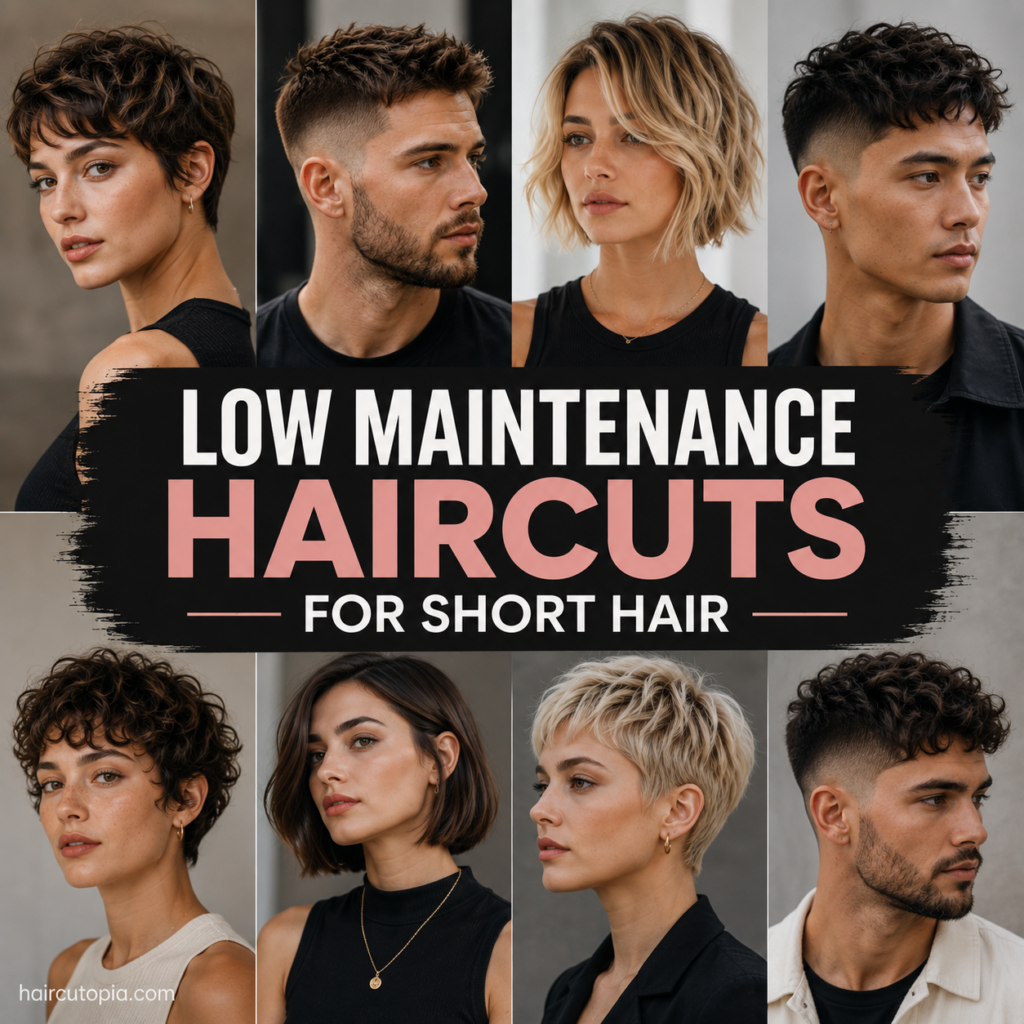
11. Pixie Cut
The pixie is one of the most recognizable short haircuts for women.
With short sides and back and slightly more length through the top, it can dramatically reduce washing, drying, and styling time.
Some pixies need nothing more than finger styling.
Others benefit from a tiny amount of wax, paste, or cream to create separation.
The main tradeoff is salon maintenance. Short cuts lose their original shape faster than longer styles, so regular trims are usually needed.
12. Long Pixie
If a traditional pixie feels too short, the long pixie offers a softer alternative.
Keeping additional length through the top and front provides more styling flexibility while maintaining the convenience of short hair.
You can wear it:
- Tousled
- Side-swept
- Textured
- Smooth
- Tucked behind the ears
It can also transition into a short bob more naturally if you eventually decide to grow it out.
13. Bixie Cut
Somewhere between a bob and a pixie is the bixie.
The style combines the cropped ease of a pixie with some of the movement and softness of a short bob.
Because it isn’t supposed to look perfectly rigid, natural texture works in its favor.
The bixie is particularly appealing if you want short hair but don’t want the very close shape of a traditional pixie.
14. Shag Haircut
The shag is practically designed around movement.
Layers create texture throughout the hair, producing an intentionally undone appearance. Waves, bends, curls, and even a little frizz can become part of the style rather than something you need to eliminate.
That makes the shag an excellent choice for anyone who prefers air-drying.
It works across multiple lengths, from short shags to longer layered versions.
15. Soft Shag
A soft shag takes the same layered idea but makes it less dramatic.
The layers are blended more gradually, creating movement without the heavily disconnected appearance associated with some traditional shag cuts.
It’s a good choice if you like effortless texture but want something versatile enough for both casual and polished styling.
16. Curly Shag
Naturally curly hair and shag layers can work beautifully together.
The layers remove excess weight and give curls room to form instead of pulling everything downward.
A well-designed curly shag can create volume and shape without requiring you to manually style every section.
Curl cream or leave-in conditioner may be enough for everyday wear.
17. Wolf Cut
The wolf cut blends characteristics of a shag with the shape of a modern mullet.
It typically features plenty of layering around the crown with longer sections toward the back.
While dramatic versions can require styling, softer wolf cuts can be surprisingly forgiving on naturally wavy or textured hair.
The intentionally lived-in appearance means the haircut doesn’t have to look perfectly arranged.
18. Butterfly Cut
The butterfly haircut uses face-framing layers and longer layers throughout the hair to create movement while retaining substantial length.
It became especially popular for its voluminous, flowing appearance.
There’s an important distinction, though.
A highly styled butterfly cut with a dramatic blowout isn’t necessarily low maintenance. But if your stylist adapts the layers to your natural texture, a softer version can remain manageable.
Ask for layers that still look good when air-dried if that’s how you normally wear your hair.
19. Curtain Bangs With Long Layers
Bangs aren’t usually the first thing people associate with low maintenance hair.
Curtain bangs are an exception.
Because they’re longer and split toward the sides, they tend to grow out more naturally than short, straight-across bangs.
They also blend easily into face-framing layers.
Curtain bangs may still need occasional styling, but they’re generally more forgiving when they get longer.
20. Face-Framing Layers
If you want to update long hair without dramatically changing it, face-framing layers are one of the simplest options.
These shorter pieces create movement around the face while leaving most of the hair at its existing length.
They work particularly well if you regularly wear your hair in a ponytail or bun because the shorter sections can soften the appearance around the face.
Keep the layers relatively long if you want minimal styling.
21. Naturally Wavy Lob
Wavy hair doesn’t always need to be straightened or curled into a more uniform pattern.
A lob cut specifically for natural waves lets the texture become the hairstyle.
The length keeps things manageable while allowing enough room for the wave pattern to develop.
After washing, try applying a lightweight styling cream or texture product, scrunching gently, and letting the hair air-dry.
22. Curly Bob
A curly bob creates shape while letting natural curls remain the focal point.
Length is important here.
Curl shrinkage means a bob that appears relatively long while wet can become significantly shorter when dry. A stylist experienced with curly hair can account for the way your individual curl pattern behaves.
Once the shape is right, everyday styling can be refreshingly simple.
23. Rounded Curly Cut
A rounded cut creates a balanced silhouette around naturally curly or coily hair.
Rather than forcing the texture downward, the haircut shapes the overall volume.
This approach allows the curls themselves to create the visual interest.
Maintaining moisture, definition, and healthy ends usually matters more than trying to create an entirely new hairstyle every morning.
24. Tapered Natural Hair
A tapered cut keeps more natural texture through the top while gradually shortening the sides and back.
It creates a defined shape without eliminating curls or coils.
The shorter sides can simplify daily maintenance while the longer top provides enough room to showcase natural texture.
The exact length can be adjusted depending on how much styling flexibility you want.
25. Short Natural Curls
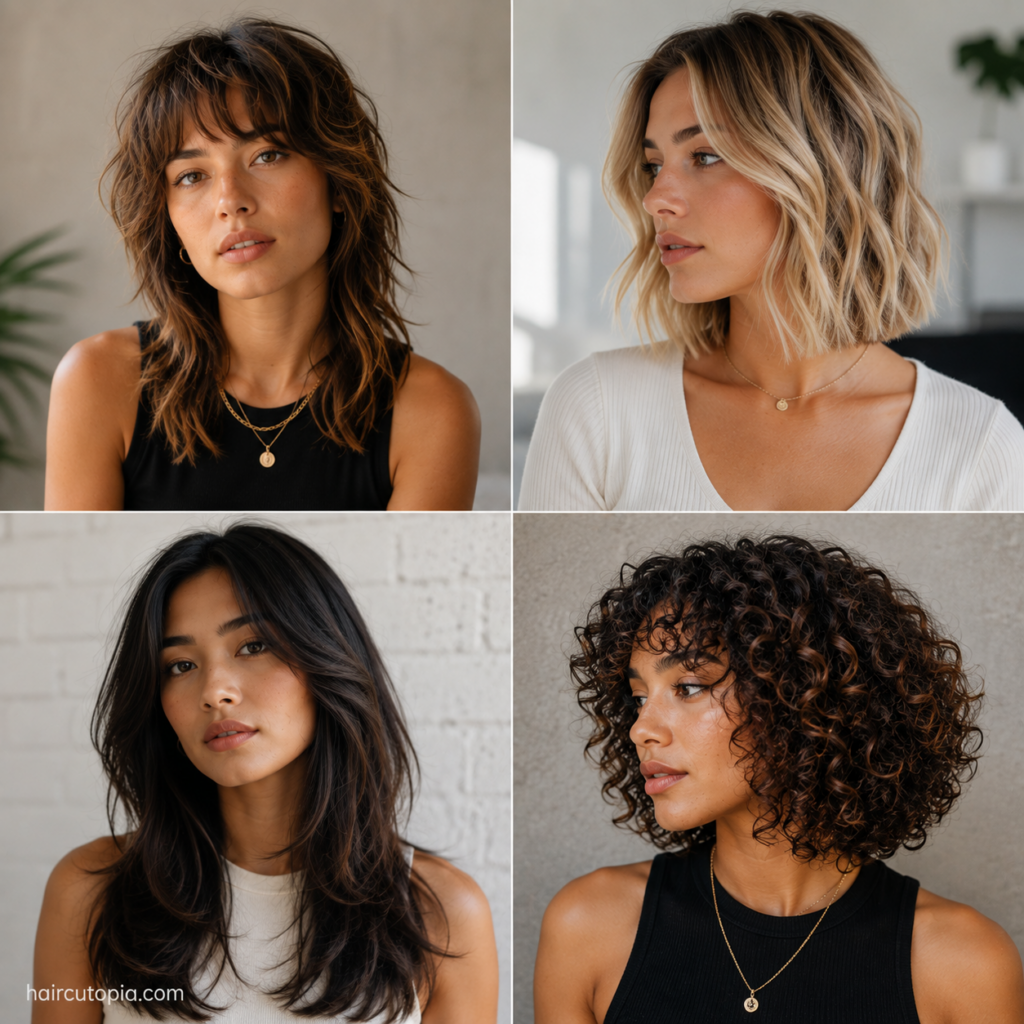
Keeping naturally curly or coily hair relatively short can reduce detangling and styling time while still preserving plenty of texture.
Instead of manipulating the hair into a different pattern, the goal is simply to keep curls moisturized and defined.
A streamlined routine might include:
- Gentle cleansing
- Conditioner
- Leave-in conditioner
- Curl cream or gel when needed
- Air-drying or gentle diffusing
The simpler the haircut, the easier it becomes to let your natural curl pattern take center stage.
Best Low Maintenance Haircuts by Hair Type
Hair texture plays a huge role in how easy a haircut will actually be.
A style that’s effortless for straight hair might require daily heat styling on curly hair—and vice versa.
Straight Hair
Straight hair often works well with cuts that rely on clean lines and natural fall.
Consider:
- Blunt bob
- Classic bob
- Lob
- Blunt lob
- Long pixie
- One-length long hair
- Long layers
If your hair is extremely straight and fine, keeping the ends relatively full can prevent the haircut from looking thin.
Wavy Hair
Natural waves are ideal for styles that embrace movement.
Good choices include:
- Textured bob
- Wavy lob
- Shag
- Soft shag
- Wolf cut
- Shoulder-length layers
- Long layers
Avoid choosing a haircut that only looks right after being completely straightened unless you’re comfortable doing that regularly.
Curly Hair
Curls often become easier to manage when the haircut distributes weight properly.
Consider:
- Curly bob
- Curly shag
- Rounded curly cut
- Shoulder-length layers
- Long curly layers
- Short natural curls
Ask your stylist to account for shrinkage before deciding on the final length.
Coily Hair
For coily textures, shape and moisture management can be more important than traditional styling.
Options include:
- Tapered natural cuts
- Short natural curls
- Rounded shapes
- Layered natural hair
- Short cropped styles
A cut that respects your natural pattern can dramatically simplify the daily routine.
Fine Hair
Too many layers can sometimes make fine hair appear thinner.
Cuts with stronger perimeters are often easier to manage, including:
- Blunt bob
- Blunt lob
- Classic bob
- Shoulder-length blunt cut
- Long hair with minimal layering
A few strategically placed layers can still create movement without removing too much density.
Thick Hair
Thick hair can benefit from carefully removing weight.
Try:
- Long layers
- Textured lob
- Shag
- Shoulder-length layers
- Butterfly-inspired layers
- Long pixie
The goal isn’t necessarily to remove as much hair as possible. It’s to distribute the volume so the haircut falls naturally.
Low Maintenance Haircuts That Grow Out Well
Daily styling isn’t the only factor worth considering.
If you don’t enjoy frequent salon visits, choose a haircut that changes gradually as it grows.
Some particularly forgiving options include:
- Lob
- Shoulder-length layers
- Long layers
- Soft shag
- Curtain bangs
- Face-framing layers
- One-length long hair
- Longer pixie styles transitioning toward a bob
Very precise short cuts generally show growth sooner.
A softer haircut with blended layers tends to evolve more naturally.
Short vs. Long Hair: Which Is Lower Maintenance?
It seems logical that short hair would always be easier.
That’s not necessarily true.
Short hair usually takes less time to wash and dry, but certain styles need regular trims to maintain their shape. Longer hair takes more time to wash, condition, and detangle, but it can often go longer between salon appointments.
There’s also the ponytail factor.
Long enough hair can simply be pulled back when you don’t feel like styling it. A chin-length bob doesn’t always give you that option.
If daily styling is your biggest concern, short hair may win.
If salon visits are the bigger inconvenience, medium or longer hair with forgiving layers may actually be lower maintenance.
Are Bangs Low Maintenance?
Usually, bangs add at least some maintenance.
Short, blunt bangs need regular trimming and often require styling after sleeping or washing your hair.
Longer fringe styles are more forgiving.
If you want bangs without committing to constant upkeep, consider:
- Curtain bangs
- Long side-swept bangs
- Bottleneck-inspired bangs
- Long face-framing fringe
These styles can gradually blend into the rest of the haircut as they grow.
How Often Should You Get a Low Maintenance Haircut?
Your ideal schedule depends on the length and precision of your haircut.
As a general guideline:
- Pixie cuts: around every 4–6 weeks
- Short bobs: around every 6–8 weeks
- Lobs: around every 8–12 weeks
- Shoulder-length cuts: around every 8–12 weeks
- Long layered hair: around every 10–16 weeks
Hair health, growth rate, chemical treatments, and personal preference can all change these timelines.
You don’t need to book an appointment simply because a certain number of weeks has passed. If the haircut still falls nicely and the ends remain healthy, you may be comfortable waiting longer.
How to Make Your Haircut Even Easier to Maintain
Choosing the right cut is the biggest step, but your routine matters too.
Embrace Your Natural Texture
The more your hairstyle depends on changing your natural texture, the more work you’re creating.
If you have waves, find a haircut that looks good wavy.
If you have curls, let the curls influence the shape.
If your hair naturally dries straight, take advantage of it.
You can still straighten, curl, or blow out your hair when you feel like it. The difference is that your haircut shouldn’t depend on those steps every single day.
Ask for an Air-Dry-Friendly Cut
Tell your stylist if you usually air-dry.
This matters because some haircuts are shaped around the assumption that they’ll be styled with a round brush, blow dryer, or hot tools.
If you rarely use those tools, your stylist needs to know.
Keep Your Routine Simple
You probably don’t need five styling products for an everyday hairstyle.
Depending on your hair type, one well-chosen product may be enough:
- Lightweight cream for softness
- Mousse for volume
- Curl cream for definition
- Leave-in conditioner for moisture
- Texture spray for waves
- Smoothing serum for flyaways
Start with less and add more only when necessary.
Consider How the Cut Will Grow
A haircut looks different four weeks after leaving the salon.
Ask your stylist how the style is likely to grow and whether the shape will remain balanced.
This is especially important with bangs, pixies, heavily layered styles, and precise bobs.
What to Tell Your Hairstylist
Instead of simply saying, “I want something low maintenance,” explain what that means to you.
For example:
“I usually air-dry my hair and don’t want to use hot tools every morning. I’d like something that still looks good naturally and grows out well.”
It also helps to mention:
- How often you wash your hair
- Whether you air-dry or blow-dry
- Your usual styling products
- How often you want salon appointments
- Whether you need to put your hair into a ponytail
- How much time you spend styling in the morning
- Whether you’re comfortable with bangs
- What you dislike about your current haircut
These details can be more useful than simply showing a reference photo.
What Is the Easiest Women’s Haircut to Maintain?
There’s no single winner because everyone’s hair behaves differently.
For naturally straight or slightly wavy hair, a lob is one of the safest choices. It has enough length to pull back, doesn’t require constant reshaping, and works with several styling options.
For curly hair, a properly shaped curly bob or layered cut can make natural texture much easier to manage.
For someone who wants extremely short hair, a pixie dramatically reduces drying and styling time, although you’ll likely visit the salon more frequently.
And if you love long hair, long layers or a simple one-length cut can be surprisingly low maintenance.
The easiest haircut is ultimately the one that looks good when you style it the way you normally do—not the way you imagine you’ll style it every morning.
Are Low Maintenance Haircuts Trendy?
Very much so.
Some of the most popular modern women’s haircuts are built around natural movement rather than perfectly controlled styling. Textured bobs, lobs, shags, curtain bangs, soft layers, curly cuts, and relaxed pixies all fit into that approach.
The emphasis has shifted toward hair that feels wearable.
That doesn’t mean polished hairstyles are disappearing. It simply means your everyday haircut can look good before you’ve spent half an hour working on it.
Choosing the Best Low Maintenance Haircut for You
Start with your actual routine.
Not the routine you plan to begin someday—the one you follow right now.
Then consider three things:
- Your natural texture. Choose a shape that complements how your hair naturally dries.
- Your preferred length. Remember that shorter doesn’t automatically mean easier.
- Your tolerance for salon visits. Precise short cuts usually require more frequent reshaping than medium and long styles.
If you want something versatile and forgiving, a lob or shoulder-length cut is difficult to beat.
If natural texture is your priority, consider a shag, curly bob, layered cut, or tapered natural style.
If you want to dramatically reduce daily styling, a pixie or short crop may be worth the additional salon appointments.
The best low maintenance haircuts for women aren’t simply the cuts requiring the least effort. They’re the ones that fit naturally into your life.
When your haircut works with your texture, schedule, and styling habits, getting ready becomes a whole lot easier.