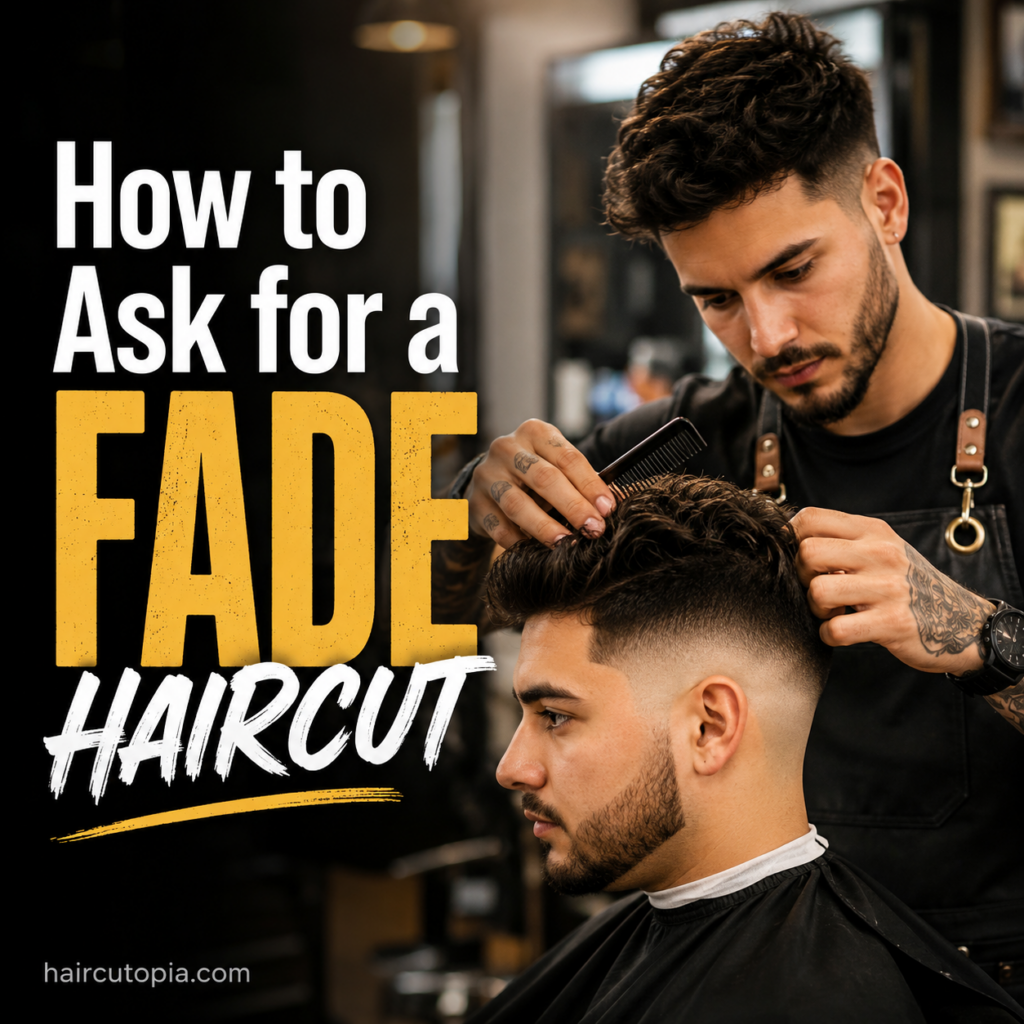
Getting a fade should be simple, but walking into a barbershop and saying, “Just give me a fade” can leave a lot open to interpretation.
A fade describes how the hair transitions from shorter to longer on the sides and back. It doesn’t tell your barber exactly how short you want it, where you want the fade to begin, or what should happen with the hair on top.
The good news is you don’t need to learn barber terminology before your next haircut. You just need to communicate a few key details.
Here’s how to ask for a fade haircut and make it much easier for your barber to understand the look you want.
What Is a Fade Haircut?
A fade is a haircut technique that gradually blends the hair from very short near the bottom into longer hair higher on the head.
Depending on the style, the shortest section might be cut with clippers, taken down to the skin, or left slightly longer.
The main difference between fades is usually where that transition begins.
Common options include:
- Low fade
- Mid fade
- High fade
- Skin fade
- Taper fade
- Drop fade
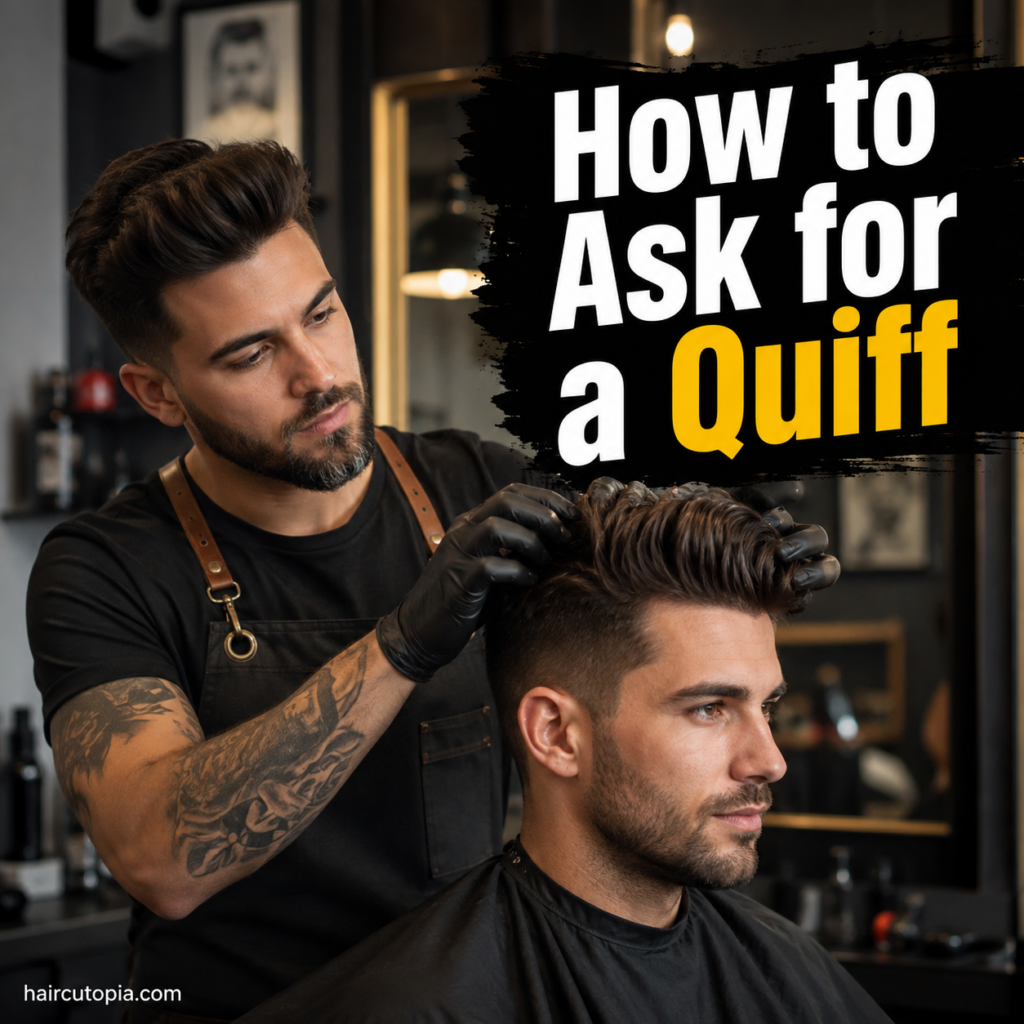
You can combine these with many different hairstyles on top, including a crew cut, textured crop, pompadour, quiff, curls, or longer swept-back hair.
That’s why asking for a “fade” alone usually isn’t specific enough.
How to Ask for a Fade Haircut
When talking to your barber, focus on four things: the fade height, how short you want the bottom, how you want the transition blended, and what you want done on top.
1. Choose How High You Want the Fade
Start by deciding where you want the fade to begin.
A low fade keeps most of the sides relatively full and creates the shortest transition close to the ears and neckline. It tends to look subtle and works well if you don’t want a dramatic contrast.
A mid fade starts higher, usually around the middle portion of the sides. It creates more noticeable contrast without exposing as much of the sides as a high fade.
A high fade begins much farther up the head. This removes more hair from the sides and creates a stronger contrast with the hair on top.
If you’re unsure, tell your barber that. You can explain how much scalp you’re comfortable showing and let them recommend a height that works with your hairstyle and head shape.
Low Fade vs. Mid Fade vs. High Fade
The easiest way to think about fade height is by how much contrast you want.
Low Fade
Ask for a low fade if you want a cleaner version of your existing haircut without dramatically shortening the sides.
It can be a good choice for:
- Professional or conservative styles
- Longer hairstyles on top
- Curly or wavy hair
- Anyone trying a fade for the first time
Mid Fade
A mid fade falls between subtle and dramatic.
It works with a wide range of hairstyles and is a useful starting point if you want the fade to be noticeable without taking it extremely high.
High Fade
A high fade removes considerably more hair from the sides.
It works especially well with styles that benefit from strong contrast, but remember that the higher placement makes the fade a much more prominent part of the haircut.
If you aren’t sure how high you want to go, starting lower gives your barber more room to make adjustments.
Decide How Short You Want the Fade
Fade height and fade length aren’t the same thing.
You can have a low fade that goes down to bare skin, or a high fade that still leaves some visible hair at its shortest point.
This is an important detail to discuss.
Asking for a Skin Fade
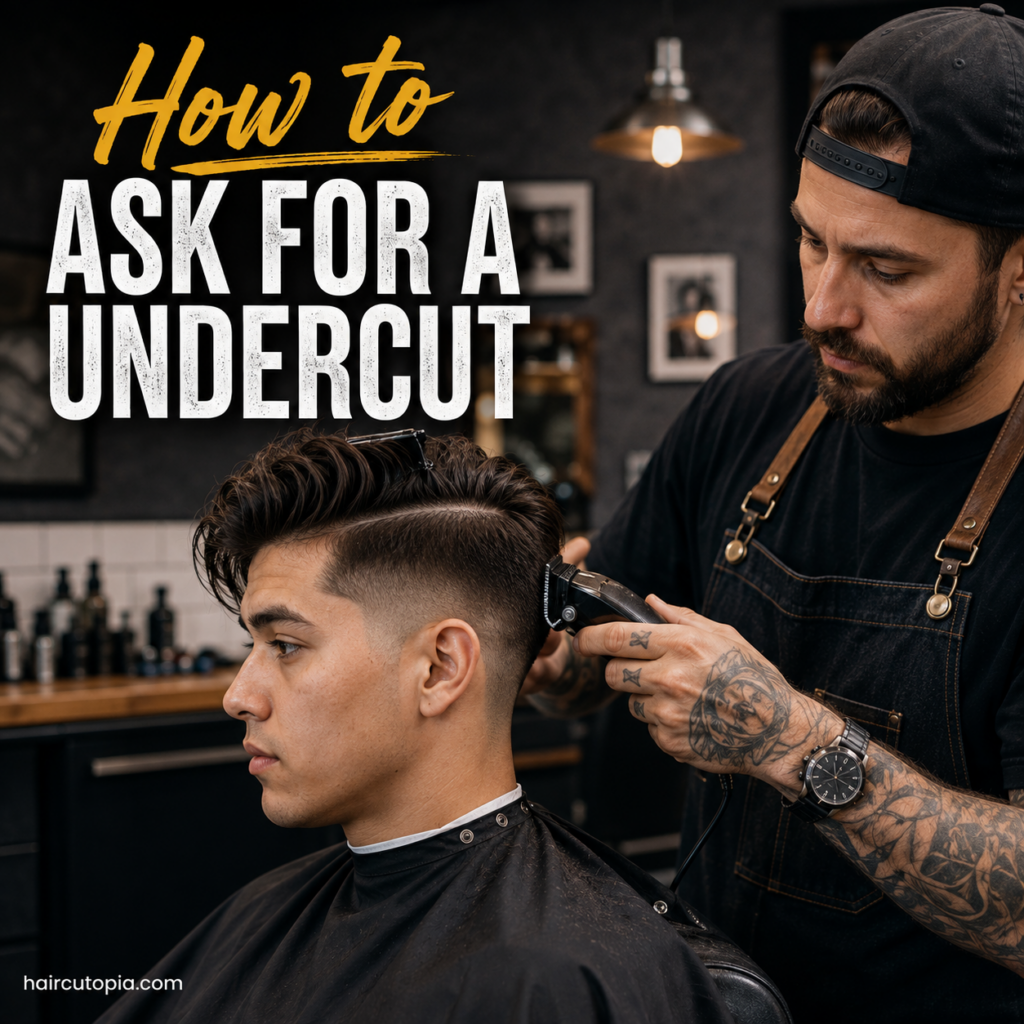
A skin fade, sometimes called a bald fade, gradually transitions all the way down to exposed skin.
You could tell your barber:
“I’d like a low skin fade, but keep some length on top.”
That immediately provides more information than simply requesting a fade.
Skin fades create a crisp, high-contrast appearance, but they also tend to look grown out sooner because the shortest hair starts at skin level.
Asking for a Clipper Fade
If you don’t want the sides taken down to the skin, ask your barber to leave some length at the bottom.
Clipper guards are commonly identified by numbers. In general, lower guard numbers leave shorter hair.
You don’t necessarily need to know the exact guard you want. Saying something like, “I want it short, but I don’t want to see bare skin,” may be more useful if you aren’t familiar with clipper lengths.
Know Your Clipper Guard Numbers
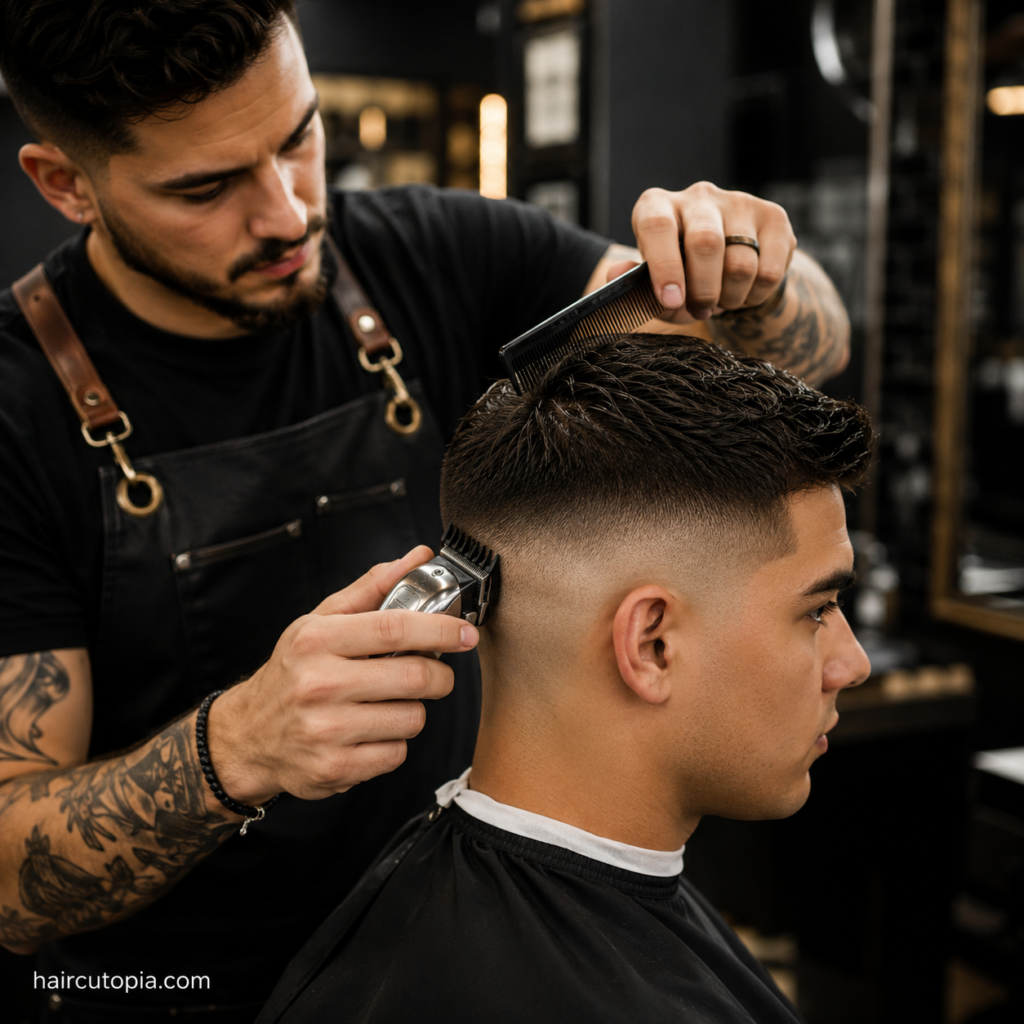
If you already know what length works for you, guard numbers can make communicating with your barber easier.
Typical clipper lengths are approximately:
- No. 0: extremely short, close to the scalp
- No. 1: 1/8 inch
- No. 2: 1/4 inch
- No. 3: 3/8 inch
- No. 4: 1/2 inch
Keep in mind that a fade usually involves several lengths rather than one guard used across the entire side of the head.
For example, asking for a “No. 1 fade” doesn’t necessarily describe the complete haircut. Your barber still needs to know where you want the fade positioned and how you want it blended into the longer hair.
If guard numbers feel confusing, don’t worry about using them. Describing the result you want works too.
Explain What You Want on Top
This is one of the easiest details to forget.
A fade mainly describes the sides and back. Your barber still needs instructions for the top.
Think about whether you want to:
- Keep your current length
- Take a small amount off
- Cut the top significantly shorter
- Add texture
- Keep enough length to style backward
- Wear the hair forward
- Keep curls or waves intact
- Create more volume
Instead of saying, “Just clean up the top,” try to give your barber something measurable.
For example:
“Take about half an inch off the top and keep enough length in front so I can style it up.”
That’s much easier to interpret.
Tell Your Barber How You Style Your Hair
Your daily styling habits matter more than you might think.
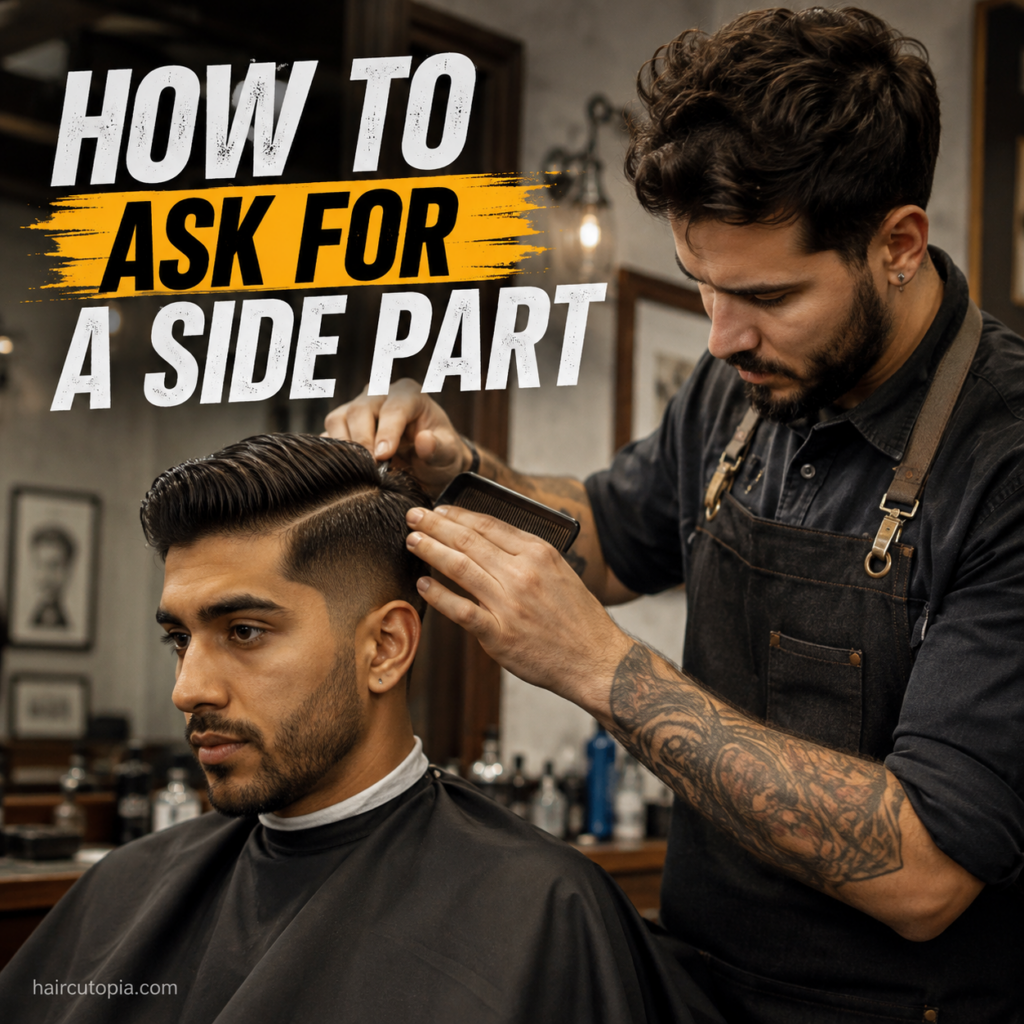
If you normally push your hair backward, tell your barber. The same applies if you wear a side part, let your curls fall naturally, brush your hair forward, or rarely use styling products.
A haircut can look great in the barber’s chair but become frustrating at home if it doesn’t work with the way you actually wear your hair.
Mentioning your normal routine helps your barber shape the haircut accordingly.
Bring a Reference Photo
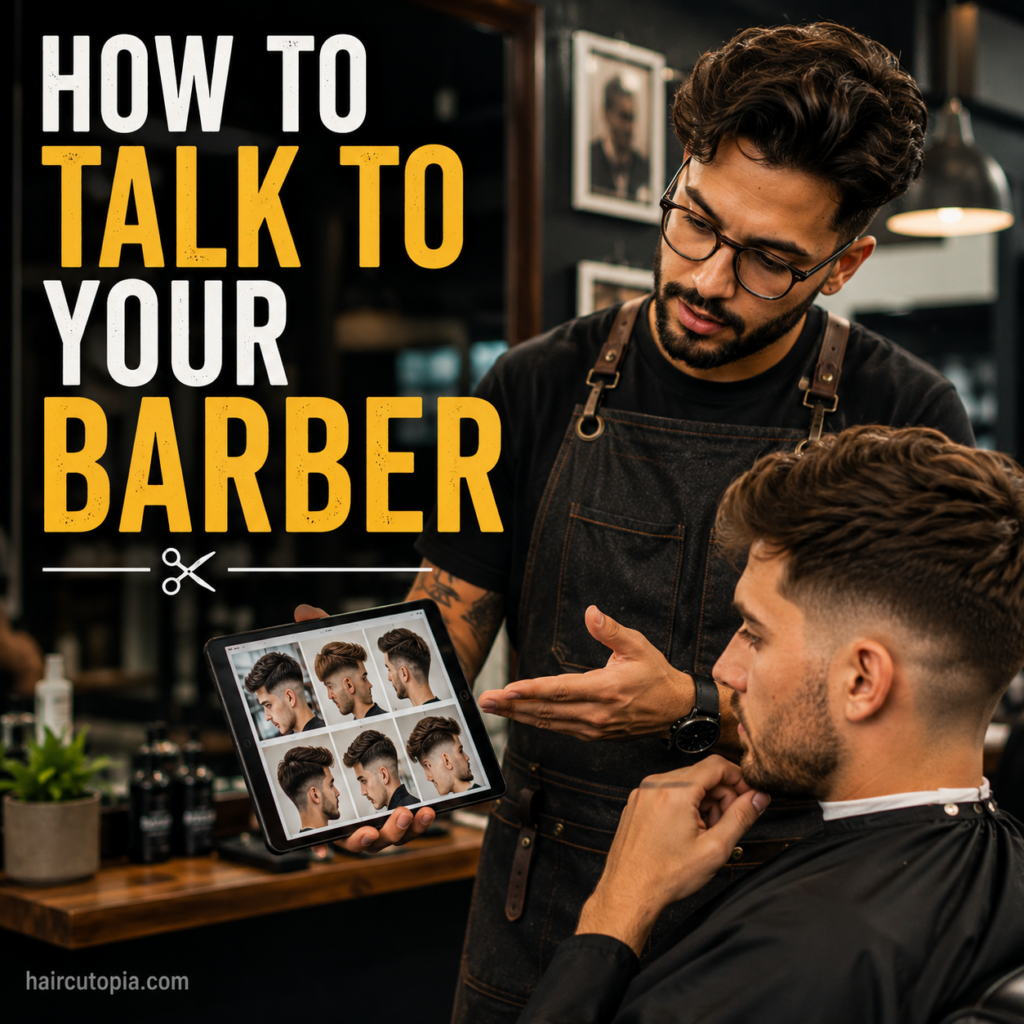
One of the easiest ways to ask for a fade is to show your barber a picture.
You don’t need to know whether the haircut in the photo technically qualifies as a low drop skin fade or something else. The image gives your barber a visual reference.
Try to choose a photo that clearly shows:
- The sides
- The fade height
- The transition into the top
- The length on top
- The overall silhouette
Multiple angles are even better.
However, treat the picture as a reference rather than a guarantee. Hair texture, density, growth patterns, head shape, and hairline can all affect how the same haircut looks on different people.
Ask your barber whether the reference style will work with your hair.
Ask About the Neckline and Sideburns
Small finishing details can change how polished a fade looks.
Your barber may ask how you’d like the neckline or sideburns finished. If they don’t, you can bring it up yourself.
Depending on the haircut, options might include a natural-looking neckline, a more defined edge, or a taper around the neck.
If you have facial hair, also discuss how the sideburns should transition into your beard.
A smooth fade from the haircut into a beard can make the entire style feel more intentional.
What to Say to Your Barber
You don’t need to give your barber a complicated speech.
A clear request might sound like this:
“I’d like a mid fade, short on the bottom but not down to skin. Take about half an inch off the top, keep the front a little longer, and add some texture.”
Or:
“I want a low skin fade with the top mostly left alone. I usually style it back, so I’d like to keep enough length to do that.”
Or simply:
“I like the fade in this photo. Can we do something similar that works with my hair?”
All three give the barber useful information.
What If You Don’t Know What Kind of Fade You Want?
You don’t have to decide everything before sitting in the chair.
A good consultation can be part of the haircut.
Tell your barber what you like and dislike about your current hair. For example:
- “The sides feel too bulky.”
- “I don’t want the fade too high.”
- “I don’t want to see much scalp.”
- “I’d like something that’s easy to maintain.”
- “I want more contrast between the top and sides.”
- “I’m growing the top out.”
- “I need something that still looks professional.”
These statements give your barber useful boundaries while leaving room for professional recommendations.
Common Mistakes When Asking for a Fade
Most haircut miscommunication comes from being too vague or assuming that certain terms mean exactly the same thing to everyone.
Only Saying “Give Me a Fade”
There are many types of fades.
Specify at least whether you want the fade low, mid, or high and whether you want it taken down to skin.
Using Barber Terms You Aren’t Sure About
You don’t need to impress your barber with technical vocabulary.
If you’re unsure what a term means, describe the appearance you want instead. Clear everyday language is better than confidently requesting the wrong haircut.
Not Discussing the Top
Don’t spend the entire consultation talking about the fade and forget about half of your haircut.
Tell your barber exactly what you want to keep or remove from the top.
Waiting Until the Haircut Is Finished to Speak Up
Your barber may show you the haircut during different stages of the process.
If something looks different from what you expected, mention it early. It may be possible to adjust the blend, remove additional length, or refine certain areas.
Expecting an Exact Copy of a Photo
Reference photos are extremely helpful, but your hair may behave differently from the model’s.
Use the picture to communicate the general shape, length, and fade rather than expecting a perfect duplicate.
How Often Should You Get a Fade Touched Up?
Fades generally require more frequent maintenance than longer, less structured haircuts because the short sections make new growth noticeable relatively quickly.
Someone who likes an especially crisp fade might return to the barber every couple of weeks. Others are perfectly comfortable letting the haircut grow for several weeks before getting another cut.
Your ideal schedule depends on:
- How short your fade is
- How quickly your hair grows
- How sharp you like the haircut to look
- Your budget
- Whether you’re maintaining a skin fade
- How the style grows out
Ask your barber how your particular cut is likely to grow between appointments.
Quick Checklist Before Your Haircut
Before heading to the barbershop, decide as many of these details as you can:
- Choose a low, mid, or high fade.
- Decide whether you want skin showing at the bottom.
- Think about how much length you want removed from the top.
- Decide how you normally want to style the top.
- Save one or two reference photos.
- Mention whether you’re growing out any part of your hair.
- Tell your barber about anything you disliked about your previous haircut.
You don’t need an answer for every detail. The goal is simply to give your barber enough information to start a useful conversation.
How to Get the Fade You Actually Want
Knowing how to ask for a fade haircut isn’t about memorizing barber terminology. It’s about clearly explaining what you want the finished haircut to look like.
Start with the fade height. Explain how short you’re comfortable going. Discuss what should happen with the top, and show a reference photo whenever possible.
And if you aren’t sure which fade suits you, say so. Your barber can recommend adjustments based on your hair texture, growth pattern, head shape, and preferred level of maintenance.
The best haircut consultations are conversations. Give your barber a clear idea of what you’re after, listen to their recommendations, and make sure you’re both picturing roughly the same result before the clippers start.