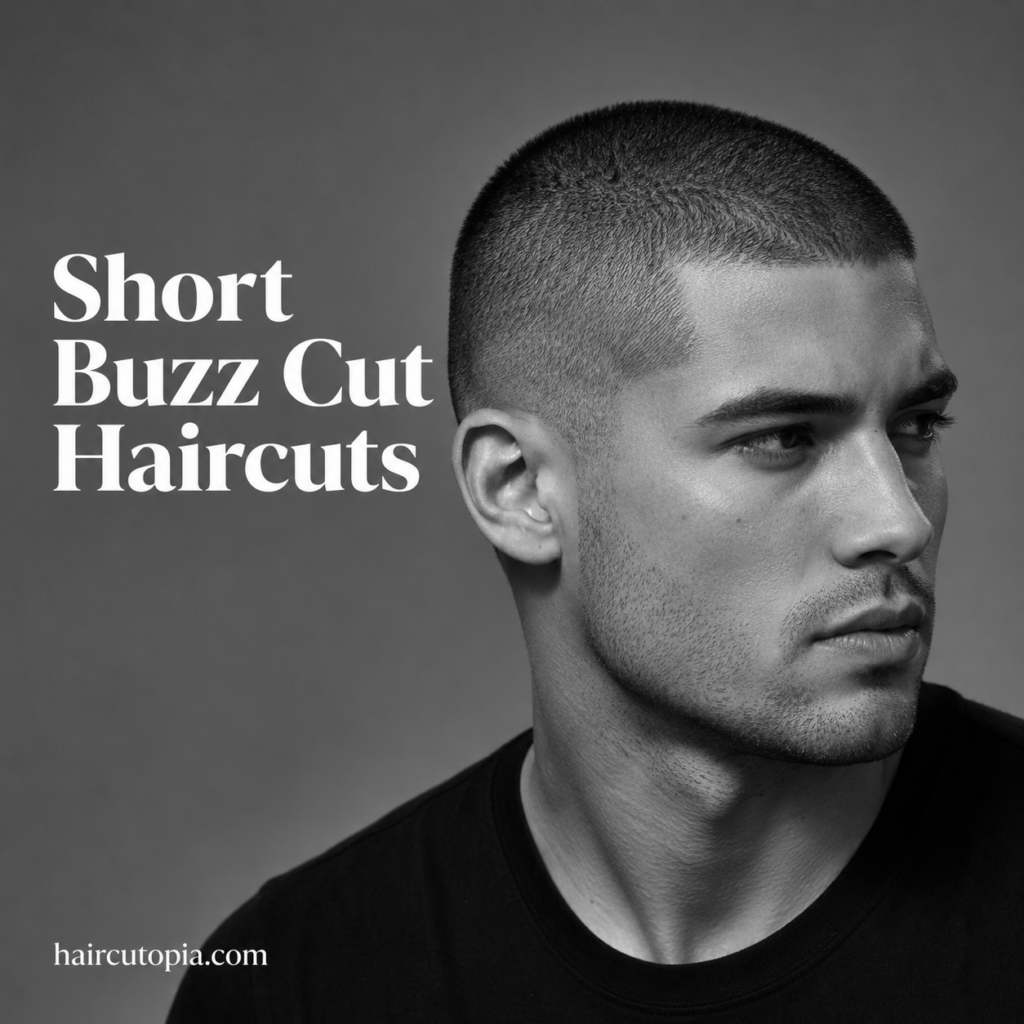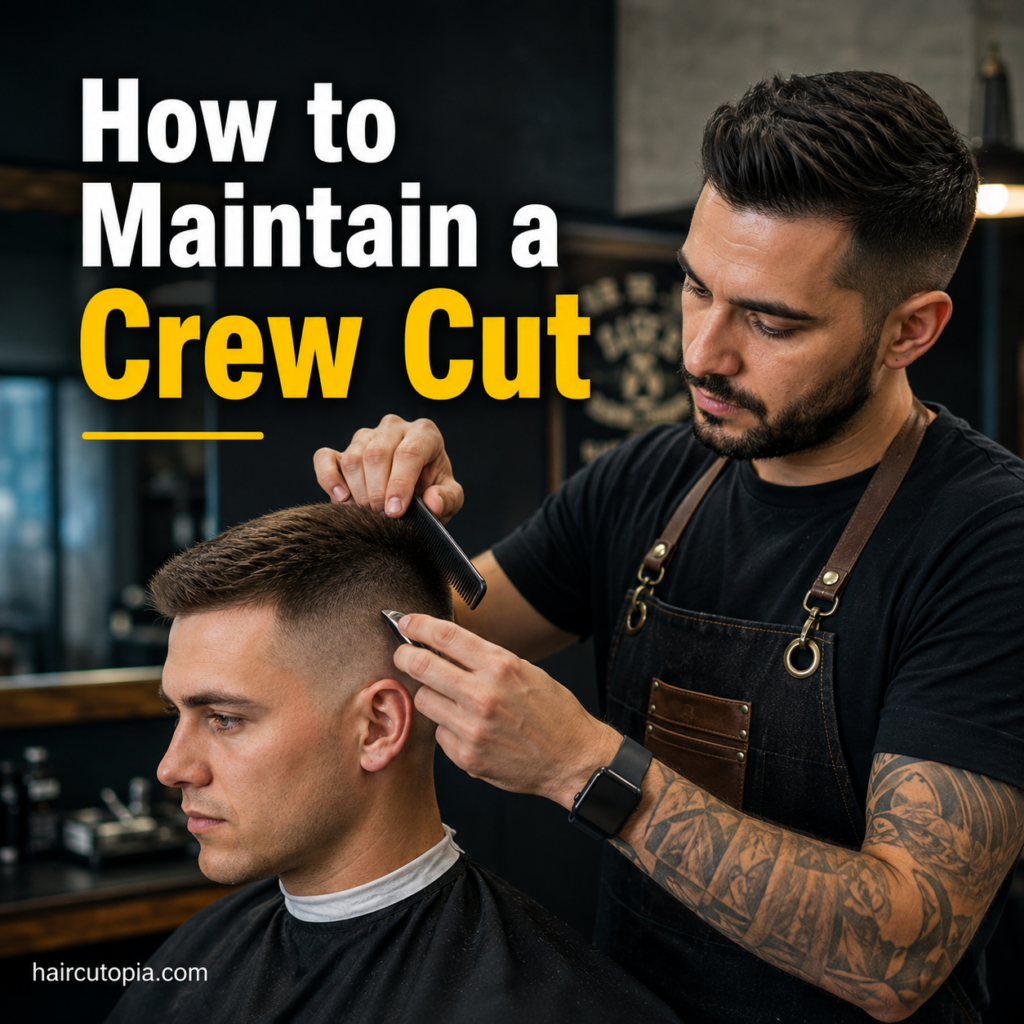
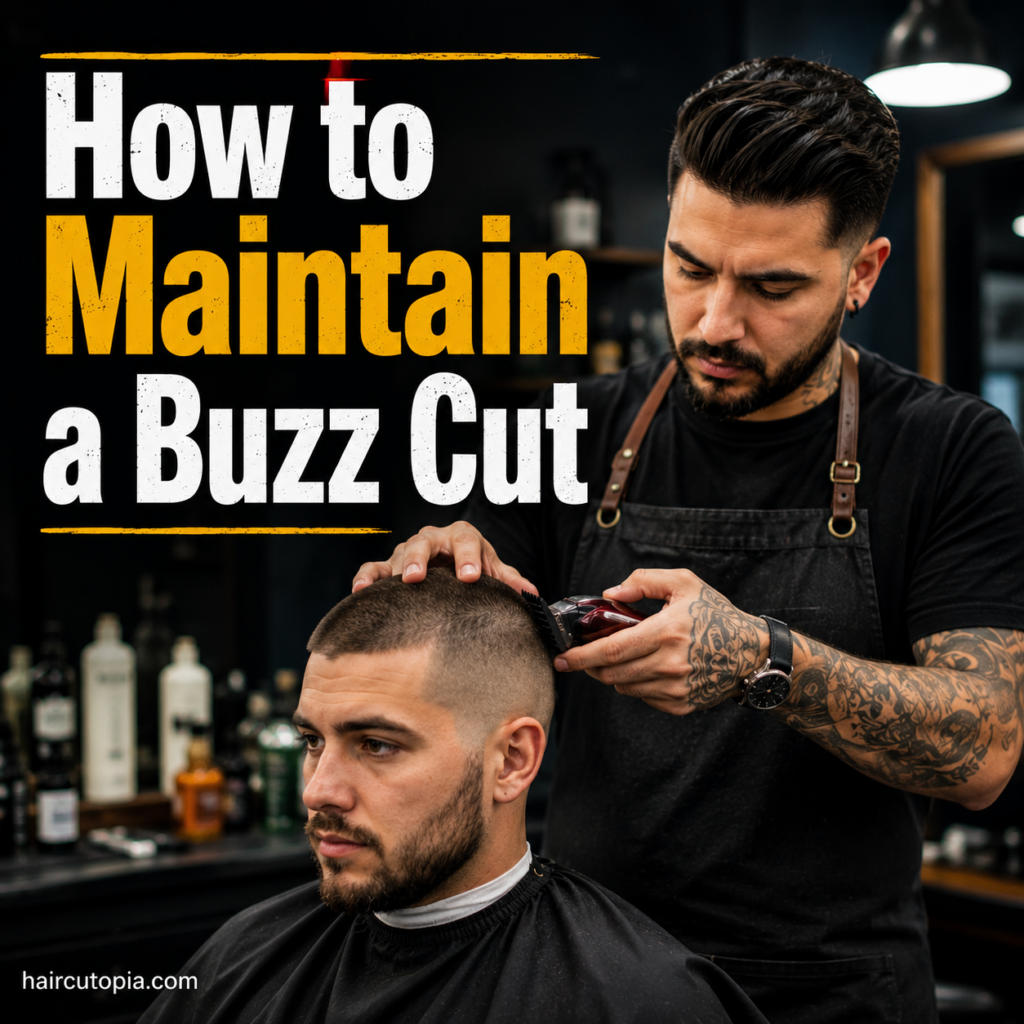
A buzz cut is about as low-maintenance as hairstyles get, but low-maintenance doesn’t mean no maintenance.
Because the hair is so short, even a little growth can change the shape of the cut. A crisp fade starts to soften, the neckline grows out, and a uniform buzz can begin looking uneven faster than you might expect.
The good news is that maintaining a buzz cut is simple. Keep it trimmed on a regular schedule, take care of your scalp, and use a few basic grooming habits to keep it looking clean between cuts.
Here’s how to maintain a buzz cut without turning an easy haircut into a complicated routine.
How Often Should You Trim a Buzz Cut?
For most people, trimming a buzz cut every two to four weeks is a good starting point.
Exactly how often you need a haircut depends on the length of your buzz cut and how polished you want it to look.
A very short buzz cut can show growth surprisingly quickly. If you have a skin fade or sharp lineup, you may notice the haircut losing its freshly cut appearance within a week or two.
Longer buzz cuts tend to be more forgiving.
As a general guide:
- Every 1–2 weeks: Very short buzz cuts, skin fades, and sharp lineups
- Every 2–3 weeks: Short buzz cuts that you want to keep looking consistently fresh
- Every 3–4 weeks: Longer or uniform buzz cuts
- Every 4+ weeks: Fine if you don’t mind a more grown-in appearance
Your hair growth rate matters too. Some people simply need trims more frequently than others.
Keep the Length Consistent
One of the biggest advantages of a buzz cut is consistency.
If you found a clipper guard that gives you the length you like, remember it. Knowing that you normally get a #2, #3, or #4 makes future barber visits much easier.
Common clipper guard lengths include:
- #1 — approximately 1/8 inch
- #2 — approximately 1/4 inch
- #3 — approximately 3/8 inch
- #4 — approximately 1/2 inch
- #5 — approximately 5/8 inch
- #6 — approximately 3/4 inch
- #7 — approximately 7/8 inch
- #8 — approximately 1 inch
Clipper systems can vary slightly, so guard numbers are best treated as a practical reference rather than an exact universal measurement.
If you’re happy with your current haircut, take a few photos while it’s fresh. They can be useful references the next time you visit your barber.
Maintaining a Buzz Cut With a Fade
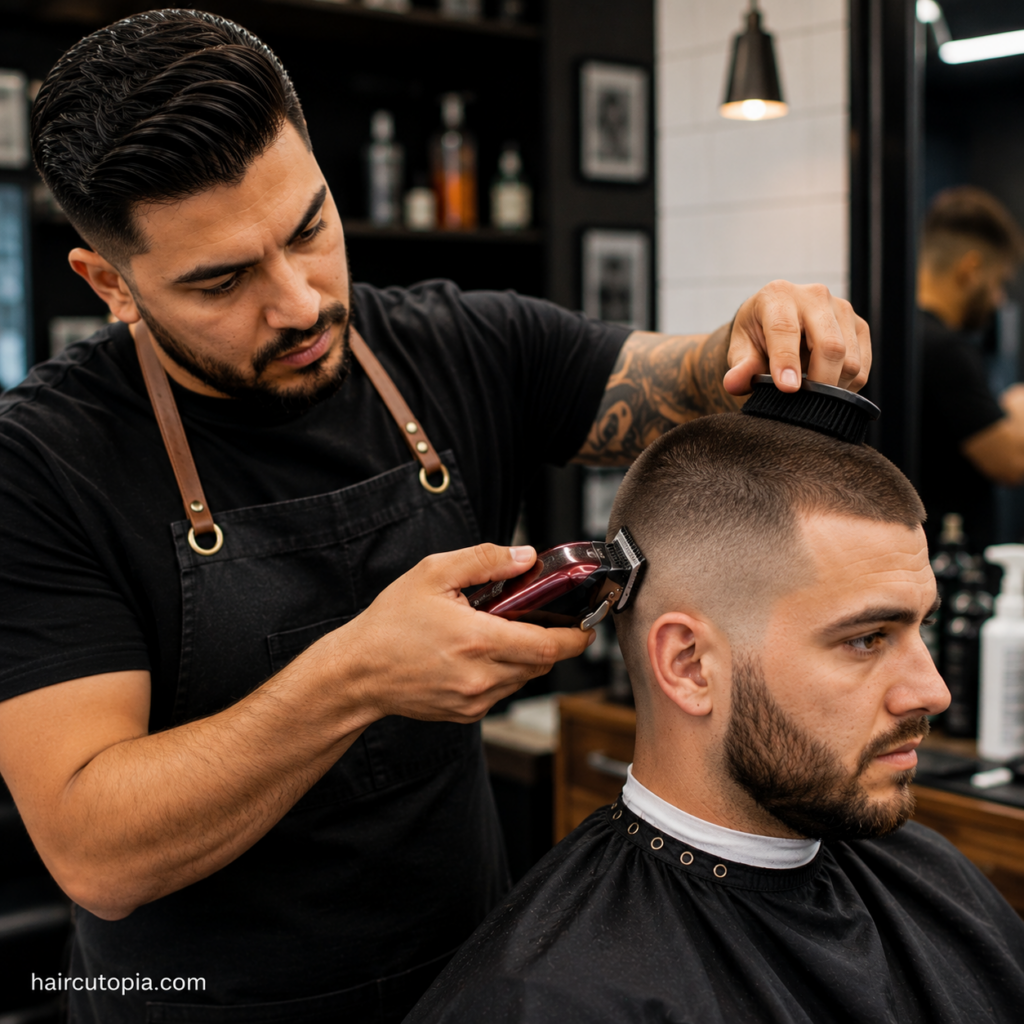
A faded buzz cut generally requires more upkeep than one that’s the same length all over.
That’s because a fade depends on contrast.
As the shortest areas grow, the transition between the different lengths becomes less obvious. The haircut may still look perfectly fine, but it won’t have the same sharp appearance it had when you left the barbershop.
Skin Fades Need More Frequent Touch-Ups
Skin fades tend to show growth fastest because the shortest portion begins at bare or nearly bare skin.
Even several days of growth can soften that contrast.
If you like your skin fade looking extremely fresh, you may want a cleanup every one to two weeks. If you’re comfortable letting it grow naturally between appointments, you can stretch that schedule longer.
Low, Mid, and High Fades Grow Out Differently
Fade height also affects how noticeable the grow-out becomes.
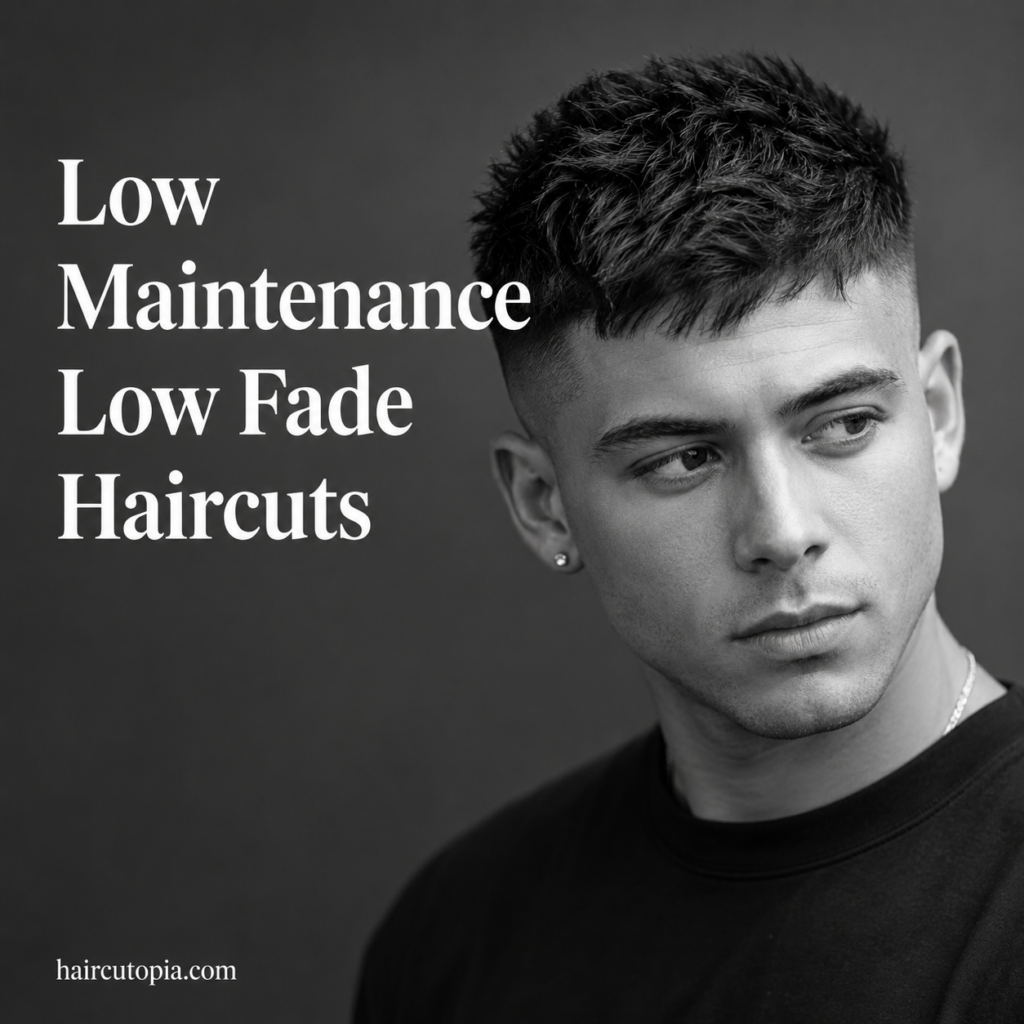
A low fade is concentrated closer to the ears and neckline, so growth may feel relatively subtle.
Mid and high fades remove more hair from the sides. As that hair grows back, the shape and contrast of the haircut can change more noticeably.
There’s no requirement to maintain a fade at a particular interval. The right schedule is simply the one that keeps it looking the way you prefer.
Maintain the Neckline and Sideburns
Sometimes the buzz cut itself still looks good, but the edges make it look overdue for a haircut.
The neckline and sideburns are often the first places where stray hairs become noticeable.
Cleaning these areas can extend the fresh appearance of your haircut between full trims.
If your buzz cut has a tapered neckline, be careful about trying to recreate the taper yourself. Blending short hair evenly can be harder than it looks, particularly when working on the back of your own head.
A simple cleanup is one thing. Rebuilding the entire fade is another.
Keep Your Hairline Clean Without Pushing It Back
A sharp lineup can make a buzz cut look particularly polished, but maintaining one requires some restraint.
Repeatedly removing tiny amounts of hair from the front edge can gradually move the visible hairline backward if you’re not careful.
If you’re maintaining your own lineup, follow the natural edge rather than trying to create an entirely new one.
When in doubt, leave it alone and let your barber handle it.
People who prefer a softer appearance can skip the sharp lineup entirely and maintain a more natural hairline.
Wash Your Buzz Cut Regularly
Short hair still needs washing.
Your scalp produces oil regardless of whether your hair is an inch long or several inches long. Sweat, dead skin, styling products, and everyday dirt can also accumulate.
How often you should shampoo depends on your scalp and lifestyle.
You may want to wash more frequently if you:
- Exercise regularly
- Sweat heavily
- Have an oily scalp
- Work in a dusty or dirty environment
- Regularly wear hats or helmets
Someone with a dry scalp may prefer shampooing less often.
There’s no universal shampoo schedule that works for everyone. Pay attention to how your scalp feels rather than assuming a buzz cut needs to be shampooed every day.
Don’t Forget About Your Scalp
Once your hair is extremely short, your scalp becomes much more exposed.
That makes scalp care an important part of buzz cut maintenance.
Watch for Dryness
If your scalp feels tight, itchy, or flaky, aggressive washing may be making the problem worse.
Try using lukewarm rather than very hot water and avoid unnecessarily harsh products.
If dryness continues despite basic changes to your routine, consider speaking with a dermatologist rather than repeatedly adding new products.
Deal With Flakes Instead of Hiding Them
Dandruff and flaking can be more visible with a buzz cut because there’s less hair covering the scalp.
An appropriate anti-dandruff shampoo may help with ordinary dandruff. Persistent, severe, painful, or unusual scalp symptoms are better evaluated by a healthcare professional.
Be Gentle After a Fresh Cut
Freshly clipped skin can sometimes feel sensitive, particularly around a very short fade or neckline.
Avoid aggressively scratching or scrubbing irritated areas immediately after your haircut.
Protect Your Scalp From the Sun
This is one of the easiest things to overlook after getting a short buzz cut.
Hair provides some physical coverage from sunlight. Once most of it is gone, areas of your scalp that previously received little direct exposure may suddenly be exposed.
A hat can provide convenient protection when you’re spending time outdoors. Sunscreen appropriate for exposed skin is another option.
This becomes especially important with very short #0 or #1 cuts and buzz cuts combined with skin fades.
Don’t assume that having some hair means your scalp can’t burn.
Do You Need Conditioner With a Buzz Cut?
Maybe, but not everyone needs it.
With an extremely short buzz cut, traditional conditioner may provide relatively little benefit to the hair itself. However, people with longer buzz cuts, coarse hair, or hair that tends to feel dry may still like using one.
Your scalp should be the bigger consideration.
If your current washing routine leaves your scalp and hair comfortable, there’s no need to complicate it simply because you think a buzz cut requires special products.
Do You Need Styling Products?
Usually, very little.
That’s one of the main attractions of a buzz cut.
A #1 or #2 buzz cut generally isn’t going to require pomade, clay, wax, or elaborate styling. As the hair gets longer, however, you may want a small amount of lightweight product to control texture or direction.
For most buzz cuts, a simple routine is enough:
- Wash as needed.
- Dry your hair and scalp.
- Apply a small amount of product only if you actually need it.
- Brush or use your hands to put longer buzzed hair into place.
There’s little reason to load very short hair with styling products that don’t noticeably improve the result.
Maintaining a Buzz Cut at Home
An even buzz cut is one of the more approachable haircuts to maintain yourself.
If the entire head uses the same clipper guard, the process is relatively straightforward. Fades, tapers, and lineups require considerably more technique.
What You’ll Need
For a basic home buzz cut, useful tools include:
- Hair clippers
- The correct clipper guard
- A handheld mirror
- A larger wall mirror
- A small brush for cleaning the clippers
- Clipper oil, if recommended by the manufacturer
Good lighting also matters. Uneven patches can be difficult to spot in a dim bathroom.
How to Trim an Even Buzz Cut
If you’re maintaining one length all over:
- Start with clean, dry hair unless your clipper manufacturer recommends otherwise.
- Attach the correct guard securely.
- Run the clippers against the direction of hair growth.
- Use overlapping passes rather than trying to cover each area once.
- Check the crown carefully, since hair growth patterns can make this area easy to miss.
- Inspect the sides and back using mirrors.
- Make additional passes over any darker or uneven areas.
- Clean around the ears and neckline carefully.
Run your hand across your head when you’re finished. Your fingers can sometimes detect longer patches that aren’t immediately obvious in the mirror.
Be Careful When Maintaining Your Own Fade
A uniform buzz cut and a faded buzz cut are very different DIY projects.
A fade requires blending multiple lengths without leaving visible lines between them. That usually means working with several guards, adjusting the clipper lever, and understanding where each transition should occur.
It’s certainly possible to learn.
But if you’re simply trying to keep a professionally cut fade looking good, attempting an aggressive home touch-up can create more work for your barber at the next appointment.
Instead, consider maintaining only the easy areas between visits:
- Remove obvious stray hairs.
- Keep the neckline tidy.
- Clean around the ears carefully.
- Leave complicated blending alone.
If you want to learn how to fade your own hair, treat it as a separate skill rather than assuming it’s just another version of running one guard over your head.
Clean and Maintain Your Clippers
If you’re cutting your buzz cut at home, your clippers need maintenance too.
Hair can accumulate around the blades and guards, affecting cutting performance.
After using your clippers:
- Brush away loose hair.
- Clean removable components according to the manufacturer’s instructions.
- Disinfect equipment when appropriate.
- Oil the blades if required.
- Store the clippers somewhere clean and dry.
- Inspect guards for cracks or damage.
Always follow the maintenance instructions for your particular clipper model, especially when using cleaning liquids or removing blades.
Well-maintained clippers generally cut more consistently and are less likely to pull at the hair.
Keep Your Buzz Cut Looking Fresh Between Haircuts
You don’t necessarily need a complete haircut every time the edges start looking untidy.
A few small habits can help extend the clean appearance:
- Keep the neckline tidy.
- Remove obvious stray hairs around the ears.
- Wash your scalp after heavy sweating.
- Keep your clipper guard number consistent.
- Protect exposed scalp when spending time in strong sun.
- Avoid trying to “fix” a professional fade unless you know how to blend it.
- Schedule your next haircut before the current one becomes significantly overgrown.
If you visit a barber, ask whether they offer quick cleanup appointments between full cuts. Some people find that an edge or fade cleanup lets them go longer before needing the entire haircut redone.
How Do You Grow Out a Buzz Cut?
Eventually, you may decide you’re done maintaining the same short length.
Growing out a buzz cut requires a different approach.
Instead of repeatedly buzzing the top, allow it to gain length while periodically cleaning up the sides, neckline, and around the ears.
The early stages can look fairly uniform. As the hair gets longer, differences in growth patterns become more noticeable.
You may eventually want your barber to reshape the haircut rather than simply shortening everything again.
Tell your barber that you’re growing your buzz cut out. That way, they can clean up the haircut without removing the length you’re trying to gain.
Common Buzz Cut Maintenance Mistakes
A buzz cut is forgiving, but a few mistakes can make maintenance harder than necessary.
Trimming Too Often Just Because You Can
Owning clippers doesn’t mean you need to use them every few days.
Trim according to the appearance you want rather than automatically buzzing your hair whenever you notice a little growth.
Using the Wrong Guard
Double-check the guard before starting.
Confusing a #2 with a #3 is a much bigger deal once you’ve already made the first pass across the top of your head.
Missing the Crown
The crown grows in different directions and is one of the easiest places to leave uneven.
Approach it from multiple directions and check it carefully afterward.
Trying to Fix One Side Repeatedly
This is a classic DIY haircut problem.
One side looks slightly different, so you remove a little more. Then the other side looks longer, so you adjust that. Before long, you’ve taken off considerably more hair than planned.
Make small corrections and check your work before continuing.
Neglecting Your Scalp
Short hair makes the condition of your scalp much more noticeable.
Washing appropriately, addressing dryness or flakes, and protecting exposed skin from the sun can make as much difference to the overall appearance as the haircut itself.
Is a Buzz Cut Actually Low-Maintenance?
Yes, especially when it comes to daily styling.
You can wake up without worrying about blow-drying, combing, or spending ten minutes getting your hair into position.
The tradeoff is that short hair can require more frequent cutting if you want it to stay at exactly the same length.
An even buzz cut is generally the easiest version to maintain. Add a skin fade, sharp lineup, or detailed taper, and you’ll probably spend more time keeping the haircut crisp.
So the best buzz cut for someone seeking minimal upkeep isn’t necessarily the shortest or sharpest one. A slightly longer, uniform cut can often go longer between appointments while still looking intentional.
Final Thoughts on Maintaining a Buzz Cut
Maintaining a buzz cut doesn’t require an elaborate grooming routine.
Keep the length consistent, trim it when the grow-out starts bothering you, wash according to your scalp’s needs, and pay attention to exposed skin. If you wear a fade or lineup, expect those details to need attention sooner than the hair on top.
For a simple, even buzz cut, home maintenance can also be practical once you’re comfortable using clippers.
The biggest advantage is flexibility. You can keep your buzz cut barbershop-sharp every couple of weeks or let it grow for a month and enjoy a softer look.
Find the schedule that works for your haircut and how you actually like to wear it. That’s usually much easier than trying to follow a rigid maintenance calendar.