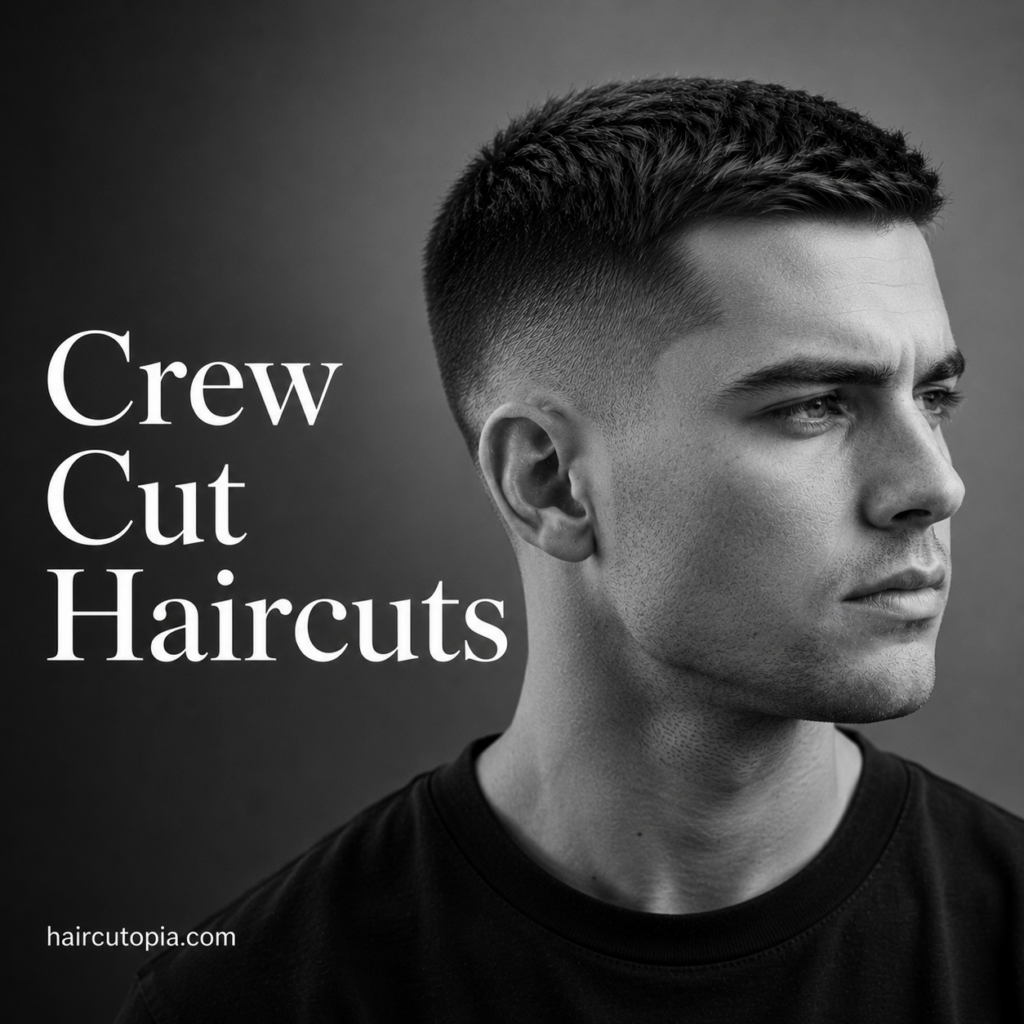
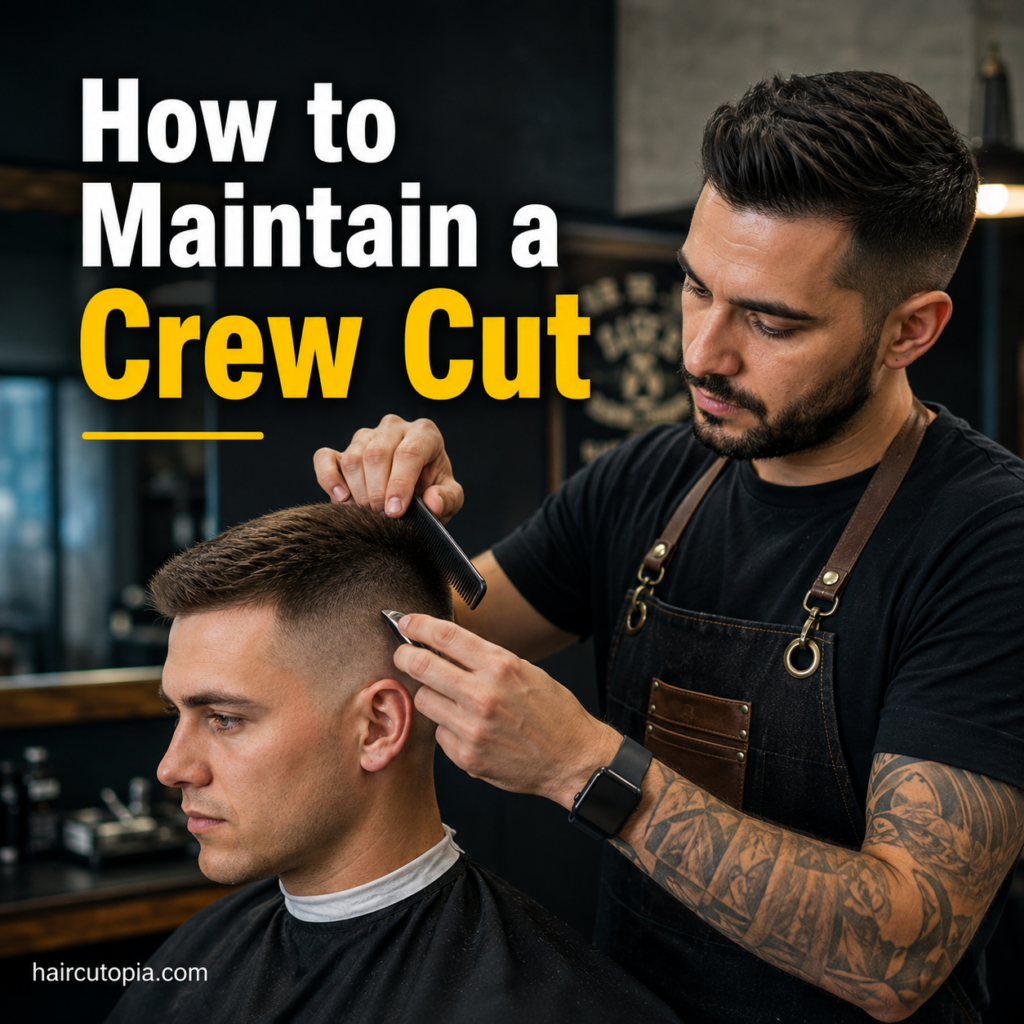
A crew cut is about as low-maintenance as men’s haircuts get, but low-maintenance doesn’t mean no maintenance.
The short sides that make a fresh crew cut look so clean are also the first areas where new growth becomes noticeable. After a couple of weeks, a sharp fade can soften, the neckline starts filling in, and the longer hair on top may stop sitting quite as neatly as it did when you left the barbershop.
Fortunately, keeping a crew cut looking good doesn’t require a complicated grooming routine. Regular trims, basic washing, occasional styling, and a little attention to the neckline and sides are usually all it takes.
Here’s how to maintain a crew cut between barber visits, including how often to get it trimmed, how to style it, and what you can safely clean up at home.
How Often Should You Get a Crew Cut?
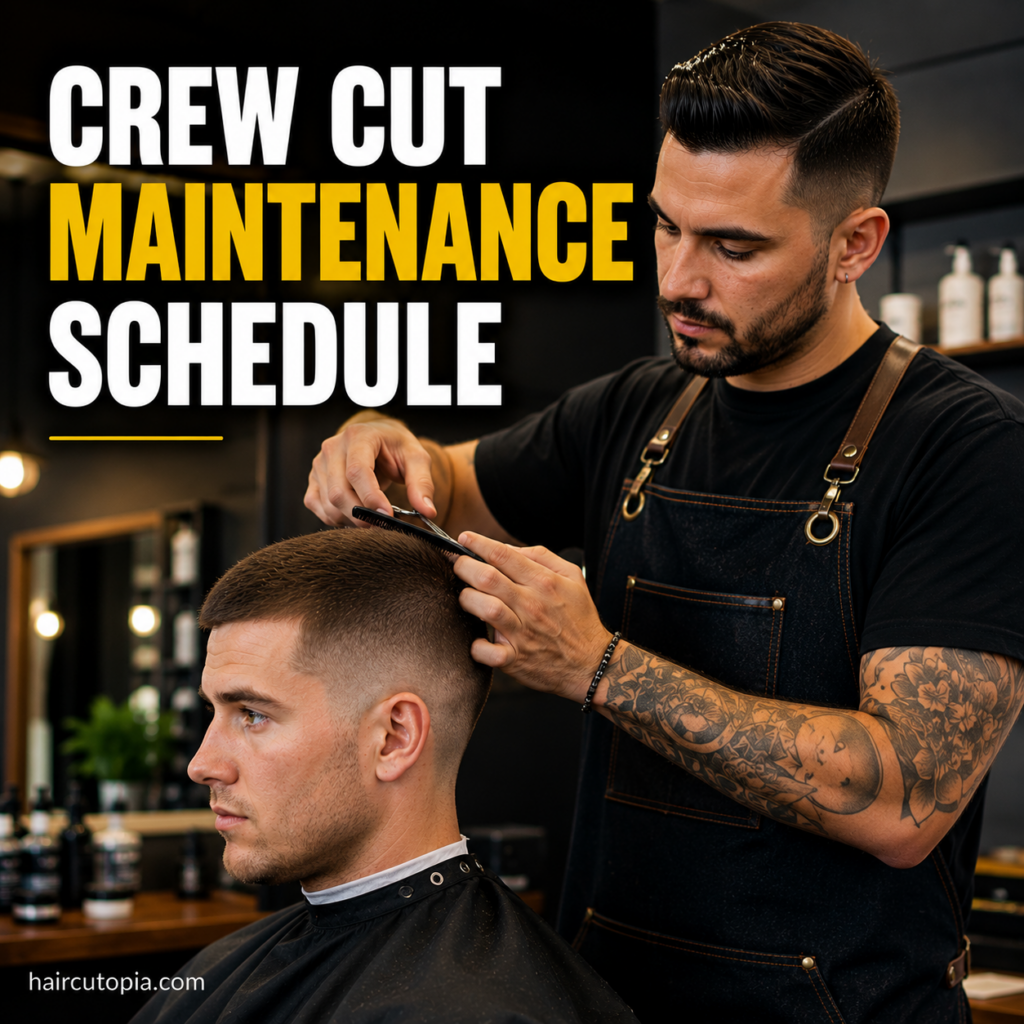
For most people, getting a crew cut trimmed every two to four weeks keeps it looking neat.
The ideal schedule depends on how short your haircut is and how polished you want it to look.
A very short crew cut with a skin or high fade tends to show growth quickly. A longer crew cut with tapered sides is much more forgiving.
A general schedule looks like this:
- Every 1–2 weeks for an especially sharp skin fade
- Every 2–3 weeks for a short crew cut with faded sides
- Every 3–4 weeks for a classic crew cut
- Every 4–5 weeks for a longer crew cut with a natural taper
There’s no rule saying you have to visit the barber the moment the sides begin growing out. If you like a slightly more relaxed look, you can stretch the time between appointments.
Why Crew Cuts Show Growth So Quickly
Short hair makes new growth easier to see.
When the sides have been faded almost to the skin, even a small amount of growth changes the contrast of the haircut. The fade gradually becomes less defined, and the area around the ears and neckline starts looking fuller.
The top usually isn’t the first problem.
Instead, you’ll probably notice changes around:
- The sideburns
- Behind the ears
- The neckline
- The temples
- The lowest portion of a fade
This is why you may feel like your crew cut has “grown out” even when the top still looks perfectly fine.
Wash Your Crew Cut Without Overdoing It
Short hair is easy to wash, but that doesn’t necessarily mean you need to shampoo it aggressively every day.
Your scalp produces natural oils that help keep both the skin and hair from becoming excessively dry. Shampooing frequency can vary depending on your hair type, scalp, activity level, and how much styling product you use.
If your scalp and hair feel clean and comfortable, there’s no need to complicate things.
Use a Small Amount of Shampoo
You don’t need much shampoo for a crew cut.
Work a small amount into your scalp with your fingertips, then rinse thoroughly. Concentrate more on cleaning your scalp than scrubbing the ends of your hair.
If you exercise heavily or sweat frequently, you may want to rinse or wash your hair more often.
Don’t Forget Conditioner
Conditioner can still be useful even when your hair is short, particularly if the top has enough length to become dry or coarse.
Use a small amount and focus primarily on the hair rather than coating the scalp.
People with very short or naturally oily hair may find that they don’t need conditioner after every wash.
Dry Your Hair Gently
One advantage of a crew cut is that it dries quickly.
After showering, gently pat or rub your hair with a towel rather than aggressively scrubbing it back and forth.
For most short crew cuts, air drying is perfectly practical.
If you’ve left more length on top and want additional volume, you can use a blow dryer for a minute or two while directing the front upward with your fingers.
Use moderate heat rather than holding very hot air directly against your scalp.
How to Style a Crew Cut
A very short crew cut may require no styling at all.
Once the top reaches around an inch or more, however, a little product can help define texture and keep the front in place.
The key is using less product than you think you need.
Short hair becomes weighed down quickly.
For a Natural Matte Finish
A matte clay or paste works well when you want visible texture without making your hair look shiny.
Start with a pea-sized amount.
Rub the product thoroughly between your palms and fingertips before working it through the hair. Start toward the back and move forward so you don’t deposit all the product directly at the hairline.
Use your fingers to create separation and lift the front slightly.
For a Softer Finish
A lightweight styling cream can provide subtle control without the stronger hold of clay or paste.
This can work particularly well for longer crew cuts or naturally wavy hair.
For More Definition
A small amount of pomade can create a cleaner, more defined finish.
Just be careful with high-shine products. Because a crew cut is short, excessive shine can make the hair appear oily rather than intentionally styled.
How to Maintain a Crew Cut Fade
If your crew cut includes a fade, the fade will usually determine how often you need a haircut.
Skin fades require the most upkeep because the transition begins at bare or nearly bare skin. As soon as the hair grows, the original contrast starts disappearing.
Low fades tend to be somewhat more forgiving because the shortest area occupies less of the head.
If keeping the fade consistently sharp matters to you, scheduling quick cleanup appointments between full haircuts may be an option.
Ask your barber whether they offer fade or edge cleanups.
Keep the Neckline Clean
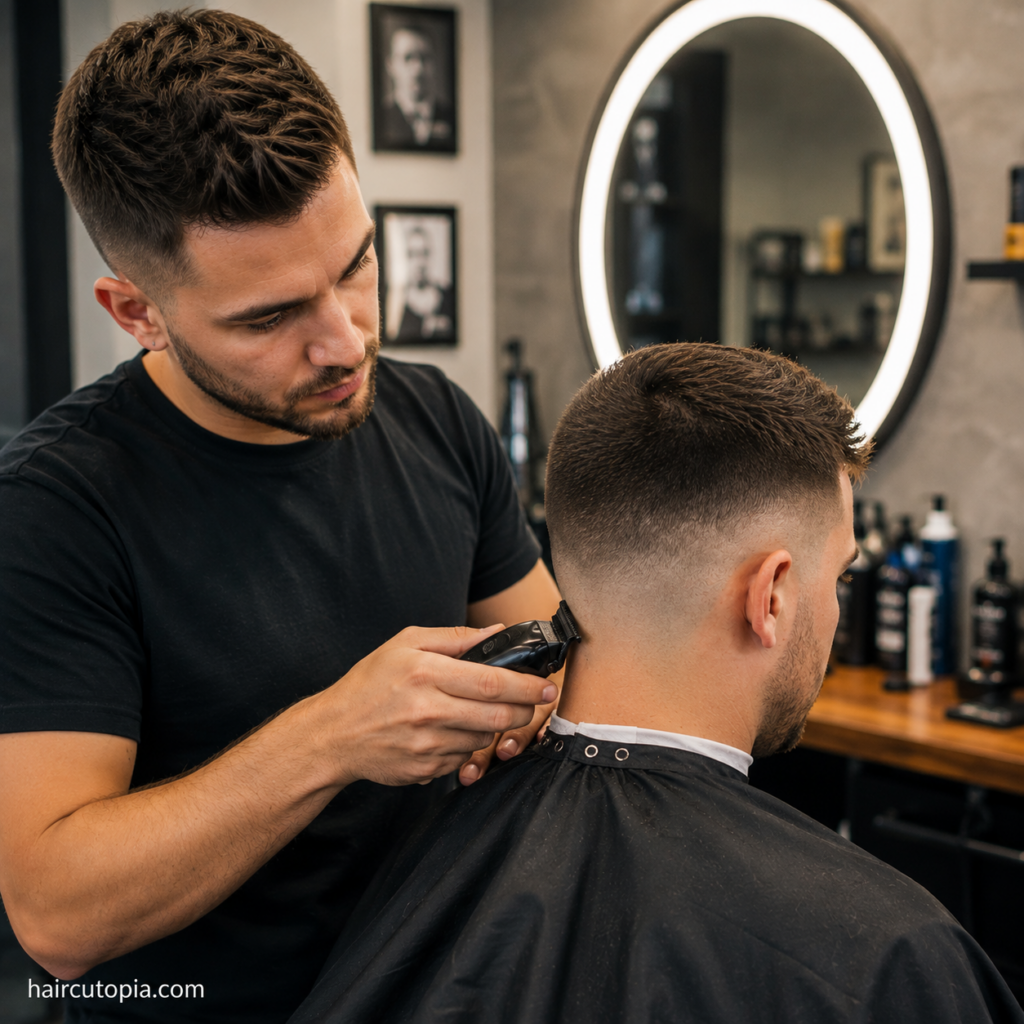
The neckline is another area where growth becomes noticeable quickly.
Stray hairs below the original neckline can make an otherwise tidy crew cut look overdue for a trim.
You have two options:
- Have your barber clean the neckline between full cuts.
- Carefully remove obvious stray hairs at home.
If you’re doing it yourself, avoid trying to completely recreate the barber’s neckline.
It’s surprisingly easy to move the line too high, make one side uneven, or accidentally create a new shape that your barber then has to correct.
Cleaning obvious growth below the existing line is safer than attempting to redesign it.
Clean Up Around the Ears Carefully
Hair around the ears can also make a crew cut look grown out.
A small trimmer can remove obvious stray hairs, but don’t chase the original fade upward.
That’s where a simple cleanup can turn into an accidental haircut.
If you’re maintaining the edges yourself:
- Use good lighting
- Work slowly
- Remove only obvious stray hairs
- Follow the existing shape
- Avoid cutting into the fade
- Check both sides frequently
When in doubt, leave it for your barber.
Should You Trim Your Own Crew Cut?
You can, but there’s a big difference between cleaning up a crew cut and completely cutting one yourself.
Trimming stray hairs around the neckline is relatively simple. Recreating a smooth fade and properly graduated top requires considerably more control.
If you want to maintain the entire haircut at home, you’ll typically need:
- Quality hair clippers
- Several clipper guards
- A smaller detail trimmer
- Handheld and wall mirrors
- A comb
- Hair-cutting scissors if the top is longer
The hardest part is usually blending the sides into the top and working on areas you can’t see directly.
Don’t Automatically Use One Guard Everywhere
Running the same clipper guard across your entire head may be easy, but the result will be closer to a uniform buzz cut than a traditional crew cut.
A crew cut normally keeps additional length through the top and front.
If you want to preserve that shape, the top and sides need to be treated differently.
Don’t Try to Repair a Fade One Spot at a Time
One of the easiest home-maintenance mistakes is noticing a dark patch in the fade and trying to remove it with clippers.
Then another section looks darker.
So you trim that.
Before long, the fade has moved considerably higher than you intended.
A professionally blended fade is created through gradual transitions between several lengths. Unless you’re comfortable using clipper guards and blending techniques, it’s usually better to let the fade grow naturally until your next appointment.
Maintain the Length on Top
The top of a crew cut usually grows out more gracefully than the sides.
Eventually, however, the additional length changes the shape of the haircut.
You may notice that:
- The front falls forward more often
- The top becomes harder to style
- Thick hair starts looking bulky
- The crown begins sticking up
- The transition into the sides becomes heavier
Those are good signs that it’s time for a full haircut rather than another edge cleanup.
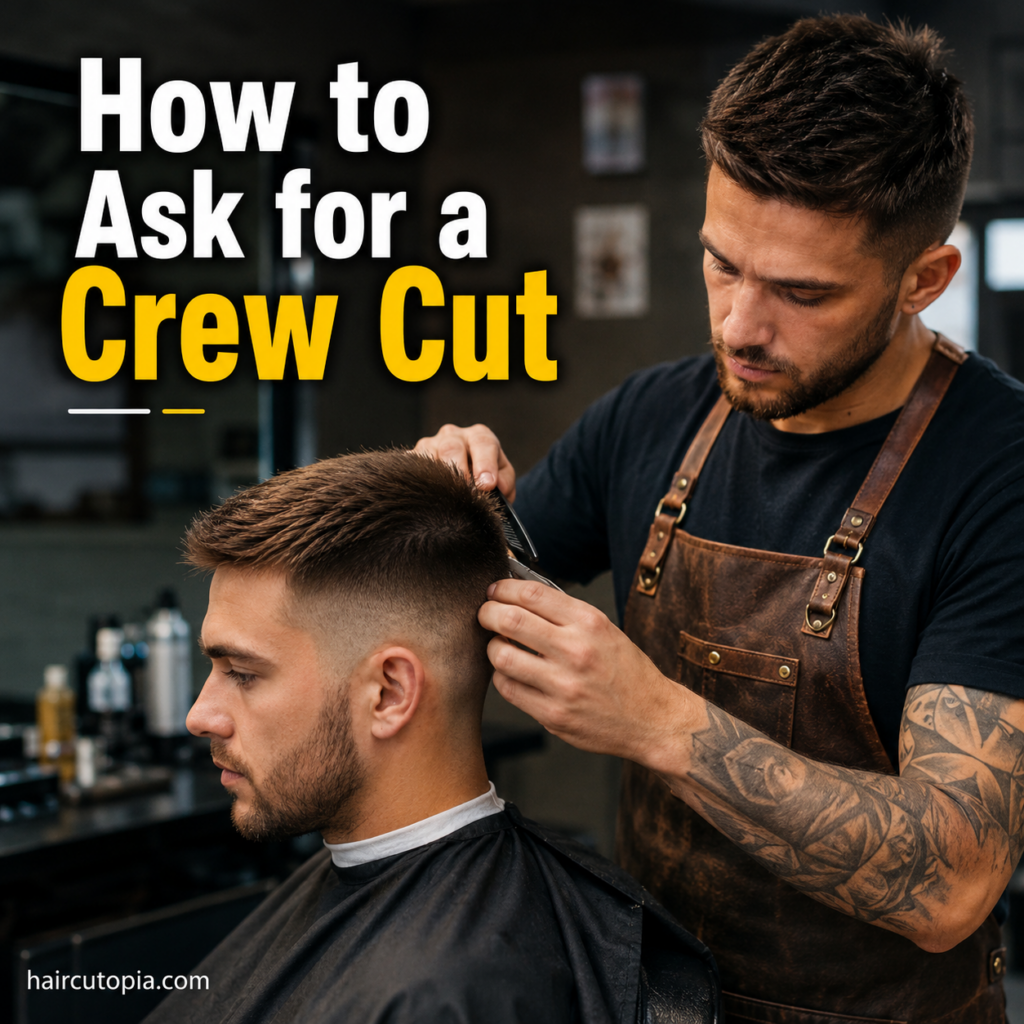
When you return to your barber, mention what you liked or disliked about how the previous cut grew out. That information can help them adjust the next haircut.
Crew Cut Maintenance for Different Hair Types
Not every crew cut behaves the same way between appointments.
Hair texture, density, and growth patterns all affect maintenance.
Straight Hair
Straight hair often makes the shape of a crew cut particularly visible.
As it grows, the sides may begin sticking outward rather than lying close to the head.
A small amount of matte styling product can help control the top, but once the sides begin noticeably flaring out, it’s usually time for a trim.
Thick Hair
Thick hair can become bulky surprisingly quickly.
Even if the overall length doesn’t bother you, the transition between the top and sides may begin looking heavy.
Ask your barber to remove excess bulk and add texture during regular appointments if this is a recurring problem.
Wavy Hair
Wavy hair can make a grown-out crew cut look intentionally textured, which may allow you to go longer between appointments.
Use a lightweight product if you want to define the natural movement without flattening it.
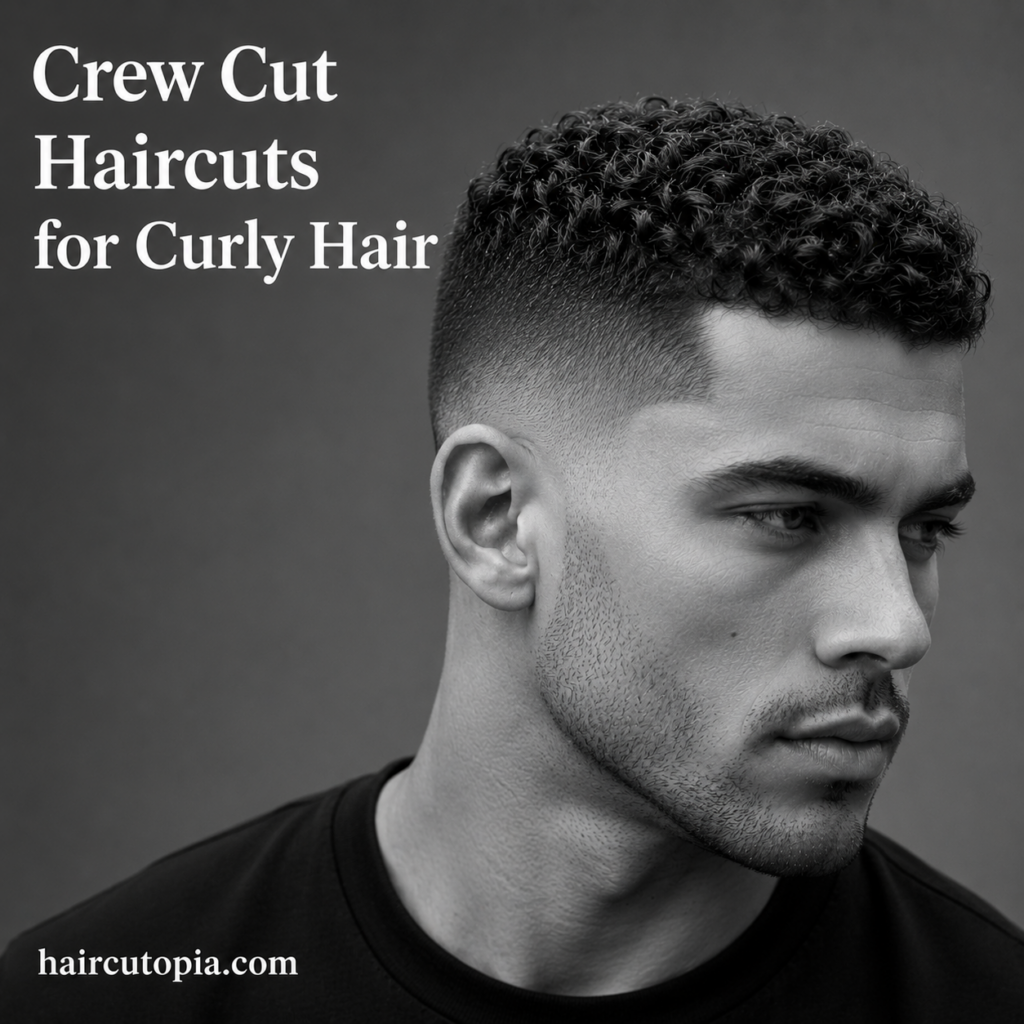
Curly Hair
Curly crew cuts can maintain visible texture as they grow, but the overall silhouette may become rounder or fuller.
Instead of focusing entirely on length, pay attention to shape. Once the sides begin expanding outward or the top becomes difficult to control, it’s probably time for a trim.
Fine or Thinning Hair
Fine hair generally benefits from lightweight styling products.
Heavy waxes and pomades can cause strands to clump together, making more scalp visible.
A small amount of matte paste or texturizing product can provide definition without weighing the hair down.
Protect Your Scalp
A very short crew cut exposes more of your scalp than longer hairstyles do.
That’s especially noticeable with high fades, skin fades, and very short tops.
If you’re spending extended time outdoors, don’t forget about sun exposure.
A hat provides straightforward coverage. Sunscreen designed for exposed skin can also be useful on areas of the scalp that aren’t protected by enough hair.
This is easy to overlook immediately after getting a much shorter haircut than you’re accustomed to.
Keep Your Clippers and Trimmers Clean
If you use clippers at home for neckline or sideburn maintenance, clean them regularly.
Loose hair can accumulate around the blades and guards.
After use:
- Turn the clipper off and unplug it if necessary.
- Remove the guard.
- Brush away loose hair.
- Clean or disinfect the blades according to the manufacturer’s instructions.
- Apply clipper oil when recommended.
Well-maintained blades generally cut more consistently and are less likely to tug at your hair.
When Does a Crew Cut Need a Full Haircut?
Not every sign of growth requires a complete haircut.
If the top still looks good and only the neckline has become messy, a cleanup may be enough.
A full haircut makes more sense when the original shape is disappearing.
Look for signs such as:
- The fade is no longer visible
- The sides are becoming bulky
- The top is difficult to style
- The front has become noticeably too long
- The crown isn’t sitting properly
- The top-to-side transition looks heavy
- Your crew cut is starting to resemble a completely different hairstyle
At that point, cleaning up the edges won’t restore the original proportions.
How to Make a Crew Cut Look Good as It Grows Out
If you don’t want to visit the barber every couple of weeks, choose your crew cut with growth in mind.
A slightly longer taper generally grows out more naturally than a dramatic skin fade.
You can also ask your barber to leave the sides a little fuller. The initial haircut won’t have quite as much contrast, but the transition between fresh and grown-out hair will be less obvious.
For easier long-term maintenance, consider:
- A low fade instead of a high skin fade
- A classic taper
- Slightly more length on the sides
- A textured top
- A natural neckline
- A less aggressively lined hairline
These choices can help your haircut stay presentable longer between appointments.
Common Crew Cut Maintenance Mistakes
Crew cuts are simple to maintain, but a few habits can make the process harder than necessary.
Using Too Much Styling Product
Start small. You can always add more.
Too much product can make short hair look greasy, stiff, or flat.
Cutting the Neckline Too High
Only remove growth beneath the existing neckline unless you’re confident in what you’re doing.
Moving the line upward is easy. Putting the hair back isn’t.
Trying to Fix Your Own Fade
Touching up one section often creates another section that needs blending.
Unless you’re comfortable fading hair, leave the transition alone.
Waiting Until the Shape Is Completely Gone
You can certainly let a crew cut grow out, but if your goal is to maintain the same style consistently, schedule your next appointment before the proportions change dramatically.
Ignoring Your Scalp
Short hair makes dryness, irritation, and sun exposure more noticeable.
Treat scalp care as part of maintaining the haircut rather than focusing exclusively on the hair itself.
A Simple Crew Cut Maintenance Routine
You don’t need an elaborate grooming schedule.
For most people, maintaining a crew cut can be reduced to a few basic habits:
- Wash your hair according to your scalp and activity level.
- Use conditioner when your hair feels dry or needs it.
- Style the top with a small amount of product if desired.
- Clean obvious stray hairs around the neckline and ears when necessary.
- Avoid attempting major fade corrections between appointments.
- Visit your barber approximately every two to four weeks if you want to maintain a consistently fresh shape.
- Keep any home clippers or trimmers clean and properly maintained.
That’s really the appeal of the haircut.
Keeping Your Crew Cut Looking Fresh
The crew cut earns its reputation as an easy haircut because everyday maintenance is minimal. You can wash it quickly, style it in a matter of minutes—or not style it at all—and keep the basic shape looking good without an extensive collection of grooming products.
The main maintenance comes from regular trimming.
If you love the crisp appearance of a fresh fade, expect more frequent barber visits. If you’d rather go longer between haircuts, a classic taper or slightly longer crew cut will usually grow out more gracefully.
Between appointments, focus on keeping your hair and scalp clean, using styling products sparingly, and cleaning up only the edges you’re comfortable handling yourself.
A little maintenance goes a long way with a haircut this simple.