The crew cut is one of those hairstyles that sounds simple until you sit in the barber chair and realize there are quite a few ways to wear one. You can go short and military-inspired, leave extra length on top for texture, pair it with a fade, or keep the sides slightly fuller for a more traditional look.
That makes knowing how to ask for a crew cut surprisingly important.
Simply telling your barber, “Give me a crew cut,” will usually get you somewhere close. But a few extra details can make the difference between a haircut you tolerate and one that looks exactly the way you pictured it.
Here’s what to tell your barber, what clipper lengths to consider, and how to choose a crew cut that works with your hair and face shape.
What Is a Crew Cut?
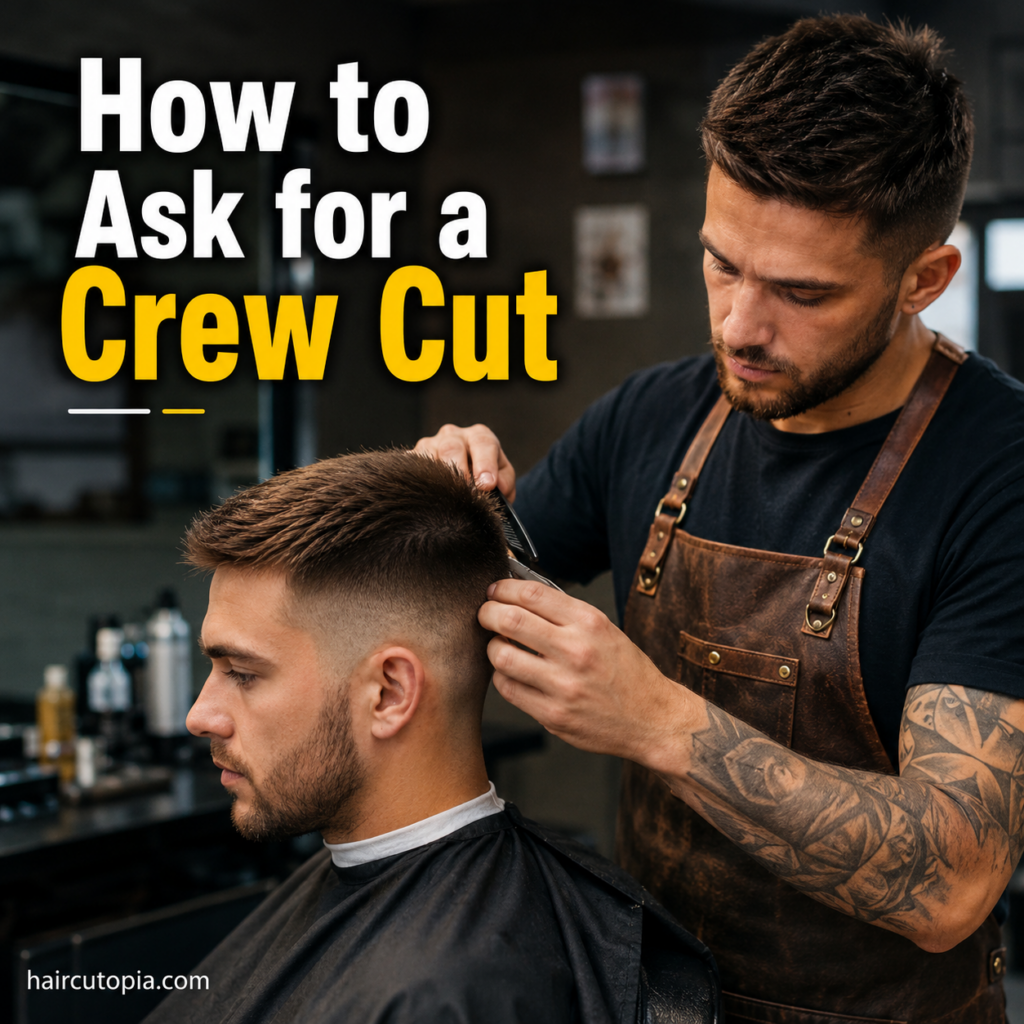
A crew cut is a short men’s haircut with tapered or faded sides and a slightly longer top. The hair on top is typically longest near the front and gradually gets shorter toward the crown.
That subtle difference in length is what separates a crew cut from a basic buzz cut.
With a buzz cut, the top is usually clipped to a relatively uniform length. A crew cut keeps enough length on top to create some shape and, depending on how long you leave it, a little texture or styling.
A typical crew cut has:
- Short sides and back
- Slightly longer hair on top
- More length toward the front
- A gradual transition toward the crown
- A tapered neckline or fade
- Optional texture through the top
The overall result is clean, practical, and easy to maintain without looking completely uniform.
What to Tell Your Barber for a Crew Cut
A straightforward way to ask for the haircut is:
“I’d like a crew cut with short faded sides, about an inch on top, and a little extra length in the front so I can add some texture.”
That gives your barber much more information than simply asking for a crew cut.
You can adjust the description depending on how short you want to go.
For example, if you prefer something tighter:
“I’d like a short crew cut with a #1 on the sides, faded up, and about half an inch on top.”
For a slightly longer version:
“I want a crew cut with a low taper on the sides and around an inch and a half on top, keeping the front slightly longer.”
You don’t need to use professional barber terminology. The goal is simply to communicate the length, shape, and overall finish you want.
Decide How Long You Want the Top
The top is one of the biggest variables in a crew cut.
Traditional crew cuts are fairly short, but modern versions often leave additional length so the hair has more texture and movement.
Very Short Crew Cut
For a tight, low-maintenance crew cut, the top might be around 1/2 inch or even shorter.
This creates a sharper, more military-inspired appearance and requires very little styling.
You can tell your barber:
“Keep the top around half an inch, with the front just slightly longer.”
Classic Crew Cut
Around 3/4 inch to 1 inch on top gives you the recognizable crew cut shape without leaving much hair to manage.
There is enough length for the barber to create some texture while keeping the haircut neat.
Try asking for:
“About an inch on top, gradually shorter toward the crown.”
Longer Crew Cut
Leaving roughly 1 to 1 1/2 inches on top creates a softer, more modern crew cut.
The additional length gives you more styling options. You may be able to brush the front upward, push it slightly to the side, or create a textured finish with a small amount of product.
If that’s the look you want, ask your barber to keep the front slightly longer rather than cutting the entire top to one uniform length.
Choose the Length on the Sides
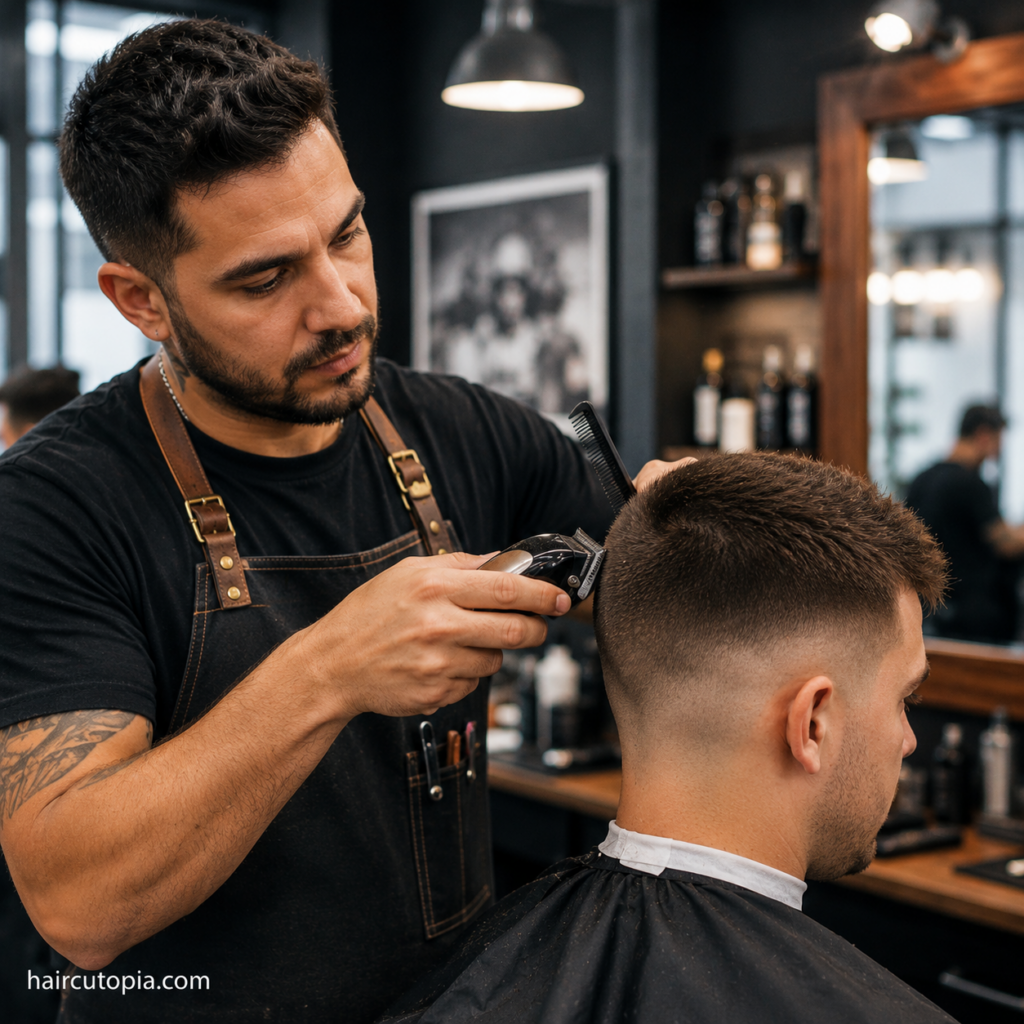
Once you’ve decided on the top, think about how short you want the sides and back.
This dramatically changes the appearance of a crew cut.
Common clipper guard lengths include:
- #0 — approximately 1/16 inch
- #1 — approximately 1/8 inch
- #2 — approximately 1/4 inch
- #3 — approximately 3/8 inch
- #4 — approximately 1/2 inch
You don’t necessarily need to choose a specific guard number. You can also tell your barber that you want the sides very short, moderately short, or slightly fuller.
If you’re uncertain, showing a reference photo is often easier than trying to guess the correct clipper guard.
Decide Whether You Want a Fade or Taper
A crew cut can be paired with several different treatments on the sides.
This is another detail worth mentioning before your barber starts cutting.
Crew Cut With a Low Fade
A low fade begins near the ears and neckline and transitions into longer hair relatively low on the head.
It keeps the haircut clean without making the fade the main feature.
A low fade is a good choice if you want a modern crew cut that still feels fairly conservative.
Crew Cut With a Mid Fade
A mid fade starts higher on the sides and creates more noticeable contrast between the top and the lower portion of the haircut.
It produces a sharper, more contemporary appearance.
Ask for:
“A crew cut with a mid fade, keeping around an inch on top.”
Crew Cut With a High Fade
A high fade removes more hair from the sides and begins the transition farther up the head.
Because so much of the sides are exposed, the longer top becomes much more noticeable.
This is a bolder version of the crew cut and can make the haircut look particularly sharp when the top is heavily textured.
Crew Cut With a Skin Fade
A skin fade, sometimes called a bald fade, takes the shortest section all the way down to the skin.
The result is extremely clean and high contrast.
Keep in mind that skin fades tend to show growth relatively quickly. If you like maintaining that freshly cut appearance, you’ll probably need more frequent barber visits.
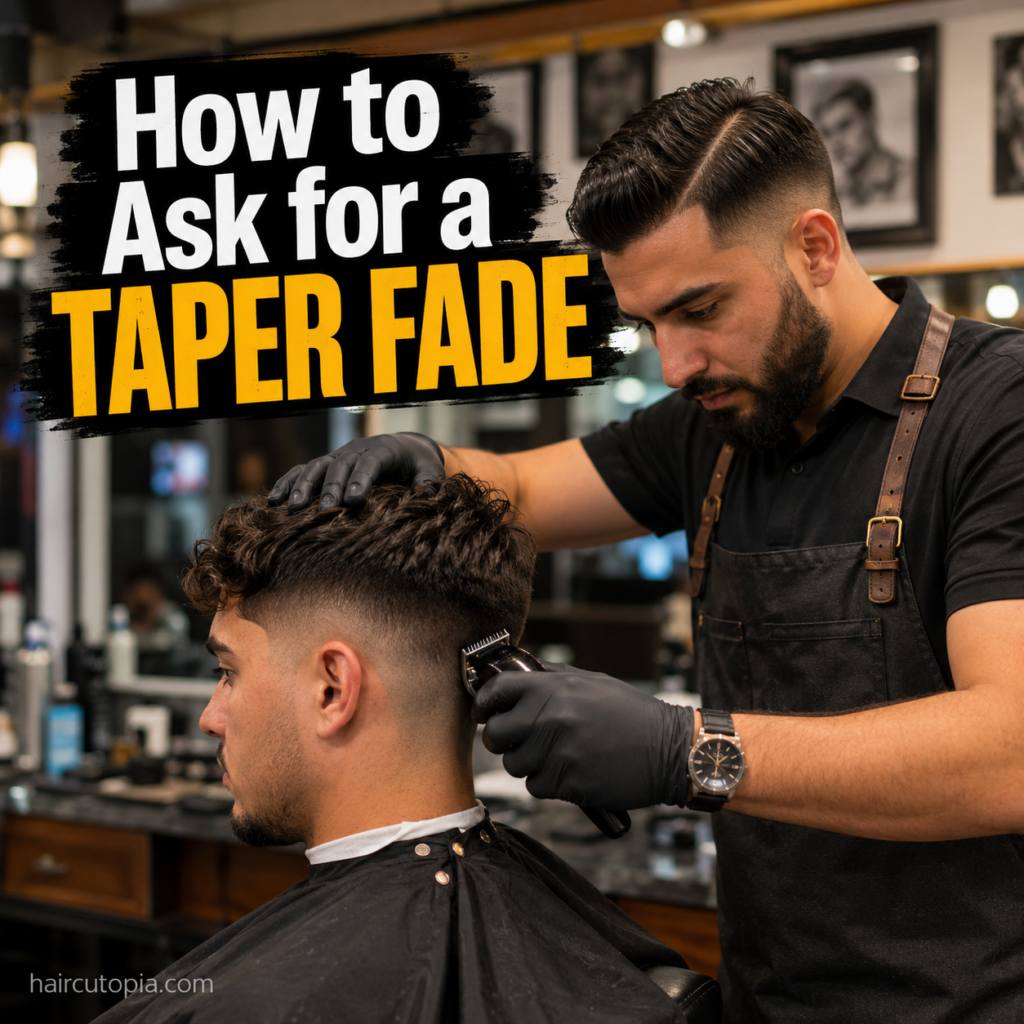
Crew Cut With a Taper
You don’t have to get a full fade.
A taper gradually shortens the hair around the sideburns and neckline while leaving more fullness around the sides of the head.
This gives the crew cut a softer, more traditional appearance and can also make regrowth less noticeable.
Ask for the Front to Be Slightly Longer
One small detail can make a big difference: the front.
The hair near the forehead is traditionally left slightly longer than the hair toward the crown.
That extra length helps create the distinctive shape of the crew cut.
It also gives you the option of styling the front upward or adding some texture instead of having the entire top lie flat.
Tell your barber:
“Leave a little extra length in the front and gradually shorten it toward the crown.”
That single instruction communicates the basic silhouette of a classic crew cut surprisingly well.
Ask Your Barber to Add Texture
If your hair is thick enough, texture can prevent a crew cut from looking heavy or blocky on top.
Your barber may use scissors, point cutting, or other texturizing techniques to remove bulk and create separation between sections of hair.
You can simply say:
“I’d like some texture through the top so it doesn’t look too uniform.”
Texture becomes especially useful when the top is around an inch or longer.
For very short crew cuts, there may not be enough length for significant texturizing to make much difference.
Should the Top Be Cut With Clippers or Scissors?
Either can work.
A very short crew cut may be clipped primarily with guards. Longer crew cuts are often better suited to scissor work on top because scissors give the barber more control over the graduation, texture, and additional length near the front.
If you want a textured crew cut rather than an extremely uniform finish, you can ask for the top to be scissor-cut.
You don’t necessarily need to dictate the technique, though. Once you’ve explained the result you want, an experienced barber can decide which tools will produce it best.
Bring a Reference Photo
A reference photo is one of the easiest ways to avoid miscommunication.
Terms such as “short,” “low fade,” and even “crew cut” can mean slightly different things to different people.
A photo gives your barber an immediate visual reference for:
- Top length
- Fade height
- Side length
- Texture
- Hairline
- Overall shape
Try to choose a photo of someone with hair reasonably similar to yours.
A crew cut on thick, straight hair may sit very differently from the same haircut on fine, curly, or strongly wavy hair.
You can also tell your barber what you specifically like about the photo. For example:
“I like the length and texture on top, but I’d prefer the sides slightly longer.”
That makes the reference even more useful.
How to Ask for a Crew Cut Based on Hair Type
Your natural hair texture affects how a crew cut sits, so the exact same measurements won’t necessarily produce the same appearance on everyone.
Straight Hair
Straight hair works especially well with the classic graduated shape of a crew cut.
If your hair tends to lie flat, leaving additional length near the front can help create some height and definition.
Ask for texture on top if your hair is thick and tends to look bulky when cut short.
Wavy Hair
Natural waves can give a crew cut plenty of texture without much styling.
Rather than cutting the top extremely short, consider leaving enough length for some of the wave pattern to remain visible.
Your barber can remove excess bulk while preserving natural movement.
Curly Hair
A curly crew cut can have a softer, more textured appearance than the traditional straight-haired version.
Because curls shrink as they dry, communicate how much visible length you want rather than relying entirely on measurements.
Leaving slightly more length on top can preserve the curl pattern while the faded or tapered sides keep everything neat.
Fine or Thinning Hair
Crew cuts can work particularly well with fine or thinning hair because the shorter length reduces the contrast between thicker and thinner areas.
Keeping the top relatively short can also make the hair appear more uniform.
Heavy styling products aren’t usually necessary. A lightweight matte product can provide texture without causing strands to clump together.
Choosing a Crew Cut for Your Face Shape
The proportions of a crew cut can be adjusted to complement different face shapes.
Round Face
Keeping some height and texture on top while taking the sides shorter can visually lengthen the face.
A mid or high fade can create additional contrast.
Avoid leaving excessive bulk around the sides if your goal is a more angular appearance.
Square Face
Crew cuts naturally complement square faces because they emphasize a strong jawline and angular features.
A classic taper, low fade, or mid fade can all work well.
Oval Face
Oval faces generally work with most crew cut variations.
You can experiment with shorter military-inspired versions, longer textured tops, or different fade heights without dramatically affecting facial proportions.
Long or Rectangular Face
Be cautious about creating too much height on top while taking the sides extremely short, since that combination can make the face appear even longer.
A slightly fuller taper or low fade with a relatively short top often creates better balance.
What About the Hairline?
Your barber will usually clean up the area around the temples, ears, and neckline as part of the haircut.
At the forehead, you may have a choice between keeping the natural hairline or having it lined up.
A sharp lineup creates a more defined edge across the forehead and temples.
A natural hairline produces a softer appearance and may grow out more subtly.
If you’re unsure, ask your barber what will work best with your natural hairline rather than automatically requesting a sharp edge-up.
What to Say If You’re Not Sure About the Length
You don’t need to arrive at the barbershop knowing every clipper guard number.
In fact, if you’re uncertain, it’s better to describe the appearance you want than confidently request a guard that may be shorter than you expect.
Tell your barber things such as:
- “I want it short but not showing much scalp.”
- “I want enough hair on top to add texture.”
- “I’d like the sides tight but not down to the skin.”
- “I want something that still looks good as it grows out.”
- “I don’t want the fade too high.”
Your barber can translate those preferences into appropriate lengths.
Crew Cut vs. Buzz Cut: Know the Difference Before You Ask
These two haircuts are often confused.
A buzz cut generally keeps the hair at a similar short length across most or all of the head, although modern buzz cuts can also include fades.
A crew cut has more deliberate shaping on top. The front is longer, and the hair gradually becomes shorter toward the crown.
If you want visible texture or enough hair at the front to style slightly upward, make that clear.
Otherwise, asking for a very short crew cut without additional explanation could leave you with something closer to a buzz cut than you expected.
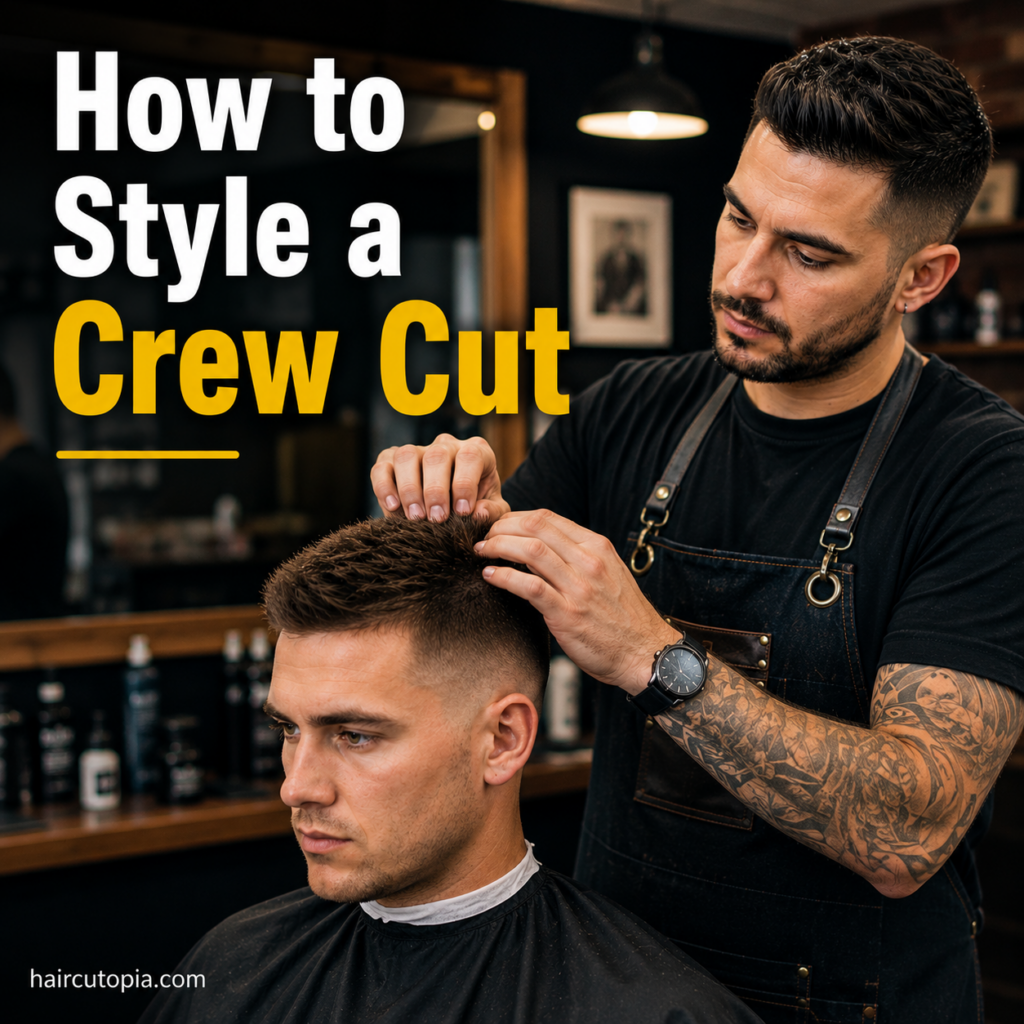
How to Style a Crew Cut
One of the biggest advantages of a crew cut is that it requires very little daily styling.
For a short version, you may not need any product at all.
If you have more length on top, start with a small amount of product and work it through the hair with your fingers.
Depending on your hair type and desired finish, you might use:
- Matte clay for stronger texture and hold
- Paste for flexible control
- Matte pomade for definition
- Lightweight cream for a softer, natural finish
Work the hair slightly forward or upward, concentrating on the longer section near the front.
Avoid starting with too much product. Short hair can quickly look greasy or weighed down when overloaded.
How Often Should You Get a Crew Cut?
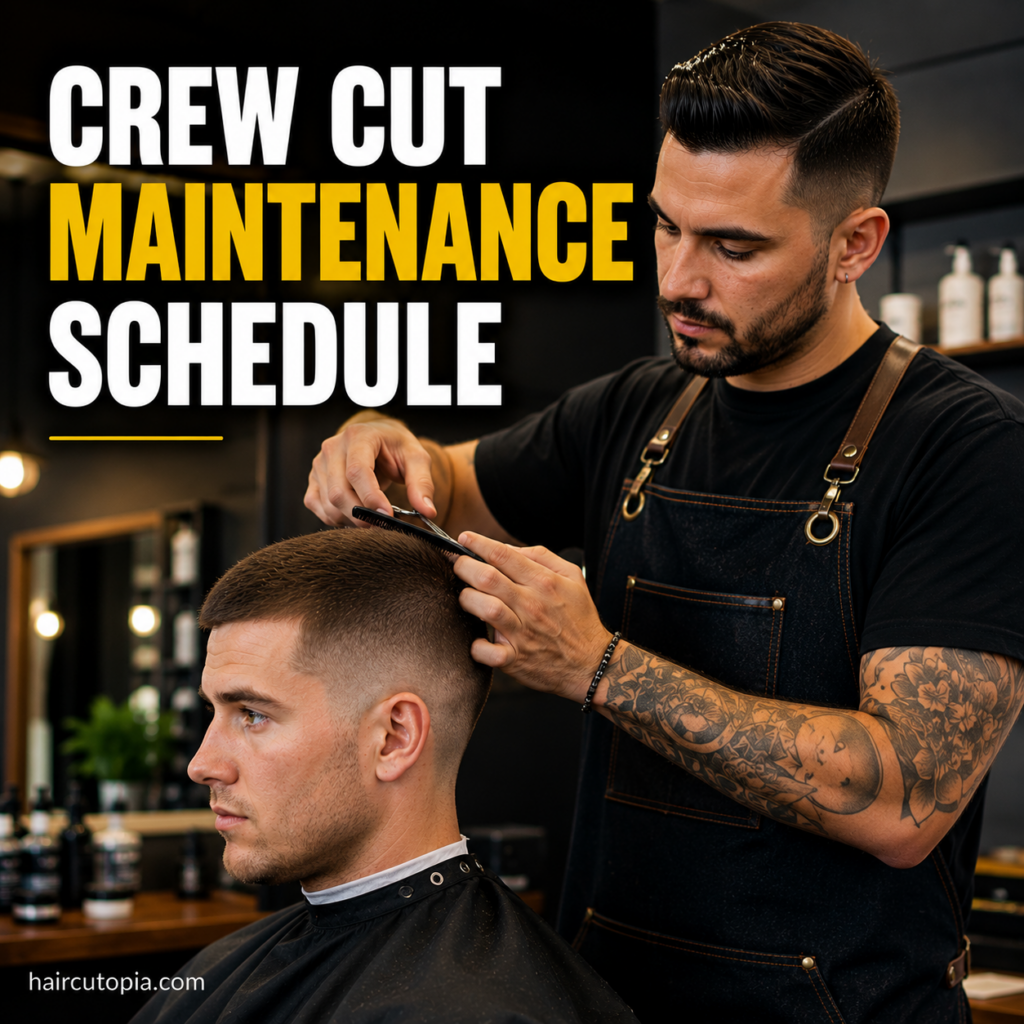
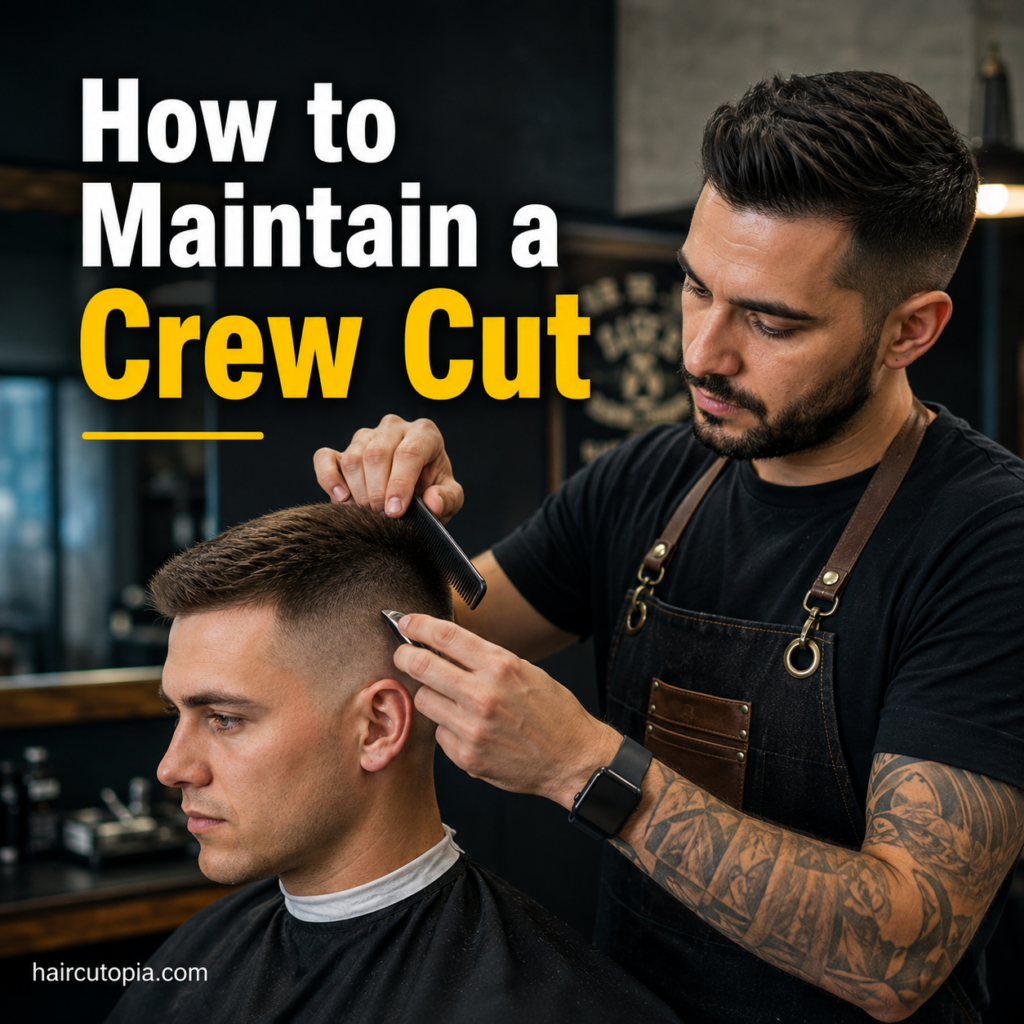
Most crew cuts look their sharpest when trimmed every two to four weeks.
How frequently you actually need a haircut depends on the style.
A skin fade may begin losing its crisp appearance within a couple of weeks because the shortest sections reveal new growth quickly.
A classic tapered crew cut usually grows out more naturally and can often go longer between appointments.
If you don’t mind a slightly grown-in appearance, stretching appointments to four or even five weeks may be perfectly reasonable.
Quick Crew Cut Barber Checklist
Before heading to your appointment, decide on these five things:
- How much length you want on top
- How short you want the sides
- Whether you want a taper, low fade, mid fade, high fade, or skin fade
- How much texture you want on top
- Whether you want a natural or sharply lined hairline
If you aren’t sure about one of them, that’s fine. A good barber can make recommendations based on your hair density, growth pattern, face shape, and desired maintenance level.
The Easiest Way to Ask for a Crew Cut
If you want one simple description that covers the important details, try this:
“I’d like a crew cut with about an inch on top, slightly longer in the front and gradually shorter toward the crown. Keep the sides short with a low or mid fade, and add some texture on top.”
From there, your barber can adjust the haircut to suit your hair.
Better yet, bring a reference photo and explain which parts of the haircut you want to copy.
You don’t need to speak like a barber to get a good crew cut. Knowing roughly how long you want the top, how short you want the sides, and what type of fade or taper you prefer is usually enough to get the conversation started.