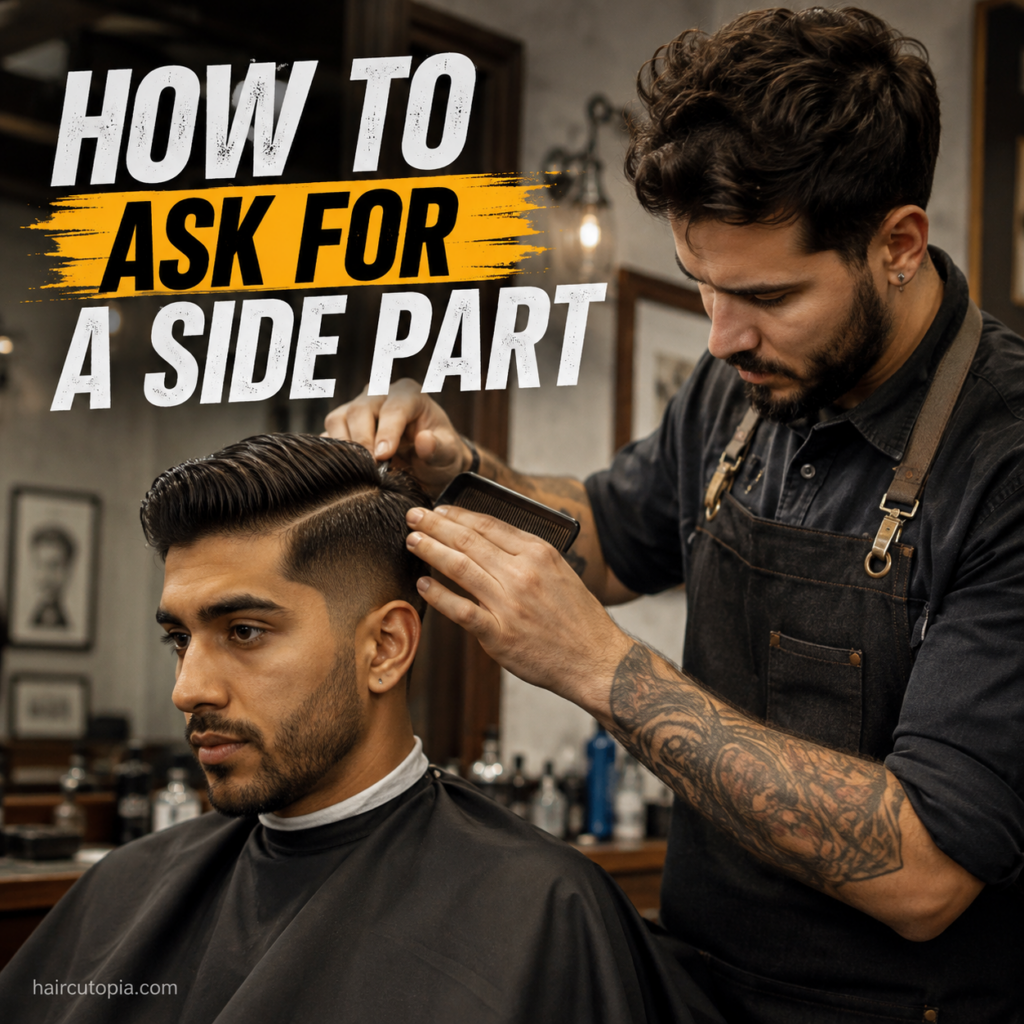
The undercut is one of those haircuts that can look dramatically different depending on how it’s cut and styled. Some versions are clean and professional, while others create a much stronger contrast between the top and sides.
That flexibility is part of what makes the undercut so popular. It also means that simply telling your barber, “I want an undercut,” may not give them enough information to create the look you have in mind.
The good news is that you don’t need to know professional barber terminology. If you can explain the length you want, how much contrast you like, and how you normally style your hair, your barber can handle the technical details.
Here’s how to ask for an undercut and communicate exactly what you want before the clippers come out.
What Is an Undercut?
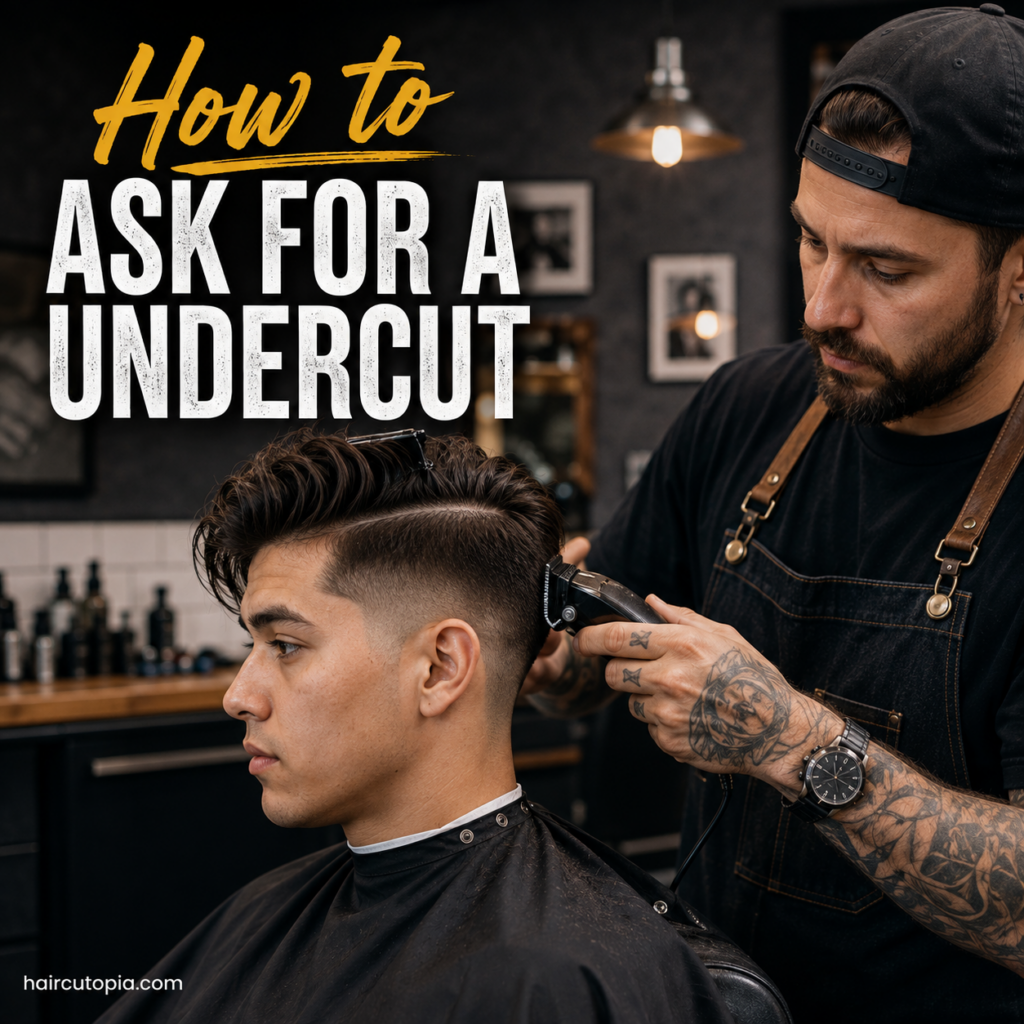
An undercut is a hairstyle where the hair on the sides and back is cut noticeably shorter than the hair on top.
The defining feature is the separation between those two lengths. Unlike many traditional tapered or faded haircuts, an undercut often keeps the longer top relatively disconnected from the shorter sides.
Depending on the version, the sides may be:
- Buzzed very short
- Clippered to a longer guard
- Tapered slightly around the edges
- Skin-short
- Faded while maintaining an undercut-inspired shape
The hair on top is usually left long enough to style into a quiff, slick back, pompadour, side part, textured style, or messy finish.
What to Tell Your Barber
A good undercut consultation comes down to a few decisions. You don’t have to describe every technical detail, but you should give your barber a clear idea of the overall result you want.
A useful starting point is:
“I’d like an undercut with the top kept longer and the sides much shorter. I want a noticeable separation between the top and sides.”
From there, talk about the specific lengths and styling you prefer.
Decide How Short You Want the Sides
The sides have a major influence on how dramatic your undercut looks.
Shorter sides create stronger contrast. Longer sides soften the haircut and can make it easier to wear in professional or conservative environments.
If you’re comfortable using clipper guard numbers, you can request something specific, such as a #1, #2, or #3.
As a general reference:
- #1 guard leaves about 1/8 inch
- #2 guard leaves about 1/4 inch
- #3 guard leaves about 3/8 inch
- #4 guard leaves about 1/2 inch
You don’t need to memorize these measurements. You can simply tell your barber that you want the sides very short, moderately short, or relatively soft.
For example:
“Keep the sides around a #2, but leave the top long.”
If you’re unsure about going extremely short, starting slightly longer is usually the safer choice. Your barber can always take more hair off.
Decide Whether You Want a Fade
An undercut and a fade aren’t exactly the same thing.
A classic undercut generally has a more obvious transition between the long hair on top and the shorter hair underneath. A fade gradually transitions from shorter hair near the bottom into longer hair higher on the head.
However, modern haircuts frequently combine elements of both.
You could ask for:
- A classic disconnected undercut
- An undercut with a low fade
- An undercut with a mid fade
- An undercut with a high fade
- A skin-faded undercut
If you want the traditional undercut appearance, tell your barber you want the top and sides to remain noticeably disconnected.
If you prefer something smoother, ask whether a subtle fade or taper would work with the style.
Explain How Much Length You Want on Top
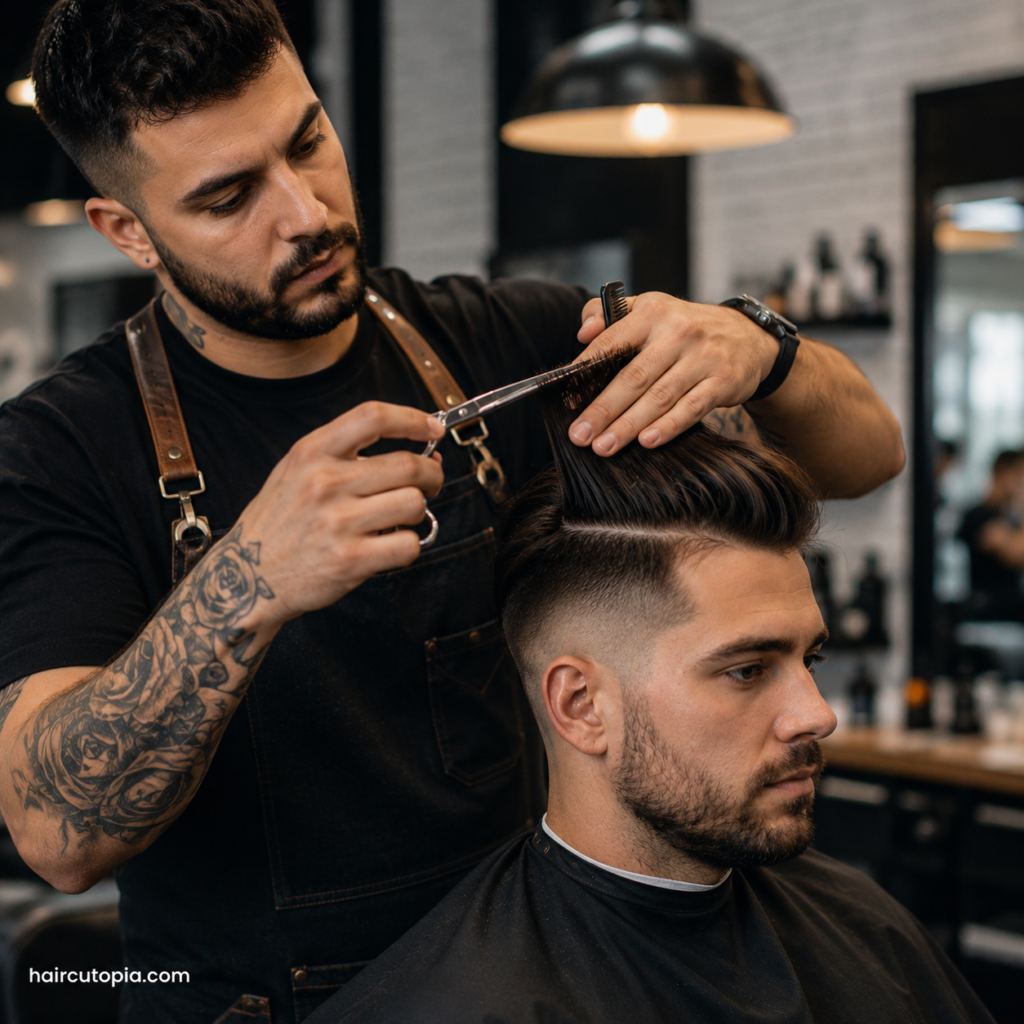
Don’t focus only on the sides. The length on top determines what hairstyles you’ll actually be able to create.
Think about how you want to wear your hair most days.
For example, longer hair may be necessary if you want to:
- Slick it straight back
- Create a pompadour
- Style a voluminous quiff
- Sweep it to one side
- Wear a loose, textured look
- Push it back naturally
Instead of saying “leave it long,” try explaining what you want the hair to do.
You might say:
“I want enough length on top to slick it back.”
Or:
“Keep enough length in the front so I can style a textured quiff.”
That gives your barber useful information about both the length and shape of the haircut.
Ask for the Right Amount of Texture
Length isn’t the only consideration on top. Texture can completely change how an undercut behaves.
Thick hair may become bulky if too much weight is left behind. Adding texture can make the style easier to shape and prevent it from looking overly heavy.
Fine hair, on the other hand, can sometimes appear thinner if it is aggressively texturized.
Rather than automatically asking your barber to thin your hair, explain what you’re trying to achieve.
For example:
“I’d like the top to have some movement and texture without looking too thin.”
Your barber can then decide whether point cutting, layering, thinning, or another technique makes sense for your hair.
Decide How Disconnected You Want the Haircut
The word “disconnected” is useful when discussing an undercut.
A disconnected undercut creates a noticeable difference between the longer top and short sides rather than gradually blending the two areas together.
This can create the bold, recognizable undercut shape many people picture when they hear the name.
If that’s what you want, tell your barber:
“I want the top disconnected from the sides rather than fully blended.”
If you’d prefer something less dramatic, ask for a softer transition.
That small distinction can make a surprisingly large difference in the finished haircut.
Bring a Reference Photo
A reference photo is one of the easiest ways to avoid misunderstandings.
Haircut terminology isn’t always perfectly consistent. Two people can say “undercut” while imagining noticeably different hairstyles.
Show your barber one or two photos that closely resemble what you want.
Try to choose someone with hair that’s reasonably similar to yours in:
- Thickness
- Texture
- Curl pattern
- Density
- Hairline
You don’t need to find someone who looks exactly like you. The goal is simply to give your barber a visual reference for the shape, length, and overall finish.
You can also point out individual details.
For example:
“I like the length on top in this picture, but I’d like the sides slightly longer.”
That can be more useful than expecting your barber to copy a photograph exactly.
Tell Your Barber How You Normally Style Your Hair
A haircut shouldn’t only look good when you leave the barbershop. It should work with your normal routine.
Tell your barber how much time you’re willing to spend styling your hair in the morning.
If you normally spend two minutes on your hair, there’s little benefit in getting a haircut that requires a blow dryer, pre-styler, brush, and multiple products every day.
Mention whether you usually:
- Blow-dry your hair
- Let it air-dry
- Use pomade or wax
- Prefer matte styling products
- Want noticeable shine
- Style with your fingers
- Use a comb or brush
- Prefer minimal styling
Your barber may adjust the length, texture, or weight distribution accordingly.
How to Ask for a Classic Undercut
If you want the traditional version, emphasize the contrast between the top and sides.
You could say:
“I want a classic undercut. Keep the top long enough to slick back, take the sides down to about a #2, and keep the top fairly disconnected instead of blending everything together.”
This creates a strong difference between the longer upper section and shorter sides.
How to Ask for a Textured Undercut
A textured undercut is usually less polished and more relaxed.
Instead of creating a perfectly smooth finish, the top is styled with separation and movement.
Try saying:
“I’d like a textured undercut with short sides and enough length on top to style forward or loosely to the side. I want some texture and movement rather than a slick finish.”
A matte clay, paste, or similar styling product often complements this type of haircut.
How to Ask for a Slicked-Back Undercut
For a slicked-back undercut, keeping enough length on top is especially important.
Tell your barber:
“I want an undercut that I can slick straight back. Keep plenty of length through the front and top, with shorter disconnected sides.”
You can also tell your barber whether you prefer a traditional glossy finish or something more natural.
How to Ask for an Undercut With a Fade
If you like the basic shape of an undercut but don’t want such an abrupt transition, combining it with a fade can create a more gradual finish.
You might say:
“I’d like an undercut with a low fade on the sides. Keep the top noticeably longer, but make the sides transition more smoothly toward the bottom.”
You can substitute low fade for mid fade or high fade depending on where you want the transition to begin.
Should You Ask for a Taper Instead?
If you’re hesitant about the strong contrast of an undercut, a taper may be worth discussing with your barber.
A taper generally keeps more length through the sides while gradually shortening the hair around the sideburns and neckline.
The result can be more subtle and easier to grow out.
You could tell your barber:
“I like the longer top of an undercut, but I don’t want the sides extremely short. Could we keep them longer and taper around the edges?”
A barber can help determine whether that approach better suits your hair and preferred style.
Consider Your Hair Type
The same undercut won’t behave identically on every head of hair.
Straight Hair
Straight hair works particularly well for sleek undercuts, side-swept styles, pompadours, and sharp textured looks.
Because straight hair can reveal the shape of a haircut clearly, the transition between the top and sides may appear especially noticeable.
Wavy Hair
Wavy hair can add natural movement to an undercut.
Leaving enough length on top allows the waves to remain visible while the shorter sides keep the overall shape controlled.
Curly Hair
Curly undercuts can create dramatic contrast between textured curls and closely cut sides.
Be careful about removing too much length from the top if you want your curl pattern to remain prominent. Curl shrinkage can make the hair appear considerably shorter once it dries.
Thick Hair
Thick hair often works very well with an undercut because removing bulk from the sides can make the overall hairstyle easier to manage.
The top may need some strategic weight removal or layering depending on the desired style.
Fine Hair
An undercut can still work with fine hair, but extremely short sides combined with a very long top may emphasize differences in density.
A slightly softer undercut may create a more balanced appearance.
Don’t Forget the Back
People naturally focus on the sides when describing an undercut, but the back matters too.
Ask your barber how the shorter section will continue around the head.
You may want the back:
- Cut to the same length as the sides
- Gradually tapered toward the neckline
- Faded
- Left slightly longer
- Finished with a natural neckline
A clean transition around the back helps the haircut look intentional from every angle.
Ask How the Neckline Will Be Finished
The neckline is another small detail that can change the overall appearance of the haircut.
Common options include:
- Natural
- Tapered
- Rounded
- Blocked or squared
A tapered or natural neckline generally grows out more gradually, while a sharply blocked neckline creates a cleaner geometric edge immediately after the haircut.
Your barber may recommend an option based on your natural growth pattern.
Common Mistakes When Asking for an Undercut
Most bad haircut consultations aren’t caused by using the “wrong” barber terminology. They’re caused by leaving important details unclear.
Try to avoid these common mistakes.
Saying Only “Give Me an Undercut”
There are too many variations for this to be a complete instruction.
Explain the side length, top length, degree of disconnection, and how you plan to style it.
Going Too Short Immediately
If you’ve never had an undercut before, jumping directly to extremely short or skin-shaved sides can be a dramatic change.
Starting slightly longer gives you more room to adjust.
Ignoring Your Hair Texture
A photograph shows how the haircut looks on someone else’s hair.
Your barber may need to modify the cut to work with your natural texture, density, growth patterns, or cowlicks.
Asking for a Style You Won’t Maintain
Some undercuts are remarkably easy to style. Others require daily blow-drying and product.
Be realistic about how much maintenance you’re willing to do.
Forgetting About the Grow-Out
Undercuts can develop noticeable bulk as the sides grow.
If you’re planning to maintain the style, expect to visit your barber regularly. If you’re growing it into a different haircut later, ask your barber how difficult the transition will be.
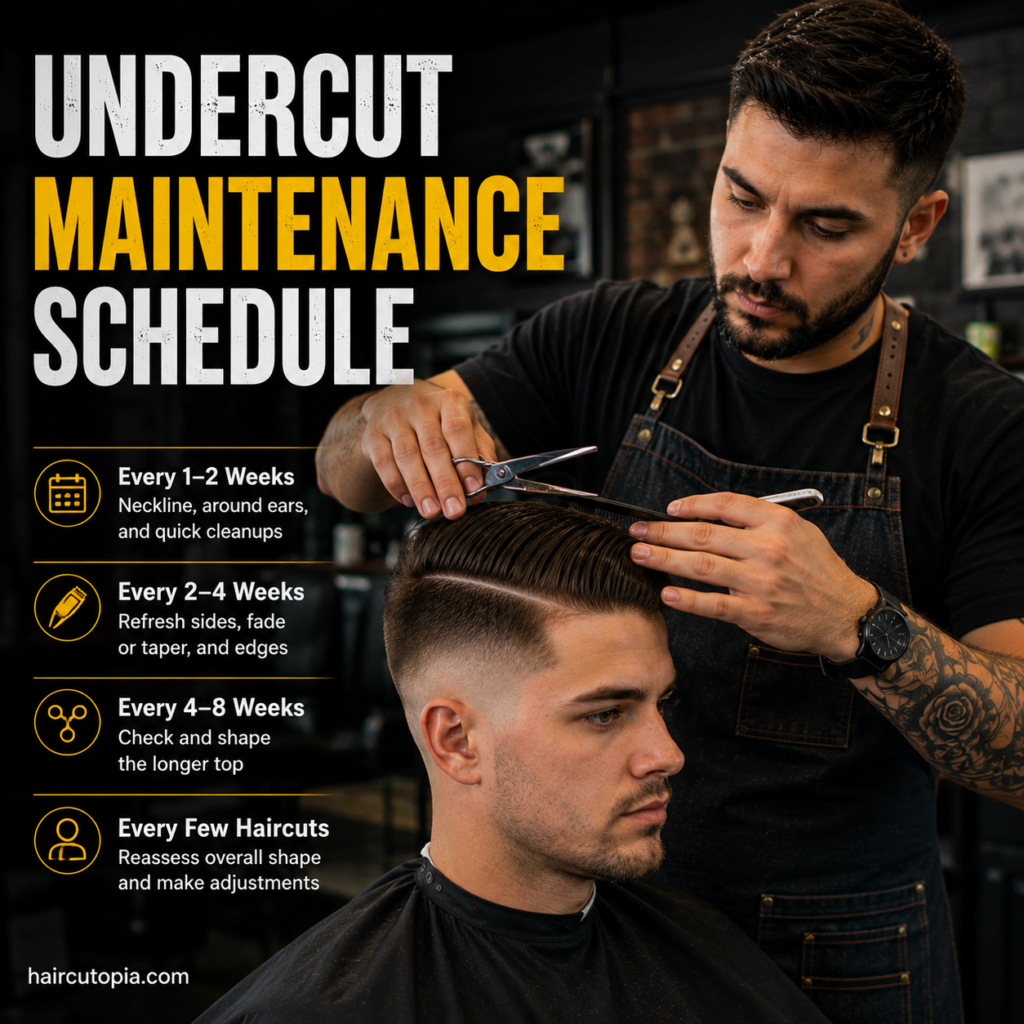
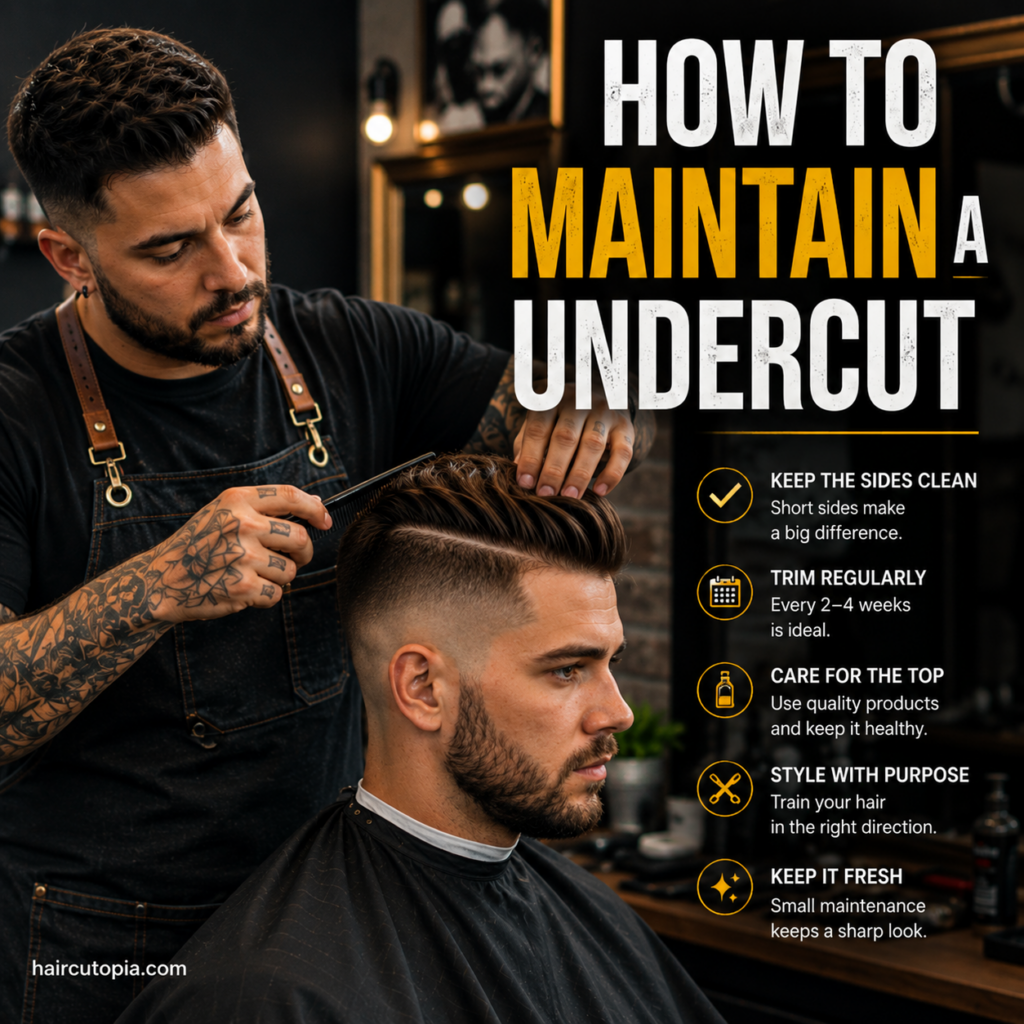
How Often Should You Maintain an Undercut?
The shorter the sides, the faster you’ll notice growth.
For a crisp undercut, many people find that a haircut or cleanup roughly every 2 to 4 weeks keeps the sides looking controlled.
You may be able to wait longer if you intentionally choose a softer or longer version.
The top usually doesn’t need to be shortened as frequently. Your barber may simply reshape it, remove excess weight, or trim damaged ends while maintaining the overall length.
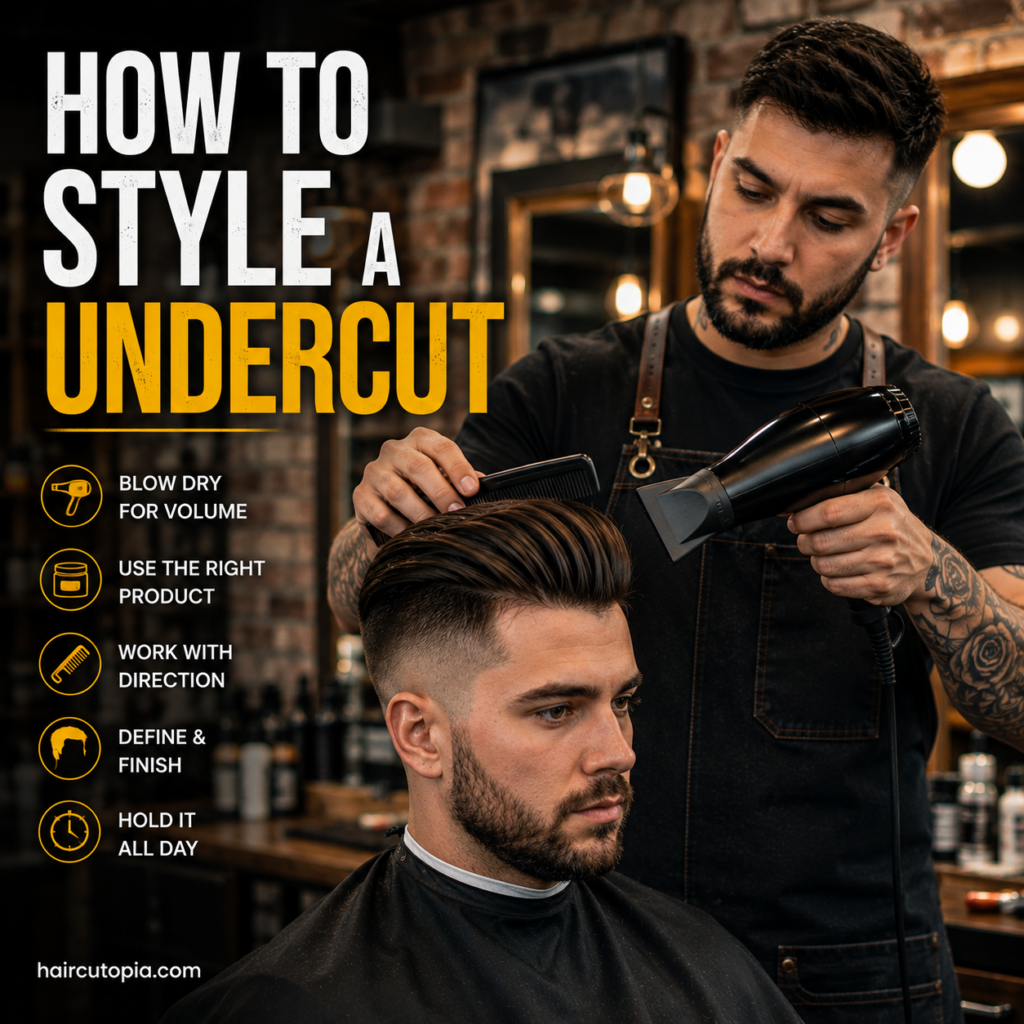
What Styling Products Work With an Undercut?
The best product depends more on your desired finish and hair type than on the haircut itself.
For a natural or textured look, consider:
- Matte clay
- Styling paste
- Texture cream
- Lightweight wax
For a smoother or more traditional finish, consider:
- Pomade
- Styling cream
- Gel
- High-shine wax
If you want volume, a pre-styler or volumizing product used before blow-drying can help create lift through the front.
Ask your barber what they used when styling your finished haircut. Knowing the product and technique can make it much easier to recreate the look at home.
A Simple Undercut Script to Use at the Barbershop
You don’t need a complicated speech.
A clear request could sound like this:
“I’d like an undercut with the sides around a #2 and the top left long enough to style back. Keep some separation between the top and sides instead of completely blending them. I’d also like some texture through the top so it’s easier to style.”
Then show your reference photo.
Your barber may ask follow-up questions about the fade, neckline, top length, or styling preferences. That’s a good thing. A short consultation before the haircut can prevent a lot of confusion afterward.
What If You Don’t Know Your Clipper Guard?
That’s completely fine.
Instead of guessing a number, show your barber approximately how short you’d like the sides.
You can say:
“I don’t know the guard number, but I want the sides about this short.”
A barber can translate your preference into the appropriate tools and technique.
It’s better to describe what you actually want than confidently request a clipper guard that turns out to be much shorter than you expected.
Questions to Ask Before Your Barber Starts
If you’re trying an undercut for the first time, a few questions can help you make better decisions:
- Will this work with my hair texture?
- How short would you recommend taking the sides?
- Should the top be disconnected or slightly blended?
- How much length should I keep for the style I want?
- Will my cowlick or growth pattern affect the haircut?
- What product should I use?
- How should I style it at home?
- How often should I come back for maintenance?
A good barber can adapt the general idea to your individual hair rather than treating the reference photo as a rigid blueprint.
Final Thoughts
Asking for an undercut doesn’t require knowing every clipper guard, barbering technique, or technical haircut term.
Focus on the details that affect what you actually see: how short you want the sides, how long you want the top, whether you prefer a sharp or gradual transition, and how you plan to style your hair.
Bring a reference photo whenever possible, especially if you’re trying the style for the first time. Then explain what you like about the picture instead of simply asking your barber to copy it.
The clearest request is usually the simplest one: describe the shape you want, show the barber your reference, and let them adapt the haircut to your hair type and growth pattern.