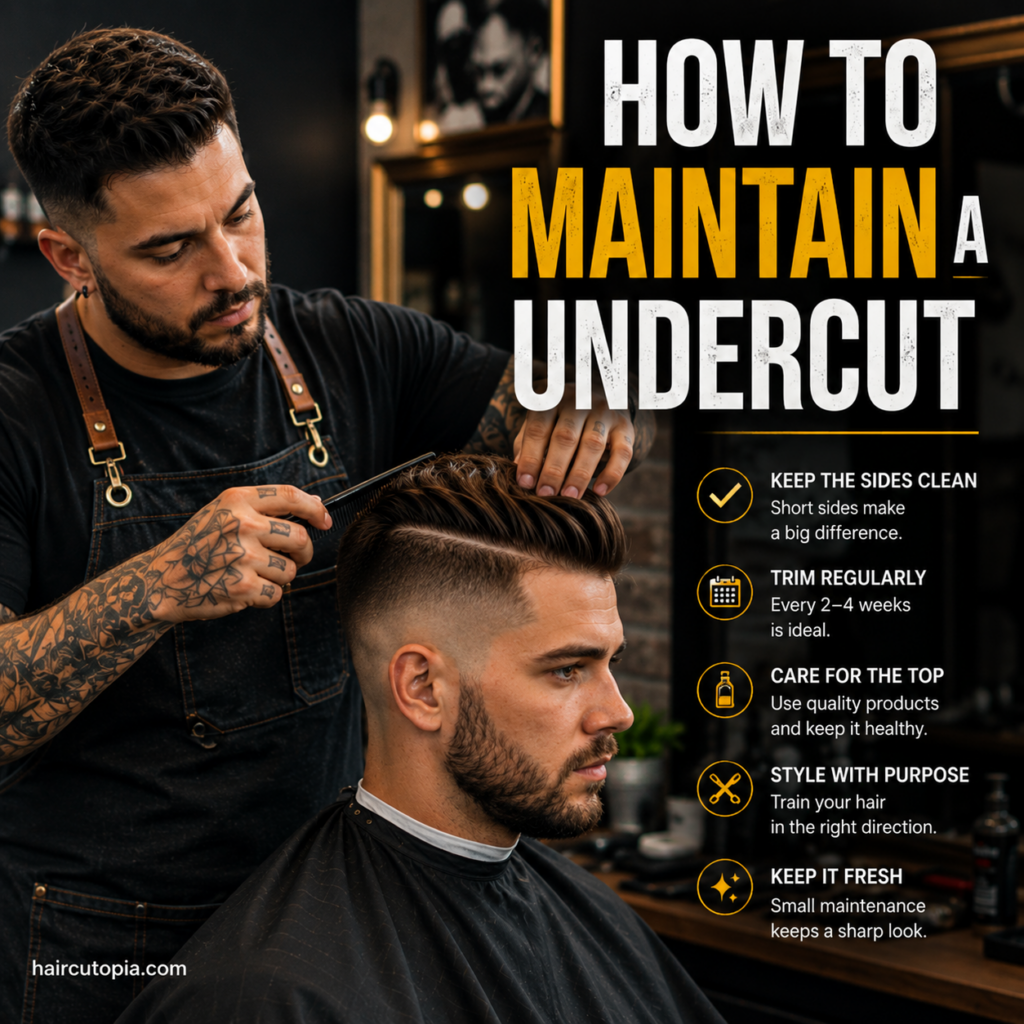
An undercut looks its best when there’s a clear contrast between the longer hair on top and the shorter sides and back. Fresh from the barbershop, that difference is sharp and easy to see. A few weeks later, things can start getting a little less defined.
The sides become fuller, the neckline grows out, and the longer hair on top may stop cooperating the way it did when the cut was fresh.
Fortunately, maintaining an undercut doesn’t require constant trips to the barber. A good routine comes down to knowing when to get a cleanup, taking care of the longer hair on top, using the right styling products, and avoiding a few common mistakes between appointments.
Here’s how to maintain an undercut and keep it looking intentional as it grows.
Why Undercuts Need Regular Maintenance
The contrast that makes an undercut distinctive is also what makes new growth noticeable.
With a traditional undercut, the sides and back are significantly shorter than the top. Even half an inch of growth can soften that difference.
You may start noticing:
- Extra bulk around the sides
- Hair sticking out above the ears
- A less defined transition between the top and sides
- An untidy neckline
- Sideburns losing their shape
- Longer hair becoming heavy or difficult to style
None of this means you need a full haircut every week. It simply helps to have a maintenance schedule based on how short you wear your undercut.
How Often Should You Get an Undercut Trimmed?
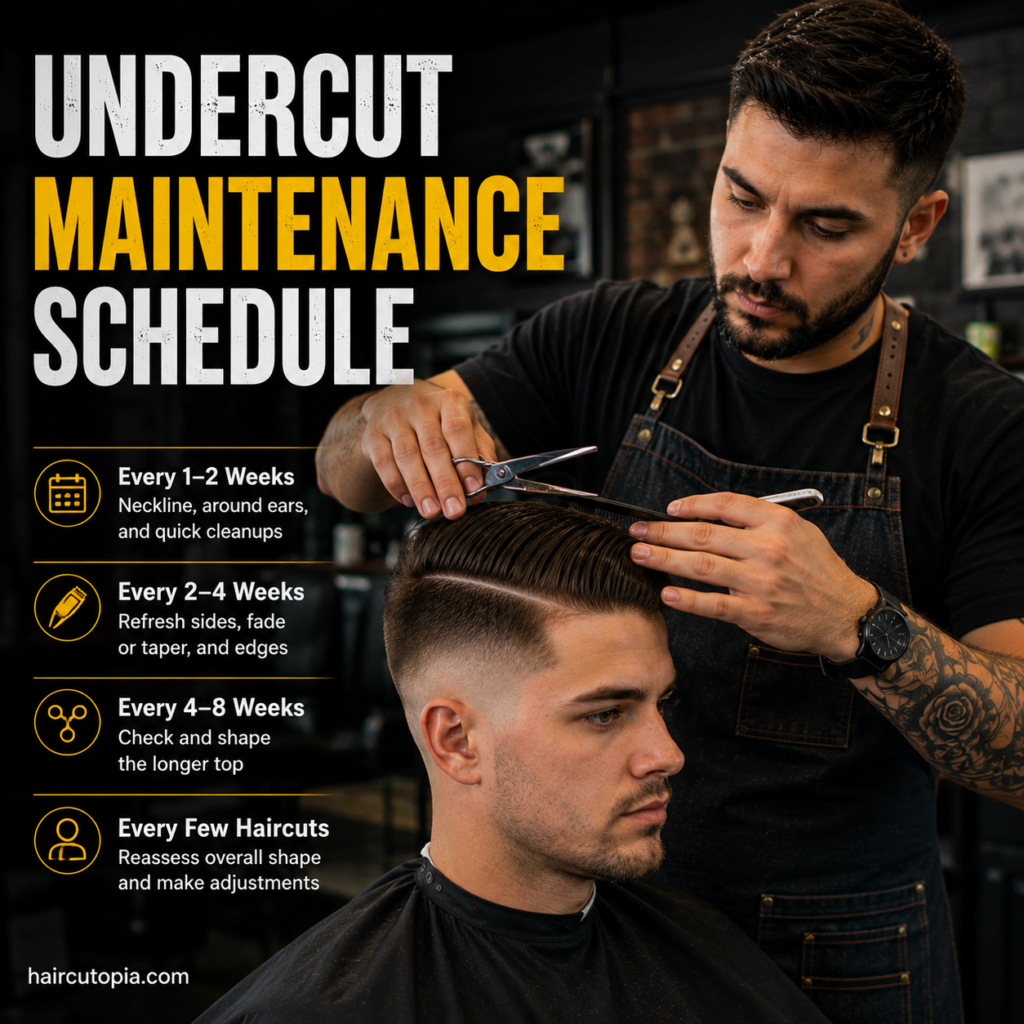
For most undercuts, visiting the barber approximately every 2 to 4 weeks will keep the haircut looking relatively fresh.
The ideal schedule depends heavily on the length of the sides.
Very Short or Skin Undercuts
If the sides are taken down to skin or nearly skin, growth becomes visible quickly.
A cleanup every 1 to 2 weeks may be necessary if you want the haircut to maintain that freshly cut appearance.
You can wait longer, of course. The haircut simply won’t look quite as crisp.
Short Clippered Undercuts
Undercuts cut with something around a #1 to #3 guard are generally a little easier to maintain.
A barber visit every 2 to 3 weeks is a reasonable starting point.
Longer Undercuts
If you prefer a softer undercut with more length through the sides, you may comfortably go 3 to 5 weeks between appointments.
Because there isn’t as much contrast, a small amount of growth is less obvious.
You Don’t Always Need a Full Haircut
One of the easiest ways to maintain an undercut is to alternate full haircuts with smaller cleanups.
For example, your barber might:
- Shorten the sides and back
- Clean around the ears
- Taper the neckline
- Reshape the sideburns
- Leave most of the top untouched
This can preserve the overall shape without constantly removing length you’ve been trying to grow on top.
Tell your barber if you’re intentionally keeping the top long.
Something as simple as, “Just clean up the sides and back—I want to keep growing the top,” makes your goal clear.
Keep the Sides Under Control
The sides are usually the first part of an undercut to lose their shape.
As short hair grows, it can begin sticking outward rather than lying flat. This is especially noticeable with thick, coarse, or straight hair.
Once the sides begin looking bulky, you have a few options.
You can schedule a quick barber cleanup, style the sides temporarily with a small amount of product, or simply let them grow until your next planned appointment.
Avoid constantly trying to flatten heavily overgrown sides with product. At a certain point, the haircut needs reshaping rather than more styling product.
Maintain the Disconnection
Traditional undercuts are often disconnected, meaning the longer hair on top isn’t gradually blended into the shorter sides.
That separation needs to be maintained carefully.
When visiting your barber, mention that you want to preserve the disconnection if that’s an important part of your style.
Otherwise, repeated haircuts can gradually soften or blend the transition.
You might say:
“Keep the top disconnected from the sides. I’m trying to maintain the same undercut shape.”
If you prefer a softer appearance, your barber can lightly blend the transition instead.
Take Care of the Longer Hair on Top
Maintaining an undercut isn’t only about keeping the sides short.
The longer top needs attention too.
Over time, the hair can become heavy, uneven, dry, or difficult to style. Even if you’re growing it longer, occasional shaping can improve how it sits.
Your barber may recommend:
- Trimming damaged ends
- Removing excess weight
- Adding texture
- Reshaping the front
- Adjusting layers
- Cleaning up uneven growth
You don’t necessarily need to lose significant length.
A small amount of strategic trimming can make longer hair much easier to manage.
Don’t Over-Texturize the Top
Texture can make an undercut look more natural and easier to style, particularly if you have thick hair.
But more texture isn’t always better.
Removing too much weight can leave the top looking thin, frizzy, or difficult to control. This is especially important if your hair is naturally fine.
Instead of automatically asking for thinning shears, tell your barber what problem you’re experiencing.
For example:
“The top is starting to feel heavy when I style it, but I don’t want to lose much length.”
That gives your barber room to choose the appropriate technique.
Wash Your Hair Based on What It Needs
There’s no universal shampoo schedule for an undercut.
How frequently you should wash your hair depends on your scalp, hair type, activity level, and the amount of styling product you use.
If you use heavy pomade or wax regularly, you’ll probably need to cleanse your hair more thoroughly than someone who uses a small amount of lightweight styling cream.
Pay attention to signs that your hair needs washing, such as:
- Excess oil
- Product buildup
- An itchy or uncomfortable scalp
- Hair that feels unusually heavy
- Styling products no longer working effectively
The goal is clean, manageable hair without unnecessarily drying it out.
Use Conditioner on the Longer Hair
The short sides of an undercut usually don’t require much conditioning, but the longer hair on top can benefit from it.
Conditioner can help keep longer hair softer and easier to manage, particularly if you regularly blow-dry or style it.
Concentrate conditioner primarily through the longer sections rather than loading it directly onto the scalp.
If your hair is fine, use a lighter conditioner so the top doesn’t become weighed down.
Thick, coarse, curly, or dry hair may benefit from something richer.
Choose Styling Products Based on the Finish You Want
There isn’t one product specifically made for maintaining every undercut.
The right choice depends on your hair and the hairstyle you’re trying to create.
For a Natural Textured Undercut
If you want separation and a low-shine finish, consider:
- Matte clay
- Styling paste
- Texture cream
- Lightweight wax
Start with a small amount and add more only if necessary.
For a Slicked-Back Undercut
For a cleaner, more polished appearance, you might prefer:
- Pomade
- Styling cream
- Wax
- Gel
Pomades generally work particularly well when you want the longer hair to stay controlled and swept away from the face.
For Volume
If you’re styling a quiff, pompadour, or another lifted hairstyle, the technique matters as much as the finishing product.
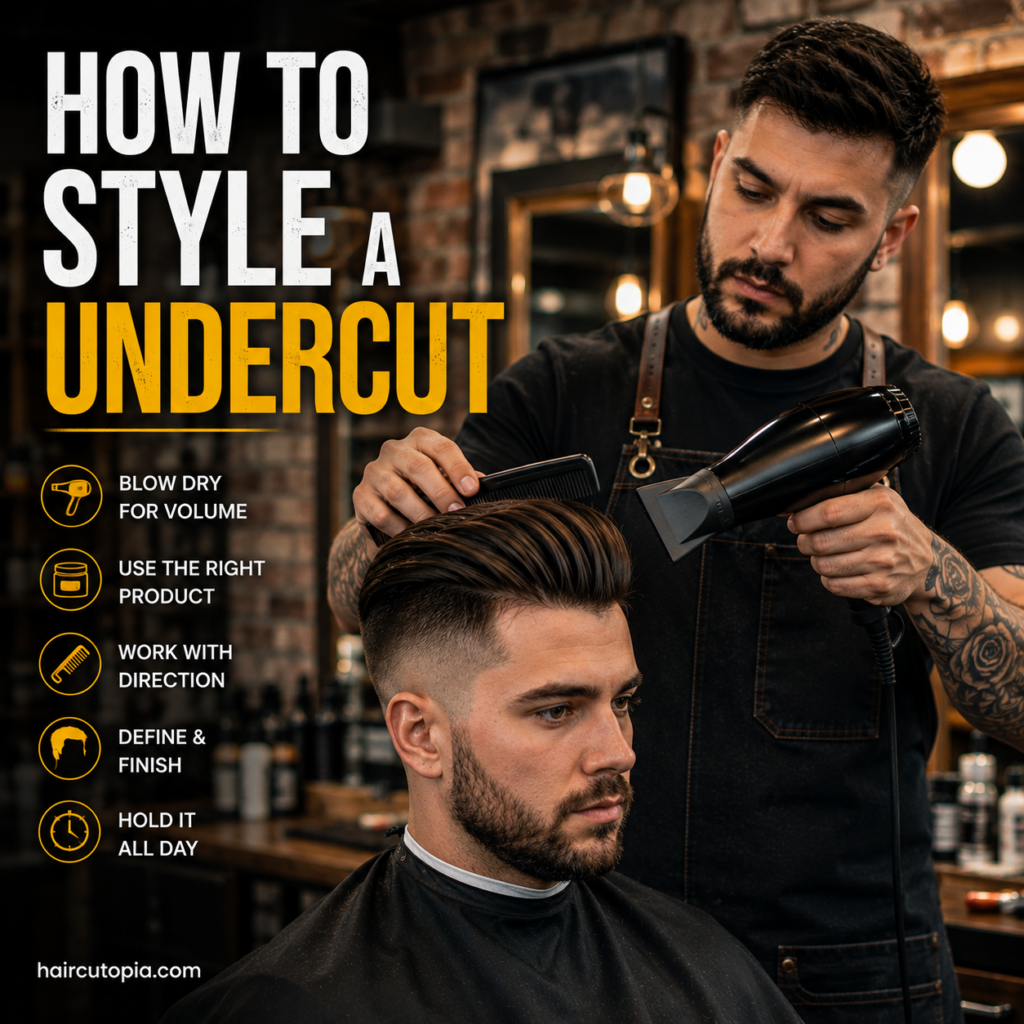
A lightweight pre-styler followed by blow-drying can create volume before you apply your final product.
That often produces a better result than trying to force completely dry, flat hair into position with a large amount of wax or pomade.
Learn to Blow-Dry the Top
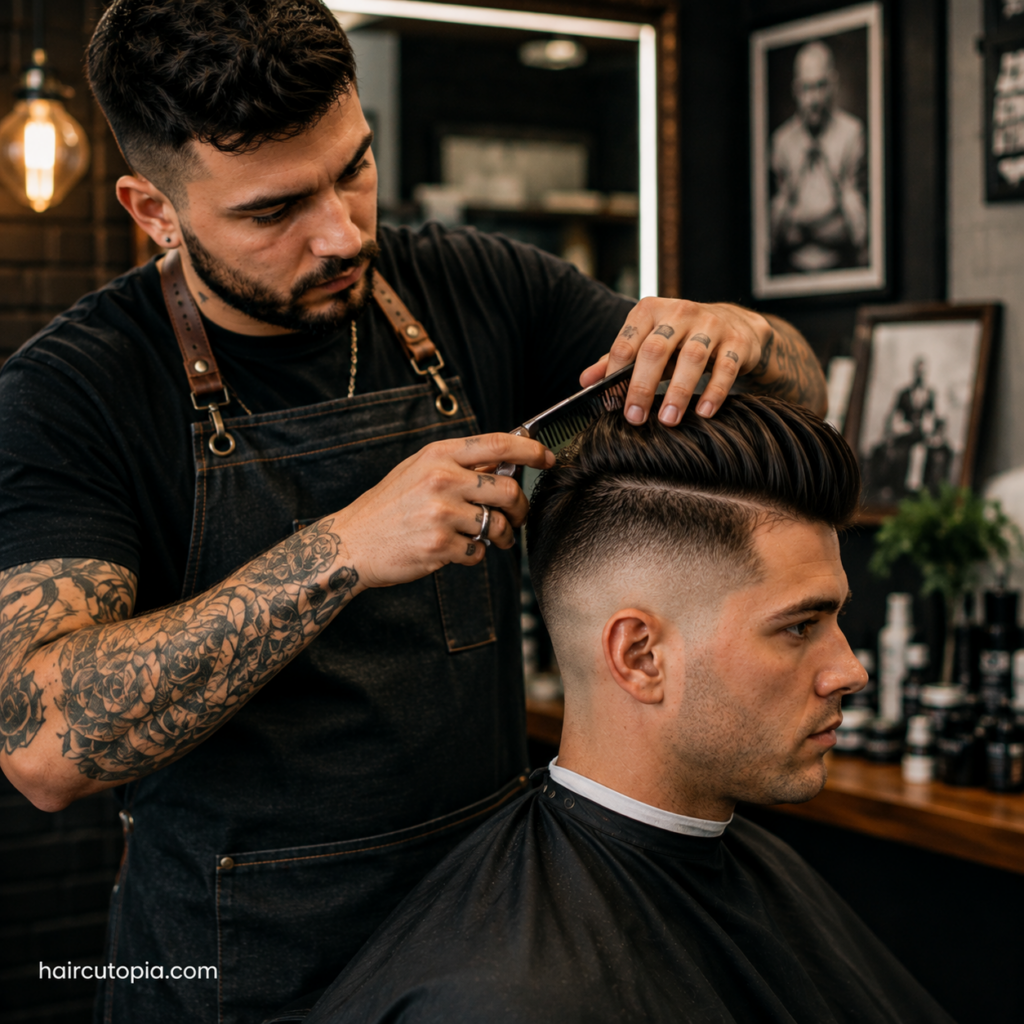
A blow dryer can make a significant difference when styling an undercut.
Instead of letting the longer hair dry randomly and trying to correct it afterward, guide it into the general shape you want while it’s drying.
For a slicked-back style, direct the hair backward.
For a quiff, direct the front upward and slightly back.
For a side-swept undercut, guide the hair toward the direction you normally wear it.
You don’t necessarily need maximum heat. Moderate heat and controlled airflow are often enough to shape the hair.
Avoid Using Too Much Product
One of the most common styling problems with an undercut is simply using too much product.
Heavy product can make the longer top look greasy, flat, or stiff.
Instead:
- Start with a small amount.
- Warm the product between your palms.
- Distribute it through your hair.
- Shape the style.
- Add more only where you actually need additional hold.
It’s much easier to add product than remove it without washing your hair again.
Keep Your Neckline Clean
The back of your haircut can look overgrown before you notice anything wrong from the front.
Hair growing below the original neckline can make an otherwise decent undercut look overdue for a haircut.
A barber can quickly clean this area during a maintenance appointment.
If you have someone helping you at home, minor neckline cleanup may also be possible. Trying to create your own neckline with mirrors and clippers is much harder than it looks, however.
One wrong movement can push the neckline too high or create an uneven shape.
Clean Up Around the Ears and Sideburns
Small details make a big difference between barber visits.
Hair growing over the ears or uneven sideburns can make the entire haircut look less polished even when the rest of the undercut is still in decent shape.
Your barber can clean these areas without substantially changing the haircut.
If you maintain your facial hair separately, pay attention to how your sideburns connect to your beard as well. Keeping that transition tidy can make the overall style look more deliberate.
Can You Maintain an Undercut at Home?
You can perform some undercut maintenance yourself, particularly if the sides are one consistent clipper length.
But there’s a difference between touching up a simple area and recreating the entire haircut.
At-home maintenance is easiest when:
- The sides use one clipper guard
- There isn’t a complicated fade
- The undercut has a clearly defined section
- You’re only cleaning obvious growth
- You already understand how your haircut is structured
Trying to maintain a skin fade or detailed transition yourself is considerably more difficult.
Be Careful With Clippers Near the Longer Top
This is one of the biggest risks of maintaining an undercut yourself.
The boundary between the long and short sections needs to remain consistent.
Taking the clippers slightly too high can remove hair from the longer top that may take months to grow back.
If you’re going to maintain the sides at home, separate the longer hair securely before turning on the clippers.
When in doubt, leave the difficult areas for your barber.
How to Maintain an Undercut While Growing the Top
Growing the top while keeping the sides short is one of the easiest ways to evolve an undercut.
The key is communicating that goal every time you get a haircut.
Ask your barber to maintain the sides while taking as little as necessary from the top.
During the growing process, occasional shaping may still be useful. Hair doesn’t always grow into the perfect style automatically.
Your barber can remove excess bulk or adjust the shape without sacrificing much overall length.
How to Grow Out an Undercut
Eventually, you may decide you don’t want an undercut anymore.
Growing one out can be awkward because the top and sides begin at dramatically different lengths.
There are two basic approaches.
Keep the Top Longer
You can allow the sides to grow while keeping most of your existing top length.
Your barber can gradually blend the two sections as the sides become long enough.
This preserves more hair but can involve an awkward transition period.
Shorten the Top
If you want to reach a more evenly blended haircut faster, you can shorten the top and allow the sides to catch up.
You’ll sacrifice some length, but the grow-out process can look more balanced.
Tell your barber you’re growing out an undercut rather than simply asking for a regular trim. They can begin shaping each haircut toward your eventual goal.
Protect Your Hair From Excessive Heat
If you regularly blow-dry the longer portion of your undercut, repeated high heat can leave the hair feeling dry or damaged.
You don’t need to stop blow-drying altogether.
Instead, avoid holding extremely hot airflow against one section for extended periods. Keep the dryer moving and use only as much heat as necessary to shape the hair.
If heat styling is part of your everyday routine, consider using an appropriate heat-protective styling product.
Pay Attention to Your Hairline and Growth Pattern
Every undercut grows out a little differently.
Cowlicks, crowns, hairlines, and changes in growth direction can become more noticeable as the hair gets longer.
Instead of fighting these areas every morning, ask your barber whether the haircut can be adjusted to work with them.
Sometimes leaving a particular section slightly longer—or taking a little more weight out of another—is enough to make styling considerably easier.
A Simple Undercut Maintenance Schedule
You don’t need to follow an exact calendar, but having a rough routine can help.
Every Day
Focus on basic styling and keeping the longer hair manageable.
Depending on your hairstyle, that might mean dampening the hair, blow-drying it into position, and applying a small amount of styling product.
As Needed
Wash and condition your hair based on your scalp, hair type, and product usage.
There’s no reason to wash it simply because the calendar says you should.
Every 1 to 2 Weeks
People with very short sides or skin fades may want a cleanup around this point.
Otherwise, check the neckline, ears, and sideburns for obvious growth.
Every 2 to 4 Weeks
This is a common window for refreshing the sides and back of an undercut.
Ask your barber to preserve the top if you’re maintaining or growing its length.
Every Few Haircuts
Evaluate the longer top.
It may need reshaping, damaged ends removed, or excess weight reduced even if you’re keeping it long.
Signs It’s Time to Visit Your Barber
You don’t have to wait for a specific number of weeks.
Your haircut will usually tell you when it needs attention.
Consider scheduling an appointment when:
- The sides begin sticking outward
- The undercut loses its clear shape
- Hair starts growing over your ears
- The neckline looks messy
- The top becomes unusually difficult to style
- Excess weight makes the hairstyle collapse
- Your fade or taper has largely disappeared
- You need much more product than usual to control the hair
If you’re spending significantly more time trying to make the haircut look right, reshaping it may solve the problem more effectively than changing your styling routine.
Common Undercut Maintenance Mistakes
Maintaining an undercut isn’t particularly complicated, but a few habits can make it harder than necessary.
Cutting the Sides Too High at Home
Following the wrong line with clippers can gradually eat into the longer section.
Once that hair is gone, the only real solution is waiting for it to grow back.
Waiting Until the Haircut Completely Loses Its Shape
You don’t need to keep an undercut permanently barber-fresh, but waiting too long can require more reshaping at your next appointment.
Overloading the Hair With Product
More product doesn’t compensate for an overgrown haircut.
If your usual styling routine suddenly stops working, the shape or weight of the hair may be the actual problem.
Removing Length From the Top at Every Appointment
If your goal is a long slick back, quiff, or similar style, repeatedly shortening the top can prevent you from ever reaching the length you want.
Tell your barber when you’re growing it.
Trying to Maintain a Complicated Fade Yourself
A simple one-length clipper cut is one thing. Maintaining multiple fade transitions on your own head is another.
Unless you’re confident with clippers, leave detailed blending to your barber.
What to Tell Your Barber During a Maintenance Cut
You don’t need to explain the entire haircut again if you’re returning to the same barber.
Tell them what’s working and what has changed since your previous visit.
For example:
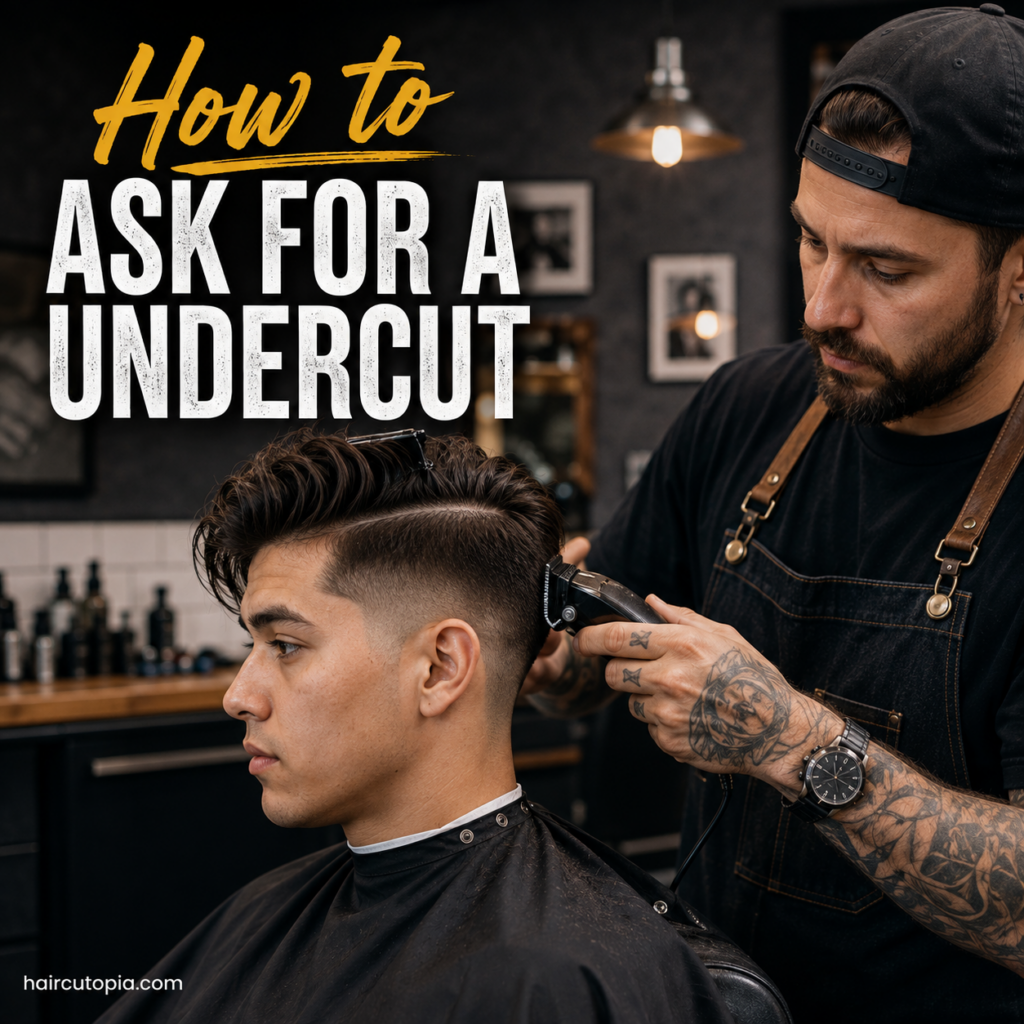
“I’m keeping the undercut. I’d like the sides taken back to a #2 and the neckline cleaned up, but keep the length on top. It’s getting a little heavy around the front, so I’d like that reshaped without taking much length off.”
If you’re seeing a new barber, bringing a photo of your undercut when it was freshly cut can be especially helpful.
Final Thoughts
The easiest way to maintain an undercut is to focus on its defining feature: the contrast between the longer top and shorter sides.
Keep the sides and neckline tidy, preserve the longer section when necessary, and have the top reshaped when it becomes too heavy or difficult to style. For many people, a barber visit every 2 to 4 weeks is enough, although very short undercuts may need more frequent cleanups.
At home, keep things simple. Use styling products that suit your hair, learn how to direct the longer section while blow-drying, and resist the temptation to fix every bit of growth with more product—or an ambitious session with the clippers.
A well-maintained undercut shouldn’t require a complicated routine. Once you find the right haircut schedule and styling method for your hair, keeping the shape becomes much easier.