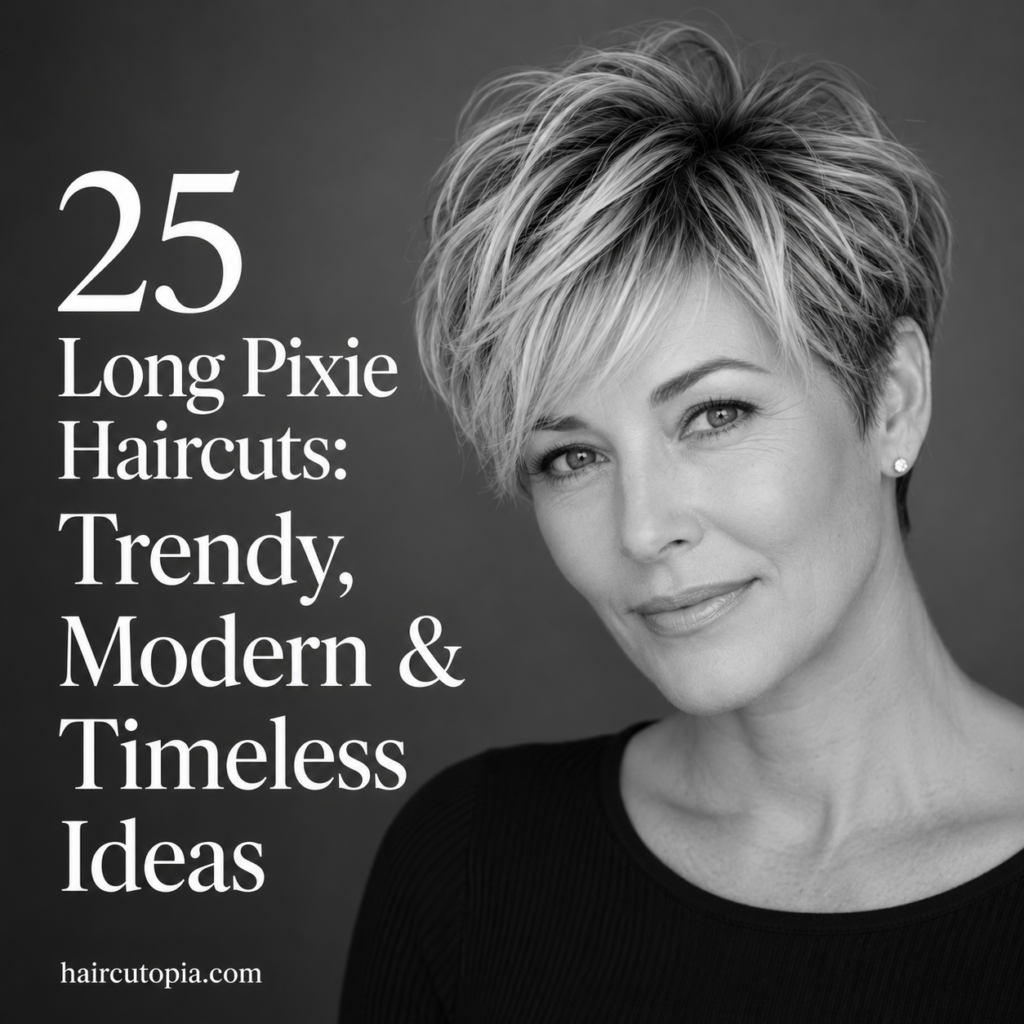
Long pixie haircuts are the sweet spot between a classic short pixie and a bob. You get the lighter feel and easy styling of short hair, but there’s still enough length to play with bangs, layers, texture, volume, and different parts.
That’s what makes the long pixie so versatile.
It can look polished and elegant, messy and playful, soft and feminine, or bold and modern. The same basic haircut can also feel completely different depending on your natural hair texture and how you style it.
Thinking about going shorter? Here are 25 long pixie haircut ideas ranging from trendy textured cuts to timeless layered styles.
Why Choose a Long Pixie Haircut?
A traditional pixie is often cut quite short around the sides, back, and crown. A long pixie keeps extra length through one or more of those areas, particularly the top and fringe.
The result is a more flexible short haircut.
Long pixies can offer:
- Faster washing and drying
- More styling options than a very short crop
- Enough length for side-swept or curtain bangs
- Natural volume through the crown
- Easy ways to show waves and curls
- A softer transition from longer hair
- Plenty of room for personal style
The haircut can also be adapted to fine, thick, straight, wavy, and curly hair.
The important part is choosing a version that works with your natural texture and everyday styling routine.
25 Best Long Pixie Haircuts to Try
From soft and classic to edgy and textured, these long pixie haircut ideas show just how many directions you can take the style.
1. Classic Layered Long Pixie
A classic layered long pixie is one of the most wearable versions of the haircut.
The sides and back are kept shorter while longer layers create movement through the crown and front.
This balanced shape works well if you want short hair without anything overly dramatic.
Style it smooth for a polished finish or add a little texture with your fingers for a more casual look.
2. Long Pixie With Side-Swept Bangs
Side-swept bangs add softness to a pixie haircut.
The fringe moves diagonally across the forehead and blends into the longer side layers.
This creates natural movement around the eyes and cheekbones.
Longer bangs can also be tucked behind the ear when you want your hair away from your face.
3. Textured Long Pixie
A textured long pixie focuses on visible separation between the layers.
Instead of creating one perfectly smooth shape, individual sections of hair are lightly defined.
The result feels relaxed and modern.
Use a small amount of matte styling paste or texture cream to bring out the layers.
4. Shaggy Long Pixie
The shaggy pixie has an intentionally undone appearance.
Relaxed layers create movement through the crown, sides, and fringe.
This style can be particularly flattering on naturally wavy hair.
Scrunch a lightweight texture cream into damp hair and allow the natural movement to form as it dries.
5. Long Pixie Bob
A pixie bob combines the shape of a pixie with the additional length of a short bob.
The back is shaped closer to the head while the front and sides remain longer.
This creates a fuller silhouette.
It’s also a good option if you want enough length to tuck your hair behind your ears.
6. Long Pixie With Wispy Bangs
Wispy bangs create light coverage across the forehead.
The fringe is divided into smaller sections rather than forming one heavy line.
This gives the haircut an airy appearance.
Wispy bangs blend naturally into layered pixies and are relatively easy to grow out.
7. Feathered Long Pixie
Feathered layers create soft movement throughout a pixie.
The ends flow gently into one another rather than forming blunt lines.
This style can create a light, elegant silhouette.
Use a small round brush while blow-drying if you want to emphasize the direction of the layers.
8. Wavy Long Pixie
Natural waves add instant texture to a long pixie.
Removing excess length may allow the wave pattern to become more noticeable.
The top should remain long enough for the waves to form naturally.
A lightweight curl cream or mousse can help define the texture.
9. Curly Long Pixie
A curly long pixie can create beautiful volume.
The haircut should follow the natural curl pattern instead of forcing the hair into a smooth shape.
Longer crown layers allow curls to form, while shorter sections near the neckline keep the haircut manageable.
Remember that curls may shrink considerably when dry.
10. Long Pixie With Curtain Bangs
Curtain bangs aren’t just for long hair.
A longer pixie can feature a soft fringe that separates near the center and frames both sides of the forehead.
The bangs blend into the side layers.
This works especially well with a softly layered pixie bob or shaggy pixie.
11. Asymmetrical Long Pixie
An asymmetrical pixie keeps one side longer than the other.
The longer section may sweep across the forehead or fall near the cheekbone.
This creates a modern silhouette.
The difference between the sides can be subtle or dramatic depending on your personal style.
12. Long Pixie With Tapered Sides
Tapered sides gradually become shorter around the ears and neckline.
The crown remains longer.
This contrast creates a clean, structured shape without requiring an extreme undercut.
Ask for a gradual taper if you prefer a softer finish.
13. Tousled Long Pixie
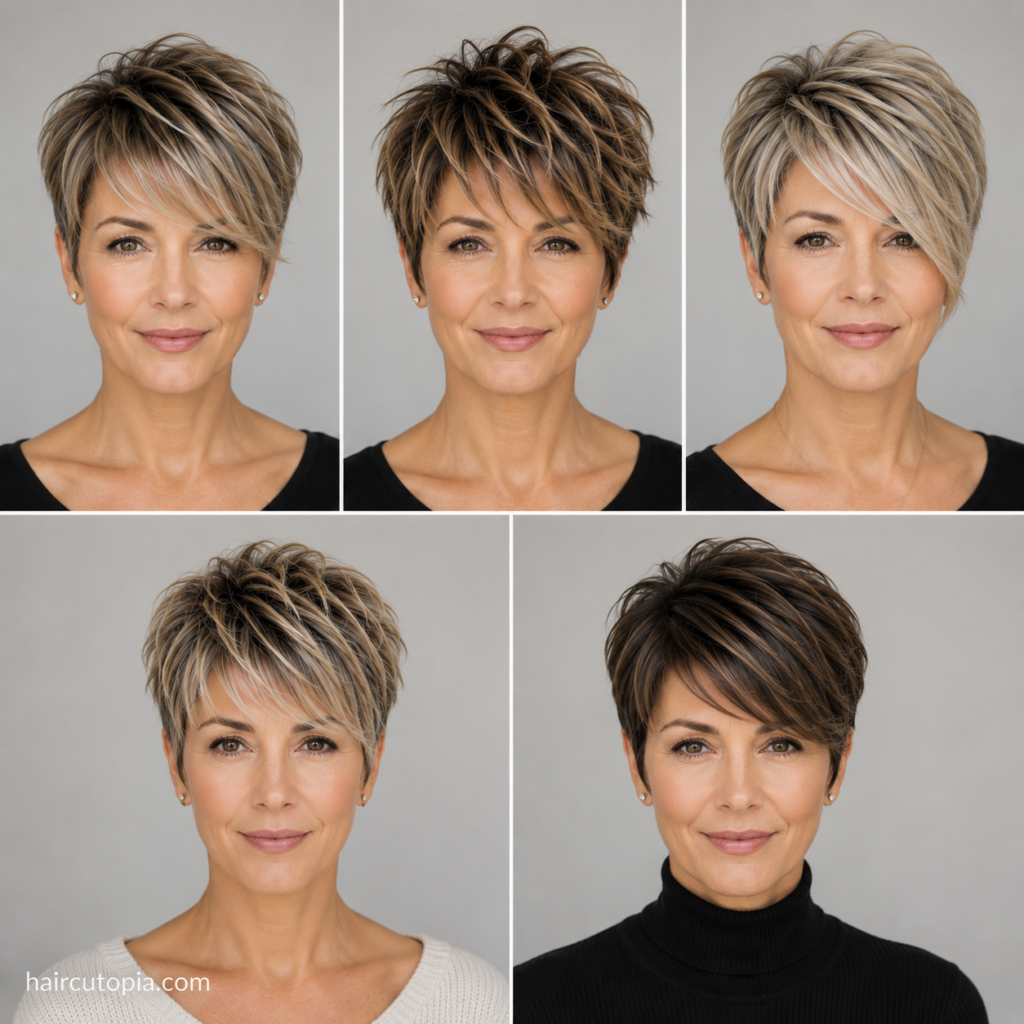
A tousled pixie has relaxed volume and intentionally imperfect texture.
The layers are styled in slightly different directions.
This creates a casual, effortless appearance.
Dry texture spray can help refresh the style on second-day hair.
14. Sleek Long Pixie
A sleek pixie creates a smooth and polished finish.
The hair is usually worn with a defined side or center part.
Longer front sections can be smoothed into place or tucked behind the ear.
Use a lightweight serum to control flyaways without making the hair look greasy.
15. Long Pixie With Long Bangs
Long bangs give a pixie plenty of styling flexibility.
The fringe may reach the eyebrows, cheekbones, or even the jawline.
You can sweep it across the forehead, create a loose center part, or tuck it behind one ear.
This is a great option if you’re transitioning from longer hair.
16. Messy Long Pixie
The messy pixie embraces controlled imperfection.
Individual layers are separated and styled in different directions.
The goal isn’t to make the hair look unbrushed.
Instead, the texture creates a relaxed, playful finish.
Use a small amount of matte paste on dry hair.
17. Long Pixie With Crown Volume
Crown volume can completely change the silhouette of a pixie.
Strategic layers help shorter sections support the longer hair above them.
This can create a fuller appearance without heavy teasing.
When blow-drying, lift the roots at the crown and allow the hair to cool before reshaping it.
18. Long Pixie for Fine Hair
Fine hair can benefit from the lighter shape of a pixie.
Removing excess length may reduce the weight pulling the hair downward.
Light crown layers and textured ends can create movement.
Avoid excessive thinning, which may make fine hair appear less dense.
19. Long Pixie for Thick Hair
Thick hair can create natural volume in a long pixie.
Internal layering helps control excess bulk.
The goal is to remove weight without making the ends look thin.
A tapered neckline can also help create a cleaner shape.
20. Long Pixie With an Undercut
An undercut creates contrast beneath the longer pixie layers.
The sides, back, or both may be clipped shorter.
Depending on the haircut, the undercut can be visible or partially hidden beneath the longer hair.
This style requires regular trimming if you want the short section to stay defined.
21. Side-Parted Long Pixie
A deep side part can instantly change the shape of a pixie.
More hair is directed across the crown, creating natural volume.
The longer side can sweep across the forehead.
This is a simple styling adjustment that can make a layered pixie feel completely different.
22. Choppy Long Pixie
A choppy pixie uses layers of slightly different lengths.
The ends have visible separation, creating a piecey texture.
This gives the haircut a bold, modern appearance.
A matte styling paste can help define individual sections.
23. Long Pixie With Soft Face-Framing Layers
Face-framing layers create movement around the forehead, temples, and cheekbones.
The sections are kept longer than the back of the haircut.
This creates a softer transition around the face.
It’s a good option if you’re nervous about cutting the front too short.
24. Voluminous Long Pixie
A voluminous pixie focuses on fullness through the crown and top.
Layering and root lift create a larger silhouette.
This style can be worn smooth or textured.
A lightweight volumizing mousse may help support the shape without making the hair stiff.
25. Grown-Out Long Pixie
The grown-out pixie has a relaxed, slightly longer appearance.
The sides and front have more length than a freshly cut traditional pixie.
Instead of fighting the extra growth, the haircut is shaped to embrace it.
This style can naturally transition into a pixie bob.
How to Choose the Right Long Pixie Haircut
With 25 different styles to consider, narrowing down your options may feel difficult.
Start with your natural hair.
Think about how it behaves when you don’t spend much time styling it.
Ask yourself:
- Is my hair naturally straight, wavy, or curly?
- Does my crown tend to fall flat?
- Do my sides become bulky?
- Do I like hair touching my forehead?
- Do I frequently tuck my hair behind my ears?
- How much time do I want to spend styling?
- How often am I willing to get trims?
Your answers can help guide the haircut.
For example, a shaggy pixie may work beautifully with natural waves. A sleek pixie may be easier for naturally straight hair.
Long Pixie Haircuts for Different Face Shapes
Face shape doesn’t have to dictate your haircut.
However, adjusting the crown, fringe, and side volume can help create the silhouette you prefer.
Round Faces
Crown volume can visually create height.
Side-swept bangs and asymmetrical sections add diagonal movement.
Keeping excessive width away from the sides may create a more elongated appearance.
Oval Faces
Oval faces can often wear many different pixie shapes.
Textured, feathered, sleek, and shaggy styles can all work.
Focus on hair texture and personal style.
Square Faces
Soft layers can create movement around stronger facial angles.
Wispy bangs and feathered sections may soften the overall shape.
A tousled finish can also prevent the haircut from appearing overly structured.
Heart-Shaped Faces
Side-swept or curtain bangs can help balance a wider forehead.
Keeping some softness around the sides adds movement near the lower portion of the face.
A pixie bob may also create gentle fullness.
Long Faces
Side volume can visually add width.
A fuller fringe or long side-swept bangs may help balance facial length.
Avoid excessive crown height if you prefer a more balanced silhouette.
Long Pixie Haircuts for Different Hair Textures
Your natural texture should play a major role in choosing a pixie.
Straight Hair
Straight hair clearly shows the shape of a pixie.
Layering and textured ends can create movement.
Side parts and longer bangs can also add dimension.
Wavy Hair
Wavy hair naturally creates texture.
A shaggy or tousled pixie can work especially well.
Use lightweight products that won’t pull the waves down.
Curly Hair
Curly pixies need enough length for curls to form.
A stylist experienced with curly hair can shape the haircut around shrinkage and curl direction.
Moisture is also important for maintaining definition.
Fine Hair
Fine hair often benefits from a lighter silhouette.
Strategic crown layers can create movement and volume.
Avoid heavy products that flatten the roots.
Thick Hair
Thick hair may require internal layering.
Removing excess weight can help the pixie sit closer to the head.
The goal is to maintain fullness while controlling bulk.
How to Style a Long Pixie Haircut
A long pixie can usually be styled in a few minutes.
Try this simple routine:
- Start with damp, towel-dried hair.
- Apply a small amount of styling product.
- Create your preferred part.
- Blow-dry the crown while lifting the roots.
- Shape the fringe with your fingers or a brush.
- Define a few individual sections with styling cream.
Focus on the overall shape.
You don’t need to style every strand individually.
Best Styling Products for Long Pixie Haircuts
The right product depends on the finish you want.
Useful options include:
- Volumizing mousse for root lift
- Texture cream for layered pixies
- Matte paste for piecey definition
- Curl cream for waves and curls
- Lightweight serum for sleek styles
- Dry texture spray for tousled volume
Start with a small amount.
It’s much easier to add more product than remove too much from short hair.
How Often Should You Trim a Long Pixie?
Most long pixies benefit from a trim every six to eight weeks.
Structured pixies with tapered sides may need more frequent maintenance.
Shaggy and grown-out styles can usually go longer between appointments.
If you’re intentionally growing your pixie into a bob, your stylist may focus on trimming the neckline while allowing the sides and front to gain length.
What to Ask Your Hairstylist
Bring reference photos to your appointment.
Try to choose examples featuring hair similar to your own texture and density.
Discuss:
- Your natural texture
- Your usual styling routine
- Your preferred fringe length
- How much crown volume you want
- Areas where your hair becomes bulky
- Cowlicks or difficult growth patterns
- Whether you tuck your hair behind your ears
- How frequently you want trims
Also explain what you don’t want.
If you don’t want clipped sides, a short neckline, or heavy bangs, mention those preferences before the haircut begins.
Are Long Pixie Haircuts High Maintenance?
Long pixies are often easy to style daily.
Washing and drying usually take less time than longer hair.
The main maintenance comes from preserving the haircut’s shape.
Short hair shows growth more quickly.
However, longer pixies are usually more forgiving than closely cropped styles.
A little extra length can simply make the haircut look softer and more relaxed.
Growing Out a Long Pixie
A long pixie can transition naturally into a pixie bob and eventually a short bob.
Regular shaping helps the process.
During the grow-out stage:
- Allow the front and sides to gain length
- Keep the neckline lightly shaped
- Avoid repeatedly cutting the crown too short
- Experiment with different parts
- Use clips and headbands when needed
- Add texture during uneven stages
The goal is to reshape the haircut while allowing the overall length to increase.
Final Thoughts on Long Pixie Haircuts
Long pixie haircuts offer an impressive amount of variety for a short hairstyle.
You can choose a soft layered pixie, a bold asymmetrical cut, a textured shaggy style, or a polished pixie bob.
The extra length gives you options.
Wear your hair sleek one day and tousled the next. Sweep your bangs to the side, tuck them behind your ear, or let your natural waves create texture.
The best long pixie is one that works with your natural hair and fits your daily routine.
Use these 25 long pixie haircut ideas as inspiration, then work with your stylist to adjust the length, layers, and fringe to create a haircut that feels like your own.

Related Posts
 A-Line Bob Haircuts for Women Over 50: 27 Flattering Styles for a Fresh, Modern Look
 Wolf Cut Haircuts: The Complete Guide to Layered, Textured Wolf Cut Styles
 Bob Haircuts: The Complete Guide to Styles, Lengths, and Choosing the Right Bob
 Bob Haircuts for Frizzy Hair: 25 Stylish Cuts That Help Control Frizz and Enhance Natural Texture