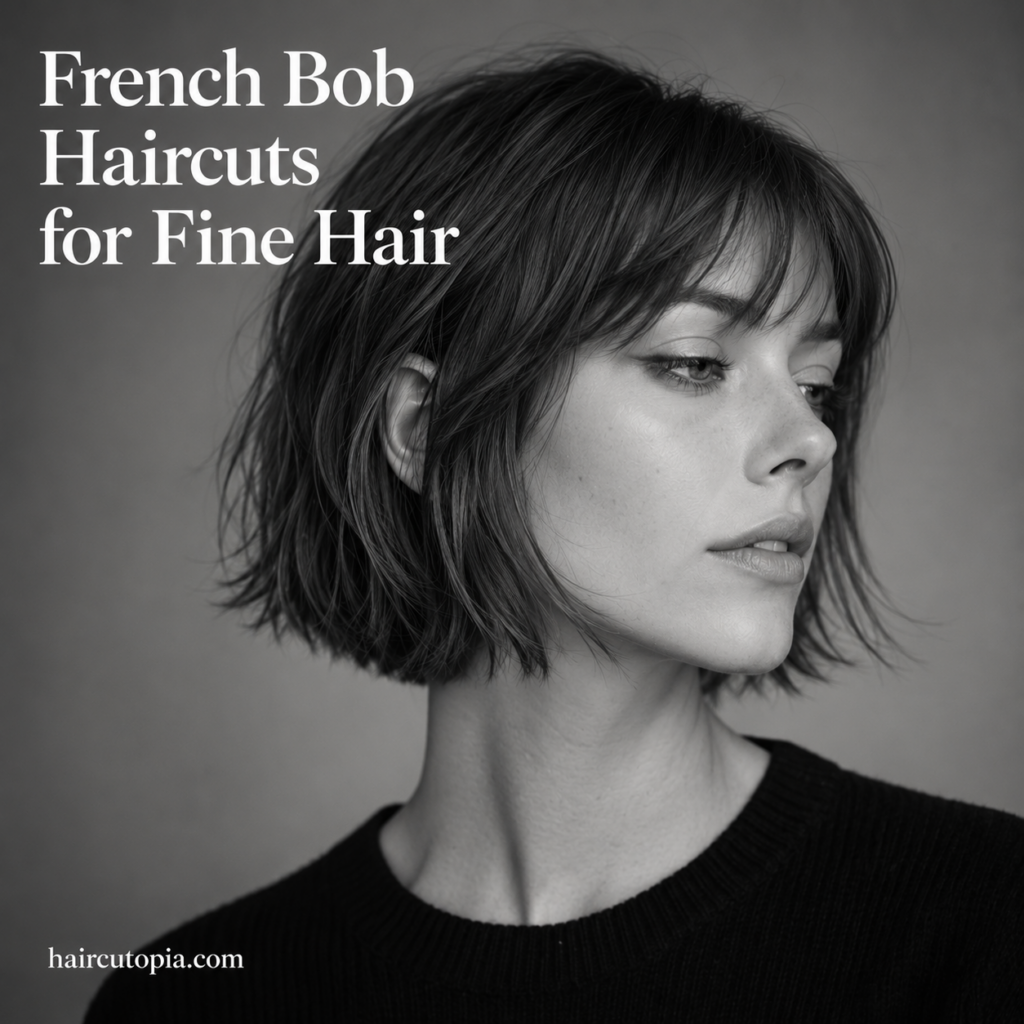
Fine hair and short haircuts can be a great combination. With less length weighing the strands down, fine hair often feels lighter, moves more easily, and can hold a stronger shape.
That’s where the French bob comes in.
Usually cut somewhere around the jaw or chin, the French bob has a compact silhouette that works beautifully with finer strands. A clean perimeter can make the ends look more substantial, while bangs, soft waves, and carefully placed texture add personality without sacrificing too much density.
The most important thing is restraint. Fine hair doesn’t always benefit from lots of layers, aggressive thinning, or heavy styling products. Often, a simpler cut creates the strongest result.
If you’re considering going shorter, these French bob haircuts for fine hair show just how versatile the style can be.
Why a French Bob Works for Fine Hair
Fine hair refers to the diameter of the individual strands. You can have fine hair and still have quite a lot of it, or you can have fine hair with lower overall density.
That distinction matters when choosing a haircut.
A French bob can work well because the shorter length reduces some of the weight pulling on the hair. Keeping the perimeter relatively strong also helps create a more defined outline.
Depending on your hair, a French bob can offer:
- A fuller-looking perimeter
- More natural movement
- Easier root lift
- Less weight through the lengths
- A stronger overall shape
- Plenty of styling options without excessive layering
The goal isn’t necessarily to make fine hair look dramatically thicker. A well-designed bob simply helps your hair make the most of its natural texture and density.
What Length Is Best for Fine Hair?
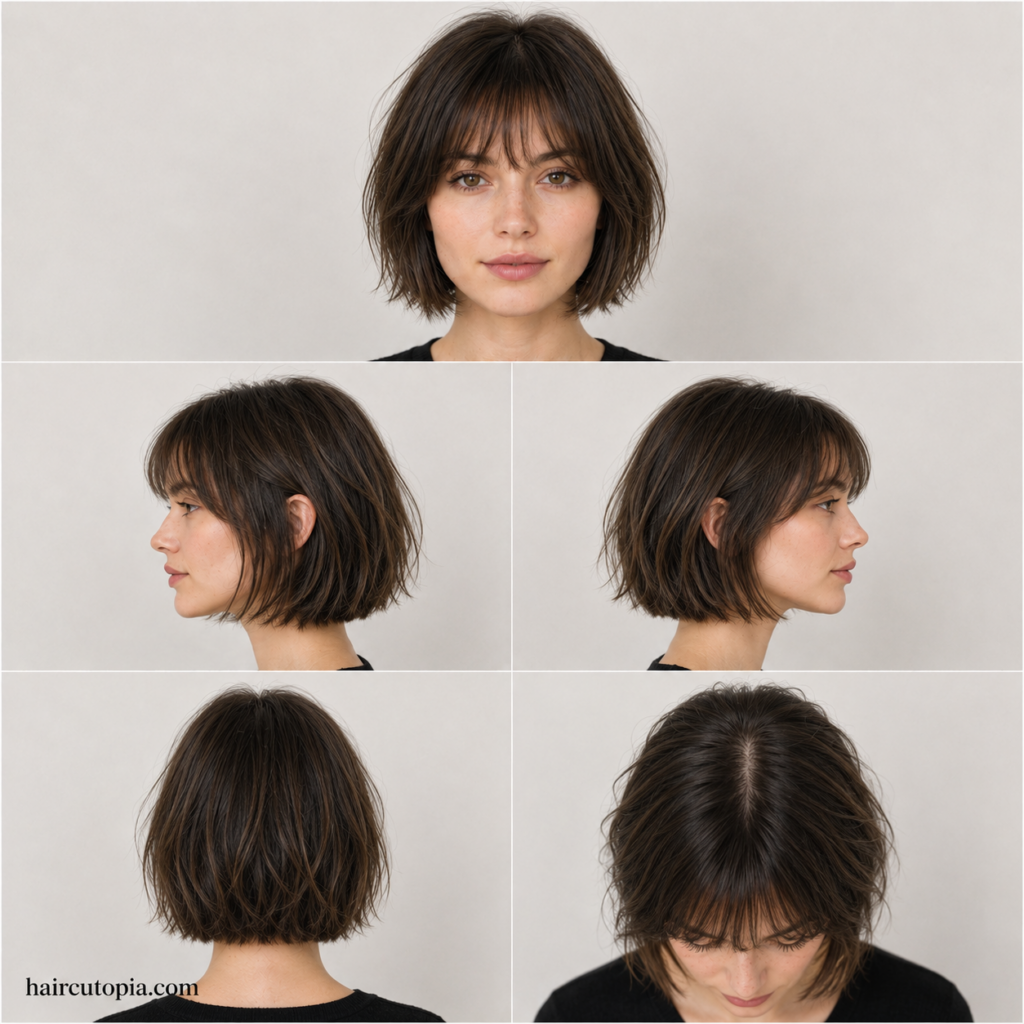
Jaw to chin length is one of the most versatile ranges for a French bob.
At this length, the ends remain close enough together to create a strong silhouette. There’s also enough hair to experiment with soft waves, tucked styles, and different parts.
Going slightly shorter can create even more definition, while a chin-length version gives you a little extra styling flexibility.
If your ends tend to become wispy as your hair grows, cutting above those areas can immediately make the overall shape look healthier and more substantial.
1. Classic French Bob for Fine Hair
The classic French bob keeps things beautifully simple.
Cut around the jaw with a defined perimeter, it creates a compact shape that can make fine strands look more intentional.
You don’t need dramatic layers or elaborate styling.
A little natural movement through the ends keeps the haircut from feeling too rigid, while a soft fringe can complete the traditional French-inspired look.
2. Blunt French Bob
A blunt bob is one of the first styles worth considering if you want to preserve visible density.
Instead of cutting lots of different lengths into the hair, the ends are kept relatively even.
That strong bottom line can make fine strands appear more substantial.
The effect is especially noticeable on straight or slightly wavy hair, where the perimeter remains clearly visible.
3. French Bob With Wispy Bangs
Wispy bangs provide the character of a fringe without requiring a large section of hair.
They’re intentionally light and slightly separated, which pairs naturally with finer strands.
The softness of the bangs also contrasts nicely with a stronger jaw-length perimeter.
If you’re concerned about taking too much hair away from the sides of your bob, ask your stylist to keep the fringe section shallow.
4. Chin-Length French Bob
A chin-length French bob is a versatile option if you don’t want to go extremely short.
That little bit of additional length gives you more room for waves, tucks, and different styling techniques while still maintaining the compact proportions of a French bob.
Keep the ends fairly solid if your goal is to emphasize fullness.
5. French Bob With Soft Waves
Adding gentle bends can give fine hair more dimension.
You don’t need to curl every strand.
In fact, a few loose waves usually look more modern and natural than a head full of identical curls.
Leave some ends relatively straight and alternate the direction of the bends. The slight irregularity creates texture while maintaining that relaxed French bob feel.
6. French Bob With Curtain Bangs
Curtain bangs open around the forehead and gradually blend into the sides.
They can be a flattering choice for fine hair because they don’t need to form a dense, heavy fringe.
Keep them soft and relatively airy.
The longer outside pieces can merge into the bob around the cheekbones, creating a smooth transition between the fringe and the main haircut.
7. Sleek French Bob
Fine hair doesn’t always need to be made as voluminous as possible.
Sometimes its natural ability to sit smoothly is exactly what makes a haircut work.
A sleek French bob embraces that quality.
A clean jaw-length perimeter and smooth finish create a polished silhouette. Rather than adding lots of texture, the style relies on precision and shine.
8. Side-Parted French Bob
Moving your part is one of the easiest ways to create natural lift.
A side part shifts more hair in one direction, which can raise the roots slightly and make the overall silhouette feel fuller.
You can keep the rest of the bob straight or add a few soft bends.
For extra movement, tuck the smaller side behind your ear.
9. French Bob With Full Bangs
Full bangs can work with fine hair, particularly if you have a good amount of overall density.
The important question is how much hair your stylist needs to bring forward to create them.
If the bang section is too deep, you may lose fullness through the sides and crown.
A softer full fringe around eyebrow length can give you the look without becoming overly heavy.
10. Textured French Bob for Fine Hair
Texture and heavy layering aren’t the same thing.
A stylist can introduce subtle movement through the ends without removing large amounts of hair.
This gives the bob a slightly undone appearance while maintaining its overall density.
It’s a good option if a perfectly blunt haircut feels too sharp for your style.
11. French Bob Without Bangs
Skipping bangs keeps the haircut clean and straightforward.
It also preserves all the hair around the front and sides, which can be useful if your density is lower around the hairline.
Wear the bob with a center part for symmetry or move the part slightly off-center for a softer finish.
This is also one of the easier French bob variations to grow out.
12. Rounded French Bob
A subtle rounded shape can make fine hair appear to have more body.
The ends gently follow the curve of the head rather than falling completely flat.
You can create the effect through the haircut itself or with a little blow-drying.
Keep the curve soft. The goal is natural body, not an exaggerated tucked-under shape.
13. French Bob With Bottleneck Bangs
Bottleneck bangs combine a shorter center with gradually longer sides.
That shape naturally frames the eyes and cheekbones while blending into a jaw- or chin-length bob.
Because the fringe doesn’t need to be uniformly thick, it can adapt nicely to finer hair.
Ask for a light version if preserving density is important to you.
14. Center-Parted French Bob
A center part creates a simple, balanced silhouette.
Paired with a blunt or minimally layered bob, it can look especially modern.
If your roots naturally lie flat along the part, try drying your hair in another direction first.
Once the hair has cooled slightly, return it to the center. The roots often retain a little extra lift.
15. French Bob With Micro Bangs
Micro bangs give the French bob a more distinctive edge.
Because they sit well above the eyebrows, even a relatively light fringe makes an impact.
This can be useful with fine hair because you don’t necessarily need to dedicate a large amount of density to the bangs.
Pair them with a clean perimeter for a graphic, modern finish.
16. Tousled French Bob
A little imperfection can be flattering on fine hair.
Instead of smoothing every strand into place, allow sections to separate and move naturally.
A tousled French bob creates visual texture without needing dramatic volume.
Use a lightweight texture product sparingly, concentrating on the mid-lengths and ends rather than coating the roots.
17. French Bob With Minimal Layers
Fine hair often responds best to conservative layering.
A few carefully placed layers can create movement, but too many may leave the perimeter looking sparse.
Ask your stylist to preserve the bottom line while adding only the movement your hair actually needs.
This approach works particularly well when you want a softer bob without losing the appearance of density.
18. French Bob With Face-Framing Pieces
A few shorter sections around the face can change the entire personality of a bob.
They might begin around the cheekbones and gradually connect with the jaw-length perimeter.
Face-framing pieces are especially useful when you’re growing out bangs or want something softer around the front without committing to a full fringe.
Keep them subtle to preserve density.
19. French Bob With Piecey Bangs
Piecey bangs naturally separate into small sections rather than forming a solid block across the forehead.
That makes them well suited to fine strands.
The separation looks intentional and creates a relaxed finish that complements a slightly tousled bob.
Use very little product on the fringe. Fine bangs can quickly become weighed down if they’re coated with heavy styling creams.
20. Ear-Tucked French Bob
A French bob can look completely different with one side tucked behind the ear.
This simple styling trick opens the face and creates a little asymmetry.
It also works whether your hair is sleek, wavy, or naturally textured.
For an evening look, you can tuck both sides and let the strong perimeter become the focus.
21. French Bob With Root Lift
You don’t need huge volume to make fine hair feel more dimensional.
A small amount of lift at the roots can be enough.
When blow-drying, direct the roots upward rather than flattening them against the scalp.
You can also dry sections opposite the direction they naturally fall and move them back into position once dry.
The result is subtle body rather than obvious teasing.
22. Softly Flipped French Bob
A few outward-turning ends can bring movement to a simple bob.
The flip doesn’t need to happen around the entire perimeter.
Try turning out selected pieces near the front or sides while leaving the rest of the hair more natural.
This creates a playful finish without requiring additional layers.
23. Air-Dried French Bob
If your fine hair has natural movement, you may not need to heat-style your French bob every day.
A haircut designed around your air-dried texture can be surprisingly low maintenance.
Use a small amount of lightweight leave-in or styling product on damp hair.
Then arrange your part, gently encourage any natural waves, and leave the hair alone while it dries.
Touching it constantly can disrupt the texture and encourage frizz.
24. French Bob With Soft Fringe
A soft fringe sits somewhere between full bangs and barely-there wispy bangs.
It provides enough coverage to frame the eyes without becoming the dominant feature of the haircut.
This can be a flattering compromise if you want bangs but aren’t sure how much density your hair can comfortably spare.
The fringe can also be swept slightly to the side as it grows.
25. Low-Maintenance French Bob
A French bob doesn’t have to require a complicated morning routine.
For something easy to live with, choose a length and shape that cooperate with your natural texture.
A strong perimeter, minimal layering, and optional soft fringe are often enough.
If your hair naturally dries fairly straight, embrace a clean finish. If it bends or waves, let those variations become part of the look.
The easier the haircut works with your hair, the less you’ll need to force it into place.
Fine Hair vs. Thin Hair: What’s the Difference?
The terms are often used interchangeably, but they describe different characteristics.
Fine hair refers to the diameter of individual strands.
Thin hair generally refers to having fewer strands or lower overall density.
That means someone can have fine hair but plenty of it.
You might also have thicker individual strands but relatively low density.
Why does this matter for a French bob?
Because the amount of layering, fringe, and texturizing your hair can support depends on both strand thickness and overall density.
If your hair is fine but dense, you may have more flexibility with layers and bangs. If it’s both fine and low-density, preserving the perimeter becomes more important.
Should Fine Hair Have Layers?
It depends.
Layers can add movement and prevent a bob from looking overly rigid, particularly if your hair has a natural wave.
But aggressive layering can remove the density that makes the ends look full.
For many people with fine hair, the sweet spot is subtle layering rather than obvious graduation throughout the entire haircut.
You might consider:
- Light face-framing pieces
- Minimal internal movement
- Softening around the ends
- A mostly blunt perimeter
Tell your stylist that preserving density is important before they begin cutting.
Blunt or Layered French Bob for Fine Hair?
A blunt French bob is usually the stronger choice when maximum visible fullness is the priority.
Keeping the ends together creates a clearly defined bottom edge.
That doesn’t mean every strand has to be precisely the same length.
A stylist can make small adjustments internally while preserving the visual strength of the perimeter.
A lightly layered bob may work better if your fine hair is wavy, tends to form an awkward shape, or needs more movement.
The best option depends on how your hair behaves naturally.
Best Bangs for a French Bob With Fine Hair
Bangs and French bobs are a natural pairing, but fine hair benefits from choosing the fringe carefully.
Some of the most adaptable options include:
- Wispy bangs
- Soft fringe
- Curtain bangs
- Bottleneck bangs
- Piecey bangs
- Micro bangs
Full bangs can also work if you have enough density.
If you’re unsure, begin with a lighter fringe. It’s much easier to add more hair to the bang section later than to immediately replace density that has already been cut away from the rest of your bob.
How to Make Fine Hair Look Fuller in a French Bob
A few small styling changes can make a noticeable difference.
Start With Lightweight Products
Fine strands can lose movement quickly when overloaded.
Use lightweight mousse, root spray, or texture products and begin with a small amount.
You can always add more.
Create Lift While Drying
Don’t automatically direct all your hair downward.
Lift sections away from the scalp as you dry them, particularly around the crown.
Even a small amount of root lift can change the silhouette.
Add Strategic Waves
Instead of curling everything, add bends to selected sections.
This creates dimension without turning your bob into a completely different hairstyle.
Keep Heavy Oils Away From the Roots
Hair oils can be useful for smoothing ends, but fine hair usually needs very little.
Apply them sparingly and concentrate on dry areas rather than the scalp.
Change Your Part
If your hair has been sitting in exactly the same part for years, it may naturally fall flat there.
Moving the part slightly can create immediate lift.
It’s one of the easiest styling tricks you can try.
Styling Products for a Fine-Hair French Bob
More product isn’t necessarily better.
A simple routine may include:
- Lightweight volumizing mousse
- Root-lifting spray
- Heat protectant
- Fine mist hairspray
- Lightweight texture spray
- A tiny amount of smoothing serum for the ends
You probably don’t need all of these at once.
Choose products based on what you’re trying to accomplish that day.
If you’re air-drying, a lightweight styling foam may be enough. For a sleek finish, heat protectant and a tiny amount of smoothing product could be all you need.
How to Style a French Bob for Fine Hair
Start with damp hair.
Apply a small amount of your preferred lightweight styling product, concentrating on areas where you want lift or texture.
Then:
- Establish your part.
- Lift the roots while blow-drying.
- Direct the ends into your preferred shape.
- Add a few loose bends if you want more movement.
- Allow the hair to cool before breaking up the style.
- Finish lightly rather than coating the hair with product.
If you already have natural texture, you can simplify the routine even further and let your bob air-dry.
How Often Should a French Bob Be Trimmed?
Short bobs rely heavily on their shape, so growth becomes noticeable relatively quickly.
Around six to eight weeks is a useful general range for maintaining a defined French bob.
You may prefer more frequent appointments if your haircut is very short or precise.
A softer chin-length bob can usually grow out more gracefully.
Bangs may need separate trims between full haircut appointments.
What to Ask Your Stylist
Reference photos are helpful, but explain what you like about them.
Maybe it’s the strong perimeter, the light bangs, or the amount of volume rather than the exact haircut.
For fine hair, consider asking:
- Which length will give my ends the strongest appearance?
- How much layering does my hair actually need?
- Should we keep the perimeter blunt?
- Will bangs reduce too much density elsewhere?
- How will the cut look air-dried?
- What is the easiest way to create root lift?
- How will this shape grow out?
These details help your stylist adapt the inspiration to your actual hair instead of simply recreating a photograph.
Is a French Bob High Maintenance on Fine Hair?
It depends on the version you choose.
A precise blunt bob with structured bangs will require more regular trimming.
A softer bob designed around your natural texture can be considerably easier.
Fine hair can also be quick to style because there’s less weight and density to dry.
If low maintenance matters, prioritize a haircut that looks good with minimal manipulation rather than one that depends on daily curling or straightening.
Final Thoughts on French Bob Haircuts for Fine Hair
Fine hair doesn’t need layers everywhere or dramatic volume to look great in a short haircut.
Often, the strongest approach is simpler.
A French bob concentrates the hair into a compact silhouette, while a clean perimeter helps the ends look defined. From there, you can personalize the shape with wispy bangs, subtle waves, face-framing pieces, or a different part.
If fullness is your priority, start with a blunt or minimally layered shape. If movement matters more, introduce soft texture without removing too much weight.
Most importantly, choose a version that suits both your strand thickness and overall density.
A good French bob should make your fine hair easier to work with—not give you another complicated styling routine to deal with every morning.
Related Posts
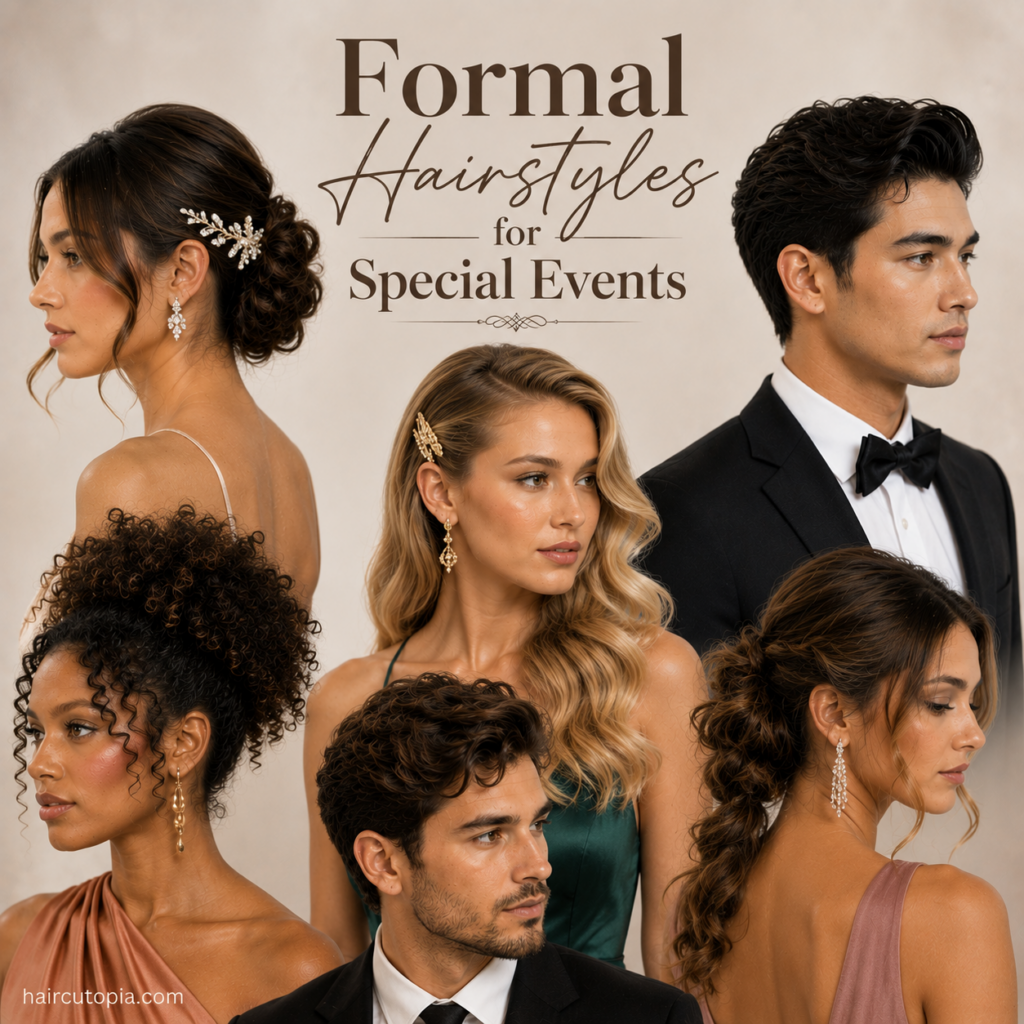 Formal Hairstyles for Special Events: 25 Elegant Ideas for Every Occasion
 Long Formal Hairstyles: 25 Elegant Ideas for Special Occasions
 Haircuts for Women with Thin Hair: 25 Flattering Styles That Add Volume and Confidence
 Short Haircuts for Thin Hair: 25 Flattering Styles That Add Volume and Confidence