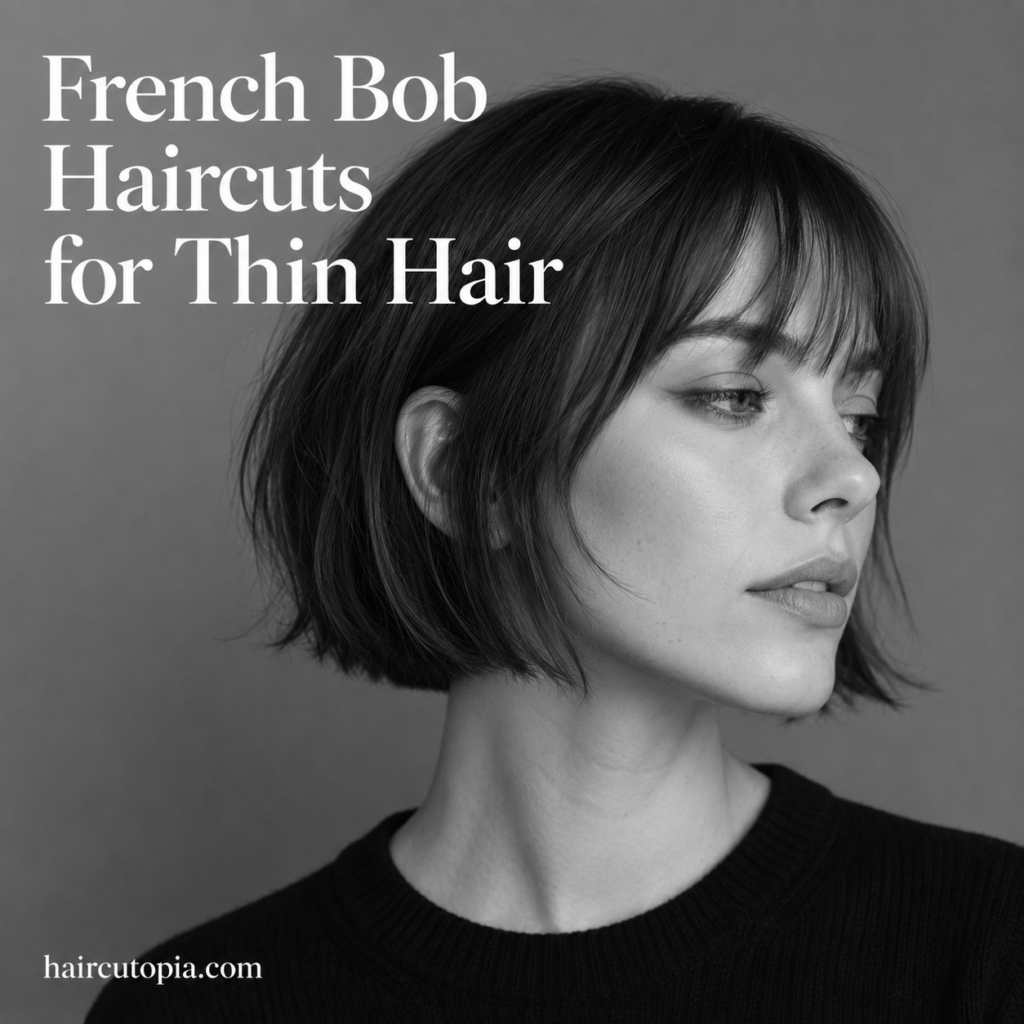
Short hair can be surprisingly flattering when your hair is on the thinner side, especially when the cut is designed to make the most of the density you already have. The French bob is a perfect example.
Typically sitting somewhere between the cheekbones and chin, a French bob creates a compact shape that can make thin hair appear fuller through the ends. Add a blunt perimeter, soft fringe, or a little natural texture, and the result can feel light, modern, and effortlessly put together.
The trick is choosing details that support fullness rather than removing too much weight.
If you’re thinking about going shorter, these French bob haircuts for thin hair offer plenty of inspiration, from classic jaw-length cuts to textured, wavy, and bang-friendly variations.
Why a French Bob Can Work Well for Thin Hair
Long hair can sometimes make thin strands look even finer, particularly when the ends become sparse. Taking the length shorter removes those thinner ends and concentrates the hair into a more defined shape.
That’s one reason bobs are such a popular option for finer hair.
A French bob can be especially effective because it usually features:
- A short, compact silhouette
- A relatively strong perimeter
- Minimal or carefully placed layering
- Natural movement rather than excessive volume
- Bangs or face-framing details that add visual interest
The goal isn’t to make thin hair look enormous. It’s to create a balanced shape where the ends appear healthy and substantial.
What Length Is Best for a French Bob on Thin Hair?
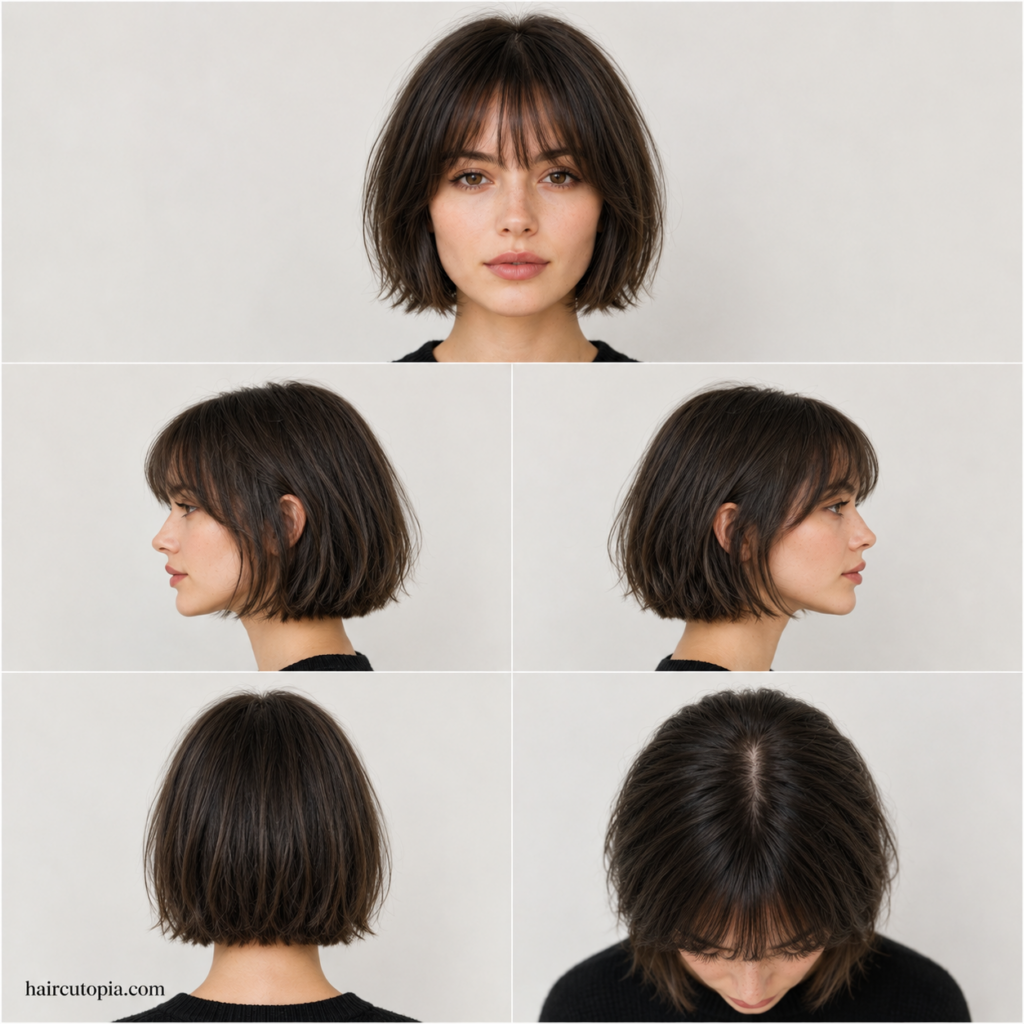
There isn’t one perfect length, but the area between the jaw and chin is a good starting point.
Going shorter can make the perimeter look stronger because fewer wispy ends are left hanging below the main body of the haircut.
However, your face shape, hairline, natural texture, and styling habits all matter.
If you’re nervous about going very short, start around the chin. You can always take the length higher during your next appointment.
1. Classic Jaw-Length French Bob
A traditional jaw-length French bob is one of the simplest ways to give thin hair a stronger silhouette.
Keeping most of the hair at a similar length allows the ends to sit together, making the perimeter appear denser. The jaw-length placement also draws attention toward the face rather than the amount of hair itself.
For a classic finish, pair the cut with a center or slightly off-center part and let the ends fall naturally.
2. Blunt French Bob for Thin Hair
If fullness is your priority, consider a blunt perimeter.
Instead of heavily texturizing the ends, the stylist creates a clean line around the bottom of the bob. This helps preserve as much visible density as possible.
A blunt French bob can work particularly well on straight or slightly wavy thin hair.
Ask your stylist to keep thinning and razor work minimal around the perimeter if your ends already tend to look fine.
3. French Bob With Wispy Bangs
Wispy bangs give a French bob that relaxed Parisian-inspired feel without requiring a large amount of hair for the fringe.
Instead of creating a thick section, the bangs are kept light and airy.
This can be especially helpful with thin hair because too much hair taken forward for bangs may reduce fullness elsewhere.
A lightly textured fringe adds softness while keeping most of your density through the main body of the bob.
4. Chin-Length French Bob
A chin-length French bob offers slightly more length while still maintaining a compact shape.
It’s a great option if you’re transitioning from a longer haircut and aren’t quite ready for a bob that sits directly at the jaw.
Keeping the ends relatively blunt helps prevent the extra length from looking sparse.
The style can be worn straight, softly waved, or tucked behind one ear.
5. French Bob With Full Bangs
Thin hair doesn’t automatically rule out full bangs.
The key is deciding how much hair you can comfortably dedicate to the fringe without making the sides of your bob look too light.
A soft full fringe sitting around the eyebrows can make the overall haircut feel more substantial while drawing attention toward the eyes.
Your stylist can adjust the depth of the bang section based on your natural density.
6. Wavy French Bob for Thin Hair
A few loose waves can give thin hair noticeably more dimension.
Instead of falling completely flat against the head, the bends create small areas of separation and movement that make the hairstyle appear more dynamic.
Keep the waves relaxed.
Large, imperfect bends usually work better for this look than tightly defined curls, especially if you’re aiming for an effortless French bob finish.
7. French Bob With Curtain Bangs
Curtain bangs are a softer alternative to a traditional fringe.
The shorter pieces open around the center of the forehead and gradually become longer toward the sides. This creates movement around the face without requiring a dense block of hair.
On thin hair, keep the curtain fringe relatively light.
The goal is to create a flattering frame while preserving enough hair around the sides to maintain the bob’s shape.
8. Slightly Tousled French Bob
Perfectly smooth hair isn’t always the best approach when you’re trying to create visual fullness.
A little tousling introduces separation and texture.
The result can make individual sections appear more noticeable rather than allowing all the strands to lie flat together.
Use your fingers to gently loosen the hair after styling. A small amount of lightweight texture spray can help, but avoid oversaturating fine strands with product.
9. French Bob Without Bangs
You don’t need bangs to create a recognizable French bob.
Leaving the forehead open creates a clean, minimalist version of the haircut that can be particularly flattering if your hair is thinner around the temples or front hairline.
A center part creates symmetry, while a side part can give the roots a little more lift.
10. Side-Parted French Bob
Sometimes simply changing your part can transform the way thin hair looks.
A deeper side part shifts more hair toward one side, creating natural lift around the roots. That extra height can make a short bob appear fuller without changing the haircut itself.
Try switching your part occasionally rather than allowing the hair to settle permanently in the same direction.
11. French Bob With Soft Texture
A textured French bob doesn’t have to mean heavily layered hair.
For thin hair, subtle texture is usually enough.
A stylist can soften selected sections without removing too much density from the ends. When styled, those small variations help the haircut move naturally.
This approach works especially well if you want something between a perfectly blunt bob and an obviously layered cut.
12. Sleek French Bob
Thin hair can be an advantage if you love a sleek bob.
Because there’s less density to control, the haircut can naturally sit closer to the head and create a clean, elegant silhouette.
Rather than chasing maximum volume, embrace the smooth shape.
A sharp perimeter around the jaw or chin gives the style definition and keeps the ends looking intentional.
13. French Bob With Bottleneck Bangs
Bottleneck bangs are shorter near the center and gradually lengthen around the sides of the face.
This creates a soft frame around the eyes and cheekbones without requiring the uniform density of traditional blunt bangs.
They pair naturally with a short French bob because the longer fringe pieces can blend directly into the sides of the haircut.
14. Rounded French Bob
A softly rounded shape can create the impression of more body through the sides and back.
Instead of hanging completely straight, the ends gently follow the shape of the head and curve inward.
You can create this effect during styling with a round brush or subtle blow-drying technique.
Keep the bend gentle. Too much curling under can make the haircut look overly styled rather than naturally full.
15. French Bob With Micro Bangs
Micro bangs create a striking contrast with a jaw-length bob.
Because the fringe sits above the eyebrows, you don’t necessarily need a large amount of hair to make the detail noticeable.
This can work well for thin hair when the bang section is kept relatively shallow.
The result feels modern, graphic, and a little more daring than the classic French bob.
16. Air-Dried French Bob
If your thin hair has a slight natural wave, an air-dried French bob can be incredibly easy to wear.
The key is getting a haircut that works with your natural texture rather than requiring daily heat styling.
Apply a small amount of lightweight styling product to damp hair and gently encourage your natural bends with your fingers.
Avoid heavy creams or oils, which can quickly weigh down thinner strands.
17. French Bob With Flipped Ends
A slight outward flip adds movement around the perimeter of the haircut.
You don’t need to flip every section. A few strategically placed pieces can make the bob feel more playful and textured.
This style works especially well around chin length, where the ends naturally have enough room to move away from the face.
18. Minimal-Layer French Bob
Layers require a little caution when you’re working with thin hair.
Too many can remove density and leave the ends looking even finer.
That doesn’t mean layers are completely off-limits.
A few subtle internal or face-framing layers can introduce movement while preserving the overall fullness of the bob. Ask your stylist to prioritize the perimeter and keep layering minimal.
19. French Bob With Face-Framing Pieces
Shorter pieces around the face can add interest without dramatically changing the rest of the haircut.
These sections might begin around the cheekbones and blend gradually toward the jaw.
They can also help connect bangs to the rest of the bob, creating a softer transition around the sides.
Keep the face-framing sections subtle if maintaining density is your main goal.
20. Ear-Tucked French Bob
Tucking one side behind the ear is one of the easiest ways to style a French bob.
The asymmetry creates visual interest while exposing more of the cheekbone and jawline.
It also works particularly well with thin hair because you don’t need a huge amount of volume for the style to look intentional.
Pair it with a center or side part depending on the finish you prefer.
21. French Bob With Root Volume
You can keep the ends sleek while adding a little height at the roots.
This creates a fuller silhouette without requiring heavy waves or curls.
When blow-drying, lift sections gently away from the scalp rather than pulling everything downward.
A lightweight volumizing mousse or root product can help, but start with less than you think you need. Fine strands can become weighed down quickly.
22. Jaw-Length Bob With Piecey Bangs
Piecey bangs add definition to the front of the haircut while still allowing some forehead to show.
Unlike a dense blunt fringe, the bangs naturally separate into smaller sections.
This makes them a good companion for thin hair because they don’t need to be especially thick to look intentional.
The slight separation also complements a relaxed, textured French bob.
23. Softly Waved French Bob With Bangs
Combining soft waves with bangs creates texture throughout the entire haircut.
The fringe frames the upper portion of the face while loose bends give the sides more dimension.
Rather than curling every section identically, create a few irregular waves and gently break them apart with your fingers.
That imperfection helps keep the hairstyle relaxed.
24. Short French Bob With a Center Part
A center part gives a short French bob a clean, modern appearance.
This version works particularly well when the perimeter is kept strong and relatively blunt.
If your hair tends to fall flat at the center, dry the roots in the opposite direction first and then return them to the middle. This can create a little natural lift without excessive teasing.
25. Low-Maintenance French Bob for Thin Hair
If you don’t want to style your hair every morning, simplicity matters.
Consider a chin- or jaw-length French bob with minimal layering, no complicated fringe, and a shape that works with your natural texture.
The fewer elements you need to recreate each day, the easier the haircut will be to maintain.
A slightly imperfect finish is completely appropriate for this style. That’s part of what gives the French bob its charm.
How to Make a French Bob Look Fuller
The right haircut does much of the work, but styling can enhance the shape.
Keep Products Lightweight
Thin hair can become flat when coated with too much product.
Look for lightweight formulas designed to create volume or texture without leaving a heavy residue.
You may only need a small amount.
Focus on the Roots
A little root lift can change the entire silhouette of a bob.
When blow-drying, direct sections upward or temporarily dry them opposite their natural direction.
Once the hair falls back into place, you’ll often have more natural-looking volume.
Don’t Overload the Ends
Heavy oils and creams can cause the ends to separate, making thin hair look even finer.
If you use smoothing products, apply a tiny amount and concentrate on areas that actually need them.
Add Gentle Movement
Soft bends create dimension without requiring dramatic curls.
A few loose waves through the mid-lengths can be enough to make the haircut feel fuller and more textured.
Avoid Excessive Teasing
Backcombing can create immediate volume, but aggressive or frequent teasing may put unnecessary stress on delicate strands.
Gentle root lift usually looks more natural with a short French bob anyway.
Should Thin Hair Be Layered in a French Bob?
Usually, less is more.
Heavy layering can remove too much hair from the perimeter, leaving the bottom of the bob looking sparse.
However, carefully placed layers can still be useful.
Your stylist might add subtle internal movement or a few face-framing pieces while keeping most of the density around the bottom.
The ideal amount depends on your hair.
Someone with fine individual strands but relatively high density may tolerate more layering than someone with both fine strands and low overall density.
Blunt vs. Layered French Bob for Thin Hair
If your primary goal is making the ends appear fuller, a blunt or minimally layered bob is usually the safest starting point.
A blunt shape keeps more strands at approximately the same length, creating a stronger perimeter.
A lightly layered version may be better if your hair has natural waves or tends to sit awkwardly without movement.
Neither approach is automatically better.
Think about whether you value maximum visible density or a softer, more textured shape.
What Bangs Work With Thin Hair?
You have several options.
Popular choices include:
- Wispy bangs for a light, airy look
- Curtain bangs for soft face framing
- Bottleneck bangs for movement around the cheekbones
- Piecey bangs for relaxed texture
- Micro bangs for a stronger statement
- Soft full bangs when you have enough density
The biggest consideration is how much hair needs to be taken from the rest of the haircut to create the fringe.
If you’re unsure, start lighter. You can always make bangs fuller later.
What to Ask Your Stylist
Bring reference photos, but also explain what you’re hoping the haircut will accomplish.
For thin hair, you might tell your stylist that maintaining visible density is important to you.
Questions worth discussing include:
- Where should the perimeter fall to look fullest?
- Should the ends be blunt or slightly softened?
- How much layering can my hair support?
- Will bangs remove too much density from the sides?
- What will the haircut look like without styling?
- How should I style it for volume?
- How often should I return for trims?
A photo shows the look you like. A conversation helps your stylist adapt that look to your actual hair.
How to Style a French Bob for Thin Hair
You don’t need a complicated routine.
Start with damp hair and apply a small amount of lightweight volumizing product if desired.
Then:
- Lift the roots gently while blow-drying.
- Direct the ends into the general shape you want.
- Add a few loose bends through selected sections.
- Let the hair cool before touching it too much.
- Separate the waves gently with your fingers.
- Finish with a small amount of lightweight texture product if needed.
You can also skip heat styling completely if your natural texture already gives the bob enough movement.
How Often Should You Trim a French Bob?
French bobs tend to look best when the perimeter maintains its shape.
A trim around every six to eight weeks is a common starting point, although your schedule will depend on how quickly your hair grows and how precise you like the cut.
Bangs may need trimming sooner.
If you’re comfortable with the bob becoming slightly longer and softer between appointments, you may be able to extend the time between full haircuts.
Is a French Bob High Maintenance for Thin Hair?
Not necessarily.
A simple blunt or softly textured French bob can actually reduce styling time because there’s less length to manage.
More structured versions may require additional effort.
For example, a sleek bob with precise bangs will probably need more regular trimming and styling than an air-dried bob without fringe.
If low maintenance matters to you, mention that before your haircut. Your stylist can choose a shape that grows out more naturally.
French Bob vs. Regular Bob for Thin Hair
The distinction isn’t always strict, but French bobs are generally shorter and have a more relaxed feel.
A traditional bob can range from very short to shoulder length, while a French-inspired version commonly sits around the jaw or chin.
French bobs are also frequently paired with bangs and slightly undone texture.
For thin hair, that shorter length can be an advantage because it concentrates the shape higher and removes longer ends that may appear sparse.
Final Thoughts on French Bob Haircuts for Thin Hair
A French bob can be one of the most flattering short haircuts for thin hair when the shape is designed around density.
You don’t necessarily need lots of layers or dramatic styling to create a fuller appearance. Often, a strong perimeter, carefully chosen length, and a little movement are enough.
Try a blunt jaw-length bob if fullness is your priority, add wispy or curtain bangs for softness, or introduce gentle waves when you want more texture.
Most importantly, work with what your hair naturally wants to do.
The best French bob isn’t the one that requires an elaborate routine every morning. It’s the one that gives your hair a stronger shape, feels comfortable to wear, and still looks good when you haven’t spent half an hour styling it.