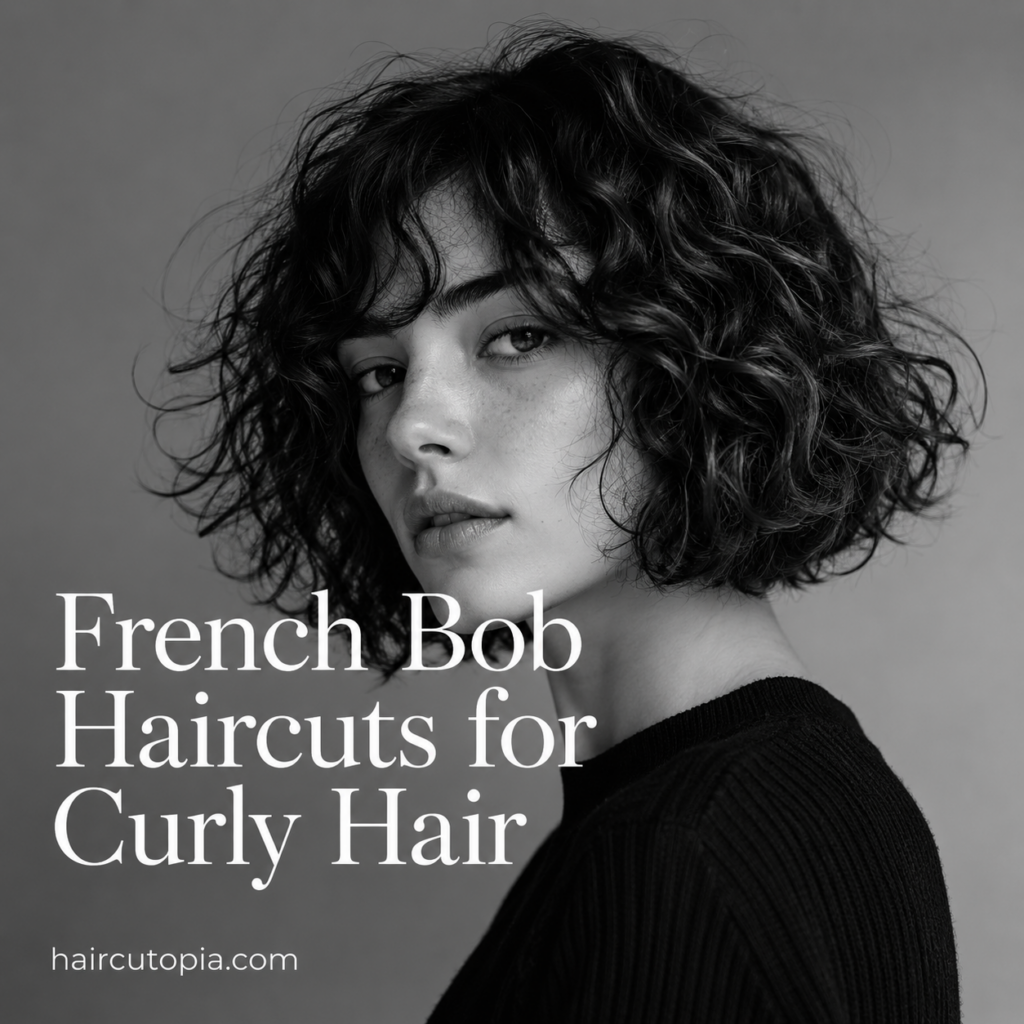
The French bob is one of those haircuts that manages to look polished and effortless at the same time. Add natural curls, waves, or coils, and the style takes on even more personality.
Unlike a traditional bob that may rely on sleek lines and precise styling, a curly French bob can be softer, fuller, and a little less structured. The natural movement of curly hair gives the cut dimension without requiring every strand to sit perfectly in place.
Whether you have loose waves, springy ringlets, or tighter curls, there are plenty of ways to make this short haircut work with your texture rather than against it.
Below, we’ll look at some of the best French bob haircuts for curly hair, along with styling ideas, maintenance tips, and what to consider before going shorter.
What Is a French Bob?
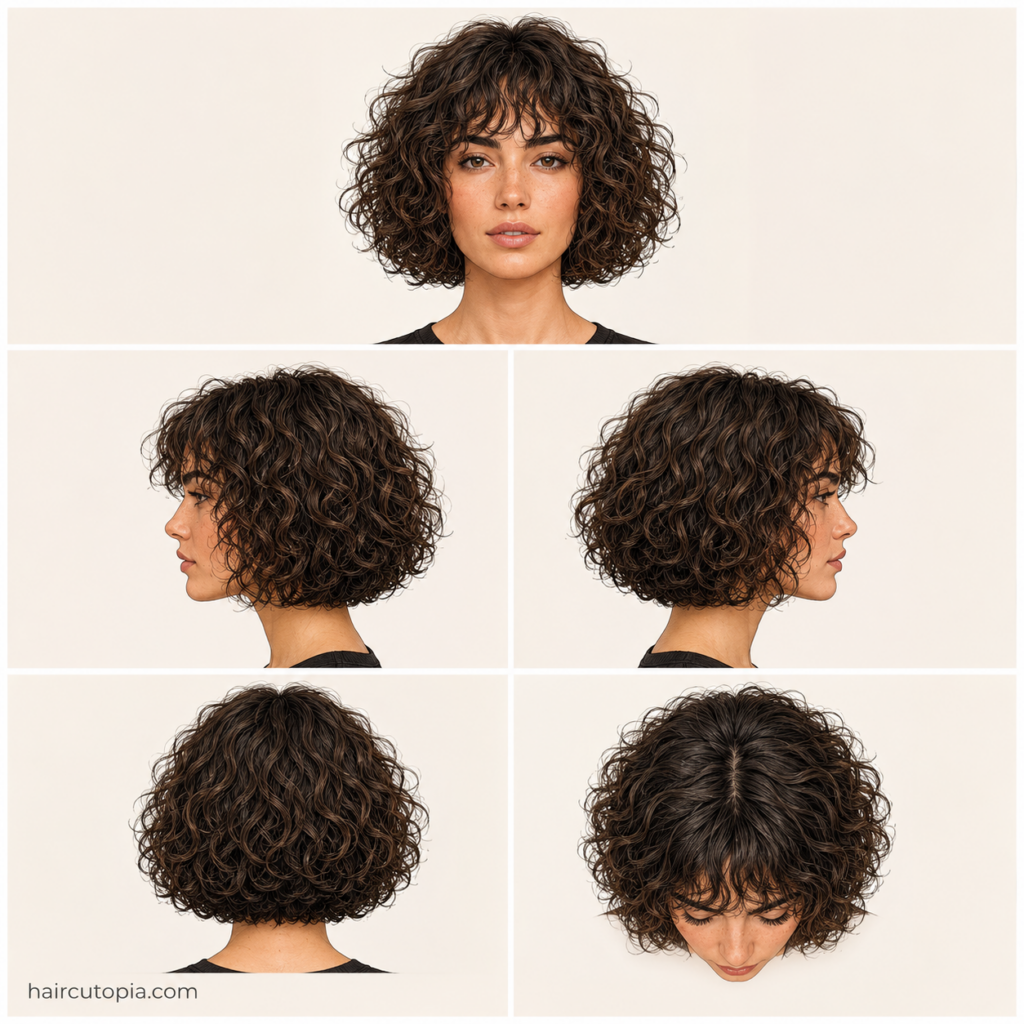
A French bob is a short bob haircut traditionally cut somewhere around the jawline or slightly above it. It’s often paired with bangs, although fringe isn’t required.
Compared with longer bob styles, the French bob tends to have a compact silhouette that draws attention to the face, jawline, and neck.
On straight hair, the shape can look crisp and defined. On curly hair, those same basic proportions create something softer and more playful.
Common features include:
- A chin-length or jaw-length cut
- Natural-looking movement
- Bangs or a face-framing fringe
- Minimal, unfussy styling
- A slightly undone finish
- Enough shape to look intentional without appearing overly sculpted
The beauty of the French bob is that it doesn’t need to look identical from one person to another. Curl pattern, density, shrinkage, and layering can completely change the finished result.
1. Classic Curly French Bob
A classic curly French bob sits around the jawline and allows the natural curl pattern to create the shape.
Rather than straightening the hair into a perfectly even line, the curls are allowed to fall naturally. This creates a softer outline while maintaining the recognizable short-bob silhouette.
This style works particularly well if you want something that feels sophisticated but doesn’t require sleek styling every morning.
A little curl cream or lightweight gel may be all that’s needed to define the texture and keep the shape looking fresh.
2. French Bob With Curly Bangs
Bangs are one of the easiest ways to give a curly bob that unmistakable French-inspired feel.
Curly bangs don’t have to be perfectly uniform. In fact, a slightly irregular fringe can complement the relaxed nature of the haircut.
The bangs can fall across the forehead or separate naturally as the curls move.
One important consideration is shrinkage. Curly hair can appear considerably shorter after drying, so bangs are often best cut with the natural curl pattern in mind.
3. Chin-Length Curly French Bob
Keeping the haircut right around chin level creates a flattering frame around the face.
This length is short enough to capture the French bob aesthetic without going extremely short. It can also provide a little extra weight for curls that tend to expand significantly when cut above the jaw.
A chin-length bob can be especially appealing if you’re transitioning from longer hair and aren’t ready for a dramatic crop.
4. Layered French Bob for Curly Hair
Layers can make a major difference in how a curly bob sits.
Without enough shaping, dense curls may create a triangular silhouette, with less volume near the roots and considerably more toward the ends.
Strategic layers remove some of that weight and encourage movement throughout the haircut.
They can also help individual curls form more clearly rather than becoming compressed beneath heavier sections of hair.
The key is balance. Too many short layers can create more volume than you want, while too few may leave the shape feeling heavy.
5. Curly French Bob With Wispy Bangs
If full curly bangs feel like too much of a commitment, a wispy fringe offers a softer alternative.
A few lighter curls around the forehead can create the effect of bangs without completely covering the area.
This works particularly well with loose curls and wavy textures because the fringe can naturally blend into the rest of the haircut.
It’s also a versatile option when growing bangs out, since the pieces can gradually become face-framing layers.
6. Rounded Curly French Bob
A rounded bob emphasizes volume and creates a fuller silhouette around the head.
Instead of focusing on a blunt perimeter, the haircut is shaped so that the curls build naturally around the sides and crown.
This can be especially flattering on dense or tightly curled hair.
The result feels bold and intentional while still showcasing the natural texture of the hair.
7. French Bob for Loose Curls
You don’t need tight ringlets to wear a curly French bob.
Loose curls and strong waves can give the haircut an airy, relaxed appearance. Because the texture isn’t overly structured, the style can have that slightly tousled finish often associated with French-inspired haircuts.
A lightweight mousse or curl-enhancing cream can help encourage definition without making the hair feel stiff.
8. Short Curly French Bob
For a more dramatic change, take the length slightly above the jawline.
A shorter French bob puts greater emphasis on the cheekbones, jawline, and neck. It can also make curls appear fuller because removing length reduces some of the weight pulling them downward.
Keep shrinkage in mind before choosing the final length.
Hair that appears jaw-length when wet may spring significantly higher once completely dry.
9. Curly French Bob Without Bangs
Although bangs are common with French bobs, they’re certainly not mandatory.
Skipping the fringe creates a cleaner, more open look around the face. The front pieces can be cut into subtle face-framing layers instead.
This variation may also require less maintenance because there are no short bangs that need regular trimming.
Try a middle part for a balanced shape or shift the part slightly to one side for additional volume.
10. Side-Parted Curly French Bob
Changing the part can completely transform a short curly haircut.
A deep or slightly off-center side part naturally pushes more hair toward one side, creating extra height and volume.
It’s an easy way to make a French bob feel more dramatic without changing the actual cut.
The best part is that you can switch between a middle and side part depending on how your curls are behaving that day.
11. Blunt French Bob With Curls
A blunt bob creates a stronger perimeter with fewer visible layers.
On curly hair, however, “blunt” doesn’t necessarily mean perfectly straight across. The curl pattern naturally breaks up the line and softens the overall effect.
This style can work especially well for fine or medium-density curly hair because keeping more weight around the ends can make the hair appear fuller.
For very dense curls, some internal shaping may still be helpful to prevent excessive bulk.
12. Voluminous French Bob
If your curls naturally create plenty of volume, there’s no reason to hide it.
A voluminous French bob embraces width, height, and movement instead of trying to flatten the hair into a traditional bob shape.
Layers can encourage lift around the crown while maintaining fullness through the sides.
For styling, try diffusing the hair with your head tilted slightly to encourage additional root volume.
13. French Bob With Face-Framing Curls
Face-framing pieces provide an alternative to traditional bangs.
Shorter curls can be placed around the cheekbones or jawline while the rest of the haircut remains relatively uniform.
This creates definition around the face without committing to a full fringe.
Face-framing curls can also make the haircut feel softer, particularly if you prefer a middle part.
14. Shaggy Curly French Bob
A shag-inspired French bob introduces additional layering and a deliberately tousled finish.
Rather than creating one smooth, rounded shape, the layers give the curls more separation and movement.
This variation works particularly well if you like hair that looks a little messy and lived-in rather than perfectly arranged.
Curly bangs can complete the look, although longer face-framing pieces work just as well.
15. French Bob for Fine Curly Hair
Fine curly hair benefits from careful layering.
Removing too much hair can make the ends appear thin, so a relatively solid perimeter is often useful for maintaining the appearance of fullness.
Light internal layers can provide movement without sacrificing density.
Avoid overloading fine curls with heavy styling creams. Lightweight mousse, foam, or a small amount of curl gel may provide definition without weighing the hair down.
16. French Bob for Thick Curly Hair
Thick curly hair can create a beautifully full French bob, but shaping becomes particularly important.
Removing strategic weight from the interior can prevent the haircut from becoming overly bulky around the bottom.
Layers can also allow curls to stack naturally rather than sitting on top of one another.
A stylist experienced with curly hair can adjust the shape based on density, curl pattern, and how much volume you actually want.
17. French Bob for Tight Curls
Tighter curl patterns can give the French bob a completely different silhouette.
Instead of falling directly toward the jaw, the curls may create a more rounded or sculpted shape around the face.
Shrinkage becomes particularly important here. The final dry length may be much shorter than the stretched length of the hair.
A curl-by-curl or dry cutting approach may help make the finished shape easier to predict.
18. Tousled Curly French Bob
Not every curl needs perfect definition.
A tousled French bob embraces a mixture of curls, waves, and slightly undone pieces. The result feels casual and effortless rather than heavily styled.
Instead of repeatedly touching the curls while they’re drying, apply your styling products and allow the natural texture to develop.
Once the hair is dry, gently separate a few curls if you want a softer finish.
How to Choose the Right Curly French Bob
The inspiration photo you love can be helpful, but your own curl pattern should ultimately determine how the haircut is adapted.
Before choosing a style, consider several factors.
Curl Pattern
Loose waves behave differently from tight curls.
A cut that falls directly at the jaw on wavy hair may sit much higher with springy curls. Your stylist may need to leave additional length to compensate.
Hair Density
Density determines how much hair you’re working with.
Fine curls may benefit from a stronger perimeter, while extremely dense curls may need internal weight removal or additional layering.
Shrinkage
Never underestimate shrinkage when choosing a short curly haircut.
If your curls shrink considerably after drying, discuss your desired dry length rather than focusing only on where the hair sits when wet.
Styling Routine
Think about how much time you realistically want to spend styling your hair.
A haircut that works well with air-drying may be more practical if you prefer minimal styling. If you regularly diffuse your curls, you may have more flexibility with layered or voluminous shapes.
How to Style a French Bob on Curly Hair
One of the advantages of a curly French bob is that styling doesn’t have to be complicated.
Your exact routine will depend on your curl pattern and preferred finish, but a basic approach might look like this:
- Start with damp or wet hair.
- Apply a lightweight leave-in conditioner if your curls need additional moisture.
- Work curl cream, mousse, or gel through the hair.
- Scrunch gently to encourage curl formation.
- Arrange your bangs or front pieces while the hair is still wet.
- Air-dry or use a diffuser on a gentle setting.
- Once completely dry, gently separate or fluff the curls as needed.
Try not to continuously manipulate your curls while they’re drying. Too much touching can break up curl clumps and create unwanted frizz.
How to Maintain a Curly French Bob
Short hair isn’t automatically maintenance-free.
Because the shape of a French bob depends heavily on its length and proportions, changes become noticeable relatively quickly as the hair grows.
Schedule Regular Trims
How frequently you need a trim depends on your curl pattern and how precise you want the bob to remain.
If you prefer a defined jaw-length silhouette, you’ll likely want trims more frequently than someone who doesn’t mind letting the cut gradually become a longer bob.
Refresh Curls Between Washes
You don’t necessarily need to fully restyle your hair every morning.
A little water or curl-refreshing product can reactivate certain styling products and help reshape curls that became flattened overnight.
Focus primarily on the curls that actually need attention.
Protect Your Hair Overnight
A satin or silk pillowcase can reduce friction while you sleep.
Depending on your hair length and curl pattern, you may also be able to loosely protect the curls with a bonnet or scarf.
Because a French bob is short, traditional “pineapple” methods may not work for everyone.
What to Ask Your Stylist For
Instead of simply requesting a French bob, explain what you like about the style.
You might say that you want:
- A finished length around the chin or jaw
- A rounded or more defined silhouette
- Curly bangs or face-framing pieces
- Enough layering to encourage movement
- Volume through the crown
- A shape that works when air-dried
- A cut that accounts for your natural shrinkage
Bring reference photos if possible, but look for examples featuring a curl pattern and density somewhat similar to your own.
A haircut can look dramatically different depending on texture.
Is a French Bob Good for Curly Hair?
A French bob can be an excellent choice for curly hair because the haircut doesn’t depend on perfectly smooth styling.
Natural curls bring movement, volume, and character to the short silhouette. They can make even a relatively simple bob feel distinctive.
The most important part is adapting the cut to the hair rather than trying to force curly hair into a shape designed for straight texture.
Length, layers, bangs, and weight distribution should all be considered with the natural curl pattern in mind.
Frequently Asked Questions
Can curly hair have a French bob?
Yes. French bobs work with loose waves, curls, and tighter textures. The length and layering may need to be adjusted based on shrinkage and hair density.
Does a French bob need bangs?
No. Bangs are strongly associated with the classic French bob, but they’re optional. Face-framing layers or a simple center or side part can work just as well.
What length is a French bob?
French bobs typically sit around the chin or jawline and can sometimes be cut slightly shorter. On curly hair, it’s better to consider the final dry length because curls can shrink significantly.
Should a curly French bob have layers?
It depends on your hair. Layers can help remove excess weight, encourage curl definition, and create a more balanced silhouette. Fine curly hair may benefit from fewer layers to preserve fullness.
Is a curly French bob high maintenance?
It can require regular trims if you want to maintain a precise short length, but daily styling doesn’t necessarily have to be complicated. Many curly French bobs work well with simple air-drying or diffusing routines.
Final Thoughts
French bob haircuts and curly hair are a natural match.
The short length gives curls a defined silhouette, while the texture keeps the haircut from looking overly precise or rigid. You can keep things classic with a chin-length bob and curly bangs, add layers for extra movement, or embrace a fuller rounded shape that makes natural volume the focus.
Before making the cut, think about your curl pattern, density, shrinkage, and everyday styling routine. A French bob looks best when those characteristics are incorporated into the haircut rather than treated as something that needs to be controlled.
The result can be chic, expressive, and surprisingly versatile—and a great way to make natural curls the centerpiece of a shorter hairstyle.
Related Posts
 Short Haircuts for Curly Hair: 25 Stylish Ideas, Tips, and Maintenance Guide
 Short Haircuts for Fine Hair: The Best Styles for Volume, Texture, and Easy Maintenance
 Haircuts for Square Faces: The Complete Guide to Finding Your Most Flattering Style
 Haircuts for Round Faces: The Complete Guide to Finding Your Most Flattering Style