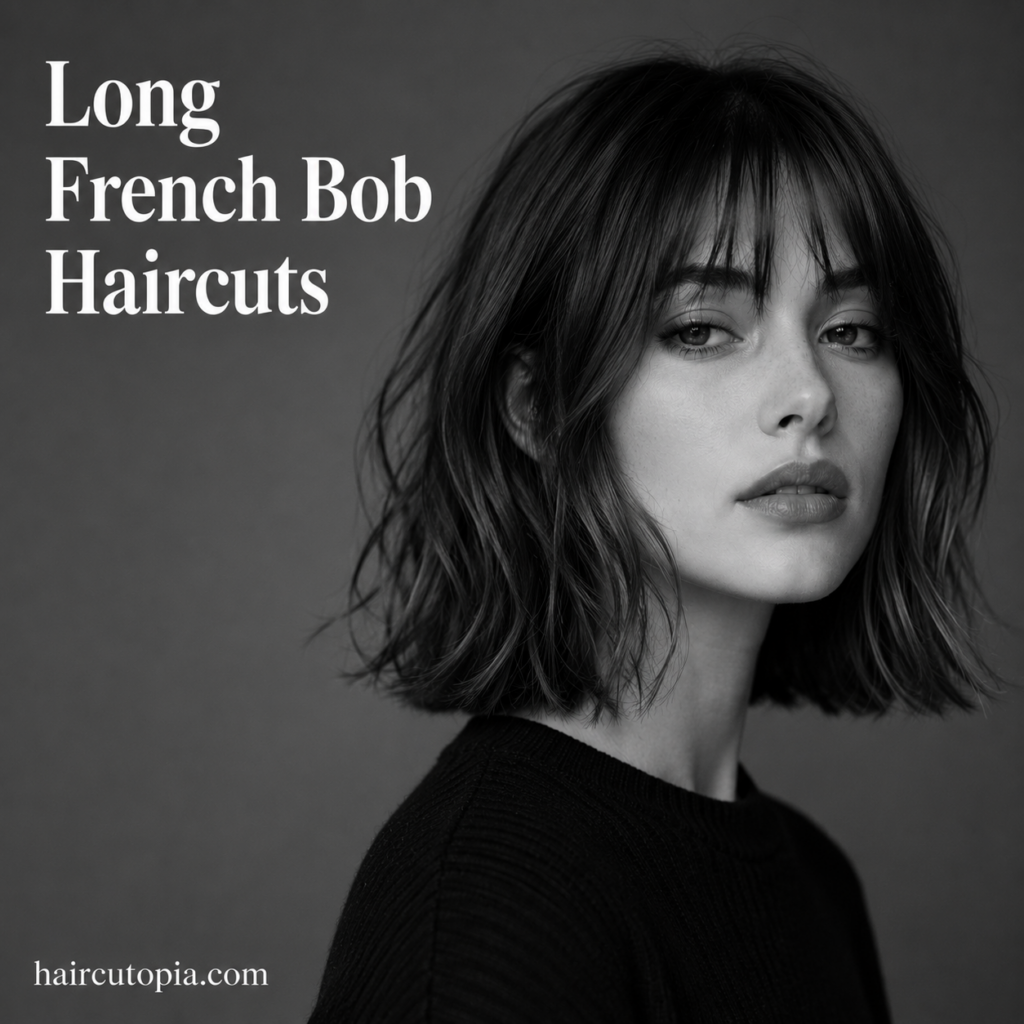
Long French bob haircuts bring the relaxed elegance of a classic French bob into a slightly longer, more versatile shape. You still get the clean lines, soft texture, and effortless feel associated with the style, but with enough length for more movement and styling options.
While a traditional French bob usually sits around the chin, a longer version can fall anywhere from below the chin to the collarbone. That extra length makes it an appealing choice if you love the French bob look but aren’t ready for a dramatic chop.
Wear it sleek and polished, tousled with loose waves, naturally curly, or paired with soft bangs. The style can shift from classic to modern with just a few small changes.
If you’re considering a longer bob, these long French bob haircuts offer plenty of inspiration.
What Is a Long French Bob?
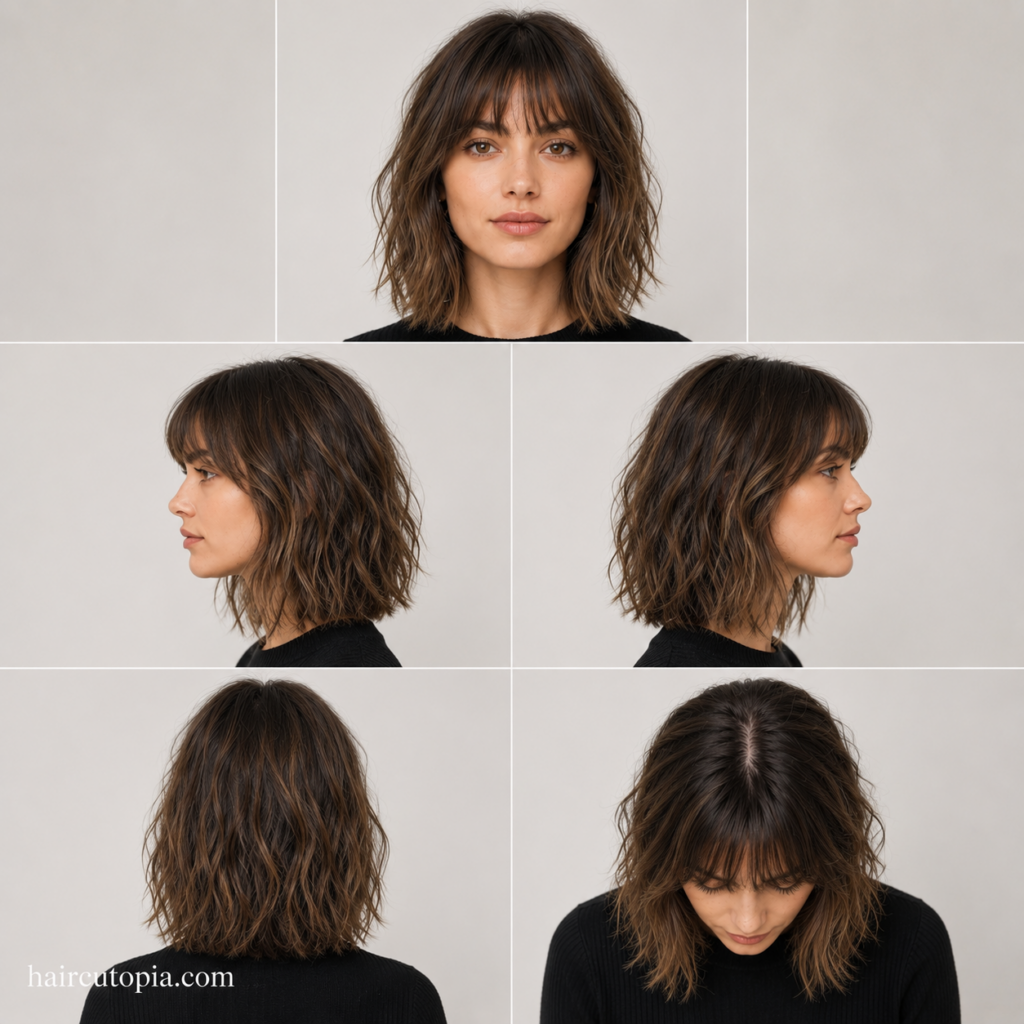
A long French bob is an extended version of the traditional chin-length French bob.
The haircut usually falls somewhere between the lower jaw and collarbone, depending on how much length you want to keep. It maintains a recognizable bob shape but has more movement than shorter versions.
Common features include:
- Below-the-chin to collarbone length
- A defined or softly textured perimeter
- Minimal to moderate layering
- Optional bangs or fringe
- Natural-looking movement
- Straight, wavy, or curly styling
- An effortless rather than overly sculpted finish
Some versions look very close to a traditional lob. What gives them a French-inspired feel is often the combination of the shape, fringe, and relaxed styling.
15 Long French Bob Haircuts to Consider
1. Classic Long French Bob
The classic long French bob is a great place to start if you want something timeless.
The hair falls below the chin without becoming quite long enough to lose the bob silhouette. The perimeter stays relatively clean, while subtle texture prevents the ends from looking too heavy.
You can pair this version with bangs for a more traditional French-inspired look or keep the front longer for a simpler finish.
It’s particularly versatile because you can wear it straight, wavy, or naturally textured without dramatically changing the haircut.
2. Long French Bob With Bangs
Bangs give a longer French bob an instantly recognizable character.
A full fringe creates a stronger frame around the eyes, while the longer perimeter balances the shorter hair across the forehead. The contrast can make the haircut feel intentional without being overly structured.
You don’t have to choose perfectly blunt bangs.
A little separation through the fringe creates a softer appearance and works especially well when the rest of the bob has natural movement.
3. Wavy Long French Bob
Loose waves are one of the easiest ways to style a longer French bob.
The additional length gives the hair enough room to develop visible bends through the mid-lengths and ends. The result is relaxed, textured, and easy to dress up or down.
Naturally wavy hair may only need a lightweight styling cream and some air-drying.
If your hair is straight, use a curling iron or flat iron to create loose bends. Alternate their direction and leave some pieces straighter so the finished style doesn’t look too uniform.
4. Blunt Long French Bob
A blunt perimeter creates a stronger, more graphic version of the haircut.
Instead of adding obvious layers, the ends are kept relatively even. This creates a fuller-looking baseline and puts more emphasis on the overall shape.
Blunt long bobs can be especially flattering for fine or straight hair because keeping weight through the ends may create the appearance of greater density.
Wear it completely sleek for a polished finish or add a few subtle bends for something softer.
5. Long French Bob With Wispy Bangs
Wispy bangs are ideal if you like fringe but don’t want it to dominate the haircut.
Rather than creating a solid line across the forehead, lighter pieces fall naturally around the brows and temples. Some of the forehead remains visible, giving the style an airy feel.
The softer fringe also blends nicely into a longer bob.
As the bangs grow, they can gradually transition into face-framing pieces instead of requiring an immediate trim.
6. Layered Long French Bob
A little layering can make longer bobs feel lighter and more dynamic.
Long layers remove weight without sacrificing the overall perimeter. They can also encourage movement in hair that tends to fall flat when it reaches the shoulders.
The key is choosing layers that support the bob rather than completely breaking up its shape.
For thicker hair, internal layers can help reduce bulk. For finer hair, keep the layering subtle so the ends maintain enough density.
7. Curly Long French Bob
Curls bring natural volume and personality to a long French bob.
Compared with a very short curly bob, the additional length gives individual curls more room to develop. This can create a softer silhouette with movement throughout the haircut.
Shrinkage still needs to be considered.
Depending on your curl pattern, hair that appears collarbone length when wet may sit considerably higher once completely dry.
Ask your stylist to evaluate the haircut based on its finished dry shape rather than relying only on wet length.
8. Long French Bob Without Bangs
A French bob doesn’t need bangs to work.
Leaving the front sections longer opens up the face and gives you more styling flexibility. You can switch between center and side parts, tuck the hair behind your ears, or add face-framing bends.
This is also one of the lower-maintenance versions.
Without fringe, you won’t need bang trims between regular haircut appointments, and the entire style can transition naturally into longer hair.
9. Tousled Long French Bob
The tousled French bob is all about movement.
Instead of creating a perfectly smooth surface, the hair has irregular bends and slightly separated ends. A few flyaways or pieces moving in different directions can actually make the style look better.
Use a lightweight texture spray or styling cream to create definition.
If you’re using heat tools, don’t curl every section. Leaving some pieces straighter creates the relaxed finish that makes this style work.
10. Long French Bob With Curtain Bangs
Curtain bangs blend beautifully into a longer bob.
The fringe separates around the center of the forehead and gradually becomes longer toward the sides. This creates a soft frame around the eyes and cheekbones without the commitment of short, straight-across bangs.
Because the bob itself has more length, curtain bangs can transition smoothly into face-framing layers.
They’re also relatively forgiving when growing out.
11. Sleek Long French Bob
A sleek finish puts the focus on the haircut’s shape.
The hair is worn smooth with a clean center or side part, allowing the perimeter to stand out. This works particularly well with blunt or minimally layered versions.
Start with heat protectant and blow-dry the hair smooth.
Use a flat iron only where necessary, then apply a small amount of smoothing serum through the ends.
You still want movement. Too much product can make a sleek bob look heavy instead of polished.
12. Long French Bob for Fine Hair
A longer bob can work beautifully on fine hair when the shape is kept relatively simple.
Maintaining a strong perimeter helps preserve the appearance of fullness. Instead of adding numerous short layers, your stylist can introduce subtle texture where movement is needed.
Lightweight volumizing products can provide extra lift around the roots.
If your fine hair tends to become flat at longer lengths, keeping the cut above the collarbone may provide a good balance between length and volume.
13. Long French Bob for Thick Hair
Thick hair has enough density to create a substantial, full-looking bob.
The challenge is making sure the haircut doesn’t become excessively heavy around the bottom.
Internal layering or carefully placed longer layers can remove some weight while leaving the outer perimeter intact.
This allows the hair to move naturally without turning the haircut into a heavily layered style.
If your thick hair is also wavy, your stylist should consider how much it expands when air-dried.
14. Side-Parted Long French Bob
Sometimes changing the part is enough to transform the haircut.
A deep or moderate side part creates asymmetry and often adds extra volume around the crown. One side can fall across the cheek while the other is tucked behind the ear.
This looks particularly good with soft waves or subtle layers.
You can also switch between a center and side part depending on the finish you want that day.
15. Collarbone-Length French Bob
The collarbone-length French bob is one of the longest ways to interpret the style.
At this point, the haircut begins to overlap with the traditional long bob, or lob. Keeping a defined perimeter, soft fringe, and relaxed styling can preserve the French-inspired character.
The biggest advantage is versatility.
At collarbone length, you have enough hair to experiment with waves, half-up styles, clips, and small ponytails while still maintaining the appearance of a bob when the hair is worn down.
It’s also a comfortable option if you’re cutting long hair and aren’t ready to jump directly to chin length.
Long French Bob With Bangs vs. Without Bangs
Bangs aren’t required, but they can have a major impact on the overall style.
Full bangs create the strongest connection to the classic French bob. They emphasize the eyes and create a defined frame around the upper half of the face.
Wispy bangs offer a lighter alternative.
Curtain bangs are even more flexible, especially if you want fringe that can eventually grow into face-framing layers.
Without bangs, the haircut feels more open and versatile. You’ll have greater freedom to change your part and pull the front sections away from your face.
Consider maintenance as well.
Short bangs generally require more frequent trims. If you prefer fewer appointments, longer curtain bangs or a fringe-free version may be easier to manage.
Choosing a Long French Bob for Your Hair Type
The best version of a French bob is one that works with your natural texture rather than constantly fighting against it.
Fine Hair
Fine hair often benefits from maintaining weight through the perimeter.
Consider:
- Blunt or lightly textured ends
- Minimal layering
- Lightweight volumizing products
- Collarbone or slightly shorter lengths
- Wispy bangs instead of extremely heavy fringe
If your hair becomes flat easily, keeping the bob slightly above the shoulders can reduce some of the weight pulling it downward.
Thick Hair
Thick hair may need internal shaping to create comfortable movement.
Long layers can reduce bulk without dramatically changing the outer shape of the haircut.
Avoid automatically removing large amounts of density from the ends. Strategic weight removal usually creates a more balanced result.
Wavy Hair
Natural waves pair especially well with long French bobs.
The length gives waves room to form, while the bob shape prevents the hair from becoming visually shapeless.
You may be able to air-dry most days with a small amount of styling cream or mousse.
Curly Hair
Longer French bobs give curls plenty of room for movement.
Your stylist should account for shrinkage and differences between individual curl patterns. The finished dry length is more important than where the hair falls while wet.
Longer layers can help distribute volume while preserving the overall bob silhouette.
Straight Hair
Straight hair naturally highlights the perimeter of the haircut.
Choose blunt ends if you want a clean, polished shape. If you prefer more movement, subtle texturizing or long layers can soften the finish.
A few loose bends around the face can also change the look without requiring a different haircut.
How to Ask Your Stylist for a Long French Bob
“Long French bob” can describe several different lengths and shapes.
Be specific about what you want.
Before your appointment, decide:
- Where you want the ends to fall.
- Whether you want the hair above or at the collarbone.
- How blunt you want the perimeter.
- Whether you want visible layers.
- Whether you want bangs or face-framing pieces.
- Where you normally part your hair.
- How you usually style your natural texture.
Bring reference photos whenever possible.
Pay particular attention to photos featuring hair with a similar density and texture to yours.
Rather than simply showing the picture, explain which details you want to recreate. You may love the length but not the bangs, or the texture but not the amount of layering.
Those distinctions matter.
How to Style a Long French Bob
The extra length makes a long French bob especially versatile.
You can completely change its appearance without changing the haircut itself.
For a Natural Finish
Apply a small amount of lightweight styling cream to damp hair and let your natural texture develop.
Air-dry or diffuse depending on your hair type.
Once dry, separate the ends with your fingers instead of brushing everything smooth.
For Loose French-Inspired Waves
Create bends through selected sections using a curling iron or flat iron.
Alternate directions and leave the ends relatively relaxed.
Once the hair cools, gently break up the waves with your fingers.
You want movement rather than perfectly formed curls.
For a Sleek Finish
Apply heat protectant before blow-drying the hair smooth.
Use a flat iron to refine any sections that need it, then add a small amount of smoothing serum to the ends.
A clean center part can emphasize the symmetry of the haircut.
For Extra Volume
Apply a lightweight volumizing mousse or root product before drying.
You can also flip your usual part to the opposite side for instant lift.
Avoid loading the ends with heavy products, especially if you have fine hair.
For Tousled Texture
Use a light texture spray through dry hair.
Scrunch the mid-lengths and ends, then separate a few sections with your fingers.
Don’t worry about making both sides identical. A slightly imperfect finish is part of the look.
Styling Options You Get With the Extra Length
One major advantage of a long French bob is that you’re not limited to wearing it completely down.
Depending on the exact length, you may be able to create:
- A small low ponytail
- Half-up styles
- Claw clip styles
- Pinned-back front sections
- Braided front pieces
- Tucked-behind-the-ear styles
- Loose waves
- Sleek straight styles
This can make the haircut especially practical if you enjoy changing your hairstyle throughout the week.
How Often Should You Trim a Long French Bob?
Long French bobs generally have a forgiving maintenance schedule.
A trim roughly every eight to twelve weeks can help maintain the shape, although your ideal timing depends on the haircut.
You may want more frequent trims if you have a very blunt perimeter or shorter bangs.
A layered or intentionally tousled version can usually grow for longer without losing its overall character.
If you’re actively growing your hair, occasional shaping can keep the ends healthy while gradually transitioning the bob into a longer style.
Is a Long French Bob Easy to Grow Out?
Yes. It’s one of the easiest French bob lengths to grow.
Because you’re already approaching the shoulders or collarbone, the transition into longer hair is relatively subtle.
The haircut naturally becomes a longer lob before eventually moving beyond bob territory.
Bangs may require more planning.
You can gradually transition full bangs into wispy fringe, then curtain bangs, and finally longer face-framing pieces.
Regular shaping during the process helps everything blend together.
Long French Bob vs. Medium French Bob
Medium and long French bobs can overlap, but the difference becomes clearer as the hair approaches the collarbone.
A medium French bob generally sits somewhere between the chin and upper shoulders.
A long French bob extends closer to the shoulders or collarbone.
The longer version typically provides:
- More styling options
- Easier ponytails and half-up styles
- More visible movement through waves and curls
- A less dramatic transition from long hair
- An easier grow-out
A medium bob, however, creates a more obvious short-hair silhouette.
If maintaining versatility is your biggest priority, the longer version may be the better fit.
Long French Bob vs. Lob
The distinction between a long French bob and a lob isn’t always clear-cut.
“Lob” simply means long bob. It describes the general length rather than one specific styling approach.
A long French bob is essentially a type of lob with French-inspired characteristics.
These might include:
- Soft or full bangs
- A clean perimeter
- Natural texture
- Minimal styling
- Slightly tousled movement
- Face-framing pieces
So, a long French bob can be considered a lob, but not every lob has the characteristics associated with a French bob.
Who Should Consider a Long French Bob?
A long French bob is a strong option if you want a noticeable haircut without sacrificing too much length.
It may be especially appealing if you:
- Want to transition gradually from long hair
- Like shoulder or collarbone-length cuts
- Want enough hair for a small ponytail
- Enjoy both sleek and textured styling
- Want to experiment with bangs
- Prefer a forgiving grow-out
- Have naturally wavy or curly hair
- Want a bob with plenty of styling flexibility
The haircut doesn’t need to follow one strict formula.
Length, fringe, layering, and texture can all be adjusted to suit your hair and everyday routine.
Frequently Asked Questions
How long is a long French bob?
A long French bob typically falls below the chin and can extend to around the shoulders or collarbone. It is longer than the traditional chin-length French bob while maintaining a defined bob shape.
Can a French bob be shoulder length?
Yes. Modern French bob variations can reach the shoulders. At that length, the haircut begins to overlap with a lob, but bangs, texture, and the overall shape can maintain its French-inspired appearance.
Does a long French bob need bangs?
No. Bangs are optional. You can wear a long French bob with blunt fringe, wispy bangs, curtain bangs, longer face-framing pieces, or no bangs.
Is a long French bob good for fine hair?
It can be. Keeping the perimeter relatively blunt can help fine hair appear fuller. Minimal layering may also preserve density through the ends.
Does a long French bob work with thick hair?
Yes. Thick hair can create a full, substantial bob. Strategic internal layers or weight removal can help control bulk while maintaining the outer shape.
Can curly hair have a long French bob?
Absolutely. The additional length gives curls room to develop and move naturally. The haircut should account for shrinkage and the way individual curls sit when dry.
Is a long French bob low maintenance?
It can be relatively low maintenance, particularly when the cut works with your natural texture. Longer versions also tend to have a more forgiving grow-out than very short, precise bobs.
Can you put a long French bob in a ponytail?
Depending on the exact length, often yes. A shoulder or collarbone-length French bob may be long enough for a small low ponytail. Shorter front layers or bangs may remain loose.
What’s the difference between a French bob and a long bob?
A long bob describes the length of the haircut, while a French bob refers more to a particular aesthetic and shape. A long French bob combines the extra length of a lob with elements such as bangs, a defined perimeter, and relaxed texture.
Final Thoughts
Long French bob haircuts offer the character of a classic bob without taking away all your length.
They’re versatile enough to wear sleek, wavy, curly, tousled, layered, or blunt. Add bangs for a more recognizable French-inspired finish, or keep the front long if you prefer something simple and lower maintenance.
The extra length also gives you practical styling options that aren’t always possible with a chin-length cut.
Ultimately, don’t worry about matching one exact definition of a French bob. Choose the length, fringe, texture, and layering that make sense for your own hair.
The best version is the one that looks just as good on an ordinary day as it does when you’ve taken the time to style it.
Related Posts
 Short Prom Hairstyles: Chic Ideas for Short Hair on Prom Night
 Short Haircuts for Curly Hair: 25 Stylish Ideas, Tips, and Maintenance Guide
 Haircuts for Women with Fine Hair: 18 Flattering Styles That Add Volume and Fullness
 Short Haircuts for Fine Hair: The Best Styles for Volume, Texture, and Easy Maintenance