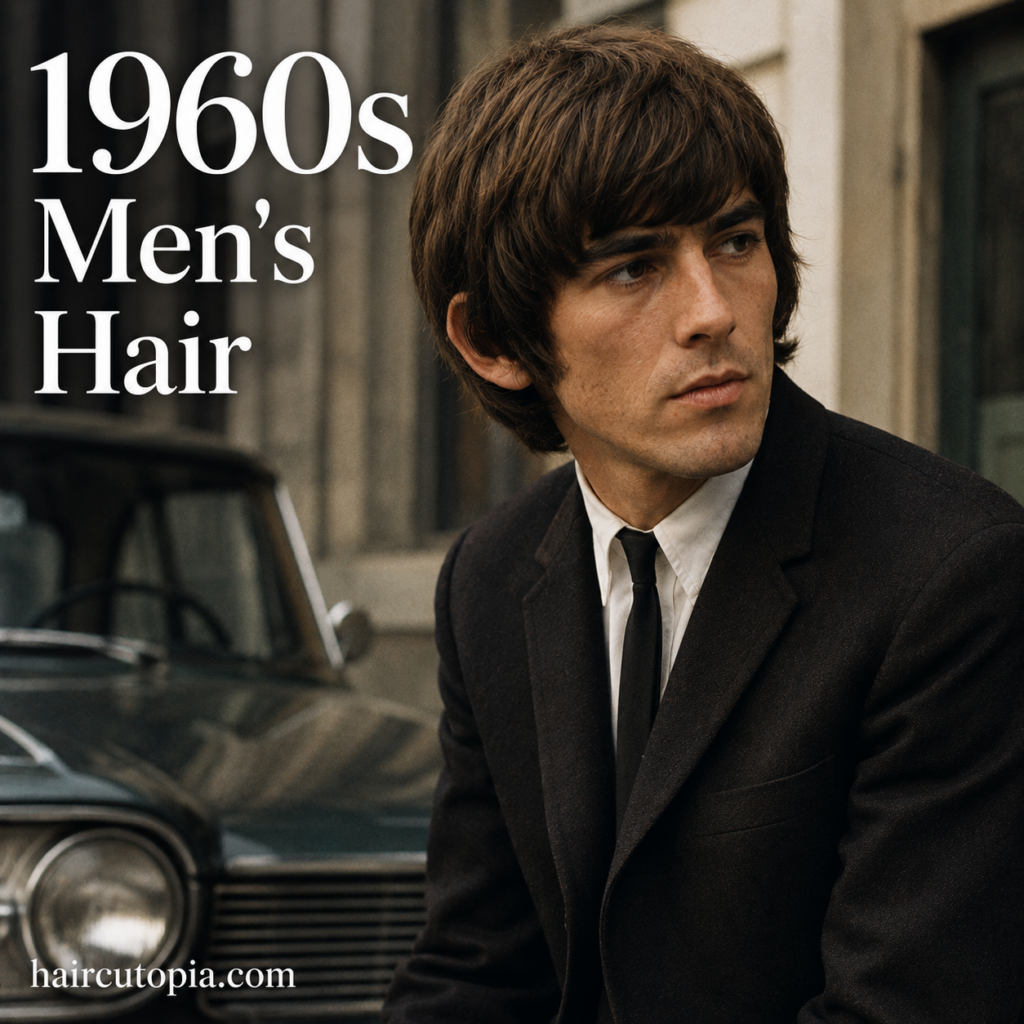
The 1960s completely transformed men’s hairstyles. The decade began with clean, conservative cuts carried over from the 1950s but quickly evolved into longer, more expressive styles that reflected changing attitudes toward fashion, music, and individuality.
From the polished Ivy League haircut to the world-famous Beatles mop top, men’s hair became a defining part of personal style. By the end of the decade, longer layered cuts inspired by the hippie movement had replaced the neatly groomed looks that once dominated barbershops.
Many of today’s most popular men’s hairstyles can trace their roots back to the 1960s. Whether you’re interested in vintage fashion, looking for haircut inspiration, or simply curious about one of history’s most influential decades, this guide explores the styles that made 1960s men’s hair unforgettable.
Why the 1960s Changed Men’s Hairstyles
Few decades had as much influence on men’s grooming as the 1960s.
Earlier generations favored short, tidy hair that emphasized professionalism and discipline. During the 1960s, however, younger men embraced longer hair, softer shapes, and styles inspired by musicians, actors, and cultural movements.
Several factors helped drive this transformation:
- The British Invasion
- Rock and roll music
- Hollywood films
- Youth culture
- Television
- The Mod movement
- The hippie movement
Hair became more than grooming—it became a statement of identity.
The Evolution of 1960s Men’s Hair
The decade can be divided into three distinct phases.
Early 1960s (1960–1963)
The beginning of the decade still reflected traditional barbering.
Popular characteristics included:
- Short back and sides
- Side parts
- Clean tapers
- Pomade styling
- Neatly trimmed necklines
These haircuts were polished and professional.
Mid-1960s (1964–1966)
Everything changed with the arrival of British bands.
Hair became:
- Longer
- Fuller
- More textured
- Less structured
- More youthful
The mop top quickly became one of the most recognizable hairstyles in history.
Late 1960s (1967–1969)
By the end of the decade, men’s hairstyles became even longer.
Popular features included:
- Shoulder-grazing lengths
- Soft layers
- Natural texture
- Center parts
- Minimal styling products
The relaxed aesthetic reflected the counterculture movement sweeping across the world.
The Most Popular 1960s Men’s Hairstyles
The Mop Top
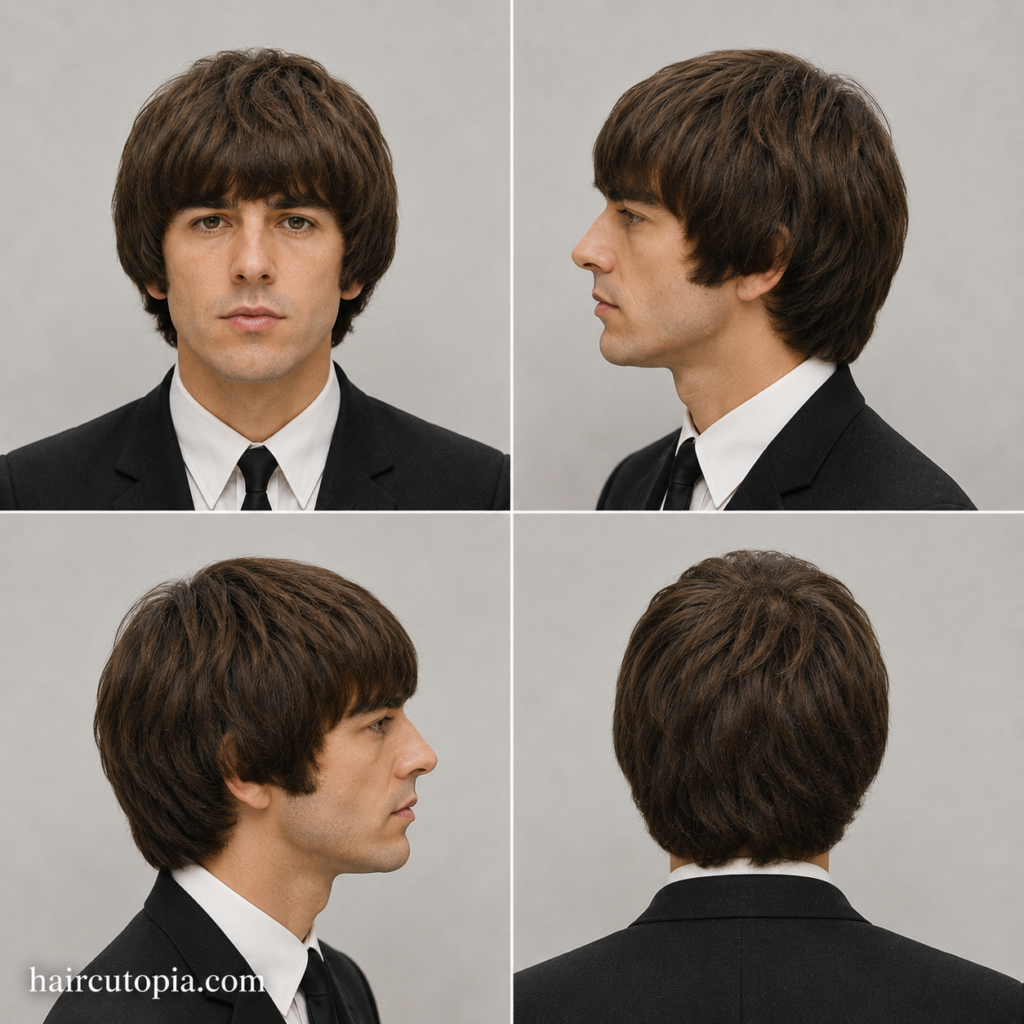
No hairstyle represents the 1960s more than the mop top.
Popularized during the British Invasion, it became a worldwide phenomenon and inspired millions of men to grow their hair longer.
Its defining characteristics included:
- Rounded silhouette
- Full fringe
- Hair covering the ears
- Medium length
- Soft layering
- Thick texture
Unlike heavily styled hair from previous decades, the mop top looked effortless while still appearing polished.
Today, textured bowl cuts and modern shag hairstyles owe much of their popularity to this iconic haircut.
The Ivy League
The Ivy League remained popular throughout the decade, especially among professionals and college students.
This timeless haircut featured:
- Short tapered sides
- Longer top
- Defined side part
- Clean neckline
- Neatly combed finish
Its versatility made it suitable for nearly every occasion.
The Side-Part Taper
Another classic style that survived the changing decade was the side-part taper.
Characteristics included:
- Medium-length top
- Gradual taper
- Natural volume
- Sharp part
- Clean edges
It blended traditional barbering with modern styling techniques.
The Crew Cut
Although longer hairstyles became fashionable, the crew cut never disappeared.
It remained popular among:
- Military personnel
- Athletes
- Business professionals
- Students
The haircut featured:
- Short sides
- Short crown
- Slightly longer front
- Easy maintenance
Its simplicity continues to make it a popular choice today.
Longer Layered Hair
By the late 1960s, many men embraced longer hairstyles.
These cuts emphasized:
- Soft movement
- Light layering
- Natural growth
- Center parts
- Relaxed styling
Rather than looking perfectly groomed, the goal was a more effortless appearance.
The Shag-Inspired Cut
The late 1960s introduced early versions of what would become the shag haircut.
Features included:
- Medium-to-long length
- Feathered layers
- Natural volume
- Face-framing movement
- Slightly messy finish
This style became even more popular during the 1970s.
The Influence of The Beatles
No discussion of 1960s men’s hair is complete without mentioning The Beatles.
When the band rose to international fame, their signature mop tops challenged traditional expectations of men’s grooming.
At first, many adults considered the style unusually long. Within a few years, however, it became one of the most requested haircuts in barbershops around the world.
The Beatles demonstrated that men’s hairstyles could be fashionable, expressive, and influential.
The Mod Movement and Men’s Hair
The Mod movement emerged in Britain and quickly spread internationally.
Mod hairstyles focused on:
- Precision cutting
- Smooth texture
- Sharp silhouettes
- Well-maintained shape
- Modern fashion
Unlike the longer hippie styles that followed, Mod hair remained neat while embracing greater length than previous generations.
The Hippie Movement’s Influence
As the decade progressed, grooming became more relaxed.
Men increasingly favored hair that looked natural rather than heavily styled.
Popular late-1960s features included:
- Shoulder-length hair
- Center parts
- Soft layers
- Natural waves
- Air-dried texture
These styles reflected a broader cultural shift toward individuality and self-expression.
Hair Products Used During the 1960s
The products men used evolved throughout the decade.
Early 1960s
Popular styling products included:
- Pomade
- Hair cream
- Brylcreem
- Grooming tonic
- Fine-tooth combs
These created polished, glossy finishes.
Mid to Late 1960s
As hairstyles became more natural, lighter products gained popularity.
Common choices included:
- Light styling cream
- Hair spray
- Leave-in conditioner
- Texture cream
- Blow dryers
The goal shifted toward movement instead of stiffness.
Hairstyles for Different Hair Types
Straight Hair
Ideal choices include:
- Mop top
- Ivy League
- Side-part taper
- Crew cut
Straight hair naturally showcases clean lines and rounded silhouettes.
Wavy Hair
Excellent options include:
- Layered medium cuts
- Longer Mod hairstyles
- Shag-inspired cuts
- Relaxed side parts
Natural waves add movement without much styling.
Thick Hair
Thicker hair works especially well with:
- Mop tops
- Layered cuts
- Longer hairstyles
- Textured styles
The added density creates fuller silhouettes.
Fine Hair
Fine hair benefits from:
- Ivy League cuts
- Crew cuts
- Side-part tapers
- Lightly layered styles
These cuts help maintain shape while creating the appearance of volume.
Curly Hair
Although naturally curly hair was less common in mainstream fashion imagery, many men embraced:
- Rounded medium cuts
- Layered curls
- Natural texture
- Fuller silhouettes
These styles fit well with the relaxed look of the late 1960s.
How to Get a 1960s Men’s Haircut Today
If you’re inspired by vintage grooming, ask your barber for a modern interpretation rather than an exact historical recreation.
Mention details like:
- Soft taper instead of skin fades
- Medium-length top
- Rounded shape
- Natural texture
- Minimal layering
- Longer fringe if desired
Bringing reference photos can also help communicate the look you’re after.
Modern Hairstyles Inspired by the 1960s
Many current trends borrow heavily from the decade.
Popular examples include:
- Modern mop tops
- Textured crops
- Curtain hairstyles
- Medium layered cuts
- Soft shags
- Classic side parts
- Ivy League cuts
- Relaxed tapers
These styles update vintage inspiration with contemporary texture and easier maintenance.
Why 1960s Men’s Hair Still Matters
The hairstyles of the 1960s changed how men viewed grooming.
Instead of following one standard, men gained the freedom to experiment with different lengths, textures, and silhouettes.
The decade also introduced the idea that hairstyles could express personality, creativity, and cultural identity.
That influence is still visible today, whether in modern textured cuts, longer layered styles, or timeless classics like the Ivy League.
Tips for Styling 1960s-Inspired Hair
To recreate the look while keeping it modern:
- Grow your hair slightly longer than contemporary short cuts.
- Avoid overly sharp fades.
- Use lightweight styling products.
- Allow natural movement.
- Choose matte finishes over heavy shine.
- Blow-dry for volume if needed.
- Keep the haircut regularly trimmed to maintain its shape.
The result is a hairstyle that feels vintage-inspired without looking outdated.
Frequently Asked Questions
What was the most popular men’s hairstyle in the 1960s?
The mop top became the defining hairstyle of the decade thanks to its rounded shape, full fringe, and influence on global fashion.
Were men’s hairstyles longer in the 1960s?
Yes. Hair gradually became longer throughout the decade, transitioning from short, neat cuts to layered, shoulder-length styles by the late 1960s.
Did everyone wear mop tops?
No. Many men continued wearing traditional styles like the Ivy League, side-part taper, or crew cut throughout the decade.
What products did men use in the 1960s?
Early styles relied on pomade, hair cream, and grooming tonics, while later hairstyles favored lighter creams, texture products, and more natural finishes.
Are 1960s men’s hairstyles still fashionable?
Absolutely. Modern textured crops, curtain hairstyles, layered cuts, and even today’s mop top variations all draw inspiration from 1960s men’s hair.
Final Thoughts
The evolution of 1960s men’s hair mirrored one of the most dynamic periods in modern history. From the polished side parts of the early years to the legendary mop top and the free-flowing layered styles of the late decade, men’s hairstyles became symbols of changing tastes, cultural movements, and personal expression.
Many of these classic looks continue to influence barbers and stylists today. Whether you prefer the timeless sophistication of an Ivy League haircut or the relaxed charm of longer layered hair, the styles of the 1960s remain relevant because they combine character, versatility, and enduring appeal.