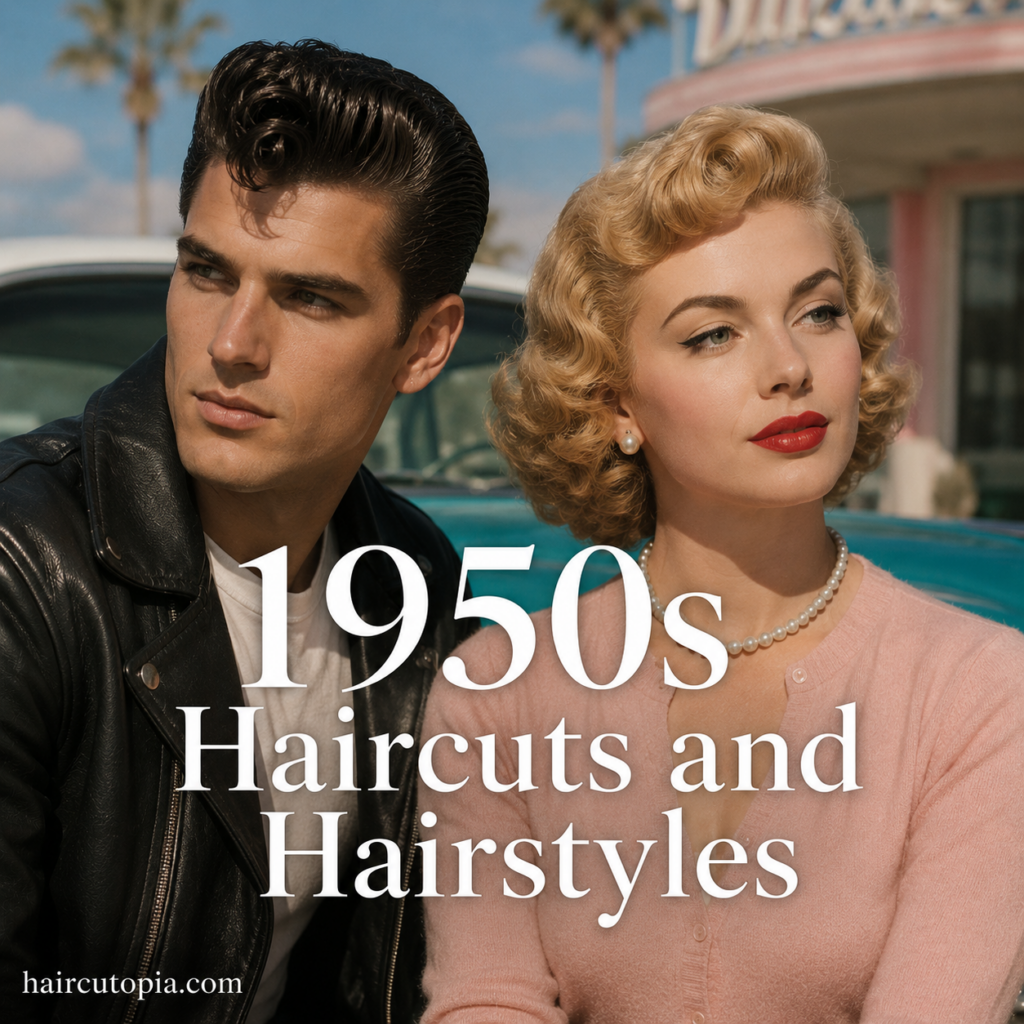
The 1950s were a golden age for hairstyles. Following the hardships of World War II, fashion embraced optimism, elegance, and polished beauty. Hair became fuller, softer, and more carefully styled, with glamorous curls, sculpted volume, and impeccably groomed cuts becoming the standard for both women and men.
Hollywood stars, television, and the rise of youth culture all played major roles in shaping hairstyle trends throughout the decade. Women experimented with everything from short pixie-inspired cuts to voluminous shoulder-length curls, while men popularized slick side parts, pompadours, and the rebellious styles associated with the birth of rock and roll.
Many of today’s most recognizable hairstyles—from the modern pixie cut to the pompadour—have their roots in the 1950s.
Whether you’re exploring vintage fashion, searching for retro hairstyle inspiration, or simply curious about hair history, this guide covers the defining haircuts and hairstyles of one of the most stylish decades ever.
Why the 1950s Were a Turning Point for Hairstyles
The 1950s marked a shift toward polished, carefully maintained hairstyles.
Advances in home beauty products made it easier than ever for people to style their hair, while salons became increasingly popular destinations for regular maintenance.
Several influences shaped hairstyles during the decade:
- Hollywood films
- Television
- Rock and roll
- Youth culture
- Growing suburban lifestyles
- New styling products and techniques
Hair became a symbol of personal style, with everyday looks often requiring careful curling, brushing, and setting.
Defining Features of 1950s Hairstyles
Although trends evolved throughout the decade, several characteristics defined 1950s hair.
Soft Volume
Compared with the more structured 1940s haircuts and hairstyles, hair in the 1950s became fuller, softer, and more rounded.
Volume appeared around:
- The crown
- The sides
- The fringe
- The ends
Carefully Styled Curls
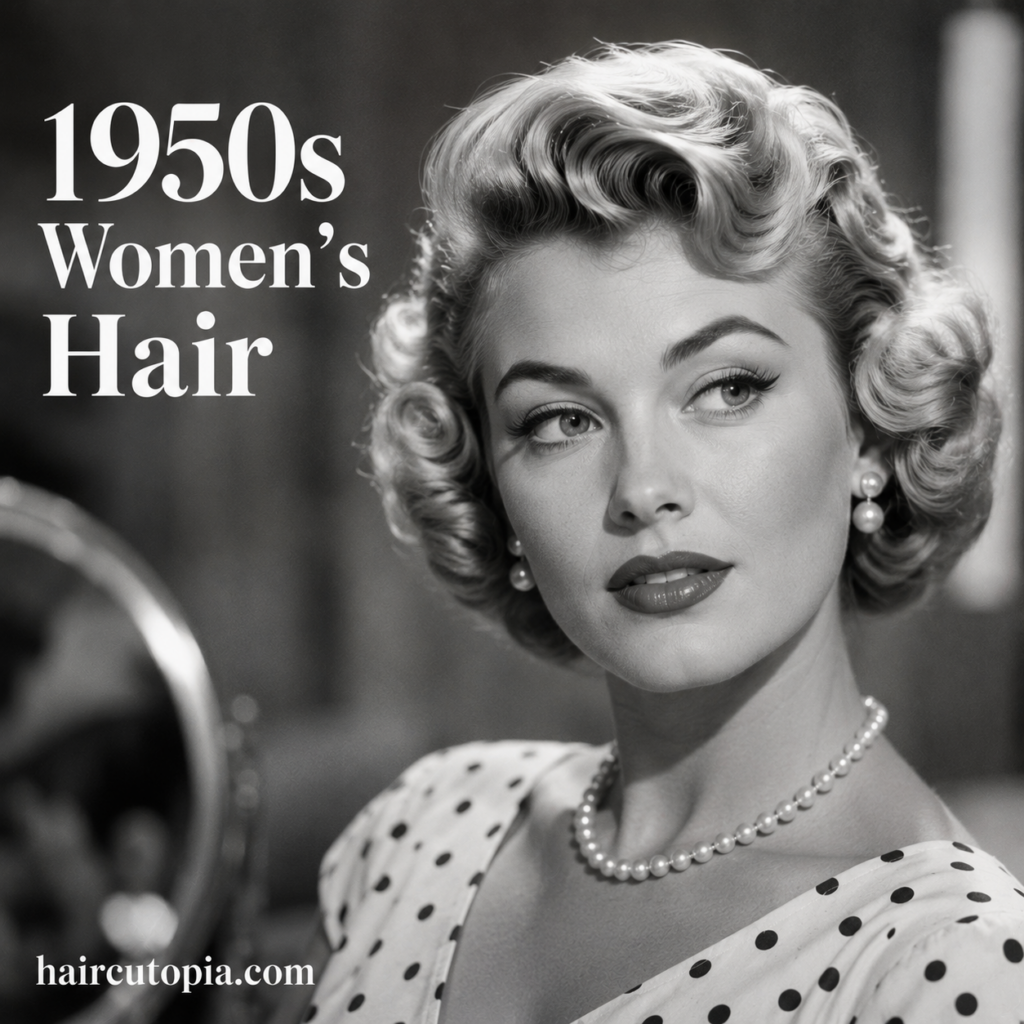
Soft curls became one of the decade’s signature features.
Hair rarely appeared messy or undone.
Healthy Shine
Pomades, setting lotions, creams, and brilliantine helped create glossy finishes.
Feminine Silhouettes
Women’s hairstyles emphasized graceful curves rather than dramatic geometric shapes.
The Most Popular Women’s Haircuts of the 1950s
The Italian Cut
One of the decade’s most fashionable hairstyles, the Italian Cut featured:
- Short to medium length
- Soft layers
- Natural movement
- Plenty of volume
Inspired by Italian film stars, the haircut appeared glamorous without looking overly formal.
The Pixie Cut
Although extremely short hair wasn’t the norm, actresses like Audrey Hepburn helped popularize elegant pixie-inspired styles.
These cuts featured:
- Cropped sides
- Soft texture
- Feminine fringe
- Delicate shaping
The pixie became one of the decade’s most memorable haircuts.
Short Curled Bob
The bob continued evolving.
Rather than sleek lines, many bobs featured:
- Curled-under ends
- Soft layering
- Rounded volume
- Side-swept styling
This elegant haircut suited nearly every age.
Shoulder-Length Layered Cut
Medium-length hairstyles became increasingly popular.
Gentle layers made it easier to create:
- Curls
- Flip styles
- Volume
- Ponytails
Long Glamour Cut
Longer hairstyles also gained popularity.
Women often wore long hair with:
- Large curls
- Side parts
- Soft waves
- Brushed-out volume
These luxurious styles appeared frequently in Hollywood films.
The Most Iconic Women’s Hairstyles
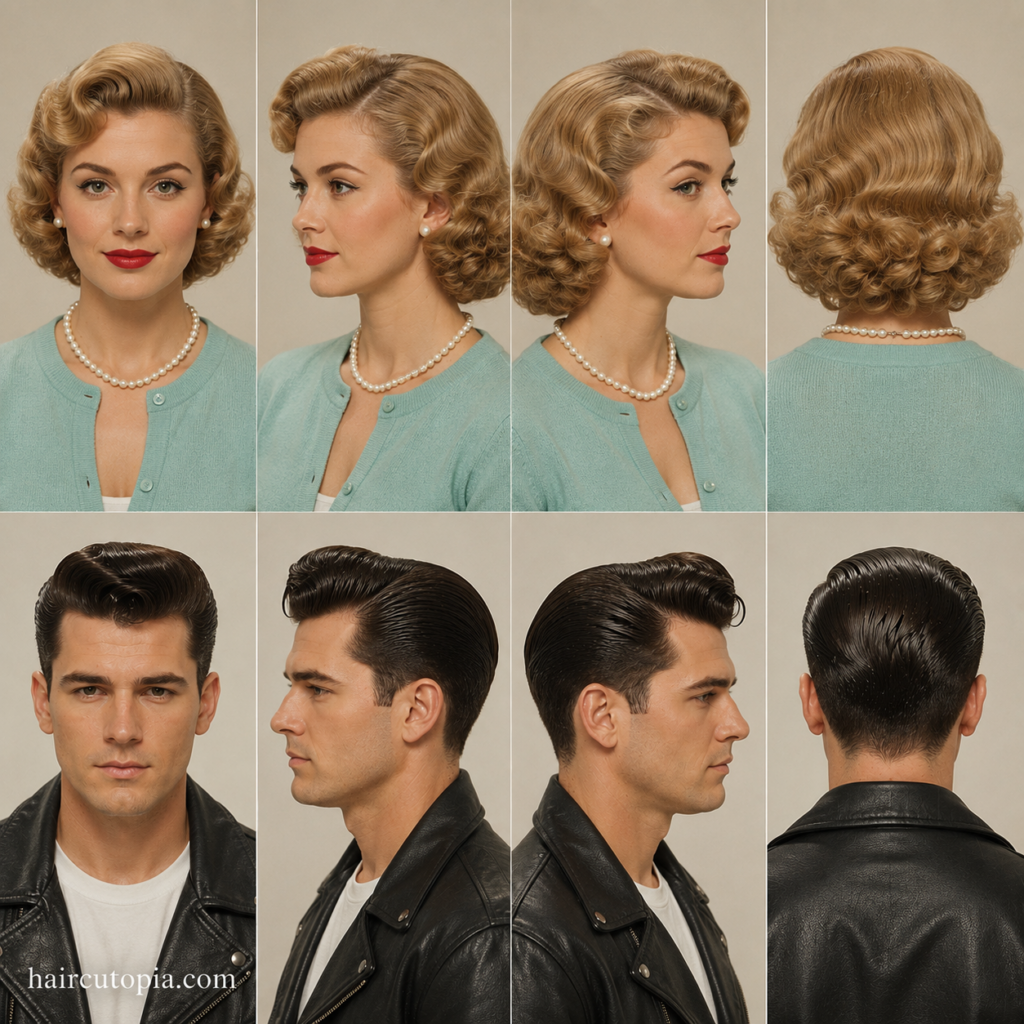
Haircuts were important, but styling truly defined the decade.
The Poodle Cut
Popularized by Lucille Ball, the Poodle Cut featured tightly curled short hair that created rounded volume around the head.
Its playful appearance became one of the most recognizable looks of the decade.
The Bubble Cut
The Bubble Cut featured:
- Rounded shape
- Full volume
- Smooth finish
- Carefully sculpted silhouette
It became especially popular toward the late 1950s.
Pin Curls
Pin curls remained an everyday styling technique.
Women often set their hair overnight before brushing the curls into soft waves.
Rolled Bangs
Rolled or curled bangs framed the face beautifully while adding volume to shorter hairstyles.
Flip Hairstyle
This trend would become even more popular as 1960s haircuts and hairstyles embraced greater volume, youthful silhouettes, and new approaches to styling.
Popular Men’s Haircuts of the 1950s
The 1950s introduced some of the most iconic men’s hairstyles in history.
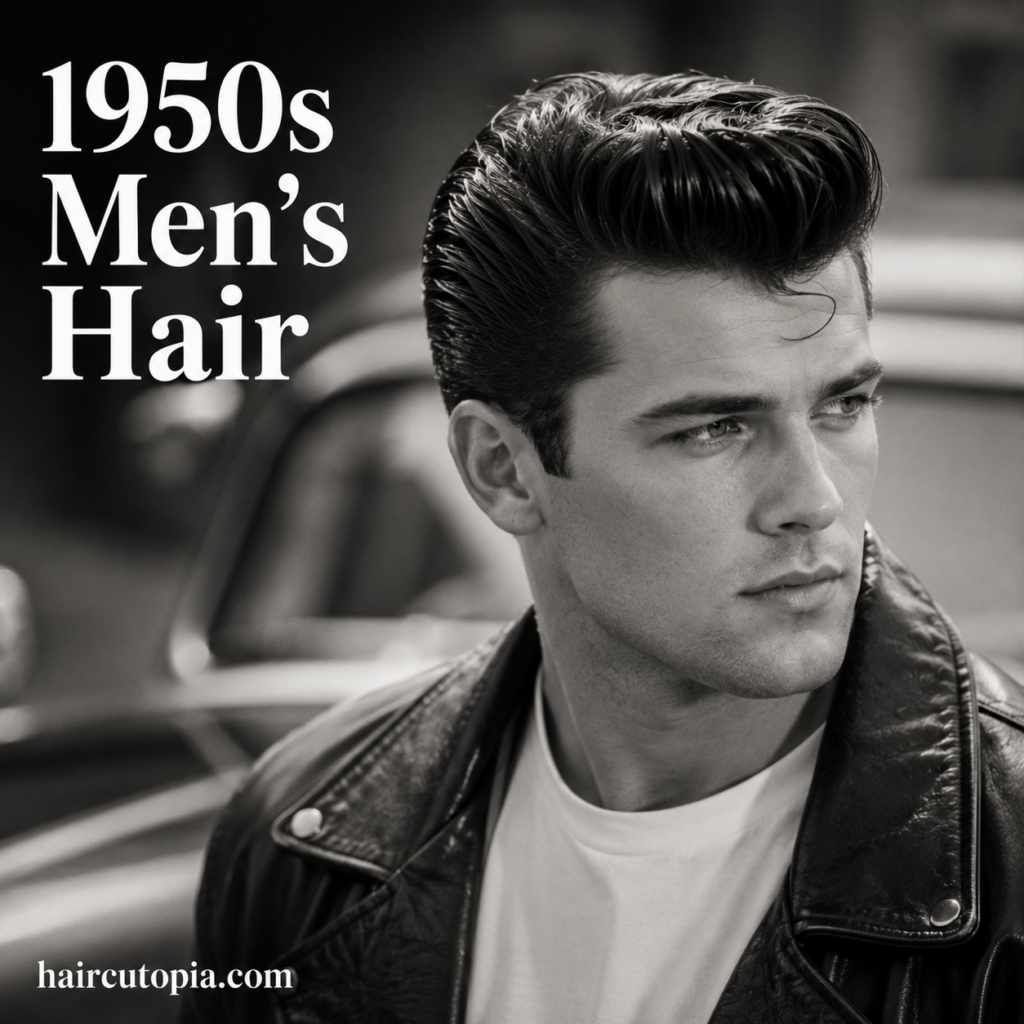
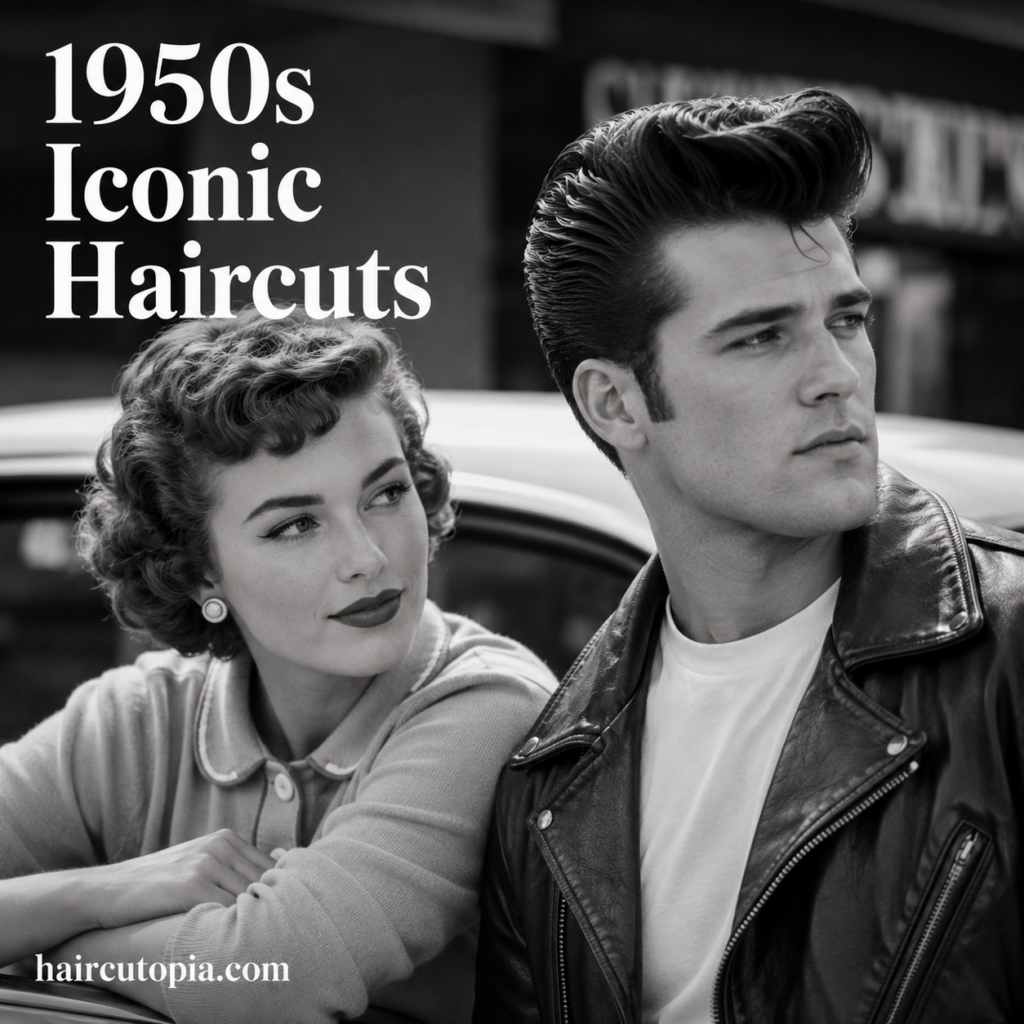
Pompadour
The pompadour became the defining men’s hairstyle of the decade.
Features included:
- High volume
- Swept-back front
- Short sides
- Glossy finish
It remains one of the most popular classic hairstyles today.
Ducktail (DA)
The Ducktail, often called the “DA,” featured hair combed backward from both sides until it met at the center of the back.
The result resembled a duck’s tail.
This rebellious style became closely associated with rock and roll culture.
Ivy League Haircut
The Ivy League haircut offered a cleaner, more conservative alternative.
It featured:
- Short sides
- Neat top
- Defined part
- Professional appearance
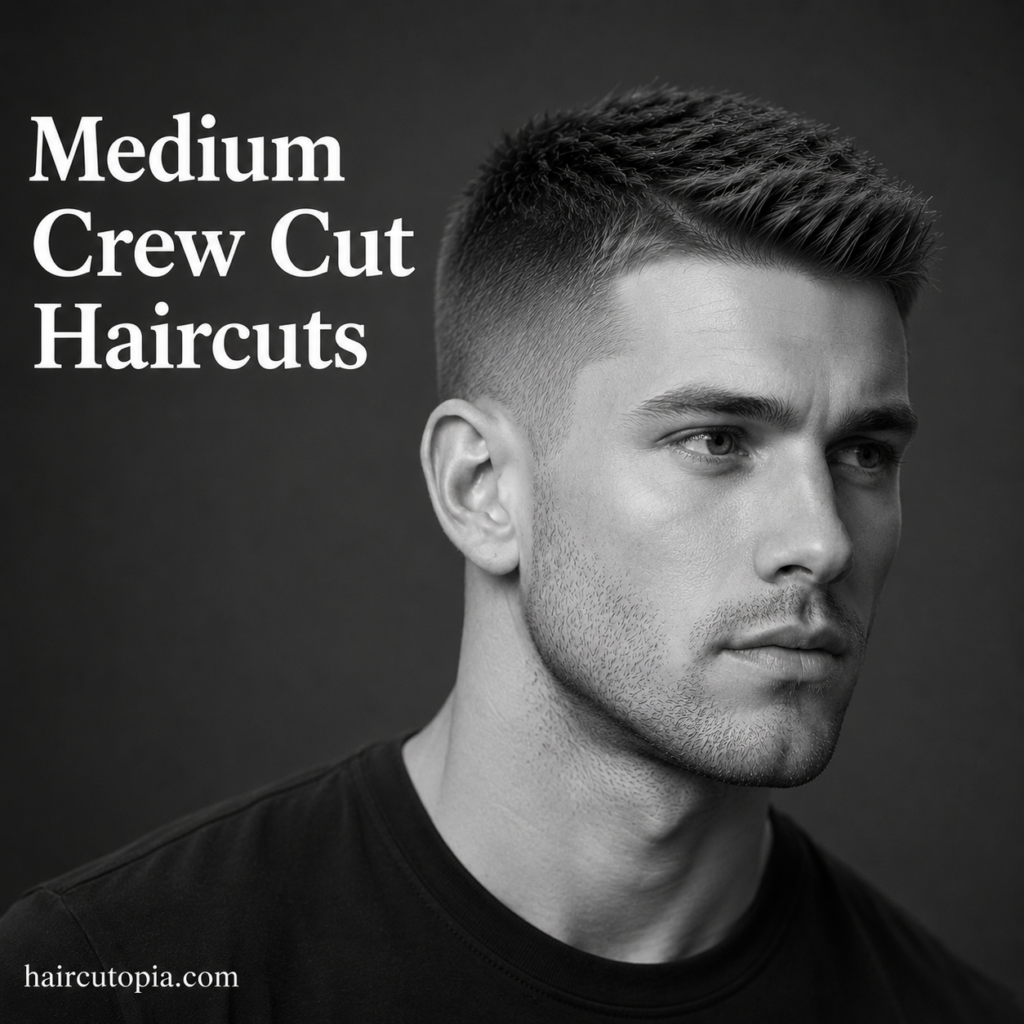
Crew Cut
Military influence continued through the popularity of crew cuts.
These low-maintenance hairstyles suited both students and professionals.
Slick Side Part
Many businessmen preferred polished side parts styled with pomade for a clean, timeless appearance.
Hollywood Icons Who Defined 1950s Hair
Film stars became international beauty influences.
Women admired hairstyles worn by:
- Marilyn Monroe
- Audrey Hepburn
- Grace Kelly
- Elizabeth Taylor
- Doris Day
- Debbie Reynolds
- Sophia Loren
Men copied the looks of:
- James Dean
- Elvis Presley
- Rock Hudson
- Cary Grant
- Tony Curtis
- Marlon Brando
These celebrities helped transform hairstyles into cultural icons.
Rock and Roll Changed Men’s Hairstyles
The emergence of rock and roll encouraged younger men to embrace more expressive hairstyles.
Popular looks featured:
- Higher pompadours
- Longer tops
- Heavy pomade
- Dramatic volume
Elvis Presley became one of the biggest hairstyle influencers of all time.
Hair Accessories of the 1950s
Accessories complemented polished hairstyles beautifully.
Popular choices included:
- Headbands
- Scarves
- Ribbon bows
- Decorative combs
- Pearls
- Floral clips
- Barrettes
These accessories added personality while maintaining an elegant appearance.
Hair Care and Styling Products
Daily hairstyling often required multiple products.
Popular options included:
- Setting lotion
- Hair spray
- Pomade
- Hair cream
- Brilliantine
- Rollers
- Pin curl clips
Many women slept in rollers to achieve salon-quality curls.
Hairstyles and Fashion Worked Together
The decade’s hairstyles paired perfectly with feminine fashion.
Popular clothing included:
- Full-circle skirts
- Pencil skirts
- Cardigans
- Shirt dresses
- Tailored suits
- Evening gowns
Voluminous hairstyles balanced the era’s fitted silhouettes.
The Rise of Home Hair Styling
Improved home appliances transformed hairstyling.
Women increasingly used:
- Heated rollers
- Hood dryers
- Curling irons
- Hair setters
This made professional-looking hairstyles more accessible than ever.
How the 1950s Influenced Modern Hair
Many current hairstyles originated during the 1950s.
Examples include:
- Modern pixie cuts
- Pompadours
- Bubble bobs
- Flip hairstyles
- Hollywood curls
- Layered medium cuts
- Classic side parts
These timeless styles continue to evolve while retaining their vintage charm.
Choosing a 1950s Hairstyle Today
Many 1950s styles remain flattering today.
Oval Faces
Almost every vintage hairstyle complements oval face shapes.
Consider:
- Italian Cut
- Pixie Cut
- Hollywood curls
- Bubble Cut
Round Faces
Longer styles with crown volume help elongate the face.
Square Faces
Soft curls reduce angularity while creating balance.
Heart-Shaped Faces
Medium-length styles with fullness around the jaw create harmonious proportions.
Can You Wear a 1950s Hairstyle Every Day?
Absolutely.
Many modern hairstyles already incorporate 1950s influences.
Simple ways to embrace the decade include:
- Soft curls
- Side parts
- Curled-under ends
- Flip styling
- Classic pompadours
- Vintage accessories
These subtle touches bring timeless elegance into contemporary fashion.
Frequently Asked Questions
What was the most popular hairstyle of the 1950s?
The decade featured several iconic looks, including the Italian Cut, Poodle Cut, Bubble Cut, pompadour, and classic curled bob.
Did women still wear short hair?
Yes. Short hairstyles remained extremely popular, although many women also embraced shoulder-length and longer cuts.
Why was the pompadour so popular?
The pompadour combined sophistication with youthful confidence and became closely associated with Elvis Presley and rock and roll culture.
What products were used in the 1950s?
Setting lotion, hair spray, pomade, brilliantine, rollers, and hair cream helped create the polished styles of the era.
Were curls fashionable?
Absolutely. Soft curls were one of the defining characteristics of women’s hairstyles throughout the decade.
Are 1950s hairstyles still in style?
Yes. Modern versions of pixie cuts, pompadours, Hollywood curls, and flipped hairstyles remain popular today.
Final Thoughts
The 1950s celebrated polished beauty, confidence, and individuality through hairstyles that have stood the test of time. From glamorous Hollywood curls and playful bubble cuts to iconic pompadours and neatly groomed side parts, the decade produced some of the most recognizable looks in hair history.
Its influence continues to shape salons, fashion runways, and everyday styling around the world. Whether you’re drawn to the elegance of Marilyn Monroe’s soft curls or the bold confidence of Elvis Presley’s pompadour, the hairstyles of the 1950s remain as stylish and inspiring today as they were more than half a century ago.