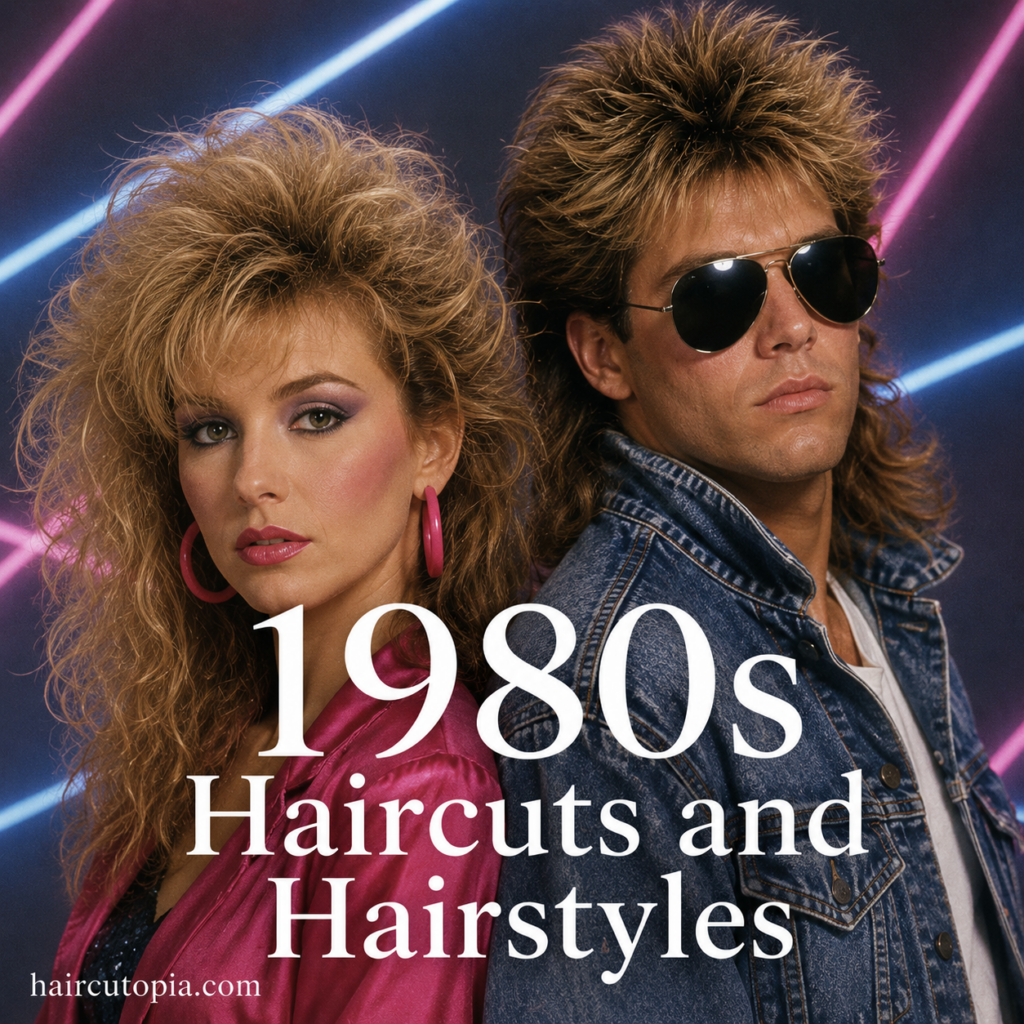
If one idea sums up 1980s hair, it’s this: more was usually more.
More volume. More texture. More layers. More hairspray. More personality.
The decade produced some of the most instantly recognizable hairstyles in modern history. Women embraced teased crowns, feathered layers, perms, side ponytails, short layered cuts, and enormous curls. Men experimented with mullets, longer rock-inspired styles, flat tops, spikes, slicked-back looks, and sharply shaped cuts.
Music had an enormous influence. Rock, metal, punk, New Wave, pop, hip-hop, and other emerging scenes each brought their own approach to hair. Television and movies amplified those trends, while salons gained new tools and products that made dramatic styling easier to recreate at home.
Yet 1980s hair wasn’t simply about making everything huge. The decade also produced sleek bobs, geometric cuts, asymmetric styles, natural Black hairstyles, precision fades, and short cuts that still influence modern hair.
Here’s a closer look at the haircuts and hairstyles that made the 1980s unforgettable.
What Defined 1980s Hair?
The 1980s represented a dramatic shift from many of the relaxed, natural hairstyles of the previous decade.
While 1970s haircuts and hairstyles favored flowing layers, natural movement, shags, and feathered looks, the 1980s often pushed those ideas further. Feathering became bigger. Shags became more dramatic. Curls gained volume. Short hairstyles became increasingly sculpted.
Several cultural influences shaped hair throughout the decade:
- MTV and music videos
- Rock and heavy metal
- New Wave and punk
- Pop music
- Hip-hop culture
- Television and movies
- Aerobics and fitness fashion
- Advances in styling products
- Celebrity culture
- Growing interest in individual expression
Hair could instantly communicate someone’s connection to a particular fashion or music scene.
That made the decade unusually diverse.
Defining Features of 1980s Hairstyles
Certain characteristics appeared again and again.
Big Volume
Volume is probably the feature most closely associated with 1980s hair.
Stylists created height around the:
- Crown
- Fringe
- Sides
- Back
Teasing, blow-drying, curling, and hairspray helped maintain the shape.
The goal wasn’t always perfect symmetry. In many styles, dramatic texture was part of the appeal.
Heavy Layering
Layers remained important after becoming a major trend during the 1970s.
In the 1980s, however, they often became shorter and more pronounced.
Short crown layers created lift while longer sections maintained movement around the sides and back.
Curls and Perms
Curls were everywhere.
People with naturally curly hair could emphasize their texture, while others turned to perms for long-lasting waves and curls.
Permed styles ranged from relatively soft waves to tight, high-volume curls.
Teased Texture
Backcombing helped create the dramatic height associated with many hairstyles.
Hair didn’t necessarily need to look perfectly smooth. Visible texture could make the style feel bigger and more energetic.
Strong Shapes
The decade wasn’t entirely about loose volume.
Precision cuts, flat tops, asymmetrical styles, fades, and geometric shapes provided a sharper alternative.
The Most Popular Women’s Haircuts of the 1980s
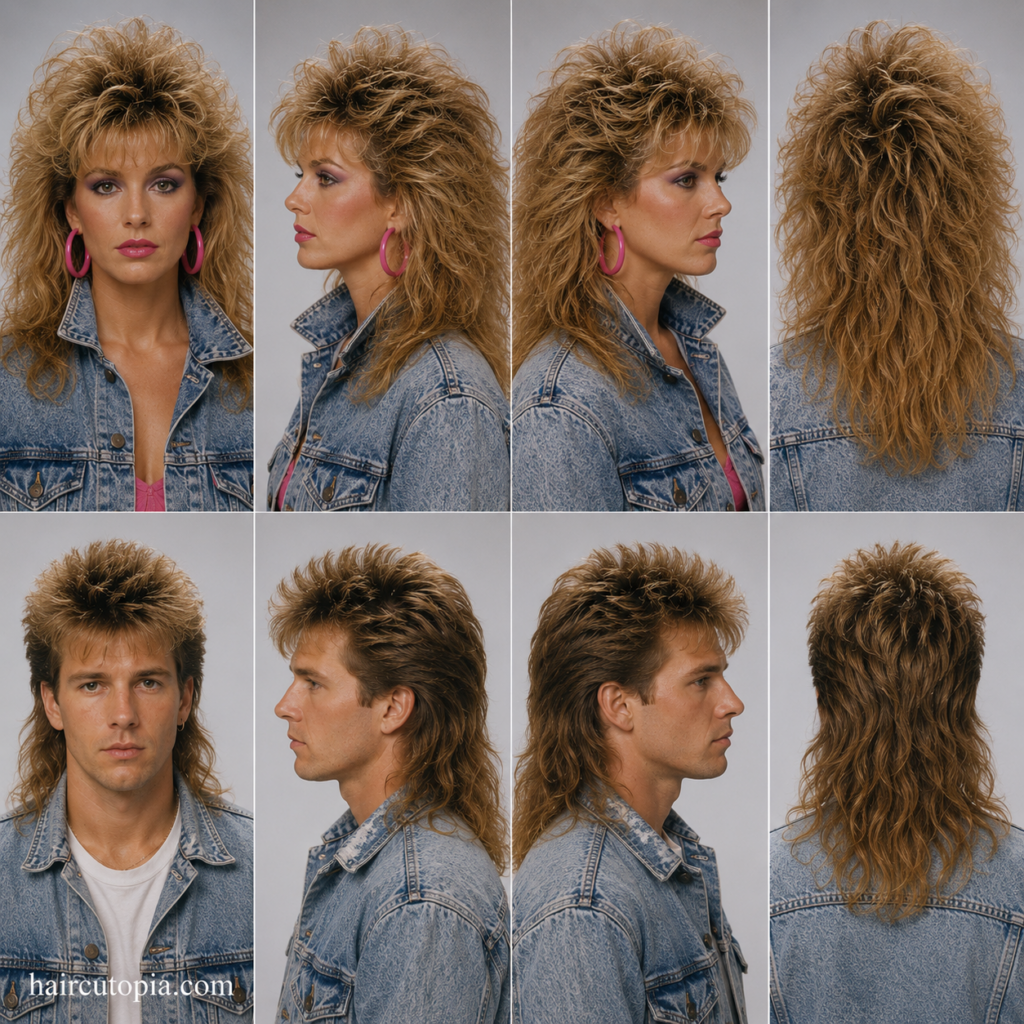
Women’s haircuts ranged from long layered styles to extremely short statement cuts.
Feathered Layers
Feathered hair carried over from the 1970s but evolved during the new decade.
Layers became fuller, higher, and often more dramatic around the face.
Typical features included:
- Shorter face-framing sections
- Crown volume
- Swept-back sides
- Long layered lengths
- Feathered fringe
Instead of falling softly, the layers were often styled to create maximum movement.
Short Layered Cut
Short layered hairstyles became extremely popular.
These cuts offered enough length to create texture while remaining relatively easy to style.
Common features included:
- Short crown layers
- Feathered sides
- Textured fringe
- Tapered neckline
The haircut could look polished for work or heavily styled for a more dramatic appearance.
Voluminous Bob
Bobs remained fashionable, but many 1980s versions were anything but flat.
Volume around the crown and sides created a fuller silhouette.
Some featured:
- Permed texture
- Heavy layering
- Side-swept bangs
- Curled ends
- Asymmetrical shapes
Long Layered Cut
Long hair remained popular throughout the decade.
Layers prevented longer styles from appearing heavy and made it easier to create the volume people wanted.
These cuts often featured short layers near the crown that gradually transitioned into longer lengths.
Asymmetrical Cut
Asymmetry became particularly fashionable within New Wave and alternative styles.
One side might be:
- Shorter
- Shaved
- Tucked tightly
- Cut at a different angle
The other side could remain dramatically longer.
These cuts offered a futuristic contrast to traditional symmetrical hairstyles.
The Most Iconic Women’s Hairstyles of the 1980s
The haircut provided the foundation. Styling created the unmistakable 1980s effect.
Big Teased Hair
Few looks capture the decade better.
Hair was teased around the crown and sides before being shaped into a voluminous silhouette.
The finished style could incorporate:
- Curls
- Waves
- Crimped texture
- Bangs
- Feathered layers
Hairspray helped keep everything in place.
The Perm
Perms became one of the defining beauty trends of the era.
Chemical treatments created curls or waves that lasted considerably longer than temporary roller sets.
Permed hairstyles could be:
- Short
- Medium-length
- Long
- Layered
- Heavily teased
For many people, the combination of a perm and layered haircut provided instant volume.
Crimped Hair
Crimping created a distinctive zigzag texture.
A heated crimping iron pressed small sections of hair between patterned plates.
Crimped hair could be worn:
- Completely loose
- In ponytails
- Partially crimped
- Teased for extra volume
The result was unmistakably playful and very much of the decade.
Side Ponytail
The side ponytail became closely associated with youthful 1980s fashion.
Hair was gathered high or low on one side and often secured with a colorful scrunchie.
It paired naturally with:
- Teased bangs
- Crimped hair
- Curly texture
- Bright accessories
High Ponytail
High ponytails also became popular, particularly alongside the decade’s fitness and aerobics trends.
Volume at the crown kept the style from appearing too simple.
Half-Up Big Hair
Half-up hairstyles allowed people to maintain dramatic volume while keeping hair away from the face.
The upper sections could be teased and secured with:
- Scrunchies
- Barrettes
- Bows
- Clips
The remaining hair was usually curled, waved, or permed.
1980s Bangs
Bangs deserve their own section because they became such a major part of the decade.
Teased Bangs
Bangs could be curled upward and teased to create significant height.
Hairspray was essential for keeping the shape intact.
Side-Swept Bangs
Longer fringe was swept dramatically across the forehead.
The style worked particularly well with layered haircuts.
Feathered Bangs
Feathered fringe flowed naturally into the sides of the haircut.
Curly Bangs
Permed hairstyles frequently included curly fringe for a cohesive textured appearance.
Not every 1980s hairstyle had bangs, but they became one of the easiest ways to create the era’s signature volume around the face.
The Mullet Becomes a Defining Haircut
Although mullet-like hairstyles existed earlier, the 1980s turned the shape into a cultural phenomenon.
The basic idea was simple:
- Shorter front
- Shorter sides
- Longer back
But there were countless variations.
Some mullets were relatively subtle, while others featured dramatic differences between the top and back.
The haircut appeared across several music and fashion scenes and was worn by both men and women.
Modern mullets have revived many of these ideas, usually with softer blending and more intentional texture.
Popular Men’s Haircuts of the 1980s
Men’s hairstyles became just as diverse as women’s.
The Mullet
The mullet was one of the decade’s most recognizable men’s cuts.
Popular variations included:
- Curly mullets
- Rock mullets
- Short mullets
- Feathered mullets
- Spiky mullets
Its versatility helped it cross several subcultures.
Long Rock Hair
Rock and heavy metal musicians helped make long hair enormously influential.
These styles often featured:
- Shoulder-length or longer hair
- Heavy layering
- Teased volume
- Waves or curls
- Long fringe
Hair became part of the larger rock aesthetic.
Flat Top
The flat top created a completely different silhouette.
Hair was cut and shaped so the upper surface appeared level or carefully sculpted.
The style could be subtle or highly geometric.
High-Top Fade
The high-top fade emerged as one of the era’s most influential Black men’s hairstyles, particularly toward the latter part of the decade and into the early 1990s.
Typical features included:
- Closely cut or faded sides
- Significant height on top
- Clean geometric shaping
- Sharp edges
Hip-hop culture helped bring the style to a much wider audience.
Jheri Curl
The Jheri curl became another highly recognizable hairstyle of the era.
It featured glossy, defined curls with a soft, loose appearance.
The style became particularly visible through musicians and entertainers.
Slicked-Back Hair
Men looking for something more conservative could wear medium-length hair combed backward with styling product.
The result was polished while still fitting the decade’s preference for stronger shapes.
Spiky Hair
Punk and New Wave influences helped popularize spiked hairstyles.
Lengths varied, but styling products were used to create visible separation and sharp texture.
Black Hairstyles and Hair Culture in the 1980s
Black hair culture continued evolving rapidly during the decade.
The Afro remained present, but new cuts and styling techniques became increasingly visible.
Popular styles included:
- High-top fades
- Flat tops
- Jheri curls
- Braids
- Cornrows
- Sculpted natural cuts
- Asymmetrical styles
- Short tapered cuts
Barbering became increasingly creative, particularly through precision shaping and geometric silhouettes.
High-Top Fade
The high-top fade became especially significant.
Its combination of clean faded sides and dramatic height created a bold silhouette that became closely connected with hip-hop fashion.
Jheri Curl
The Jheri curl offered a completely different look, emphasizing glossy, loose curls and movement.
Michael Jackson helped make the style internationally recognizable during the decade.
Braids and Cornrows
Braided styles continued to be worn in a wide variety of patterns.
Beyond fashion, these styles have deep cultural and historical roots within Black communities and shouldn’t be viewed simply as an isolated decade trend.
Rock and Heavy Metal Hair
Few musical genres influenced 1980s hairstyles as visibly as rock and heavy metal.
Long hair became part of the image.
Musicians frequently wore:
- Long layered cuts
- Teased crowns
- Permed curls
- Heavy fringe
- Shaggy texture
The term “hair metal” itself demonstrates how closely hairstyles became associated with the genre’s visual identity.
Bands appearing on MTV brought these looks into homes around the world.
Fans followed.
Punk and New Wave Hairstyles
Punk had already emerged during the late 1970s, but its influence continued into the 1980s.
New Wave added a more stylized, futuristic approach.
Hairstyles could include:
- Mohawks
- Shaved sections
- Spikes
- Asymmetry
- Bright colors
- Sculpted fringe
- Geometric shapes
These styles deliberately rejected conventional beauty standards.
Hair became another way to communicate creativity and rebellion.
The Mohawk
The mohawk became one of the most recognizable alternative hairstyles associated with punk culture.
The sides were shaved or cut extremely short while a strip of longer hair remained through the center.
That longer section could be:
- Spiked
- Colored
- Fanned outward
- Worn naturally
The exaggerated punk version became particularly associated with rebellion and alternative youth culture.
Pop Music and 1980s Hair
Pop stars were equally influential.
Music videos meant audiences weren’t simply hearing performers anymore—they were constantly seeing their clothes, makeup, and hairstyles.
Artists including Madonna, Cyndi Lauper, Janet Jackson, Whitney Houston, and others introduced distinctive looks that fans recreated.
Women’s pop hairstyles included:
- Teased curls
- Side ponytails
- Bows
- Scrunchies
- Short layered cuts
- Asymmetrical styles
The visual nature of pop culture accelerated hairstyle trends considerably.
Celebrity Influence on 1980s Hairstyles
Television, movies, magazines, and music videos turned celebrities into major hairstyle references.
Women drew inspiration from figures such as:
- Madonna
- Princess Diana
- Whitney Houston
- Cyndi Lauper
- Joan Jett
- Tina Turner
- Janet Jackson
- Brooke Shields
Men’s hairstyles were influenced by figures including:
- Michael Jackson
- George Michael
- Jon Bon Jovi
- David Bowie
- Prince
- Tom Cruise
- Billy Idol
Each represented a different side of the decade.
Princess Diana helped popularize short feathered layers, while rock musicians pushed longer, larger hairstyles. Pop and New Wave performers embraced everything from curls to dramatic asymmetry.
Princess Diana’s Influence on Short Hair
One of the decade’s most influential women’s hairstyles wasn’t especially extreme.
Princess Diana became known for a short, feathered haircut with soft volume and carefully layered sides.
The look featured:
- Short layers
- Side-swept fringe
- Feathered movement
- Crown volume
- Tapered shape
It offered a sophisticated alternative to long, heavily teased hairstyles.
Versions of this haircut appeared in salons throughout the decade.
Hair Accessories of the 1980s
Accessories became almost as important as the hairstyles themselves.
Popular choices included:
- Scrunchies
- Oversized bows
- Headbands
- Banana clips
- Barrettes
- Ribbon
- Decorative combs
- Sweatbands
Scrunchies
The scrunchie became one of the decade’s signature accessories.
Its fabric-covered elastic design worked perfectly with ponytails and half-up hairstyles.
Banana Clips
Banana clips gathered longer hair vertically along the back of the head.
They could create the appearance of a fuller ponytail while maintaining plenty of volume.
Headbands
Headbands ranged from practical athletic styles to bold fashion accessories.
They worked especially well with big curls and teased hair.
Hair Products That Made Big Hair Possible
Creating 1980s volume often required serious styling support.
Common products included:
- Strong-hold hairspray
- Mousse
- Styling gel
- Curl activators
- Pomade
- Hair wax
- Setting products
Hairspray became particularly important.
After teasing or curling, generous application helped preserve the height.
Styling Tools of the 1980s
Home hairstyling technology continued improving.
Popular tools included:
- Blow dryers
- Curling irons
- Crimping irons
- Hot rollers
- Brushes
- Teasing combs
- Hair picks
- Diffusers
The combination of heat tools and stronger styling products made increasingly elaborate hairstyles possible outside the salon.
Early 1980s vs. Late 1980s Hairstyles
Hair trends evolved significantly throughout the decade.
Early 1980s Hair
Many early styles still carried 1970s influences.
Common features included:
- Feathered layers
- Medium-length cuts
- Natural curls
- Shags
- Softer volume
Mid-1980s Hair
Volume increased dramatically.
Popular trends included:
- Perms
- Teased hair
- Mullets
- Big curls
- Rock hairstyles
- Crimping
Late 1980s Hair
The decade ended with an enormous range of styles.
Popular looks included:
- High-top fades
- Long rock hair
- Short layered cuts
- Slicked-back men’s styles
- Asymmetrical cuts
- Sculpted shapes
- Dramatic bangs
Some of these trends continued directly into the early 1990s, while others gave way to the layered cuts, grunge-inspired texture, bobs, and more relaxed styling that would define 1990s haircuts and hairstyles.
1980s Hairstyles for Different Hair Lengths
The decade offers inspiration at virtually every length.
Short Hair
Popular options included:
- Feathered crops
- Layered pixies
- Short mullets
- Asymmetrical cuts
- Sculpted bobs
- Short tapered cuts
Short hair could still carry plenty of volume.
Medium Hair
Medium lengths were ideal for:
- Perms
- Shags
- Feathered layers
- Mullets
- Voluminous bobs
- Curly styles
This was one of the most versatile lengths for achieving classic 1980s shapes.
Long Hair
Long styles included:
- Rock hair
- Permed curls
- Feathered layers
- Crimped hair
- High ponytails
- Big teased styles
Long hair provided plenty of material for dramatic styling.
How to Wear an 1980s Hairstyle Today
You don’t need an entire can of hairspray to borrow inspiration from the decade.
Modern interpretations usually tone down the extreme styling while keeping the underlying shape.
Modern Mullet
Today’s mullets often feature softer transitions, textured layers, and more wearable proportions.
Modern Shag
A contemporary shag keeps the short-to-long layering while allowing the hair’s natural texture to create movement.
Soft Feathering
Face-framing layers can be blown away from the face for a subtle reference to 1980s feathered hair.
Modern Perm
Contemporary perms can create looser waves and softer curls rather than the tightly structured texture commonly associated with vintage versions.
Textured Short Cut
Short layered cuts inspired by the decade can be styled with lightweight products for natural separation instead of stiff volume.
Modern High-Top Fade
Precision barbering continues to reinterpret high-top shapes with clean fades, sharp lines, and customized proportions.
Why 1980s Hair Is Coming Back
Many modern trends share the same priorities that made 1980s hair exciting:
- Volume
- Texture
- Layers
- Individuality
- Strong silhouettes
After years of extremely polished minimalist styling, many people have returned to hair with more movement and personality.
Modern versions of:
- Mullets
- Shags
- Perms
- Big blowouts
- Crimped texture
- Layered short cuts
have all appeared again.
The styling may be softer, but the inspiration is unmistakable.
The Lasting Influence of 1980s Haircuts and Hairstyles
The decade’s influence reaches well beyond novelty nostalgia.
Modern hairstyling still borrows from:
- Layered mullets
- Textured shags
- High-top fades
- Feathered layers
- Voluminous blowouts
- Asymmetrical cuts
- Permed texture
- Sculpted short hair
- Spiky styles
The 1980s also reinforced an idea that continues to shape fashion today: hair can be an extension of identity.
A haircut didn’t simply need to look neat.
It could be dramatic, rebellious, glamorous, artistic, or completely unconventional.
Choosing an 1980s-Inspired Hairstyle
The right style depends on how strongly you want to reference the decade.
For Glamorous Volume
Consider:
- Big curls
- Feathered layers
- Voluminous blowout
- Long layered hair
For Rock Style
Try:
- Shag
- Mullet
- Long layered hair
- Teased texture
For Something Short
Consider:
- Feathered crop
- Short layered cut
- Asymmetrical bob
- Textured pixie
For a Bold Statement
Try:
- High-top fade
- Mohawk
- Dramatic mullet
- Asymmetrical cut
- Crimped texture
For a Subtle 1980s Influence
Keep the haircut modern and add:
- Face-framing volume
- Soft feathering
- Textured bangs
- Extra crown lift
You can reference the era without looking like you’re wearing a costume.
Frequently Asked Questions
What was the most popular hairstyle in the 1980s?
There wasn’t one single dominant hairstyle. Perms, feathered layers, mullets, teased hair, voluminous curls, high-top fades, and short layered cuts were all major trends.
Why was 1980s hair so big?
Volume became fashionable across pop, rock, television, and mainstream beauty culture. Improved styling products and tools also made dramatic height easier to create.
Were perms popular in the 1980s?
Extremely. Perms were used to add curls, waves, texture, and volume to short, medium, and long hair.
Were mullets popular with both men and women?
Yes. Although often associated with men’s hair, variations of the mullet were worn across genders and appeared in rock, pop, punk, and mainstream fashion.
What men’s hairstyles were popular in the 1980s?
Popular styles included mullets, flat tops, high-top fades, Jheri curls, long rock hair, spiky cuts, and slicked-back styles.
What women’s hairstyles were popular in the 1980s?
Women commonly wore feathered layers, perms, big teased hair, short layered cuts, voluminous bobs, side ponytails, and asymmetrical hairstyles.
Were bangs popular?
Very much so. Teased, curled, feathered, and side-swept bangs were all common.
What accessories were popular?
Scrunchies, banana clips, headbands, bows, barrettes, and decorative combs were widely used.
Are 1980s hairstyles fashionable again?
Many are. Modern mullets, shags, perms, voluminous blowouts, layered cuts, and textured styles all draw inspiration from the decade.
Final Thoughts
The 1980s weren’t interested in subtlety.
Hair became bigger, bolder, more textured, and increasingly personal. Perms created mountains of curls. Feathered layers framed the face. Mullets challenged traditional haircut shapes. Rock musicians pushed long hair to dramatic extremes, while punk and New Wave scenes embraced spikes, asymmetry, and unconventional color.
At the same time, precision barbering produced influential styles such as the high-top fade, while short feathered cuts demonstrated that 1980s hair didn’t always need to be enormous to make an impact.
What ties these seemingly different hairstyles together is confidence.
The decade encouraged people to experiment with their appearance and treat hair as part of their identity.
That’s also why so many 1980s ideas keep returning. Modern versions may use less hairspray and softer styling, but shags, mullets, perms, big blowouts, layered crops, and high-top shapes continue to evolve.
The hairstyles may have changed, but the decade’s fearless approach to hair never really disappeared.
Related Posts
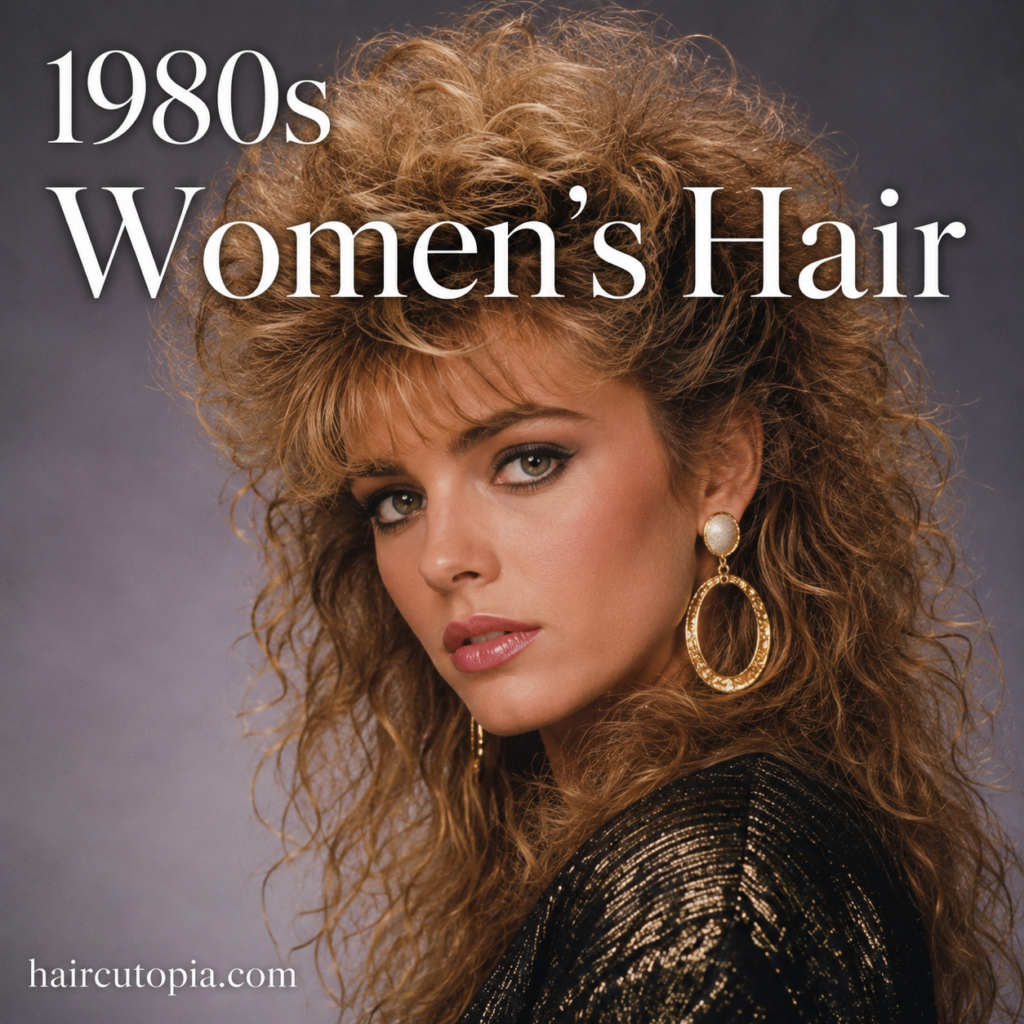 1980s Women’s Hair: The Ultimate Guide to the Decade’s Most Iconic Hairstyles
 1980s Men’s Hair: The Ultimate Guide to the Decade’s Most Iconic Styles
 1980s Iconic Haircuts: The Most Memorable Cuts That Defined the Decade
 2000s Haircuts and Hairstyles: The Complete Guide to Y2K Layers, Spikes, Highlights, and Iconic Styles