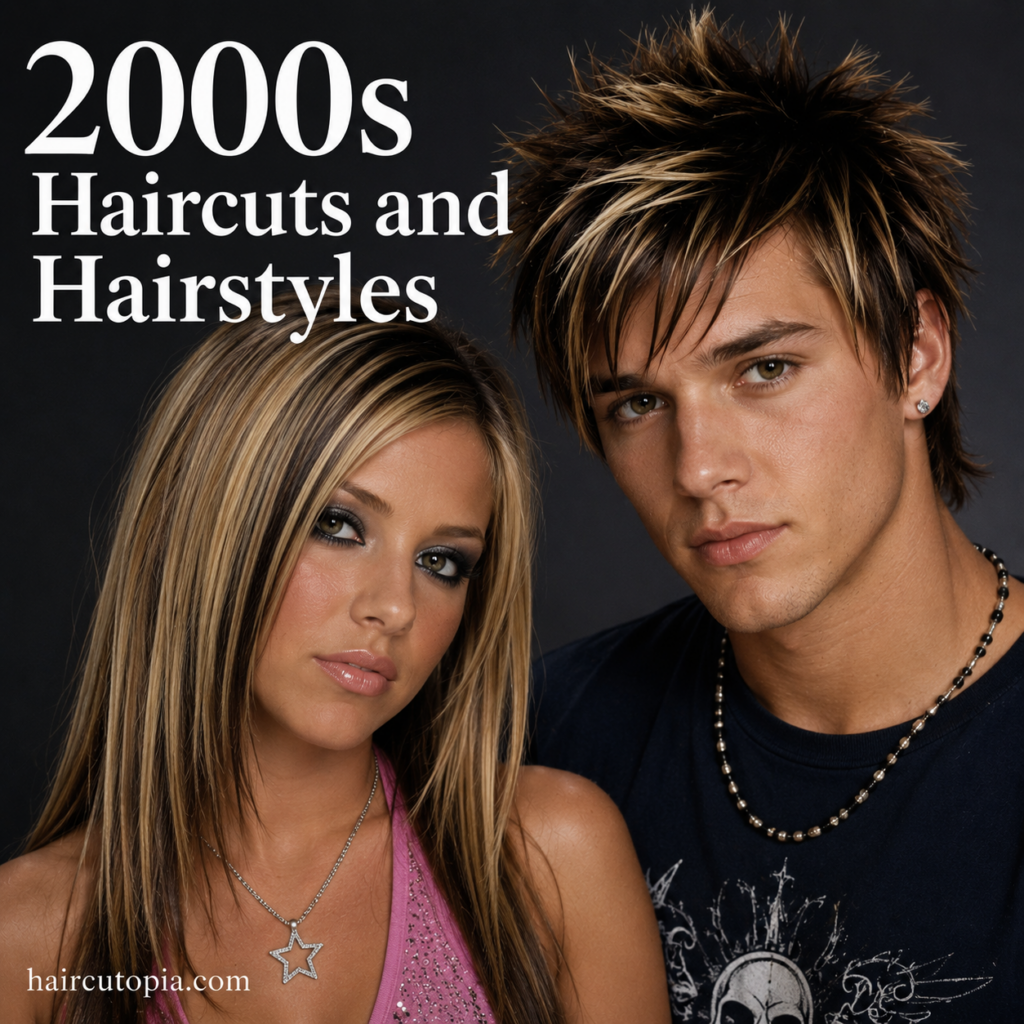
The 2000s were an experimental time for hair.
After the softer layers, grunge textures, bobs, and minimalist styles of the 1990s, the new millennium brought a noticeably more playful approach. Hair became sleeker in some circles and much more dramatic in others. Chunky highlights, razor-cut layers, spiky texture, side-swept bangs, frosted tips, flat-ironed lengths, and carefully messy updos could all exist at the same time.
Celebrity culture played an enormous role. Teen movies, reality television, music videos, red carpets, fashion magazines, and the growing influence of the internet made hairstyle trends easier to discover and copy. A new celebrity haircut could quickly become the look people brought into salons.
Women’s hairstyles ranged from ultra-straight layers and angled bobs to messy buns and heavily highlighted cuts. Men’s hair included spikes, faux hawks, buzz cuts, shaggy surfer styles, emo fringe, and the frosted tips that became one of the era’s most recognizable trends.
Today, many of these looks are returning under the broader Y2K revival.
Some are coming back almost unchanged. Others have been softened and adapted to modern styling.
Either way, 2000s hair is officially old enough to be nostalgic—and influential enough to inspire a new generation.
What Defined 2000s Hair?
There wasn’t one single hairstyle that defined the entire decade.
Instead, the 2000s combined several competing aesthetics.
On one side was sleek minimalism. Flat irons became an everyday styling tool, and pin-straight hair with a glossy finish became extremely fashionable.
On the other side was texture.
Hair could be:
- Spiked
- Razored
- Chunky
- Tousled
- Heavily layered
- Deliberately messy
Color also became an increasingly important part of the overall hairstyle.
Chunky highlights, contrasting streaks, frosted tips, and bold color placement helped make even relatively simple haircuts stand out.
How Hair Changed from the 1990s to the 2000s
The transition wasn’t immediate.
Many trends from 1990s haircuts and hairstyles flowed directly into the early 2000s.
These included:
- Frosted tips
- Butterfly clips
- Spiky men’s hair
- Face-framing layers
- Sleek straight hair
- Center parts
- Claw clips
As the 2000s progressed, however, several new trends gained momentum.
Women’s hair became increasingly associated with side parts, long layers, side-swept bangs, and highly polished straight finishes.
Men’s hair became shorter and more textured in many mainstream styles, although longer shaggy and emo-inspired cuts emerged later in the decade.
By the late 2000s, many hairstyles already looked noticeably different from their Y2K-era predecessors.
Defining Features of 2000s Hairstyles
Several styling details instantly give hair a 2000s feel.
Flat-Ironed Texture
Straightening became one of the biggest styling trends of the decade.
Hair was often worn extremely smooth from roots to ends.
Straight styles could feature:
- Long layers
- Side bangs
- Center parts
- Deep side parts
- Face-framing pieces
The flat iron became an essential tool in many everyday beauty routines.
Heavy Layering
Layers remained popular but frequently became more visible.
Some cuts featured short sections around the crown combined with significantly longer lengths underneath.
Razor cutting helped create wispy, separated ends.
Side Parts
The deep side part became especially influential during the middle and later years of the decade.
It worked naturally with side-swept bangs and layered cuts.
Side-Swept Bangs
Few details are more closely associated with mid-2000s women’s hair.
Long bangs swept diagonally across the forehead could be paired with:
- Long straight hair
- Layered cuts
- Bobs
- Ponytails
- Updos
Piecey Texture
Hair was often styled into visibly separated sections rather than one smooth shape.
Wax, gel, pomade, and texturizing products helped create the effect.
The Most Popular Women’s Haircuts of the 2000s
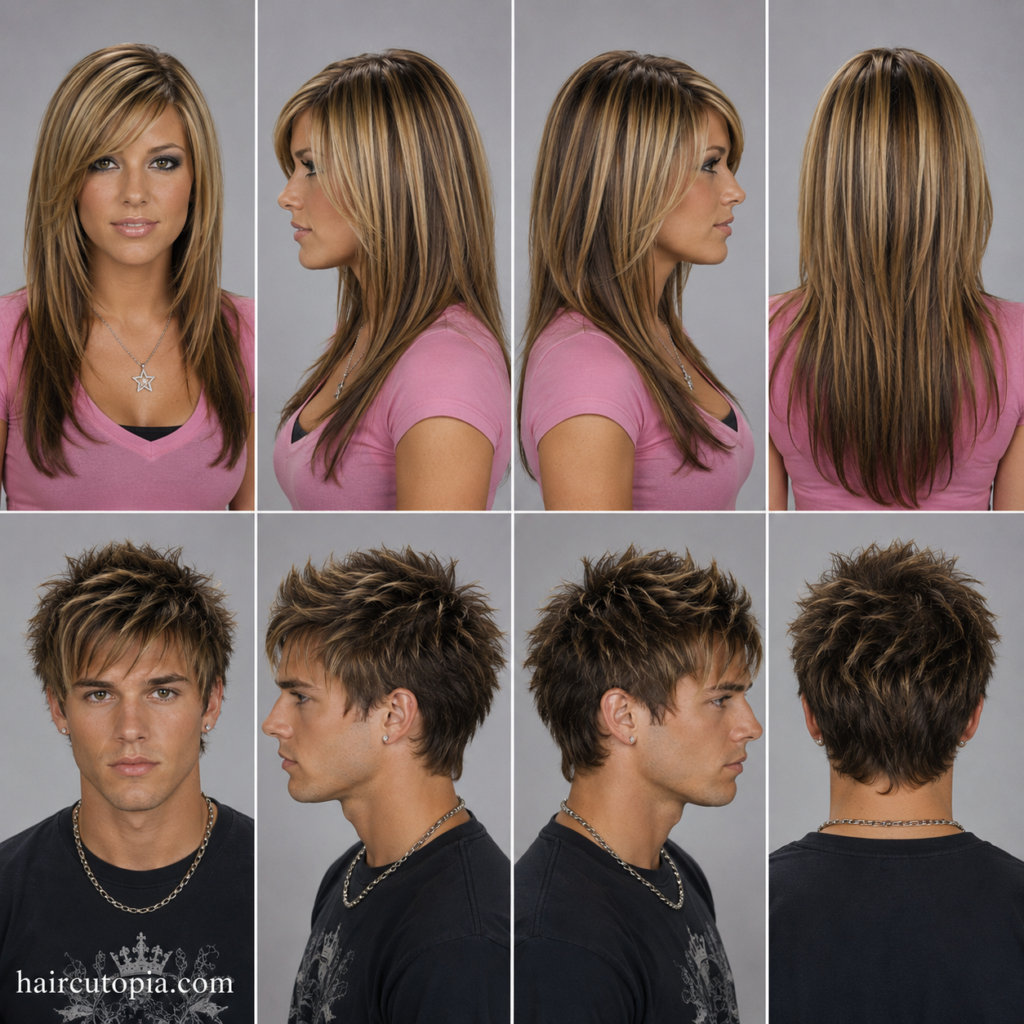
Women’s haircuts changed considerably from the beginning to the end of the decade.
Long Layered Hair
Long layers were everywhere.
The haircut typically maintained substantial overall length while adding movement through:
- Face-framing layers
- Crown layers
- Tapered ends
- Side-swept fringe
The style could be worn perfectly straight or blown out for more volume.
Long layered cuts became one of the decade’s most versatile and enduring trends.
Razor-Cut Layers
Razor cutting helped create the wispy, separated texture associated with many Y2K hairstyles.
Rather than appearing blunt, the ends looked:
- Feathered
- Light
- Piecey
- Textured
This technique worked particularly well with medium and long hair.
Angled Bob
The angled bob became one of the most recognizable shorter cuts of the later 2000s.
Hair was typically:
- Shorter at the back
- Longer toward the front
- Smoothly graduated
- Styled sleek and straight
Some versions were subtle. Others featured a dramatic difference between the front and back.
The cut created a sharp, fashion-forward silhouette that stood apart from the softer bobs of previous decades.
Layered Bob
Not every bob was sharply angled.
Layered bobs offered more volume and movement, often paired with side-swept bangs.
They could be styled:
- Straight
- Tousled
- Flipped
- Textured
Long Hair with Side Bangs
This combination became practically synonymous with mid-2000s hair.
Long lengths were paired with diagonal fringe sweeping across the forehead.
The bangs could begin relatively short or blend gradually into face-framing layers.
The Most Iconic Women’s Hairstyles of the 2000s
Some of the decade’s most recognizable looks depended more on styling than cutting.
Pin-Straight Hair
The sleek, flat-ironed look was one of the defining hairstyles of the era.
Hair was often worn extremely straight with minimal volume.
The style emphasized:
- Shine
- Length
- Smooth texture
- Sharp layers
Straightening products and heat protectants became increasingly important as frequent flat-iron use became common.
Messy Bun
The messy bun offered a complete contrast to perfectly straight hair.
Instead of creating a smooth formal updo, hair was gathered loosely with visible texture.
Face-framing pieces were often left around the front.
The finished look was supposed to appear effortless—even when achieving that effortless appearance took some work.
Spiky Updo
Formal hairstyles could get considerably more elaborate.
Sections of hair were twisted, pinned, and deliberately left sticking outward to create spiky texture.
Small face-framing pieces often completed the look.
These styles appeared frequently at:
- Proms
- Weddings
- Red carpets
- Formal events
Half-Up Hairstyle
Half-up hair remained popular from the previous decade.
The upper portion could be clipped or tied back while the remaining hair stayed straight or curled.
High Ponytail
Ponytails became sleeker and more polished.
Some versions incorporated a section of hair wrapped around the elastic for a cleaner finish.
Chunky Highlights Defined Y2K Hair Color
Hair color became an especially visible part of 2000s hairstyles.
Chunky highlights were one of the era’s signature trends.
Instead of subtle blended dimension, sections were intentionally noticeable.
Common combinations included:
- Blonde on brown hair
- Platinum streaks
- Caramel highlights
- Dark lowlights
- Face-framing highlights
The contrast was part of the appeal.
Modern highlighting tends to emphasize blending, but the return of Y2K fashion has brought more obvious streaks back into style.
Face-Framing Highlights
Bright pieces around the face became another recognizable trend.
These sections helped emphasize the haircut while adding contrast around the complexion.
Today’s “money piece” highlights share similarities with this earlier approach, although modern versions often use more sophisticated blending.
Crimped Hair Makes Another Appearance
Crimping didn’t disappear after the 1980s.
It returned in a more selective way during the 2000s.
Instead of crimping the entire head, people might crimp:
- Small sections
- Lower lengths
- Face-framing pieces
- Ponytails
This created additional texture without necessarily producing enormous volume.
Hair Accessories of the 2000s
Accessories were a major part of Y2K styling.
Popular choices included:
- Butterfly clips
- Claw clips
- Mini claw clips
- Snap clips
- Headbands
- Bandanas
- Decorative barrettes
- Scrunchies
- Rhinestone clips
Butterfly Clips
Butterfly clips carried over from the late 1990s and remained closely associated with early Y2K style.
Small sections around the hairline could be twisted backward and secured with multiple colorful clips.
Zigzag Headbands
Stretchy zigzag headbands pulled the hair away from the face while creating a distinctive pattern along the hairline.
Bandanas
Bandanas could be folded and worn over the crown, particularly with casual hairstyles.
Decorative Clips
Sparkly clips and barrettes worked naturally with the glamorous fashion of the era.
Popular Men’s Haircuts of the 2000s
Men’s hair was equally varied.
Spiky Hair
Spiky hair became one of the defining men’s looks of the early 2000s.
Hair was generally kept relatively short and styled upward with gel or wax.
Variations ranged from:
- Small textured spikes
- Messy spikes
- Defined vertical spikes
- Forward-pointing texture
Strong styling products helped keep everything in position.
Frosted Tips
Frosted tips carried over from the late 1990s and reached peak visibility around the turn of the millennium.
The basic look combined darker roots with lighter ends.
Hair was often styled into spikes so the contrast became even more noticeable.
Few hairstyles capture early-2000s pop culture quite as immediately.
Faux Hawk
The faux hawk provided a more wearable interpretation of the traditional mohawk.
Instead of shaving the sides completely, hair was:
- Kept shorter around the sides
- Left longer through the center
- Styled upward or inward
It offered an edgy appearance without requiring an extreme haircut.
Buzz Cut
Buzz cuts remained a dependable choice throughout the decade.
The simple shape worked well with the increasingly casual approach to men’s fashion.
Crew Cut
Crew cuts and short textured styles offered another clean alternative.
Hair could be left slightly longer at the front for subtle styling.
Shaggy Men’s Hair
Not every men’s haircut was short.
Medium-length shaggy hair became increasingly fashionable, particularly during the middle years of the decade.
The style usually featured:
- Longer fringe
- Layered sides
- Natural movement
- Textured ends
It could look casual and surfer-inspired or lean toward the emerging indie and alternative aesthetic.
Surfer Hair
Beach-inspired men’s hair became a recognizable 2000s look.
Hair was usually medium-length with:
- Tousled texture
- Sun-lightened color
- Longer fringe
- Natural movement
The goal was an intentionally relaxed appearance.
Modern textured flow haircuts share some similarities with these styles.
Emo Hair and the Late 2000s
Toward the latter half of the decade, emo fashion became increasingly visible.
Hair played a major role in the aesthetic.
Common features included:
- Long side-swept fringe
- Straightened texture
- Heavy layering
- Dark hair color
- Choppy sections
- Significant asymmetry
The fringe often covered part of the forehead or one eye.
Some styles added contrasting colored streaks for additional drama.
Emo hair became one of the decade’s strongest examples of music and subculture influencing mainstream youth fashion.
Scene Hairstyles
Scene fashion developed alongside and partly out of emo culture but often pushed styling in a more colorful and exaggerated direction.
Scene hair could feature:
- Extreme crown layers
- Long lower sections
- Heavy side bangs
- Teasing
- Bright color
- Contrasting streaks
The combination of short upper layers and long lengths created a distinctive silhouette.
This style became especially visible through early social media and online youth culture.
Black Hairstyles and Hair Culture in the 2000s
The decade featured an enormous variety of Black hairstyles influenced by music, fashion, television, film, and established hair traditions.
Popular styles included:
- Cornrows
- Box braids
- Micro braids
- Locs
- Twists
- Short fades
- Waves
- Natural styles
- Braided updos
- Tapered cuts
Many of these styles have cultural histories extending far beyond the decade, but they were highly visible throughout 2000s popular culture.
Cornrows
Cornrows became particularly visible in music, sports, movies, and mainstream fashion.
Styles ranged from straight-back patterns to more complex designs.
Micro Braids
Fine individual braids were another recognizable look.
They offered substantial styling versatility and could be worn long, tied back, or arranged into updos.
Waves
Defined wave patterns became a popular men’s grooming style.
Combined with clean lineups and fades, waves created a polished short-hair look.
Short Fades
Barbering continued the precision-focused direction established during previous decades.
Clean fades, lineups, and carefully shaped hairlines remained fundamental elements of men’s grooming.
Hip-Hop’s Influence on 2000s Hair
Hip-hop continued to influence hairstyles globally.
Musicians and athletes helped popularize:
- Cornrows
- Braids
- Waves
- Buzz cuts
- Fades
- Locs
Music videos provided constant visual exposure to new styles.
As hip-hop became an even larger part of mainstream popular culture, its influence on fashion and grooming expanded with it.
Pop-Punk and Alternative Hairstyles
Pop-punk introduced another recognizable approach to men’s hair.
Styles frequently featured:
- Choppy layers
- Spiky texture
- Messy fringe
- Dark color
- Shorter sides
Later in the decade, these looks increasingly overlapped with emo and scene styling.
Celebrity Influence on 2000s Hair
Celebrity culture had enormous power during the decade.
Fashion magazines, television, paparazzi photography, music videos, and entertainment websites constantly exposed audiences to new hairstyles.
Women drew inspiration from figures such as:
- Jennifer Aniston
- Beyoncé
- Britney Spears
- Christina Aguilera
- Rihanna
- Victoria Beckham
- Hilary Duff
- Avril Lavigne
Men’s hair trends were influenced by figures including:
- David Beckham
- Justin Timberlake
- Usher
- Zac Efron
- Pete Wentz
- Adam Brody
These figures represented dramatically different aesthetics, from sleek glamour to pop-punk texture.
The Angled Bob Becomes a Major Trend
One haircut became particularly influential toward the later part of the decade: the sharply angled bob.
The style featured a graduated back with longer front sections.
It looked particularly dramatic when worn:
- Straight
- Smooth
- Glossy
- Deeply side-parted
Its strong geometry made it immediately recognizable.
Modern inverted and A-line bobs continue to use many of the same principles.
Side-Swept Bangs Take Over
If one feature could represent women’s mid-2000s hair, side bangs would be a strong candidate.
The fringe typically swept diagonally across the forehead and blended into longer layers.
Side bangs worked with almost every length:
- Pixies
- Bobs
- Shoulder-length cuts
- Long hair
They also worked well with ponytails and updos, which made them incredibly versatile.
Hair Products of the 2000s
Styling products reflected the decade’s competing trends.
People wanted either sleek smoothness or highly defined texture.
Common products included:
- Hair gel
- Styling wax
- Pomade
- Straightening serum
- Shine spray
- Hairspray
- Mousse
- Heat protectant
- Curl products
Men’s spiky styles often relied on gel or wax, while sleek women’s hairstyles depended heavily on smoothing products.
Styling Tools of the 2000s
Few decades were as closely connected with heat styling.
Popular tools included:
- Flat irons
- Curling irons
- Blow dryers
- Hot rollers
- Crimping irons
The Flat Iron
The flat iron deserves special attention.
It became one of the era’s defining styling tools.
People used it not only to straighten naturally wavy or curly hair but also to flatten already-straight hair into an extremely sleek finish.
Modern hairstyling still relies heavily on flat irons, although today’s techniques often prioritize more movement and volume.
Early 2000s vs. Late 2000s Hairstyles
Hair changed considerably throughout the decade.
Early 2000s Hair
Common trends included:
- Frosted tips
- Butterfly clips
- Chunky highlights
- Spiky men’s hair
- Flat-ironed lengths
- Crimped sections
- Center parts
Many still reflected late-1990s fashion.
Mid-2000s Hair
Popular styles increasingly included:
- Side-swept bangs
- Long layers
- Deep side parts
- Messy buns
- Faux hawks
- Shaggy men’s hair
- Sleek straight styles
Late 2000s Hair
Toward the end of the decade, trends included:
- Angled bobs
- Emo fringe
- Scene layers
- Long side bangs
- Tousled men’s cuts
- Polished waves
- Heavily layered styles
Several of these looks continued into the early 2010s.
2000s Hairstyles for Different Hair Lengths
The decade offered options across every length.
Short Hair
Popular choices included:
- Angled bob
- Layered bob
- Pixie cut
- Buzz cut
- Crew cut
- Faux hawk
- Short spiky cut
Medium Hair
Medium-length hair worked well for:
- Side-swept bangs
- Razor layers
- Shaggy cuts
- Messy updos
- Tousled men’s styles
Long Hair
Long styles included:
- Pin-straight layers
- Side bangs
- Chunky highlights
- Scene layers
- Braids
- Long waves
How to Wear a 2000s Hairstyle Today
Y2K hair is back, but modern interpretations tend to be softer.
Modern Long Layers
Keep the recognizable face framing but use blended layers for more natural movement.
Updated Side Bangs
Side-swept fringe can be kept longer and lighter so it blends naturally into the haircut.
Modern Angled Bob
Reduce the extreme graduation for a cleaner, more versatile silhouette.
Updated Spiky Hair
Use matte styling products and softer separation rather than heavily gelled spikes.
Modern Faux Hawk
Pair textured length through the center with a taper or fade around the sides.
Y2K Highlights
Chunkier highlights can be incorporated strategically while maintaining enough blending to keep the color dimensional.
Why Y2K Hairstyles Are Coming Back
Fashion cycles often revive after a couple of decades, and the 2000s are now firmly in that window.
Young people who didn’t experience the original trends are discovering them as something new, while people who did experience them are seeing familiar styles return.
Popular Y2K-inspired trends include:
- Butterfly clips
- Chunky highlights
- Face-framing streaks
- Spiky updos
- Zigzag parts
- Long layers
- Side bangs
- Claw clips
Social media has accelerated the revival.
Old celebrity photographs and red-carpet looks can instantly become inspiration for a new hairstyle.
1990s Hair vs. 2000s Hair
The two decades overlap, particularly around the turn of the millennium, but they developed different personalities.
1990s hair generally emphasized:
- Natural movement
- Softer layers
- Grunge texture
- Center parts
- Minimalism
2000s hair increasingly emphasized:
- Flat-ironed finishes
- Side parts
- Side bangs
- Visible layers
- Chunky highlights
- Piecey texture
The shift wasn’t universal, but it helps explain why the decades remain visually distinct.
2000s Hair vs. 2010s Hair
By the early 2010s, many Y2K trends were fading as 2010s haircuts and hairstyles began moving in a noticeably different direction.
Hair gradually shifted toward:
- Softer waves
- Balayage
- Ombré
- Longer blended layers
- Undercuts
- Quiffs
- More polished texture
Chunky highlights became less common as blended color techniques gained popularity.
Side bangs remained fashionable for a while, but they eventually competed with renewed interest in center parts and curtain-style fringe.
The Lasting Influence of 2000s Haircuts and Hairstyles
The decade’s influence is becoming increasingly obvious.
Modern hairstyling continues to borrow from:
- Long layers
- Face-framing highlights
- Angled bobs
- Textured men’s cuts
- Faux hawks
- Side bangs
- Piecey layers
- Claw-clip styles
- Spiky updos
Even trends once considered dated are being reconsidered.
That’s often how fashion works.
Once enough time passes, an old hairstyle stops looking outdated and starts looking interesting again.
Choosing a 2000s-Inspired Hairstyle
The best option depends on how strongly you want to embrace the Y2K aesthetic.
For a Sleek Look
Consider:
- Long straight layers
- Angled bob
- Deep side part
- Side-swept bangs
For Something Playful
Try:
- Butterfly clips
- Mini braids
- Crimped sections
- Spiky updo
For Men’s Hair
Consider:
- Textured spikes
- Faux hawk
- Shaggy cut
- Short fade
- Surfer hair
For an Alternative Look
Try:
- Emo fringe
- Choppy layers
- Scene-inspired volume
- Contrasting color
For a Subtle Y2K Influence
Add just one recognizable element:
- Chunkier highlights
- Side bangs
- Face-framing pieces
- Small hair clips
- Piecey texture
That usually provides enough nostalgia without making the hairstyle feel like a costume.
Frequently Asked Questions
What were the most popular hairstyles of the 2000s?
Popular styles included long layers, side-swept bangs, pin-straight hair, angled bobs, messy buns, chunky highlights, spiky men’s hair, faux hawks, and shaggy cuts.
Were side bangs popular in the 2000s?
Yes. Side-swept bangs became one of the most recognizable women’s hair trends of the middle and later 2000s.
Were frosted tips a 2000s hairstyle?
Yes. Frosted tips became especially associated with early-2000s men’s hair, although the trend began gaining popularity during the late 1990s.
What hairstyles did men wear in the 2000s?
Popular men’s styles included spikes, faux hawks, buzz cuts, crew cuts, shaggy hair, surfer-inspired cuts, emo fringe, waves, and fades.
What hairstyles did women wear in the 2000s?
Women commonly wore long layers, side bangs, straightened hair, angled bobs, messy buns, highlighted cuts, and layered medium-length styles.
Were chunky highlights popular?
Very much so. High-contrast highlights became one of the defining hair-color trends of the Y2K era.
When did emo hair become popular?
Emo-inspired hairstyles became increasingly visible during the middle and later years of the 2000s.
Were butterfly clips still popular?
Yes. Butterfly clips carried over from the late 1990s and became strongly associated with early Y2K fashion.
Are 2000s hairstyles fashionable again?
Yes. The broader Y2K revival has brought back butterfly clips, chunky highlights, spiky updos, face-framing color, layers, and other recognizable 2000s trends.
Final Thoughts
The 2000s were a decade of contrasts.
Hair could be perfectly flat-ironed or intentionally messy. Highlights could be blended or deliberately chunky. Men’s styles could be closely buzzed, aggressively spiked, casually shaggy, or swept dramatically across the face.
That’s what makes the decade so interesting.
Early Y2K hair retained some of the playful energy of the late 1990s with butterfly clips, frosted tips, and colorful accessories. The middle of the decade brought long layers, deep side parts, side-swept bangs, faux hawks, and sleek styling. By the end, angled bobs, emo fringe, scene layers, and increasingly polished cuts were setting the stage for the 2010s.
Many of these trends eventually became shorthand for “dated” hair.
Now they’re coming back.
Long layers, chunky highlights, claw clips, face-framing color, spiky updos, and even side bangs are being rediscovered and reworked for modern tastes.
That’s the fun of looking back at hair history. Styles rarely disappear forever.
The 2000s are proving that even the most unmistakably Y2K haircut can eventually find its way back into the salon chair.
Related Posts
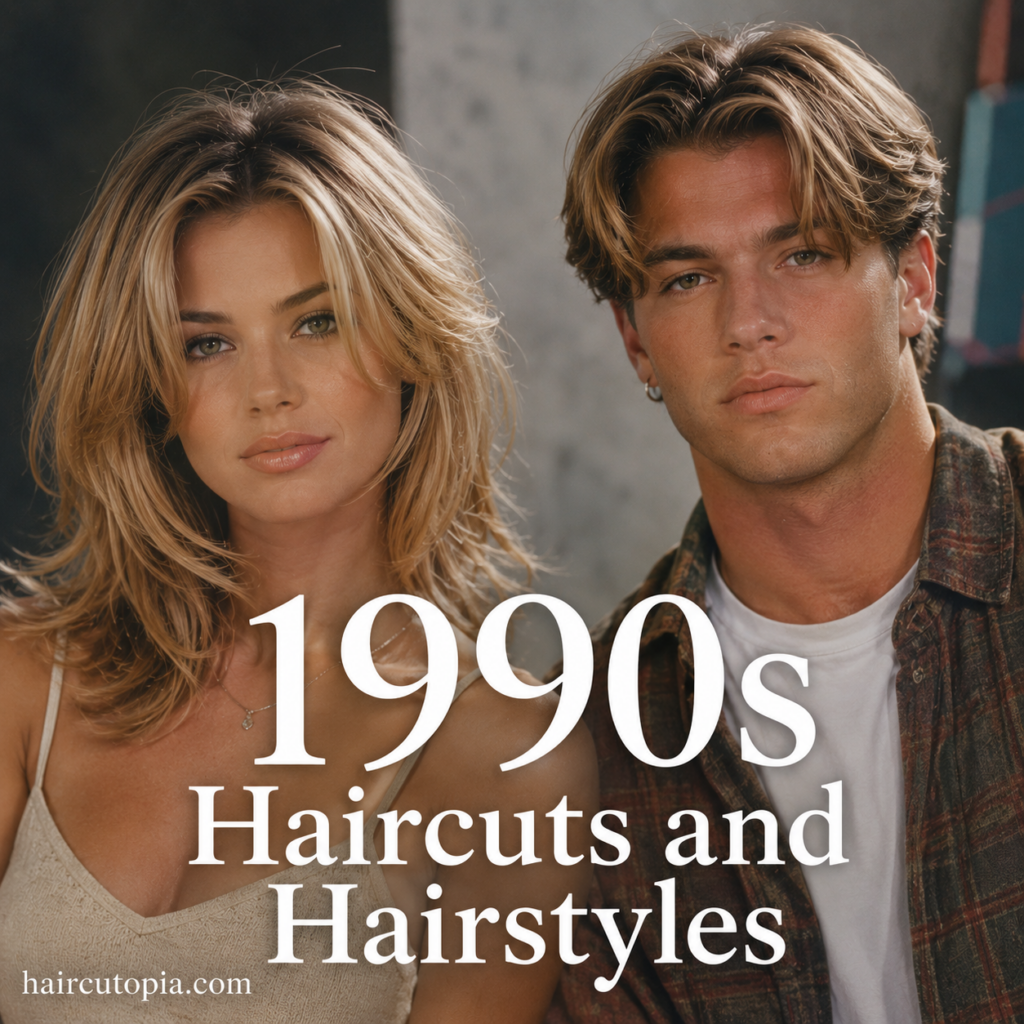 1990s Haircuts and Hairstyles: The Complete Guide to Layers, Grunge, Bobs, and Iconic ’90s Hair
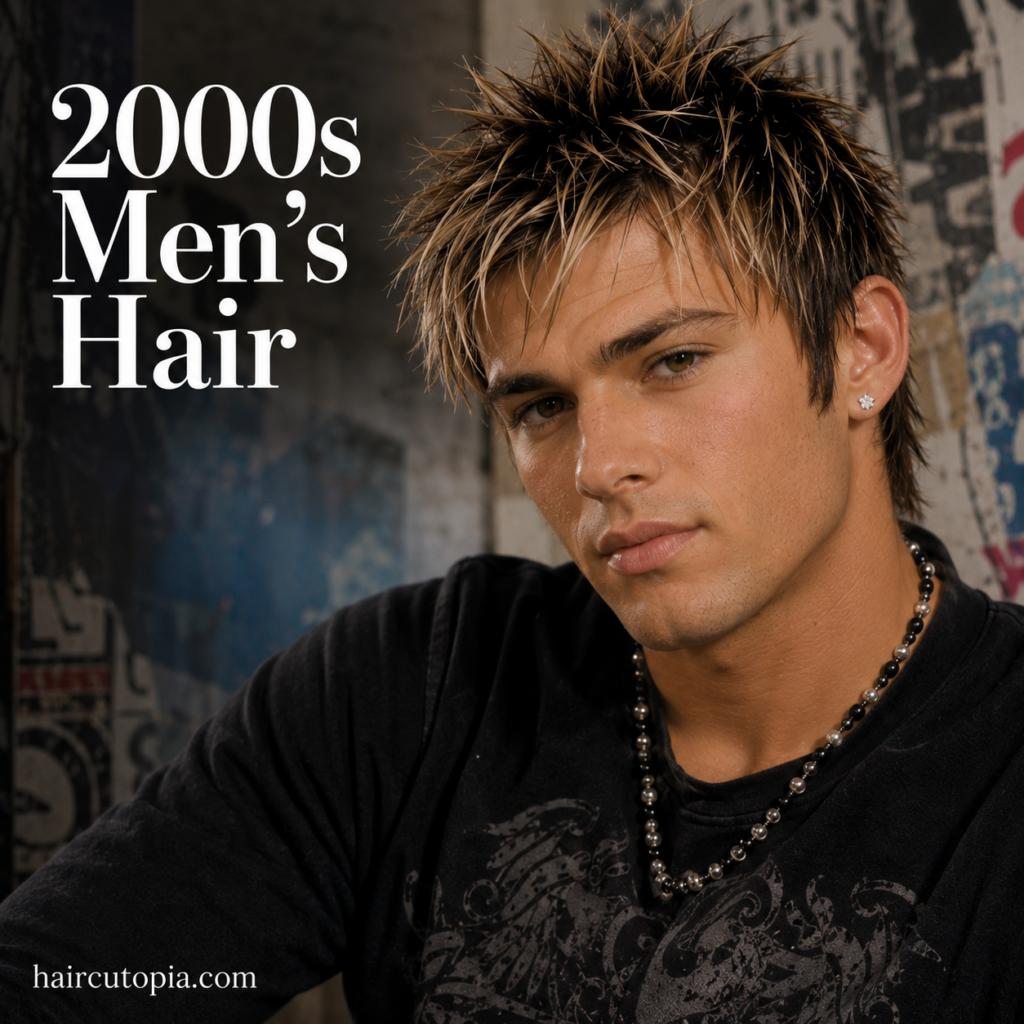 2000s Men’s Hair: The Iconic Y2K Hairstyles That Defined a Generation
 2010s Haircuts and Hairstyles: The Complete Guide to the Decade’s Hair Trends
 1960s Women’s Hair: The Elegant and Revolutionary Styles That Defined a Fashion Era