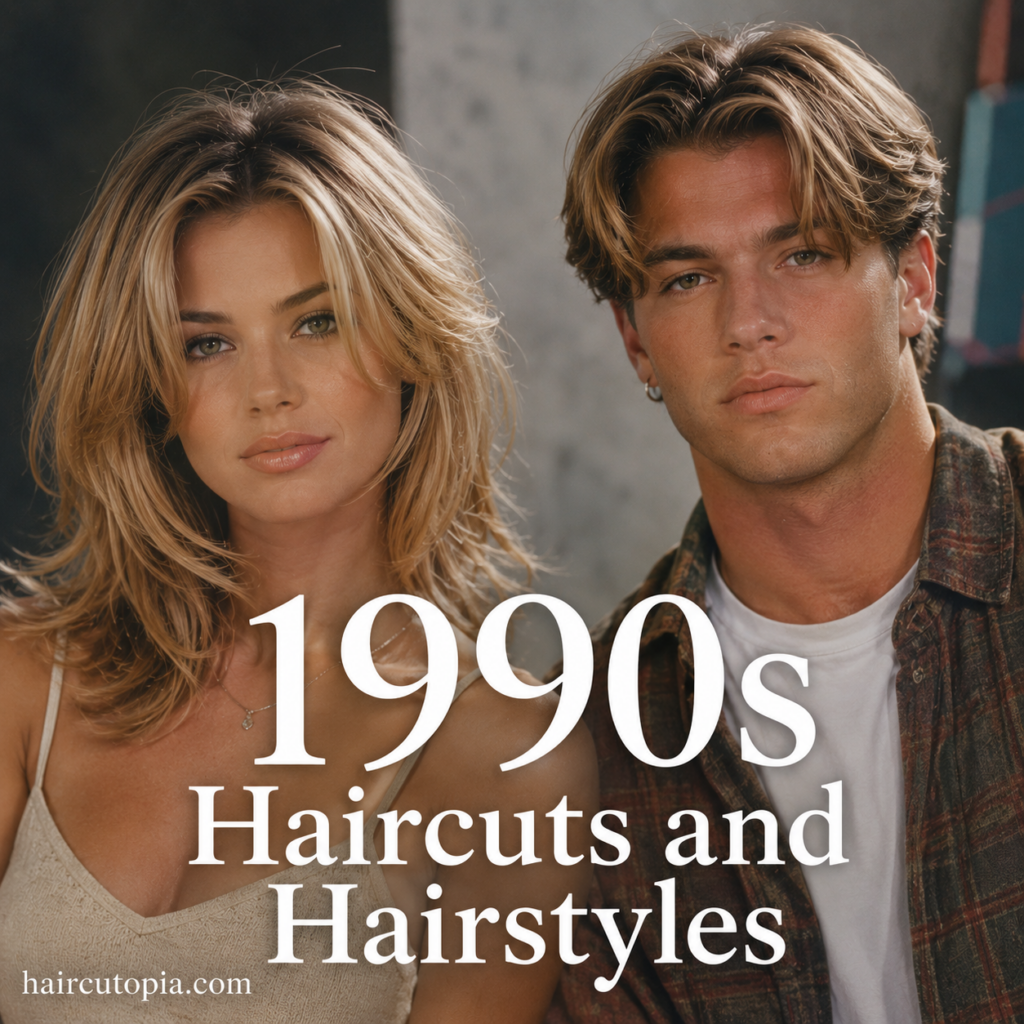
The 1990s were a reset for hair.
After the towering volume, heavy perms, and highly styled looks of the 1980s, hairstyles gradually became softer, simpler, and more relaxed. Hair still had plenty of personality, but the decade increasingly favored cuts that could move naturally and styles that didn’t look quite so carefully constructed.
At the same time, there wasn’t one universal ’90s look.
The decade gave us everything from “The Rachel” and supermodel blowouts to grunge-inspired layers, pixie cuts, box braids, high-top fades, curtain hair, frosted tips, and sleek center parts. Hip-hop, R&B, alternative rock, television, movies, and celebrity culture all influenced what people requested at salons and barbershops.
Some trends disappeared almost as quickly as they arrived. Others never really left.
Today, layered blowouts, curtain bangs, middle parts, short bobs, face-framing layers, textured men’s cuts, and many other popular styles have unmistakable connections to the 1990s.
Here’s a closer look at the haircuts and hairstyles that defined the decade.
How Hair Changed During the 1990s
The beginning of the decade still carried plenty of influence from 1980s haircuts and hairstyles. Big curls, perms, mullets, and substantial volume didn’t suddenly disappear when 1990 arrived.
Fashion evolves gradually, and many people continued wearing familiar styles during the early years.
As the decade progressed, however, the overall direction changed.
Hair became increasingly:
- Relaxed
- Layered
- Sleek
- Textured
- Individual
- Easy-moving
Grunge encouraged deliberately undone hairstyles. Supermodels made polished blowouts fashionable. Sitcoms introduced instantly recognizable cuts, while hip-hop and R&B brought enormous creativity to barbering, braiding, natural hair, and protective styling.
By the end of the decade, sleek straight hair, center parts, face-framing pieces, and minimalist styling were pointing directly toward the early 2000s.
Defining Features of 1990s Hairstyles
The decade was incredibly varied, but several characteristics appeared repeatedly.
Face-Framing Layers
Layers remained important, but they became softer than many of the dramatic styles associated with the previous decade.
Face-framing pieces created movement around:
- Cheekbones
- Jawlines
- Shoulders
These layers worked particularly well with blowouts and medium-length hair.
Natural-Looking Texture
Not every strand needed to stay perfectly in place.
Loose waves, messy layers, tousled hair, and natural curls became increasingly fashionable.
Center Parts
Middle parts returned in a major way.
They appeared on:
- Long straight hair
- Curtain hairstyles
- Bobs
- Grunge-inspired cuts
- Men’s medium-length hair
Short Hair
Women embraced a wide variety of shorter cuts.
Pixies, crops, bobs, and chin-length styles became major fashion statements.
Reduced Volume
Volume didn’t disappear, especially in glamorous blowouts, but everyday hairstyles generally became less exaggerated.
Hair started falling closer to its natural shape.
The Most Popular Women’s Haircuts of the 1990s
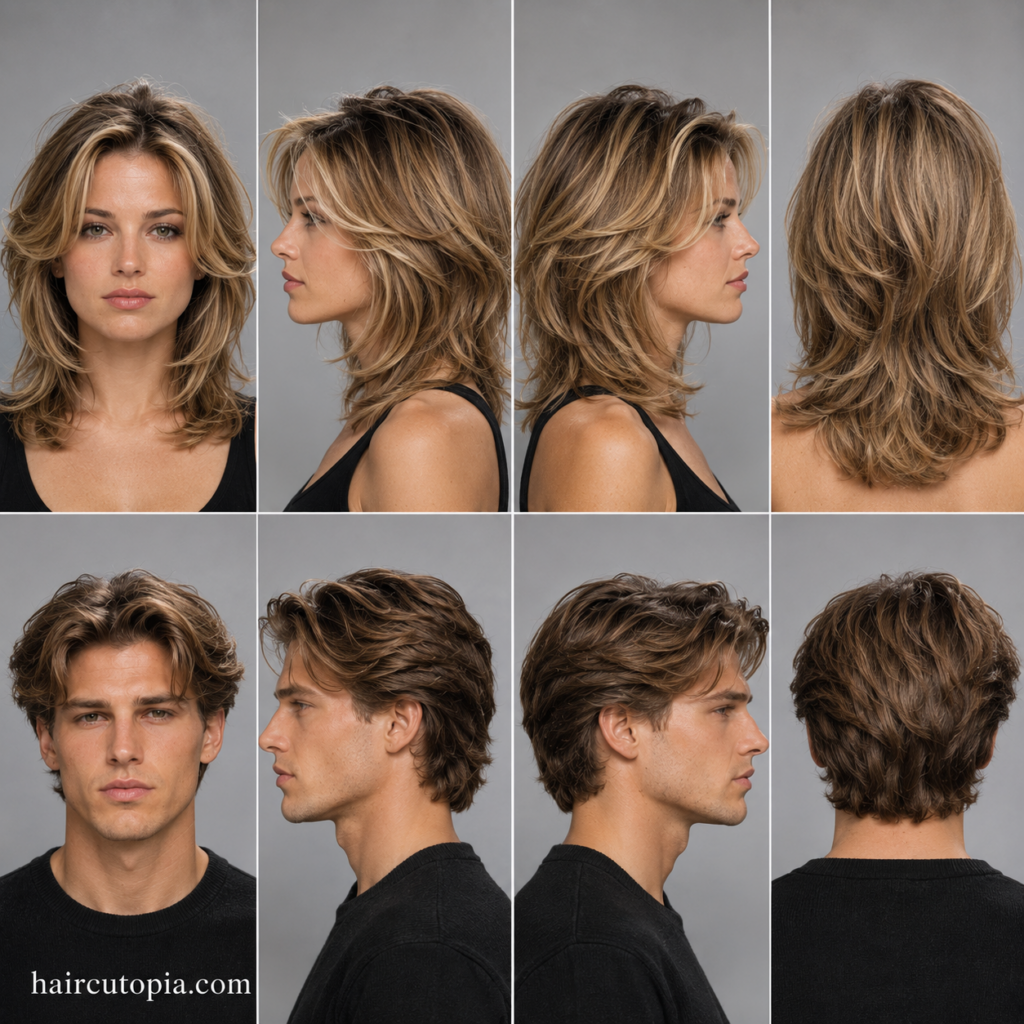
The decade produced several cuts that are experiencing major revivals today.
The Rachel
Few television hairstyles have ever generated as much attention as “The Rachel.”
Jennifer Aniston’s layered haircut on Friends became one of the most requested salon looks of the mid-1990s.
The cut featured:
- Heavy face-framing layers
- Medium length
- Rounded volume
- Flipped and curved ends
- Plenty of movement
Its shape framed the face while creating fullness without requiring the towering height of 1980s hairstyles.
The Rachel became so influential that versions of it appeared everywhere.
Modern layered blowouts and butterfly-style cuts often share similar principles, even when the finished shape is softer or longer.
The Bob
Bobs became enormously popular throughout the decade.
Unlike many highly structured vintage bobs, 1990s versions could feel minimalist and effortless.
Popular variations included:
- Chin-length bob
- Blunt bob
- Layered bob
- Side-parted bob
- Rounded bob
Some were styled smooth and sleek, while others incorporated natural texture.
Pixie Cut
The pixie became one of the decade’s strongest short-hair trends.
It could be:
- Soft and feminine
- Textured
- Choppy
- Sleek
- Androgynous
The simplicity of the cut made facial features the focus.
Short Layered Crop
Slightly longer than a traditional pixie, cropped layered hairstyles offered plenty of styling flexibility.
Short layers could be:
- Tousled
- Slicked back
- Side-swept
- Spiked slightly
These cuts fit perfectly with the decade’s increasingly minimalist fashion.
Long Layered Cut
Long hair remained extremely popular.
Instead of maintaining one heavy length, subtle layers created movement while preserving overall length.
Long layers worked beautifully with both straight and wavy hair.
The Most Iconic Women’s Hairstyles of the 1990s
The decade’s hairstyles ranged from glamorous to deliberately casual.
Supermodel Blowout
The 1990s supermodel era brought polished volume back in a more sophisticated form.
Hair featured:
- Large waves
- Rounded layers
- Crown lift
- Bouncy ends
- Glossy movement
Rather than looking stiff, the hair moved naturally.
The modern blowout revival owes plenty to this era.
Sleek Straight Hair
Straight hair became increasingly fashionable as the decade progressed.
Hair was often worn:
- Long
- Smooth
- Center-parted
- Minimally layered
The simplicity allowed shine and healthy-looking texture to become the focus.
Messy Updo
One of the decade’s most recognizable formal looks involved loosely pinning hair up while leaving pieces around the face.
The style could include:
- Face-framing tendrils
- Loose curls
- Small clips
- Soft volume
It looked elegant without appearing overly perfect.
High Ponytail
High ponytails remained popular, but they generally became cleaner and less exaggerated than their 1980s counterparts.
Face-framing pieces could be left loose for a softer appearance.
Half-Up Hairstyle
Half-up hair was everywhere.
The upper sections were pulled away from the face while the remaining length stayed loose.
Butterfly clips, barrettes, and scrunchies often completed the look.
Grunge Hairstyles
Grunge dramatically influenced fashion during the early and middle 1990s.
The aesthetic rejected the polished excess associated with the previous decade.
Hair could look intentionally:
- Messy
- Tousled
- Unstyled
- Grown out
- Naturally textured
Longer hair became common among men in alternative rock scenes, while women often wore simple center parts, messy layers, or minimally styled lengths.
The goal wasn’t necessarily to look like you’d spent an hour styling your hair.
That was precisely the point.
Curtain Hair Becomes a Major Men’s Trend
One of the decade’s most recognizable men’s hairstyles was curtain hair.
The cut featured medium-length hair parted near the center so the front sections fell toward either side of the face.
Typical characteristics included:
- Center part
- Longer fringe
- Tapered or layered sides
- Natural movement
- Soft finish
Actors, musicians, and television personalities helped make the style extremely popular among younger men.
Curtain hair has since returned as a major modern men’s trend.
Today’s versions often add more texture, tapering, or a low fade while maintaining the recognizable parted front.
Popular Men’s Haircuts of the 1990s
Men’s hairstyles ranged from extremely short cuts to shoulder-length grunge hair.
Curtain Haircut
The curtain hairstyle became particularly fashionable among teenagers and young adults.
It worked best with enough length through the top and fringe to create natural separation.
Caesar Cut
The Caesar offered a completely different option.
Hair was cut relatively short with a small fringe styled forward.
The haircut featured:
- Short length
- Horizontal fringe
- Minimal styling
- Clean silhouette
Its simplicity made it one of the decade’s most recognizable short men’s cuts.
Buzz Cut
Buzz cuts remained popular for anyone wanting an extremely low-maintenance hairstyle.
The clean shape fit naturally with the decade’s minimalist fashion.
Spiky Hair
Short hair styled upward with gel became increasingly common.
The look ranged from subtle texture to highly defined spikes.
Long Grunge Hair
Rock and alternative musicians helped maintain the popularity of longer men’s hair.
It was frequently:
- Shoulder-length
- Center-parted
- Naturally wavy
- Minimally styled
The relaxed appearance contrasted sharply with the teased rock hair of the previous decade.
Frosted Tips Arrive
Toward the end of the 1990s, frosted tips became an increasingly visible men’s trend.
Hair was usually:
- Cut relatively short.
- Styled upward or into textured spikes.
- Lightened selectively at the ends.
The contrast between darker roots and lighter tips created a distinctive appearance.
Frosted tips would become even more closely associated with early-2000s fashion, but their rise began during the latter part of the 1990s.
Black Hairstyles and Hair Culture in the 1990s
The 1990s were an incredibly influential decade for Black hair and barbering.
Hip-hop, R&B, film, television, and fashion brought a wide variety of styles into greater mainstream visibility.
Popular hairstyles included:
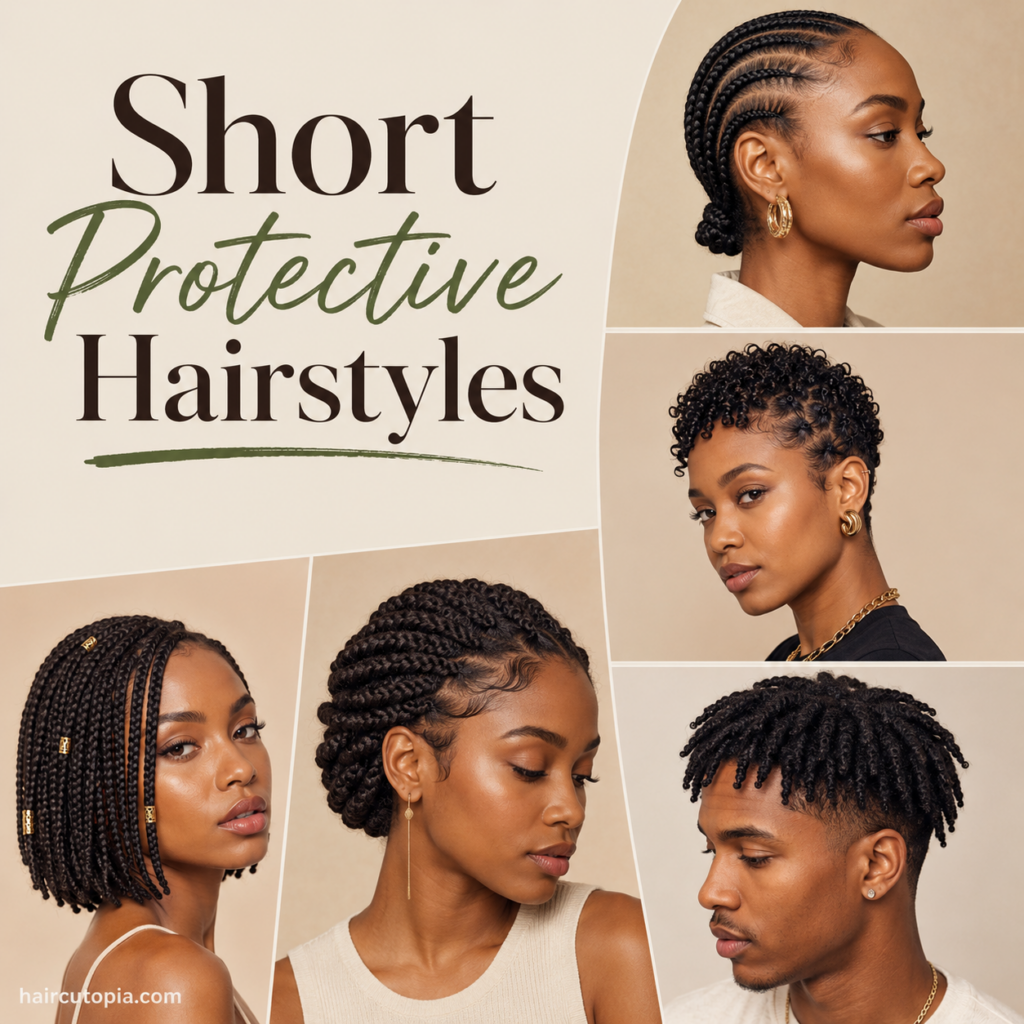
- Box braids
- Cornrows
- High-top fades
- Flat tops
- Finger waves
- Short natural cuts
- Braided styles
- Sculpted fades
- Bantu knots
- Locs
Many of these hairstyles have histories extending far beyond the 1990s, but the decade gave them significant visibility within global popular culture.
Box Braids
Box braids became particularly visible through musicians, actresses, and other public figures.
The style offered enormous versatility.
Braids could be:
- Long
- Short
- Thick
- Fine
- Styled up
- Worn loose
Box braids are also a protective style with deep roots in Black hair traditions.
High-Top Fade
The high-top fade carried over from the late 1980s and remained influential during the early 1990s.
Barbers created clean fades around the sides while maintaining dramatic height on top.
Some versions incorporated:
- Designs
- Sharp lines
- Geometric shapes
- Stepped silhouettes
Short Fades
As the decade progressed, shorter fades became increasingly common.
These cuts emphasized precise barbering and sharp outlines.
Their influence on contemporary men’s grooming is enormous.
Finger Waves
Finger waves experienced another period of popularity, particularly on shorter women’s hairstyles.
Modern styling products allowed the waves to appear glossy and precisely sculpted.
Braids in the 1990s
Braided hairstyles were an important part of 1990s hair culture.
Popular looks included:
- Box braids
- Cornrows
- Micro braids
- Braided ponytails
- Braided updos
Musicians and television personalities helped introduce a wider mainstream audience to the enormous versatility of braided hairstyles.
These styles shouldn’t be treated simply as temporary ’90s trends. Many have deep cultural histories and continue to be worn regardless of mainstream fashion cycles.
The Rise of Precision Barbering
Barbershops became important centers of hairstyle innovation throughout the decade.
Men’s cuts increasingly emphasized:
- Sharp hairlines
- Clean fades
- Precise edges
- Geometric shapes
- Creative designs
These techniques helped establish many of the barbering trends that dominate men’s grooming today.
Modern lineups, fades, and highly sculpted short cuts owe plenty to the barbering culture of the late 1980s and 1990s.
Hip-Hop’s Influence on 1990s Hairstyles
Hip-hop became one of the decade’s strongest cultural influences.
Music videos and album covers gave hairstyles enormous visibility.
Different artists helped popularize:
- High-top fades
- Braids
- Cornrows
- Buzz cuts
- Short fades
- Sculpted hairlines
As hip-hop expanded internationally, these styles influenced fashion far beyond the music itself.
R&B and Glamorous 1990s Hair
R&B contributed another distinctive range of looks.
Women’s hairstyles included:
- Sleek bobs
- Braids
- Long straight hair
- Pixie cuts
- Finger waves
- Sculpted updos
Men frequently wore:
- Short fades
- Caesar cuts
- Braids
- Closely cropped hair
The polished styling associated with R&B provided an elegant contrast to the deliberately undone grunge aesthetic.
Celebrity Influence on 1990s Hair
Television and celebrity culture became increasingly powerful forces in hairstyling.
Women drew inspiration from figures such as:
- Jennifer Aniston
- Winona Ryder
- Halle Berry
- Cindy Crawford
- Naomi Campbell
- Drew Barrymore
- Janet Jackson
- Meg Ryan
Men’s hairstyles were influenced by figures including:
- Leonardo DiCaprio
- Brad Pitt
- George Clooney
- Will Smith
- Johnny Depp
- Kurt Cobain
- David Beckham
These celebrities represented very different aesthetics, which illustrates how varied the decade really was.
You could have a polished supermodel blowout, a short pixie, long grunge hair, a high-top fade, or center-parted curtains and still look unmistakably 1990s.
Jennifer Aniston and “The Rachel”
“The Rachel” deserves special attention because few celebrity haircuts have generated comparable demand.
When Jennifer Aniston wore the layered style during the early seasons of Friends, viewers quickly began requesting similar cuts.
Its popularity came from its combination of:
- Volume
- Layers
- Face framing
- Medium length
- Movement
The haircut felt polished without being overly formal.
Ironically, Aniston later discussed how difficult the original style could be to maintain without professional styling.
Nevertheless, its cultural impact was enormous.
Halle Berry and the 1990s Pixie
Halle Berry helped demonstrate just how glamorous extremely short hair could look.
Her pixie styles emphasized:
- Texture
- Short tapered sides
- Longer top sections
- Face-framing fringe
The hairstyle became one of the decade’s most memorable short cuts and remains a reference point for modern pixies.
Hair Accessories of the 1990s
The decade produced an impressive collection of instantly recognizable accessories.
Popular choices included:
- Scrunchies
- Butterfly clips
- Claw clips
- Snap clips
- Headbands
- Bandanas
- Barrettes
- Mini clips
Butterfly Clips
Small butterfly-shaped clips became especially popular toward the latter half of the decade.
They could secure tiny sections around the face or decorate elaborate updos.
Scrunchies
Scrunchies carried over from the 1980s but remained extremely common.
They worked with:
- Ponytails
- Buns
- Half-up styles
Claw Clips
Claw clips offered a simple way to twist long hair away from the face.
The style has since experienced a major revival.
1990s Updos
Formal hairstyles generally became softer and less structured.
Messy Bun
Hair was loosely gathered rather than perfectly sculpted.
Strands around the face created a relaxed finish.
French Twist
The French twist remained an elegant option for formal events.
Modern versions often incorporated softer texture than earlier interpretations.
Face-Framing Tendrils
Leaving two small sections around the face became one of the most recognizable styling details of the decade.
These pieces could be:
- Straight
- Curled
- Wavy
The trend has returned repeatedly in modern styling.
Hair Products and Styling Tools of the 1990s
Haircare continued evolving rapidly.
Common products included:
- Styling gel
- Mousse
- Hairspray
- Hair serum
- Pomade
- Curl-enhancing products
- Leave-in conditioner
Compared with the previous decade, many hairstyles required less extreme hold.
Flat Irons
Hair straightening became increasingly important, particularly toward the end of the decade.
Sleek, smooth hairstyles would become even more dominant during the early 2000s.
Blow Dryers and Round Brushes
These remained essential for creating layered blowouts.
Round brushes helped produce the curved, bouncy ends associated with styles such as The Rachel.
Early 1990s vs. Late 1990s Hairstyles
The decade changed significantly from beginning to end.
Early 1990s Hair
Many styles retained elements of the 1980s.
Common features included:
- Permed texture
- Large curls
- High-top fades
- Mullets
- Feathered layers
- Substantial volume
Mid-1990s Hair
The decade developed a clearer identity.
Popular styles included:
- The Rachel
- Curtain hair
- Pixie cuts
- Grunge hair
- Box braids
- Bobs
- Supermodel blowouts
Late 1990s Hair
Styles became increasingly sleek.
Popular trends included:
- Straight hair
- Center parts
- Frosted tips
- Spiky men’s cuts
- Face-framing pieces
- Butterfly clips
- Sleek bobs
These trends flowed naturally into 2000s haircuts and hairstyles, where sleek straight hair, spikes, highlights, layered cuts, and other Y2K-inspired looks would become defining trends.
1990s Hairstyles for Different Hair Lengths
There was no shortage of options.
Short Hair
Popular styles included:
- Pixie cut
- Short crop
- Caesar cut
- Buzz cut
- Short bob
- Sculpted fade
Medium Hair
Medium lengths were ideal for:
- The Rachel
- Curtain hair
- Layered bobs
- Blowouts
- Tousled layers
Long Hair
Long styles included:
- Straight center-parted hair
- Supermodel layers
- Grunge hair
- Braids
- Loose waves
- Long layered cuts
The decade made nearly every length fashionable.
How to Wear a 1990s Hairstyle Today
Many ’90s hairstyles have returned with surprisingly few changes.
Modern Rachel Cut
Keep the face-framing layers but make the transitions softer.
A modern blowout creates movement without requiring the original highly rounded styling.
Curtain Hair
For men’s hair, keep enough length around the front for a center part while adding a taper around the sides and neckline.
Modern Pixie
Add texture through the top while maintaining clean tapered edges.
Sleek Bob
A blunt or lightly layered bob with a center part provides an easy minimalist reference to late-’90s hair.
Face-Framing Layers
Long hair can incorporate subtle layers beginning around the cheekbones or jaw.
Claw-Clip Updo
Twist the hair upward and secure it with a simple claw clip for one of the easiest ways to reference the decade.
Why 1990s Hairstyles Are Popular Again
The 1990s revival isn’t difficult to understand.
Many of the decade’s hairstyles were relatively wearable to begin with.
They focused on:
- Natural movement
- Simple shapes
- Layers
- Healthy-looking hair
- Individual texture
Modern fashion has also returned to many ’90s clothing trends, bringing hairstyles along with them.
Current trends with strong 1990s connections include:
- Curtain hair
- Middle parts
- Claw clips
- Butterfly clips
- Layered blowouts
- Pixie cuts
- Face-framing layers
- Blunt bobs
The difference is usually in the finishing.
Modern products create softer movement and more natural texture.
The Lasting Influence of 1990s Haircuts and Hairstyles
The decade sits surprisingly close to modern hairstyling.
Many ideas established or popularized during the era remain salon staples.
Its influence can be seen in:
- Face-framing layers
- Curtain hairstyles
- Blunt bobs
- Pixie cuts
- Textured crops
- Sleek center parts
- Layered blowouts
- Precision fades
- Claw-clip hairstyles
The 1990s also demonstrated how many different cultural influences could exist simultaneously.
Grunge, hip-hop, R&B, supermodel fashion, television, and alternative culture all contributed distinct hairstyles.
Rather than everyone chasing one dominant look, hair became increasingly connected to individual style.
Choosing a 1990s-Inspired Hairstyle
There are plenty of options depending on the look you want.
For a Glamorous Look
Consider:
- Supermodel blowout
- Long layers
- Voluminous bob
- Soft updo
For a Relaxed Look
Try:
- Center-parted long hair
- Grunge layers
- Loose waves
- Claw-clip updo
For Short Hair
Consider:
- Pixie cut
- Blunt bob
- Textured crop
- Caesar cut
For Men’s Hair
Try:
- Curtains
- Caesar
- Buzz cut
- Short fade
- Longer grunge hair
For a Subtle ’90s Influence
You can simply add:
- Face-framing layers
- A center part
- A claw clip
- Soft curtain fringe
- A rounded blowout
A small detail can capture the decade without turning the hairstyle into a costume.
Frequently Asked Questions
What was the most popular hairstyle in the 1990s?
There wasn’t one universal style, but The Rachel, curtain hair, pixie cuts, bobs, layered blowouts, box braids, fades, and long center-parted hairstyles were among the decade’s most recognizable looks.
What was The Rachel haircut?
The Rachel was Jennifer Aniston’s famous medium-length layered haircut from Friends. It featured heavy face-framing layers, rounded volume, and curved ends.
What men’s hairstyles were popular in the 1990s?
Curtain hair, Caesar cuts, buzz cuts, fades, high-top fades, spiky styles, and longer grunge hair were all popular.
Were middle parts popular?
Yes. Center parts became increasingly common on both men’s and women’s hairstyles.
Were pixie cuts fashionable?
Very much so. Short pixies and textured crops became some of the decade’s most memorable women’s cuts.
Were frosted tips a 1990s hairstyle?
Yes, particularly during the latter part of the decade. They became even more prominent during the early 2000s.
What hair accessories were popular?
Scrunchies, butterfly clips, claw clips, barrettes, snap clips, and headbands were all widely worn.
Were box braids popular in the 1990s?
Yes. Box braids gained significant mainstream visibility during the decade, although their cultural history extends far beyond 1990s fashion.
Why are 1990s hairstyles popular again?
Many ’90s hairstyles already have the softer layers, natural movement, and relatively simple styling that fit contemporary hair trends.
Final Thoughts
The 1990s brought hair back down to earth—but it certainly didn’t make it boring.
After the exaggerated volume of the previous decade, hairstyles became increasingly relaxed and versatile. Grunge made messy texture fashionable. Supermodels made bouncy layered blowouts aspirational. Friends turned The Rachel into a salon phenomenon, while pixies and sleek bobs proved short hair could be just as influential.
Men experimented with curtains, Caesar cuts, buzz cuts, fades, spikes, and longer grunge-inspired hair. Meanwhile, hip-hop and R&B helped bring greater visibility to creative barbering, braids, natural hairstyles, and precision fades.
By the end of the decade, sleek center parts, straight hair, face-framing pieces, and frosted tips were already hinting at what would come next.
Perhaps that’s why 1990s hairstyles have returned so easily.
Many of them don’t feel particularly retro anymore.
Layered blowouts, curtain hair, middle parts, bobs, pixies, claw clips, and face-framing layers are once again common in salons and on social media.
The 1990s may have ended decades ago, but when it comes to hair, much of the decade never really went away.
Related Posts
 2000s Haircuts and Hairstyles: The Complete Guide to Y2K Layers, Spikes, Highlights, and Iconic Styles
 1960s Women’s Hair: The Elegant and Revolutionary Styles That Defined a Fashion Era
 1930s Women’s Hair: Classic Hairstyles, Haircuts and Beauty Trends
 2010s Women’s Hair: The Styles That Defined a Decade